Compare
Petzl Actik Core vs Black Diamond Spot 400-R
The two lamps most buyers end up choosing between, and for once both makers publish enough to settle it. The answer turns on water and on what happens when the battery is flat.
By Scooter M. · Published · Updated
| # | Product | Best for | Output | Price |
|---|---|---|---|---|
| 1 | 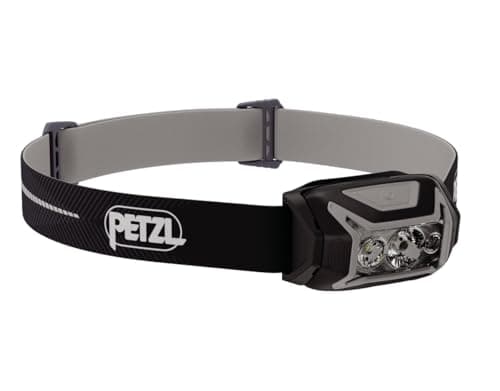 Petzl Actik CoreTop pickThe default outdoor headlamp: hybrid power, a published ANSI figure, and a beam shaped for walking rather than for a spec sheet. | Hiking and general outdoor use | 625 lm | |
| 2 | 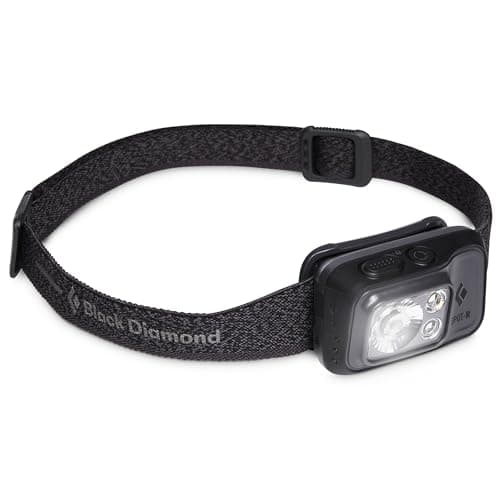 Black Diamond Spot 400-R400 lumens, red night vision, and brightness memory, from the brand most likely to already be in your gear closet. | Camping with a red mode that stays put | 400 lm | |
| 3 | 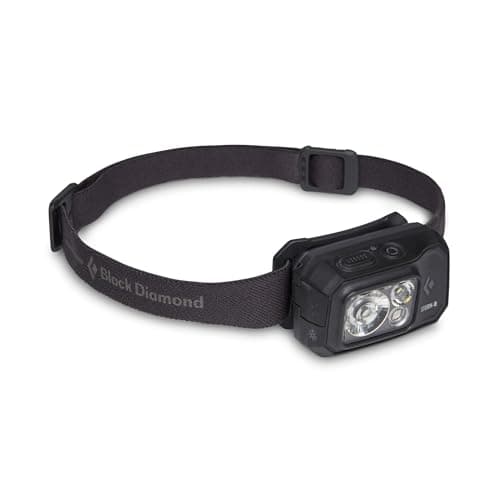 Black Diamond Storm 500-R500 lumens with red, green and blue night-vision modes. The Storm is the waterproof one in Black Diamond's range. | Wet weather and RGB night vision | 500 lm | |
| 4 | 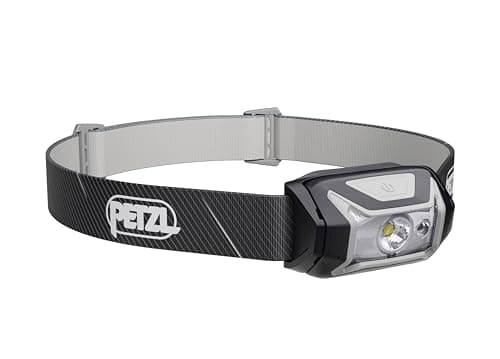 Petzl Tikka350 lumens, three AAA cells, a red mode, 94 grams. The unglamorous answer that covers most of what people actually do after dark. | A first headlamp, and the glovebox | 350 lm |
We earn a commission if you buy through the links on this page, at no extra cost to you. It does not change what we recommend or the order they appear in. Full disclosure. Prices checked October 17, 2026.

Buy the Petzl Actik Core if the lamp might ever be flat somewhere inconvenient; buy the Black Diamond Spot 400-R if it might ever go underwater. That is the whole decision. The Petzl publishes 625 lumens, 115 m and a three-AAA fallback when its rechargeable pack dies. The Black Diamond publishes 400 lumens, 100 m and IP67 immersion against the Petzl's IPX4 rain rating, plus a red mode you reach without cycling through white. They weigh within 2 g of each other and nothing else on the sheets separates them meaningfully.
We have not handled either lamp. We own none of the products on this site and have no laboratory, so there is no verdict here on strap comfort or switch feel. Every figure below is the maker's own, read from its own product page on the date cited - see our methodology.
Both sheets, side by side
| Specification | Petzl Actik Core | Black Diamond Spot 400-R |
|---|---|---|
| Maximum output | 625 lm | 400 lm |
| Middle level | 100 lm | 200 lm |
| Lowest level | 7 lm | 6 lm |
| Beam distance, high | 115 m | 100 m |
| Beam distance, middle | Published per level | 60 m |
| Runtime, high | 2 h | 4 h |
| Runtime, middle | 7 h on the pack, 10 h on AAA | 8 h |
| Runtime, low | 100 h | 225 h |
| Battery | CORE 1,250 mAh / 3.6 V / 4.5 Wh, or 3 x AAA | Integrated 1,500 mAh Li-ion, micro-USB |
| Weight | 88 g | 86 g |
| Ingress protection | IPX4 | IP67 |
| Peak candela | Not published | Not published |
| Red mode | No | Yes, with dimming and strobe |
| Lockout | No | Yes, digital |
| Battery fallback | 3 x AAA | None |
Read that table and most rows are a wash. Two are not: the battery fallback row and the ingress row, and between them they decide which lamp is right for which buyer.
The output gap is smaller than it looks
625 lumens against 400 sounds decisive and is not. Petzl publishes a distance for every level, and Black Diamond now does too, so both can be converted to the figure that describes reach.
Fifteen meters of detection range is not a reason to choose a headlamp. Both are flood-biased lamps in the 5 to 6 candela-per-lumen band, which is the right shape for walking and camp work and the wrong shape for identifying anything at distance. If reach is the job, the brightest headlamps ranks the category on this exact figure and both of these sit in its lower half.
The runtime tables, and the trap in both of them
Black Diamond publishes longer hours at every level: 4 against 2 on high, 8 against 7 on the pack, 225 against 100 on low. Before concluding anything from that, it is worth doing the arithmetic that both companies leave to the reader.
The genuinely informative runtime row is the middle one on the Petzl, because Petzl publishes it twice: 10 hours at 100 lumens on three AAA cells against 7 hours on its own rechargeable pack. On the setting most people use, the disposable cells beat the lithium pack on the maker's own figures. That is a strange and useful fact, and it is covered in full in the Tikkina review, where Petzl publishes the same pair of tables for a cheaper lamp.
Water: the one row that is not close
Petzl publishes IPX4 for the Actik Core, as it does across its entire range. Black Diamond publishes IP67 for the Spot 400-R and states it as tested to operate at least 1.0 meter underwater for thirty minutes.
Under IEC 60529 those are not neighboring claims. IPX4 is splashing water from any direction, with the X meaning no dust test was declared - a rain rating. IP67 is dust tight plus immersion to a meter. For fishing, canoeing, anything around a boat, or simply living in a wet climate, that is the end of the argument, and it is why the Black Diamond is the pick for headlamps for fishing conditions even though the Petzl is the better-documented lamp overall.
Flat batteries: the other row that is not close
The Actik Core is a hybrid. When the CORE pack is empty, three AAA cells go in and the lamp works - Petzl publishes the whole performance table for that configuration, capped at 450 lumens instead of 625. The Spot 400-R has a sealed cell and no alternative at all: flat is flat until you find a socket, and the socket has to supply micro-USB rather than USB-C.
How much that matters is a question about you rather than about the lamps. For a night walk from your own front door it is irrelevant. For a multi-day hike, a hunting trip or a power cut it is decisive, and it is why the Petzl is the pick on headlamps for backpacking and for hiking. The car emergency kit page makes the same argument in its strongest form.
The features only one of them has
- Red night vision, Black Diamond only. With dimming and a strobe, and Black Diamond states it activates without cycling through the white mode. Petzl does not fit red to the Actik Core - it appears on the Tikka and the Tactikka instead. See what a red mode is for.
- Brightness memory, Black Diamond only. The lamp returns to the level you switched it off at, so the dim setting is one press rather than a cycle.
- Digital lockout, Black Diamond only. The lamp cannot switch itself on in a pack or a coat pocket.
- A published watt-hour figure, Petzl only. 4.5 Wh for the CORE pack. No other headlamp maker on this site states energy in watt-hours, and it is the figure every runtime claim ultimately rests on.
- A battery meter, Black Diamond only. Three LEDs over six states.
- A reserve-lighting figure, Petzl only. Petzl publishes a separate be-seen claim for its strobe - visible at 700 m for 400 hours - which is a visibility figure rather than a working runtime, and we count it as neither a strength nor a fault.
Which to buy
Buy the Petzl Actik Core if you want the lamp to keep working. The AAA fallback, the extra reach, the published watt-hours and the complete per-source table make it the better-documented and more recoverable object. It is our pick for hiking, backpacking and anything multi-day. Its honest downsides are IPX4, no red mode, no lockout, and the fact that its 625-lumen headline runs for two published hours.
Buy the Black Diamond Spot 400-R if the lamp will get wet, or if you want a quiet interface. IP67, red without a white cycle, brightness memory and a lockout are a real list, and on live pricing it is usually the cheaper of the two. Its honest downsides are the sealed cell with no fallback, micro-USB charging in 2026, less output and less reach, and a 225-hour low-mode figure that needs reading as the FL 1 maximum it is.
If neither is quite right: the Black Diamond Storm 500-R adds red, green and blue night vision, which nothing from Petzl matches - but Black Diamond publishes nothing beyond its 500-lumen output for that lamp, so it cannot be held to anything. The Petzl Tikka is the cheaper hybrid: 350 lumens, 70 m, a red mode, and three AAA cells in the box, with the same complete table. For the brand-level argument behind all of this, see Petzl vs Black Diamond.
The picks, in full
Top pick · Hiking and general outdoor use
Petzl Actik Core
The default outdoor headlamp: hybrid power, a published ANSI figure, and a beam shaped for walking rather than for a spec sheet.
625 lumens and 115 meters is a walking beam, not a searching beam. The FL1 definition puts illuminance at 115 m down to 0.25 lux, which is enough to tell that something is there and not enough to identify it. In practice you run the middle level and see 30 to 60 m of usable trail.
4.5 watt-hours matters more than the lumen figure. A lamp drawing a regulated 2 W empties that pack in a bit over two hours. The 400-hour number Petzl quotes is a reserve-mode visibility claim, not 400 hours of light you can walk by.
The hybrid design is the real feature. When the CORE pack dies three hours into a night descent, three AAA cells from a gas station bring the lamp back. Very little else at this price does that.
What works
- Runs on the rechargeable pack or three AAA cells, which is a genuine field fix rather than a marketing bullet
- Petzl publishes the full ANSI FL 1 table, including a distance for every mode
- 88 g is light enough that you stop noticing it
What does not
- IPX4 only: rain is fine, a dropped-in-the-creek recovery is not
- No published peak candela, so the 115 m claim cannot be checked against the intensity
- The maker's own site and its own Amazon listing disagree about peak output
Skip this ifyou need reach. 115 m is short by 2026 standards, and the 625-lumen headline does not change the shape of the beam.
Published specification
- Output
- 625 lmANSI/PLATO FL 1. Petzl's US product page states 625; the brand's own Amazon listing says 650. We use the maker's own site.Petzl Actik Core — manufacturer spec page (retrieved September 1, 2026)
- Peak intensity
- not published(Petzl publishes distance, not peak intensity)
- Beam distance
- 115 mMaximum, on the CORE rechargeable batteryPetzl Actik Core — manufacturer spec page (retrieved September 1, 2026)
- Runtime
- 2 h at 625 lm / 7 h at 100 lm / 100 h at 7 lm, on the CORE packPetzl publishes a full per-mode table for both power sources. On 3 x AAA the same levels run 2 h / 10 h / 100 h, with peak output capped at 450 lm. Its separate strobe figure, visible at 700 m for 400 h, is a be-seen claim and not a working runtime.Petzl Actik Core — manufacturer spec page (retrieved September 19, 2026)
- Battery
- CORE 1250 mAh / 3.6 V / 4.5 Wh, or 3 x AAAPetzl Actik Core — manufacturer spec page (retrieved September 1, 2026)
- Ingress
- IPX4Weather resistant. Not immersion rated.Petzl Actik Core — manufacturer spec page (retrieved September 1, 2026)
$87.95 · 8% off
#ad · how this is funded · price as of October 17, 2026
Pick 2 · Camping with a red mode that stays put
Black Diamond Spot 400-R
400 lumens, red night vision, and brightness memory, from the brand most likely to already be in your gear closet.
Black Diamond publishes a complete sheet for this lamp on its own site: 400/200/6 lumens, 100/60/12 meters, 4/8/225 hours, 86 grams, IP67 and a 1500 mAh cell. This catalogue previously held four of those as unpublished because we had only read the Amazon listing.
The burn-time figures are FL 1 maximums - measured until output falls to a tenth of where it started - so 4 hours on high is not 4 hours of 400 lumens. 5.6 watt-hours cannot deliver it: that would be a draw no 400-lumen lamp sustains.
Brightness memory is the underrated feature. The lamp comes back on at the level you left it, which means the red mode is one click away rather than a cycle through white.
IP67 is the specification that separates it from the Petzl range at this price. Petzl publishes IPX4 across the Tikkina, Tikka and Actik Core - rain, not immersion.
What works
- A complete published spec sheet: per-mode output, distance and burn time, weight, cell capacity and IP rating
- IP67 immersion, where the obvious Petzl alternatives publish IPX4
- Red night vision with brightness memory and a digital lockout, so you do not blind a tent to get to it
What does not
- Micro-USB in 2026, when almost everything else here charges over USB-C
- No candela figure, so the 100 m distance cannot be cross-checked against an intensity
- No AAA fallback on the -R version: when the sealed cell is flat the lamp is done for the night
Skip this ifyou want a power-source fallback. The Petzl Actik Core and Tikka take three AAA cells when the pack dies; this one does not.
Published specification
- Output
- 400 lmHigh. Medium 200 lm, low 6 lm.Black Diamond Spot 400-R — manufacturer spec page (retrieved October 17, 2026)
- Peak intensity
- not published(Black Diamond publishes distance, not peak intensity)
- Beam distance
- 100 mHigh. 60 m medium, 12 m low.Black Diamond Spot 400-R — manufacturer spec page (retrieved October 17, 2026)
- Runtime
- 4 h high / 8 h medium / 225 h lowPublished as max burn time, the FL 1 measure to 10 percent of initial output - not hours at the stated lumens.Black Diamond Spot 400-R — manufacturer spec page (retrieved October 17, 2026)
- Battery
- Integrated 1500 mAh Li-ion, micro-USB5.6 Wh at a 3.7 V nominal cell. Micro-USB, not USB-C.Black Diamond Spot 400-R — manufacturer spec page (retrieved October 17, 2026)
- Ingress
- IP67Black Diamond states tested to operate at least 1.0 m underwater for 30 minutes. The same page's prose calls the housing IPX8; we quote the spec line.Black Diamond Spot 400-R — manufacturer spec page (retrieved October 17, 2026)
$79.95 · 28% off
#ad · how this is funded · price as of October 17, 2026
Pick 3 · Wet weather and RGB night vision
Black Diamond Storm 500-R
500 lumens with red, green and blue night-vision modes. The Storm is the waterproof one in Black Diamond's range.
The RGB night-vision set is the differentiator. Green preserves adaptation like red does but renders map contours and blood trails differently, which is why hunters ask for it specifically.
As with the Spot, we could not reach Black Diamond's own spec page from this build, so the table is thin on purpose. We assert the two figures the brand's listing states and nothing else.
The Storm line has historically been the waterproof one, but we will not print an IP rating we could not source.
What works
- Red, green and blue night-vision modes in one lamp
- 500 lumens is a step up from the Spot for a small price difference
- Integrated rechargeable
What does not
- No sourced beam distance, runtime, weight or IP rating
- Heavier than the Spot, though we cannot tell you by how much
- Mode cycling gets busy with four colors to reach
Skip this ifyou only ever use white light. You are paying for two colors you will not switch on.
Published specification
- Output
- 500 lmBlack Diamond Storm 500-R — the brand's own listing on Amazon.com (retrieved September 1, 2026)
- Peak intensity
- not published
- Beam distance
- not published(Not stated in the listing we read)
- Runtime
- not published
- Battery
- Integrated rechargeableBlack Diamond Storm 500-R — the brand's own listing on Amazon.com (retrieved September 1, 2026)
- Weight
- not published
- Ingress
- not published(Not stated in the listing we read)
$89.95 · 18% off
#ad · how this is funded · price as of October 17, 2026
Pick 4 · A first headlamp, and the glovebox
Petzl Tikka
350 lumens, three AAA cells, a red mode, 94 grams. The unglamorous answer that covers most of what people actually do after dark.
Three alkaline AAA cells hold roughly 3.9 Wh between them at a modest draw. That is comparable to the Swift LT's entire battery, for a couple of dollars, available in any gas station in the country.
The red mode is the feature people end up using most. It preserves night adaptation and does not wake a tent.
350 lumens looks modest next to a 3,000-lumen listing. On a footpath at walking pace it is more light than you need, and it will still be running when the 3,000-lumen light has stepped down twice.
What works
- AAA cells: replaceable anywhere, storable for years, no charge cycle to manage
- A red mode you can reach without a mode-cycling ordeal
- Cheap enough to own two
What does not
- No rechargeable pack in the box
- 70 m throw identifies nothing at distance
- IPX4
Skip this ifyou want one lamp for everything including work. There is no real flood mode and no high-CRI option.
Published specification
- Output
- 350 lmANSI/PLATO FL 1Petzl Tikka — manufacturer spec page (retrieved September 1, 2026)
- Peak intensity
- not published
- Beam distance
- 70 mOn three AAA cells; 75 m on the CORE rechargeable accessoryPetzl Tikka — manufacturer spec page (retrieved September 1, 2026)
- Runtime
- 2 h at 350 lm / 12 h at 100 lm / 110 h at 7 lm, on AAAOn the CORE pack the same levels run 2.5 h at 450 lm / 7 h at 100 lm / 110 h at 7 lm. AAA gives less peak output and more mid-level runtime. The 400 h figure Petzl lists is the red strobe, not a working runtime.Petzl Tikka — manufacturer spec page (retrieved September 27, 2026)
- Battery
- 3 x AAA (included), or the CORE rechargeable packPetzl Tikka — manufacturer spec page (retrieved September 1, 2026)
#ad · how this is funded · price as of October 17, 2026
Questions people actually ask
Petzl Actik Core or Black Diamond Spot 400-R?
The Actik Core if the lamp must keep working when the pack is flat - it takes three AAA cells and Petzl publishes the full performance table for them. The Spot 400-R if the lamp will get wet: it publishes IP67 immersion against the Petzl's IPX4 rain rating, plus a red mode, brightness memory and a digital lockout. They weigh within 2 g of each other.
Which is brighter, the Actik Core or the Spot 400-R?
The Actik Core, at a published 625 lumens against 400, and it reaches 115 m against 100 m. But the gap in reach is 15 meters for 56 percent more output, which tells you the Black Diamond is the marginally more concentrated beam of the two. Neither is a lamp to buy for distance.
Is the Black Diamond Spot 400-R waterproof?
Yes, on its own specification: IP67, stated as tested to operate at least 1.0 meter underwater for thirty minutes. Note that a paragraph of marketing copy on the same page calls the housing IPX8; we quote the spec line, which is the lower claim. The Petzl Actik Core publishes IPX4, which is rain resistance only.
Does the Spot 400-R take AAA batteries?
No. The -R version has a sealed 1500 mAh Li-ion cell charged over micro-USB, with no battery fallback at all. If a flat lamp with no socket nearby is a scenario that matters to you, that is the single strongest reason to buy the Petzl instead.
Which lasts longer?
Black Diamond publishes longer hours at every level - 4 against 2 on high, 225 against 100 on low. Both companies measure to the ANSI FL 1 rule, which runs until output falls to 10 percent of its starting value, so neither set of figures is hours at the stated brightness. They are comparable to each other and should be read as maximums with a dimming tail.
Which one has a red light?
The Black Diamond. Its red night vision has dimming and a strobe and, per Black Diamond, activates without cycling through the white mode. The Petzl Actik Core has no red mode - within the Petzl range it appears on the Tikka and the Tactikka instead.
Are these the same weight?
Effectively. Petzl publishes 88 g for the Actik Core and Black Diamond 86 g for the Spot 400-R. Any difference you can feel between them is strap design rather than mass, and strap design is not something we can assess without handling them.
Which is better value?
The Spot 400-R is usually the cheaper of the two - check the live prices in the table above rather than trusting a number typed into an article. What the extra buys on the Petzl is the AAA fallback, 56 percent more peak output and 15 m more reach; what the Black Diamond gives up nothing on is weather sealing and interface.
Sources
Every figure on this page came from one of the documents below, read on the date shown. We do not cite other review sites, forum posts or video reviews as sources of fact.
- Petzl Actik Core — manufacturer spec page (retrieved September 1, 2026)
- Black Diamond Spot 400-R — manufacturer spec page (retrieved October 17, 2026)
- Black Diamond Storm 500-R — the brand's own listing on Amazon.com (retrieved September 1, 2026)
- Petzl Tikka — manufacturer spec page (retrieved September 1, 2026)
- Petzl — ANSI/PLATO FL 1 technical information for its headlamp range
- ANSI/PLATO FL 1 flashlight performance standard — definitions of lumens, peak beam intensity, beam distance, runtime, impact and water resistance
- IEC 60529 — the IP (ingress protection) rating system
Read next
Flashlight brand comparisons
Brand-against-brand comparisons on published figures and disclosure quality, not on reputation.
Petzl vs Black Diamond
Petzl against Black Diamond on published beam distance, runtime, battery energy and weight, with three matched pairs at the prices people actually shop.
Petzl vs Fenix headlamps
Petzl against Fenix on published battery energy, beam distance, weight and ingress rating — four matched pairs where both makers actually show their work.
Nitecore vs Black Diamond headlamps
Nitecore against Black Diamond on published headlamp output and features — the least documented matchup on this site, and what you can still decide from it.
Best headlamps, ranked on the watt-hours behind the lumens
The full headlamp ranking: output, weight, battery energy and beam distance, every figure sourced to the maker.
Best headlamps for hiking
Hiking headlamps ranked on hybrid power, published runtime and weight — not on peak output.
Best headlamps for camping
Camping headlamps ranked on red-mode access, replaceable cells and honest runtime figures.
Best headlamps for fishing at night
Night fishing headlamps ranked on published water rating first, then red mode and runtime.
Best headlamps for reading
Reading lamps ranked on the lowest usable setting, how easily you reach it and what sits on your forehead for an hour - with the arithmetic that shows what those long runtimes really mean.
Petzl Actik Core review
A specification-first review of the Petzl Actik Core: the full per-mode table, what the AAA fallback actually costs you, and who should buy something else.
Petzl Tikkina review
A specification-first review of the Petzl Tikkina: three levels, six published runtimes across two power sources, and the arithmetic that names the mode to plan a night around.
What a headlamp red light mode is actually for
The physiology behind red headlamp modes, and how to choose a lamp whose red is reachable in one click.
Found a number that is wrong? Tell us and we will fix it and say so. Our methodology shows every formula on this page.