Headlamps
The brightest headlamps, and what the lumens actually buy
Ranked by published output, from 3,000 lumens down. Then ranked again by reach, where the order comes apart completely.
By Scooter M. · Published · Updated
| # | Product | Best for | Output / weight | Price |
|---|---|---|---|---|
| 1 | 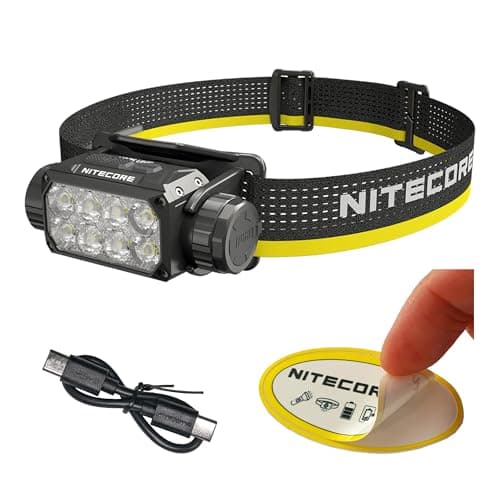 Nitecore HC75 UHETop pick3,000 lumens with a zoomable head, white and red beams, and 192 m of stated reach. The brightest headlamp on the site. | Industrial work where you need to change the beam | 3,000 lm | |
| 2 | 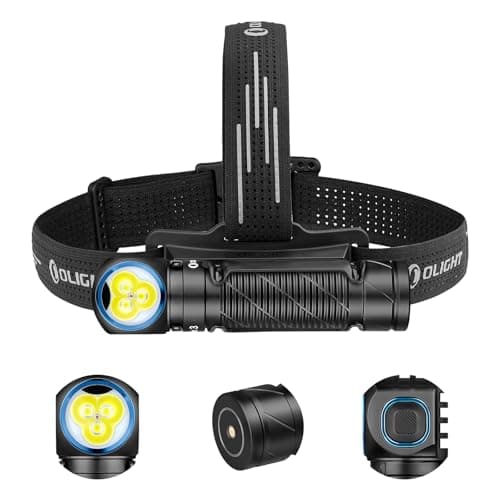 Olight Perun 33,000 lumens, 160 m of stated beam, and a body that comes off the strap and works as a right-angle flashlight. | A headlamp that detaches into a proper flashlight | 3,000 lm | |
| 3 | 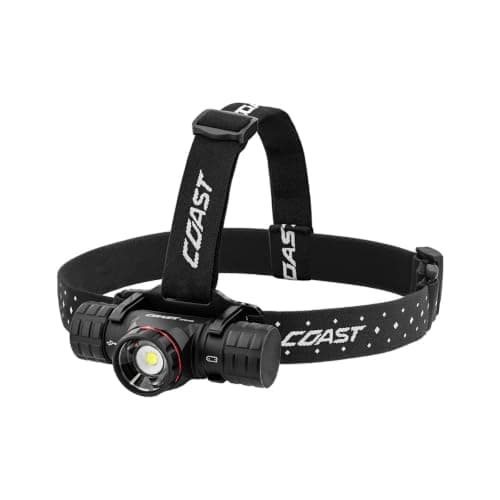 Coast XPH34R2,700 lumens, a twist-focus beam, and dual-power operation on either the rechargeable pack or alkaline cells. | Maximum output with a swappable power source | 2,700 lm | |
| 4 | 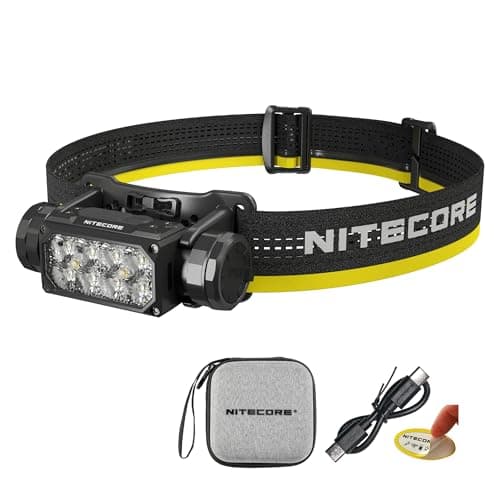 Nitecore HC65 UHE2,000 lumens in a heavy-duty metal body with white, red and reading lights. Built like a work light, worn like a headlamp. | A metal-bodied headlamp that takes abuse | 2,000 lm | |
| 5 | 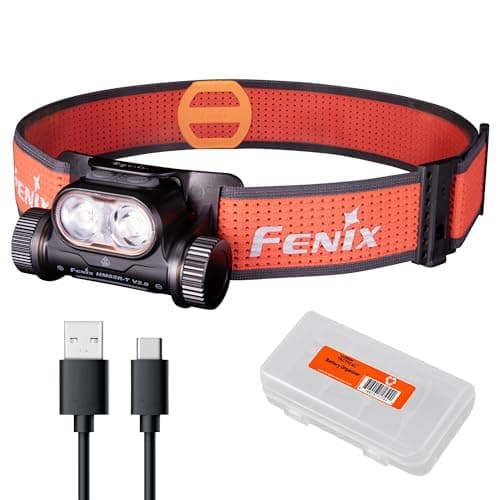 Fenix HM65R-T V2.01,600 lumens and 170 m from a magnesium body running a standard 18650, at 140 g. The removable cell is what separates it from the sealed-pack lamps. | Long nights where you want reach and a spare cell | 1,600 lm / 140 g (4.94 oz) | |
| 6 | 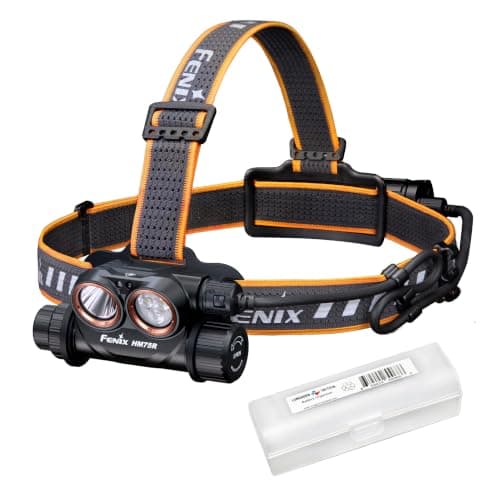 Fenix HM75RTwo cells in a rear case feeding a 1,600-lumen head. Heavy at 321 g, and the only lamp here that will genuinely run a full night shift on high-ish output. | All-shift work lighting | 1,600 lm / 321 g (11.32 oz) complete; 170 g without the rear power bank | |
| 7 | 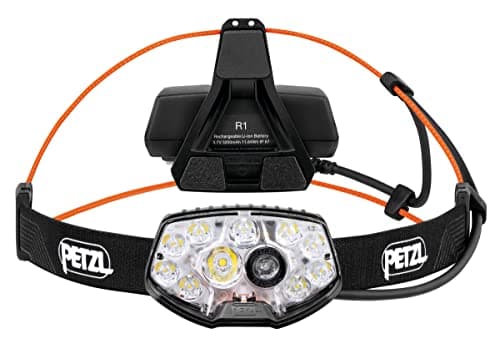 Petzl NAO RL1,500 lumens and 11.84 watt-hours in a rear-battery layout. The most stored energy on this list, and the weight that comes with it. | Ultra distance, where the battery has to last the night | 1,500 lm / 145 g | |
| 8 | 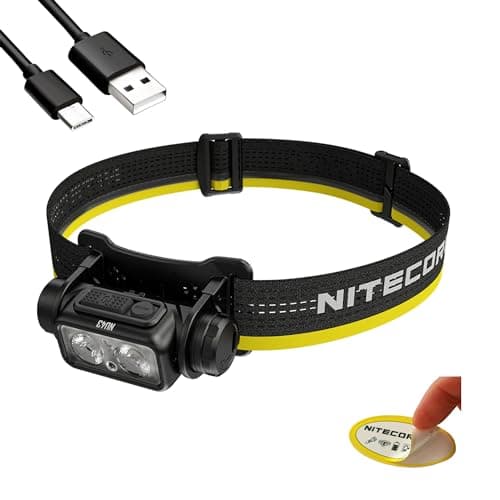 Nitecore NU431,400 lumens with a spotlight and floodlight pair, USB-C, and a price well under the European brands. | Bright output at low weight for the money | 1,400 lm | |
| 9 | 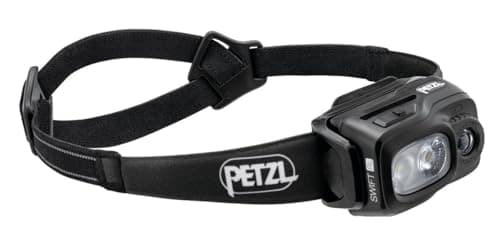 Petzl Swift RLThe best power-to-weight figure we could source: 1,200 lumens and 168 m from 92 grams, with reactive dimming that genuinely extends the burn. | Trail running and fast movement at night | 1,200 lm / 92 g | Check price#ad |
We earn a commission if you buy through the links on this page, at no extra cost to you. It does not change what we recommend or the order they appear in. Full disclosure. Prices checked September 13, 2026.

Two headlamps on this page publish 3,000 lumens. One of them reaches 192 meters and the other reaches 160. A third publishes 1,200 lumens and reaches 168 — further than the 3,000-lumen lamp, on 40 percent of the output.
That is not a trick of selection. Those are the makers' own figures, and they are the reason this page exists. Brightest is the word people search, so the list below is ranked by output — with the reach column sitting right beside it, arguing.
How we judged, before the ranking
- A published output figure from the maker. No estimates and nothing borrowed from a review site. Where a brand's own site would not serve us a spec page, we cite its own retail listing and label it.
- Beam distance where it exists, because output alone cannot tell you what the light is doing. Four of these nine publish one.
- A runtime figure, which on a 3,000-lumen lamp is the number that decides whether the headline means anything at all.
- Currently purchasable, verified against the live listing before writing.
We have handled none of these lamps. Every figure is the manufacturer's own with its source linked — our methodology sets out what we do instead of testing, and why we would rather print a gap than an estimate.
Ranked by output, with the column that disagrees
| Lamp | Output | Beam distance | Candela | Candela per lumen |
|---|---|---|---|---|
| Nitecore HC75 UHE | 3,000 lm | 192 m | 9,216 (computed) | 3.1 |
| Olight Perun 3 | 3,000 lm | 160 m | 6,400 (computed) | 2.1 |
| Coast XPH34R | 2,700 lm | not published | - | - |
| Nitecore HC65 UHE | 2,000 lm | not published | - | - |
| Fenix HM65R-T V2.0 | 1,600 lm | 170 m | 7,225 (computed) | 4.5 |
| Fenix HM75R | 1,600 lm | not published | - | - |
| Petzl NAO RL | 1,500 lm | not published | - | - |
| Nitecore NU43 | 1,400 lm | not published | - | - |
| Petzl Swift RL | 1,200 lm | 168 m | 7,056 (computed) | 5.9 |
Read the top row against the bottom row. The Nitecore HC75 UHE publishes two and a half times the output of the Petzl Swift RL and reaches 24 meters further. The Olight Perun 3 publishes two and a half times the output and reaches 8 meters *less*.
The number that decides whether 3,000 lumens means anything
No headlamp sustains its peak output. A high-power LED turns most of its input into heat, and a lamp strapped to your forehead has neither the mass to absorb it nor anywhere to send it — so the driver reduces current within minutes. That is thermal step-down, and it is physics rather than a defect.
Which makes runtime the specification that matters most on this page. Here is who publishes one.
| Lamp | Published runtime | Battery energy |
|---|---|---|
| Fenix HM75R | 234 h floodlight / 365 h red | 30.2 Wh (computed) |
| Fenix HM65R-T V2.0 | 300 h maximum | 12.2 Wh (computed) |
| Petzl NAO RL | 5 h minimum in reactive mode | 11.84 Wh (published) |
| Petzl Swift RL | 7 h minimum at medium, reactive | 8.47 Wh (published) |
| Nitecore HC75 UHE | not published | not published |
| Olight Perun 3 | not published | not published |
| Coast XPH34R | not published | not published |
| Nitecore HC65 UHE | not published | not published |
| Nitecore NU43 | not published | not published |
The two brightest lamps on the page publish no runtime and no battery capacity. Five of nine publish neither. So for the lamps sold hardest on output, there is no way to find out how long that output lasts — and the honest reading of a 3,000-lumen headline with no runtime beside it is that it describes a burst, not a working level.
Petzl's figures are the most useful format here and they are not even the biggest. A minimum at a stated mode tells you the floor; a maximum tells you the ceiling on a setting you will rarely select. How runtime is defined covers why.
The picks, and who each one is wrong for
Nitecore HC75 UHE — the literal answer, at 3,000 lumens
The highest published output of any headlamp we cover, with 192 m of stated reach and a zoomable head — unusual on a headlamp and genuinely useful, since you can flood a panel at arm's length and then throw the same output down a yard. White and red, in a work-rated body.
Skip it if you need to know how long it runs, because Nitecore publishes no runtime, no weight and no IP rating for it. On a 3,000-lumen lamp the missing runtime is the figure you most need. This is a burst-and-identify tool, not something you walk with for four hours.
Olight Perun 3 — the same output, the widest beam on the site
3,000 lumens and 160 m, which computes to 2.1 candela per lumen — the lowest concentration of any product on this website. That makes it a genuinely excellent area lamp: it fills a space rather than punching a hole in it. It also detaches into a proper right-angle flashlight, which is a real second role.
Skip it if you want distance, since a 1,200-lumen Petzl reaches further. Skip it if proprietary magnetic charging bothers you, and note that no runtime, weight or ingress rating is published.
Coast XPH34R — output with a swappable power source
2,700 lumens with genuine dual power: the rechargeable pack or alkaline cells in the same body. Among the high-output lamps here that flexibility is rare, and it is the one on this page most likely to still work on the third night of a trip with no socket.
Skip it if you want any specification beyond output — Coast publishes a lumen figure and nothing else we could source. No beam distance, runtime, weight or IP rating.
Nitecore HC65 UHE — metal, in a plastic category
2,000 lumens in a metal-bodied lamp with white, red and a dedicated reading emitter. A polymer headlamp survives being dropped; a metal one survives being stepped on in a truck bed. The reading light — low, wide and close-range — is the mode people actually leave on.
Skip it if weight matters: metal costs grams, and Nitecore does not publish how many. No runtime or ingress rating either.
Fenix HM65R-T V2.0 — the one we would actually wear
1,600 lumens, 170 m, IP68, a removable 3,400 mAh 18650 worth 12.2 watt-hours, a CR123A fallback, and 140 g. It is fifth on output and first on everything you would check before a long night out. At 4.5 candela per lumen it reaches almost as far as the 3,000-lumen lamps while publishing the numbers they do not.
Skip it if you want maximum output — four lamps here are brighter. Skip it if 140 g is too much on your forehead. Its 300-hour runtime figure is a maximum on the lowest mode, not a claim about 1,600 lumens. There is a full review of this lamp if it is the one you are deciding on.
Fenix HM75R — the longest burn, by a distance
1,600 lumens carried by an 18650 and a 21700 at once: 30.2 watt-hours, the largest energy store anywhere on this site, with 234 hours published on floodlight and 365 on red. For all-shift work lighting nothing else here competes.
Skip it for anything you wear for pleasure. At 321 g complete it is a work decision, and the rear battery case is the reason. No ingress rating published, which at this price is disappointing.
Petzl NAO RL — reactive output that lasts the night
1,500 lumens, 11.84 published watt-hours, 145 g, and a pack that doubles as a power bank. Reactive lighting reads the scene and dims when you look at something close, which is why Petzl can publish a 5-hour minimum rather than a maximum on a mode nobody uses.
Skip it if you want a published beam distance or ingress rating — the NAO RL is the one Petzl lamp that states neither. It is also the most expensive lamp on this page.
Nitecore NU43 — the most output per dollar
1,400 lumens with separate spot and flood emitters and USB-C, at a price well under the European brands. Two beam shapes in one lamp is the right architecture for general use, because one shape never covers both map-reading and trail-finding.
Skip it if you need documentation: output and charging are all Nitecore publishes. No runtime, weight, beam distance or IP rating.
Petzl Swift RL — the lamp that makes the argument
1,200 lumens — the lowest on this page — and 168 m of reach, which beats a 3,000-lumen lamp. Add 8.47 published watt-hours, 92 g, IPX4 and reactive dimming with a 7-hour minimum at medium. At 5.9 candela per lumen it has the most efficient optic here.
Skip it if you need immersion protection or raw output. Worth flagging honestly: its buy box is currently showing no live price through our data layer, so its button reads Check price rather than a figure. The listing is live and purchasable; we simply will not print a number the layer has not verified.
How to buy on this page
- You want the biggest number — Nitecore HC75 UHE at 3,000 lm, understanding you are buying a burst.
- You want to flood a work area — Olight Perun 3, where 2.1 candela per lumen is the feature and not the flaw.
- You want the furthest reach — Nitecore HC75 UHE at 192 m, or the Petzl Swift RL at 168 m on far less output.
- You want it to survive weather — Fenix HM65R-T, the only lamp here with a published IP68.
- You need it to last a full shift — Fenix HM75R at 30.2 Wh. See headlamps for work.
- You want a lamp you can plan a night around — Petzl Swift RL or NAO RL, on published minimums rather than maximums.
What we would not tell you
We would not tell you any of these lamps holds its headline output, because none of them does and five publish no figure that would let you find out. A 3,000-lumen headlamp is a 3,000-lumen headlamp for a period its maker has chosen not to state.
We would also not tell you the lumen figure is meaningless. It is a real, standardized ANSI FL 1 measurement and for filling a space it is exactly the number that matters. It just is not the number that tells you how far you will see — which, on a page about the brightest headlamps, is the thing most people came here assuming.
The picks, in full
Top pick · Industrial work where you need to change the beam
Nitecore HC75 UHE
3,000 lumens with a zoomable head, white and red beams, and 192 m of stated reach. The brightest headlamp on the site.
A zoomable head is unusual on a headlamp and it is the point of this one: you can flood a panel at arm's length, then throw the same 3,000 lumens 190 m down a yard.
3,000 lumens is not a setting you run in. It is a burst for identifying something, and any lamp this bright will step down within minutes to protect the emitter and your forehead.
192 m from 3,000 lumens implies a fairly wide hotspot. A dedicated thrower at a third of the output would reach further — which is exactly the lumens-versus-candela confusion this site exists to unpick.
What works
- Zoom lets one lamp do close work and distance
- The highest published output of any headlamp here
- White and red in a work-rated body
What does not
- No sourced runtime, which on a 3,000-lumen lamp is the number you most need
- Zoom optics lose light compared with a fixed reflector
- Heavy enough that a hard hat mount is the sensible way to wear it
Skip this ifyou want reach specifically. 192 m from 3,000 lumens is a flood-biased beam; a thrower gets you further on a quarter of the output.
Published specification
- Output
- 3,000 lmNitecore HC75 UHE — the brand's own listing on Amazon.com (retrieved September 1, 2026)
- Peak intensity
- not published
- Beam distance
- 192 mNitecore HC75 UHE (192 m beam, 3,000 lm) — the brand's own listing on Amazon.com (retrieved September 1, 2026)
- Runtime
- not published
- Battery
- USB-C rechargeableNitecore HC75 UHE — the brand's own listing on Amazon.com (retrieved September 1, 2026)
- Weight
- not published
- Ingress
- not published
#ad · how this is funded · price as of September 13, 2026
Pick 2 · A headlamp that detaches into a proper flashlight
Olight Perun 3
3,000 lumens, 160 m of stated beam, and a body that comes off the strap and works as a right-angle flashlight.
3,000 lumens at 160 m tells you this is a flood-biased beam. For comparison, a Petzl Swift RL reaches 168 m on 1,200 lumens — more distance from 40 percent of the output, because distance comes from intensity, not from lumens.
The two-in-one design is the real selling point. A right-angle light that clips to a pocket and also mounts on a strap replaces two tools.
Marketing copy calling it waterproof without an IP number is exactly the kind of claim we will not repeat as a specification.
What works
- Detaches into a genuinely useful right-angle flashlight
- Magnetic charging, which is quick and has no port to flood
- Published beam distance, which many competitors omit
What does not
- No sourced runtime, weight, or IP rating
- 3,000 lumens on 160 m of reach is a wide beam sold on a big number
- Proprietary magnetic charger to lose
Skip this ifyou want distance. The published figures say flood; a 1,200-lumen Petzl reaches further.
Published specification
- Peak intensity
- not published
- Beam distance
- 160 mOlight Perun 3 — the brand's own listing on Amazon.com (retrieved September 1, 2026)
- Runtime
- not published
- Battery
- Rechargeable, magnetic chargingOlight Perun 3 — the brand's own listing on Amazon.com (retrieved September 1, 2026)
- Weight
- not published
- Ingress
- not published(Marketed as waterproof; no rating stated in the listing)
#ad · how this is funded · price as of September 13, 2026
Pick 3 · Maximum output with a swappable power source
Coast XPH34R
2,700 lumens, a twist-focus beam, and dual-power operation on either the rechargeable pack or alkaline cells.
Dual power is the same hybrid idea Petzl and Fenix use, and it is the single most practically valuable feature a headlamp can have.
2,700 lumens is the largest headline on this page. Treat it as a burst; sustained output on any headlamp is limited by what your forehead will tolerate as heat.
The twist focus is Coast's signature. It works, and it costs you some throw efficiency compared with a fixed reflector of the same aperture.
What works
- Runs on rechargeable or disposable cells
- The highest published output of any lamp in the headlamp set
- Twist focus covers flood and spot from one head
What does not
- No sourced runtime, weight, beam distance or IP rating
- 2,700 lumens on a head-mounted light is a heat problem before it is a light problem
- Bulky next to the running lamps
Skip this ifyou plan to wear it for hours. Output this high on a headlamp is a burst tool and the mass reflects it.
Published specification
- Peak intensity
- not published
- Beam distance
- not published
- Runtime
- not published
- Battery
- Dual power: rechargeable pack or alkaline cellsCoast XPH34R — the brand's own listing on Amazon.com (retrieved September 1, 2026)
- Weight
- not published
- Ingress
- not published
#ad · how this is funded · price as of September 13, 2026
Pick 4 · A metal-bodied headlamp that takes abuse
Nitecore HC65 UHE
2,000 lumens in a heavy-duty metal body with white, red and reading lights. Built like a work light, worn like a headlamp.
A metal body is the reason to buy this rather than the NU43. Plastic headlamps survive drops; metal ones survive being stepped on in a truck bed.
Three emitters — white, red and a dedicated reading light — is more useful than it sounds. The reading light is a low, wide, close-range flood, which is the mode people actually leave on.
As with the rest of the Nitecore range, we could only reach the brand's retail listing, so the spec table stops at the two figures it states.
What works
- Metal construction in a category dominated by polymer
- White, red and reading emitters
- 2,000-lumen headline for a mid-range price
What does not
- Heavier than any polymer lamp here, though we cannot give you the number
- No sourced runtime or beam distance
- Metal conducts heat, so turbo will get warm against your forehead
Skip this ifyou want it for running. The mass that makes it durable is the mass that makes it bounce.
Published specification
- Output
- 2,000 lmMaximumNitecore HC65 UHE — the brand's own listing on Amazon.com (retrieved September 1, 2026)
- Peak intensity
- not published
- Beam distance
- not published
- Runtime
- not published
- Battery
- USB-C rechargeableNitecore HC65 UHE — the brand's own listing on Amazon.com (retrieved September 1, 2026)
- Weight
- not published(Metal body; no figure in the listing we read)
- Ingress
- not published
#ad · how this is funded · price as of September 13, 2026
Pick 5 · Long nights where you want reach and a spare cell
Fenix HM65R-T V2.0
1,600 lumens and 170 m from a magnesium body running a standard 18650, at 140 g. The removable cell is what separates it from the sealed-pack lamps.
A 3,400 mAh 18650 at a nominal 3.6 V is 12.2 watt-hours. That is more energy than a Petzl NAO RL carries, in a lamp 5 g lighter, because a bare 18650 is a more efficient package than a molded pack.
It is also the only headlamp in this set whose battery you can replace at a checkpoint for three dollars, because 18650 is a standard cell and not a proprietary brick.
IP68 rather than IPX4 is the second real difference. This one survives being dropped in water; most of the running lamps here do not.
What works
- Standard 18650 cell: swappable, cheap, and available everywhere
- IP68 and 2 m impact rating, the toughest specification in this roundup
- Dual emitters, one white and one warm white, so it works for close tasks as well as reach
What does not
- 140 g is at the heavy end for a running lamp
- Charging works only with Fenix ARB-L18 series cells, which limits the swap-any-18650 advantage
- No published candela figure
Skip this ifyou count grams. A Swift LT does the camp job at 43 g; you are carrying 97 g extra for reach and a removable cell.
Published specification
- Peak intensity
- not published(Fenix publishes distance, not peak intensity)
- Runtime
- 300 h maximumLowest mode. The turbo figure is far shorter and Fenix publishes it per-mode.Fenix HM65R-T V2.0 — manufacturer spec page (retrieved September 1, 2026)
- Battery
- 3,400 mAh 18650 Li-ion (included), or 2 x CR123AFenix HM65R-T V2.0 — manufacturer spec page (retrieved September 1, 2026)
- Weight
- 140 g (4.94 oz)Including battery and headbandFenix HM65R-T V2.0 — manufacturer spec page (retrieved September 1, 2026)
- Ingress
- IP68Dust tight and immersion rated; 2 m impact resistanceFenix HM65R-T V2.0 — manufacturer spec page (retrieved September 1, 2026)
#ad · how this is funded · price as of September 13, 2026
Pick 6 · All-shift work lighting
Fenix HM75R
Two cells in a rear case feeding a 1,600-lumen head. Heavy at 321 g, and the only lamp here that will genuinely run a full night shift on high-ish output.
3,400 mAh at 3.6 V plus 5,000 mAh at 3.6 V is 30.2 watt-hours. That is 2.5 times a Petzl NAO RL and roughly ten times a Swift LT, which is the single reason to accept 321 grams.
It also discharges over USB-C, so on a jobsite it is a headlamp and a phone charger. That is a genuine second function rather than a spec-sheet bullet.
The 170 g figure without the rear case matters: you can leave the power bank behind on a short job and carry a normal-weight lamp.
What works
- 30.2 Wh of stored energy, by far the most on the site
- Rear case detaches, so the lamp has a light configuration and a long configuration
- USB-C output charges a phone from the same cells
What does not
- 321 g complete is heavy enough to notice within an hour
- No published beam distance or IP rating on the pages we read
- The two-cell arrangement means two things to keep charged
Skip this ifyou are not working a full shift. For recreation it is 200 g of battery you will never flatten.
Published specification
- Peak intensity
- not published
- Beam distance
- not published(Not stated on the page we read)
- Runtime
- 234 h floodlight / 365 h redMaximum, lowest modesFenix HM75R — manufacturer spec page (retrieved September 1, 2026)
- Battery
- One 18650 (3,400 mAh) plus one 21700 (5,000 mAh) in a rear battery caseFenix HM75R — manufacturer spec page (retrieved September 1, 2026)
- Weight
- 321 g (11.32 oz) complete; 170 g without the rear power bankFenix HM75R — manufacturer spec page (retrieved September 1, 2026)
- Ingress
- not published(Not stated on the page we read)
#ad · how this is funded · price as of September 13, 2026
Pick 7 · Ultra distance, where the battery has to last the night
Petzl NAO RL
1,500 lumens and 11.84 watt-hours in a rear-battery layout. The most stored energy on this list, and the weight that comes with it.
11.84 watt-hours is 3.6 times the Swift LT's tank and 1.4 times the Swift RL's. That is the entire reason to carry 145 g on your head.
The rear battery is not styling. It moves sixty-odd grams off the front of your skull, which is why the NAO does not bounce on a descent the way a front-heavy lamp does.
It charges a phone. On a hundred-miler that is a second reason to carry it.
What works
- The most stored energy in this roundup, by a wide margin
- Weight split front and rear, so it stays put on rough ground
- Swappable spare pack turns a battery change into a 20-second job at an aid station
What does not
- 145 g is 53 g more than a Swift RL for the same reactive technology
- No published beam distance or IP rating on the page we read
- The most expensive headlamp here
Skip this ifyour longest night is under five hours. You would be carrying a battery for a duration you never reach.
Published specification
- Peak intensity
- not published
- Beam distance
- not published(Not stated on the page we read)
- Runtime
- 5 h minimum in reactive mode at the standard levelPetzl NAO RL — manufacturer spec page (retrieved September 1, 2026)
- Battery
- 3,200 mAh / 3.7 V / 11.84 Wh Li-ion, USB-C, doubles as a power bankPetzl NAO RL — manufacturer spec page (retrieved September 1, 2026)
- Ingress
- not published(Not stated on the page we read)
$199.95 · 25% off
#ad · how this is funded · price as of September 13, 2026
Pick 8 · Bright output at low weight for the money
Nitecore NU43
1,400 lumens with a spotlight and floodlight pair, USB-C, and a price well under the European brands.
1,400 lumens at this price is the whole pitch, and it is a real pitch: nothing from Petzl at the same money publishes a number that high.
A spot and a flood emitter together is the right architecture for a general-purpose lamp. One beam shape never covers both map-reading and trail-finding.
Everything except output and charging is unpublished in the source we could reach, which is why this sits below the Fenix and Petzl picks despite the bigger headline.
What works
- The highest published output per dollar in this roundup
- Separate spot and flood emitters
- USB-C
What does not
- No sourced runtime, weight, beam distance or IP rating
- A 1,400-lumen headline on an unstated battery tells you nothing about how long it holds
- Built-in cell
Skip this ifthe runtime matters more than the peak. Without a published runtime table you cannot plan a night around it, and we will not estimate one for you.
Published specification
- Peak intensity
- not published
- Beam distance
- not published
- Runtime
- not published
- Battery
- USB-C rechargeableNitecore NU43 — the brand's own listing on Amazon.com (retrieved September 1, 2026)
- Weight
- not published
- Ingress
- not published
#ad · how this is funded · price as of September 13, 2026
Pick 9 · Trail running and fast movement at night
Petzl Swift RL
The best power-to-weight figure we could source: 1,200 lumens and 168 m from 92 grams, with reactive dimming that genuinely extends the burn.
8.47 watt-hours across 92 grams is the whole argument. That works out to 13.0 lumens per gram at peak and 0.092 Wh of stored energy per gram carried, the best combination of the two figures in this roundup.
Reactive lighting is the runtime strategy, not a gimmick. The lamp meters reflected light and cuts output when you look at your own hands or a pale trail. Petzl's 7-hour minimum at medium is quoted in that mode, and it is the number to plan around.
168 m of throw is more than a runner can use below about 8 minutes per kilometer. What you actually notice is how little the beam sags once the pack drops under half.
What works
- 1,200 lm and 168 m at 92 g, the best power-to-weight in this set on published figures
- Reactive dimming extends the burn instead of just cutting output in bright patches
- Five-level charge gauge, so you know what you have before you start
What does not
- IPX4, in a category where running in rain is the normal case
- Charging cable not included at this price
- Reactive mode takes a few outings to trust
Skip this ifyou mostly walk. You are paying for a reactive sensor and a 2,250 mAh pack to solve a problem hikers do not have.
Published specification
- Output
- 1,200 lmANSI FL 1 standardPetzl Swift RL — manufacturer spec page (retrieved September 1, 2026)
- Peak intensity
- not published(Petzl publishes distance, not peak intensity)
- Beam distance
- 168 mPetzl Swift RL — manufacturer spec page (retrieved September 1, 2026)
- Runtime
- 7 h minimum at medium, in reactive modePetzl Swift RL — manufacturer spec page (retrieved September 1, 2026)
- Battery
- 2,250 mAh / 3.85 V / 8.47 Wh Li-ion, USB-CPetzl Swift RL — manufacturer spec page (retrieved September 1, 2026)
#ad · how this is funded · price as of September 13, 2026
Questions people actually ask
What is the brightest headlamp?
Of the lamps we cover, the Nitecore HC75 UHE and the Olight Perun 3, both at a published 3,000 lumens. The HC75 reaches 192 m and the Perun 3 reaches 160 m, so they are not equivalent despite the identical headline. Neither maker publishes a runtime.
How long can a headlamp run at 3,000 lumens?
Neither Nitecore nor Olight publishes a runtime for its 3,000-lumen lamp, so we cannot tell you and will not estimate. What is certain is that it is not sustained — a lamp on your forehead cannot shed that much heat, so the driver steps output down within minutes. That is why a headline with no runtime beside it describes a burst.
Why does a 1,200-lumen headlamp reach further than a 3,000-lumen one?
Because reach depends on beam intensity. The Petzl Swift RL publishes 168 m, which works back to 7,056 candela, or 5.9 candela per lumen. The Olight Perun 3 publishes 160 m, or 6,400 candela at 2.1 per lumen. The Petzl concentrates nearly three times as much of each lumen.
Do I need a 3,000-lumen headlamp?
Almost certainly not. A headlamp lights the ground in front of you, and 300 to 600 lumens covers camping, hiking and chores comfortably. Very high output is worth it for search, industrial work or identifying something at distance — and even then, what you actually want is beam distance rather than lumens.
Which bright headlamp is waterproof?
The Fenix HM65R-T, which publishes IP68 — dust-tight and rated for continuous immersion. It is the only lamp on this page with a published ingress rating at all. Petzl publishes IPX4 across its range, which covers rain but not submersion.
What is the brightest headlamp with a long battery life?
The Fenix HM75R. It publishes 1,600 lumens and carries an 18650 plus a 21700 for a computed 30.2 watt-hours — the largest on this site — with 234 hours on floodlight. The trade is 321 g complete, which is a work lamp rather than a hiking one.
Is a brighter headlamp always better?
No, and this page is the clearest demonstration we can build from published figures. Ranked by lumens the list runs one way; ranked by reach it comes apart entirely, and the two brightest lamps publish nothing about how long they hold that output.
Sources
Every figure on this page came from one of the documents below, read on the date shown. We do not cite other review sites, forum posts or video reviews as sources of fact.
- Nitecore HC75 UHE — the brand's own listing on Amazon.com (retrieved September 1, 2026)
- Olight Perun 3 — the brand's own listing on Amazon.com (retrieved September 1, 2026)
- Coast XPH34R — the brand's own listing on Amazon.com (retrieved September 1, 2026)
- Nitecore HC65 UHE — the brand's own listing on Amazon.com (retrieved September 1, 2026)
- Nitecore NU43 — the brand's own listing on Amazon.com (retrieved September 1, 2026)
- Fenix HM65R-T V2.0 — manufacturer spec page (retrieved September 1, 2026)
- Fenix HM75R — manufacturer spec page (retrieved September 1, 2026)
- Petzl NAO RL — manufacturer spec page (retrieved September 1, 2026)
- Petzl Swift RL — manufacturer spec page (retrieved September 1, 2026)
- Petzl — ANSI/PLATO FL 1 technical information for its headlamp range
- ANSI/PLATO FL 1 flashlight performance standard — definitions of lumens, peak beam intensity, beam distance, runtime, impact and water resistance
- IEC 60529 — the IP (ingress protection) rating system
Read next
Best headlamps, ranked on the watt-hours behind the lumens
The full headlamp ranking: output, weight, battery energy and beam distance, every figure sourced to the maker.
Headlamp brands, ranked on what they tell you
Every headlamp brand we cover, ranked on specification disclosure — from the one publishing watt-hours to the three publishing only a lumen figure.
Fenix HM65R-T V2.0 review
A specification-first review of the Fenix HM65R-T V2.0: what the published figures mean, what they do not cover, and who should buy something else.
Lumens vs candela
The distinction that decides reach, with the conversion formula and a table of real published figures.
Throw vs flood
How reflector geometry produces throw or flood, what each suits, and where the middle ground lives.
Best headlamps for work
Work headlamps ranked on shift runtime, color rendering and hard-hat compatibility.
Found a number that is wrong? Tell us and we will fix it and say so. Our methodology shows every formula on this page.