Learn
Lumens vs candela
Lumens tell you how much light there is. Candela tell you where it goes. Almost every bad flashlight purchase comes from confusing the two.
By Scooter M. · Published · Updated
| # | Product | Best for | Output | Price |
|---|---|---|---|---|
| 1 | 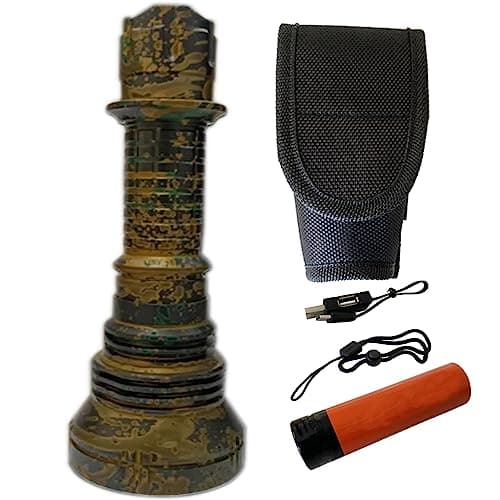 Acebeam L19Top pick1,650 lumens and 1,300 m of stated throw. The most efficient distance-per-lumen figure on the site, by a wide margin. | The longest reach per lumen here | 1,650 lm | |
| 2 | 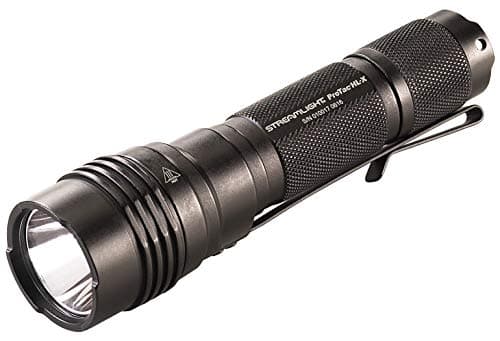 Streamlight ProTac HL-X1,300 lumens, 35,000 candela, 374 m, 1.5 hours, IP68, on either a rechargeable pack or two CR123A cells. Every figure published per mode. | Duty use, and the best-documented light on this site | 1,300 lm | |
| 3 | No image Streamlight MacroStream USB500 lumens, 2,000 candela, 90 m and two hours on high — every figure published per mode by the maker. That is the reason it leads. | The best-documented small EDC light here | 500 lm | Check price#ad |
We earn a commission if you buy through the links on this page, at no extra cost to you. It does not change what we recommend or the order they appear in. Full disclosure. Prices checked October 15, 2026.
Here is the whole thing in one sentence: a 1,650-lumen flashlight on this site reaches 1,300 meters and a 2,800-lumen one reaches 380. If lumens decided reach that would be impossible. They do not.
What each unit is
| Unit | Measures | Analogy |
|---|---|---|
| Lumen (lm) | Total light emitted in all directions | How much water comes out of the hose |
| Candela (cd) | Light intensity in one direction | How hard the jet hits, which depends on the nozzle |
| Lux (lx) | Light falling on a surface | How wet the thing you are pointing at gets |
The hose analogy holds up well. Total output is fixed by the emitter and the driver. What the reflector does is decide how tightly that output is aimed, and that is what candela measures.
The relationship, stated properly
Candela is lumens per steradian — light output per unit of solid angle. Concentrate the same lumens into a smaller angle and the candela figure rises, with total output unchanged.
Real lights, real numbers
| Light | Lumens | Beam distance | Candela | Candela per lumen |
|---|---|---|---|---|
| Acebeam L19 | 1,650 | 1,300 m | 422,500 | 256 |
| Nitecore P30i | 2,000 | 1,000 m | 250,000 | 125 |
| Olight Warrior X 4 | 2,600 | 630 m | 99,200 | 38 |
| Streamlight ProTac HL-X | 1,300 | 374 m | 35,000 (published) | 27 |
| Fenix PD36R Pro | 2,800 | 380 m | 36,100 | 13 |
| Streamlight MacroStream | 500 | 90 m | 2,000 (published) | 4 |
The last column is the interesting one and it is not a specification anybody publishes. It says how much of each lumen the optic is concentrating. The Acebeam concentrates twenty times more per lumen than the Fenix, which is why it reaches over three times as far on 60 percent of the output.
Which one you should care about
- Lighting a room, a campsite or a work area — lumens. You want total output spread widely, and candela is irrelevant.
- Seeing something at distance — candela, entirely. A 600-lumen thrower beats a 2,000-lumen flood at 200 meters and it is not close.
- Walking, working, most everyday use — a balance, leaning toward lumens. Too much candela gives you a bright circle and blindness around it.
Why the marketing uses lumens
Because it is the bigger number and it goes up more easily. Adding lumens means a bigger emitter and more current, both of which are cheap. Adding candela means a bigger, deeper reflector, which makes the light physically larger and harder to sell.
It is also the number a buyer thinks they understand. Twice the lumens sounds like twice the light, and in the way that matters — how far you can see — it is not.
The inverse square law, briefly
How to use this when buying
- Find the candela figure. If the maker publishes beam distance instead, square it and multiply by 0.25.
- If the maker publishes both, check they agree. If they do not, the figures are estimates rather than measurements.
- Compare candela across the lights you are considering, not lumens.
- Then check the lumens, to make sure you are not buying a tight beam with no spill for a job that needs spill.
That fourth step matters. Throw versus flood covers the trade properly, and best flashlight throwers shows what the extreme end of the candela scale actually looks like. For the cleanest worked example of the whole distinction, Streamlight vs Maglite puts a 127-lumen light that reaches 156 m next to a 500-lumen light that reaches 90.
The picks, in full
Top pick · The longest reach per lumen here
Acebeam L19
1,650 lumens and 1,300 m of stated throw. The most efficient distance-per-lumen figure on the site, by a wide margin.
1,300 m implies roughly 422,500 candela. From 1,650 lumens that is an extraordinarily concentrated beam — this light puts a higher fraction of its output into the hotspot than anything else on the site.
It is the clearest possible demonstration of why lumens are the wrong metric for reach: this light reaches nearly twice as far as the Nitecore P30i on 82 percent of its output.
The 20A cell requirement is not a detail. A beam this intense draws hard, and a standard protected 21700 will trip its own protection circuit.
What works
- 1,300 m of published throw, the longest here
- Best distance-per-lumen ratio on the site by a distance
- Ships with the high-drain cell it actually needs
What does not
- No sourced runtime, candela or IP rating
- Requires a 20A-rated cell, so a generic replacement will underperform
- Effectively no spill
Skip this ifyou do not have a genuine long-distance need. Inside 50 m it is worse than a 500-lumen pocket light.
Published specification
- Peak intensity
- not published
- Beam distance
- 1,300 mAcebeam L19 — the brand's own listing on Amazon.com (retrieved September 1, 2026)
- Runtime
- not published
- Battery
- 20A-rated 21700 (included)Acebeam L19 — the brand's own listing on Amazon.com (retrieved September 1, 2026)
- Weight
- not published
- Ingress
- not published
#ad · how this is funded · price as of October 15, 2026
Pick 2 · Duty use, and the best-documented light on this site
Streamlight ProTac HL-X
1,300 lumens, 35,000 candela, 374 m, 1.5 hours, IP68, on either a rechargeable pack or two CR123A cells. Every figure published per mode.
35,000 candela and 374 m reconcile exactly: the square root of 35,000 divided by 0.25 is 374.2 m. Streamlight's numbers are internally consistent across all three modes, which is the strongest signal of a maker publishing real measurements rather than marketing figures.
1.5 hours at 1,300 lumens implies roughly 6 to 7 watt-hours of usable energy — consistent with a single 18650-class pack and with the CR123A alternative.
IP68 with 2 m impact resistance is the toughest rating in this roundup, and the reason this light shows up on so many duty belts.
What works
- Full ANSI FL1 table published per mode, and it reconciles
- Runs on a rechargeable pack or on shelf-stable CR123A lithium cells
- IP68 and 2 m impact rating
What does not
- The programming interface takes reading the manual to understand
- 162 to 176 g is heavy for pocket carry
- CR123A cells are expensive if you use it hard
Skip this ifyou want a pocket light. It is a duty-belt tool and the weight and length are built for a holster.
Published specification
- Output
- 1,300 lmHigh. Medium 420 lm, low 70 lm.Streamlight ProTac HL-X — manufacturer spec page (retrieved September 1, 2026)
- Peak intensity
- 35,000 cdHigh. 11,000 cd medium, 1,800 cd low.Streamlight ProTac HL-X — manufacturer spec page (retrieved September 1, 2026)
- Beam distance
- 374 mHigh. 210 m medium, 85 m low.Streamlight ProTac HL-X — manufacturer spec page (retrieved September 1, 2026)
- Runtime
- 1.5 h high / 3.75 h medium / 25 h lowOn the SL-B26 pack. On CR123A: 1.25 h / 3 h / 20 h.Streamlight ProTac HL-X — manufacturer spec page (retrieved September 1, 2026)
- Battery
- SL-B26 rechargeable Li-ion pack, or 2 x CR123A lithiumStreamlight ProTac HL-X — manufacturer spec page (retrieved September 1, 2026)
- Weight
- 162 g with CR123A, 176 g with the packStreamlight ProTac HL-X — manufacturer spec page (retrieved September 1, 2026)
- Ingress
- IP68Dust tight, waterproof to 2 m; 2 m impact resistance testedStreamlight ProTac HL-X — manufacturer spec page (retrieved September 1, 2026)
#ad · how this is funded · price as of October 15, 2026
image
Pick 3 · The best-documented small EDC light here
Streamlight MacroStream USB
500 lumens, 2,000 candela, 90 m and two hours on high — every figure published per mode by the maker. That is the reason it leads.
2,000 candela and 90 m are consistent with each other, which is a better sign than it sounds. The FL1 beam distance is the square root of candela divided by 0.25 lux: the square root of 2,000 over 0.25 is 89.4 m. Streamlight's published figures check out to within a meter.
Two hours on high for 500 lumens implies roughly 2.5 watt-hours of usable energy, which is about right for a light this size. Nothing here is being oversold.
62 grams is pocketable in a way that a 21700 light is not, and that is the trade you are making against a bigger cell.
What works
- Every headline figure published per mode, and internally consistent
- 62 g with a real clip
- The arithmetic between its candela and its distance actually reconciles
What does not
- IPX4, so splash-resistant and no more
- Built-in cell rather than a replaceable 18650
- 500 lumens is modest against the 1,600-lumen headlines nearby
Skip this ifyou want reach. 2,000 candela is a close-range beam and no setting will change that.
Published specification
- Output
- 500 lmHigh. Low is 50 lm.Streamlight MacroStream USB — manufacturer spec page (retrieved September 1, 2026)
- Peak intensity
- 2,000 cdHigh. 220 cd on low.Streamlight MacroStream USB — manufacturer spec page (retrieved October 15, 2026)
- Beam distance
- 90 mHigh. 30 m on low.Streamlight MacroStream USB — manufacturer spec page (retrieved September 1, 2026)
- Runtime
- 2 h on high, 8 h on lowStreamlight MacroStream USB — manufacturer spec page (retrieved September 1, 2026)
- Battery
- Built-in Li-ion, charges in 4 hStreamlight MacroStream USB — manufacturer spec page (retrieved September 1, 2026)
- Weight
- 62.4 g (2.2 oz)Streamlight MacroStream USB — manufacturer spec page (retrieved September 1, 2026)
- Ingress
- IPX41 m impact resistance testedStreamlight MacroStream USB — manufacturer spec page (retrieved September 1, 2026)
#ad · how this is funded · price as of October 15, 2026
Questions people actually ask
What is the difference between lumens and candela?
Lumens measure total light output in every direction. Candela measure intensity in one direction. The reflector converts one into the other, and only candela decides how far a light reaches.
How do I convert candela to beam distance?
Beam distance is the square root of candela divided by 0.25. So 35,000 candela gives 374 meters. Reversing it, candela equals distance squared times 0.25.
Do more lumens mean a brighter flashlight?
More total light, yes. Brighter at the thing you are pointing at, not necessarily — that depends on candela. A 500-lumen light with a deep reflector can put far more light on a distant object than a 2,000-lumen flood.
Why do manufacturers advertise lumens instead of candela?
Because it is the bigger number, it rises more cheaply, and buyers think they understand it. Raising candela requires a bigger reflector, which makes the light physically larger and harder to sell.
What is lux?
Light falling on a surface: candela divided by distance squared. It is the unit that actually describes what you can see, and it falls off with the square of the distance.
Why is beam distance measured at 0.25 lux?
It is the ANSI FL 1 convention, chosen as roughly the illumination of a full moon — a detection threshold. It is not a working distance. Divide the rating by about three for the range at which you can identify what you are looking at.
Should I buy the light with the highest candela?
Only if reach is your problem. High candela means a tight hotspot with little spill, which is excellent across a field and genuinely poor indoors or on a footpath.
Sources
Every figure on this page came from one of the documents below, read on the date shown. We do not cite other review sites, forum posts or video reviews as sources of fact.
- ANSI/PLATO FL 1 flashlight performance standard — definitions of lumens, peak beam intensity, beam distance, runtime, impact and water resistance
- Streamlight ProTac HL-X — manufacturer spec page (retrieved September 1, 2026)
- Streamlight MacroStream USB — manufacturer spec page (retrieved September 1, 2026)
Read next

The brightest headlamps, and what the lumens actually buy
Nine of the highest-output headlamps we cover, ranked on published lumens with the reach and runtime figures that contradict the ranking.
A flashlight lumens reference, anchored to real lights
What each lumen level actually means, anchored to lights with published figures — and why the same output can reach 221 m or 1,000 m.
The brightest tactical flashlights, and what brightness actually buys
Seven of the highest-output tactical lights we cover, ranked on published lumens with the beam distance that contradicts the order.
Flashlight specifications, explained
The reference section: lumens, candela, runtime, CRI, IP ratings and cell formats, all brand-neutral.
Throw vs flood
How reflector geometry produces throw or flood, what each suits, and where the middle ground lives.
How many lumens do I need?
A task-by-task lumen chart derived from illuminance requirements rather than from marketing.
Best flashlight throwers
Throwers ranked on computed candela and published beam distance, with the optics explained.
The ANSI FL 1 standard, explained
What the ANSI/PLATO FL 1 standard specifies, measurement by measurement, and the self-reporting problem at its center.

Best EDC flashlights, ranked on what they actually hold
The full EDC ranking: cell format, stored energy, color rendering and beam shape, every figure sourced.
Mini Maglite LED 2-Cell AA review
A specification-first review of the Mini Maglite LED 2-Cell AA: 48 candela per lumen from an adjustable-focus reflector, a full published sheet, and the four-mode switch that costs it.
Found a number that is wrong? Tell us and we will fix it and say so. Our methodology shows every formula on this page.