Learn
How many lumens do I need?
Far fewer than the market implies. Here is the arithmetic, task by task, and where the honest ceiling sits.
By Scooter M. · Published · Updated
| # | Product | Best for | Output | Price |
|---|---|---|---|---|
| 1 | No image Streamlight MacroStream USBTop pick500 lumens, 2,000 candela, 90 m and two hours on high — every figure published per mode by the maker. That is the reason it leads. | The best-documented small EDC light here | 500 lm | Check price#ad |
| 2 | 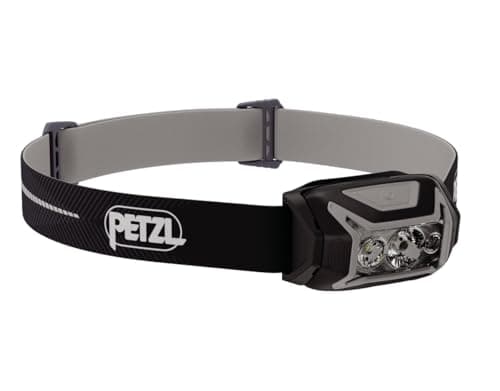 Petzl Actik CoreThe default outdoor headlamp: hybrid power, a published ANSI figure, and a beam shaped for walking rather than for a spec sheet. | Hiking and general outdoor use | 625 lm | |
| 3 | 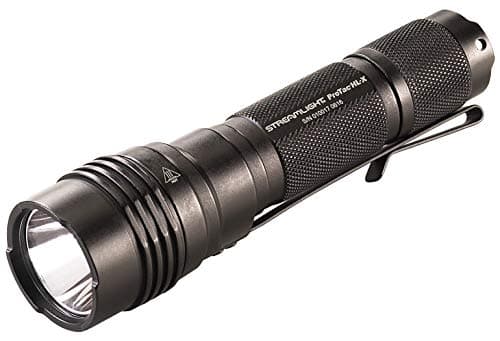 Streamlight ProTac HL-X1,300 lumens, 35,000 candela, 374 m, 1.5 hours, IP68, on either a rechargeable pack or two CR123A cells. Every figure published per mode. | Duty use, and the best-documented light on this site | 1,300 lm |
We earn a commission if you buy through the links on this page, at no extra cost to you. It does not change what we recommend or the order they appear in. Full disclosure. Prices checked October 16, 2026.
The honest answer to this question is uncomfortable for the industry: for most of what people do with a flashlight, somewhere between 50 and 300 lumens is enough. The market sells 2,000 and up because it is easy to make and easy to compare.
Below is the arithmetic behind that claim, rather than a list of numbers somebody picked.
Starting from what your eyes need
| Situation | Lux |
|---|---|
| Full moon on a clear night | 0.25 |
| Twilight | 10 |
| Corridor lighting | 50-100 |
| Living room | 100-200 |
| Office desk | 300-500 |
| Detailed inspection work | 750-1,000 |
| Overcast daylight | 1,000-2,000 |
| Direct sunlight | 32,000-100,000 |
Two things jump out. Comfortable indoor light is about 100 to 200 lux, which is a tiny fraction of daylight — human vision is extraordinarily adaptable. And the 0.25 lux at the top is the ANSI beam-distance threshold, which puts that specification in perspective.
Turning lux into lumens
The task-by-task chart
| Task | Distance | Lumens | Notes |
|---|---|---|---|
| Finding a keyhole | 0.3 m | 5-20 | A keychain light on low |
| Reading a map or a label | 0.4 m | 20-50 | More than this is glare off paper |
| Working in a panel or engine bay | 0.5 m | 300-700 | Diffused, not a hotspot |
| Walking a footpath | 5-15 m | 50-150 | Most people use far more than they need |
| Walking rough trail | 10-25 m | 100-250 | Beam shape matters more than output |
| Trail running | 15-40 m | 300-500 | Sustained, not peak |
| Lighting a campsite | 5 m radius | 300-600 | From a lantern, not a beam |
| Lighting a room in an outage | 15 m^2 | 400-600 | Area light, 360 degrees |
| Searching a field | 100 m+ | Candela decides, not lumens | Look for 25,000 cd and up |
| Identifying something at 200 m | 200 m | Candela decides, not lumens | Around 100,000 cd |
Why the peak figure is not the figure
Every high-output light in a small body steps down within one to two minutes to protect the emitter and keep the body touchable. So a 2,000-lumen pocket light is a 2,000-lumen light for ninety seconds and a 500-lumen light thereafter.
What you should be comparing is sustained output, which the good makers publish per mode. Flashlight runtime covers how the measurement works and why the ANSI figure starts 30 seconds in.
Where high output genuinely helps
- Scanning. A brief high-output burst to see what is out there, then back to a usable level. This is the real use case for turbo.
- Bad air. Fog, dust and snow scatter light badly, and more output partially compensates. A warmer color temperature helps more.
- Large areas. Lighting a whole room or yard needs total output, which is genuinely a lumens problem.
- Photography and video. More light means shorter exposures.
Where it actively hurts
Indoors, and at close range generally. A 1,000-lumen beam on a pale wall at two meters is dazzling, contracts your pupils, and makes everything outside the beam harder to see than it would have been with a dimmer light.
It also destroys your dark adaptation, which takes twenty to thirty minutes to rebuild. That is why a good low mode — 5 to 30 lumens — is a more valuable feature than a good turbo, and why red modes exist.
The picks, in full
image
Top pick · The best-documented small EDC light here
Streamlight MacroStream USB
500 lumens, 2,000 candela, 90 m and two hours on high — every figure published per mode by the maker. That is the reason it leads.
2,000 candela and 90 m are consistent with each other, which is a better sign than it sounds. The FL1 beam distance is the square root of candela divided by 0.25 lux: the square root of 2,000 over 0.25 is 89.4 m. Streamlight's published figures check out to within a meter.
Two hours on high for 500 lumens implies roughly 2.5 watt-hours of usable energy, which is about right for a light this size. Nothing here is being oversold.
62 grams is pocketable in a way that a 21700 light is not, and that is the trade you are making against a bigger cell.
What works
- Every headline figure published per mode, and internally consistent
- 62 g with a real clip
- The arithmetic between its candela and its distance actually reconciles
What does not
- IPX4, so splash-resistant and no more
- Built-in cell rather than a replaceable 18650
- 500 lumens is modest against the 1,600-lumen headlines nearby
Skip this ifyou want reach. 2,000 candela is a close-range beam and no setting will change that.
Published specification
- Output
- 500 lmHigh. Low is 50 lm.Streamlight MacroStream USB — manufacturer spec page (retrieved September 1, 2026)
- Peak intensity
- 2,000 cdHigh. 220 cd on low.Streamlight MacroStream USB — manufacturer spec page (retrieved October 15, 2026)
- Beam distance
- 90 mHigh. 30 m on low.Streamlight MacroStream USB — manufacturer spec page (retrieved September 1, 2026)
- Runtime
- 2 h on high, 8 h on lowStreamlight MacroStream USB — manufacturer spec page (retrieved September 1, 2026)
- Battery
- Built-in Li-ion, charges in 4 hStreamlight MacroStream USB — manufacturer spec page (retrieved September 1, 2026)
- Weight
- 62.4 g (2.2 oz)Streamlight MacroStream USB — manufacturer spec page (retrieved September 1, 2026)
- Ingress
- IPX41 m impact resistance testedStreamlight MacroStream USB — manufacturer spec page (retrieved September 1, 2026)
#ad · how this is funded · price as of October 16, 2026
Pick 2 · Hiking and general outdoor use
Petzl Actik Core
The default outdoor headlamp: hybrid power, a published ANSI figure, and a beam shaped for walking rather than for a spec sheet.
625 lumens and 115 meters is a walking beam, not a searching beam. The FL1 definition puts illuminance at 115 m down to 0.25 lux, which is enough to tell that something is there and not enough to identify it. In practice you run the middle level and see 30 to 60 m of usable trail.
4.5 watt-hours matters more than the lumen figure. A lamp drawing a regulated 2 W empties that pack in a bit over two hours. The 400-hour number Petzl quotes is a reserve-mode visibility claim, not 400 hours of light you can walk by.
The hybrid design is the real feature. When the CORE pack dies three hours into a night descent, three AAA cells from a gas station bring the lamp back. Very little else at this price does that.
What works
- Runs on the rechargeable pack or three AAA cells, which is a genuine field fix rather than a marketing bullet
- Petzl publishes the full ANSI FL 1 table, including a distance for every mode
- 88 g is light enough that you stop noticing it
What does not
- IPX4 only: rain is fine, a dropped-in-the-creek recovery is not
- No published peak candela, so the 115 m claim cannot be checked against the intensity
- The maker's own site and its own Amazon listing disagree about peak output
Skip this ifyou need reach. 115 m is short by 2026 standards, and the 625-lumen headline does not change the shape of the beam.
Published specification
- Output
- 625 lmANSI/PLATO FL 1. Petzl's US product page states 625; the brand's own Amazon listing says 650. We use the maker's own site.Petzl Actik Core — manufacturer spec page (retrieved September 1, 2026)
- Peak intensity
- not published(Petzl publishes distance, not peak intensity)
- Beam distance
- 115 mMaximum, on the CORE rechargeable batteryPetzl Actik Core — manufacturer spec page (retrieved September 1, 2026)
- Runtime
- 2 h at 625 lm / 7 h at 100 lm / 100 h at 7 lm, on the CORE packPetzl publishes a full per-mode table for both power sources. On 3 x AAA the same levels run 2 h / 10 h / 100 h, with peak output capped at 450 lm. Its separate strobe figure, visible at 700 m for 400 h, is a be-seen claim and not a working runtime.Petzl Actik Core — manufacturer spec page (retrieved September 19, 2026)
- Battery
- CORE 1250 mAh / 3.6 V / 4.5 Wh, or 3 x AAAPetzl Actik Core — manufacturer spec page (retrieved September 1, 2026)
- Ingress
- IPX4Weather resistant. Not immersion rated.Petzl Actik Core — manufacturer spec page (retrieved September 1, 2026)
$87.95 · 6% off
#ad · how this is funded · price as of October 16, 2026
Pick 3 · Duty use, and the best-documented light on this site
Streamlight ProTac HL-X
1,300 lumens, 35,000 candela, 374 m, 1.5 hours, IP68, on either a rechargeable pack or two CR123A cells. Every figure published per mode.
35,000 candela and 374 m reconcile exactly: the square root of 35,000 divided by 0.25 is 374.2 m. Streamlight's numbers are internally consistent across all three modes, which is the strongest signal of a maker publishing real measurements rather than marketing figures.
1.5 hours at 1,300 lumens implies roughly 6 to 7 watt-hours of usable energy — consistent with a single 18650-class pack and with the CR123A alternative.
IP68 with 2 m impact resistance is the toughest rating in this roundup, and the reason this light shows up on so many duty belts.
What works
- Full ANSI FL1 table published per mode, and it reconciles
- Runs on a rechargeable pack or on shelf-stable CR123A lithium cells
- IP68 and 2 m impact rating
What does not
- The programming interface takes reading the manual to understand
- 162 to 176 g is heavy for pocket carry
- CR123A cells are expensive if you use it hard
Skip this ifyou want a pocket light. It is a duty-belt tool and the weight and length are built for a holster.
Published specification
- Output
- 1,300 lmHigh. Medium 420 lm, low 70 lm.Streamlight ProTac HL-X — manufacturer spec page (retrieved September 1, 2026)
- Peak intensity
- 35,000 cdHigh. 11,000 cd medium, 1,800 cd low.Streamlight ProTac HL-X — manufacturer spec page (retrieved September 1, 2026)
- Beam distance
- 374 mHigh. 210 m medium, 85 m low.Streamlight ProTac HL-X — manufacturer spec page (retrieved September 1, 2026)
- Runtime
- 1.5 h high / 3.75 h medium / 25 h lowOn the SL-B26 pack. On CR123A: 1.25 h / 3 h / 20 h.Streamlight ProTac HL-X — manufacturer spec page (retrieved September 1, 2026)
- Battery
- SL-B26 rechargeable Li-ion pack, or 2 x CR123A lithiumStreamlight ProTac HL-X — manufacturer spec page (retrieved September 1, 2026)
- Weight
- 162 g with CR123A, 176 g with the packStreamlight ProTac HL-X — manufacturer spec page (retrieved September 1, 2026)
- Ingress
- IP68Dust tight, waterproof to 2 m; 2 m impact resistance testedStreamlight ProTac HL-X — manufacturer spec page (retrieved September 1, 2026)
#ad · how this is funded · price as of October 16, 2026
Questions people actually ask
How many lumens is a good flashlight?
For general use, 500 to 1,000 peak with a usable low mode. You will spend most of your time between 50 and 200 lumens, and the low mode is the one a good design gets right.
How many lumens do I need for walking at night?
50 to 150 on a footpath and 100 to 250 on rough trail. Most people use considerably more than they need, which costs them battery and dark adaptation for no gain.
Is 1,000 lumens too bright for indoor use?
At close range, yes. A 1,000-lumen beam on a pale wall at two meters is dazzling, contracts your pupils, and makes everything outside the beam harder to see. Indoors you want 50 to 200 lumens.
How many lumens do I need to see 100 meters?
That is a candela question rather than a lumens one. To get a usable 5 lux at 100 meters you need 50,000 candela, which a good reflector achieves from around 1,000 lumens and a bad one does not achieve from 3,000.
Why is my 2,000-lumen flashlight not much brighter than my 500-lumen one?
Two reasons. Perceived brightness is roughly logarithmic, so four times the light looks about twice as bright. And the 2,000-lumen light steps down within a couple of minutes, so most of the time it is not putting out 2,000 lumens.
What is the most useful mode on a flashlight?
The low one. A good 5-to-30-lumen mode preserves dark adaptation, runs for days on a small cell, and covers most close-range tasks. It is the mode people use most and the one makers advertise least.
Sources
Every figure on this page came from one of the documents below, read on the date shown. We do not cite other review sites, forum posts or video reviews as sources of fact.
Read next
A flashlight lumens reference, anchored to real lights
What each lumen level actually means, anchored to lights with published figures — and why the same output can reach 221 m or 1,000 m.
Flashlight specifications, explained
The reference section: lumens, candela, runtime, CRI, IP ratings and cell formats, all brand-neutral.
Lumens vs candela
The distinction that decides reach, with the conversion formula and a table of real published figures.
Flashlight runtime, computed
How runtime is defined, why thermal step-down happens, and the arithmetic to compute a real figure yourself.
How to choose a headlamp
A decision guide built on watt-hours, weight, beam distance, ingress rating and red-mode access.

What to look for when buying a flashlight
A buyer's checklist in priority order: cell, sustained output, candela, interface, ingress and CRI.
What a headlamp red light mode is actually for
The physiology behind red headlamp modes, and how to choose a lamp whose red is reachable in one click.
Best flashlights for beginners
A first flashlight, ranked for simplicity, ordinary batteries and published specifications rather than for the lumen number on the box.
Found a number that is wrong? Tell us and we will fix it and say so. Our methodology shows every formula on this page.