Learn
18650 vs 21700, and every other cell format
The cell decides the light. Here is what each format holds, what the numbers mean, and which one your light actually needs.
By Scooter M. · Published · Updated
| # | Product | Best for | Output | Price |
|---|---|---|---|---|
| 1 | 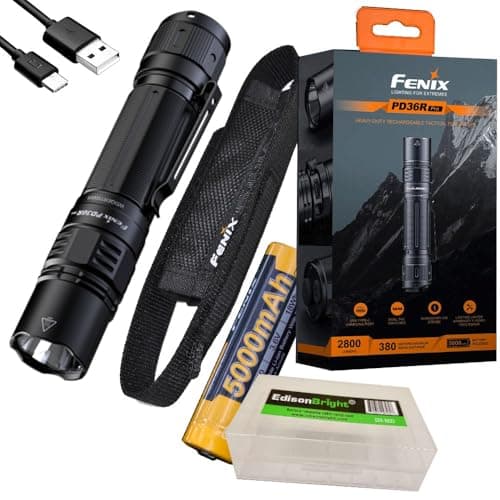 Fenix PD36R ProTop pick2,800 lumens from a 21700 cell holding 18 watt-hours, at 169 grams. The biggest energy store in the tactical set. | The most output and energy in a tactical body | 2,800 lm | |
| 2 | 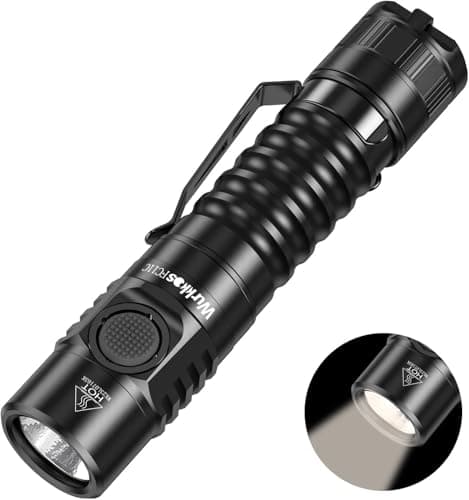 Wurkkos FC11C1,200 lumens at a stated CRI of 90 for a budget price. Color rendering is the spec that changes how a light feels, and this is the cheapest way to get it. | High color accuracy for the least money | 1,200 lm | |
| 3 | 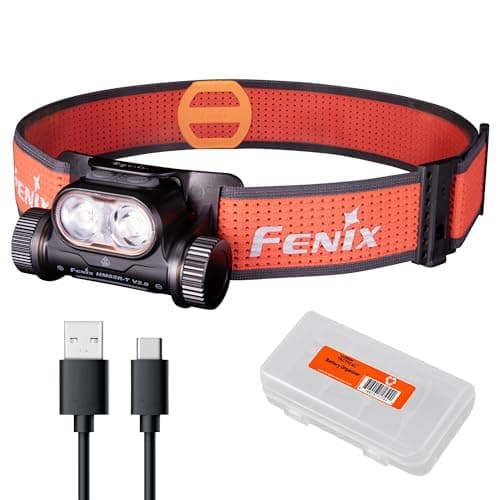 Fenix HM65R-T V2.01,600 lumens and 170 m from a magnesium body running a standard 18650, at 140 g. The removable cell is what separates it from the sealed-pack lamps. | Long nights where you want reach and a spare cell | 1,600 lm |
We earn a commission if you buy through the links on this page, at no extra cost to you. It does not change what we recommend or the order they appear in. Full disclosure. Prices checked October 16, 2026.
Cell format names are dimensions. An 18650 is 18 millimeters across and 65.0 millimeters long. A 21700 is 21 millimeters across and 70.0 long. A 16340 is 16 by 34. There is no mystery in the naming and knowing it makes the whole category legible.
What each format holds
| Format | Dimensions | Typical capacity | Watt-hours | Typical use |
|---|---|---|---|---|
| 10440 | 10 x 44 mm | 350 mAh | 1.3 | AAA-size lights, high output, very short runtime |
| 14500 | 14 x 50 mm | 800 mAh | 2.9 | AA-size lights, roughly doubles output over alkaline |
| 16340 | 16 x 34 mm | 800 mAh | 2.9 | Very compact high-output pocket lights |
| 18350 | 18 x 35 mm | 1,100 mAh | 4.0 | Short-body versions of 18650 lights |
| 18650 | 18 x 65 mm | 3,400 mAh | 12.2 | The workhorse format |
| 21700 | 21 x 70 mm | 5,000 mAh | 18.0 | The current high end |
The step from 18650 to 21700 is about 48 percent more energy for a cell 3 millimeters fatter and 5 millimeters longer. That is why the whole industry moved, and why a 21700 light with a similar body diameter to an 18650 one will simply run longer.
Capacity is not the only number
The second specification, and the one that catches people out, is the continuous discharge rating in amps. A high-output light draws serious current, and a cell that cannot supply it will either trip its own protection or sag in voltage — which shows up as a light that will not reach its rated output.
There is a direct trade between the two: high-capacity cells generally have lower current ratings, and high-drain cells generally hold less. Buy for whichever your light needs, and if it needs both, buy the cell the maker specifies.
Protected and unprotected
A protected cell has a small circuit board at the negative end providing overcharge, overdischarge and overcurrent protection. It makes the cell a couple of millimeters longer, which occasionally stops it fitting.
- Protected — the right default for almost everybody. Costs a little more, is a little longer, removes the failure modes that make lithium-ion dangerous.
- Unprotected — for lights with protection built into the driver, and for high-drain applications where the protection circuit would trip. Only if you know that is what you need.
- Button-top or flat-top — a mechanical detail, not an electrical one. Some lights need the raised positive terminal to make contact. Check before buying.
Safety, briefly and seriously
None of this is alarmism. Lithium-ion is safe when treated correctly and every one of those four failures is well documented. Cells travel in a plastic case, and old cells get recycled rather than kept as spares.
Storage
Store lithium-ion at roughly 40 to 60 percent charge, somewhere cool. A cell held at full charge in a hot place ages several times faster than one stored properly, and the loss is permanent.
This is why we recommend lithium primaries rather than rechargeables for emergency lights: a CR123A holds its charge for about a decade with no maintenance at all. See emergency flashlights.
USB-C cells
A growing number of 18650 and 21700 cells have a USB-C port built into the cell itself, so they charge outside the light. Convenient, and worth knowing the trade: the port and its circuitry take up internal volume, so a USB-C cell of the same format usually holds 5 to 15 percent less than a plain one.
Which to buy
- Buy what the light takes. Format is mechanical; you cannot substitute.
- Protected, from a known manufacturer, unless the light specifically calls for otherwise.
- Check the light's charging requirements. Fenix states that the HM65R-T charges only with its ARB-L18 series cells, which limits the swap-any-cell advantage.
- Match the current rating to the light's output. A thrower needs a high-drain cell.
- Buy two. A spare cell is the cheapest possible runtime upgrade.
The picks, in full
Top pick · The most output and energy in a tactical body
Fenix PD36R Pro
2,800 lumens from a 21700 cell holding 18 watt-hours, at 169 grams. The biggest energy store in the tactical set.
A 5,000 mAh 21700 at 3.6 V is 18.0 watt-hours — nearly three times what the ProTac HL-X carries. That is the case for the 21700 format in one number.
380 m of reach on 2,800 lumens works back to about 36,100 candela, almost identical to the ProTac's 35,000 from 1,300 lumens. The Fenix is spending its extra output on spill, not on distance.
169 g including the cell is only 7 g more than a ProTac on CR123A, for nearly triple the energy. That is what four years of cell development buys.
What works
- 18 Wh of stored energy, the most in the tactical set
- 2,800 lumens with 380 m of published reach
- Standard 21700 cell, USB-C on the light
What does not
- Waterproofing stated as 2 m submersion, with no IP code to compare against
- No published candela, so the throw figure cannot be cross-checked
- 2,800 lumens will step down quickly in a body this size
Skip this ifyou need a shelf-stable light. A rechargeable cell self-discharges; for a drawer light, CR123A primaries are the right answer.
Published specification
- Peak intensity
- not published
- Beam distance
- 380 mFenix states 1,247 feet (380 m)Fenix PD36R Pro — manufacturer spec page (retrieved September 17, 2026)
- Runtime
- 3 h 30 min on Turbo / 42 h maximumTurbo is measured to 10% output under ANSI FL 1, so it includes step-down; 42 h is the lowest mode. Other modes are published as a chart imageFenix PD36R Pro — manufacturer spec page (retrieved September 1, 2026)
- Battery
- 5,000 mAh 21700 Li-ion (included), USB-CFenix PD36R Pro — manufacturer spec page (retrieved September 1, 2026)
- Weight
- 169 g (5.96 oz)Including batteryFenix PD36R Pro — manufacturer spec page (retrieved September 1, 2026)
- Ingress
- Waterproof underwater to 2 mFenix states this without giving an IP codeFenix PD36R Pro — manufacturer spec page (retrieved September 17, 2026)
#ad · how this is funded · price as of October 16, 2026
Pick 2 · High color accuracy for the least money
Wurkkos FC11C
1,200 lumens at a stated CRI of 90 for a budget price. Color rendering is the spec that changes how a light feels, and this is the cheapest way to get it.
CRI 90 versus the CRI 70 typical of a cheap cool-white emitter is the single most noticeable upgrade in a flashlight, and it is nothing to do with brightness. Reds stop looking brown. Wire insulation colors become distinguishable.
The cost of high CRI is output: the same emitter family loses roughly 10 to 20 percent of its lumens for the better phosphor. A 1,200-lumen high-CRI light is doing well.
18650 is the right cell format here — replaceable, standard, and enough energy to hold a useful level.
What works
- CRI 90 at a price where CRI is usually not mentioned at all
- Standard 18650, replaceable anywhere
- USB-C on the light itself
What does not
- No sourced runtime, candela, beam distance or IP rating
- High CRI costs output; treat the 1,200 figure as generous
- A budget brand with a thin published spec table
Skip this ifyou need maximum reach per dollar. High-CRI emitters throw less than the cool-white ones they replace.
Published specification
- Peak intensity
- not published
- Beam distance
- not published
- Runtime
- not published
- Battery
- 18650, USB-C rechargeableWurkkos FC11C — the brand's own listing on Amazon.com (retrieved September 1, 2026)
- Weight
- not published
- Ingress
- not published
- CRI
- 90Stated as '90 High CRI' on the listingWurkkos FC11C — the brand's own listing on Amazon.com (retrieved September 1, 2026)
$35.99 · 20% off
#ad · how this is funded · price as of October 16, 2026
Pick 3 · Long nights where you want reach and a spare cell
Fenix HM65R-T V2.0
1,600 lumens and 170 m from a magnesium body running a standard 18650, at 140 g. The removable cell is what separates it from the sealed-pack lamps.
A 3,400 mAh 18650 at a nominal 3.6 V is 12.2 watt-hours. That is more energy than a Petzl NAO RL carries, in a lamp 5 g lighter, because a bare 18650 is a more efficient package than a molded pack.
It is also the only headlamp in this set whose battery you can replace at a checkpoint for three dollars, because 18650 is a standard cell and not a proprietary brick.
IP68 rather than IPX4 is the second real difference. This one survives being dropped in water; most of the running lamps here do not.
What works
- Standard 18650 cell: swappable, cheap, and available everywhere
- IP68 and 2 m impact rating, the toughest specification in this roundup
- Dual emitters, one white and one warm white, so it works for close tasks as well as reach
What does not
- 140 g is at the heavy end for a running lamp
- Charging works only with Fenix ARB-L18 series cells, which limits the swap-any-18650 advantage
- No published candela figure
Skip this ifyou count grams. A Swift LT does the camp job at 43 g; you are carrying 97 g extra for reach and a removable cell.
Published specification
- Peak intensity
- not published(Fenix publishes distance, not peak intensity)
- Runtime
- 300 h maximumLowest mode. The turbo figure is far shorter and Fenix publishes it per-mode.Fenix HM65R-T V2.0 — manufacturer spec page (retrieved September 1, 2026)
- Battery
- 3,400 mAh 18650 Li-ion (included), or 2 x CR123AFenix HM65R-T V2.0 — manufacturer spec page (retrieved September 1, 2026)
- Weight
- 140 g (4.94 oz)Including battery and headbandFenix HM65R-T V2.0 — manufacturer spec page (retrieved September 1, 2026)
- Ingress
- IP68Dust tight and immersion rated; 2 m impact resistanceFenix HM65R-T V2.0 — manufacturer spec page (retrieved September 1, 2026)
#ad · how this is funded · price as of October 16, 2026
Questions people actually ask
What is the difference between 18650 and 21700?
Dimensions and capacity. An 18650 is 18 by 65 millimeters and typically holds 3,400 mAh, about 12.2 watt-hours. A 21700 is 21 by 70 and typically holds 5,000 mAh, about 18 watt-hours — roughly 48 percent more energy for a slightly larger cell.
What do the numbers in a battery name mean?
Dimensions in millimeters. An 18650 is 18 mm in diameter and 65.0 mm long; a 21700 is 21 by 70.0; a 16340 is 16 by 34. The last digit indicates the cell is cylindrical.
Should I use protected or unprotected lithium cells?
Protected, for almost everybody. The small circuit at the negative end provides overcharge, overdischarge and overcurrent protection and makes the cell a couple of millimeters longer. Use unprotected only when the light specifically requires it.
Can I use any 18650 in my flashlight?
Mechanically usually, electrically not always. High-output lights need cells rated for the current they draw, some lights charge only their own brand of cell, and button-top versus flat-top matters for contact in some designs.
How should I store lithium-ion cells?
At roughly 40 to 60 percent charge, somewhere cool, in a plastic case rather than loose in a pocket. A cell held at full charge in heat ages several times faster and the capacity loss is permanent.
Is it safe to charge lithium-ion cells in the cold?
No. Charging below about freezing plates metallic lithium onto the anode, which permanently reduces capacity and creates a genuine hazard. Most modern chargers refuse to try, which is the protection working rather than a fault.
Are USB-C rechargeable cells worth it?
For convenience, often. The trade is capacity: the port and its circuitry take internal volume, so a USB-C cell of the same format typically holds 5 to 15 percent less than a plain one.
Sources
Every figure on this page came from one of the documents below, read on the date shown. We do not cite other review sites, forum posts or video reviews as sources of fact.
Read next
Flying with a flashlight
FAA and TSA battery rules applied to real flashlights and headlamps, with published capacities converted to watt-hours and checked against the limits.
Flashlight specifications, explained
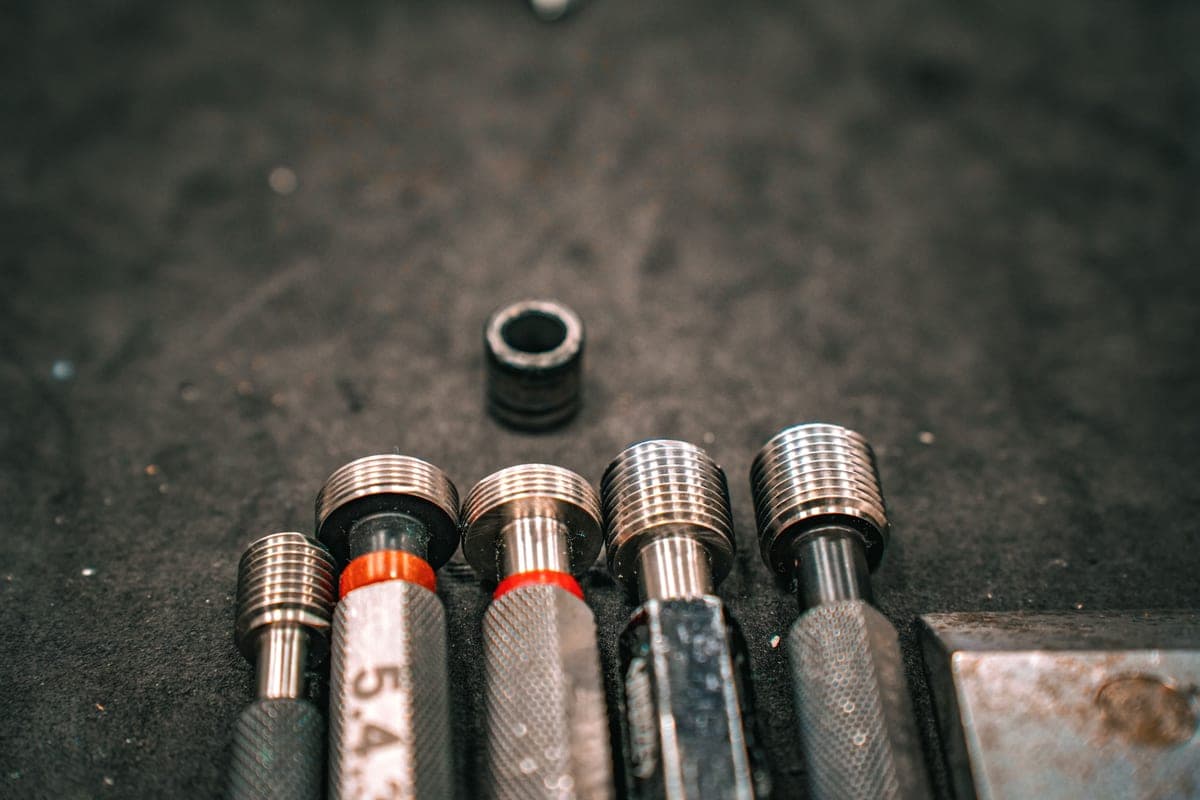
The reference section: lumens, candela, runtime, CRI, IP ratings and cell formats, all brand-neutral.
Flashlight runtime, computed
How runtime is defined, why thermal step-down happens, and the arithmetic to compute a real figure yourself.
Best rechargeable flashlights
Rechargeable flashlights sorted by cell strategy, with the capacity arithmetic and the lifespan trade set out.
Best rechargeable headlamps
Rechargeable headlamps sorted by cell strategy: sealed, swappable standard cell, or hybrid.

Best flashlight throwers
Throwers ranked on computed candela and published beam distance, with the optics explained.
Found a number that is wrong? Tell us and we will fix it and say so. Our methodology shows every formula on this page.