EDC Flashlights
Best EDC flashlights, ranked on what they actually hold
A pocket light is defined by the cell inside it. Everything else — the lumen headline, the mode count, the finish — is downstream of that one decision.
By Scooter M. · Published · Updated
| # | Product | Best for | Output | Price |
|---|---|---|---|---|
| 1 | No image Streamlight MacroStream USBTop pick500 lumens, 2,000 candela, 90 m and two hours on high — every figure published per mode by the maker. That is the reason it leads. | The best-documented small EDC light here | 500 lm | Check price#ad |
| 2 | 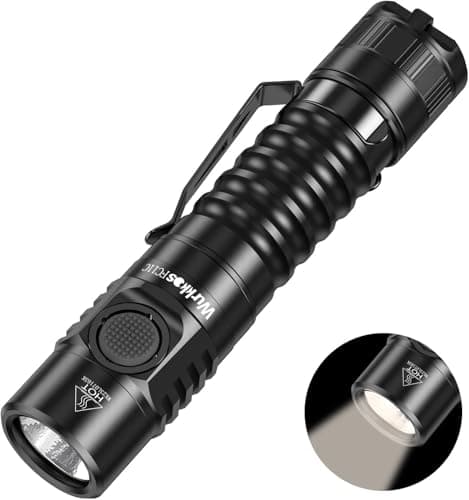 Wurkkos FC11C1,200 lumens at a stated CRI of 90 for a budget price. Color rendering is the spec that changes how a light feels, and this is the cheapest way to get it. | High color accuracy for the least money | 1,200 lm | |
| 3 | 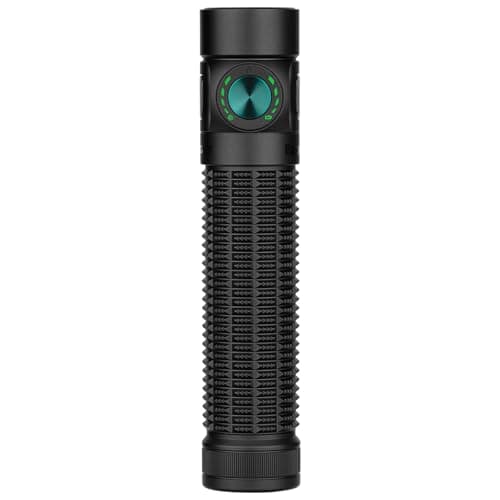 Olight Baton 4 Pro1,600 lumens from something the size of a lipstick tube. The output is real and the runtime at that output is not the point. | The most output in a pocket-sized body | 1,600 lm | |
| 4 | 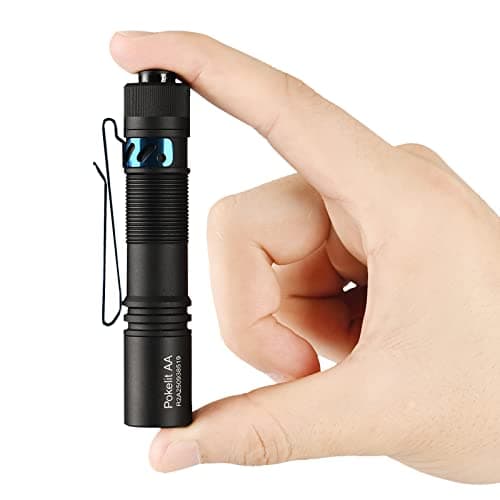 Acebeam Pokelit AA (high CRI)550 lumens at a stated 90-plus CRI, IP68, on a single AA. The combination of color accuracy and a standard cell is rare. | High CRI on a AA cell | 550 lm | |
| 5 | 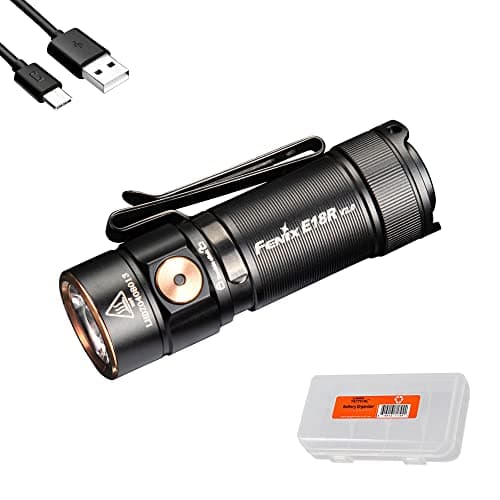 Fenix E18R V2.01,200 lumens from a light barely longer than its own cell, USB-C rechargeable, with a proper tail switch. | Maximum output per cubic inch with a tail switch | 1,200 lm | |
| 6 | 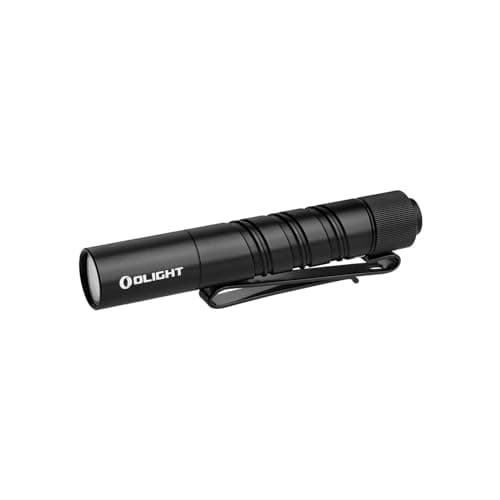 Olight i3T 2 EOS200 lumens, 62 m of stated throw, IPX8, on a single AAA cell. The one to buy if you want no charging routine at all. | A AAA light that lives on a keyring and never needs thinking about | 200 lm | |
| 7 | 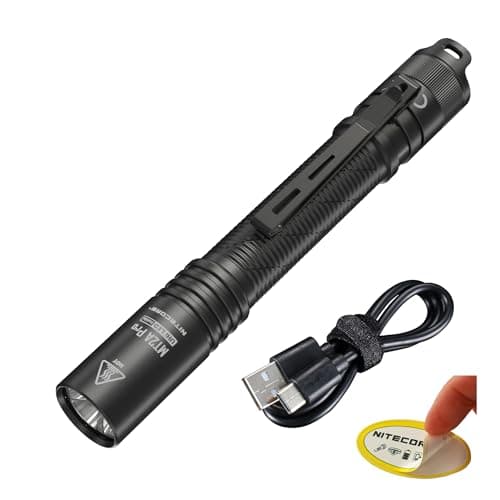 Nitecore MT2A Pro1,000 lumens and 255 m of stated reach on AA cells, with USB-C charging. Dual power done properly. | AA cells with USB-C and real reach | 1,000 lm |
We earn a commission if you buy through the links on this page, at no extra cost to you. It does not change what we recommend or the order they appear in. Full disclosure. Prices checked October 16, 2026.

Every-day-carry flashlights are sold on peak lumens, which is the specification least connected to how the light performs. A 1,600-lumen pocket light holds that output for roughly ninety seconds before thermal step-down, and then it is a 400-lumen light with a warm body. The cell inside decides everything that happens after that.
So this ranking starts from the cell, works out what it holds in watt-hours, and only then looks at output and beam shape.
How we picked
Published specification completeness first, then stored energy, then whether the beam shape and color rendering match a pocket light's actual job. Every figure links to its source. We have carried none of these lights and the methodology page explains what we do instead.
The cell decides the light
| Cell | Nominal | Watt-hours | What it buys you |
|---|---|---|---|
| 1 x AAA alkaline | 1.5 V | 1.3 | Hours at 30 lm; minutes at 200 |
| 1 x AA alkaline | 1.5 V | 1.9 | A genuinely long low-mode run |
| 2 x AA alkaline | 3.0 V | 3.9 | More energy than most 16340 rechargeables |
| 16340 Li-ion | 3.6 V | 2.9 | High current in a very short body |
| 18650 Li-ion | 3.6 V | 12.2 | The workhorse: real runtime at real output |
| 21700 Li-ion | 3.6 V | 18.0 | Everything an 18650 does, in a fatter tube |
The important comparison in that table is the one people find surprising: two alkaline AA cells hold more energy than a 16340 lithium-ion. The lithium cell delivers it faster and recharges, which is why small high-output lights use it — but it is not more energy. 18650 versus 21700 covers the larger formats in detail.
Color rendering: the spec that changes how a light feels
A typical cheap cool-white LED has a color rendering index around 70. Reds go brown, skin looks gray, and colored wires become hard to tell apart. A high-CRI emitter at 90 or above fixes all of that, at a cost of roughly 10 to 20 percent of the light output.
Two lights here publish a CRI figure: the Wurkkos FC11C at 90 and the Acebeam Pokelit AA at 90-plus. If you have never used a high-CRI light, it is a bigger perceptual upgrade than doubling the lumens. What CRI actually measures explains the number, and high-CRI EDC lights covers the picks.
Beam shape matters more than output at pocket size
A pocket light does two jobs: illuminating something at arm's length, and telling you what is at the end of the yard. Those need different beams, and the aperture of a pocket light is too small to do both well.
Why the MacroStream leads a list of brighter lights
Streamlight publishes output, candela, beam distance, runtime, weight and an IP rating for the MacroStream, per mode — and the figures reconcile with each other. Square-root 2,000 divided by 0.25 gives 89.4 meters against a published 90. That internal consistency is the strongest available signal that a maker is publishing measurements rather than marketing.
Several brighter lights on this page publish output and nothing else. On a site that exists to check numbers, a complete and self-consistent spec sheet is worth more than 1,100 extra lumens of unverifiable burst.
Switches and interfaces
- Tail switch — momentary on with your thumb without changing grip. Best for a light you use quickly and often.
- Side switch — easier one-handed mode changes, harder to find in the dark.
- Dual switch — one for power, one for mode. The best of both, and why the ThruNite Archer 2A earns a place despite modest output.
- Twist — cheapest and most reliable, but needs two hands. Fine on a keychain light.
What we would not buy
Anything advertising four-figure or five-figure lumens with no published runtime, no candela and no IP rating. The marketplace is full of them and the numbers are not measurements. If a maker cannot tell you how long the light holds its output, assume the answer is embarrassing.
We would also avoid buying a sealed-cell light as a long-term carry. A pocket light gets used daily, and lithium-ion cells lose meaningful capacity after a few hundred cycles. A light taking a standard 18650 or a AA is still a light in five years.
Where to go from here
- On a budget — best EDC flashlights under $50.
- A step up — best EDC flashlights under $100.
- On a keyring — best keychain flashlights.
- Color accuracy — best high-CRI flashlights.
- Charging strategy — best rechargeable flashlights.
- How to actually carry one — pocket carry, clips and holsters.
- Reach, in a pocket — best compact thrower flashlights, ranked on candela per lumen rather than output.
- Your first flashlight — best flashlights for beginners, which is about the four mistakes people make before it is about the picks.
- Reviewed in full — the Streamlight MacroStream, the best-documented small light here, the Mini Maglite LED, which concentrates 48 candela per lumen from 127, and the Wurkkos FC11C, the cheapest route to high CRI.
The picks, in full
image
Top pick · The best-documented small EDC light here
Streamlight MacroStream USB
500 lumens, 2,000 candela, 90 m and two hours on high — every figure published per mode by the maker. That is the reason it leads.
2,000 candela and 90 m are consistent with each other, which is a better sign than it sounds. The FL1 beam distance is the square root of candela divided by 0.25 lux: the square root of 2,000 over 0.25 is 89.4 m. Streamlight's published figures check out to within a meter.
Two hours on high for 500 lumens implies roughly 2.5 watt-hours of usable energy, which is about right for a light this size. Nothing here is being oversold.
62 grams is pocketable in a way that a 21700 light is not, and that is the trade you are making against a bigger cell.
What works
- Every headline figure published per mode, and internally consistent
- 62 g with a real clip
- The arithmetic between its candela and its distance actually reconciles
What does not
- IPX4, so splash-resistant and no more
- Built-in cell rather than a replaceable 18650
- 500 lumens is modest against the 1,600-lumen headlines nearby
Skip this ifyou want reach. 2,000 candela is a close-range beam and no setting will change that.
Published specification
- Output
- 500 lmHigh. Low is 50 lm.Streamlight MacroStream USB — manufacturer spec page (retrieved September 1, 2026)
- Peak intensity
- 2,000 cdHigh. 220 cd on low.Streamlight MacroStream USB — manufacturer spec page (retrieved October 15, 2026)
- Beam distance
- 90 mHigh. 30 m on low.Streamlight MacroStream USB — manufacturer spec page (retrieved September 1, 2026)
- Runtime
- 2 h on high, 8 h on lowStreamlight MacroStream USB — manufacturer spec page (retrieved September 1, 2026)
- Battery
- Built-in Li-ion, charges in 4 hStreamlight MacroStream USB — manufacturer spec page (retrieved September 1, 2026)
- Weight
- 62.4 g (2.2 oz)Streamlight MacroStream USB — manufacturer spec page (retrieved September 1, 2026)
- Ingress
- IPX41 m impact resistance testedStreamlight MacroStream USB — manufacturer spec page (retrieved September 1, 2026)
#ad · how this is funded · price as of October 16, 2026
Pick 2 · High color accuracy for the least money
Wurkkos FC11C
1,200 lumens at a stated CRI of 90 for a budget price. Color rendering is the spec that changes how a light feels, and this is the cheapest way to get it.
CRI 90 versus the CRI 70 typical of a cheap cool-white emitter is the single most noticeable upgrade in a flashlight, and it is nothing to do with brightness. Reds stop looking brown. Wire insulation colors become distinguishable.
The cost of high CRI is output: the same emitter family loses roughly 10 to 20 percent of its lumens for the better phosphor. A 1,200-lumen high-CRI light is doing well.
18650 is the right cell format here — replaceable, standard, and enough energy to hold a useful level.
What works
- CRI 90 at a price where CRI is usually not mentioned at all
- Standard 18650, replaceable anywhere
- USB-C on the light itself
What does not
- No sourced runtime, candela, beam distance or IP rating
- High CRI costs output; treat the 1,200 figure as generous
- A budget brand with a thin published spec table
Skip this ifyou need maximum reach per dollar. High-CRI emitters throw less than the cool-white ones they replace.
Published specification
- Peak intensity
- not published
- Beam distance
- not published
- Runtime
- not published
- Battery
- 18650, USB-C rechargeableWurkkos FC11C — the brand's own listing on Amazon.com (retrieved September 1, 2026)
- Weight
- not published
- Ingress
- not published
- CRI
- 90Stated as '90 High CRI' on the listingWurkkos FC11C — the brand's own listing on Amazon.com (retrieved September 1, 2026)
$35.99 · 20% off
#ad · how this is funded · price as of October 16, 2026
Pick 3 · The most output in a pocket-sized body
Olight Baton 4 Pro
1,600 lumens from something the size of a lipstick tube. The output is real and the runtime at that output is not the point.
1,600 lumens in a body this small is a thermal problem, not an optical one. Every light in this class steps down within a minute or two, and the honest way to read the number is as a burst.
Olight's magnetic charging is the best-executed version of the idea: no port to flood, no cable to thread, and the light sits on a dock.
We could only reach the brand's retail listing, so output and charging are the only figures we assert.
What works
- The highest published output in the pocket class
- Magnetic charging with no exposed port
- Genuinely small
What does not
- No sourced runtime, candela, beam distance or IP rating
- Proprietary charger to lose
- 1,600 lumens is a burst figure in a body this size
Skip this ifyou want to know how long it holds high. Without a published step-down table, the headline is unverifiable.
Published specification
- Output
- 1,600 lmOlight Baton 4 Pro — the brand's own listing on Amazon.com (retrieved September 1, 2026)
- Peak intensity
- not published
- Beam distance
- not published
- Runtime
- not published
- Battery
- Rechargeable, magnetic chargingOlight Baton 4 Pro — the brand's own listing on Amazon.com (retrieved September 1, 2026)
- Weight
- not published
- Ingress
- not published
#ad · how this is funded · price as of October 16, 2026
Pick 4 · High CRI on a AA cell
Acebeam Pokelit AA (high CRI)
550 lumens at a stated 90-plus CRI, IP68, on a single AA. The combination of color accuracy and a standard cell is rare.
IP68 on a AA pocket light is the specification that justifies the price over a supermarket torch. Dust tight and immersion rated is a different class of object.
A single alkaline AA holds about 1.9 Wh. That is a long run at 50 lumens and a short one at 550; the 14500 lithium option roughly doubles the usable power at the cost of storage life.
CRI above 90 in a AA body is unusual. Most makers reserve the good phosphor for the 18650 lights.
What works
- 90-plus CRI with IP68 in a AA form factor
- Takes a AA or a 14500, so you choose storage life or output
- Clip and pocket profile are genuinely well designed
What does not
- No sourced runtime, candela or beam distance
- 550 lumens on an alkaline AA will not be sustained
- Costs meaningfully more than a comparable cool-white light
Skip this ifyou want maximum output for the money. You are paying for color accuracy and an ingress rating, not for lumens.
Published specification
- Output
- 550 lmAcebeam Pokelit AA — the brand's own listing on Amazon.com (retrieved September 1, 2026)
- Peak intensity
- not published
- Beam distance
- not published
- Runtime
- not published
- Battery
- 1 x AA (14500 compatible)Acebeam Pokelit AA — the brand's own listing on Amazon.com (retrieved September 1, 2026)
- Weight
- not published
$29.95 · 33% off
#ad · how this is funded · price as of October 16, 2026
Pick 5 · Maximum output per cubic inch with a tail switch
Fenix E18R V2.0
1,200 lumens from a light barely longer than its own cell, USB-C rechargeable, with a proper tail switch.
A 16340 holds about 2.9 watt-hours. At 1,200 lumens that is a few minutes before the driver steps it down, which is normal and worth understanding before you buy on the headline.
The tail switch is what separates this from the twist-and-hope keychain class: momentary on with your thumb, without changing your grip.
Very short overall length makes it disappear in a coin pocket, which is the real reason people carry it.
What works
- 1,200 lumens in a genuinely tiny body
- Tail switch with momentary operation
- USB-C on the light
What does not
- 2.9 Wh cell means turbo is measured in minutes
- No sourced runtime, candela or IP rating
- 16340 is a less common cell than 18650
Skip this ifyou need sustained light. The cell is too small to hold high output for long and nothing in the design changes that.
Published specification
- Peak intensity
- not published
- Beam distance
- not published
- Runtime
- not published
- Battery
- 16340 Li-ion, USB-C rechargeableFenix E18R V2.0 — the brand's own listing on Amazon.com (retrieved September 1, 2026)
- Weight
- not published
- Ingress
- not published
#ad · how this is funded · price as of October 16, 2026
Pick 6 · A AAA light that lives on a keyring and never needs thinking about
Olight i3T 2 EOS
200 lumens, 62 m of stated throw, IPX8, on a single AAA cell. The one to buy if you want no charging routine at all.
62 m from 200 lumens implies roughly 960 candela, working backward through the FL1 definition. That is a tight little beam for the output, which is what you want on a light this small.
IPX8 on a AAA twist light is unusual and worth the money on its own.
One alkaline AAA is about 1.3 Wh. At a modest 30 lumens that is a genuinely long night; at 200 lumens it is minutes.
What works
- IPX8 immersion rating on a keychain light
- AAA cells: no charging, no degradation, available anywhere
- Published beam distance, which most keychain lights omit
What does not
- 200 lumens is the ceiling and there is no reserve
- No published runtime
- Twist switch means two hands
Skip this ifyou want more than a few minutes at full output. A single AAA cannot hold it and no design gets around that.
Published specification
- Peak intensity
- not published
- Beam distance
- 62 mOlight i3T 2 EOS — the brand's own listing on Amazon.com (retrieved September 1, 2026)
- Runtime
- not published
- Battery
- 1 x AAAOlight i3T 2 EOS — the brand's own listing on Amazon.com (retrieved September 1, 2026)
- Weight
- not published
#ad · how this is funded · price as of October 16, 2026
Pick 7 · AA cells with USB-C and real reach
Nitecore MT2A Pro
1,000 lumens and 255 m of stated reach on AA cells, with USB-C charging. Dual power done properly.
255 m from 1,000 lumens works back to roughly 16,300 candela. That is a moderately tight beam — real reach without the tunnel vision of a dedicated thrower.
AA plus USB-C is the combination that solves the emergency case: charge it normally, and when the power has been out for three days put alkalines in it.
Nitecore lists it as waterproof with no IP number, which is exactly the sort of claim we will not carry into the spec table.
What works
- AA compatibility and USB-C charging in the same light
- 255 m of published reach
- 1,000 lumens is high for the AA class
What does not
- Waterproof claim without a rating
- No sourced runtime or candela
- AA sets the diameter, so it is a wide pocket light
Skip this ifyou want the smallest possible carry. The AA format costs you length and girth over a 16340 light.
Published specification
- Output
- 1,000 lmNitecore MT2A Pro — the brand's own listing on Amazon.com (retrieved September 1, 2026)
- Peak intensity
- not published
- Beam distance
- 255 mListed as a 279-yard beam; converted to metersNitecore MT2A Pro — the brand's own listing on Amazon.com (retrieved September 1, 2026)
- Runtime
- not published
- Battery
- AA, dual power compatible, USB-C rechargeableNitecore MT2A Pro — the brand's own listing on Amazon.com (retrieved September 1, 2026)
- Weight
- not published
- Ingress
- not published(Listed as waterproof without a rating)
#ad · how this is funded · price as of October 16, 2026
Questions people actually ask
How many lumens do I need in an EDC flashlight?
500 to 1,000 peak covers essentially everything a pocket light is asked to do, and you will spend most of your time between 50 and 200. Above 1,000 lumens in a pocket-sized body you are buying a burst that thermal step-down ends within a couple of minutes.
What is the best battery type for an EDC flashlight?
18650 if you want real runtime and a replaceable cell. AA if you want a light that is never dead for long and stores for years. 16340 if absolute size is the constraint. Two AA cells hold more energy than one 16340, which surprises most people.
Is a high-CRI flashlight worth it?
If you use a light for anything where color matters — wiring, mechanical work, first aid, looking at anything natural — yes, and the difference is more noticeable than doubling the output. The cost is roughly 10 to 20 percent of the lumens.
Why does my flashlight get dim after a minute?
Thermal step-down. The driver reduces output to protect the emitter and keep the body touchable. Every high-output light in a small body does it, and the ANSI FL 1 runtime measurement is defined from 30 seconds after switch-on precisely because of it.
Should an EDC light be rechargeable or take disposable batteries?
Rechargeable is cheaper and more convenient for daily use. Disposable-cell lights, especially those taking lithium AA or CR123A primaries, are the right answer for a light that sits unused for months. Several lights here do both.
How bright is too bright for a pocket light?
Indoors, above about 300 lumens you are creating glare rather than visibility, especially off pale walls. That is why almost every well-designed EDC light has a low mode in the 5-to-30-lumen range, and why that is the mode most people use most.
What does IPX8 mean on a flashlight?
Continuous immersion, to a depth the manufacturer specifies. IPX7 is immersion to one meter for thirty minutes; IPX4 is only splashing water. In our EDC set, the Olight i3T 2 EOS and the ThruNite Archer 2A publish IPX8, while the Streamlight MacroStream is IPX4.
Sources
Every figure on this page came from one of the documents below, read on the date shown. We do not cite other review sites, forum posts or video reviews as sources of fact.
- Streamlight MacroStream USB — manufacturer spec page (retrieved September 1, 2026)
- Streamlight PolyTac — manufacturer spec page (retrieved September 1, 2026)
- Fenix PD36R Pro — manufacturer spec page (retrieved September 1, 2026)
- ANSI/PLATO FL 1 flashlight performance standard — definitions of lumens, peak beam intensity, beam distance, runtime, impact and water resistance
- IEC 60529 — the IP (ingress protection) rating system
Read next
Best flashlights for beginners
A first flashlight, ranked for simplicity, ordinary batteries and published specifications rather than for the lumen number on the box.
Mini Maglite LED 2-Cell AA review
A specification-first review of the Mini Maglite LED 2-Cell AA: 48 candela per lumen from an adjustable-focus reflector, a full published sheet, and the four-mode switch that costs it.

Best compact thrower flashlights
Pocketable lights ranked on how tightly they concentrate each lumen, with every candela figure either published by the maker or computed from a published beam distance.
Wurkkos FC11C review
A specification-first review of the Wurkkos FC11C: why CRI 90 for under thirty dollars is remarkable, and what buying from a maker that publishes two figures really costs.
Best AA flashlights
AA and AAA flashlights ranked on published reach, CRI and ingress rating, with the arithmetic behind each and the gaps named.
The longest-running EDC flashlights, on published figures
EDC lights ranked on published runtime, with the mode each figure applies to and the stored energy behind it.
Best EDC flashlights under $50
Budget EDC picks, with a straight account of what the price band actually costs you.
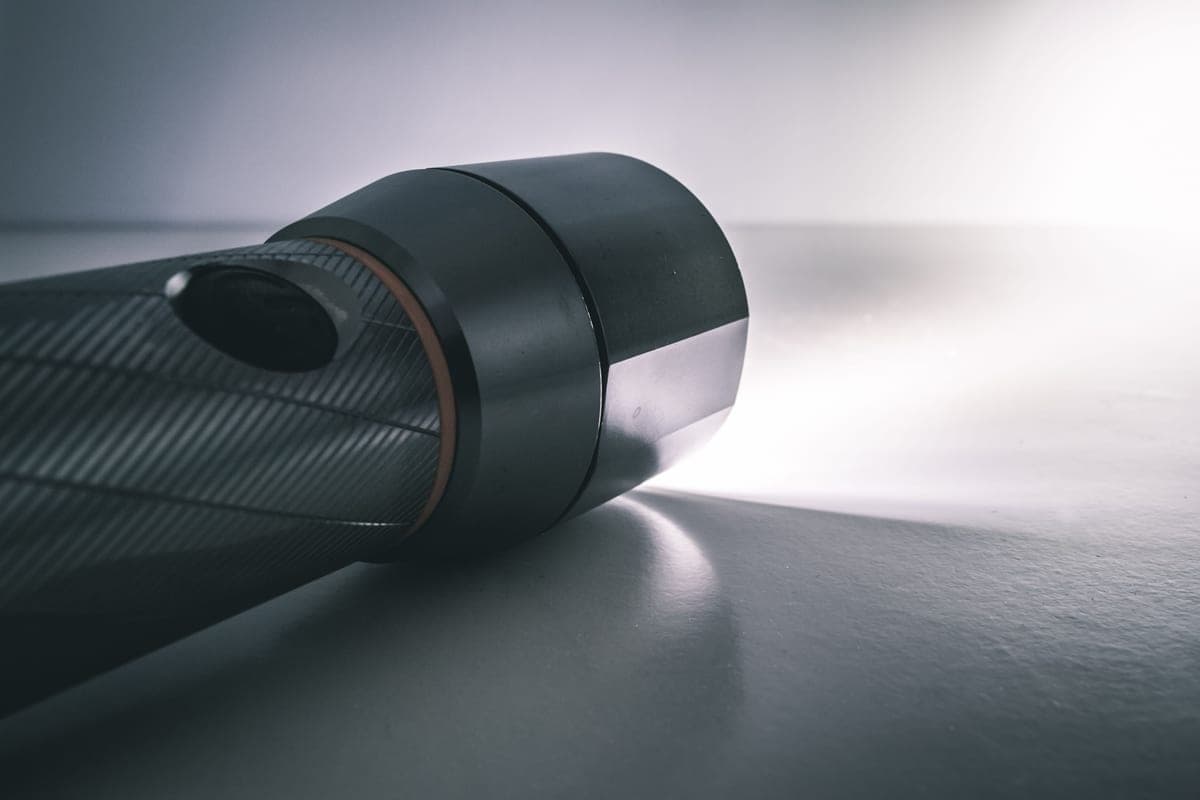
Best EDC flashlights under $100
The under-$100 EDC picks, and an honest account of what the price step above budget actually gets you.

Best high-CRI flashlights
High-CRI picks, the output they give up for the phosphor, and why the trade is usually worth making.
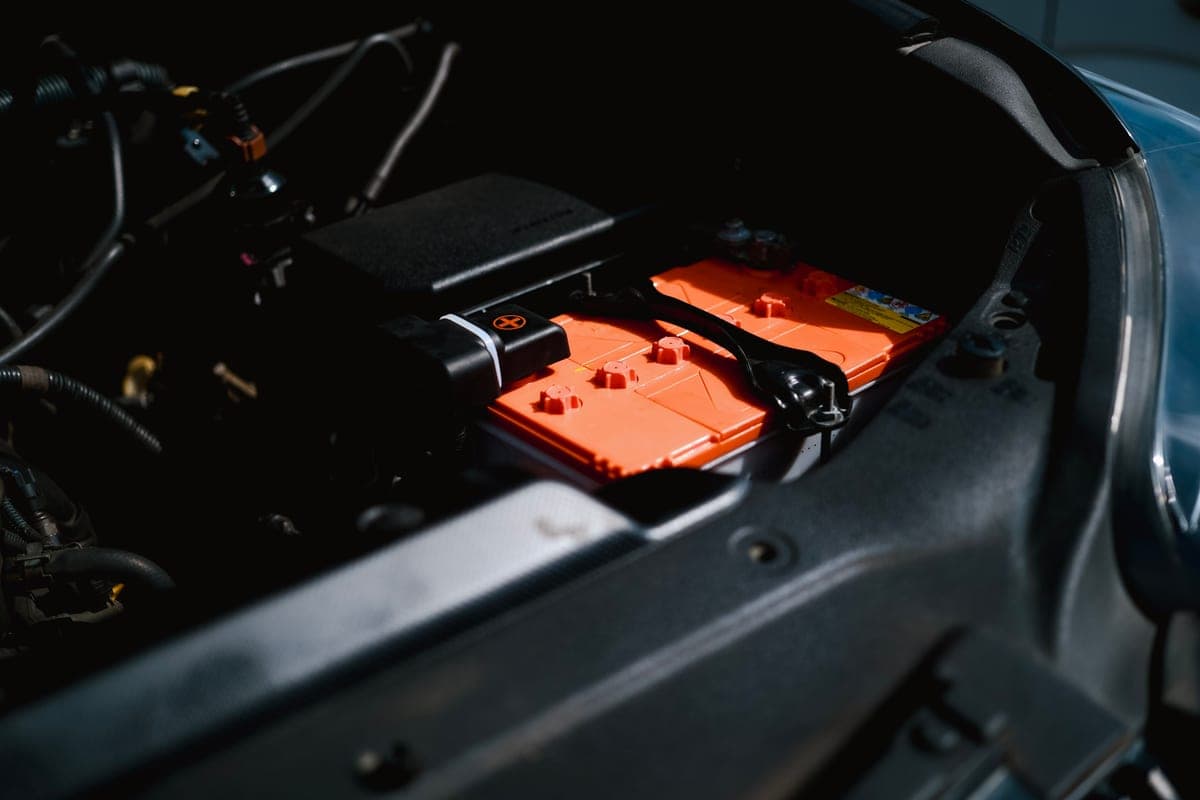
18650 vs 21700, and every other cell format
Cell formats compared on capacity, current rating and dimensions, with the safety rules that matter.

Lumens vs candela
The distinction that decides reach, with the conversion formula and a table of real published figures.
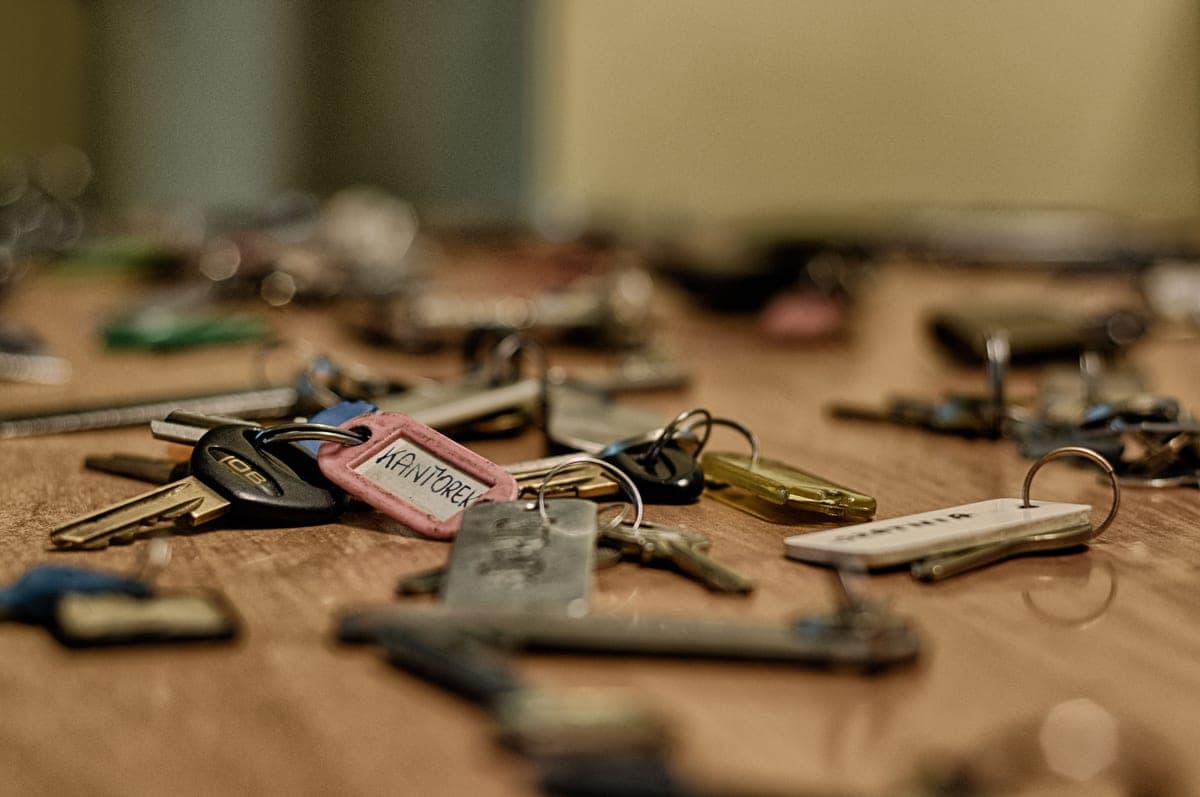
Best keychain flashlights
Keychain lights ranked on cell type, published output and how long they stay useful.
Found a number that is wrong? Tell us and we will fix it and say so. Our methodology shows every formula on this page.