EDC Flashlights
How to carry an EDC flashlight
The best light is the one you have. Carry method decides whether that is true, and it is the part nobody writes about.
By Scooter M. · Published · Updated
| # | Product | Best for | Output | Price |
|---|---|---|---|---|
| 1 | 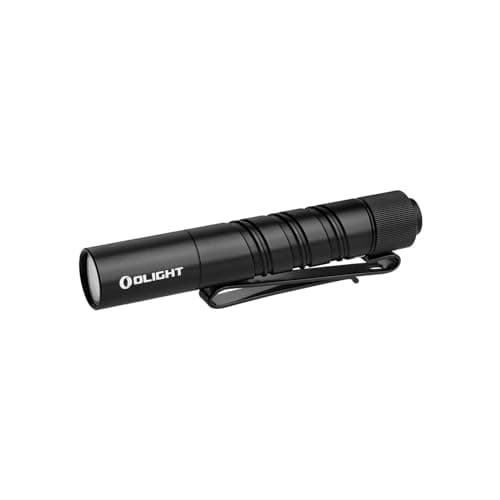 Olight i3T 2 EOSTop pick200 lumens, 62 m of stated throw, IPX8, on a single AAA cell. The one to buy if you want no charging routine at all. | A AAA light that lives on a keyring and never needs thinking about | 200 lm | |
| 2 | 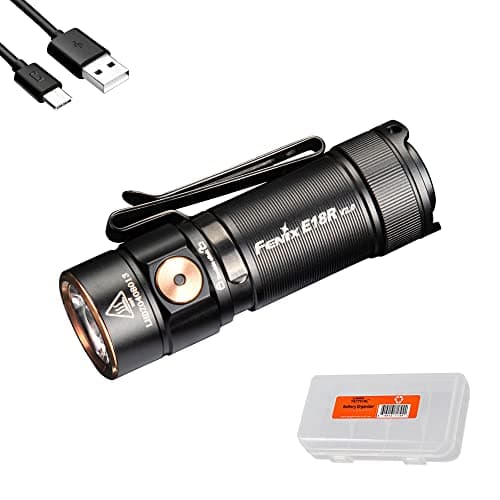 Fenix E18R V2.01,200 lumens from a light barely longer than its own cell, USB-C rechargeable, with a proper tail switch. | Maximum output per cubic inch with a tail switch | 1,200 lm | |
| 3 | No image Streamlight MacroStream USB500 lumens, 2,000 candela, 90 m and two hours on high — every figure published per mode by the maker. That is the reason it leads. | The best-documented small EDC light here | 500 lm | Check price#ad |
We earn a commission if you buy through the links on this page, at no extra cost to you. It does not change what we recommend or the order they appear in. Full disclosure. Prices checked October 15, 2026.
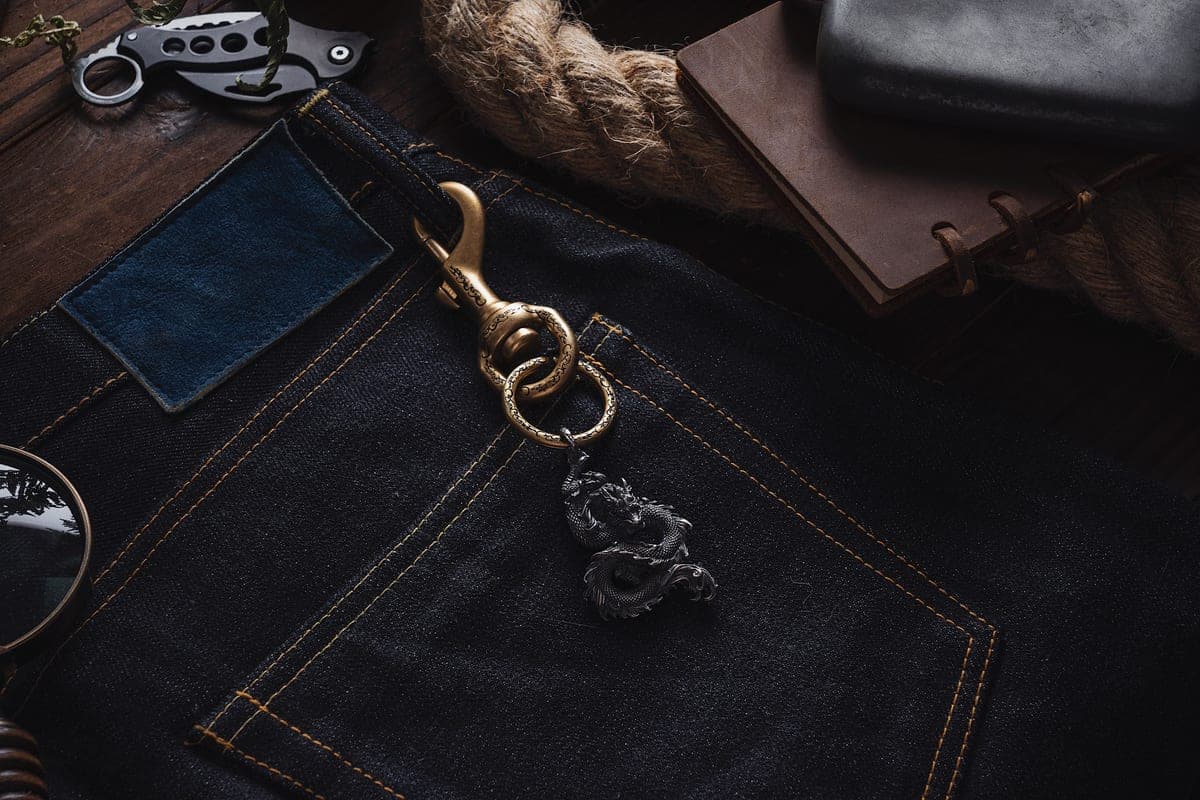
Most people who buy an EDC flashlight stop carrying it within a month. The light is not the problem; the carry method is. A light that prints through a pocket, snags on a seat belt or sits at the bottom of a bag will be left at home.
Clip orientation, and why it is the whole argument
Two conventions exist and they are not interchangeable.
- Bezel-down (head at the bottom). The tail switch sits at the pocket opening. You draw and the light is already the right way up in your hand. Most tactical lights ship this way.
- Bezel-up (head at the top). The head is exposed at the pocket opening, which allows using the light without drawing it fully. Common on keychain and small side-switch lights.
Bezel-down is the better default for a light with a tail switch, because the draw and the grip are one motion. Bezel-up is better for a light with a side switch. Reversible clips let you choose, and a light that ships with one is telling you it was designed by someone who carries a light.
Deep carry or standard
A deep-carry clip puts almost the whole light inside the pocket, leaving a small tab visible. It is less obtrusive and less likely to catch. A standard clip leaves the tail proud, which makes the draw faster and the light more likely to be noticed and to snag.
For daily civilian carry, deep carry is almost always the right answer. The half-second the standard clip saves is worth less than not catching the light on a car door for the hundredth time.
Which pocket
| Position | Suits | Drawback |
|---|---|---|
| Front trouser pocket, clipped | Lights under about 110 mm | Competes with keys and phone |
| Coin or fifth pocket | 16340-class lights only | Very limited length |
| Belt holster | Full-size 18650 and 21700 lights | Visible; not appropriate everywhere |
| Bag or pack | Anything | You will not have it when the light goes out |
| Keyring | Keychain lights | Sets a hard limit on cell size |
The bottom row is the one that catches people. A light in a bag is a light you do not have when you step out of a building into an unlit car park, which is exactly the moment it exists for.
Size is the real constraint
Roughly 110 millimeters is the length above which a light stops being comfortable in a front trouser pocket for most people. That is why the 16340 format exists despite holding a quarter of an 18650's energy, and why the Fenix E18R V2.0 gets carried while a PD36R Pro sits in a bag.
If you want both, carry both: a small light clipped and a bigger one in a bag or on a belt. It is a more honest solution than pretending a 21700 light is pocketable.
Lockout, and why you want it
A light that switches itself on in a pocket is dangerous as well as annoying. A 1,000-lumen emitter in an enclosed pocket gets genuinely hot, and it will be flat when you need it.
Two mechanisms exist: an electronic lockout, usually a double or triple click, and a mechanical lockout where you loosen the tail cap a quarter turn to break the circuit. The mechanical one is more reliable and works on any light with a threaded tail. Use one of them.
Lanyards
A lanyard is worth more than it looks on any light you use over water, at height or with gloves. It costs nothing, weighs nothing, and it is the difference between dropping a light and losing one. Most lights ship with an attachment point and no lanyard; a short loop of cord is enough.
The picks, in full
Top pick · A AAA light that lives on a keyring and never needs thinking about
Olight i3T 2 EOS
200 lumens, 62 m of stated throw, IPX8, on a single AAA cell. The one to buy if you want no charging routine at all.
62 m from 200 lumens implies roughly 960 candela, working backward through the FL1 definition. That is a tight little beam for the output, which is what you want on a light this small.
IPX8 on a AAA twist light is unusual and worth the money on its own.
One alkaline AAA is about 1.3 Wh. At a modest 30 lumens that is a genuinely long night; at 200 lumens it is minutes.
What works
- IPX8 immersion rating on a keychain light
- AAA cells: no charging, no degradation, available anywhere
- Published beam distance, which most keychain lights omit
What does not
- 200 lumens is the ceiling and there is no reserve
- No published runtime
- Twist switch means two hands
Skip this ifyou want more than a few minutes at full output. A single AAA cannot hold it and no design gets around that.
Published specification
- Peak intensity
- not published
- Beam distance
- 62 mOlight i3T 2 EOS — the brand's own listing on Amazon.com (retrieved September 1, 2026)
- Runtime
- not published
- Battery
- 1 x AAAOlight i3T 2 EOS — the brand's own listing on Amazon.com (retrieved September 1, 2026)
- Weight
- not published
#ad · how this is funded · price as of October 15, 2026
Pick 2 · Maximum output per cubic inch with a tail switch
Fenix E18R V2.0
1,200 lumens from a light barely longer than its own cell, USB-C rechargeable, with a proper tail switch.
A 16340 holds about 2.9 watt-hours. At 1,200 lumens that is a few minutes before the driver steps it down, which is normal and worth understanding before you buy on the headline.
The tail switch is what separates this from the twist-and-hope keychain class: momentary on with your thumb, without changing your grip.
Very short overall length makes it disappear in a coin pocket, which is the real reason people carry it.
What works
- 1,200 lumens in a genuinely tiny body
- Tail switch with momentary operation
- USB-C on the light
What does not
- 2.9 Wh cell means turbo is measured in minutes
- No sourced runtime, candela or IP rating
- 16340 is a less common cell than 18650
Skip this ifyou need sustained light. The cell is too small to hold high output for long and nothing in the design changes that.
Published specification
- Peak intensity
- not published
- Beam distance
- not published
- Runtime
- not published
- Battery
- 16340 Li-ion, USB-C rechargeableFenix E18R V2.0 — the brand's own listing on Amazon.com (retrieved September 1, 2026)
- Weight
- not published
- Ingress
- not published
#ad · how this is funded · price as of October 15, 2026
image
Pick 3 · The best-documented small EDC light here
Streamlight MacroStream USB
500 lumens, 2,000 candela, 90 m and two hours on high — every figure published per mode by the maker. That is the reason it leads.
2,000 candela and 90 m are consistent with each other, which is a better sign than it sounds. The FL1 beam distance is the square root of candela divided by 0.25 lux: the square root of 2,000 over 0.25 is 89.4 m. Streamlight's published figures check out to within a meter.
Two hours on high for 500 lumens implies roughly 2.5 watt-hours of usable energy, which is about right for a light this size. Nothing here is being oversold.
62 grams is pocketable in a way that a 21700 light is not, and that is the trade you are making against a bigger cell.
What works
- Every headline figure published per mode, and internally consistent
- 62 g with a real clip
- The arithmetic between its candela and its distance actually reconciles
What does not
- IPX4, so splash-resistant and no more
- Built-in cell rather than a replaceable 18650
- 500 lumens is modest against the 1,600-lumen headlines nearby
Skip this ifyou want reach. 2,000 candela is a close-range beam and no setting will change that.
Published specification
- Output
- 500 lmHigh. Low is 50 lm.Streamlight MacroStream USB — manufacturer spec page (retrieved September 1, 2026)
- Peak intensity
- 2,000 cdHigh. 220 cd on low.Streamlight MacroStream USB — manufacturer spec page (retrieved October 15, 2026)
- Beam distance
- 90 mHigh. 30 m on low.Streamlight MacroStream USB — manufacturer spec page (retrieved September 1, 2026)
- Runtime
- 2 h on high, 8 h on lowStreamlight MacroStream USB — manufacturer spec page (retrieved September 1, 2026)
- Battery
- Built-in Li-ion, charges in 4 hStreamlight MacroStream USB — manufacturer spec page (retrieved September 1, 2026)
- Weight
- 62.4 g (2.2 oz)Streamlight MacroStream USB — manufacturer spec page (retrieved September 1, 2026)
- Ingress
- IPX41 m impact resistance testedStreamlight MacroStream USB — manufacturer spec page (retrieved September 1, 2026)
#ad · how this is funded · price as of October 15, 2026
Questions people actually ask
Should a flashlight clip be bezel-up or bezel-down?
Bezel-down for a tail-switch light, so the draw and the grip are one motion. Bezel-up for a side-switch light, so you can use it without fully drawing it. Reversible clips let you choose, and their presence is a good sign about the rest of the design.
What is a deep-carry pocket clip?
A clip that puts almost the whole light inside the pocket with only a small tab showing. It is less obtrusive and much less likely to catch on things, at the cost of a slightly slower draw. For daily carry it is usually the better choice.
How big can an EDC flashlight be before it is uncomfortable?
About 110 millimeters is where most people stop wanting a light in a front trouser pocket. That length constraint is why the 16340 format exists, despite holding roughly a quarter of an 18650's energy.
How do I stop my flashlight turning on in my pocket?
Use the lockout. Electronic lockout is usually a double or triple click; mechanical lockout means loosening the tail cap a quarter turn to break the circuit. The mechanical version is more reliable and works on any light with a threaded tail.
Is a flashlight holster worth it?
For a full-size 18650 or 21700 light, yes — it is the only comfortable way to carry one all day. For a pocketable light it adds bulk without solving a problem.
Should I carry more than one flashlight?
Many people who use lights daily end up carrying a keychain light and a pocket light, because they solve different problems and the keychain light is always present. It is a more honest answer than trying to find one light that does both.
Sources
Every figure on this page came from one of the documents below, read on the date shown. We do not cite other review sites, forum posts or video reviews as sources of fact.
Read next
Streamlight MacroStream USB review
A specification-first review of the Streamlight MacroStream USB — the only small EDC light we cover that publishes output, candela, reach, runtime, weight and an ingress rating together.

Best EDC flashlights, ranked on what they actually hold
The full EDC ranking: cell format, stored energy, color rendering and beam shape, every figure sourced.
Best keychain flashlights
Keychain lights ranked on cell type, published output and how long they stay useful.
Best EDC flashlights under $100
The under-$100 EDC picks, and an honest account of what the price step above budget actually gets you.
Best tactical flashlights, ranked on candela rather than lumens
The tactical ranking: published candela, beam distance, sustained runtime and ingress rating, all sourced.
What to look for when buying a flashlight
A buyer's checklist in priority order: cell, sustained output, candela, interface, ingress and CRI.
Found a number that is wrong? Tell us and we will fix it and say so. Our methodology shows every formula on this page.