EDC Flashlights
Best EDC flashlights under $100
The second fifty dollars buys published specifications, a better cell and a beam somebody designed. It does not buy meaningfully more light.
By Scooter M. · Published · Updated
| # | Product | Best for | Output | Price |
|---|---|---|---|---|
| 1 | No image Streamlight MacroStream USBTop pick500 lumens, 2,000 candela, 90 m and two hours on high — every figure published per mode by the maker. That is the reason it leads. | The best-documented small EDC light here | 500 lm | Check price#ad |
| 2 | 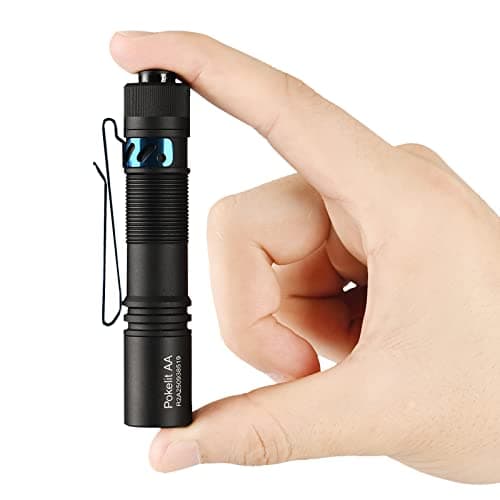 Acebeam Pokelit AA (high CRI)550 lumens at a stated 90-plus CRI, IP68, on a single AA. The combination of color accuracy and a standard cell is rare. | High CRI on a AA cell | 550 lm | |
| 3 | 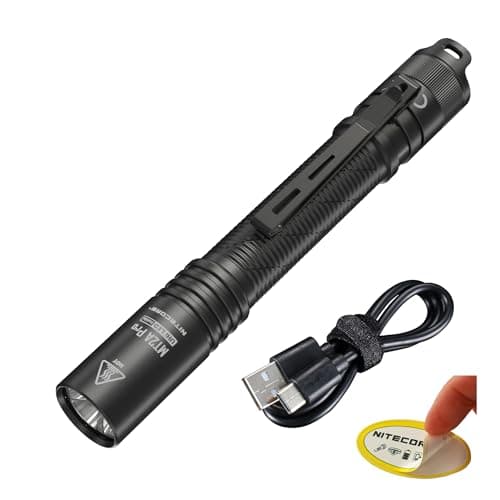 Nitecore MT2A Pro1,000 lumens and 255 m of stated reach on AA cells, with USB-C charging. Dual power done properly. | AA cells with USB-C and real reach | 1,000 lm | |
| 4 | 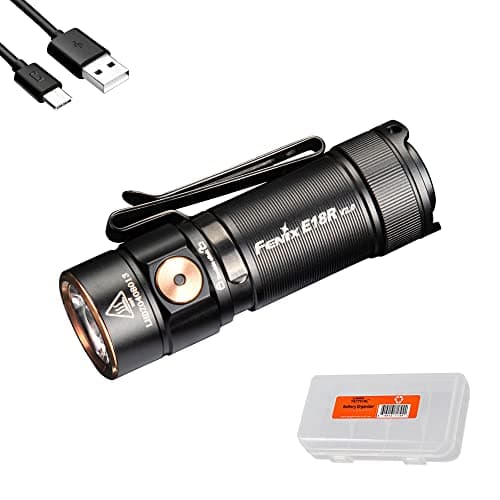 Fenix E18R V2.01,200 lumens from a light barely longer than its own cell, USB-C rechargeable, with a proper tail switch. | Maximum output per cubic inch with a tail switch | 1,200 lm | |
| 5 | 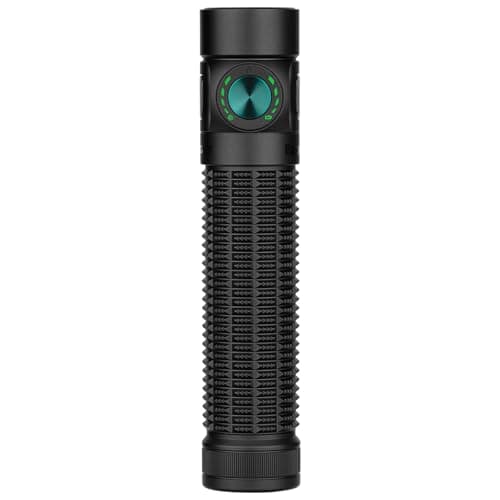 Olight Baton 4 Pro1,600 lumens from something the size of a lipstick tube. The output is real and the runtime at that output is not the point. | The most output in a pocket-sized body | 1,600 lm |
We earn a commission if you buy through the links on this page, at no extra cost to you. It does not change what we recommend or the order they appear in. Full disclosure. Prices checked October 16, 2026.
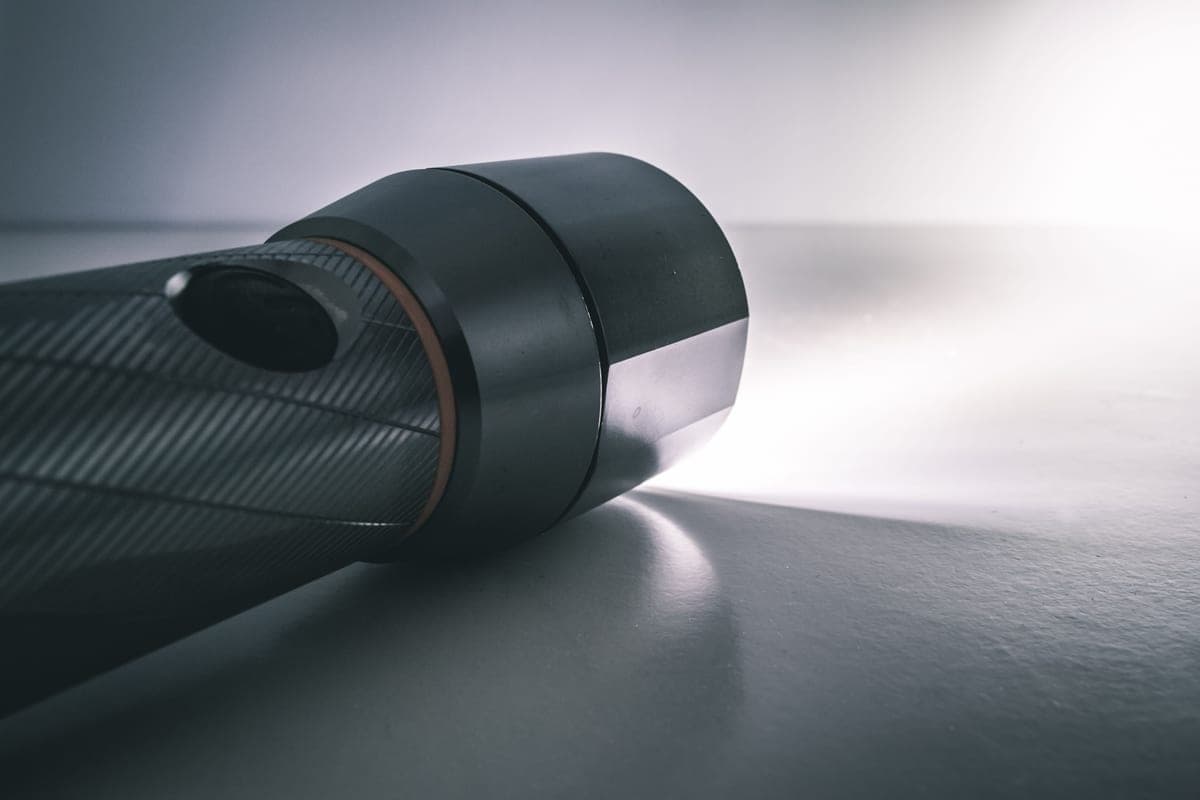
The honest summary of this price band: you are not buying more light. A budget light and a hundred-dollar light both put out somewhere between 500 and 1,600 lumens. What changes is everything around the output.
How we picked
We ranked on published specification completeness first, then cell format, then beam quality and interface. Every figure is sourced. We have not handled any of these lights — see our methodology.
What the extra money actually buys
- Published specifications you can check. The Streamlight MacroStream publishes candela, beam distance, runtime and weight per mode, and the figures reconcile. Most budget lights publish a lumen number and nothing else.
- A better ingress rating. IP68 and IPX8 appear reliably in this band; below it they are sporadic and often unstated.
- Color rendering. The Acebeam Pokelit AA publishes CRI 90-plus with IP68 on a single AA, which is a combination that simply is not available cheaper.
- A driver that regulates properly. Constant-current drivers with real thermal sensing hold their output rather than sagging with the cell voltage.
- An interface someone thought about. Dual switches, mode memory, lockout that works.
Where the specification gaps still are
| Light | Output | Candela | Beam | Runtime | Weight | IP |
|---|---|---|---|---|---|---|
| Streamlight MacroStream | Yes | Yes | Yes | Yes | Yes | Yes |
| Acebeam Pokelit AA | Yes | No | No | No | No | Yes |
| Fenix E18R V2.0 | Yes | No | No | No | No | No |
| Olight Baton 4 Pro | Yes | No | No | No | No | No |
That table is the reason the 500-lumen MacroStream leads a page containing a 1,600-lumen Olight. Only one of these makers has published enough for a buyer to know what they are getting, and on a site built around checking numbers, that counts.
Choosing a beam for the job
The two extremes on this page are instructive. The MacroStream publishes 2,000 candela and 90 meters — a wide, close beam that lights a room and a footpath. The Nitecore MT2A Pro publishes 255 meters, which works back to about 16,300 candela: a tighter hotspot with real reach and comparatively little spill.
AA, 16340 or 18650 at this price
All three are represented here and they solve different problems. AA — the Pokelit and the Archer 2A — gives you a light that works after a year in a drawer. 16340 — the Fenix E18R — gives you 1,200 lumens in a body barely longer than the cell. 18650 gives you real runtime and appears more often at the top of this band than at the bottom.
What we would not buy under $100
A light with a proprietary sealed cell and no published capacity. At this price you should be able to find out how much energy you are buying, and if you cannot, buy something else.
We would also skip lights whose entire pitch is a big turbo number. In this band the honest differentiators are the sustained output, the beam pattern and the color rendering, and a maker leading with turbo is usually leading with the only number that flatters them.
The picks, in full
image
Top pick · The best-documented small EDC light here
Streamlight MacroStream USB
500 lumens, 2,000 candela, 90 m and two hours on high — every figure published per mode by the maker. That is the reason it leads.
2,000 candela and 90 m are consistent with each other, which is a better sign than it sounds. The FL1 beam distance is the square root of candela divided by 0.25 lux: the square root of 2,000 over 0.25 is 89.4 m. Streamlight's published figures check out to within a meter.
Two hours on high for 500 lumens implies roughly 2.5 watt-hours of usable energy, which is about right for a light this size. Nothing here is being oversold.
62 grams is pocketable in a way that a 21700 light is not, and that is the trade you are making against a bigger cell.
What works
- Every headline figure published per mode, and internally consistent
- 62 g with a real clip
- The arithmetic between its candela and its distance actually reconciles
What does not
- IPX4, so splash-resistant and no more
- Built-in cell rather than a replaceable 18650
- 500 lumens is modest against the 1,600-lumen headlines nearby
Skip this ifyou want reach. 2,000 candela is a close-range beam and no setting will change that.
Published specification
- Output
- 500 lmHigh. Low is 50 lm.Streamlight MacroStream USB — manufacturer spec page (retrieved September 1, 2026)
- Peak intensity
- 2,000 cdHigh. 220 cd on low.Streamlight MacroStream USB — manufacturer spec page (retrieved October 15, 2026)
- Beam distance
- 90 mHigh. 30 m on low.Streamlight MacroStream USB — manufacturer spec page (retrieved September 1, 2026)
- Runtime
- 2 h on high, 8 h on lowStreamlight MacroStream USB — manufacturer spec page (retrieved September 1, 2026)
- Battery
- Built-in Li-ion, charges in 4 hStreamlight MacroStream USB — manufacturer spec page (retrieved September 1, 2026)
- Weight
- 62.4 g (2.2 oz)Streamlight MacroStream USB — manufacturer spec page (retrieved September 1, 2026)
- Ingress
- IPX41 m impact resistance testedStreamlight MacroStream USB — manufacturer spec page (retrieved September 1, 2026)
#ad · how this is funded · price as of October 16, 2026
Pick 2 · High CRI on a AA cell
Acebeam Pokelit AA (high CRI)
550 lumens at a stated 90-plus CRI, IP68, on a single AA. The combination of color accuracy and a standard cell is rare.
IP68 on a AA pocket light is the specification that justifies the price over a supermarket torch. Dust tight and immersion rated is a different class of object.
A single alkaline AA holds about 1.9 Wh. That is a long run at 50 lumens and a short one at 550; the 14500 lithium option roughly doubles the usable power at the cost of storage life.
CRI above 90 in a AA body is unusual. Most makers reserve the good phosphor for the 18650 lights.
What works
- 90-plus CRI with IP68 in a AA form factor
- Takes a AA or a 14500, so you choose storage life or output
- Clip and pocket profile are genuinely well designed
What does not
- No sourced runtime, candela or beam distance
- 550 lumens on an alkaline AA will not be sustained
- Costs meaningfully more than a comparable cool-white light
Skip this ifyou want maximum output for the money. You are paying for color accuracy and an ingress rating, not for lumens.
Published specification
- Output
- 550 lmAcebeam Pokelit AA — the brand's own listing on Amazon.com (retrieved September 1, 2026)
- Peak intensity
- not published
- Beam distance
- not published
- Runtime
- not published
- Battery
- 1 x AA (14500 compatible)Acebeam Pokelit AA — the brand's own listing on Amazon.com (retrieved September 1, 2026)
- Weight
- not published
$29.95 · 33% off
#ad · how this is funded · price as of October 16, 2026
Pick 3 · AA cells with USB-C and real reach
Nitecore MT2A Pro
1,000 lumens and 255 m of stated reach on AA cells, with USB-C charging. Dual power done properly.
255 m from 1,000 lumens works back to roughly 16,300 candela. That is a moderately tight beam — real reach without the tunnel vision of a dedicated thrower.
AA plus USB-C is the combination that solves the emergency case: charge it normally, and when the power has been out for three days put alkalines in it.
Nitecore lists it as waterproof with no IP number, which is exactly the sort of claim we will not carry into the spec table.
What works
- AA compatibility and USB-C charging in the same light
- 255 m of published reach
- 1,000 lumens is high for the AA class
What does not
- Waterproof claim without a rating
- No sourced runtime or candela
- AA sets the diameter, so it is a wide pocket light
Skip this ifyou want the smallest possible carry. The AA format costs you length and girth over a 16340 light.
Published specification
- Output
- 1,000 lmNitecore MT2A Pro — the brand's own listing on Amazon.com (retrieved September 1, 2026)
- Peak intensity
- not published
- Beam distance
- 255 mListed as a 279-yard beam; converted to metersNitecore MT2A Pro — the brand's own listing on Amazon.com (retrieved September 1, 2026)
- Runtime
- not published
- Battery
- AA, dual power compatible, USB-C rechargeableNitecore MT2A Pro — the brand's own listing on Amazon.com (retrieved September 1, 2026)
- Weight
- not published
- Ingress
- not published(Listed as waterproof without a rating)
#ad · how this is funded · price as of October 16, 2026
Pick 4 · Maximum output per cubic inch with a tail switch
Fenix E18R V2.0
1,200 lumens from a light barely longer than its own cell, USB-C rechargeable, with a proper tail switch.
A 16340 holds about 2.9 watt-hours. At 1,200 lumens that is a few minutes before the driver steps it down, which is normal and worth understanding before you buy on the headline.
The tail switch is what separates this from the twist-and-hope keychain class: momentary on with your thumb, without changing your grip.
Very short overall length makes it disappear in a coin pocket, which is the real reason people carry it.
What works
- 1,200 lumens in a genuinely tiny body
- Tail switch with momentary operation
- USB-C on the light
What does not
- 2.9 Wh cell means turbo is measured in minutes
- No sourced runtime, candela or IP rating
- 16340 is a less common cell than 18650
Skip this ifyou need sustained light. The cell is too small to hold high output for long and nothing in the design changes that.
Published specification
- Peak intensity
- not published
- Beam distance
- not published
- Runtime
- not published
- Battery
- 16340 Li-ion, USB-C rechargeableFenix E18R V2.0 — the brand's own listing on Amazon.com (retrieved September 1, 2026)
- Weight
- not published
- Ingress
- not published
#ad · how this is funded · price as of October 16, 2026
Pick 5 · The most output in a pocket-sized body
Olight Baton 4 Pro
1,600 lumens from something the size of a lipstick tube. The output is real and the runtime at that output is not the point.
1,600 lumens in a body this small is a thermal problem, not an optical one. Every light in this class steps down within a minute or two, and the honest way to read the number is as a burst.
Olight's magnetic charging is the best-executed version of the idea: no port to flood, no cable to thread, and the light sits on a dock.
We could only reach the brand's retail listing, so output and charging are the only figures we assert.
What works
- The highest published output in the pocket class
- Magnetic charging with no exposed port
- Genuinely small
What does not
- No sourced runtime, candela, beam distance or IP rating
- Proprietary charger to lose
- 1,600 lumens is a burst figure in a body this size
Skip this ifyou want to know how long it holds high. Without a published step-down table, the headline is unverifiable.
Published specification
- Output
- 1,600 lmOlight Baton 4 Pro — the brand's own listing on Amazon.com (retrieved September 1, 2026)
- Peak intensity
- not published
- Beam distance
- not published
- Runtime
- not published
- Battery
- Rechargeable, magnetic chargingOlight Baton 4 Pro — the brand's own listing on Amazon.com (retrieved September 1, 2026)
- Weight
- not published
- Ingress
- not published
#ad · how this is funded · price as of October 16, 2026
Questions people actually ask
Is a $100 flashlight worth it over a $30 one?
You get published specifications you can check, a better ingress rating, better color rendering and a driver that holds its output. You do not get meaningfully more light. Whether that is worth it depends on whether those things matter to you.
What is the best EDC flashlight around $100?
On our criteria, the Streamlight MacroStream, because it is the only light in this set whose maker publishes a full per-mode table whose figures reconcile with each other. If color rendering matters more to you, the Acebeam Pokelit AA at CRI 90-plus with IP68.
How many lumens is enough for everyday carry?
500 to 1,000 peak covers everything, and you will spend your time between 50 and 200. Extra peak output in a pocket-sized body is limited by heat, not by the emitter, and ends within a couple of minutes.
Is 18650 better than 16340 for EDC?
For runtime, substantially: 12.2 watt-hours against 2.9. For pocketability, no — a 16340 light is dramatically shorter. Pick based on whether the light lives in a pocket or in a bag.
Do I need IP68 on a pocket flashlight?
Not usually. IPX4 covers rain and IPX7 covers dropping it in a puddle. IP68 matters if the light will be genuinely submerged or used somewhere very dusty; otherwise it is a durability signal rather than a requirement.
Why is a 500-lumen light your top pick over a 1,600-lumen one?
Because the 500-lumen light publishes candela, beam distance, runtime, weight and an ingress rating per mode, and those figures reconcile with each other. The 1,600-lumen light publishes a lumen figure. On this site, a checkable specification outranks an unverifiable headline.
Sources
Every figure on this page came from one of the documents below, read on the date shown. We do not cite other review sites, forum posts or video reviews as sources of fact.
Read next
Streamlight MacroStream USB review
A specification-first review of the Streamlight MacroStream USB — the only small EDC light we cover that publishes output, candela, reach, runtime, weight and an ingress rating together.

Best EDC flashlights, ranked on what they actually hold
The full EDC ranking: cell format, stored energy, color rendering and beam shape, every figure sourced.
Best EDC flashlights under $50
Budget EDC picks, with a straight account of what the price band actually costs you.

Lumens vs candela
The distinction that decides reach, with the conversion formula and a table of real published figures.

Best high-CRI flashlights
High-CRI picks, the output they give up for the phosphor, and why the trade is usually worth making.
Best tactical flashlights, ranked on candela rather than lumens
The tactical ranking: published candela, beam distance, sustained runtime and ingress rating, all sourced.
Found a number that is wrong? Tell us and we will fix it and say so. Our methodology shows every formula on this page.