EDC Flashlights
Best high-CRI flashlights
Color rendering is the one flashlight specification that changes how the light feels rather than how far it goes, and almost nobody publishes it.
By Scooter M. · Published · Updated
| # | Product | Best for | Output | Price |
|---|---|---|---|---|
| 1 | 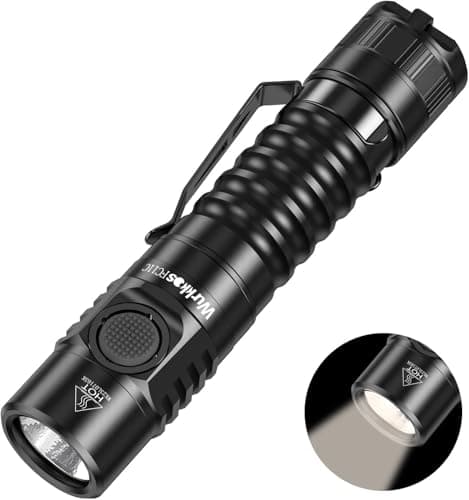 Wurkkos FC11CTop pick1,200 lumens at a stated CRI of 90 for a budget price. Color rendering is the spec that changes how a light feels, and this is the cheapest way to get it. | High color accuracy for the least money | 1,200 lm | |
| 2 | 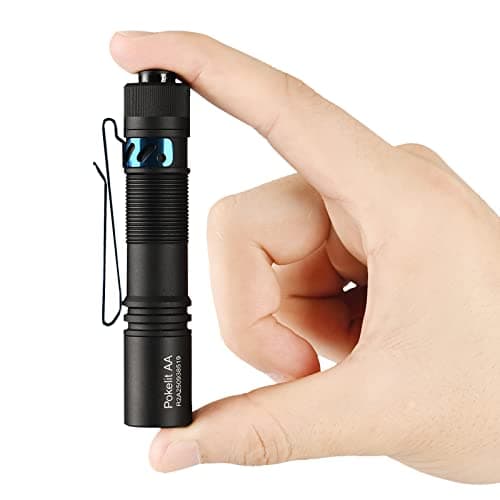 Acebeam Pokelit AA (high CRI)550 lumens at a stated 90-plus CRI, IP68, on a single AA. The combination of color accuracy and a standard cell is rare. | High CRI on a AA cell | 550 lm | |
| 3 | 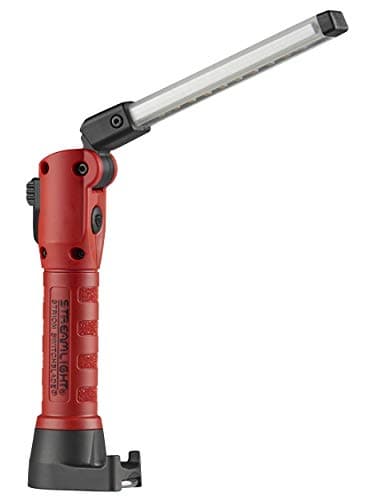 Streamlight Strion Switchblade500 lumens cool white, or 400 at a published 90 CRI, in a folding bar. The color accuracy is the specification that matters on a wiring loom, and it is the only one here with a number behind it. | Color-critical work under the hood | 500 lm | |
| 4 | No image Streamlight MacroStream USB500 lumens, 2,000 candela, 90 m and two hours on high — every figure published per mode by the maker. That is the reason it leads. | The best-documented small EDC light here | 500 lm | Check price#ad |
We earn a commission if you buy through the links on this page, at no extra cost to you. It does not change what we recommend or the order they appear in. Full disclosure. Prices checked October 16, 2026.
Take a cheap cool-white flashlight into a room and shine it at something red. It will look brown. Shine a high-CRI light at the same thing and it will look red. Nothing about the brightness has changed; what changed is which wavelengths are present in the beam.
How we picked
A light appears here only if its maker publishes a CRI figure, or makes a specific and named color-accuracy claim. That is a short list, which is itself the finding. Every figure is sourced; we have handled none of these lights. See our methodology.
What CRI is measuring
The color rendering index compares how a light source renders a set of reference color samples against a reference illuminant at the same correlated color temperature. A score of 100 means identical rendering. Ra, the commonly quoted figure, averages the first eight samples — all of them moderately saturated pastels.
What high CRI costs you
That trade is close to always worth making for a light used at arm's length. It is not worth making for a thrower, where the whole point is putting photons a long way away and nobody is judging color at 400 meters.
Color temperature is a separate decision
| Kelvin | Appearance | Best for |
|---|---|---|
| 6500 K | Cold blue-white | Maximum apparent brightness; poor in fog and dust |
| 5000 K | Neutral white | General purpose; the RovyVon Aurora A5 states this |
| 4000 K | Slightly warm | The usual choice of people who use lights a lot |
| 3000 K | Warm | Fog, snow, dust; comfortable at close range |
A high-CRI 4000 K light and a low-CRI 6500 K light of the same output will look completely different, and most people who compare them directly stop buying the second kind. What CRI actually measures covers the metric in more depth.
Where color accuracy genuinely matters
- Electrical work. Wire insulation color is the whole point, and a CRI 70 emitter makes brown and red genuinely hard to separate. See work lights.
- Mechanical work. Fluid color tells you what is leaking. Coolant, oil and brake fluid look alike under bad light.
- First aid. Skin tone and blood color carry information.
- Photography and inspection. Anything where you are judging a surface rather than finding it.
- Anything outdoors you want to enjoy looking at. This is not a technical justification and it is the reason most enthusiasts switch.
The publishing problem
Most flashlight makers do not publish a CRI figure at all. Streamlight does for one product: the Strion Switchblade states 90 CRI at 4,000 K in its Color-Rite mode, at 400 lumens rather than its headline 500. That is a work-light bar rather than a pocket light, so it is the wrong shape for this page and the right shape for a panel — the full review covers it.
Until that changes, the practical approach is to buy from the makers who do publish it. On this page that is Wurkkos, at a stated CRI 90, and Acebeam, at a stated 90-plus.
What we would not buy
A light claiming high CRI without a number. High CRI is a measurable property and a maker who cares about it states the figure. A marketing phrase with no number attached is a claim, not a specification.
The picks, in full
Top pick · High color accuracy for the least money
Wurkkos FC11C
1,200 lumens at a stated CRI of 90 for a budget price. Color rendering is the spec that changes how a light feels, and this is the cheapest way to get it.
CRI 90 versus the CRI 70 typical of a cheap cool-white emitter is the single most noticeable upgrade in a flashlight, and it is nothing to do with brightness. Reds stop looking brown. Wire insulation colors become distinguishable.
The cost of high CRI is output: the same emitter family loses roughly 10 to 20 percent of its lumens for the better phosphor. A 1,200-lumen high-CRI light is doing well.
18650 is the right cell format here — replaceable, standard, and enough energy to hold a useful level.
What works
- CRI 90 at a price where CRI is usually not mentioned at all
- Standard 18650, replaceable anywhere
- USB-C on the light itself
What does not
- No sourced runtime, candela, beam distance or IP rating
- High CRI costs output; treat the 1,200 figure as generous
- A budget brand with a thin published spec table
Skip this ifyou need maximum reach per dollar. High-CRI emitters throw less than the cool-white ones they replace.
Published specification
- Peak intensity
- not published
- Beam distance
- not published
- Runtime
- not published
- Battery
- 18650, USB-C rechargeableWurkkos FC11C — the brand's own listing on Amazon.com (retrieved September 1, 2026)
- Weight
- not published
- Ingress
- not published
- CRI
- 90Stated as '90 High CRI' on the listingWurkkos FC11C — the brand's own listing on Amazon.com (retrieved September 1, 2026)
$35.99 · 20% off
#ad · how this is funded · price as of October 16, 2026
Pick 2 · High CRI on a AA cell
Acebeam Pokelit AA (high CRI)
550 lumens at a stated 90-plus CRI, IP68, on a single AA. The combination of color accuracy and a standard cell is rare.
IP68 on a AA pocket light is the specification that justifies the price over a supermarket torch. Dust tight and immersion rated is a different class of object.
A single alkaline AA holds about 1.9 Wh. That is a long run at 50 lumens and a short one at 550; the 14500 lithium option roughly doubles the usable power at the cost of storage life.
CRI above 90 in a AA body is unusual. Most makers reserve the good phosphor for the 18650 lights.
What works
- 90-plus CRI with IP68 in a AA form factor
- Takes a AA or a 14500, so you choose storage life or output
- Clip and pocket profile are genuinely well designed
What does not
- No sourced runtime, candela or beam distance
- 550 lumens on an alkaline AA will not be sustained
- Costs meaningfully more than a comparable cool-white light
Skip this ifyou want maximum output for the money. You are paying for color accuracy and an ingress rating, not for lumens.
Published specification
- Output
- 550 lmAcebeam Pokelit AA — the brand's own listing on Amazon.com (retrieved September 1, 2026)
- Peak intensity
- not published
- Beam distance
- not published
- Runtime
- not published
- Battery
- 1 x AA (14500 compatible)Acebeam Pokelit AA — the brand's own listing on Amazon.com (retrieved September 1, 2026)
- Weight
- not published
$29.95 · 33% off
#ad · how this is funded · price as of October 16, 2026
Pick 3 · Color-critical work under the hood
Streamlight Strion Switchblade
500 lumens cool white, or 400 at a published 90 CRI, in a folding bar. The color accuracy is the specification that matters on a wiring loom, and it is the only one here with a number behind it.
Color accuracy is the whole reason this exists. Under a cool-white work light, a brown wire and a red wire look the same, and that is not a cosmetic problem.
Streamlight calls it Color-Rite and does publish the number: 90 CRI at 4,000 K. That makes this the only work light we cover whose maker states a color rendering index, and the figure applies to the 400 lm mode rather than the 500 lm one - so color accuracy costs 20 percent of the output, which is a good price for it.
The folding bar shape puts a wide, even flood along a panel rather than a hotspot in the middle of it.
What works
- A published 90 CRI at 4,000 K - the only work light here with a color figure
- Bar shape floods a panel evenly, and a UV mode for dye-traced leaks
- Streamlight's trade distribution makes service easy
What does not
- No ingress rating of any kind, on a light sold for engine bays
- No candela or beam distance, and no runtime for the Color-Rite or UV modes
- 500 lumens is modest if you need to light a whole bay
Skip this ifyou need area lighting. It is a close-range color-accurate tool, not a floodlight.
Published specification
- Output
- 500 lmCool white. The Color-Rite mode is 400 lm; a third mode is UV.Streamlight Strion Switchblade — manufacturer spec page (retrieved October 10, 2026)
- Peak intensity
- not published
- Beam distance
- not published(A flood bar; Streamlight publishes neither beam figure)
- Runtime
- 3 h on highNo runtime published for the Color-Rite or UV modes.Streamlight Strion Switchblade — manufacturer spec page (retrieved October 10, 2026)
- Battery
- Li-ion, 4 h rechargeUSB or an existing Strion charger. Capacity not published.Streamlight Strion Switchblade — manufacturer spec page (retrieved October 10, 2026)
- Weight
- 181 g6.40 oz.Streamlight Strion Switchblade — manufacturer spec page (retrieved October 10, 2026)
- Ingress
- not published(No IP or IPX code stated; a 2 m impact rating is)
- CRI
- 90 CRIAt 4,000 K, in the 400 lm Color-Rite mode - not the 500 lm cool-white one.Streamlight Strion Switchblade — manufacturer spec page (retrieved October 10, 2026)
#ad · how this is funded · price as of October 16, 2026
image
Pick 4 · The best-documented small EDC light here
Streamlight MacroStream USB
500 lumens, 2,000 candela, 90 m and two hours on high — every figure published per mode by the maker. That is the reason it leads.
2,000 candela and 90 m are consistent with each other, which is a better sign than it sounds. The FL1 beam distance is the square root of candela divided by 0.25 lux: the square root of 2,000 over 0.25 is 89.4 m. Streamlight's published figures check out to within a meter.
Two hours on high for 500 lumens implies roughly 2.5 watt-hours of usable energy, which is about right for a light this size. Nothing here is being oversold.
62 grams is pocketable in a way that a 21700 light is not, and that is the trade you are making against a bigger cell.
What works
- Every headline figure published per mode, and internally consistent
- 62 g with a real clip
- The arithmetic between its candela and its distance actually reconciles
What does not
- IPX4, so splash-resistant and no more
- Built-in cell rather than a replaceable 18650
- 500 lumens is modest against the 1,600-lumen headlines nearby
Skip this ifyou want reach. 2,000 candela is a close-range beam and no setting will change that.
Published specification
- Output
- 500 lmHigh. Low is 50 lm.Streamlight MacroStream USB — manufacturer spec page (retrieved September 1, 2026)
- Peak intensity
- 2,000 cdHigh. 220 cd on low.Streamlight MacroStream USB — manufacturer spec page (retrieved October 15, 2026)
- Beam distance
- 90 mHigh. 30 m on low.Streamlight MacroStream USB — manufacturer spec page (retrieved September 1, 2026)
- Runtime
- 2 h on high, 8 h on lowStreamlight MacroStream USB — manufacturer spec page (retrieved September 1, 2026)
- Battery
- Built-in Li-ion, charges in 4 hStreamlight MacroStream USB — manufacturer spec page (retrieved September 1, 2026)
- Weight
- 62.4 g (2.2 oz)Streamlight MacroStream USB — manufacturer spec page (retrieved September 1, 2026)
- Ingress
- IPX41 m impact resistance testedStreamlight MacroStream USB — manufacturer spec page (retrieved September 1, 2026)
#ad · how this is funded · price as of October 16, 2026
Questions people actually ask
What is a good CRI for a flashlight?
Ra 90 or above is high CRI and is a clearly visible improvement over the Ra 70 typical of cheap cool-white emitters. Ra 80 is a middle ground that still often renders saturated reds poorly, because the Ra average excludes the R9 red sample.
Does high CRI reduce brightness?
Yes, by roughly 10 to 20 percent for the same emitter family. Rendering long wavelengths properly requires less efficient phosphor conversion. For a light used at arm's length the trade is almost always worth it.
What is R9 and why does it matter?
R9 is the saturated red reference sample, and it is deliberately excluded from the commonly quoted Ra average. A light can score Ra 80 with a poor R9, which is why some nominally decent lights still make reds look brown. A maker publishing R9 separately is telling you something real.
Is high CRI worth it for a throwing flashlight?
No. On a thrower the objective is maximum intensity at distance, nobody is judging color at 400 meters, and the 10 to 20 percent output penalty directly costs you reach. Keep high CRI for close-range lights.
What color temperature should I choose?
4000 K is the usual answer among people who use lights a lot: warm enough to be comfortable and to cut through fog and dust, neutral enough for general use. 6500 K looks brightest and performs worst in bad air.
Why do so few flashlights publish a CRI figure?
Because it is not a number that flatters most emitters, and because output is easier to market. That is exactly why we treat publishing it as a positive signal in its own right.
Sources
Every figure on this page came from one of the documents below, read on the date shown. We do not cite other review sites, forum posts or video reviews as sources of fact.
Read next

Streamlight Strion Switchblade review
A specification-first review of the Streamlight Strion Switchblade: the published 90 CRI figure, the 100 lumens it costs you, the UV mode nobody mentions, and what Streamlight still will not state.

Best EDC flashlights, ranked on what they actually hold
The full EDC ranking: cell format, stored energy, color rendering and beam shape, every figure sourced.
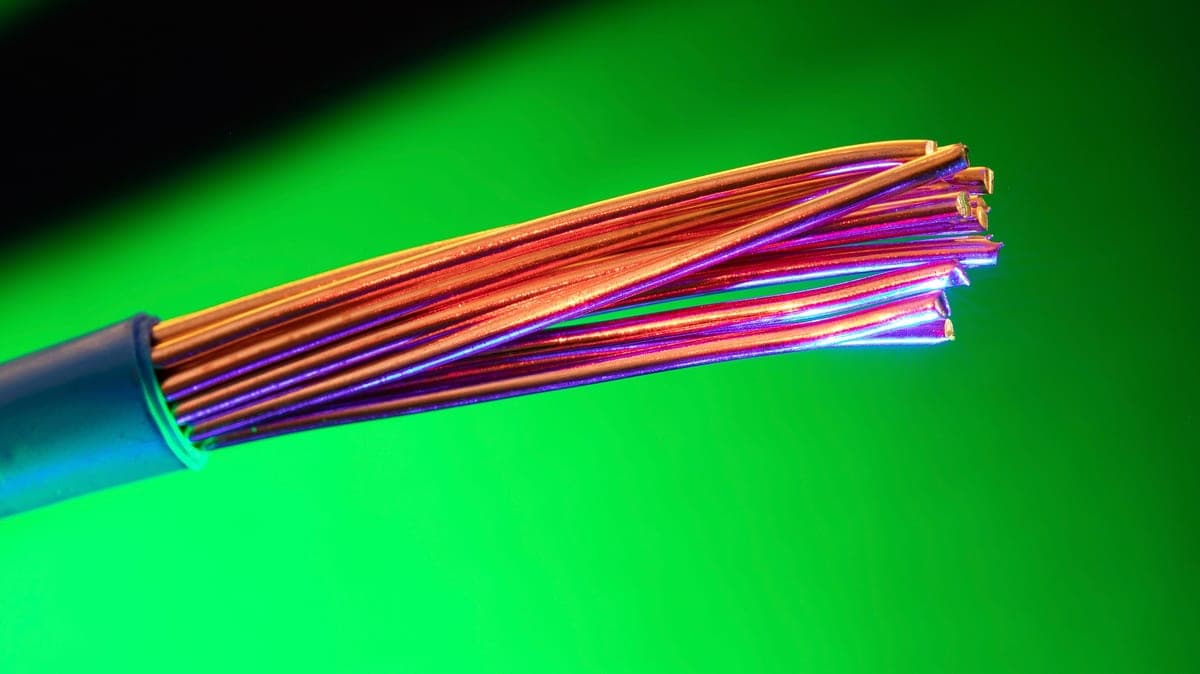
CRI explained
What CRI measures, the R9 problem, the output cost, and how CRI differs from color temperature.
Why color accuracy matters on a jobsite
What color rendering does to trade work, and how to choose when almost no maker publishes a CRI figure.
Best EDC flashlights under $50
Budget EDC picks, with a straight account of what the price band actually costs you.

Best work lights, ranked on beam shape rather than brightness
The work-light ranking: beam shape, color rendering, mounting and runtime, with every published figure sourced.
Wurkkos FC11C review
A specification-first review of the Wurkkos FC11C: why CRI 90 for under thirty dollars is remarkable, and what buying from a maker that publishes two figures really costs.
Found a number that is wrong? Tell us and we will fix it and say so. Our methodology shows every formula on this page.