EDC Flashlights
Best EDC flashlights under $50
Under fifty dollars you can have a complete spec sheet or a big lumen number. You cannot reliably have both, and we would take the spec sheet.
By Scooter M. · Published · Updated
| # | Product | Best for | Output | Price |
|---|---|---|---|---|
| 1 | 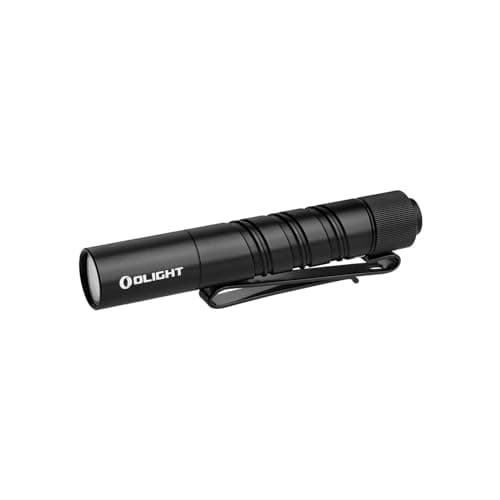 Olight i3T 2 EOSTop pick200 lumens, 62 m of stated throw, IPX8, on a single AAA cell. The one to buy if you want no charging routine at all. | A AAA light that lives on a keyring and never needs thinking about | 200 lm | |
| 2 | 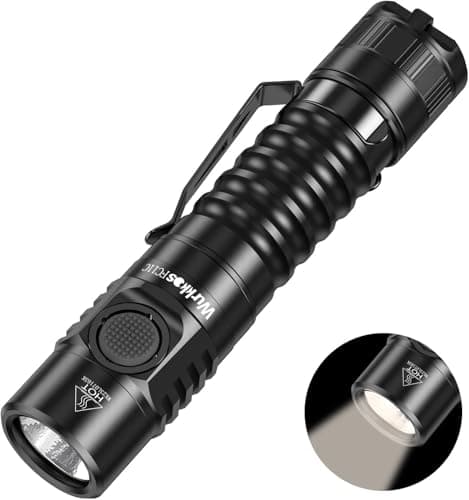 Wurkkos FC11C1,200 lumens at a stated CRI of 90 for a budget price. Color rendering is the spec that changes how a light feels, and this is the cheapest way to get it. | High color accuracy for the least money | 1,200 lm | |
| 3 | 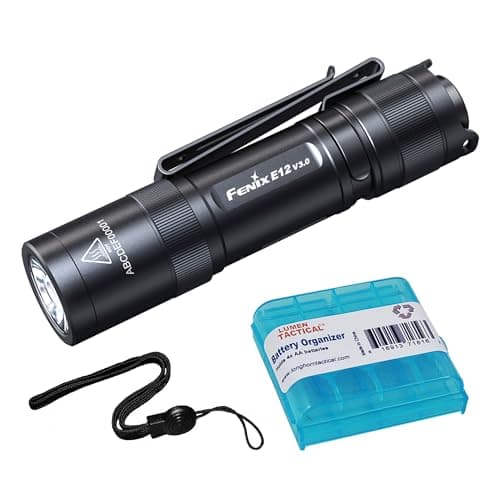 Fenix E12 V3.0200 lumens on one AA cell in a penlight body. Simple, replaceable, and the least likely light here to be flat when you need it. | A pen-shaped AA light for pockets and toolbags | 200 lm | |
| 4 | 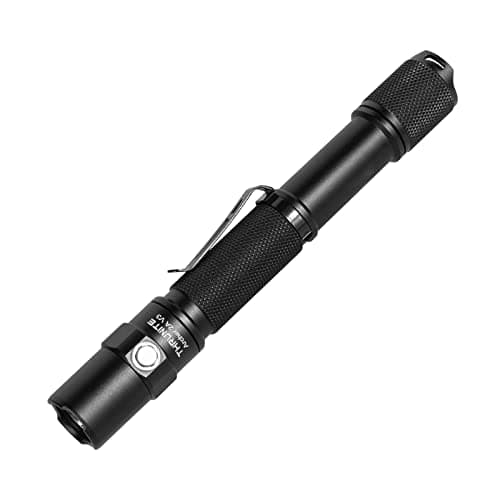 ThruNite Archer 2A V3500 lumens on two AA cells, IPX8, with separate mode and power switches. The interface is the reason to pick it. | AA cells and a dual-switch interface | 500 lm | |
| 5 | No image Streamlight MacroStream USB500 lumens, 2,000 candela, 90 m and two hours on high — every figure published per mode by the maker. That is the reason it leads. | The best-documented small EDC light here | 500 lm | Check price#ad |
We earn a commission if you buy through the links on this page, at no extra cost to you. It does not change what we recommend or the order they appear in. Full disclosure. Prices checked October 15, 2026.
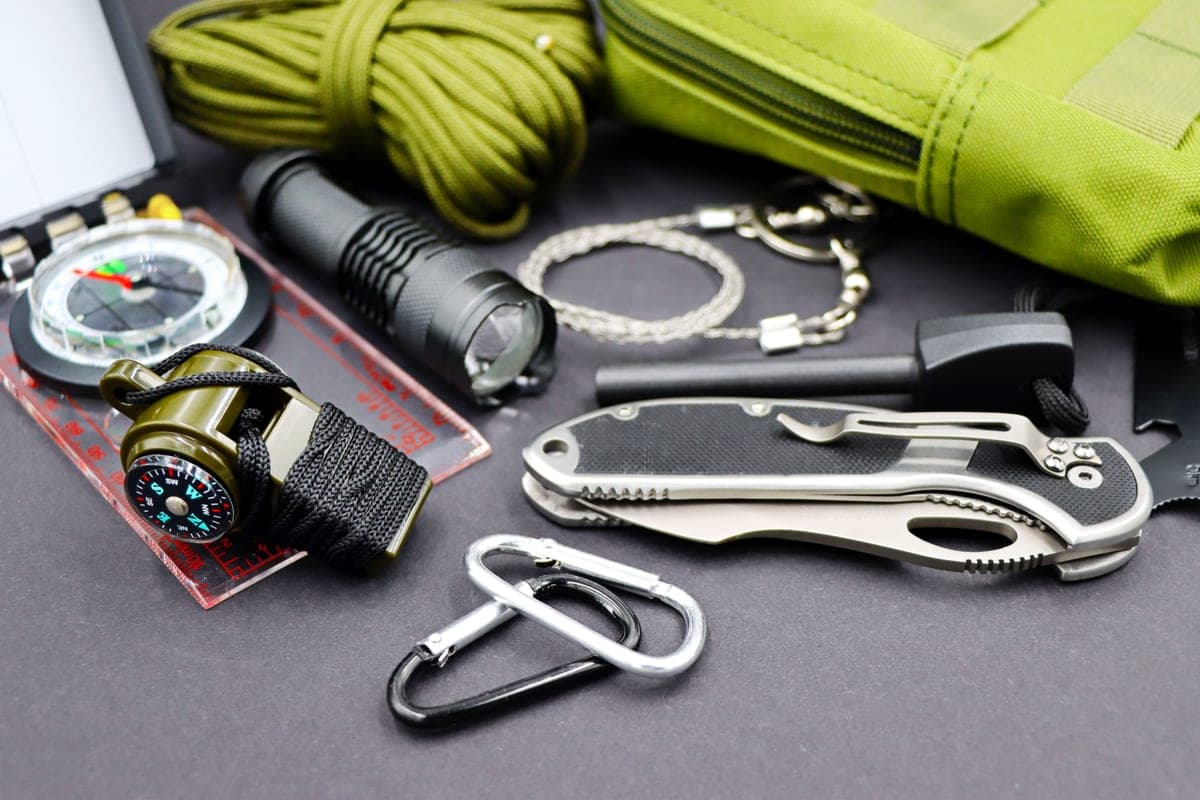
Fifty dollars is a genuinely good budget for a pocket light in 2026. The emitter and driver technology that used to cost two hundred is now commodity, and the differences at this price are mostly about which corners the maker chose to cut.
How we picked
The prices on this page come from the live price layer and are checked continuously — where a live price is not available the button says so rather than showing a number we cannot verify. We ranked on published specification completeness, cell format and beam quality. We have handled none of these lights; see our methodology.
What you actually give up at this price
| Feature | Typical under $50 | What more money buys |
|---|---|---|
| Emitter | Cool white, CRI around 70 | High CRI 90+, selectable color temperature |
| Driver | PWM dimming, simple step-down | Constant current, thermal regulation by temperature sensor |
| Ingress rating | Often IPX4, sometimes unstated | IPX8 or IP68, published and tested |
| Published specs | Output only, sometimes a beam distance | Full per-mode table with candela and runtime |
| Cell | Sealed Li-ion or AAA | Standard 18650 or 21700, replaceable |
The row that matters most is the last one but two: published specifications. At this price a maker's willingness to publish a full table is the best available proxy for whether the light does what it claims, because it is the only thing you can actually check before buying.
The high-CRI exception
One thing that used to be a premium feature and now is not: color rendering. The Wurkkos FC11C publishes a CRI of 90 at a budget price, running a standard 18650. Five years ago that combination did not exist below three figures.
If you only take one recommendation from this page, it is that a high-CRI budget light is a better purchase than a cool-white one at twice the lumens. Why CRI matters explains what the number is measuring.
AAA and AA lights are underrated in this band
A single AAA cell holds about 1.3 watt-hours and costs a few cents. At a genuinely useful 30 lumens that is a very long night, and the light works after two years in a drawer, which no rechargeable does.
The Olight i3T 2 EOS publishes IPX8 and 62 meters of beam distance on a single AAA. That combination — immersion rating and published throw at the bottom of the price range — is why it leads this page despite 200 lumens being the smallest headline here.
What we would not buy under $50
Anything advertising 90,000 or 100,000 lumens. Those figures appear constantly in this price band and they are not measurements of anything. A genuine 100,000-lumen light draws kilowatts and would set fire to a pocket. Treat the number as a signal that nothing else on the listing is reliable either.
We would also avoid zoom lights at this price. A sliding lens loses a substantial fraction of the output and produces a square-edged beam with a dark ring, and at the budget end the mechanism is usually the first thing to fail.
The picks, in full
Top pick · A AAA light that lives on a keyring and never needs thinking about
Olight i3T 2 EOS
200 lumens, 62 m of stated throw, IPX8, on a single AAA cell. The one to buy if you want no charging routine at all.
62 m from 200 lumens implies roughly 960 candela, working backward through the FL1 definition. That is a tight little beam for the output, which is what you want on a light this small.
IPX8 on a AAA twist light is unusual and worth the money on its own.
One alkaline AAA is about 1.3 Wh. At a modest 30 lumens that is a genuinely long night; at 200 lumens it is minutes.
What works
- IPX8 immersion rating on a keychain light
- AAA cells: no charging, no degradation, available anywhere
- Published beam distance, which most keychain lights omit
What does not
- 200 lumens is the ceiling and there is no reserve
- No published runtime
- Twist switch means two hands
Skip this ifyou want more than a few minutes at full output. A single AAA cannot hold it and no design gets around that.
Published specification
- Peak intensity
- not published
- Beam distance
- 62 mOlight i3T 2 EOS — the brand's own listing on Amazon.com (retrieved September 1, 2026)
- Runtime
- not published
- Battery
- 1 x AAAOlight i3T 2 EOS — the brand's own listing on Amazon.com (retrieved September 1, 2026)
- Weight
- not published
#ad · how this is funded · price as of October 15, 2026
Pick 2 · High color accuracy for the least money
Wurkkos FC11C
1,200 lumens at a stated CRI of 90 for a budget price. Color rendering is the spec that changes how a light feels, and this is the cheapest way to get it.
CRI 90 versus the CRI 70 typical of a cheap cool-white emitter is the single most noticeable upgrade in a flashlight, and it is nothing to do with brightness. Reds stop looking brown. Wire insulation colors become distinguishable.
The cost of high CRI is output: the same emitter family loses roughly 10 to 20 percent of its lumens for the better phosphor. A 1,200-lumen high-CRI light is doing well.
18650 is the right cell format here — replaceable, standard, and enough energy to hold a useful level.
What works
- CRI 90 at a price where CRI is usually not mentioned at all
- Standard 18650, replaceable anywhere
- USB-C on the light itself
What does not
- No sourced runtime, candela, beam distance or IP rating
- High CRI costs output; treat the 1,200 figure as generous
- A budget brand with a thin published spec table
Skip this ifyou need maximum reach per dollar. High-CRI emitters throw less than the cool-white ones they replace.
Published specification
- Peak intensity
- not published
- Beam distance
- not published
- Runtime
- not published
- Battery
- 18650, USB-C rechargeableWurkkos FC11C — the brand's own listing on Amazon.com (retrieved September 1, 2026)
- Weight
- not published
- Ingress
- not published
- CRI
- 90Stated as '90 High CRI' on the listingWurkkos FC11C — the brand's own listing on Amazon.com (retrieved September 1, 2026)
$35.99 · 20% off
#ad · how this is funded · price as of October 15, 2026
Pick 3 · A pen-shaped AA light for pockets and toolbags
Fenix E12 V3.0
200 lumens on one AA cell in a penlight body. Simple, replaceable, and the least likely light here to be flat when you need it.
One AA cell holds roughly 1.9 Wh, which at a genuine 30 lumens is a very long night and at 200 lumens is well under an hour.
The penlight shape is the point: it sits in a shirt pocket or a tool roll where a tube light will not.
Fenix's own site did not carry a page for this variant when we looked, so we cite the brand's listing and assert only what it states.
What works
- AA cells, so it is never dead for long
- Pocket-clip penlight shape
- Fenix build quality at the bottom of the range
What does not
- 200 lumens is the ceiling
- No sourced runtime, candela, beam distance or IP rating
- No rechargeable option
Skip this ifyou need to light a room or a yard. It is a close-work light and nothing more.
Published specification
- Peak intensity
- not published
- Beam distance
- not published
- Runtime
- not published
- Weight
- not published
- Ingress
- not published
#ad · how this is funded · price as of October 15, 2026
Pick 4 · AA cells and a dual-switch interface
ThruNite Archer 2A V3
500 lumens on two AA cells, IPX8, with separate mode and power switches. The interface is the reason to pick it.
Two alkaline AA cells hold roughly 3.9 Wh, which is more than most single-16340 rechargeables and costs a dollar to replace.
A dual switch — one for on, one for mode — is the interface people actually want. Single-switch lights make you cycle through modes to turn off.
IPX8 is stated on the listing. We could not reach a ThruNite spec page from this build, so the rest of the table stays empty.
What works
- AA cells, which outlast lithium chemistry in storage and cost nothing
- Dual switch, so mode changes never involve turning the light off
- IPX8
What does not
- No sourced runtime, candela or beam distance
- AA is a bulky format for a pocket
- 500 lumens is mid-pack
Skip this ifyou want it small. Two AA cells set a length no design can shorten.
Published specification
- Output
- 500 lmStated for the cool-white two-pack variant of the same modelThruNite Archer 2A V3 (500 lm) — the brand's own listing on Amazon.com (retrieved September 1, 2026)
- Peak intensity
- not published
- Beam distance
- not published
- Runtime
- not published
- Battery
- 2 x AAThruNite Archer 2A V3 — the brand's own listing on Amazon.com (retrieved September 1, 2026)
- Weight
- not published
#ad · how this is funded · price as of October 15, 2026
image
Pick 5 · The best-documented small EDC light here
Streamlight MacroStream USB
500 lumens, 2,000 candela, 90 m and two hours on high — every figure published per mode by the maker. That is the reason it leads.
2,000 candela and 90 m are consistent with each other, which is a better sign than it sounds. The FL1 beam distance is the square root of candela divided by 0.25 lux: the square root of 2,000 over 0.25 is 89.4 m. Streamlight's published figures check out to within a meter.
Two hours on high for 500 lumens implies roughly 2.5 watt-hours of usable energy, which is about right for a light this size. Nothing here is being oversold.
62 grams is pocketable in a way that a 21700 light is not, and that is the trade you are making against a bigger cell.
What works
- Every headline figure published per mode, and internally consistent
- 62 g with a real clip
- The arithmetic between its candela and its distance actually reconciles
What does not
- IPX4, so splash-resistant and no more
- Built-in cell rather than a replaceable 18650
- 500 lumens is modest against the 1,600-lumen headlines nearby
Skip this ifyou want reach. 2,000 candela is a close-range beam and no setting will change that.
Published specification
- Output
- 500 lmHigh. Low is 50 lm.Streamlight MacroStream USB — manufacturer spec page (retrieved September 1, 2026)
- Peak intensity
- 2,000 cdHigh. 220 cd on low.Streamlight MacroStream USB — manufacturer spec page (retrieved October 15, 2026)
- Beam distance
- 90 mHigh. 30 m on low.Streamlight MacroStream USB — manufacturer spec page (retrieved September 1, 2026)
- Runtime
- 2 h on high, 8 h on lowStreamlight MacroStream USB — manufacturer spec page (retrieved September 1, 2026)
- Battery
- Built-in Li-ion, charges in 4 hStreamlight MacroStream USB — manufacturer spec page (retrieved September 1, 2026)
- Weight
- 62.4 g (2.2 oz)Streamlight MacroStream USB — manufacturer spec page (retrieved September 1, 2026)
- Ingress
- IPX41 m impact resistance testedStreamlight MacroStream USB — manufacturer spec page (retrieved September 1, 2026)
#ad · how this is funded · price as of October 15, 2026
Questions people actually ask
Is a $50 flashlight good enough?
Yes, for essentially everything a pocket light is asked to do. What you give up is published specification depth, color rendering, and in some cases a proper ingress rating — not usable brightness.
Why do cheap flashlights claim 100,000 lumens?
Because nothing stops them. There is no enforcement of output claims on a marketplace listing. A genuine 100,000-lumen light draws kilowatts. Treat the claim as a signal that nothing else on the listing can be trusted.
Is a high-CRI budget light better than a brighter cool-white one?
For most uses, yes. Going from CRI 70 to CRI 90 is a bigger perceptual improvement than doubling the lumens, and it is now available at the bottom of the price range.
Should a budget flashlight take AAA or a rechargeable cell?
AAA if the light will sit unused between uses; rechargeable if you carry it daily. A AAA light works after two years in a drawer, which no lithium-ion light does.
Are zoomable flashlights worth it?
Rarely, and least of all at this price. A sliding lens costs you output, produces a square-edged beam with a visible dark ring, and adds the mechanism most likely to fail. A fixed reflector at the same money gives better light.
What is the best cheap flashlight brand?
We do not rank brands, we rank published specifications. In this band, Streamlight and Fenix publish the most complete tables, and Wurkkos publishes a CRI figure most competitors omit — that is the basis on which they appear here.
Sources
Every figure on this page came from one of the documents below, read on the date shown. We do not cite other review sites, forum posts or video reviews as sources of fact.
Read next

Best EDC flashlights, ranked on what they actually hold
The full EDC ranking: cell format, stored energy, color rendering and beam shape, every figure sourced.
Best EDC flashlights under $100
The under-$100 EDC picks, and an honest account of what the price step above budget actually gets you.

Best high-CRI flashlights
High-CRI picks, the output they give up for the phosphor, and why the trade is usually worth making.
CRI explained
What CRI measures, the R9 problem, the output cost, and how CRI differs from color temperature.
Best keychain flashlights
Keychain lights ranked on cell type, published output and how long they stay useful.
Best flashlights for beginners
A first flashlight, ranked for simplicity, ordinary batteries and published specifications rather than for the lumen number on the box.
Wurkkos FC11C review
A specification-first review of the Wurkkos FC11C: why CRI 90 for under thirty dollars is remarkable, and what buying from a maker that publishes two figures really costs.
Found a number that is wrong? Tell us and we will fix it and say so. Our methodology shows every formula on this page.