EDC Flashlights
Best keychain flashlights
A keychain light is not a small flashlight. It is a different object with different limits, and knowing them is the whole purchase.
By Scooter M. · Published · Updated
| # | Product | Best for | Output | Price |
|---|---|---|---|---|
| 1 | 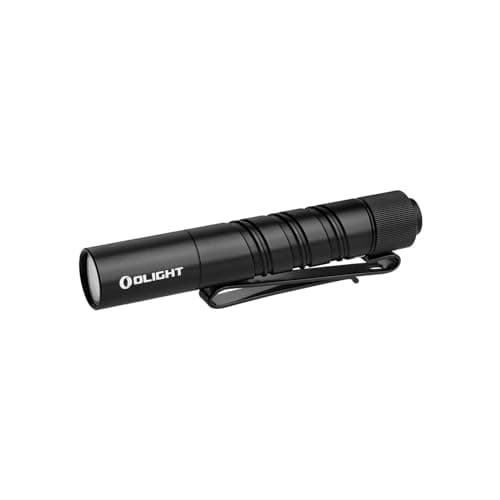 Olight i3T 2 EOSTop pick200 lumens, 62 m of stated throw, IPX8, on a single AAA cell. The one to buy if you want no charging routine at all. | A AAA light that lives on a keyring and never needs thinking about | 200 lm | |
| 2 | 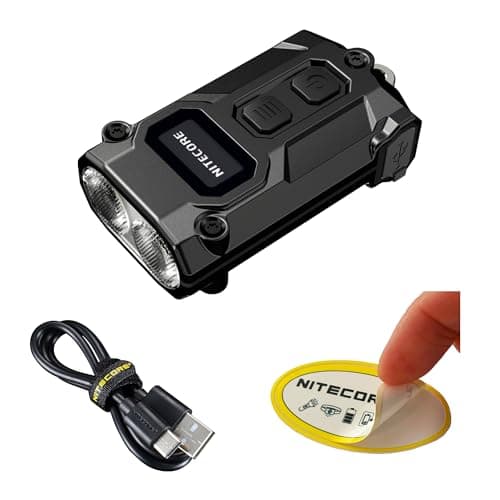 Nitecore TINI 3600 lumens from a keychain light, with multiple color temperatures and USB-C charging. | The brightest thing that fits on a keyring | 600 lm | |
| 3 | 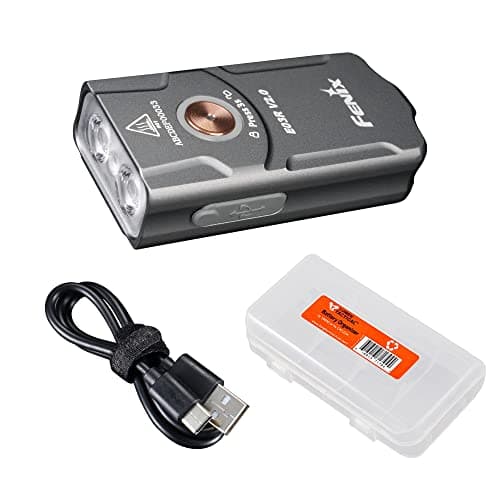 Fenix E03R V2.0500 lumens plus a dedicated red LED on a keyring, charged over USB-C. | A keychain light with a red mode | 500 lm | |
| 4 | 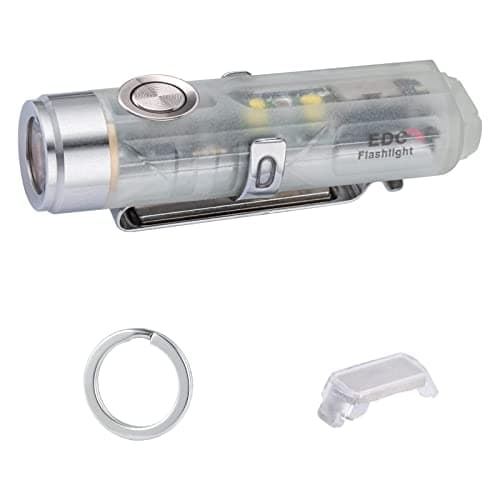 RovyVon Aurora A5 G4420 lumens at 5000K with USB-C and a magnetic base. The side-lighting panel is the feature nobody else builds in. | A keychain light with a side glow panel | 420 lm | |
| 5 | 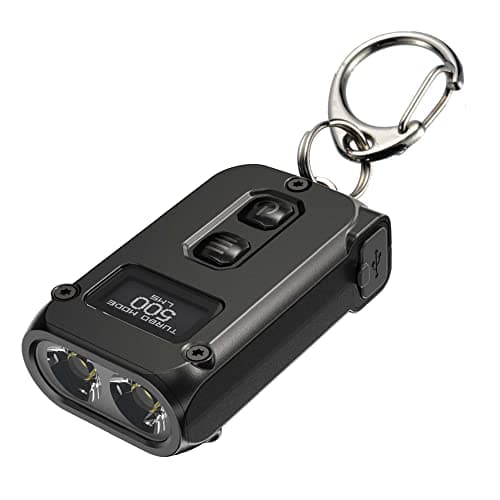 Nitecore TINI 2500 lumens from a dual-LED keychain light with an OLED readout showing the remaining runtime. | A keychain light with a real display | 500 lm |
We earn a commission if you buy through the links on this page, at no extra cost to you. It does not change what we recommend or the order they appear in. Full disclosure. Prices checked October 16, 2026.
The defining constraint of a keychain light is volume. A cell that fits on a keyring holds one to three watt-hours, and no amount of driver cleverness changes that. Everything about this category follows from that number.
How we picked
Cell type first — because it decides service life — then published output and any other figure the maker states. Most of this category publishes almost nothing, which we note in each entry rather than filling in. See our methodology.
What one to three watt-hours actually buys
So a 600-lumen keychain light is not a 600-lumen light. It is a 30-lumen light with a 600-lumen burst, and understanding that before you buy is the difference between satisfaction and disappointment.
AAA or sealed lithium: the real decision
| Single AAA | Sealed Li-ion | |
|---|---|---|
| Peak output | 150 to 200 lm | 400 to 600 lm |
| Energy | 1.3 Wh, replaceable in seconds | 1 to 2 Wh, rechargeable |
| Service life | As long as the body lasts | 300 to 500 charge cycles |
| After a year unused | Works | Flat, possibly degraded |
| Example here | Olight i3T 2 EOS | Nitecore TINI 3, Fenix E03R V2.0 |
This is the honest split. A sealed keychain light is brighter and more convenient and it is a consumable — a few hundred cycles of daily use and the cell is materially degraded, with no way to replace it. A AAA light is dimmer and it is still a light in ten years.
For something attached to your keys, which you will still have in ten years, we lean toward AAA. That is why the Olight i3T 2 EOS leads a page with brighter lights on it — and it publishes IPX8 and 62 meters of beam distance, which almost nothing else in the category does.
What a keychain light is genuinely good at
- Finding a keyhole, a dropped item, or the back of a cupboard.
- Reading a label, a menu or a meter.
- Walking a familiar path when the streetlight is out.
- Being present at all — which is the entire argument, because the best light is the one you have.
What it is not good at
Anything sustained. A keychain light will not walk you out of a wood, will not light a work area, and will not hold its headline output for more than a couple of minutes. If you need those things, carry a pocket light as well; the keychain light is your backup, not your primary.
The side-panel option
The RovyVon Aurora A5 adds a side-facing glow panel alongside the main emitter — a low, wide, diffuse light rather than a hotspot. For finding something in a bag or lighting a small space, it is genuinely more useful than a beam, and nobody else builds it into a keychain light.
What we would not buy
Anything with a micro-USB port. On a light that lives on a keyring and gets full of pocket lint, the port is the failure point, and micro-USB is far more fragile than USB-C. Every rechargeable light we recommend here uses USB-C.
We would also skip keychain lights with no published ingress rating. Keys go through the wash, get rained on and sit in wet coat pockets. The i3T 2 EOS's published IPX8 is the specification that makes it a keychain light rather than a small torch you attached to your keys.
The picks, in full
Top pick · A AAA light that lives on a keyring and never needs thinking about
Olight i3T 2 EOS
200 lumens, 62 m of stated throw, IPX8, on a single AAA cell. The one to buy if you want no charging routine at all.
62 m from 200 lumens implies roughly 960 candela, working backward through the FL1 definition. That is a tight little beam for the output, which is what you want on a light this small.
IPX8 on a AAA twist light is unusual and worth the money on its own.
One alkaline AAA is about 1.3 Wh. At a modest 30 lumens that is a genuinely long night; at 200 lumens it is minutes.
What works
- IPX8 immersion rating on a keychain light
- AAA cells: no charging, no degradation, available anywhere
- Published beam distance, which most keychain lights omit
What does not
- 200 lumens is the ceiling and there is no reserve
- No published runtime
- Twist switch means two hands
Skip this ifyou want more than a few minutes at full output. A single AAA cannot hold it and no design gets around that.
Published specification
- Peak intensity
- not published
- Beam distance
- 62 mOlight i3T 2 EOS — the brand's own listing on Amazon.com (retrieved September 1, 2026)
- Runtime
- not published
- Battery
- 1 x AAAOlight i3T 2 EOS — the brand's own listing on Amazon.com (retrieved September 1, 2026)
- Weight
- not published
#ad · how this is funded · price as of October 16, 2026
Pick 2 · The brightest thing that fits on a keyring
Nitecore TINI 3
600 lumens from a keychain light, with multiple color temperatures and USB-C charging.
600 lumens on a keychain is a two-minute burst and a warm body. Read it as a look-over-there setting, not a work level.
Multiple color temperatures in a light this small is the genuinely interesting part: a warm channel makes a keychain light usable for reading a label rather than just for finding a lock.
Built-in cell means a finite service life, which on a light you carry every day is a real consideration.
What works
- 600 lumens is the highest keychain figure here
- USB-C rather than micro-USB
- Multiple color temperatures
What does not
- No sourced runtime, candela, weight or IP rating
- Built-in cell will eventually end the light
- Turbo on a body this small is a burst
Skip this ifyou want it to last a decade. A sealed cell on a daily-carry light is a wear item.
Published specification
- Peak intensity
- not published
- Beam distance
- not published
- Runtime
- not published
- Battery
- Built-in Li-ion, USB-CNitecore TINI 3 — the brand's own listing on Amazon.com (retrieved September 1, 2026)
- Weight
- not published
- Ingress
- not published
- CRI
- not published(Multiple color temperatures offered; no CRI figure stated)
#ad · how this is funded · price as of October 16, 2026
Pick 3 · A keychain light with a red mode
Fenix E03R V2.0
500 lumens plus a dedicated red LED on a keyring, charged over USB-C.
A red LED on a keychain light sounds like a gimmick until the first time you need to check something at 3 a.m. without waking a household.
500 lumens from this size is a burst. The useful modes are the low ones, and they are the reason to carry it.
Built-in cell, USB-C, no user service. Standard for the class.
What works
- Dedicated red LED, not a filtered white
- USB-C
- Fenix build at keychain size
What does not
- No sourced runtime, candela, weight or IP rating
- Sealed cell
- 500 lumens is a burst
Skip this ifyou already carry a phone with a torch and only need light occasionally. The red mode is the only thing your phone cannot do.
Published specification
- Peak intensity
- not published
- Beam distance
- not published
- Runtime
- not published
- Battery
- Built-in Li-ion, USB-CFenix E03R V2.0 — the brand's own listing on Amazon.com (retrieved September 1, 2026)
- Weight
- not published
- Ingress
- not published
#ad · how this is funded · price as of October 16, 2026
Pick 4 · A keychain light with a side glow panel
RovyVon Aurora A5 G4
420 lumens at 5000K with USB-C and a magnetic base. The side-lighting panel is the feature nobody else builds in.
5000K is a neutral white, and stating it at all puts RovyVon ahead of most keychain makers, who ship whatever cool-white emitter was cheapest that quarter.
The side panel is a genuinely different tool: a low, wide glow for finding something in a bag without blinding yourself with a hotspot.
As with every light in this class, the built-in cell is the limiting factor on service life.
What works
- Side glow panel alongside the main emitter
- Stated 5000K color temperature rather than an unspecified white
- Magnetic base
What does not
- No sourced runtime, candela, weight or IP rating
- Built-in cell
- Small body means turbo is a burst
Skip this ifyou want a serviceable light. Everything about this class is sealed and disposable.
Published specification
- Output
- 420 lmRovyVon Aurora A5 G4 — the brand's own listing on Amazon.com (retrieved September 1, 2026)
- Peak intensity
- not published
- Beam distance
- not published
- Runtime
- not published
- Battery
- Built-in Li-ion, USB-CRovyVon Aurora A5 G4 — the brand's own listing on Amazon.com (retrieved September 1, 2026)
- Weight
- not published
- Ingress
- not published
- CRI
- not published(5000K color temperature stated; CRI not stated)
#ad · how this is funded · price as of October 16, 2026
Pick 5 · A keychain light with a real display
Nitecore TINI 2
500 lumens from a dual-LED keychain light with an OLED readout showing the remaining runtime.
The OLED readout is the reason to pick this over its successor. A keychain light that tells you how long it has left removes the single most annoying thing about the category, which is never knowing.
500 lumens from a cell this small is a burst measured in a couple of minutes. The useful levels are far lower and that is where the readout earns its place.
Superseded by the TINI 3, which is brighter and adds color temperatures. If the display matters more to you than the extra 100 lumens, this is still the one.
What works
- An OLED display showing remaining runtime, which nothing else here offers
- Dual LEDs and USB-C
- Genuinely small
What does not
- No sourced runtime, candela, weight or IP rating
- Sealed cell with a finite service life
- Superseded by a brighter model
Skip this ifyou want the brightest keychain light. The TINI 3 is brighter; this one trades that for a display.
Published specification
- Peak intensity
- not published
- Beam distance
- not published
- Runtime
- not published(The light displays its own remaining runtime; no table is published)
- Battery
- Built-in Li-ion, USB-CNitecore TINI 2 — the brand's own listing on Amazon.com (retrieved September 1, 2026)
- Weight
- not published
- Ingress
- not published
#ad · how this is funded · price as of October 16, 2026
Questions people actually ask
How many lumens does a keychain flashlight need?
Thirty lumens covers almost everything a keychain light is genuinely asked to do, and a single AAA will run that for most of a night. The 400-to-600-lumen headlines are two-minute bursts limited by the cell, not settings you can use.
Is a rechargeable keychain light better than a AAA one?
Brighter and more convenient, and a consumable. Sealed lithium cells degrade over a few hundred cycles with no way to replace them. For something on your keys for a decade, AAA is the more durable choice.
What is the brightest keychain flashlight?
In this set, the Nitecore TINI 3 at a published 600 lumens. Read that as a burst: a cell that fits on a keyring holds one to two watt-hours, so 600 lumens lasts a couple of minutes before thermal and voltage limits end it.
Do keychain flashlights survive the washing machine?
Only if they carry a real ingress rating. The Olight i3T 2 EOS publishes IPX8, which covers continuous immersion. Most keychain lights publish nothing, and the ones that publish nothing generally do not survive.
Should I get a keychain light with a red mode?
It is genuinely useful if you check on things at night without wanting to wake a household. The Fenix E03R V2.0 has a dedicated red LED rather than a filtered white one, which is the implementation that actually works.
Is a phone torch good enough instead?
For finding a keyhole, usually. What a phone cannot do is give you a red mode, survive being dropped in a puddle, run for hours without draining the thing you need for calls, or point where your hand points while you use the other hand.
Sources
Every figure on this page came from one of the documents below, read on the date shown. We do not cite other review sites, forum posts or video reviews as sources of fact.
Read next

Best AA flashlights
AA and AAA flashlights ranked on published reach, CRI and ingress rating, with the arithmetic behind each and the gaps named.
Flying with a flashlight
FAA and TSA battery rules applied to real flashlights and headlamps, with published capacities converted to watt-hours and checked against the limits.
Best EDC flashlights, ranked on what they actually hold
The full EDC ranking: cell format, stored energy, color rendering and beam shape, every figure sourced.
Best EDC flashlights under $50
Budget EDC picks, with a straight account of what the price band actually costs you.
How to carry an EDC flashlight
Clip orientation, pocket choice and holsters — the practical side of actually carrying a light every day.
Flashlights for kids
Children's flashlights ranked on findability and durability rather than on any performance figure.
Best rechargeable flashlights
Rechargeable flashlights sorted by cell strategy, with the capacity arithmetic and the lifespan trade set out.
Found a number that is wrong? Tell us and we will fix it and say so. Our methodology shows every formula on this page.