Emergency & Home
Best flashlights for power outages
An emergency light is judged on whether it works after two years in a drawer. Every other specification is secondary to that one.
By Scooter M. · Published · Updated
| # | Product | Best for | Output | Price |
|---|---|---|---|---|
| 1 | 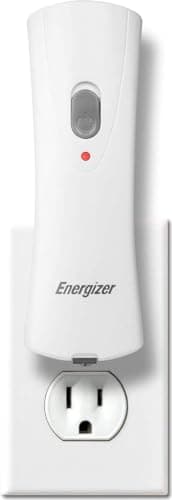 Energizer Auto-On Rechargeable FlashlightTop pickIt lives in a wall socket, charges continuously, and switches itself on the instant the power fails. | The light that finds you, rather than the other way round | not published | |
| 2 | 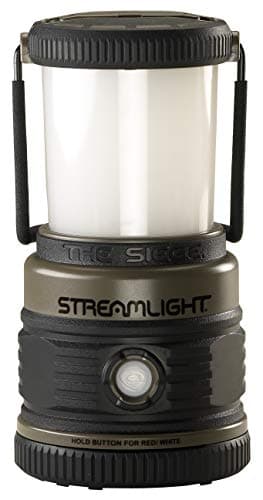 Streamlight Siege540 lumens of 360-degree area lighting, IPX7, on replaceable cells. A lantern beats a flashlight indoors and this is the one to own. | Area light in a power cut | 540 lm | |
| 3 | 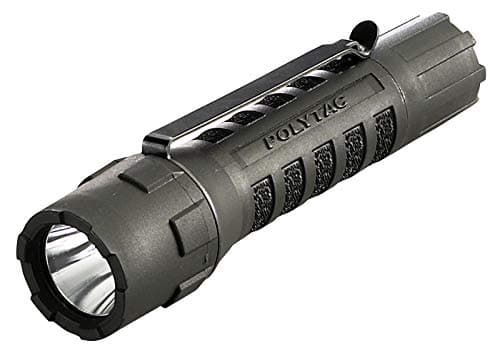 Streamlight PolyTac600 lumens, 214 m, 2.75 hours, IPX7 and 3 m impact resistance in a nylon polymer body. The one you leave in a truck. | A polymer duty light you will not worry about | 600 lm | |
| 4 | 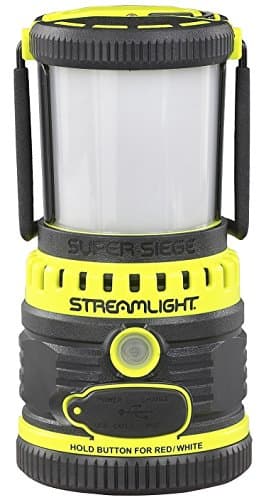 Streamlight Super Siege1,100 lumens of area light, USB rechargeable, and it will put charge back into a phone during an outage. | A lantern that also charges a phone | 1,100 lm | |
| 5 | 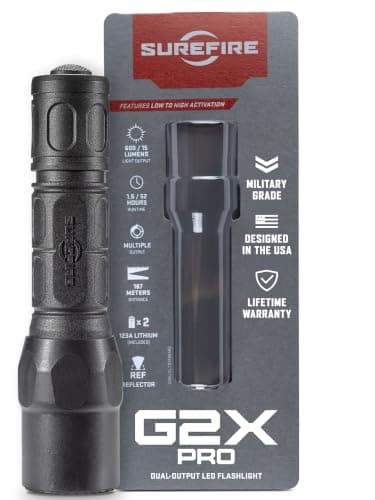 SureFire G2X Pro600 lumens, 8,700 candela, 1.5 hours, and two modes. The specification is modest; the point is that nothing on it can go wrong. | A simple two-mode light that will outlive you | 600 lm | |
| 6 | 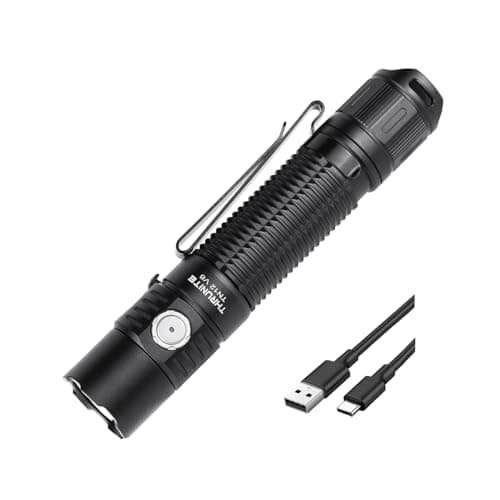 ThruNite TN12 V6259 m of published reach and a 3,400 mAh 18650 for well under the duty brands, with an IPX8 rating and a Turbo mode ThruNite admits lasts sixty seconds. | Reach per dollar on a cell you can replace | 1,950 lm | |
| 7 | 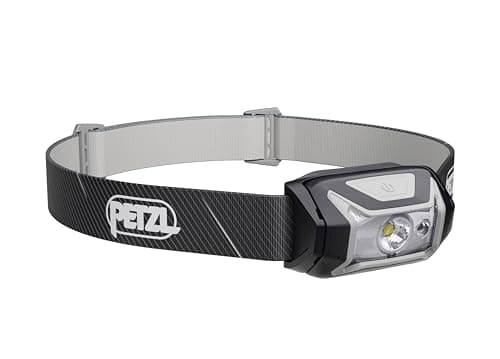 Petzl Tikka350 lumens, three AAA cells, a red mode, 94 grams. The unglamorous answer that covers most of what people actually do after dark. | A first headlamp, and the glovebox | 350 lm | |
| 8 | 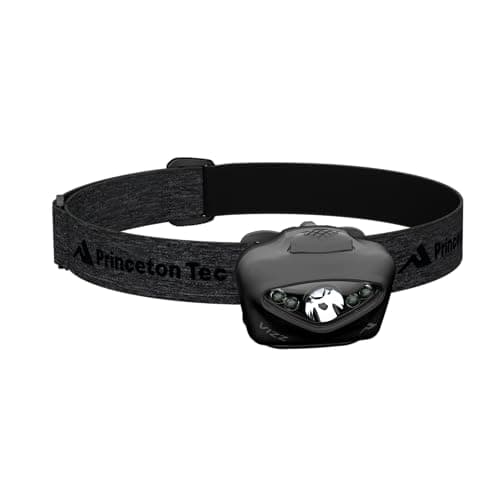 Princeton Tec Vizz550 lumens on three AAA cells with an IPX7 rating — immersion, not just rain. The only AAA lamp here rated for a dunking. | Getting wet | 550 lm |
We earn a commission if you buy through the links on this page, at no extra cost to you. It does not change what we recommend or the order they appear in. Full disclosure. Prices checked October 16, 2026.
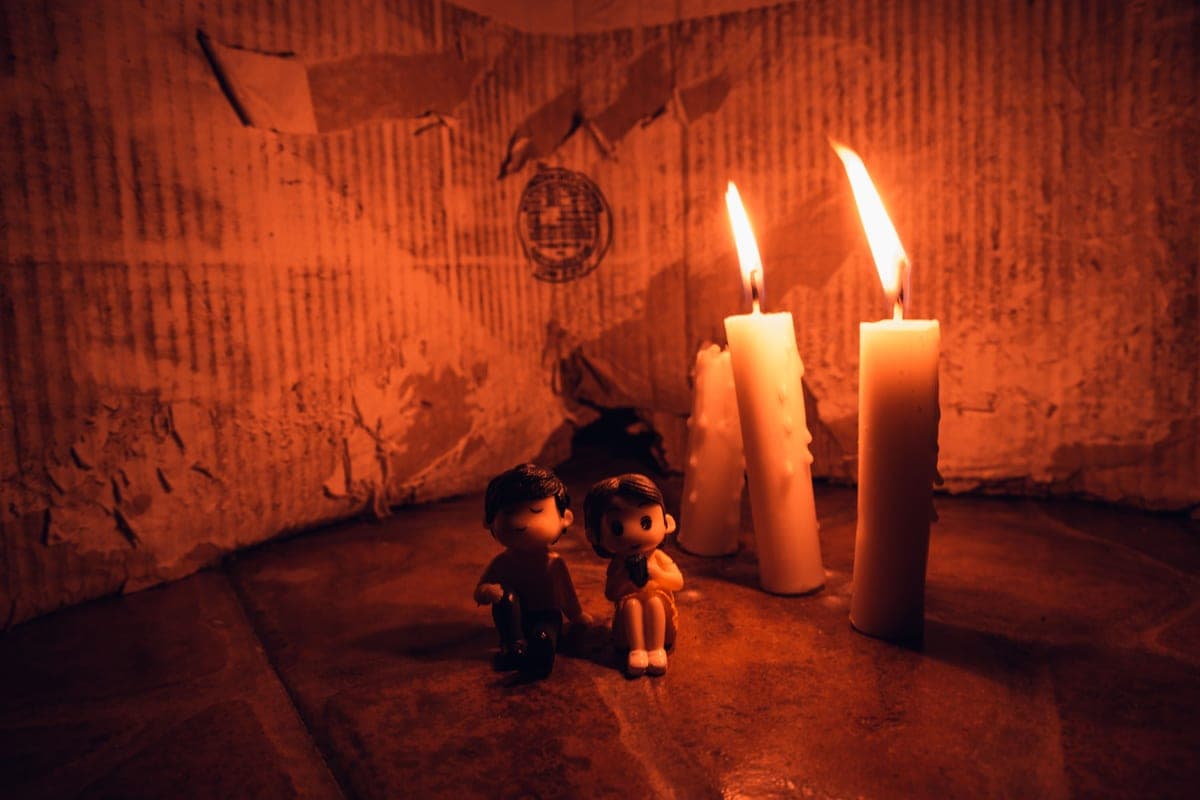
Every other page on this site ranks lights on performance. This one does not, because emergency lighting has a different failure mode. The light that fails you in an outage is not the dim one — it is the flat one, or the one you could not find.
So this ranking starts from shelf life and findability, and treats output as a tiebreaker.
How we picked
Power-source shelf life first, then beam shape for indoor use, then whether the light can be located in the dark. Every figure is sourced and several products here publish almost nothing, which we say plainly. See our methodology.
Shelf life is the specification
| Source | Shelf life | Cold performance | Suits |
|---|---|---|---|
| Lithium primary (CR123A, lithium AA/AAA) | About 10 years | Excellent | Drawer lights, go-bags |
| Alkaline (AA, AAA, D) | 5 to 10 years, with leak risk | Poor below freezing | Cheap coverage, rotated regularly |
| Lithium-ion, sealed | Months before needing a top-up | Poor when cold | Lights you use and charge regularly |
| Mains-charged, always plugged in | Indefinite while powered | Not applicable | Socket lights that switch on automatically |
That table explains the whole ranking. The Energizer socket light leads because it is charging continuously and switches itself on. The Streamlight PolyTac and SureFire G2X Pro rank high because CR123A lithium primaries hold their charge for around a decade. Rechargeable lights rank lower here despite better specifications, because a flat light is worth nothing.
A lantern beats a flashlight indoors
This is the single most useful thing on this page. A flashlight in a dark kitchen produces one bright circle and a room full of hard shadow. A 360-degree lantern at a quarter of the output makes the whole room usable.
Directional light is for finding things and for moving outdoors. Area light is for living in a room, which is what an outage actually requires. Flashlight versus lantern sets out the comparison properly.
Findability: the problem nobody plans for
Every household emergency plan has the same flaw. The torch is in a drawer, in a room you now have to cross in the dark, past the furniture that has moved since you last thought about it.
- A socket light that switches itself on removes the problem entirely. This is why the Energizer Auto-On leads a page with no published output figure at all.
- Glow-in-the-dark bodies let a light be found without another light. Cheap and genuinely effective.
- One light per room beats one good light in the hall.
- A headlamp beside the bed means both hands free from the moment you get up.
How much light a household actually needs
Building a household kit
- One socket light per floor, minimum. They switch themselves on and they cost very little.
- One lantern for the main living space. Area light is what makes an outage tolerable.
- One headlamp per adult. Hands free for the fuse box, the water stop-tap, or the stairs.
- One reliable handheld on lithium primaries. For going outside, checking the meter, or looking at anything at distance.
- One light per child, ideally glow-in-the-dark so they can find it. See flashlights for kids.
- Spare cells, stored separately, and a note of the date you bought them.
What we would not buy
A single expensive rechargeable light as your whole outage plan. It will be flat, and one directional light in a dark house is a much worse outcome than four cheap lights in the right places.
We would also avoid hand-crank lights as a primary. They work, and they produce very little light for a lot of effort. As a last-resort backup in a go-bag they are reasonable; as the thing you reach for when the lights go out they are miserable.
One household classic worth knowing about on shelf life alone: a D-cell Maglite publishes 298 hours of runtime on its lowest mode and needs no charge maintained, so it works after two years in a cupboard. It is IPX4 and heavy, which is the trade. Streamlight vs Maglite sets out both sides on published figures.
Where to go next
- Household coverage — best flashlights for home use.
- Away from the house — best flashlights for camping.
- For children — flashlights for kids.
- Which beam shape — flashlight versus lantern.
- What to keep together — a power outage lighting kit.
- For an older relative — flashlights for elderly people and seniors, ranked on being findable and simple rather than bright.
- Reviewed in full — the Streamlight Siege for area light, the Maglite ML300L, which runs 32 hours at its full output on cells from any supermarket, and the Streamlight Super Siege, which publishes 348 hours on its red mode and floats.
The picks, in full
Top pick · The light that finds you, rather than the other way round
Energizer Auto-On Rechargeable Flashlight
It lives in a wall socket, charges continuously, and switches itself on the instant the power fails.
This is the only product on the site we recommend without a single performance figure, and the reason is that its performance is not the point. Being switched on and in a known place at the moment the lights go out is the point.
Every household emergency plan fails the same way: the torch is in a drawer in the dark room you cannot cross safely. A socket light removes that step entirely.
Energizer publishes no output figure we could find, and we are not going to invent one. Buy it for the behavior, not for the beam.
What works
- Switches itself on when mains power fails
- Always charged, because it lives in the socket
- Doubles as a night light
What does not
- No published output figure at all
- Nothing else about it is documented either
- Only useful in the room it is plugged into, so you need several
Skip this ifyou want one good light rather than several adequate ones. This is a coverage product, not a performance one.
Published specification
- Output
- not published(Not stated in the listing we read)
- Peak intensity
- not published
- Beam distance
- not published
- Runtime
- not published
- Battery
- Rechargeable, charges in the wall socketEnergizer Auto-On rechargeable flashlight — the brand's own listing on Amazon.com (retrieved September 1, 2026)
- Weight
- not published
- Ingress
- not published
$12.99 · 11% off
#ad · how this is funded · price as of October 16, 2026
Pick 2 · Area light in a power cut
Streamlight Siege
540 lumens of 360-degree area lighting, IPX7, on replaceable cells. A lantern beats a flashlight indoors and this is the one to own.
A flashlight in a dark kitchen produces one bright circle and a room full of hard shadow. A 360-degree lantern at a quarter of the output makes the room usable. That is the whole argument for owning one.
IPX7 on an outage light matters because outages and weather arrive together.
Replaceable cells rather than a sealed pack is the correct choice for something that sits in a cupboard for two years between uses.
What works
- 360-degree area lighting, which is the right beam shape indoors
- IPX7
- Replaceable cells, so storage does not kill it
What does not
- No published runtime in the source we could reach
- 540 lumens is modest if you want to light a whole floor
- No sourced weight
Skip this ifyou need to walk outside with it. A lantern spreads light everywhere, which is exactly wrong on a dark path.
Published specification
- Peak intensity
- not published
- Beam distance
- not published(Not applicable to a 360-degree lantern)
- Runtime
- not published(Not stated in the listing we read)
- Battery
- Replaceable cellsStreamlight Siege — the brand's own listing on Amazon.com (retrieved September 1, 2026)
- Weight
- not published
$85.81 · 47% off
#ad · how this is funded · price as of October 16, 2026
Pick 3 · A polymer duty light you will not worry about
Streamlight PolyTac
600 lumens, 214 m, 2.75 hours, IPX7 and 3 m impact resistance in a nylon polymer body. The one you leave in a truck.
2.75 hours at 600 lumens from two CR123A cells is a very efficient result — that is roughly 6 watt-hours doing real work rather than being thrown away as heat.
3 m of impact resistance is the highest figure in this roundup. Polymer absorbs a drop that would dent an aluminum body.
119 g with cells installed makes this the lightest full-size duty light here.
What works
- Full per-mode table published, all three modes
- 3 m impact resistance and IPX7
- 119 g, with a ten-year shelf life on its cells
What does not
- 600 lumens is modest against the rechargeable competition
- CR123A running costs add up
- We could not pin a current ASIN for it, so the buy link is a tagged Amazon search
Skip this ifyou use a light daily. CR123A primaries are the wrong economics for frequent use; buy a rechargeable instead.
Published specification
- Output
- 600 lmHigh. Medium 260 lm, low 35 lm.Streamlight PolyTac — manufacturer spec page (retrieved September 1, 2026)
- Peak intensity
- 11,500 cdHigh. Medium 4,900 cd, low 675 cd. Each reconciles with the published distance for its mode.Streamlight PolyTac — manufacturer spec page (retrieved September 27, 2026)
- Beam distance
- 214 mHigh. 140 m medium, 52 m low.Streamlight PolyTac — manufacturer spec page (retrieved September 1, 2026)
- Runtime
- 2.75 h high / 5.5 h medium / 34 h lowStreamlight PolyTac — manufacturer spec page (retrieved September 1, 2026)
- Battery
- 2 x CR123A lithium (included)Streamlight PolyTac — manufacturer spec page (retrieved September 1, 2026)
- Weight
- 119 g (4.2 oz) with batteriesStreamlight PolyTac — manufacturer spec page (retrieved September 1, 2026)
- Ingress
- IPX7Waterproof to 1 m for 30 minutes; 3 m impact resistance testedStreamlight PolyTac — manufacturer spec page (retrieved September 1, 2026)
#ad · how this is funded · price as of October 16, 2026
Pick 4 · A lantern that also charges a phone
Streamlight Super Siege
1,100 lumens of area light, USB rechargeable, and it will put charge back into a phone during an outage.
1,100 lumens is enough to light a whole room to a level where you can read and cook, which is the difference between coping with an outage and enduring one.
The USB output is the second reason to own it. In a multi-day outage, the phone is the thing that matters.
Rechargeable rather than replaceable cells is a real trade-off for emergency kit: better in a planned outage, worse if it has been in a cupboard for eighteen months. The red LED is the hedge: 1 lumen for a published 348 hours means a flat-ish pack still gives you two weeks of find-the-stairs light.
What works
- Six published output-and-runtime pairs, including 348 h on the 1 lm red
- IPX7 to a meter, a 2 m impact rating, and it floats
- Charges a phone over USB - Streamlight states 4+ phone charges
What does not
- No sourced runtime, weight or IP rating
- Rechargeable cell self-discharges in storage
- Bulkier and heavier than the standard Siege
Skip this ifit will sit untouched for years. For pure standby, replaceable cells beat a rechargeable pack every time.
Published specification
- Output
- 1,100 lmWhite high. Medium 550 lm, low 125 lm, plus a three-mode red LED.Streamlight Super Siege — manufacturer spec page (retrieved October 13, 2026)
- Peak intensity
- not published
- Beam distance
- not published(Not applicable to a 360-degree lantern)
- Runtime
- 5 h 45 min at 1,100 lmSix published pairs: white 550 lm/11.5 h and 125 lm/36.25 h; red 2.7 lm/140 h, 1 lm/348 h and SOS 2.7 lm/320 h.Streamlight Super Siege — manufacturer spec page (retrieved October 13, 2026)
- Battery
- Li-ion, USB rechargeableAlso a USB power bank: Streamlight states 4+ phone charges. Capacity not published.Streamlight Super Siege — manufacturer spec page (retrieved October 13, 2026)
- Weight
- 868 g1 lb 14.0 oz. 19.05 cm tall.Streamlight Super Siege — manufacturer spec page (retrieved October 13, 2026)
- Ingress
- IPX7Submersible to 1 m, 2 m impact rating, and it floats.Streamlight Super Siege — manufacturer spec page (retrieved October 13, 2026)
#ad · how this is funded · price as of October 16, 2026
Pick 5 · A simple two-mode light that will outlive you
SureFire G2X Pro
600 lumens, 8,700 candela, 1.5 hours, and two modes. The specification is modest; the point is that nothing on it can go wrong.
SureFire publishes both 8,700 candela and a 187 m beam distance, and the two reconcile: the square root of 8,700 divided by 0.25 is 186.5 m. That makes this the only light on this site outside Streamlight and Maglite whose two beam figures can be checked against each other. It is still well short of the ProTac's 374 m on similar output, because SureFire deliberately builds a wider beam with more usable spill.
Two modes, low then high, with no strobe and no programming. On a light you might need in a hurry, that is a feature.
CR123A primaries hold their charge for a decade on a shelf. For a light that lives in a drawer against the worst night of your life, that matters more than rechargeability.
What works
- Two modes, no menu, nothing to misconfigure
- CR123A lithium cells with a ten-year shelf life
- The most durable reputation in the category, earned over decades
What does not
- 600 lumens and 8,700 candela are modest for the price in 2026
- IPX7 is immersion-only - no dust digit - and SureFire states no impact rating
- CR123A cells cost real money to run
Skip this ifyou buy on specification. Almost everything here beats it on paper; you are paying for reliability and simplicity instead.
Published specification
- Output
- 600 lmHigh. Low is 15 lm.SureFire G2X Pro — manufacturer spec page (retrieved October 6, 2026)
- Peak intensity
- 8,700 cdSureFire G2X Pro — manufacturer spec page (retrieved October 6, 2026)
- Beam distance
- 187 mPublished, and it reconciles with the 8,700 cd figure.SureFire G2X Pro — manufacturer spec page (retrieved October 6, 2026)
- Runtime
- 1.5 h on highLow is 52 h.SureFire G2X Pro — manufacturer spec page (retrieved October 6, 2026)
- Battery
- 2 x CR123A lithiumSureFire G2X Pro — manufacturer spec page (retrieved October 6, 2026)
- Weight
- 125 g4.4 oz, cells installed.SureFire G2X Pro — manufacturer spec page (retrieved October 6, 2026)
- Ingress
- IPX7No dust digit; no impact rating stated.SureFire G2X Pro — manufacturer spec page (retrieved October 6, 2026)
#ad · how this is funded · price as of October 16, 2026
Pick 6 · Reach per dollar on a cell you can replace
ThruNite TN12 V6
259 m of published reach and a 3,400 mAh 18650 for well under the duty brands, with an IPX8 rating and a Turbo mode ThruNite admits lasts sixty seconds.
259 m works back to roughly 16,770 candela, about 8.6 candela per lumen — a moderately wide beam that still reaches further than several lights with more output. The candela figure is ours, not ThruNite's.
ThruNite states the 1,950-lumen Turbo lasts 60 seconds. That is the most honest line on the page: most makers quote a headline and leave you to discover the step-down. Treat the working output as whatever High turns out to be, which ThruNite does not publish.
The 3,400 mAh 18650 computes to 12.2 watt-hours, the same store as a Fenix HM65R-T, and it is a standard removable cell rather than a sealed pack. Firefly at 0.5 lumens for 41 days is the figure that earns it a place in an outage kit.
What works
- 259 m of published reach, and an IPX8 rating at this price
- Standard 3,400 mAh 18650, included, charging over USB-C
- Publishes that Turbo is a 60-second burst instead of implying it is sustained
What does not
- No runtime published for Low, Medium or High — the levels you would actually use
- No candela and no weight, so the beam figure is derived and the carry weight is unknown
- Six modes with strobe in the cycle, on a light aimed partly at emergency use
Skip this ifyou want a light that sits in a drawer for a year and still works. A rechargeable cell self-discharges; the Streamlight PolyTac runs on lithium primaries that keep for roughly a decade.
Published specification
- Output
- 1,950 lmTurbo, which ThruNite states runs for 60 seconds. Firefly is 0.5 lm.ThruNite TN12 V6 — manufacturer spec page (retrieved October 3, 2026)
- Peak intensity
- not published
- Beam distance
- 259 mThruNite TN12 V6 — manufacturer spec page (retrieved October 3, 2026)
- Runtime
- 60 s on Turbo / 41 days on FireflyThruNite publishes only these two. Low, Medium and High are not given a runtime.ThruNite TN12 V6 — manufacturer spec page (retrieved October 3, 2026)
- Battery
- 3,400 mAh 18650 (included), USB-CThruNite TN12 V6 — manufacturer spec page (retrieved October 3, 2026)
- Weight
- not published
- Ingress
- IPX81.5 m impact resistanceThruNite TN12 V6 — manufacturer spec page (retrieved October 3, 2026)
#ad · how this is funded · price as of October 16, 2026
Pick 7 · A first headlamp, and the glovebox
Petzl Tikka
350 lumens, three AAA cells, a red mode, 94 grams. The unglamorous answer that covers most of what people actually do after dark.
Three alkaline AAA cells hold roughly 3.9 Wh between them at a modest draw. That is comparable to the Swift LT's entire battery, for a couple of dollars, available in any gas station in the country.
The red mode is the feature people end up using most. It preserves night adaptation and does not wake a tent.
350 lumens looks modest next to a 3,000-lumen listing. On a footpath at walking pace it is more light than you need, and it will still be running when the 3,000-lumen light has stepped down twice.
What works
- AAA cells: replaceable anywhere, storable for years, no charge cycle to manage
- A red mode you can reach without a mode-cycling ordeal
- Cheap enough to own two
What does not
- No rechargeable pack in the box
- 70 m throw identifies nothing at distance
- IPX4
Skip this ifyou want one lamp for everything including work. There is no real flood mode and no high-CRI option.
Published specification
- Output
- 350 lmANSI/PLATO FL 1Petzl Tikka — manufacturer spec page (retrieved September 1, 2026)
- Peak intensity
- not published
- Beam distance
- 70 mOn three AAA cells; 75 m on the CORE rechargeable accessoryPetzl Tikka — manufacturer spec page (retrieved September 1, 2026)
- Runtime
- 2 h at 350 lm / 12 h at 100 lm / 110 h at 7 lm, on AAAOn the CORE pack the same levels run 2.5 h at 450 lm / 7 h at 100 lm / 110 h at 7 lm. AAA gives less peak output and more mid-level runtime. The 400 h figure Petzl lists is the red strobe, not a working runtime.Petzl Tikka — manufacturer spec page (retrieved September 27, 2026)
- Battery
- 3 x AAA (included), or the CORE rechargeable packPetzl Tikka — manufacturer spec page (retrieved September 1, 2026)
#ad · how this is funded · price as of October 16, 2026
Pick 8 · Getting wet
Princeton Tec Vizz
550 lumens on three AAA cells with an IPX7 rating — immersion, not just rain. The only AAA lamp here rated for a dunking.
IPX7 on AAA cells is the specification that makes this interesting. Almost everything else in the AAA class is IPX4, which means rain and nothing more.
Three lithium AAA cells hold roughly 4.5 Wh and shrug off cold in a way alkalines do not. On this lamp that combination is worth more than another 500 lumens.
Princeton Tec publishes an output and a runtime for each of its four modes, plus an 85 m beam distance and a 92 g weight - not a single flattering maximum. The 85 m works back to about 1,806 candela, or 3.3 candela per lumen, which says the 550 lumens buys width rather than reach.
What works
- IPX7 immersion rating on replaceable cells
- A published runtime spread across modes and chemistries
- Digital lockout, so it does not drain itself in a pack
What does not
- No candela figure, so the 85 m distance cannot be cross-checked
- Bulkier than the modern rechargeable lamps
- No rechargeable option
Skip this ifweight is your constraint. The AAA carriage that makes it robust also makes it bigger than the Li-ion competition.
Published specification
- Output
- 550 lmSpot high. Spot low 150 lm, flood high 30 lm, red high 10 lm.Princeton Tec Vizz — manufacturer spec page (retrieved October 15, 2026)
- Peak intensity
- not published(Princeton Tec publishes distance, not peak intensity)
- Runtime
- 1 h 30 min on spot highFour published pairs: spot 150 lm/40 h, flood 30 lm/90 h, red 10 lm/135 h. The headline 90 h is the flood figure.Princeton Tec Vizz — manufacturer spec page (retrieved October 15, 2026)
- Battery
- 3 x AAA alkaline or lithiumPrinceton Tec Vizz — manufacturer spec page (retrieved October 15, 2026)
- Ingress
- IPX7Withstands immersion to one meterPrinceton Tec Vizz — manufacturer spec page (retrieved October 15, 2026)
#ad · how this is funded · price as of October 16, 2026
Questions people actually ask
What is the best flashlight for a power outage?
Not one light — a set. A socket light that switches itself on when mains power fails, a lantern for the living space, a headlamp per adult, and one handheld on lithium primaries. Coverage beats performance in an outage.
How long do flashlight batteries last in storage?
Lithium primaries about ten years. Alkalines five to ten, with a real risk of leaking and destroying the light. Sealed lithium-ion packs need a top-up every few months. For a drawer light, lithium primaries are the right answer.
Should emergency flashlights be rechargeable?
Generally no, for the primary ones. A rechargeable cell self-discharges and may be flat exactly when you need it. Keep rechargeables for lights you use and charge regularly, and put primaries in the ones that wait.
Is a lantern better than a flashlight for a power cut?
Indoors, yes, and by a wide margin. A flashlight gives one bright circle and hard shadows; a 360-degree lantern at a quarter of the output makes a whole room usable. Have both — the flashlight for going outside.
How many lumens do I need for a power outage?
Less than you would guess. Five hundred lumens of area light makes a room usable; a hundred lumens of directional light finds anything you need to find. Output is not the constraint — being able to find a working light is.
Do batteries leak if left in a flashlight?
Alkaline cells frequently do over a period of years, and the leak usually destroys the light. Store alkalines beside the light rather than in it, or use lithium primaries, which do not fail the same way.
Are hand-crank flashlights worth having?
As a last-resort backup in a go-bag, reasonably. As your primary outage light, no: they produce very little light for a lot of effort, and a socket light costs less and works instantly.
Sources
Every figure on this page came from one of the documents below, read on the date shown. We do not cite other review sites, forum posts or video reviews as sources of fact.
- Streamlight PolyTac — manufacturer spec page (retrieved September 1, 2026)
- SureFire G2X Pro — manufacturer spec page (retrieved October 6, 2026)
- Princeton Tec Vizz — manufacturer spec page (retrieved September 1, 2026)
- ANSI/PLATO FL 1 flashlight performance standard — definitions of lumens, peak beam intensity, beam distance, runtime, impact and water resistance
- IEC 60529 — the IP (ingress protection) rating system
Read next
Streamlight Super Siege review
A specification-first review of the Streamlight Super Siege: six published runtimes, the 348-hour red mode that matters in a long outage, the power-bank figures, and the one arithmetic result that tells you which mode to run.
Best flashlights for elderly people and seniors
Flashlights for older adults, ranked on being findable in the dark, being simple to switch on, and being charged when needed — with honest cons on every pick.
Maglite ML300L 3-Cell D review
A specification-first review of the Maglite ML300L 3-Cell D: 32 hours at its full 746 lumens, 403 m of reach, and the 748 grams that pays for both.
Streamlight Siege review
A specification-first review of the Streamlight Siege: what a 360-degree lantern is actually judged on, and why the brightest light is the wrong tool indoors.
Best flashlights for home use
Household lighting ranked on coverage: socket lights, lanterns and a handheld that will still work in two years.
What to keep in a power outage lighting kit
A practical outage lighting kit, with battery storage rules and a check schedule that takes ten minutes a year.
Flashlight vs lantern
Directional versus area light, with the illuminance arithmetic for choosing between them.
Best headlamps, ranked on the watt-hours behind the lumens
The full headlamp ranking: output, weight, battery energy and beam distance, every figure sourced to the maker.
Flashlight runtime, computed
How runtime is defined, why thermal step-down happens, and the arithmetic to compute a real figure yourself.
Flashlights for kids
Children's flashlights ranked on findability and durability rather than on any performance figure.
Found a number that is wrong? Tell us and we will fix it and say so. Our methodology shows every formula on this page.