Compare
Streamlight vs Maglite
The rare comparison where both makers publish figures you can check. They have simply made opposite decisions about where the light should go.
By Scooter M. · Published · Updated
| # | Product | Best for | Output | Price |
|---|---|---|---|---|
| 1 | 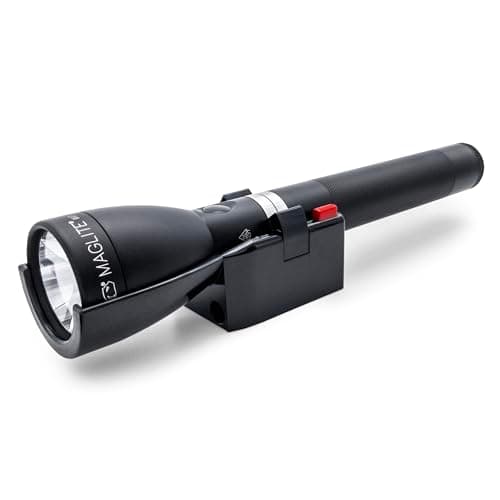 Maglite ML150LRX RechargeableTop pick1,082 lumens and 458 meters, which is further than any Streamlight here reaches and further than most lights of twice its output. | The longest published reach in this comparison | 1,082 lm | |
| 2 | 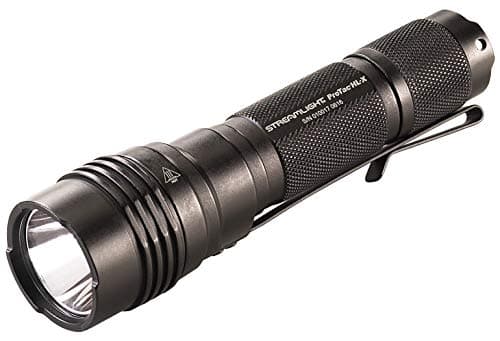 Streamlight ProTac HL-X1,300 lumens, 35,000 candela, 374 m, 1.5 hours, IP68, on either a rechargeable pack or two CR123A cells. Every figure published per mode. | Duty use, and the best-documented light on this site | 1,300 lm | |
| 3 | 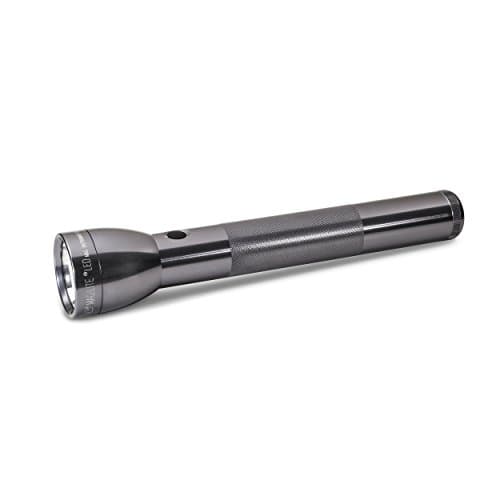 Maglite ML300L 3-Cell D746 lumens thrown 403 meters, and 298 hours on its lowest mode. The reach per lumen and the runtime are both far beyond anything Streamlight fields here. | Runtime measured in days, on cells from any shop | 746 lm | |
| 4 | 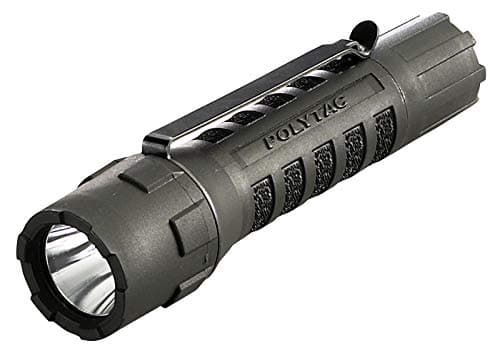 Streamlight PolyTac600 lumens, 214 m, 2.75 hours, IPX7 and 3 m impact resistance in a nylon polymer body. The one you leave in a truck. | A polymer duty light you will not worry about | 600 lm | |
| 5 | 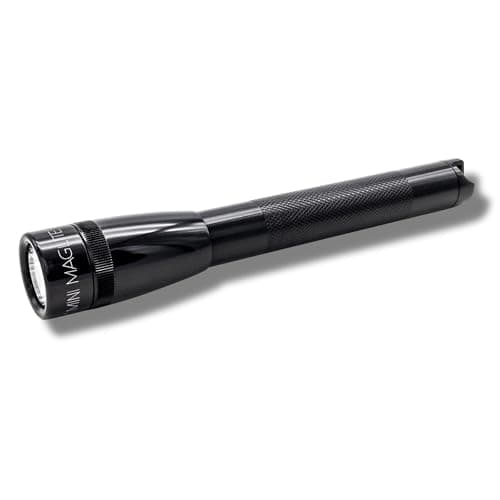 Maglite Mini Maglite LED 2-Cell AA127 lumens that reach 156 meters. A Streamlight MacroStream puts out four times the output and reaches 90. | Reach from a pocket light, on AA cells | 127 lm | |
| 6 | No image Streamlight MacroStream USB500 lumens, 2,000 candela, 90 m and two hours on high — every figure published per mode by the maker. That is the reason it leads. | The best-documented small EDC light here | 500 lm | Check price#ad |
We earn a commission if you buy through the links on this page, at no extra cost to you. It does not change what we recommend or the order they appear in. Full disclosure. Prices checked October 19, 2026.
Most brand comparisons on this site come down to disclosure: one maker publishes enough to be checked and the other publishes a lumen figure. This one does not. Streamlight and Maglite both publish candela, beam distance, runtime, weight and an ingress rating, and in both cases the candela and the distance reconcile with each other. That is two out of nine brands we cover, and they are these two.
So the comparison is about something more interesting than who is hiding what. It is about two companies looking at the same physics and making opposite decisions.
How we picked
Three matched pairs, chosen so each Maglite meets the Streamlight closest to it in size and role: the rechargeable flagships, the full-size duty lights, and the pocket lights. Every figure below is the maker's own, linked with the date we read it. We have handled none of these lights and we do not claim to have — our methodology sets out what we do instead.
The whole comparison in one column
Candela per lumen is not a specification anybody publishes. It is what you get by dividing the beam intensity by the total output, and it says how much of each lumen the reflector is concentrating rather than spreading. Here it separates the two brands completely.
| Light | Output | Candela | Beam distance | Candela per lumen |
|---|---|---|---|---|
| Maglite ML300L 3-Cell D | 746 lm | 40,596 | 403 m | 54 |
| Maglite ML150LRX | 1,082 lm | 52,555 | 458 m | 49 |
| Maglite Mini 2-Cell AA | 127 lm | 6,093 | 156 m | 48 |
| Streamlight ProTac HL-X | 1,300 lm | 35,000 | 374 m | 27 |
| Streamlight PolyTac | 600 lm | 11,400 (computed) | 214 m | 19 |
| Streamlight MacroStream | 500 lm | 2,000 | 90 m | 4 |
Every Maglite here sits between 48 and 54. Every Streamlight sits between 4 and 27. There is no overlap at all, which for two ranges assembled independently is a striking result — it means the beam shape is a house style rather than a per-product decision.
Why the beams differ
Maglite's design has been built around an adjustable-focus reflector since long before either company sold an LED. Twisting the head moves the emitter relative to a deep parabolic reflector, and at the spot end of that travel it collimates hard. A deep reflector and a small emitter is exactly the recipe for high candela, and it is the same physics that governs a dedicated thrower — see best flashlight throwers.
Streamlight builds fixed reflectors tuned for a hotspot with substantial usable spill around it. That is the right call for a light used to search a room, clear a vehicle or work under a hood, where a tight circle in a black field is actively unhelpful. Throw vs flood covers the trade in general terms; this page is what it looks like when two companies pick different sides of it.
Runtime: not close
This is the other place the two ranges diverge, and it is a straight consequence of what powers them.
| Light | Power source | Published runtime |
|---|---|---|
| Maglite ML300L 3-Cell D | 3 x D alkaline | 32 h at 746 lm / 112 h at 102 lm / 298 h at 23 lm |
| Maglite ML150LRX | LiFePO4, C-cell size | 3 h 15 min at 1,082 lm / 18 h at 138 lm / 79 h at 25 lm |
| Maglite Mini 2-Cell AA | 2 x AA | 25 h on Low |
| Streamlight ProTac HL-X | SL-B26 pack or 2 x CR123A | 1.5 h high / 3.75 h medium / 25 h low |
| Streamlight PolyTac | 2 x CR123A | 2.75 h high / 5.5 h medium / 34 h low |
| Streamlight MacroStream | Built-in Li-ion | 2 h high / 8 h low |
Three D cells hold more energy than every lithium pack in this comparison put together, and 298 hours is what that buys at a low output. And unusually for this site, both makers publish a figure for every mode. Maglite states 32 hours at its full 746 lumens, 112 hours at 102 lumens and 298 hours at 23 lumens — so the D-cell advantage is not confined to a dim reserve setting. Thirty-two hours at full output is a number no lithium light in this comparison comes close to.
That is the one real disclosure gap on the Maglite side, and it matters more than it looks. Runtime at the top of the range is the number a buyer most wants and the number least likely to flatter anybody. How runtime is defined and how to compute it covers why a single headline figure can be true and still be misleading.
Durability: Streamlight, clearly
| Light | Ingress | Impact |
|---|---|---|
| Streamlight ProTac HL-X | IP68, dust tight and waterproof to 2 m | 2 m |
| Streamlight PolyTac | IPX7, immersion to 1 m for 30 min | 3 m |
| Streamlight MacroStream | IPX4 | 1 m |
| Maglite ML300L 3-Cell D | IPX4 | 1 m |
| Maglite ML150LRX | IPX4 | 1 m |
| Maglite Mini 2-Cell AA | IPX4 | 1 m |
Every Maglite in this comparison is IPX4 with a 1 m drop rating. IPX4 is splashing water from any direction — it covers rain and it does not cover dropping the light in a stream. The ProTac HL-X's IP68 covers dust and sustained immersion, and the polymer PolyTac's 3 m impact rating is the highest figure on this site.
It is worth being precise about what this does and does not say. A Maglite's anodized aluminum body has a decades-long reputation for surviving abuse, and nothing here contradicts that. What it says is that Streamlight has run the tests and published the numbers, and on those published numbers it wins. Reputation is not a specification, and this site ranks on specifications.
The three matched pairs
Rechargeable flagship: ML150LRX vs ProTac HL-X
The Maglite reaches 84 m further on 17 percent less output. The Streamlight is a third of the weight, is IP68 against IPX4, and runs on CR123A primaries when the pack is flat. Both publish a full per-mode runtime table. If the light lives in a vehicle and gets pointed at things a long way away, take the Maglite. If it lives on a belt and gets used, take the Streamlight.
Full size: ML300L 3-Cell D vs PolyTac
Not really a fair pairing on size — 748 g against 119 g — but it is the honest one on role, because both are the light you keep somewhere rather than carry. The ML300L reaches 403 m against 214 m, and runs 32 hours at full output against the PolyTac's 2.75, or 298 hours at its lowest against 34. The PolyTac is IPX7 with a 3 m impact rating and weighs a sixth as much. For a hall cupboard or a workshop bench, the Maglite. For a glovebox or a bag, the PolyTac.
Pocket: Mini Maglite 2-Cell AA vs MacroStream
The starkest pair. 127 lumens reaching 156 m against 500 lumens reaching 90 m. The MacroStream is USB-C rechargeable, half the weight, and puts four times as much total light into a room; the Mini reaches nearly twice as far and runs on AA cells you already own. Neither is wrong. They are answers to different questions, and the lumen figure would have told you the opposite of the truth about which one sees further.
Which brand should you buy
- You need reach — Maglite, on every pair here. Roughly twice the candela per lumen, and the figures reconcile.
- You need the light to survive things — Streamlight. IP68 and a 2 m impact rating against IPX4 and 1 m, on published figures.
- You need days of runtime from cells you can buy anywhere — Maglite. 298 hours on Eco from three D cells is not a number Streamlight fields an answer to.
- You need to know what it does at full output — either. Both publish a runtime for every mode, and Maglite's 32 hours at 746 lumens is the outlier figure here.
- It goes on a belt or in a pocket — Streamlight, on weight alone.
- It goes in a truck, a workshop, or a cupboard for an emergency — Maglite. See emergency and home lighting for how that fits a household kit.
What we would not do
We would not buy either brand on its reputation. Maglite has thirty years of being the flashlight in everyone's kitchen drawer and Streamlight has thirty years of being the one on a duty belt, and neither fact is a specification. Both companies publish enough to be judged on evidence, which is rare enough that it should be the reason you pick one.
We would also not read Maglite's IPX4 as meaning the lights are fragile, or Streamlight's lower candela as meaning its beams are weak. Both are deliberate engineering choices with a cost attached, and the cost is the thing worth understanding before buying.
The picks, in full
Top pick · The longest published reach in this comparison
Maglite ML150LRX Rechargeable
1,082 lumens and 458 meters, which is further than any Streamlight here reaches and further than most lights of twice its output.
458 m is the longest published reach of any light in this comparison, and it comes from 1,082 lumens — 17 percent less output than a Streamlight ProTac HL-X, which reaches 374 m. Forty-nine candela per lumen against twenty-seven.
The LiFePO4 chemistry is an unusual choice and a deliberate one. Lithium iron phosphate holds less energy per gram than the lithium-ion in a Streamlight SL-B26 pack, but it tolerates far more charge cycles and is markedly more stable at temperature. On a light expected to sit on a charger for years, that trade makes sense.
Maglite publishes a figure for every mode — 3 h 15 min at 1,082 lm, 18 h at 138, 79 h at 25 — plus 80 percent of capacity at 1,000 charge cycles, which is the only service-life figure on this site apart from Petzl's 300 cycles. What it still publishes badly is durability: IPX4 and a 1 m drop rating against IP68 and 2 m on the ProTac HL-X.
What works
- The longest published beam distance here, 458 m, with candela that reconciles
- LiFePO4 cells: longer cycle life and better temperature stability than lithium-ion
- Rechargeable without giving up the reach that defines the brand
What does not
- IPX4 and a 1 m drop rating, against IP68 and 2 m on the ProTac HL-X
- 431 g is nearly three times a ProTac HL-X
- No published cell capacity, so watt-hours and cost-to-run cannot be computed
Skip this ifthe light will be rained on hard or dropped on concrete. Maglite's published durability figures are the weakest part of its specification, and Streamlight's are the strongest part of its.
Published specification
- Peak intensity
- 52,555 cdMaglite ML150LRX Rechargeable — manufacturer spec page (retrieved September 4, 2026)
- Beam distance
- 458 mReconciles with the published candela: the square root of 52,555 divided by 0.25 is 458.5 mMaglite ML150LRX Rechargeable — manufacturer spec page (retrieved September 4, 2026)
- Runtime
- 3 h 15 min at 1,082 lm / 18 h at 138 lm / 79 h at 25 lmMaglite publishes output and runtime for all three modes. It also publishes a service life of 80 percent of capacity at 1,000 charge-discharge cycles, which almost no maker states.Maglite ML150LRX Rechargeable — manufacturer spec page (retrieved October 4, 2026)
- Battery
- LiFePO4, C-cell size, includedLithium iron phosphate rather than lithium-ion — a different chemistry, with a longer cycle life and a lower energy density.Maglite ML150LRX Rechargeable — manufacturer spec page (retrieved September 4, 2026)
- Weight
- 431 g (15.2 oz)With batteriesMaglite ML150LRX Rechargeable — manufacturer spec page (retrieved September 4, 2026)
- Ingress
- IPX41 m drop resistanceMaglite ML150LRX Rechargeable — manufacturer spec page (retrieved September 4, 2026)
#ad · how this is funded · price as of October 19, 2026
Pick 2 · Duty use, and the best-documented light on this site
Streamlight ProTac HL-X
1,300 lumens, 35,000 candela, 374 m, 1.5 hours, IP68, on either a rechargeable pack or two CR123A cells. Every figure published per mode.
35,000 candela and 374 m reconcile exactly: the square root of 35,000 divided by 0.25 is 374.2 m. Streamlight's numbers are internally consistent across all three modes, which is the strongest signal of a maker publishing real measurements rather than marketing figures.
1.5 hours at 1,300 lumens implies roughly 6 to 7 watt-hours of usable energy — consistent with a single 18650-class pack and with the CR123A alternative.
IP68 with 2 m impact resistance is the toughest rating in this roundup, and the reason this light shows up on so many duty belts.
What works
- Full ANSI FL1 table published per mode, and it reconciles
- Runs on a rechargeable pack or on shelf-stable CR123A lithium cells
- IP68 and 2 m impact rating
What does not
- The programming interface takes reading the manual to understand
- 162 to 176 g is heavy for pocket carry
- CR123A cells are expensive if you use it hard
Skip this ifyou want a pocket light. It is a duty-belt tool and the weight and length are built for a holster.
Published specification
- Output
- 1,300 lmHigh. Medium 420 lm, low 70 lm.Streamlight ProTac HL-X — manufacturer spec page (retrieved September 1, 2026)
- Peak intensity
- 35,000 cdHigh. 11,000 cd medium, 1,800 cd low.Streamlight ProTac HL-X — manufacturer spec page (retrieved September 1, 2026)
- Beam distance
- 374 mHigh. 210 m medium, 85 m low.Streamlight ProTac HL-X — manufacturer spec page (retrieved September 1, 2026)
- Runtime
- 1.5 h high / 3.75 h medium / 25 h lowOn the SL-B26 pack. On CR123A: 1.25 h / 3 h / 20 h.Streamlight ProTac HL-X — manufacturer spec page (retrieved September 1, 2026)
- Battery
- SL-B26 rechargeable Li-ion pack, or 2 x CR123A lithiumStreamlight ProTac HL-X — manufacturer spec page (retrieved September 1, 2026)
- Weight
- 162 g with CR123A, 176 g with the packStreamlight ProTac HL-X — manufacturer spec page (retrieved September 1, 2026)
- Ingress
- IP68Dust tight, waterproof to 2 m; 2 m impact resistance testedStreamlight ProTac HL-X — manufacturer spec page (retrieved September 1, 2026)
#ad · how this is funded · price as of October 19, 2026
Pick 3 · Runtime measured in days, on cells from any shop
Maglite ML300L 3-Cell D
746 lumens thrown 403 meters, and 298 hours on its lowest mode. The reach per lumen and the runtime are both far beyond anything Streamlight fields here.
40,596 candela from 746 lumens is 54 candela per lumen. A Streamlight ProTac HL-X manages 27. That is the whole Maglite argument in one ratio: the deep adjustable-focus reflector puts roughly twice as much of each lumen into the hotspot, so this light reaches 403 m on 57 percent of the ProTac's output.
298 hours on Eco is not a reserve-visibility claim of the kind some makers publish — Maglite states it as a runtime. Three D cells hold more energy than every lithium pack in this comparison put together, and this is what that buys.
The cost is mass and ingress. 748 g is more than four ProTac HL-Xs, and IPX4 means rain rather than immersion. This is a light that lives in a truck, a workshop or a hall cupboard, not on a belt.
What works
- 403 m of published reach from only 746 lumens, and the candela figure reconciles with it exactly
- 298 hours on Eco, on D cells you can buy in any supermarket
- Adjustable focus, from a wide flood to a tight spot, on a mechanism Maglite has refined for decades
What does not
- 748 g with cells fitted — the heaviest light on this site by a wide margin
- IPX4 only, against IP68 on the ProTac HL-X
- Three D cells are not included, and there is no rechargeable option in this model
Skip this ifyou have to carry it. The reach and the runtime are real, and so is the weight; a duty light at a fifth the mass is the better tool on a belt.
Published specification
- Peak intensity
- 40,596 cdMaglite ML300L 3-Cell D — manufacturer spec page (retrieved September 21, 2026)
- Beam distance
- 403 mReconciles exactly with the published candela: the square root of 40,596 divided by 0.25 is 403.0 mMaglite ML300L 3-Cell D — manufacturer spec page (retrieved September 21, 2026)
- Runtime
- 32 h at 746 lm / 112 h at 102 lm / 298 h at 23 lmMaglite publishes output and runtime for all three modes. Thirty-two hours at full output is the highest full-power figure on this site.Maglite ML300L 3-Cell D — manufacturer spec page (retrieved September 21, 2026)
- Battery
- 3 x D (not included)Maglite ML300L 3-Cell D — manufacturer spec page (retrieved September 21, 2026)
- Weight
- 748 g (26.4 oz)With batteries. 11.75 in x 2.25 in.Maglite ML300L 3-Cell D — manufacturer spec page (retrieved September 21, 2026)
- Ingress
- IPX4Water resistant, not immersion rated. 1 m drop resistance.Maglite ML300L 3-Cell D — manufacturer spec page (retrieved September 21, 2026)
#ad · how this is funded · price as of October 19, 2026
Pick 4 · A polymer duty light you will not worry about
Streamlight PolyTac
600 lumens, 214 m, 2.75 hours, IPX7 and 3 m impact resistance in a nylon polymer body. The one you leave in a truck.
2.75 hours at 600 lumens from two CR123A cells is a very efficient result — that is roughly 6 watt-hours doing real work rather than being thrown away as heat.
3 m of impact resistance is the highest figure in this roundup. Polymer absorbs a drop that would dent an aluminum body.
119 g with cells installed makes this the lightest full-size duty light here.
What works
- Full per-mode table published, all three modes
- 3 m impact resistance and IPX7
- 119 g, with a ten-year shelf life on its cells
What does not
- 600 lumens is modest against the rechargeable competition
- CR123A running costs add up
- We could not pin a current ASIN for it, so the buy link is a tagged Amazon search
Skip this ifyou use a light daily. CR123A primaries are the wrong economics for frequent use; buy a rechargeable instead.
Published specification
- Output
- 600 lmHigh. Medium 260 lm, low 35 lm.Streamlight PolyTac — manufacturer spec page (retrieved September 1, 2026)
- Peak intensity
- 11,500 cdHigh. Medium 4,900 cd, low 675 cd. Each reconciles with the published distance for its mode.Streamlight PolyTac — manufacturer spec page (retrieved September 27, 2026)
- Beam distance
- 214 mHigh. 140 m medium, 52 m low.Streamlight PolyTac — manufacturer spec page (retrieved September 1, 2026)
- Runtime
- 2.75 h high / 5.5 h medium / 34 h lowStreamlight PolyTac — manufacturer spec page (retrieved September 1, 2026)
- Battery
- 2 x CR123A lithium (included)Streamlight PolyTac — manufacturer spec page (retrieved September 1, 2026)
- Weight
- 119 g (4.2 oz) with batteriesStreamlight PolyTac — manufacturer spec page (retrieved September 1, 2026)
- Ingress
- IPX7Waterproof to 1 m for 30 minutes; 3 m impact resistance testedStreamlight PolyTac — manufacturer spec page (retrieved September 1, 2026)
#ad · how this is funded · price as of October 19, 2026
Pick 5 · Reach from a pocket light, on AA cells
Maglite Mini Maglite LED 2-Cell AA
127 lumens that reach 156 meters. A Streamlight MacroStream puts out four times the output and reaches 90.
This is the clearest single illustration on the site of why lumens do not decide reach. 127 lumens, 6,093 candela, 156 m. The Streamlight MacroStream is 500 lumens, 2,000 candela, 90 m. Four times the output, and it reaches 66 m less, because its reflector spreads the light instead of collimating it.
Forty-eight candela per lumen from a AA light is remarkable, and it is entirely down to the focusing head. Twist it and the beam goes from a usable flood to a tight circle you can put on something across a field.
What you give up is everything else. 127 lumens is genuinely dim next to any modern pocket light, there is no USB-C, and IPX4 is a rain rating.
What works
- 156 m of published reach from a 2 x AA pocket light, with candela that reconciles
- Two AA cells: available anywhere, storable for years, no charging routine
- Adjustable focus from flood to spot
What does not
- 127 lumens is far below anything modern in this size class
- IPX4, and no published sustained-output figure
- No rechargeable option and no USB-C
Skip this ifyou want a modern pocket light. On raw output it loses to everything, and it earns its place here only on reach per lumen and on running from cells you already own.
Published specification
- Output
- 127 lmMaglite Mini Maglite LED 2-Cell AA — manufacturer spec page (retrieved September 27, 2026)
- Peak intensity
- 6,093 cdMaglite Mini Maglite LED 2-Cell AA — manufacturer spec page (retrieved September 27, 2026)
- Beam distance
- 156 mReconciles with the published candela: the square root of 6,093 divided by 0.25 is 156.1 mMaglite Mini Maglite LED 2-Cell AA — manufacturer spec page (retrieved September 27, 2026)
- Runtime
- 11 h on High / 25 h on LowMaglite publishes both. Blink and SOS are not given a runtime.Maglite Mini Maglite LED 2-Cell AA — manufacturer spec page (retrieved September 27, 2026)
- Battery
- 2 x AA (included)Maglite Mini Maglite LED 2-Cell AA — manufacturer spec page (retrieved September 27, 2026)
- Weight
- 118 g (4.15 oz)With batteriesMaglite Mini Maglite LED 2-Cell AA — manufacturer spec page (retrieved September 27, 2026)
- Ingress
- IPX41 m drop resistanceMaglite Mini Maglite LED 2-Cell AA — manufacturer spec page (retrieved September 27, 2026)
#ad · how this is funded · price as of October 19, 2026
image
Pick 6 · The best-documented small EDC light here
Streamlight MacroStream USB
500 lumens, 2,000 candela, 90 m and two hours on high — every figure published per mode by the maker. That is the reason it leads.
2,000 candela and 90 m are consistent with each other, which is a better sign than it sounds. The FL1 beam distance is the square root of candela divided by 0.25 lux: the square root of 2,000 over 0.25 is 89.4 m. Streamlight's published figures check out to within a meter.
Two hours on high for 500 lumens implies roughly 2.5 watt-hours of usable energy, which is about right for a light this size. Nothing here is being oversold.
62 grams is pocketable in a way that a 21700 light is not, and that is the trade you are making against a bigger cell.
What works
- Every headline figure published per mode, and internally consistent
- 62 g with a real clip
- The arithmetic between its candela and its distance actually reconciles
What does not
- IPX4, so splash-resistant and no more
- Built-in cell rather than a replaceable 18650
- 500 lumens is modest against the 1,600-lumen headlines nearby
Skip this ifyou want reach. 2,000 candela is a close-range beam and no setting will change that.
Published specification
- Output
- 500 lmHigh. Low is 50 lm.Streamlight MacroStream USB — manufacturer spec page (retrieved September 1, 2026)
- Peak intensity
- 2,000 cdHigh. 220 cd on low.Streamlight MacroStream USB — manufacturer spec page (retrieved October 15, 2026)
- Beam distance
- 90 mHigh. 30 m on low.Streamlight MacroStream USB — manufacturer spec page (retrieved September 1, 2026)
- Runtime
- 2 h on high, 8 h on lowStreamlight MacroStream USB — manufacturer spec page (retrieved September 1, 2026)
- Battery
- Built-in Li-ion, charges in 4 hStreamlight MacroStream USB — manufacturer spec page (retrieved September 1, 2026)
- Weight
- 62.4 g (2.2 oz)Streamlight MacroStream USB — manufacturer spec page (retrieved September 1, 2026)
- Ingress
- IPX41 m impact resistance testedStreamlight MacroStream USB — manufacturer spec page (retrieved September 1, 2026)
#ad · how this is funded · price as of October 19, 2026
Questions people actually ask
Is Streamlight or Maglite better?
Neither, and unusually for a brand comparison the figures are good enough on both sides to say why. Maglite reaches roughly twice as far per lumen and runs far longer on replaceable cells. Streamlight publishes better durability ratings and beams with far more usable spill. Both publish a full per-mode runtime table. Pick on which of those you need.
Why does a 127-lumen Mini Maglite reach further than a 500-lumen Streamlight?
Because reach depends on candela, not lumens. The Mini Maglite publishes 6,093 candela and 156 m; the Streamlight MacroStream publishes 2,000 candela and 90 m. Maglite's adjustable-focus reflector concentrates the light into a tight hotspot; Streamlight's fixed reflector spreads it. Four times the output, less reach.
Are Maglite flashlights waterproof?
Every Maglite in this comparison publishes IPX4, which is splashing water from any direction. That covers rain and does not cover immersion. If you need immersion, the Streamlight ProTac HL-X publishes IP68 and the PolyTac publishes IPX7.
How long does a Maglite ML300L actually run?
Maglite publishes a full per-mode table for the 3-Cell D: 32 hours at 746 lumens, 112 hours at 102 lumens and 298 hours at 23 lumens. The 32-hour figure at full output is the striking one — three D cells hold enough energy that the top mode is not a short burst the way it is on a pocket light.
Is Maglite still worth buying in 2026?
On published figures, yes, for two specific jobs: reach per lumen and runtime on replaceable cells. It is not competitive on output per dollar, ingress rating or weight, and it has no USB-C option in this comparison. Buy it for what it is unusually good at rather than as a general-purpose modern light.
Which brand publishes better specifications?
Streamlight, narrowly, and now only because of the durability ratings — IP68 and 2 m against IPX4 and 1 m. Both publish output, candela, beam distance, per-mode runtime, weight and an ingress rating, and both have candela and beam distance that reconcile through the 0.25 lux definition. That puts them together at the top of the nine brands we cover.
Does a Maglite make a good emergency flashlight?
The ML300L is a strong household choice specifically because of the D cells: 298 hours on Eco and no charge to maintain, so it works after two years in a cupboard. The caveat is IPX4 and 748 g. See our emergency and home lighting page for how it fits alongside a lantern and a headlamp.
Sources
Every figure on this page came from one of the documents below, read on the date shown. We do not cite other review sites, forum posts or video reviews as sources of fact.
- Streamlight ProTac HL-X — manufacturer spec page (retrieved September 1, 2026)
- Streamlight PolyTac — manufacturer spec page (retrieved September 1, 2026)
- Streamlight MacroStream USB — manufacturer spec page (retrieved September 1, 2026)
- Maglite ML300L 3-Cell D — manufacturer spec page (retrieved September 21, 2026)
- Maglite ML150LRX Rechargeable — manufacturer spec page (retrieved September 4, 2026)
- Maglite Mini Maglite LED 2-Cell AA — manufacturer spec page (retrieved September 4, 2026)
- ANSI/PLATO FL 1 flashlight performance standard — definitions of lumens, peak beam intensity, beam distance, runtime, impact and water resistance
- IEC 60529 — the IP (ingress protection) rating system
Read next
Flashlight brand comparisons
Brand-against-brand comparisons on published figures and disclosure quality, not on reputation.
Streamlight vs SureFire
The two American duty brands compared on documentation, power strategy and interface philosophy.
Lumens vs candela
The distinction that decides reach, with the conversion formula and a table of real published figures.
Throw vs flood
How reflector geometry produces throw or flood, what each suits, and where the middle ground lives.
Best tactical flashlights, ranked on candela rather than lumens
The tactical ranking: published candela, beam distance, sustained runtime and ingress rating, all sourced.
Best flashlights for power outages
Outage lighting ranked on shelf life, area coverage and findability rather than on output.

Klein vs Streamlight work lights
Klein against Streamlight on work-light beam shape, mounting and published figures - including the only ingress rating either brand states.
Maglite ML300L 3-Cell D review
A specification-first review of the Maglite ML300L 3-Cell D: 32 hours at its full 746 lumens, 403 m of reach, and the 748 grams that pays for both.
Maglite ML150LRX review
A specification-first review of the Maglite ML150LRX: 48.6 candela per lumen, four programmable function sets, a 1,000-cycle LiFePO4 pack, and the IPX4 rating that holds it back.
Found a number that is wrong? Tell us and we will fix it and say so. Our methodology shows every formula on this page.