Emergency & Home
Maglite ML300L 3-Cell D review
The most striking runtime figure on this site, from the least fashionable light on it: thirty-two hours at full brightness, on batteries from a supermarket.
By Scooter M. · Published · Updated
| # | Product | Best for | Output | Price |
|---|---|---|---|---|
| 1 | 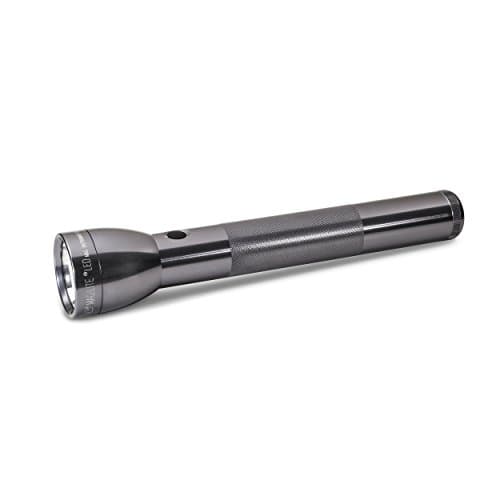 Maglite ML300L 3-Cell DTop pick746 lumens thrown 403 meters, and 298 hours on its lowest mode. The reach per lumen and the runtime are both far beyond anything Streamlight fields here. | Runtime measured in days, on cells from any shop | 746 lm |
We earn a commission if you buy through the links on this page, at no extra cost to you. It does not change what we recommend or the order they appear in. Full disclosure. Prices checked September 21, 2026.
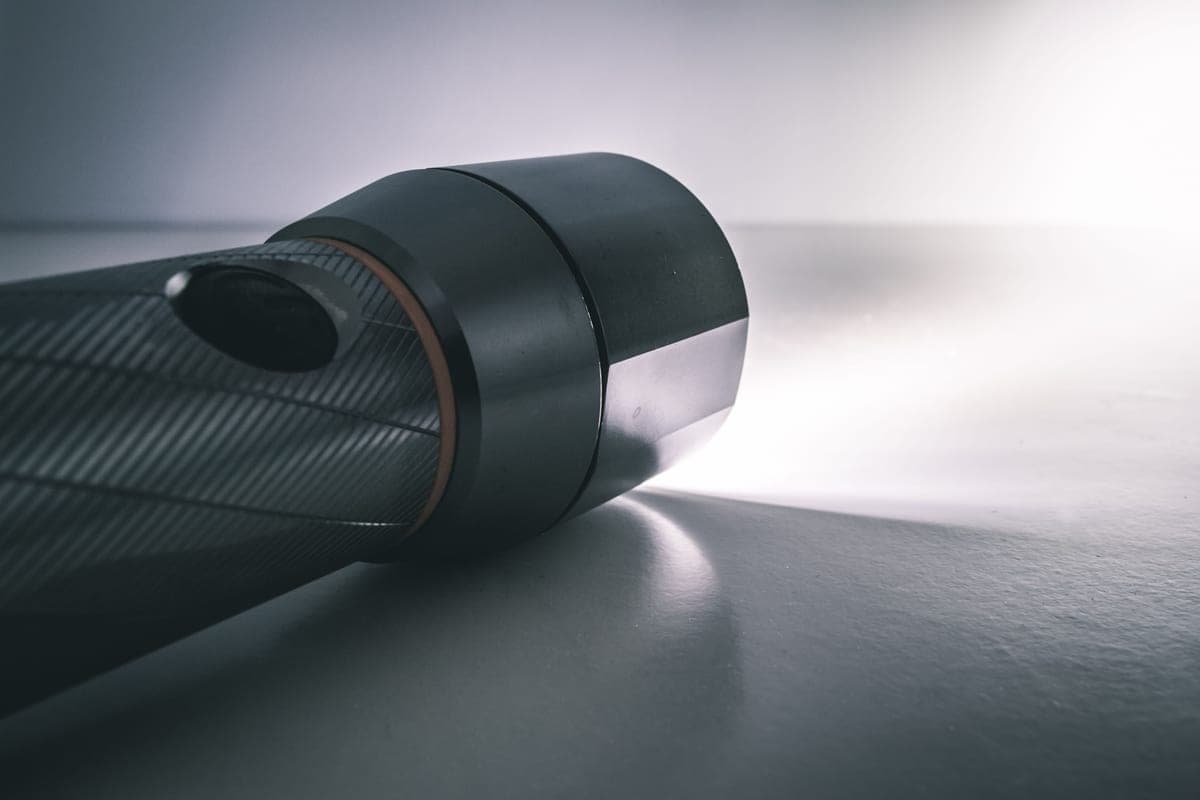
We have not tested this flashlight. We own none of the products on this site and have no laboratory. This review works from Maglite's own product page, re-read on September 21, 2026, and from the arithmetic those figures allow.
Maglite publishes one of the most complete specification sheets in the category, and one figure on it is genuinely remarkable: 32 hours at the full 746 lumens. Not 32 hours on a reserve setting. Thirty-two hours at maximum. Nothing else we cover comes within an order of magnitude of that at full output.
What Maglite publishes
| Specification | Published figure |
|---|---|
| Maximum output | 746 lm |
| Peak beam intensity | 40,596 cd |
| Beam distance | 403 m |
| Runtime, high | 32 h at 746 lm |
| Runtime, low | 112 h at 102 lm |
| Runtime, eco | 298 h at 23 lm |
| Batteries | 3 x D (not included) |
| Weight | 748 g (26.4 oz) with batteries |
| Length | 298 mm (11.75 in) |
| Water resistance | IPX4 |
| Impact resistance | 1 m |
Output, intensity, distance, a runtime for every mode, weight, dimensions and two durability ratings. Only Streamlight and Petzl publish at that level on this site. It is worth saying plainly, because Maglite is often written off as a legacy brand: on disclosure it is one of the best makers we cover.
The reach, and why it reconciles
The derived ratio is the interesting part. 40,596 candela from 746 lumens is 54 candela per lumen. A Streamlight ProTac HL-X manages 27 and a Fenix PD36R Pro 13. The ML300L puts roughly twice as much of each lumen into its hotspot as a modern tactical light, which is why it reaches 403 m on output that a pocket light exceeds.
That comes from the large, deep, adjustable-focus reflector that has been Maglite's signature for forty years. Reflector area and depth are what buy throw, and a D-cell body has room for both. See throw versus flood.
The runtime figure, in context
The reason is energy, not efficiency. Three alkaline D cells hold far more than any lithium pack in a handheld light, and the ML300L spends that energy at a modest 746 lumens rather than a fashionable 2,000. Lower output plus a much larger tank is the whole trick, and it is a trick no compact light can copy. How runtime is defined explains why the 10 percent threshold makes these figures comparable.
It also means no charging discipline. A light that sits in a cupboard for two years with fresh alkalines in it works when you pick it up — which is the single most important property of an emergency light and the one rechargeables are worst at. Our outage kit page treats that as the organizing principle.
What it costs you
748 grams with cells fitted, and 298 mm long. That is more than four Streamlight ProTac HL-Xs and nearly twelve Streamlight MacroStreams. It does not go in a pocket, a jacket or most bags. It lives in a truck, a workshop, a hall cupboard or beside a door, and that is the correct way to think about buying it.
IPX4 is the weak figure. That is splash resistance — rain, not immersion. The ProTac HL-X publishes IP68 and the PolyTac IPX7. If this light will be used in genuinely wet conditions rather than around the house, that gap matters more than any of the numbers above.
The 1 m impact rating is modest for a light this heavy. Mass and drop resistance work against each other: 748 g arriving on concrete carries far more energy than 119 g does, and 1 m is where Maglite stops guaranteeing it. The polymer Streamlight PolyTac publishes 3 m at a sixth the weight.
The cells are not included, and three D cells are a real running cost if you use it daily. For occasional and emergency use — which is what this light is for — that is the right trade, because alkalines keep for years in storage.
Who should buy something else
Skip it if you have to carry it. Every objection to this light is weight. If it goes on a belt or in a bag, the ProTac HL-X is the better tool at 162 to 176 g.
Skip it if it will get properly wet. IPX4 is rain. For boats, storms and flooding, buy something with an immersion rating.
Skip it if you want maximum output. 746 lumens is modest in 2026. It is also why the runtime figure exists, so this is a trade rather than a shortfall — but if you want 2,000 lumens, buy 2,000 lumens and accept two hours of it.
Skip it if you want an area light. A flashlight lights what you point it at; a lantern lights a room. In a power cut you probably want both, and flashlight versus lantern covers the split.
The verdict, stated as what it commits to
Maglite commits to 746 lumens for 32 hours, 40,596 candela, 403 meters, 748 grams, IPX4 and 1 m — a full sheet, with two figures that check each other. On the specification that matters most for emergency use, endurance at a level you would actually use, nothing else we cover is close.
What it is not is portable, waterproof or bright by current standards. Buy it as the light that lives by the door and works after two years in a drawer, and it is close to the ideal object for that job. Our home emergency page puts it against the alternatives.
The picks, in full
Top pick · Runtime measured in days, on cells from any shop
Maglite ML300L 3-Cell D
746 lumens thrown 403 meters, and 298 hours on its lowest mode. The reach per lumen and the runtime are both far beyond anything Streamlight fields here.
40,596 candela from 746 lumens is 54 candela per lumen. A Streamlight ProTac HL-X manages 27. That is the whole Maglite argument in one ratio: the deep adjustable-focus reflector puts roughly twice as much of each lumen into the hotspot, so this light reaches 403 m on 57 percent of the ProTac's output.
298 hours on Eco is not a reserve-visibility claim of the kind some makers publish — Maglite states it as a runtime. Three D cells hold more energy than every lithium pack in this comparison put together, and this is what that buys.
The cost is mass and ingress. 748 g is more than four ProTac HL-Xs, and IPX4 means rain rather than immersion. This is a light that lives in a truck, a workshop or a hall cupboard, not on a belt.
What works
- 403 m of published reach from only 746 lumens, and the candela figure reconciles with it exactly
- 298 hours on Eco, on D cells you can buy in any supermarket
- Adjustable focus, from a wide flood to a tight spot, on a mechanism Maglite has refined for decades
What does not
- 748 g with cells fitted — the heaviest light on this site by a wide margin
- IPX4 only, against IP68 on the ProTac HL-X
- Three D cells are not included, and there is no rechargeable option in this model
Skip this ifyou have to carry it. The reach and the runtime are real, and so is the weight; a duty light at a fifth the mass is the better tool on a belt.
Published specification
- Peak intensity
- 40,596 cdMaglite ML300L 3-Cell D — manufacturer spec page (retrieved September 21, 2026)
- Beam distance
- 403 mReconciles exactly with the published candela: the square root of 40,596 divided by 0.25 is 403.0 mMaglite ML300L 3-Cell D — manufacturer spec page (retrieved September 21, 2026)
- Runtime
- 32 h at 746 lm / 112 h at 102 lm / 298 h at 23 lmMaglite publishes output and runtime for all three modes. Thirty-two hours at full output is the highest full-power figure on this site.Maglite ML300L 3-Cell D — manufacturer spec page (retrieved September 21, 2026)
- Battery
- 3 x D (not included)Maglite ML300L 3-Cell D — manufacturer spec page (retrieved September 21, 2026)
- Weight
- 748 g (26.4 oz)With batteries. 11.75 in x 2.25 in.Maglite ML300L 3-Cell D — manufacturer spec page (retrieved September 21, 2026)
- Ingress
- IPX4Water resistant, not immersion rated. 1 m drop resistance.Maglite ML300L 3-Cell D — manufacturer spec page (retrieved September 21, 2026)
#ad · how this is funded · price as of September 21, 2026
Questions people actually ask
How long does the Maglite ML300L run?
Maglite publishes a figure for every mode: 32 hours at its full 746 lumens, 112 hours at 102 lumens and 298 hours at 23 lumens. The 32-hour figure at maximum output is the striking one - most makers publish only a low-mode maximum, and nothing else we cover comes close at full output.
Is the Maglite ML300L worth it?
As an emergency and household light, yes. It publishes 746 lumens for 32 hours, 403 m of reach and 40,596 candela that reconcile exactly, on D cells you can buy anywhere and that keep for years in storage. As a carried light it is the wrong tool - it weighs 748 g with cells.
How far does the Maglite ML300L throw?
Maglite publishes 403 m, and separately 40,596 candela. Those two figures reconcile exactly under ANSI FL 1, which is a stronger signal than either alone. The ratio works out at 54 candela per lumen, roughly twice what a modern tactical light achieves.
Is the Maglite ML300L waterproof?
It is rated IPX4, which is splash and rain resistance rather than immersion. That is the weakest figure on an otherwise strong sheet - the Streamlight ProTac HL-X publishes IP68 and the PolyTac IPX7. For genuinely wet conditions, buy something immersion-rated.
How heavy is the Maglite ML300L 3-Cell D?
748 g, or 26.4 oz, with batteries fitted, and 298 mm long. That is more than four times a Streamlight ProTac HL-X. The weight is the whole objection to the light, and it is also inseparable from the three D cells that produce the 32-hour runtime.
Does the Maglite ML300L come with batteries?
No - it takes three D cells and Maglite does not include them. For an emergency light that is less of a drawback than it sounds, because alkaline D cells store for years and can be bought in any supermarket, which is precisely why this light works after two years in a cupboard.
Maglite ML300L or a rechargeable flashlight?
For emergency use, the Maglite, because the failure mode of a rechargeable is that it is flat when you need it. For daily use, a rechargeable, because D cells cost real money to replace. Many people should own one of each, and our outage kit page sets out why.
Why is a 746-lumen light better than a 2,000-lumen one here?
Because the job is endurance, not peak brightness. The ML300L runs 32 hours at 746 lumens; a 2,000-lumen handheld typically runs one to three hours at its maximum. Lower output drawn from a much larger battery is what buys days of light instead of hours.
Sources
Every figure on this page came from one of the documents below, read on the date shown. We do not cite other review sites, forum posts or video reviews as sources of fact.
- Maglite ML300L 3-Cell D — manufacturer spec page (retrieved September 21, 2026)
- Streamlight ProTac HL-X — manufacturer spec page (retrieved September 1, 2026)
- Streamlight PolyTac — manufacturer spec page (retrieved September 1, 2026)
- ANSI/PLATO FL 1 flashlight performance standard — definitions of lumens, peak beam intensity, beam distance, runtime, impact and water resistance
- IEC 60529 — the IP (ingress protection) rating system
Read next
Best flashlights for power outages
Outage lighting ranked on shelf life, area coverage and findability rather than on output.
Best flashlights for home use
Household lighting ranked on coverage: socket lights, lanterns and a handheld that will still work in two years.
What to keep in a power outage lighting kit
A practical outage lighting kit, with battery storage rules and a check schedule that takes ten minutes a year.
Streamlight vs Maglite
Streamlight against Maglite on published candela, reach, runtime and durability - two complete spec sheets that disagree about beam shape.
Flashlight runtime, computed
How runtime is defined, why thermal step-down happens, and the arithmetic to compute a real figure yourself.
Lumens vs candela
The distinction that decides reach, with the conversion formula and a table of real published figures.
Found a number that is wrong? Tell us and we will fix it and say so. Our methodology shows every formula on this page.