Emergency & Home
Flashlight vs lantern
One puts light in a direction, the other puts it everywhere. Which you want depends entirely on whether you are looking for something or living in a room.
By Scooter M. · Published · Updated
| # | Product | Best for | Output | Price |
|---|---|---|---|---|
| 1 | 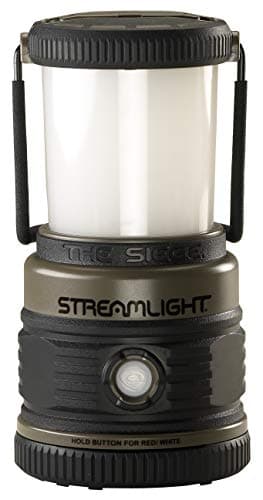 Streamlight SiegeTop pick540 lumens of 360-degree area lighting, IPX7, on replaceable cells. A lantern beats a flashlight indoors and this is the one to own. | Area light in a power cut | 540 lm | |
| 2 | 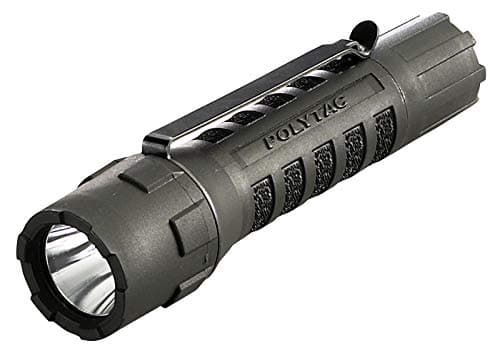 Streamlight PolyTac600 lumens, 214 m, 2.75 hours, IPX7 and 3 m impact resistance in a nylon polymer body. The one you leave in a truck. | A polymer duty light you will not worry about | 600 lm | |
| 3 | 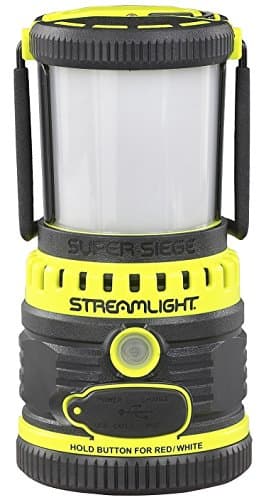 Streamlight Super Siege1,100 lumens of area light, USB rechargeable, and it will put charge back into a phone during an outage. | A lantern that also charges a phone | 1,100 lm |
We earn a commission if you buy through the links on this page, at no extra cost to you. It does not change what we recommend or the order they appear in. Full disclosure. Prices checked October 15, 2026.
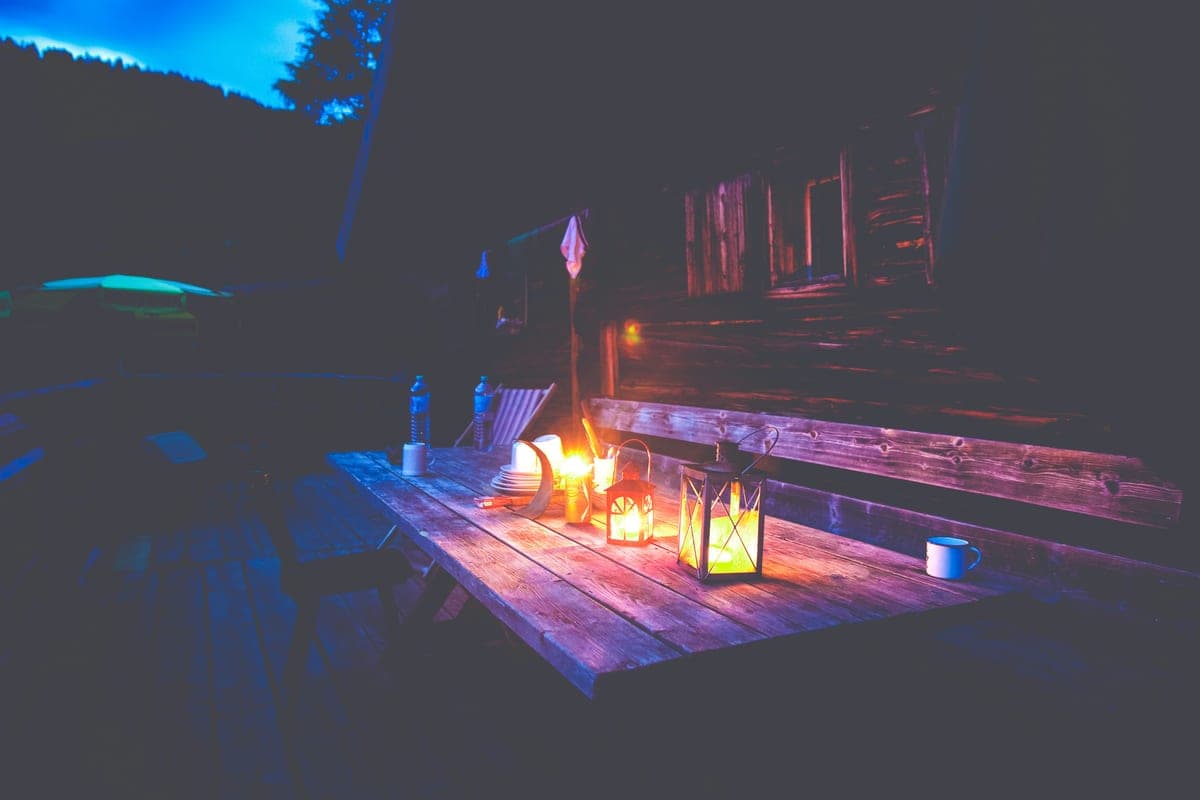
This is a beam-shape question rather than a brightness question, and it is the single most useful distinction in household lighting. A flashlight concentrates light into a cone. A lantern spreads it in every direction. Neither is better; they solve different problems.
The core difference, in numbers
| Situation | Better tool | Why |
|---|---|---|
| Power cut in the living room | Lantern | You need the whole room usable, not one bright circle |
| Finding the fuse box in a cupboard | Flashlight or headlamp | Directional, and you need to point it into a recess |
| Cooking on a camp stove | Lantern | Even light, no shadow cast by your own hands |
| Walking a dark path | Flashlight or headlamp | You need reach and a beam that goes where you look |
| Inside a tent | Lantern | A beam makes a bright oval on fabric and shadow everywhere else |
| Checking a noise outside | Flashlight with reach | This is the one job that genuinely wants candela |
| Reading in bed during an outage | Either, on low | Both work; the lantern is more comfortable |
Why a flashlight in a dark room is unpleasant
Two reasons, and both are about your eyes rather than about the light. A bright hotspot forces your pupils to contract for the lit area, which makes everything outside it darker than it would have been with no light at all. And a single point source casts hard-edged shadows that move as you move, which is disorienting.
The common improvisation — pointing a flashlight at the ceiling — works precisely because it converts a directional source into a diffuse one. A lantern is that, done properly.
Where a lantern falls down
Outdoors and moving. A lantern held at arm's length puts as much light in your own eyes as on the ground, and it has no reach at all. On a dark path a 100-lumen headlamp is more useful than a 1,000-lumen lantern.
It is also glare-prone at the wrong height. A lantern below eye level on a table is comfortable; the same lantern hung at head height is not.
The diffuser middle ground
Several flashlights accept a translucent diffuser cone that converts the beam into a small lantern. It works, it is cheap and it weighs nothing, and it is a genuinely good answer for a backpacker who does not want to carry two lights.
What it is not is as good as a real lantern, because the emitter still sits at one end and the light is uneven. For a household it is worth owning both.
What to own
For a house, one lantern per living space and one flashlight by the door. For camping, a lantern for the site and a headlamp per person. For a bag, one flashlight and a diffuser.
The mistake almost everyone makes is owning three flashlights and no lantern, and then improvising with a torch pointed at the ceiling during every outage. Emergency lighting covers the full household plan.
The picks, in full
Top pick · Area light in a power cut
Streamlight Siege
540 lumens of 360-degree area lighting, IPX7, on replaceable cells. A lantern beats a flashlight indoors and this is the one to own.
A flashlight in a dark kitchen produces one bright circle and a room full of hard shadow. A 360-degree lantern at a quarter of the output makes the room usable. That is the whole argument for owning one.
IPX7 on an outage light matters because outages and weather arrive together.
Replaceable cells rather than a sealed pack is the correct choice for something that sits in a cupboard for two years between uses.
What works
- 360-degree area lighting, which is the right beam shape indoors
- IPX7
- Replaceable cells, so storage does not kill it
What does not
- No published runtime in the source we could reach
- 540 lumens is modest if you want to light a whole floor
- No sourced weight
Skip this ifyou need to walk outside with it. A lantern spreads light everywhere, which is exactly wrong on a dark path.
Published specification
- Peak intensity
- not published
- Beam distance
- not published(Not applicable to a 360-degree lantern)
- Runtime
- not published(Not stated in the listing we read)
- Battery
- Replaceable cellsStreamlight Siege — the brand's own listing on Amazon.com (retrieved September 1, 2026)
- Weight
- not published
$85.81 · 47% off
#ad · how this is funded · price as of October 15, 2026
Pick 2 · A polymer duty light you will not worry about
Streamlight PolyTac
600 lumens, 214 m, 2.75 hours, IPX7 and 3 m impact resistance in a nylon polymer body. The one you leave in a truck.
2.75 hours at 600 lumens from two CR123A cells is a very efficient result — that is roughly 6 watt-hours doing real work rather than being thrown away as heat.
3 m of impact resistance is the highest figure in this roundup. Polymer absorbs a drop that would dent an aluminum body.
119 g with cells installed makes this the lightest full-size duty light here.
What works
- Full per-mode table published, all three modes
- 3 m impact resistance and IPX7
- 119 g, with a ten-year shelf life on its cells
What does not
- 600 lumens is modest against the rechargeable competition
- CR123A running costs add up
- We could not pin a current ASIN for it, so the buy link is a tagged Amazon search
Skip this ifyou use a light daily. CR123A primaries are the wrong economics for frequent use; buy a rechargeable instead.
Published specification
- Output
- 600 lmHigh. Medium 260 lm, low 35 lm.Streamlight PolyTac — manufacturer spec page (retrieved September 1, 2026)
- Peak intensity
- 11,500 cdHigh. Medium 4,900 cd, low 675 cd. Each reconciles with the published distance for its mode.Streamlight PolyTac — manufacturer spec page (retrieved September 27, 2026)
- Beam distance
- 214 mHigh. 140 m medium, 52 m low.Streamlight PolyTac — manufacturer spec page (retrieved September 1, 2026)
- Runtime
- 2.75 h high / 5.5 h medium / 34 h lowStreamlight PolyTac — manufacturer spec page (retrieved September 1, 2026)
- Battery
- 2 x CR123A lithium (included)Streamlight PolyTac — manufacturer spec page (retrieved September 1, 2026)
- Weight
- 119 g (4.2 oz) with batteriesStreamlight PolyTac — manufacturer spec page (retrieved September 1, 2026)
- Ingress
- IPX7Waterproof to 1 m for 30 minutes; 3 m impact resistance testedStreamlight PolyTac — manufacturer spec page (retrieved September 1, 2026)
#ad · how this is funded · price as of October 15, 2026
Pick 3 · A lantern that also charges a phone
Streamlight Super Siege
1,100 lumens of area light, USB rechargeable, and it will put charge back into a phone during an outage.
1,100 lumens is enough to light a whole room to a level where you can read and cook, which is the difference between coping with an outage and enduring one.
The USB output is the second reason to own it. In a multi-day outage, the phone is the thing that matters.
Rechargeable rather than replaceable cells is a real trade-off for emergency kit: better in a planned outage, worse if it has been in a cupboard for eighteen months. The red LED is the hedge: 1 lumen for a published 348 hours means a flat-ish pack still gives you two weeks of find-the-stairs light.
What works
- Six published output-and-runtime pairs, including 348 h on the 1 lm red
- IPX7 to a meter, a 2 m impact rating, and it floats
- Charges a phone over USB - Streamlight states 4+ phone charges
What does not
- No sourced runtime, weight or IP rating
- Rechargeable cell self-discharges in storage
- Bulkier and heavier than the standard Siege
Skip this ifit will sit untouched for years. For pure standby, replaceable cells beat a rechargeable pack every time.
Published specification
- Output
- 1,100 lmWhite high. Medium 550 lm, low 125 lm, plus a three-mode red LED.Streamlight Super Siege — manufacturer spec page (retrieved October 13, 2026)
- Peak intensity
- not published
- Beam distance
- not published(Not applicable to a 360-degree lantern)
- Runtime
- 5 h 45 min at 1,100 lmSix published pairs: white 550 lm/11.5 h and 125 lm/36.25 h; red 2.7 lm/140 h, 1 lm/348 h and SOS 2.7 lm/320 h.Streamlight Super Siege — manufacturer spec page (retrieved October 13, 2026)
- Battery
- Li-ion, USB rechargeableAlso a USB power bank: Streamlight states 4+ phone charges. Capacity not published.Streamlight Super Siege — manufacturer spec page (retrieved October 13, 2026)
- Weight
- 868 g1 lb 14.0 oz. 19.05 cm tall.Streamlight Super Siege — manufacturer spec page (retrieved October 13, 2026)
- Ingress
- IPX7Submersible to 1 m, 2 m impact rating, and it floats.Streamlight Super Siege — manufacturer spec page (retrieved October 13, 2026)
#ad · how this is funded · price as of October 15, 2026
Questions people actually ask
Is a lantern better than a flashlight for a power outage?
Indoors, yes. A lantern makes a whole room usable at a fraction of the output a flashlight needs, because it spreads light in every direction rather than concentrating it into a cone. Keep a flashlight for going outside.
How many lumens does a camping lantern need?
About 500 lumens is comfortable table light. A thousand and up covers a larger shelter or communal space. Beyond that a lantern at head height becomes glare rather than illumination.
Why does a flashlight make a dark room feel darker?
Because the bright hotspot makes your pupils contract for that area, so everything outside the beam is harder to see than it would have been with no light at all. A single point source also casts hard, moving shadows.
Does pointing a flashlight at the ceiling work?
Yes, and for exactly the reason a lantern works — it converts a directional source into a diffuse one. It is the improvised version of the right tool, and it wastes most of the output.
Are flashlight diffuser cones any good?
They are a genuinely useful compromise for anyone carrying weight, converting a beam into a small lantern for almost nothing. They are not as good as a real lantern, because the emitter is still at one end.
Should I own both a flashlight and a lantern?
For a household, yes. One lantern per living space and one flashlight by the door covers everything an outage produces, and most people own three flashlights and no lantern.
Sources
Every figure on this page came from one of the documents below, read on the date shown. We do not cite other review sites, forum posts or video reviews as sources of fact.
Read next
Streamlight Super Siege review
A specification-first review of the Streamlight Super Siege: six published runtimes, the 348-hour red mode that matters in a long outage, the power-bank figures, and the one arithmetic result that tells you which mode to run.
Best flashlights for power outages
Outage lighting ranked on shelf life, area coverage and findability rather than on output.
Best flashlights for camping
Camping lights ranked on area coverage, replaceable cells and published water ratings.
Best flashlights for home use
Household lighting ranked on coverage: socket lights, lanterns and a handheld that will still work in two years.
Throw vs flood
How reflector geometry produces throw or flood, what each suits, and where the middle ground lives.
Light types explained
The portable light categories, and the terminology that trips people up.
Found a number that is wrong? Tell us and we will fix it and say so. Our methodology shows every formula on this page.