Learn
Light types explained
Half the confusion in this category is vocabulary. Here is what each word means and which object it points at.
By Scooter M. · Published · Updated
| # | Product | Best for | Output | Price |
|---|---|---|---|---|
| 1 | 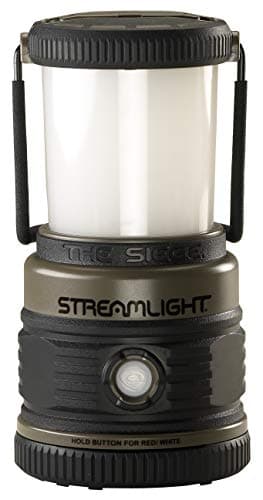 Streamlight SiegeTop pick540 lumens of 360-degree area lighting, IPX7, on replaceable cells. A lantern beats a flashlight indoors and this is the one to own. | Area light in a power cut | 540 lm | |
| 2 | No image Streamlight MacroStream USB500 lumens, 2,000 candela, 90 m and two hours on high — every figure published per mode by the maker. That is the reason it leads. | The best-documented small EDC light here | 500 lm | Check price#ad |
| 3 | 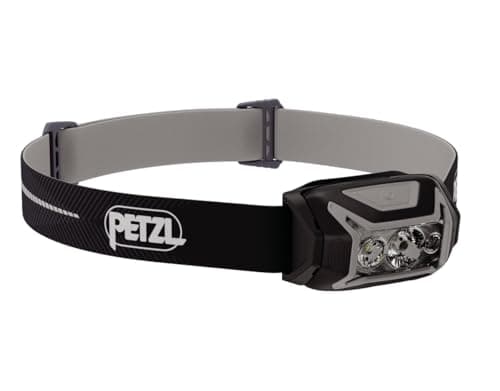 Petzl Actik CoreThe default outdoor headlamp: hybrid power, a published ANSI figure, and a beam shaped for walking rather than for a spec sheet. | Hiking and general outdoor use | 625 lm |
We earn a commission if you buy through the links on this page, at no extra cost to you. It does not change what we recommend or the order they appear in. Full disclosure. Prices checked October 15, 2026.
This page exists because a lot of the confusion in portable lighting is not technical, it is vocabulary. Two of the terms genuinely mean different things on different sides of the Atlantic, and one of them sends a large number of people to the wrong product entirely.
Headlamp and headlight
The categories
| Term | What it is | Beam | Typical use |
|---|---|---|---|
| Flashlight (torch) | Handheld, directional | Hotspot with spill | General purpose |
| Headlamp | Head-mounted, hands free | Usually flood-biased | Working, walking, camping |
| Headlight | A vehicle's forward lighting | Regulated cutoff pattern | Driving |
| Spotlight | Handheld or mounted, very tight beam | Almost all hotspot | Searching at distance |
| Thrower | Enthusiast term for a spotlight-pattern flashlight | Extreme hotspot | Maximum reach |
| Lantern | 360-degree area light | No beam at all | Camping, outages, rooms |
| Work light | Set-down or mounted task light | Wide even flood | Trades, vehicles, panels |
| Area light / floodlight | High-output wide light, often on a stand | Very wide flood | Sites, large spaces |
| Penlight | Pen-sized handheld | Narrow, low output | Inspection, close work |
| Weapon light | Firearm-mounted | Hotspot with defined spill | Specialist |
| Right-angle light | L-shaped, clips to a pocket or strap | Flood-biased | Military, work, hands-free improvisation |
Terms that describe beam rather than object
- Thrower. A light optimized for reach. Describes the optics, not the form factor. See throw vs flood.
- Flooder. The opposite: wide, even, short-range.
- Mule. Enthusiast term for a light with no reflector at all — pure flood, and genuinely excellent for close work.
- Zoomie. A light with a sliding lens that moves between flood and spot. Usually a compromise; see throw vs flood.
Terms that describe the interface
- Tail switch. Button at the back, momentary on with the thumb.
- Side switch. Button on the body, easier for mode changes.
- Twisty. Turn the head to switch. Simple and very reliable.
- Ramping. Smooth stepless brightness rather than fixed levels. See the Anduril guide.
- Mode memory. The light returns to the level you left it in.
- Lockout. A deliberate state where the light cannot be switched on accidentally.
Terms about power
- Primary cell. Non-rechargeable — alkaline, lithium, CR123A. Long shelf life.
- Secondary cell. Rechargeable — lithium-ion, NiMH.
- Dual fuel / hybrid. Accepts either. The most practically valuable feature a light can have.
- Protected cell. A lithium-ion cell with a protection circuit at the negative end. See 18650 vs 21700.
- Regulated. The driver holds output constant as the cell drains, then drops off. Better to use than an unregulated light that fades gradually.
Which category you probably want
- Both hands busy — a headlamp.
- One light for general use — a flashlight.
- Lighting a room or a campsite — a lantern. See emergency lighting.
- Lighting a work area — a work light.
- Seeing a long way — a thrower.
- A car part — not this site. You want an automotive retailer.
The picks, in full
Top pick · Area light in a power cut
Streamlight Siege
540 lumens of 360-degree area lighting, IPX7, on replaceable cells. A lantern beats a flashlight indoors and this is the one to own.
A flashlight in a dark kitchen produces one bright circle and a room full of hard shadow. A 360-degree lantern at a quarter of the output makes the room usable. That is the whole argument for owning one.
IPX7 on an outage light matters because outages and weather arrive together.
Replaceable cells rather than a sealed pack is the correct choice for something that sits in a cupboard for two years between uses.
What works
- 360-degree area lighting, which is the right beam shape indoors
- IPX7
- Replaceable cells, so storage does not kill it
What does not
- No published runtime in the source we could reach
- 540 lumens is modest if you want to light a whole floor
- No sourced weight
Skip this ifyou need to walk outside with it. A lantern spreads light everywhere, which is exactly wrong on a dark path.
Published specification
- Peak intensity
- not published
- Beam distance
- not published(Not applicable to a 360-degree lantern)
- Runtime
- not published(Not stated in the listing we read)
- Battery
- Replaceable cellsStreamlight Siege — the brand's own listing on Amazon.com (retrieved September 1, 2026)
- Weight
- not published
$85.81 · 47% off
#ad · how this is funded · price as of October 15, 2026
image
Pick 2 · The best-documented small EDC light here
Streamlight MacroStream USB
500 lumens, 2,000 candela, 90 m and two hours on high — every figure published per mode by the maker. That is the reason it leads.
2,000 candela and 90 m are consistent with each other, which is a better sign than it sounds. The FL1 beam distance is the square root of candela divided by 0.25 lux: the square root of 2,000 over 0.25 is 89.4 m. Streamlight's published figures check out to within a meter.
Two hours on high for 500 lumens implies roughly 2.5 watt-hours of usable energy, which is about right for a light this size. Nothing here is being oversold.
62 grams is pocketable in a way that a 21700 light is not, and that is the trade you are making against a bigger cell.
What works
- Every headline figure published per mode, and internally consistent
- 62 g with a real clip
- The arithmetic between its candela and its distance actually reconciles
What does not
- IPX4, so splash-resistant and no more
- Built-in cell rather than a replaceable 18650
- 500 lumens is modest against the 1,600-lumen headlines nearby
Skip this ifyou want reach. 2,000 candela is a close-range beam and no setting will change that.
Published specification
- Output
- 500 lmHigh. Low is 50 lm.Streamlight MacroStream USB — manufacturer spec page (retrieved September 1, 2026)
- Peak intensity
- 2,000 cdHigh. 220 cd on low.Streamlight MacroStream USB — manufacturer spec page (retrieved October 15, 2026)
- Beam distance
- 90 mHigh. 30 m on low.Streamlight MacroStream USB — manufacturer spec page (retrieved September 1, 2026)
- Runtime
- 2 h on high, 8 h on lowStreamlight MacroStream USB — manufacturer spec page (retrieved September 1, 2026)
- Battery
- Built-in Li-ion, charges in 4 hStreamlight MacroStream USB — manufacturer spec page (retrieved September 1, 2026)
- Weight
- 62.4 g (2.2 oz)Streamlight MacroStream USB — manufacturer spec page (retrieved September 1, 2026)
- Ingress
- IPX41 m impact resistance testedStreamlight MacroStream USB — manufacturer spec page (retrieved September 1, 2026)
#ad · how this is funded · price as of October 15, 2026
Pick 3 · Hiking and general outdoor use
Petzl Actik Core
The default outdoor headlamp: hybrid power, a published ANSI figure, and a beam shaped for walking rather than for a spec sheet.
625 lumens and 115 meters is a walking beam, not a searching beam. The FL1 definition puts illuminance at 115 m down to 0.25 lux, which is enough to tell that something is there and not enough to identify it. In practice you run the middle level and see 30 to 60 m of usable trail.
4.5 watt-hours matters more than the lumen figure. A lamp drawing a regulated 2 W empties that pack in a bit over two hours. The 400-hour number Petzl quotes is a reserve-mode visibility claim, not 400 hours of light you can walk by.
The hybrid design is the real feature. When the CORE pack dies three hours into a night descent, three AAA cells from a gas station bring the lamp back. Very little else at this price does that.
What works
- Runs on the rechargeable pack or three AAA cells, which is a genuine field fix rather than a marketing bullet
- Petzl publishes the full ANSI FL 1 table, including a distance for every mode
- 88 g is light enough that you stop noticing it
What does not
- IPX4 only: rain is fine, a dropped-in-the-creek recovery is not
- No published peak candela, so the 115 m claim cannot be checked against the intensity
- The maker's own site and its own Amazon listing disagree about peak output
Skip this ifyou need reach. 115 m is short by 2026 standards, and the 625-lumen headline does not change the shape of the beam.
Published specification
- Output
- 625 lmANSI/PLATO FL 1. Petzl's US product page states 625; the brand's own Amazon listing says 650. We use the maker's own site.Petzl Actik Core — manufacturer spec page (retrieved September 1, 2026)
- Peak intensity
- not published(Petzl publishes distance, not peak intensity)
- Beam distance
- 115 mMaximum, on the CORE rechargeable batteryPetzl Actik Core — manufacturer spec page (retrieved September 1, 2026)
- Runtime
- 2 h at 625 lm / 7 h at 100 lm / 100 h at 7 lm, on the CORE packPetzl publishes a full per-mode table for both power sources. On 3 x AAA the same levels run 2 h / 10 h / 100 h, with peak output capped at 450 lm. Its separate strobe figure, visible at 700 m for 400 h, is a be-seen claim and not a working runtime.Petzl Actik Core — manufacturer spec page (retrieved September 19, 2026)
- Battery
- CORE 1250 mAh / 3.6 V / 4.5 Wh, or 3 x AAAPetzl Actik Core — manufacturer spec page (retrieved September 1, 2026)
- Ingress
- IPX4Weather resistant. Not immersion rated.Petzl Actik Core — manufacturer spec page (retrieved September 1, 2026)
$87.95 · 6% off
#ad · how this is funded · price as of October 15, 2026
Questions people actually ask
What is the difference between a headlamp and a headlight?
In American English a headlamp is worn on your head and a headlight is a vehicle's front light. In British usage headlamp usually means the car part, which is why searches for headlamps return automotive results alongside outdoor ones.
What is the difference between a flashlight and a spotlight?
Beam shape. A flashlight has a hotspot with useful spill around it; a spotlight puts almost everything into a tight hotspot with very little spill. Enthusiasts call the second kind a thrower.
What is a mule flashlight?
A light with no reflector at all, so it produces pure flood with no hotspot. It sounds like a defect and it is genuinely excellent for close work, where a hotspot is glare and hard shadow.
What does dual fuel mean on a flashlight?
It accepts either a rechargeable cell or disposable primaries. It is the most practically valuable feature a light can have, because it means a flat battery is a swap rather than the end of your night.
What is a regulated flashlight?
One whose driver holds output constant as the cell drains and then drops off, rather than fading gradually. It is better to use, though an unregulated light can post a longer ANSI runtime while being dimmer throughout.
Is a lantern a kind of flashlight?
No — it is the opposite. A flashlight concentrates light into a cone; a lantern spreads it in every direction with no beam at all. Indoors the lantern is usually the better tool. See flashlight vs lantern.
Sources
Every figure on this page came from one of the documents below, read on the date shown. We do not cite other review sites, forum posts or video reviews as sources of fact.
Read next
Flashlight specifications, explained
The reference section: lumens, candela, runtime, CRI, IP ratings and cell formats, all brand-neutral.
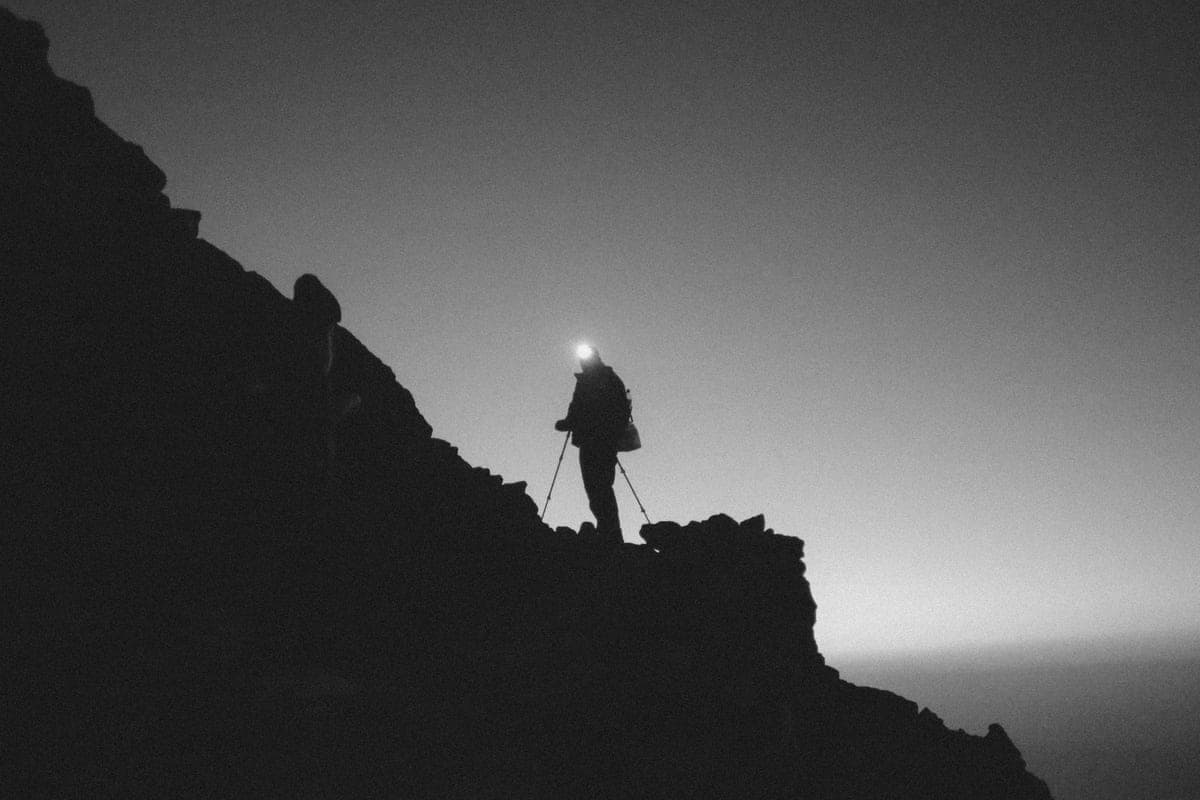
Flashlight vs headlamp
Handheld against head-mounted on aiming, shadows, hands-free use and battery capacity.
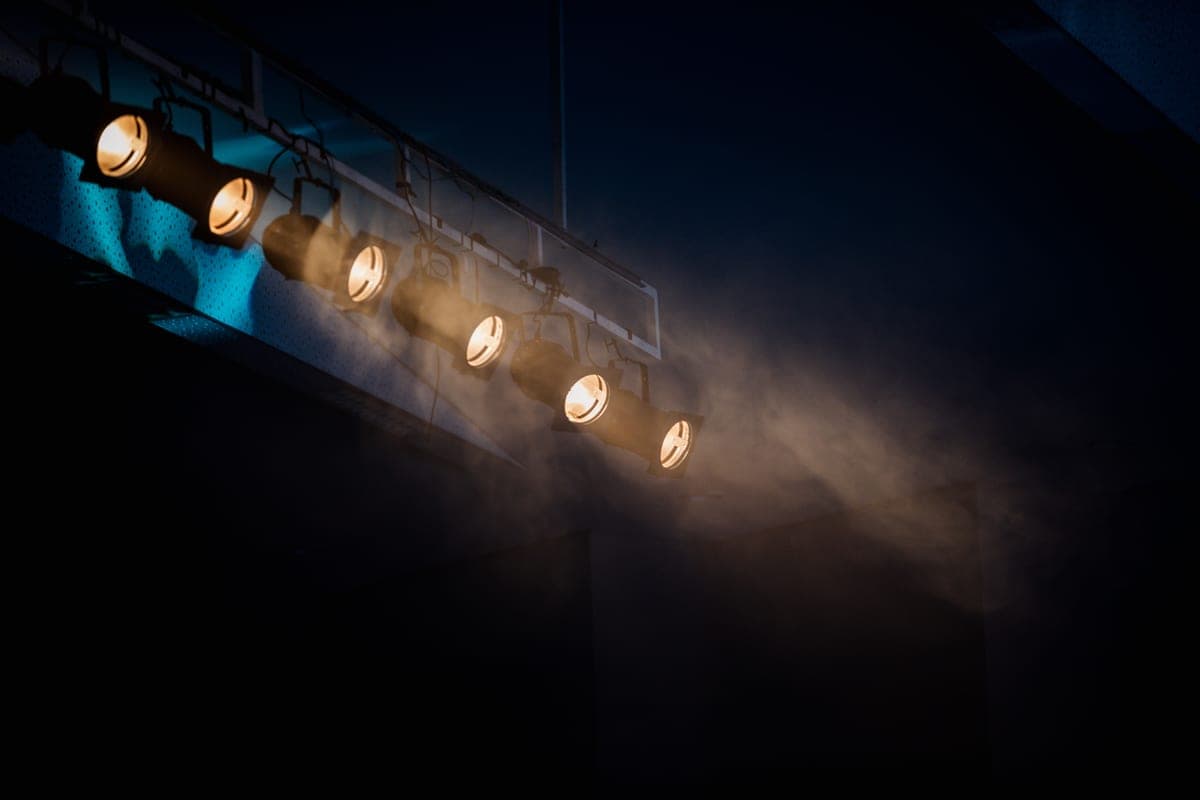
Throw vs flood
How reflector geometry produces throw or flood, what each suits, and where the middle ground lives.
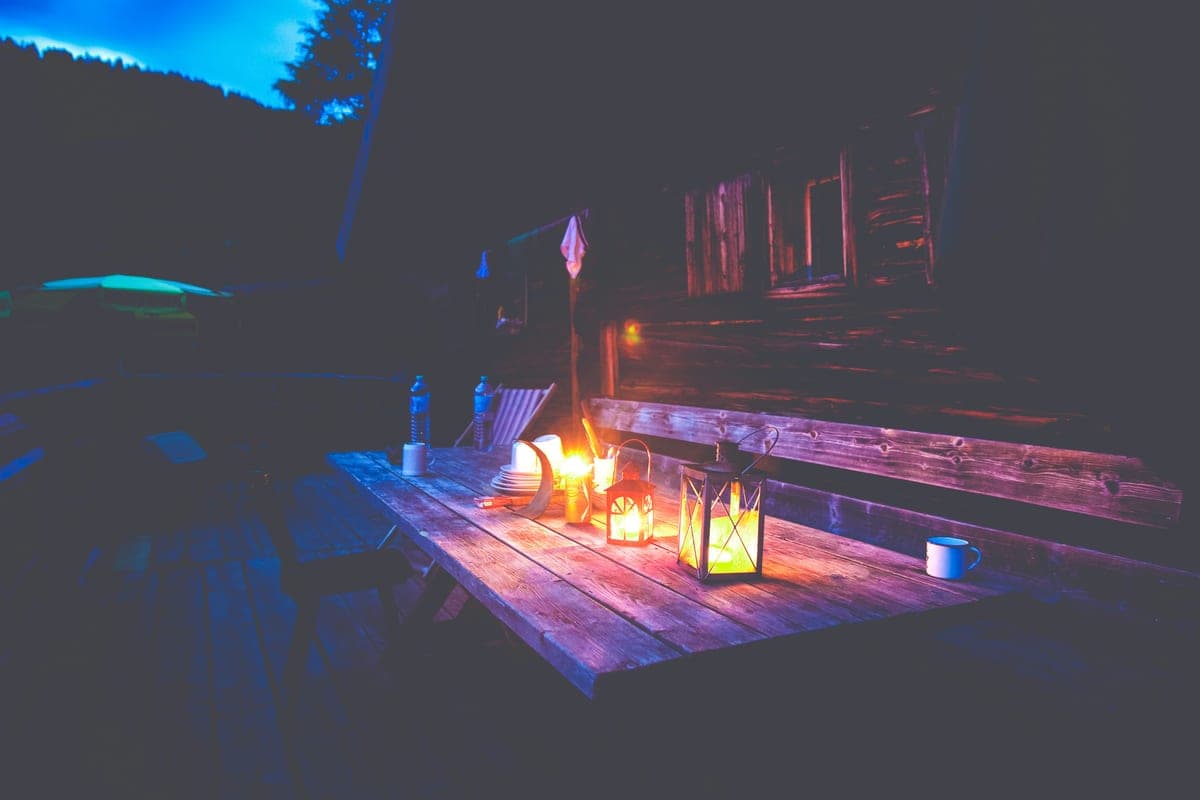
Flashlight vs lantern
Directional versus area light, with the illuminance arithmetic for choosing between them.

Best work lights, ranked on beam shape rather than brightness
The work-light ranking: beam shape, color rendering, mounting and runtime, with every published figure sourced.
Found a number that is wrong? Tell us and we will fix it and say so. Our methodology shows every formula on this page.