Learn
Flashlight specifications, explained
Every number on a flashlight box means something specific. Most of them are explained by the companies selling the light. These pages are not.
By Scooter M. · Published · Updated
Almost every explanation of flashlight specifications online is written by a company that sells flashlights, and it shows: the metric that gets the clearest explanation is usually the one that flatters that brand's products. These pages are written by somebody who sells no lights and has no line to protect.
They exist because the money pages on this site depend on them. Every roundup here cites lumens, candela, runtime and watt-hours, and none of those numbers is worth anything to a reader who has not been told what it means.
Start with these three
- [Lumens vs candela](/learn/lumens-vs-candela) — the single most consequential distinction in the category. One is how much light there is; the other is where it goes, and only one of them decides how far you can see.
- [Flashlight runtime](/learn/flashlight-runtime) — what ANSI FL 1 actually measures, why your light gets dim after a minute, and how to compute a real runtime from a battery capacity.
- [The ANSI FL 1 standard](/learn/ansi-fl1-standard) — what the standard specifies, and the far more important question of what it does not police.
Choosing and using
- [How many lumens do I need](/learn/how-many-lumens-do-i-need) — task by task, with the illuminance arithmetic.
- [A flashlight lumens reference](/learn/lumens-reference) — what each level from 30 to 4,000 lumens looks like, anchored to lights whose makers publish the figure.
- [Throw vs flood](/learn/throw-vs-flood) — beam shape, and why the two ends of the spectrum are different tools rather than better and worse.
- [CRI explained](/learn/cri-explained) — color rendering, the R9 problem, and what high CRI costs you in output.
- [18650 vs 21700](/learn/18650-vs-21700) — cell formats, capacity, current rating and what actually fits.
Interfaces and categories
- [The Anduril UI guide](/learn/anduril-ui-guide) — the enthusiast firmware, explained without assuming you already know it.
- [Flashlight vs headlamp](/learn/flashlight-vs-headlamp) — which form factor for which job.
- [Light types explained](/learn/light-types-explained) — headlamps, headlights, spotlights, lanterns and work lights, and the words people confuse.
- [Flying with a flashlight](/learn/flying-with-flashlights) — the FAA and TSA battery rules, with the watt-hours of real lights checked against the 100 Wh limit.
The two conversions worth memorizing
How these pages are written
Every factual claim here is either sourced to a published standard or to a manufacturer document, or it is arithmetic you can redo from figures we link. We have not tested any lights and we do not claim to have. Our methodology sets out exactly what we do instead and what we refuse to assert.
Where sources disagree, we say so and show both numbers. That happens more often than you would expect: the Petzl Actik Core is rated 625 lumens on Petzl's own US site and 650 on the brand's own Amazon listing, and treating that as a finding rather than a nuisance is most of the editorial value here.
Where these guides lead
Each guide links to the money pages it supports, because an explanation that does not help you buy the right thing has only done half a job. If you already know the theory, start at headlamps, EDC flashlights or tactical flashlights.
Questions people actually ask
What is the difference between lumens and candela?
Lumens measure total light output in all directions. Candela measures intensity in the brightest part of the beam. Reach depends on candela, not lumens — a 600-lumen thrower can reach further than a 2,000-lumen flood.
What does ANSI FL 1 actually measure?
Light output in lumens, peak beam intensity in candela, beam distance at 0.25 lux, runtime to 10 percent of initial output, impact resistance in meters and water resistance. It specifies the measurements; it does not audit anybody's results.
How do I calculate flashlight runtime?
Convert the battery to watt-hours — milliamp-hours divided by 1,000, times nominal voltage — then divide by the light's power draw. A 12.2 watt-hour 18650 driving a 2-watt output gives about six hours.
Why does my flashlight get dimmer after a minute?
Thermal step-down: the driver reduces output to protect the emitter and keep the body touchable. Every high-output light in a small body does it, which is why the ANSI runtime measurement starts 30 seconds after switch-on.
Is a higher CRI flashlight worth buying?
For any light used at close range, usually yes. Going from CRI 70 to CRI 90 is a bigger perceptual change than doubling the output, at a cost of roughly 10 to 20 percent of the lumens.
Why do these guides not recommend a specific brand?
Because they are explanations rather than roundups. Each one links to the buying pages it supports, where we do recommend specific lights and say exactly why.
Sources
Every figure on this page came from one of the documents below, read on the date shown. We do not cite other review sites, forum posts or video reviews as sources of fact.
- ANSI/PLATO FL 1 flashlight performance standard — definitions of lumens, peak beam intensity, beam distance, runtime, impact and water resistance
- IEC 60529 — the IP (ingress protection) rating system
- Petzl — ANSI/PLATO FL 1 technical information for its headlamp range
- Streamlight ProTac HL-X — manufacturer spec page (retrieved September 1, 2026)
Read next
Flying with a flashlight
FAA and TSA battery rules applied to real flashlights and headlamps, with published capacities converted to watt-hours and checked against the limits.
A flashlight lumens reference, anchored to real lights
What each lumen level actually means, anchored to lights with published figures — and why the same output can reach 221 m or 1,000 m.
Lumens vs candela
The distinction that decides reach, with the conversion formula and a table of real published figures.
Flashlight runtime, computed
How runtime is defined, why thermal step-down happens, and the arithmetic to compute a real figure yourself.
The ANSI FL 1 standard, explained
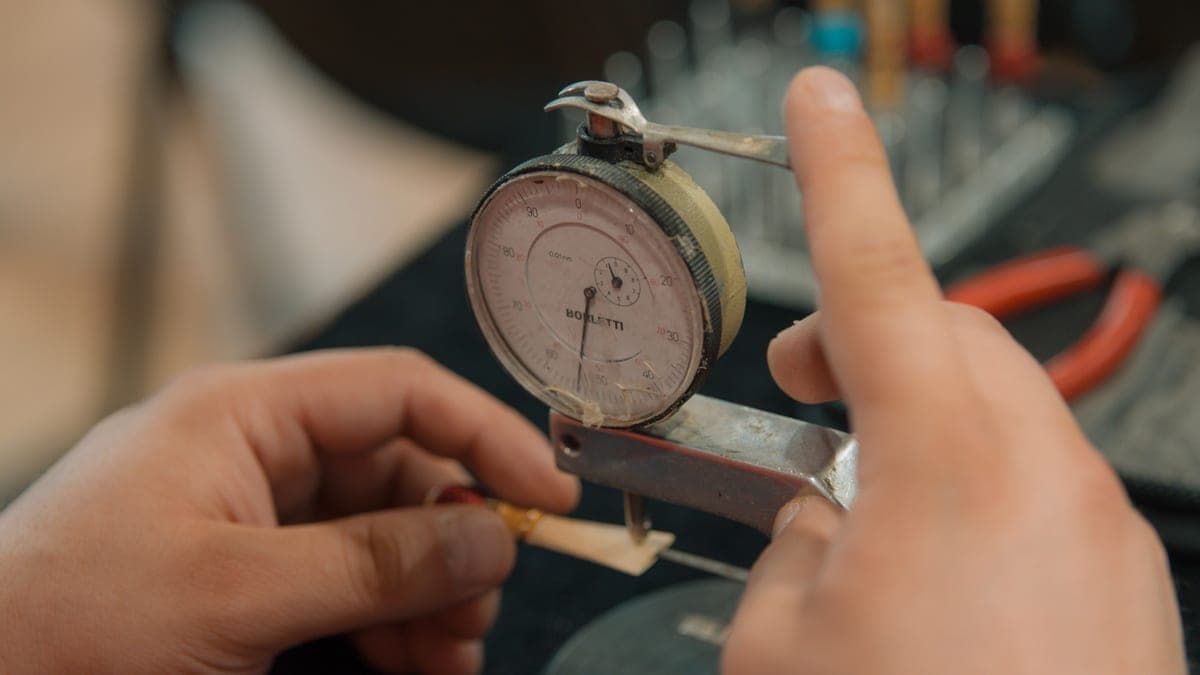
What the ANSI/PLATO FL 1 standard specifies, measurement by measurement, and the self-reporting problem at its center.
How many lumens do I need?
A task-by-task lumen chart derived from illuminance requirements rather than from marketing.
CRI explained
What CRI measures, the R9 problem, the output cost, and how CRI differs from color temperature.
18650 vs 21700, and every other cell format
Cell formats compared on capacity, current rating and dimensions, with the safety rules that matter.
Found a number that is wrong? Tell us and we will fix it and say so. Our methodology shows every formula on this page.