Learn
A flashlight lumens reference, anchored to real lights
Every level on this page is a light whose maker publishes the figure. No estimates, no borrowed numbers, and the reach column beside every one.
By Scooter M. · Published · Updated
| # | Product | Best for | Output | Price |
|---|---|---|---|---|
| 1 | 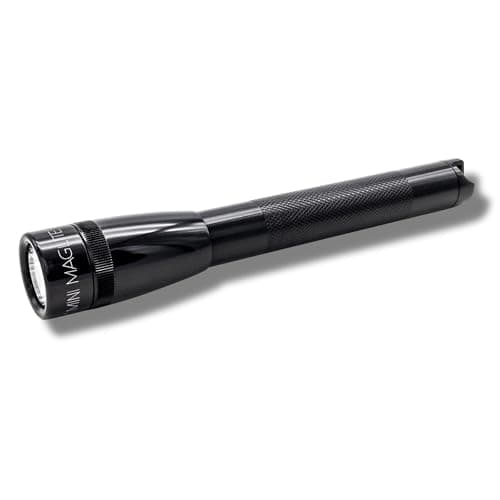 Maglite Mini Maglite LED 2-Cell AATop pick127 lumens that reach 156 meters. A Streamlight MacroStream puts out four times the output and reaches 90. | Reach from a pocket light, on AA cells | 127 lm | |
| 2 | No image Streamlight MacroStream USB500 lumens, 2,000 candela, 90 m and two hours on high — every figure published per mode by the maker. That is the reason it leads. | The best-documented small EDC light here | 500 lm | Check price#ad |
| 3 | 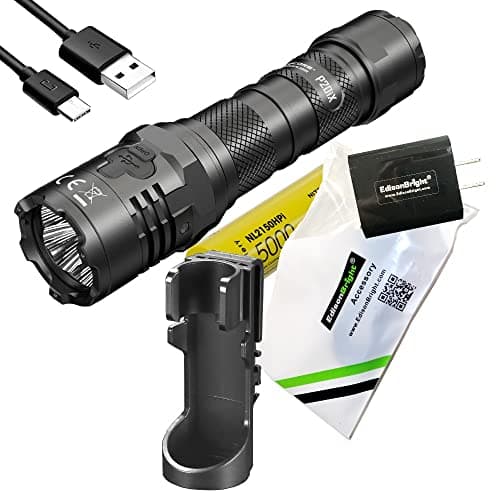 Nitecore P20iX4,000 lumens and 221 m of stated reach with USB-C charging, at a price well under the duty brands. | The most published output in the tactical set | 4,000 lm | |
| 4 | 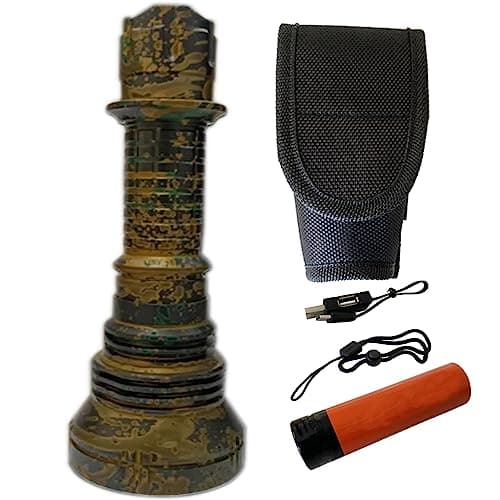 Acebeam L191,650 lumens and 1,300 m of stated throw. The most efficient distance-per-lumen figure on the site, by a wide margin. | The longest reach per lumen here | 1,650 lm |
We earn a commission if you buy through the links on this page, at no extra cost to you. It does not change what we recommend or the order they appear in. Full disclosure. Prices checked October 20, 2026.
Lumen figures are hard to picture because there is nothing to compare them to. A box says 1,000 lumens and the number means nothing until you have held one. This page fixes each level to a real light whose manufacturer publishes the figure, so the scale is anchored to something checkable rather than to adjectives.
It also does the thing most lumen charts leave out. Two lights with identical output can differ by a factor of four in how far they see, and the reference is misleading without that column. Every row below carries the published reach beside the published output.
What a lumen actually measures
A lumen is a unit of total luminous flux — the entire quantity of visible light a source emits, added up in every direction it goes. Under ANSI/PLATO FL 1 the figure is measured in an integrating sphere 30 seconds after switch-on, which is why it is sometimes called out-the-front output.
The critical property is that it says nothing about where the light goes. Pour a fixed quantity of light into a narrow column and you get a beam that reaches a kilometer. Spread the same quantity across a wide field and you get something that lights a room and dies at 200 meters. The lumen figure is identical in both cases. Lumens vs candela covers the distinction in full.
The reference, from 30 lumens to 4,000
| Output | A light that publishes it | Beam distance | What it suits |
|---|---|---|---|
| 30 lm | Petzl e+LITE | not published | An emergency backup that lives in a first-aid kit |
| 127 lm | Maglite Mini LED 2-Cell AA | 156 m | A pocket light that still reaches surprisingly far |
| 200 lm | Olight i3T 2 EOS | 62 m | Keychain and close task work |
| 300 lm | Petzl Tikkina | 65 m | Camp chores, a dog walk, a power cut |
| 500 lm | Streamlight MacroStream | 90 m | General everyday carry |
| 625 lm | Petzl Actik Core | 115 m | Hiking and trail running |
| 746 lm | Maglite ML300L 3-Cell D | 403 m | A household light with real reach |
| 1,200 lm | Petzl Swift RL | 168 m | Serious night movement on foot |
| 1,300 lm | Streamlight ProTac HL-X | 374 m | Duty carry with published everything |
| 1,650 lm | Acebeam L19 | 1,300 m | Pure distance |
| 2,000 lm | Streamlight Stinger 2020 | 315 m | A bright, broad duty beam |
| 2,000 lm | Nitecore P30i | 1,000 m | The same output, aimed at the horizon |
| 2,800 lm | Fenix PD36R Pro | 380 m | Maximum output with a large cell behind it |
| 4,000 lm | Nitecore P20iX | 221 m | Filling a space, not reaching across one |
Turning reach into intensity
Beam distance and candela are two ways of saying the same thing, and the conversion between them is exact rather than approximate. That is unusually convenient: it means you can derive an intensity figure for any light that publishes a distance, and compare lights whose makers publish different halves of the picture.
Divide candela by lumens and you get a single number describing how concentrated a beam is. Nobody publishes it, and it explains more than any specification that is published.
| Light | Output | Candela | Candela per lumen | Beam character |
|---|---|---|---|---|
| Acebeam L19 | 1,650 lm | 422,500 | 256 | Extreme thrower |
| Nitecore P30i | 2,000 lm | 250,000 | 125 | Thrower |
| Maglite Mini LED 2-Cell AA | 127 lm | 6,093 | 48 | Focused |
| Streamlight ProTac HL-X | 1,300 lm | 35,000 | 27 | Hotspot with usable spill |
| Fenix PD36R Pro | 2,800 lm | 36,100 | 13 | Broad and bright |
| Streamlight MacroStream | 500 lm | 2,000 | 4 | Pure flood |
| Nitecore P20iX | 4,000 lm | 12,210 | 3 | Pure flood |
The range runs from 3 to 256, which is a factor of 85 within a set of ordinary lights. A number under about 10 is a flood for close work. Anything over about 50 is built to reach. The middle of the range is where general-purpose lights sit, and the ProTac HL-X at 27 is close to the ideal compromise if you want one light for everything.
Why the brightest light on the page reaches the least far
The Nitecore P20iX publishes 4,000 lumens — more than any other light here — and 221 meters, less than any other light here except the two keychain-class entries. That is not a fault and it is not a contradiction. It is a design decision made visible.
A reflector concentrating light into a tight column produces high candela and long reach at the cost of everything outside the column. A shallow reflector or a diffused emitter spreads the same lumens across a wide field. The P20iX is built to fill a space — a yard, a warehouse aisle, the inside of a vehicle — and it does that better than anything else on the page. Ask it to identify something at 300 meters and it will lose to a light with 40 percent of its output. Throw vs flood sets out the engineering trade.
How to use this reference
- Find the job, then the number. Lighting a room or a work area is a lumen question. Identifying something at distance is a candela question, and the lumen figure will mislead you.
- Check whether the maker publishes a distance. If they publish output and nothing else, you cannot tell what shape the beam is — and on this site that counts against a light.
- Do the arithmetic yourself. Distance squared, times 0.25, gives candela. Divide by lumens for the concentration figure. Two multiplications tell you more than the marketing copy.
- More is not better past a point. Above roughly 1,000 lumens at arm's length, extra output is glare bouncing back at you. See how many lumens do I need for the job-by-job version of this.
What this page does not do
It does not convert flashlight lumens into household bulb wattages. That comparison gets asked constantly and it is a category error: a bulb radiates in every direction to light a room, and a flashlight concentrates output into a beam. A 60-watt incandescent bulb and a 500-lumen flashlight are not doing the same job even where the flux figures are similar, and the flashlight will look far brighter pointed at a wall while lighting the room far worse.
It also does not estimate anything. Every figure above is published by the manufacturer of the light named in the row, with the source linked. Where a maker does not publish a beam distance — the Petzl e+LITE here — the cell says so rather than carrying a number we inferred.
The picks, in full
Top pick · Reach from a pocket light, on AA cells
Maglite Mini Maglite LED 2-Cell AA
127 lumens that reach 156 meters. A Streamlight MacroStream puts out four times the output and reaches 90.
This is the clearest single illustration on the site of why lumens do not decide reach. 127 lumens, 6,093 candela, 156 m. The Streamlight MacroStream is 500 lumens, 2,000 candela, 90 m. Four times the output, and it reaches 66 m less, because its reflector spreads the light instead of collimating it.
Forty-eight candela per lumen from a AA light is remarkable, and it is entirely down to the focusing head. Twist it and the beam goes from a usable flood to a tight circle you can put on something across a field.
What you give up is everything else. 127 lumens is genuinely dim next to any modern pocket light, there is no USB-C, and IPX4 is a rain rating.
What works
- 156 m of published reach from a 2 x AA pocket light, with candela that reconciles
- Two AA cells: available anywhere, storable for years, no charging routine
- Adjustable focus from flood to spot
What does not
- 127 lumens is far below anything modern in this size class
- IPX4, and no published sustained-output figure
- No rechargeable option and no USB-C
Skip this ifyou want a modern pocket light. On raw output it loses to everything, and it earns its place here only on reach per lumen and on running from cells you already own.
Published specification
- Output
- 127 lmMaglite Mini Maglite LED 2-Cell AA — manufacturer spec page (retrieved September 27, 2026)
- Peak intensity
- 6,093 cdMaglite Mini Maglite LED 2-Cell AA — manufacturer spec page (retrieved September 27, 2026)
- Beam distance
- 156 mReconciles with the published candela: the square root of 6,093 divided by 0.25 is 156.1 mMaglite Mini Maglite LED 2-Cell AA — manufacturer spec page (retrieved September 27, 2026)
- Runtime
- 11 h on High / 25 h on LowMaglite publishes both. Blink and SOS are not given a runtime.Maglite Mini Maglite LED 2-Cell AA — manufacturer spec page (retrieved September 27, 2026)
- Battery
- 2 x AA (included)Maglite Mini Maglite LED 2-Cell AA — manufacturer spec page (retrieved September 27, 2026)
- Weight
- 118 g (4.15 oz)With batteriesMaglite Mini Maglite LED 2-Cell AA — manufacturer spec page (retrieved September 27, 2026)
- Ingress
- IPX41 m drop resistanceMaglite Mini Maglite LED 2-Cell AA — manufacturer spec page (retrieved September 27, 2026)
#ad · how this is funded · price as of October 20, 2026
image
Pick 2 · The best-documented small EDC light here
Streamlight MacroStream USB
500 lumens, 2,000 candela, 90 m and two hours on high — every figure published per mode by the maker. That is the reason it leads.
2,000 candela and 90 m are consistent with each other, which is a better sign than it sounds. The FL1 beam distance is the square root of candela divided by 0.25 lux: the square root of 2,000 over 0.25 is 89.4 m. Streamlight's published figures check out to within a meter.
Two hours on high for 500 lumens implies roughly 2.5 watt-hours of usable energy, which is about right for a light this size. Nothing here is being oversold.
62 grams is pocketable in a way that a 21700 light is not, and that is the trade you are making against a bigger cell.
What works
- Every headline figure published per mode, and internally consistent
- 62 g with a real clip
- The arithmetic between its candela and its distance actually reconciles
What does not
- IPX4, so splash-resistant and no more
- Built-in cell rather than a replaceable 18650
- 500 lumens is modest against the 1,600-lumen headlines nearby
Skip this ifyou want reach. 2,000 candela is a close-range beam and no setting will change that.
Published specification
- Output
- 500 lmHigh. Low is 50 lm.Streamlight MacroStream USB — manufacturer spec page (retrieved September 1, 2026)
- Peak intensity
- 2,000 cdHigh. 220 cd on low.Streamlight MacroStream USB — manufacturer spec page (retrieved October 15, 2026)
- Beam distance
- 90 mHigh. 30 m on low.Streamlight MacroStream USB — manufacturer spec page (retrieved September 1, 2026)
- Runtime
- 2 h on high, 8 h on lowStreamlight MacroStream USB — manufacturer spec page (retrieved September 1, 2026)
- Battery
- Built-in Li-ion, charges in 4 hStreamlight MacroStream USB — manufacturer spec page (retrieved September 1, 2026)
- Weight
- 62.4 g (2.2 oz)Streamlight MacroStream USB — manufacturer spec page (retrieved September 1, 2026)
- Ingress
- IPX41 m impact resistance testedStreamlight MacroStream USB — manufacturer spec page (retrieved September 1, 2026)
#ad · how this is funded · price as of October 20, 2026
Pick 3 · The most published output in the tactical set
Nitecore P20iX
4,000 lumens and 221 m of stated reach with USB-C charging, at a price well under the duty brands.
221 m from 4,000 lumens works back to about 12,200 candela. That is a wide, bright beam rather than a thrower — the Streamlight ProTac HL-X puts nearly three times the intensity into its hotspot on a third of the output.
It is the clearest illustration on the site of why lumens do not decide reach. Four thousand lumens is a genuinely large number and this light still reaches barely half as far as a 1,300-lumen one.
4,000 lumens in a 21700 tube is a thermal burst. Without a published runtime table there is no way to know where it settles, which is what keeps it below the documented lights on our ranking.
What works
- The highest published output in the tactical set
- Standard 21700 cell with USB-C on the light
- Instant strobe on a dedicated tactical switch
What does not
- No sourced runtime, candela, weight or IP rating
- 221 m of reach from 4,000 lumens is a wide beam sold on a big number
- The turbo figure cannot be sustained and nothing published says for how long it holds
Skip this ifyou need reach or a runtime you can plan around. On both counts a documented 1,300-lumen light beats it.
Published specification
- Peak intensity
- not published
- Beam distance
- 221 mListed as a 242-yard beam; converted to metersNitecore P20iX (242-yard beam) — the brand's own listing on Amazon.com (retrieved September 1, 2026)
- Runtime
- not published
- Battery
- 21700, USB-C rechargeableNitecore P20iX — the brand's own listing on Amazon.com (retrieved September 1, 2026)
- Weight
- not published
- Ingress
- not published
#ad · how this is funded · price as of October 20, 2026
Pick 4 · The longest reach per lumen here
Acebeam L19
1,650 lumens and 1,300 m of stated throw. The most efficient distance-per-lumen figure on the site, by a wide margin.
1,300 m implies roughly 422,500 candela. From 1,650 lumens that is an extraordinarily concentrated beam — this light puts a higher fraction of its output into the hotspot than anything else on the site.
It is the clearest possible demonstration of why lumens are the wrong metric for reach: this light reaches nearly twice as far as the Nitecore P30i on 82 percent of its output.
The 20A cell requirement is not a detail. A beam this intense draws hard, and a standard protected 21700 will trip its own protection circuit.
What works
- 1,300 m of published throw, the longest here
- Best distance-per-lumen ratio on the site by a distance
- IP68 and a 1.5 m drop rating, both published
- Ships with the high-drain cell it actually needs
What does not
- No published candela and no published runtime, so the implied 422,500 cd cannot be checked
- Requires a 20A-rated cell, so a generic replacement will underperform
- A 60 mm head is the price of the reach, and it does not pocket
- Effectively no spill
Skip this ifyou do not have a genuine long-distance need. Inside 50 m it is worse than a 500-lumen pocket light.
Published specification
- Output
- 1,650 lmThe White LED PM1 emitter, which is the variant this listing sells. Acebeam's SFT40 Hi option is 2,200 lm at a shorter 1,082 m.Acebeam L19 Camo — manufacturer spec page (retrieved October 17, 2026)
- Peak intensity
- not published(Acebeam publishes throw but no peak intensity for it)
- Beam distance
- 1,300 mPM1 white. The green NM1 option is quoted at 1,520 m.Acebeam L19 Camo — manufacturer spec page (retrieved October 17, 2026)
- Runtime
- not published(No per-mode runtime on the maker's page)
- Battery
- 21700 USB-C (included); 1 x 18650 or 2 x CR123A compatibleAcebeam L19 Camo — manufacturer spec page (retrieved October 17, 2026)
- Weight
- 196 g without a cell163.8 mm long, 60 mm across the head. The head width is what buys the throw.Acebeam L19 Camo — manufacturer spec page (retrieved October 17, 2026)
- Ingress
- IP68Stated as submersible to 6.5 ft for 30 minutes; 1.5 m drop testedAcebeam L19 Camo — manufacturer spec page (retrieved October 17, 2026)
#ad · how this is funded · price as of October 20, 2026
Questions people actually ask
How many lumens is bright for a flashlight?
For everyday carry, 500 lumens is comfortable and 1,000 is plenty. For duty or search use, 1,300 to 2,800. Above 3,000 you are buying width rather than distance in most cases — the 4,000-lumen Nitecore P20iX publishes the shortest beam distance of any full-size light on this page.
How many lumens do I need to see 100 yards?
Lumens will not answer that — beam distance will. 100 yards is about 91 m, so you need a light publishing at least that, which works back to roughly 8,300 candela. The 500-lumen Streamlight MacroStream publishes 90 m; the 127-lumen Maglite Mini publishes 156 m. The dimmer light sees considerably further.
How many lumens is a 60-watt bulb?
That figure is printed on the bulb's own packaging, and comparing it to a flashlight is misleading regardless. A bulb spreads its output in every direction to light a room; a flashlight concentrates it into a beam. The same lumen figure produces completely different results depending on where the light is sent.
What is the difference between lumens and candela?
Lumens measure total light output in all directions. Candela measures intensity in the brightest part of the beam. Lumens tell you how much light there is; candela tells you how far it reaches. The Nitecore P20iX has 4,000 lumens and 12,210 candela; the Acebeam L19 has 1,650 lumens and 422,500 candela.
Is 1,000 lumens enough for a flashlight?
For nearly everything, yes. 1,000 lumens covers everyday carry, work at arm's length and general outdoor use with room to spare. The question worth asking instead is what beam distance the light publishes, because that is what varies between a 1,000-lumen light that reaches 90 m and one that reaches 400 m.
How do I calculate beam distance from candela?
Take the square root of candela divided by 0.25. ANSI FL 1 defines beam distance as the point where the light delivers 0.25 lux, roughly full moonlight, so the conversion is exact. Reversed: candela equals beam distance squared times 0.25.
Do flashlights really produce their advertised lumens?
The ANSI FL 1 figure is measured 30 seconds after switch-on, and nearly every high-output light steps down substantially after that as it heats. So the number is real but describes the first half-minute. The specification that would tell you what happens next is runtime, and many makers publish only a single maximum figure for their lowest mode.
Sources
Every figure on this page came from one of the documents below, read on the date shown. We do not cite other review sites, forum posts or video reviews as sources of fact.
- Streamlight MacroStream USB — manufacturer spec page (retrieved September 1, 2026)
- Streamlight ProTac HL-X — manufacturer spec page (retrieved September 1, 2026)
- Petzl Tikkina — manufacturer spec page (retrieved September 1, 2026)
- Petzl Actik Core — manufacturer spec page (retrieved September 1, 2026)
- Petzl Swift RL — manufacturer spec page (retrieved September 1, 2026)
- Petzl e+LITE — the brand's own listing on Amazon.com (retrieved September 1, 2026)
- Maglite Mini Maglite LED 2-Cell AA — manufacturer spec page (retrieved September 4, 2026)
- Maglite ML300L 3-Cell D — manufacturer spec page (retrieved September 4, 2026)
- Nitecore P30i — the brand's own listing on Amazon.com (retrieved September 1, 2026)
- Nitecore P20iX — the brand's own listing on Amazon.com (retrieved September 1, 2026)
- Acebeam L19 — the brand's own listing on Amazon.com (retrieved September 1, 2026)
- Olight i3T 2 EOS — the brand's own listing on Amazon.com (retrieved September 1, 2026)
- Fenix PD36R Pro — manufacturer spec page (retrieved September 1, 2026)
- Streamlight Stinger 2020 — manufacturer spec page (retrieved September 1, 2026)
- ANSI/PLATO FL 1 flashlight performance standard — definitions of lumens, peak beam intensity, beam distance, runtime, impact and water resistance
Read next
Flashlight specifications, explained
The reference section: lumens, candela, runtime, CRI, IP ratings and cell formats, all brand-neutral.
Lumens vs candela
The distinction that decides reach, with the conversion formula and a table of real published figures.
How many lumens do I need?
A task-by-task lumen chart derived from illuminance requirements rather than from marketing.
Throw vs flood
How reflector geometry produces throw or flood, what each suits, and where the middle ground lives.
The ANSI FL 1 standard, explained
What the ANSI/PLATO FL 1 standard specifies, measurement by measurement, and the self-reporting problem at its center.
The brightest tactical flashlights, and what brightness actually buys
Seven of the highest-output tactical lights we cover, ranked on published lumens with the beam distance that contradicts the order.
Found a number that is wrong? Tell us and we will fix it and say so. Our methodology shows every formula on this page.