Learn
The ANSI FL 1 standard, explained
FL 1 defines how to measure a flashlight. It does not check anybody's homework, and understanding that distinction is the point of this page.
By Scooter M. · Published · Updated
| # | Product | Best for | Output | Price |
|---|---|---|---|---|
| 1 | 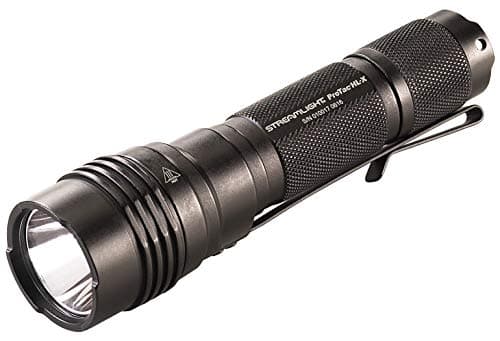 Streamlight ProTac HL-XTop pick1,300 lumens, 35,000 candela, 374 m, 1.5 hours, IP68, on either a rechargeable pack or two CR123A cells. Every figure published per mode. | Duty use, and the best-documented light on this site | 1,300 lm | |
| 2 | 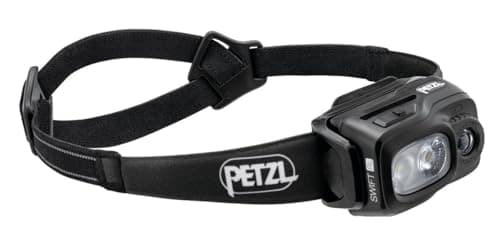 Petzl Swift RLThe best power-to-weight figure we could source: 1,200 lumens and 168 m from 92 grams, with reactive dimming that genuinely extends the burn. | Trail running and fast movement at night | 1,200 lm | Check price#ad |
| 3 | 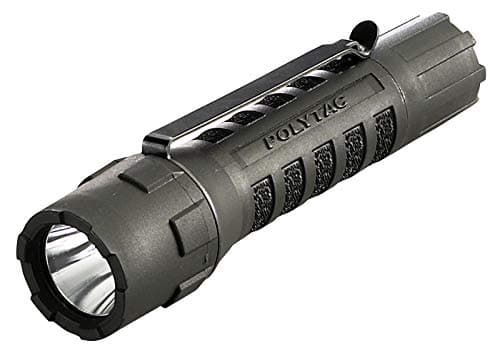 Streamlight PolyTac600 lumens, 214 m, 2.75 hours, IPX7 and 3 m impact resistance in a nylon polymer body. The one you leave in a truck. | A polymer duty light you will not worry about | 600 lm |
We earn a commission if you buy through the links on this page, at no extra cost to you. It does not change what we recommend or the order they appear in. Full disclosure. Prices checked October 16, 2026.
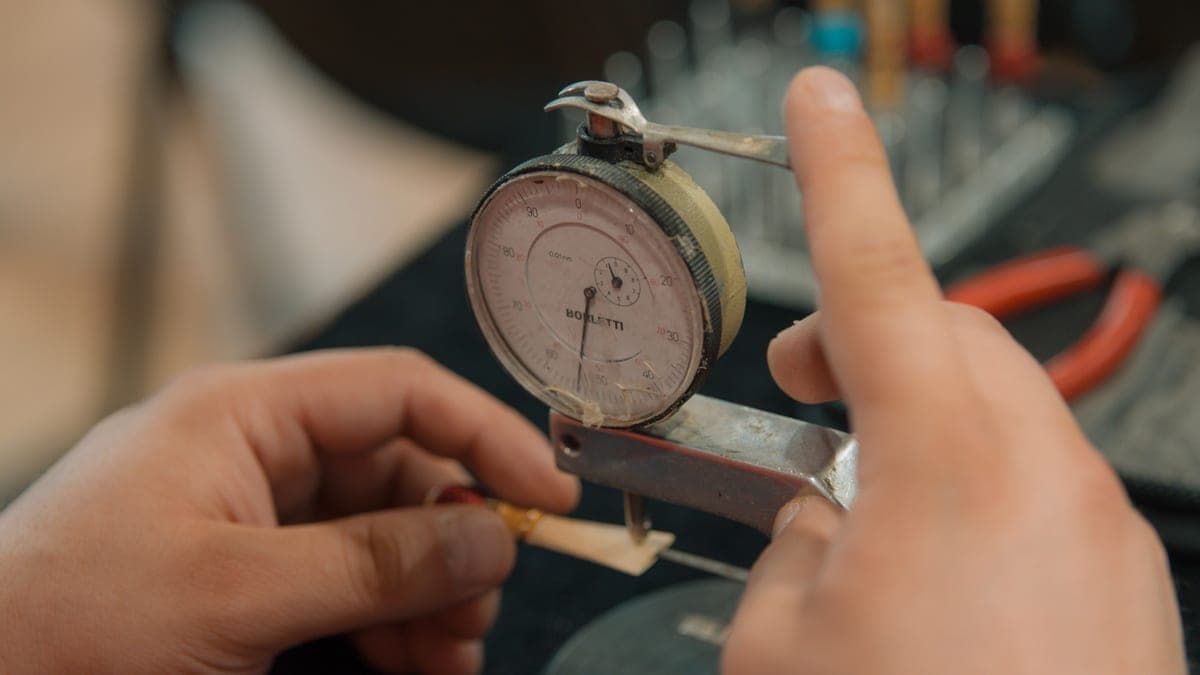
Before FL 1, every flashlight maker measured output however they liked and the numbers were not comparable. The standard fixed that by defining the measurements. What it did not do — and this is the part that matters — is create anybody whose job is to check that a manufacturer's published figures are real.
What the standard specifies
| Measurement | Unit | How it is defined |
|---|---|---|
| Light output | Lumens | Total output, measured in an integrating sphere, 30 to 120 seconds after switch-on |
| Peak beam intensity | Candela | The brightest point of the beam |
| Beam distance | Meters | Where illuminance falls to 0.25 lux, roughly full moonlight |
| Runtime | Hours | From 30 seconds after switch-on until output falls to 10 percent of that initial value |
| Impact resistance | Meters | Dropped onto concrete, six times, from the rated height, and it must still work |
| Water resistance | IPX rating | Per IEC 60529: IPX4 splash, IPX7 immersion to 1 m, IPX8 continuous immersion |
The 30-second rule, and why it matters
Both the output and the runtime measurements start 30 seconds after switch-on. That is a deliberate and sensible choice: it excludes the brief peak before the emitter warms up and the driver settles, which nobody could sustain anyway.
It also means the headline lumen figure is not the instantaneous peak. A light can honestly publish 1,600 lumens and drop to 500 within two minutes, because the measurement was taken during the window the standard specifies.
The 10 percent runtime rule, and the loophole in it
Runtime is measured until output falls to 10 percent of the initial reading. That is where the specification gets interesting.
This is why makers who publish a per-mode table — output and runtime for high, medium and low separately — are giving you something meaningfully better than a single headline figure. Streamlight publishes exactly that for the ProTac HL-X and the PolyTac.
The thing FL 1 does not do
This is exactly why internal consistency is worth checking. When a maker publishes both candela and beam distance and the two reconcile through the 0.25 lux definition, that is strong evidence the figures came from measurements rather than from a marketing meeting. Streamlight's 35,000 candela and 374 meters agree to within a meter.
When a maker publishes one number and nothing else, there is nothing to check.
What FL 1 does not cover at all
- Color rendering (CRI). Not part of the standard. See CRI explained.
- Color temperature. Not covered.
- Beam profile. How the light is distributed outside the hotspot — the spill — is not measured at all.
- Flicker or PWM. Some lights dim by rapidly switching the emitter, which some people can see. Not covered.
- Sustained output. The specification measures peak and runtime-to-10-percent, but never asks what the light holds indefinitely.
- Charging time or cycle life. Not covered.
IP ratings, from IEC 60529
The water-resistance part of FL 1 defers to IEC 60529, which is where the IP numbers come from. The first digit is solids, the second is water, and X means not tested.
| Rating | Meaning |
|---|---|
| IPX4 | Splashing water from any direction |
| IPX6 | Powerful water jets. Not immersion. |
| IPX7 | Immersion to 1 meter for 30 minutes |
| IPX8 | Continuous immersion, to a depth the maker specifies |
| IP66 | Dust tight, plus powerful jets |
| IP68 | Dust tight, plus continuous immersion |
The point people miss: the water digit is not cumulative. IPX6 tests jets, not immersion, so an IPX6 light has never been tested for being dropped in a lake. Only IPX7 and above have.
How to read a spec sheet
- Does it publish per-mode figures? A single headline number tells you the least flattering modes exist and are not being shown.
- Do candela and beam distance reconcile? Square the distance, multiply by 0.25, compare. Agreement is a strong signal.
- Is there an impact rating in meters? FL 1 defines the test; makers who ran it publish the number.
- Is the IP rating IPX or IP? IPX means the dust test was not done.
- Is a battery capacity stated? Without it you cannot compute a real runtime, and the maker knows that.
The picks, in full
Top pick · Duty use, and the best-documented light on this site
Streamlight ProTac HL-X
1,300 lumens, 35,000 candela, 374 m, 1.5 hours, IP68, on either a rechargeable pack or two CR123A cells. Every figure published per mode.
35,000 candela and 374 m reconcile exactly: the square root of 35,000 divided by 0.25 is 374.2 m. Streamlight's numbers are internally consistent across all three modes, which is the strongest signal of a maker publishing real measurements rather than marketing figures.
1.5 hours at 1,300 lumens implies roughly 6 to 7 watt-hours of usable energy — consistent with a single 18650-class pack and with the CR123A alternative.
IP68 with 2 m impact resistance is the toughest rating in this roundup, and the reason this light shows up on so many duty belts.
What works
- Full ANSI FL1 table published per mode, and it reconciles
- Runs on a rechargeable pack or on shelf-stable CR123A lithium cells
- IP68 and 2 m impact rating
What does not
- The programming interface takes reading the manual to understand
- 162 to 176 g is heavy for pocket carry
- CR123A cells are expensive if you use it hard
Skip this ifyou want a pocket light. It is a duty-belt tool and the weight and length are built for a holster.
Published specification
- Output
- 1,300 lmHigh. Medium 420 lm, low 70 lm.Streamlight ProTac HL-X — manufacturer spec page (retrieved September 1, 2026)
- Peak intensity
- 35,000 cdHigh. 11,000 cd medium, 1,800 cd low.Streamlight ProTac HL-X — manufacturer spec page (retrieved September 1, 2026)
- Beam distance
- 374 mHigh. 210 m medium, 85 m low.Streamlight ProTac HL-X — manufacturer spec page (retrieved September 1, 2026)
- Runtime
- 1.5 h high / 3.75 h medium / 25 h lowOn the SL-B26 pack. On CR123A: 1.25 h / 3 h / 20 h.Streamlight ProTac HL-X — manufacturer spec page (retrieved September 1, 2026)
- Battery
- SL-B26 rechargeable Li-ion pack, or 2 x CR123A lithiumStreamlight ProTac HL-X — manufacturer spec page (retrieved September 1, 2026)
- Weight
- 162 g with CR123A, 176 g with the packStreamlight ProTac HL-X — manufacturer spec page (retrieved September 1, 2026)
- Ingress
- IP68Dust tight, waterproof to 2 m; 2 m impact resistance testedStreamlight ProTac HL-X — manufacturer spec page (retrieved September 1, 2026)
#ad · how this is funded · price as of October 16, 2026
Pick 2 · Trail running and fast movement at night
Petzl Swift RL
The best power-to-weight figure we could source: 1,200 lumens and 168 m from 92 grams, with reactive dimming that genuinely extends the burn.
8.47 watt-hours across 92 grams is the whole argument. That works out to 13.0 lumens per gram at peak and 0.092 Wh of stored energy per gram carried, the best combination of the two figures in this roundup.
Reactive lighting is the runtime strategy, not a gimmick. The lamp meters reflected light and cuts output when you look at your own hands or a pale trail. Petzl's 7-hour minimum at medium is quoted in that mode, and it is the number to plan around.
168 m of throw is more than a runner can use below about 8 minutes per kilometer. What you actually notice is how little the beam sags once the pack drops under half.
What works
- 1,200 lm and 168 m at 92 g, the best power-to-weight in this set on published figures
- Reactive dimming extends the burn instead of just cutting output in bright patches
- Five-level charge gauge, so you know what you have before you start
What does not
- IPX4, in a category where running in rain is the normal case
- Charging cable not included at this price
- Reactive mode takes a few outings to trust
Skip this ifyou mostly walk. You are paying for a reactive sensor and a 2,250 mAh pack to solve a problem hikers do not have.
Published specification
- Output
- 1,200 lmANSI FL 1 standardPetzl Swift RL — manufacturer spec page (retrieved September 1, 2026)
- Peak intensity
- not published(Petzl publishes distance, not peak intensity)
- Beam distance
- 168 mPetzl Swift RL — manufacturer spec page (retrieved September 1, 2026)
- Runtime
- 7 h minimum at medium, in reactive modePetzl Swift RL — manufacturer spec page (retrieved September 1, 2026)
- Battery
- 2,250 mAh / 3.85 V / 8.47 Wh Li-ion, USB-CPetzl Swift RL — manufacturer spec page (retrieved September 1, 2026)
#ad · how this is funded · price as of October 16, 2026
Pick 3 · A polymer duty light you will not worry about
Streamlight PolyTac
600 lumens, 214 m, 2.75 hours, IPX7 and 3 m impact resistance in a nylon polymer body. The one you leave in a truck.
2.75 hours at 600 lumens from two CR123A cells is a very efficient result — that is roughly 6 watt-hours doing real work rather than being thrown away as heat.
3 m of impact resistance is the highest figure in this roundup. Polymer absorbs a drop that would dent an aluminum body.
119 g with cells installed makes this the lightest full-size duty light here.
What works
- Full per-mode table published, all three modes
- 3 m impact resistance and IPX7
- 119 g, with a ten-year shelf life on its cells
What does not
- 600 lumens is modest against the rechargeable competition
- CR123A running costs add up
- We could not pin a current ASIN for it, so the buy link is a tagged Amazon search
Skip this ifyou use a light daily. CR123A primaries are the wrong economics for frequent use; buy a rechargeable instead.
Published specification
- Output
- 600 lmHigh. Medium 260 lm, low 35 lm.Streamlight PolyTac — manufacturer spec page (retrieved September 1, 2026)
- Peak intensity
- 11,500 cdHigh. Medium 4,900 cd, low 675 cd. Each reconciles with the published distance for its mode.Streamlight PolyTac — manufacturer spec page (retrieved September 27, 2026)
- Beam distance
- 214 mHigh. 140 m medium, 52 m low.Streamlight PolyTac — manufacturer spec page (retrieved September 1, 2026)
- Runtime
- 2.75 h high / 5.5 h medium / 34 h lowStreamlight PolyTac — manufacturer spec page (retrieved September 1, 2026)
- Battery
- 2 x CR123A lithium (included)Streamlight PolyTac — manufacturer spec page (retrieved September 1, 2026)
- Weight
- 119 g (4.2 oz) with batteriesStreamlight PolyTac — manufacturer spec page (retrieved September 1, 2026)
- Ingress
- IPX7Waterproof to 1 m for 30 minutes; 3 m impact resistance testedStreamlight PolyTac — manufacturer spec page (retrieved September 1, 2026)
#ad · how this is funded · price as of October 16, 2026
Questions people actually ask
What is the ANSI FL 1 standard?
A specification for how flashlight performance is measured: output in lumens, peak beam intensity in candela, beam distance at 0.25 lux, runtime to 10 percent of initial output, impact resistance in meters, and water resistance per IEC 60529.
Is ANSI FL 1 independently tested?
No. The standard defines the measurements; it does not require independent testing, certify anybody, or audit published figures. Every FL 1 number you read is self-reported by the manufacturer.
Why is flashlight runtime measured to 10 percent of output?
It is the standard's definition of when the light stops being useful. The consequence is that a light stepping down from 1,600 to 400 lumens and drifting to 160 can publish a long runtime, all of it compliant and none of it meaning 1,600 lumens for that period.
Why does the lumen measurement start 30 seconds after switch-on?
To exclude the brief peak before the emitter warms and the driver settles, which no light sustains. It is a sensible rule, and it means the headline figure is not the instantaneous peak.
Does ANSI FL 1 cover CRI?
No. Color rendering, color temperature, beam profile, flicker and sustained output are all outside the standard. It is why those specifications appear so inconsistently across the market.
What is the difference between IPX7 and IPX8?
IPX7 is immersion to one meter for thirty minutes. IPX8 is continuous immersion to a depth the manufacturer specifies. Note that IPX6, which tests powerful jets, does not cover immersion at all — the water digit is not cumulative.
How can I tell if a manufacturer's figures are honest?
Check internal consistency. If candela and beam distance are both published, square the distance and multiply by 0.25 — the answer should match the candela figure. Agreement is strong evidence of real measurement. A single unverifiable number is not.
Sources
Every figure on this page came from one of the documents below, read on the date shown. We do not cite other review sites, forum posts or video reviews as sources of fact.
- ANSI/PLATO FL 1 flashlight performance standard — definitions of lumens, peak beam intensity, beam distance, runtime, impact and water resistance
- IEC 60529 — the IP (ingress protection) rating system
- Streamlight ProTac HL-X — manufacturer spec page (retrieved September 1, 2026)
- Streamlight PolyTac — manufacturer spec page (retrieved September 1, 2026)
- Petzl — ANSI/PLATO FL 1 technical information for its headlamp range
Read next
Flashlight specifications, explained
The reference section: lumens, candela, runtime, CRI, IP ratings and cell formats, all brand-neutral.
Lumens vs candela
The distinction that decides reach, with the conversion formula and a table of real published figures.
Flashlight runtime, computed
How runtime is defined, why thermal step-down happens, and the arithmetic to compute a real figure yourself.
CRI explained
What CRI measures, the R9 problem, the output cost, and how CRI differs from color temperature.

What to look for when buying a flashlight
A buyer's checklist in priority order: cell, sustained output, candela, interface, ingress and CRI.
Found a number that is wrong? Tell us and we will fix it and say so. Our methodology shows every formula on this page.