Learn
Flying with a flashlight
The airline limit is written in watt-hours — the same unit this site computes for every light. Here is what that means once you do the arithmetic.
By Scooter M. · Published · Updated
| # | Product | Best for | Output | Price |
|---|---|---|---|---|
| 1 | 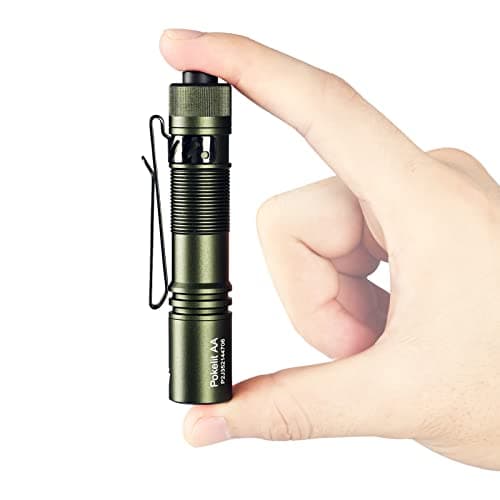 Acebeam Pokelit AA (high CRI)Top pick550 lumens at a stated 90-plus CRI, IP68, on a single AA. The combination of color accuracy and a standard cell is rare. | High CRI on a AA cell | 550 lm | |
| 2 | 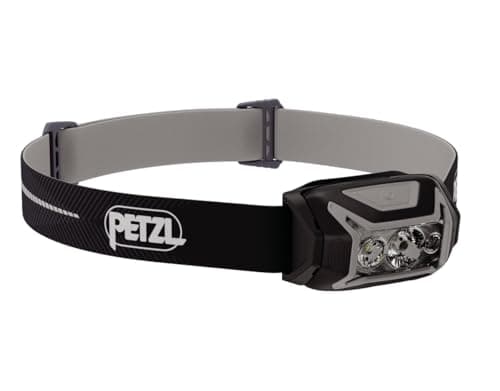 Petzl Actik CoreThe default outdoor headlamp: hybrid power, a published ANSI figure, and a beam shaped for walking rather than for a spec sheet. | Hiking and general outdoor use | 625 lm | |
| 3 | No image Streamlight MacroStream USB500 lumens, 2,000 candela, 90 m and two hours on high — every figure published per mode by the maker. That is the reason it leads. | The best-documented small EDC light here | 500 lm | Check price#ad |
| 4 | 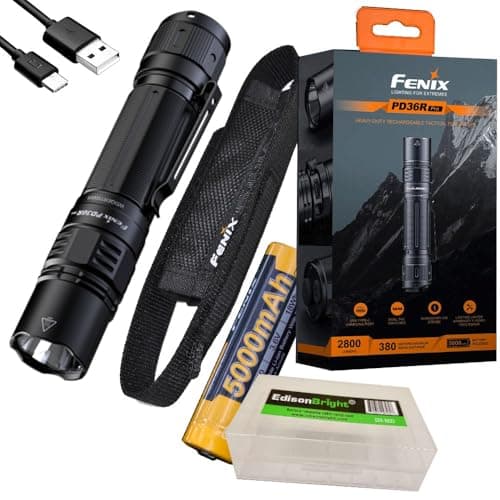 Fenix PD36R Pro2,800 lumens from a 21700 cell holding 18 watt-hours, at 169 grams. The biggest energy store in the tactical set. | The most output and energy in a tactical body | 2,800 lm |
We earn a commission if you buy through the links on this page, at no extra cost to you. It does not change what we recommend or the order they appear in. Full disclosure. Prices checked October 23, 2026.
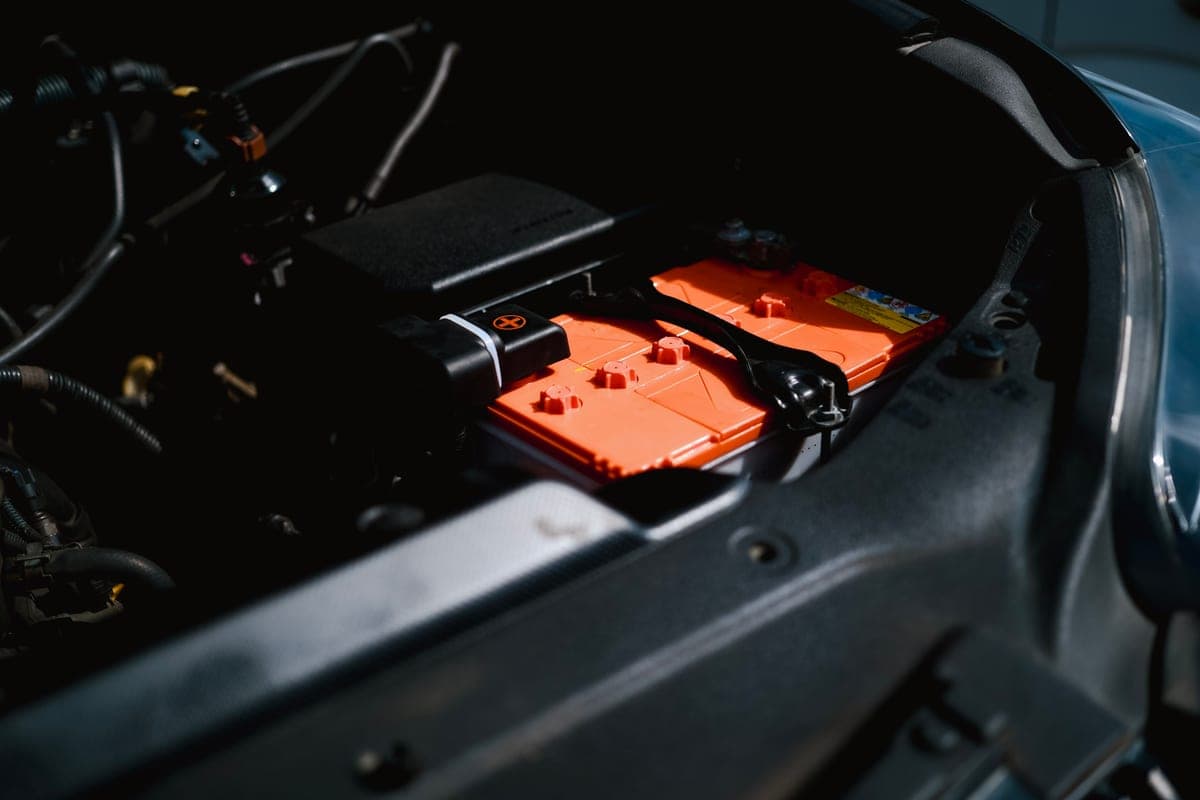
Airline battery rules are written in watt-hours. That is convenient, because watt-hours is the unit this site already computes for every light it covers — and once you run the arithmetic, the answer for flashlights turns out to be reassuring in a way most travel advice never bothers to establish. The largest battery in any light we cover is 30.2 watt-hours. The limit is 100.
So the watt-hour ceiling is almost never what catches a flashlight owner. Something else is, and it catches people constantly: the rule about where a *spare* cell may travel. That distinction is the whole of this page.
The four rules that actually matter
Stripped of everything that does not apply to portable lights, current FAA and TSA guidance comes down to four statements.
- A battery installed in a device may travel in either bag. TSA rules a lithium battery of 100 watt-hours or less, installed in a device, as permitted in both carry-on and checked baggage. A flashlight with its cell in it is a device.
- A spare cell must travel in the cabin. FAA and TSA both state that spare, uninstalled lithium-ion and lithium metal batteries — including power banks — must be carried in carry-on baggage only, and are prohibited in checked baggage. This is the rule that catches flashlight owners.
- Spares must be individually protected against short circuits. The FAA names three acceptable methods: leave the cell in its original retail packaging, tape over the exposed terminals, or place each cell in its own separate plastic bag.
- Above 100 watt-hours you need permission; above 160 you cannot fly it. Batteries from 0 to 100 Wh are allowed. From 101 to 160 Wh they require the air carrier's approval, and passengers may carry at most two such spares. Above 160 Wh they are forbidden on passenger aircraft.
There is a fifth that only bites at the gate: if your carry-on bag is checked planeside or at the gate, the FAA requires that all spare lithium batteries and power banks are removed from it first and kept with you in the cabin. That is easy to forget on a full flight when the bag is taken from you at the jet bridge.
What the limit looks like against real lights
This is where the arithmetic becomes useful rather than abstract. Every light below publishes either a battery energy figure directly or a capacity we can convert, so each row is checkable rather than asserted.
| Light | Battery | Energy | Share of the 100 Wh limit |
|---|---|---|---|
| Fenix HM75R | 18650 3,400 mAh + 21700 5,000 mAh | 30.2 Wh (computed) | 30% |
| Fenix PD36R Pro | 21700, 5,000 mAh | 18.0 Wh (computed) | 18% |
| Fenix HM65R-T V2.0 | 18650, 3,400 mAh | 12.2 Wh (computed) | 12% |
| Petzl NAO RL | 3,200 mAh / 3.7 V | 11.84 Wh (published) | 12% |
| Petzl Swift RL | 2,250 mAh / 3.85 V | 8.47 Wh (published) | 8% |
| Fenix HL18R-T V2.0 | 1,900 mAh pack | 6.8 Wh (computed) | 7% |
| Petzl Actik Core | CORE, 1,250 mAh / 3.6 V | 4.5 Wh (published) | 5% |
| Petzl Swift LT | 880 mAh / 3.7 V | 3.27 Wh (published) | 3% |
| Fenix HM50R V2.0 | 16340, 800 mAh | 2.9 Wh (computed) | 3% |
Nothing is close. The largest figure on the site is the Fenix HM75R at 30.2 watt-hours, and that is a headlamp carrying two cells at once including a rear power bank. It uses under a third of the allowance. A typical rechargeable headlamp sits between 3 and 12 watt-hours, which is three to thirty times under the ceiling.
The rule that actually catches flashlight owners
It is not the ceiling. It is the spare.
Flashlight owners are unusually likely to carry loose cells, because a large part of this hobby is built on removable 18650 and 21700 batteries and the habit of carrying a charged spare. A loose 21700 rolling around in a checked bag is exactly what the rules prohibit — not because of its energy, which is trivial at 18 watt-hours, but because an uninstalled cell can short against keys, coins or another cell in a bag nobody can reach at 35,000 feet.
- Light with the cell installed — either bag. Put it in the carry-on anyway; you will want it if the power goes out in a strange hotel.
- Spare cells, of any size — cabin only, every time, with the terminals protected.
- A headlamp with a sealed built-in battery — a device, so either bag. There is nothing to remove.
- A power bank, including a headlamp that doubles as one — treated as a spare battery. Cabin only.
Lithium primaries and ordinary alkalines
Two of the cell types this site covers most often are not lithium-ion at all, and they are governed differently.
CR123A and lithium AA primaries are lithium metal cells, and those are rated by lithium content in grams rather than in watt-hours. The FAA limit is 2 grams of lithium per battery for ordinary carriage, with 2 to 8 grams possible only with airline approval. Consumer CR123A and lithium AA cells of the kind that go in a Streamlight PolyTac or a ProTac HL-X sit well inside the 2 gram class. They are still spares when they are loose, so the cabin-only rule applies to them exactly as it does to a 21700.
Ordinary alkaline AA and AAA cells are not lithium at all and are not covered by any of the lithium rules. This is the quietest argument for an alkaline light as a travel light, and it is the reason the first pick on this page runs on a single AA.
The disclosure problem, in a place you can feel it
Here is where this site's usual complaint stops being academic. Most flashlight makers do not publish battery capacity at all. Across the lights we cover, only Fenix and Petzl state a capacity or a watt-hour figure. Nitecore, Olight, Coast, Black Diamond, Klein, Nebo, Astro and Streamlight do not, on the pages available to us.
For nearly all travel that costs you nothing, because a light with a sealed cell is a device and no one asks. But if you are ever questioned about a spare, or you are flying a carrier with its own stricter policy, the ability to point at a printed watt-hour figure is worth something — and with most brands you simply do not have one. A specification you cannot cite is a specification you do not really have.
Four lights, four travel situations
Acebeam Pokelit AA — the version of this problem that does not exist
550 lumens at CRI 90 or better with IP68, and 54.6 g. Run it on an ordinary alkaline AA and none of the lithium rules on this page apply to you at all: no watt-hour figure to know, no spare-battery rule, no terminal taping. For a traveler who wants to stop thinking about this entirely, that is the answer. Two things to know before you pack it, both from Acebeam's own page. The cell in the box is a 14500 lithium-ion rechargeable, not the AA - so as shipped this is a lithium light and the rules on this page do apply; swap the cell to travel. And the published runtimes belong to that 14500: 1 h 1 min at 550 lm, 2 h 21 min at 190 lm and 58 h at 5 lm, with no separate figures for the alkaline.
Petzl Actik Core — the best-documented case
625 lumens with a published 4.5 Wh CORE pack, and it also runs on three AAA cells. That hybrid is the ideal travel arrangement: fly on AAA if you would rather not think about it, use the rechargeable pack the rest of the time, and if anybody ever asks what is in it, Petzl prints the number. Petzl is one of only two brands we cover that publishes battery energy directly. Cons: IPX4 only, so rain but not immersion, and 88 g is not the lightest lamp in its class.
Streamlight MacroStream — the sealed-cell case, honestly flagged
500 lumens, 2,000 candela, 90 m, 62.4 g, and a built-in cell that charges over USB. As a device it travels in either bag with nothing to remove, which makes it genuinely easy to fly with. The honest catch is that Streamlight does not publish the capacity, so we cannot tell you its watt-hours and neither can you. It is certainly far under 100 Wh given the size, but that is an inference rather than a citation. Cons: IPX4, and 8 hours on low is the shortest runtime among our picks.
Fenix PD36R Pro — the one where the spare rule bites
2,800 lumens, 380 m and the largest single cell on this site at 5,000 mAh, or 18.0 watt-hours computed. It is the best light of the four by some distance and the one that demands you actually follow the rule: if you carry the charged spare 21700 that makes this light worth owning, it goes in the cabin with its terminals covered, never in the hold. Cons: at 169 g it is large for a travel light, and Fenix publishes only a single maximum runtime rather than a per-mode table.
A packing checklist
- Put the light in your carry-on with its cell installed. It is permitted in either bag, and a light in the hold is a light you cannot reach.
- Take every loose cell out of your checked bag. This is the only rule on this page that people routinely break.
- Protect each spare — retail packaging, taped terminals, or one cell per plastic bag.
- Check your own light's watt-hours if the maker publishes a capacity. Almost certainly under 20 Wh, and the ceiling is 100.
- If your bag gets gate-checked, pull the spares and the power bank out before you hand it over.
- Check your airline's own policy, which may be stricter than the FAA's, especially on power banks.
What we would not tell you
We would not tell you your specific airline's policy, because carriers set their own and several are stricter than the regulator — particularly on power banks, where limits on the number carried have been tightening. We link the FAA and TSA pages below so you can read the current text yourself rather than trusting a summary that may have aged.
We would also not tell you the watt-hours of a light whose maker does not publish a capacity. For the Streamlight MacroStream above we can reason that a cell that size is nowhere near the limit, and we still will not print a number, because an inference in a table looks exactly like a measurement and it is not one.
The picks, in full
Top pick · High CRI on a AA cell
Acebeam Pokelit AA (high CRI)
550 lumens at a stated 90-plus CRI, IP68, on a single AA. The combination of color accuracy and a standard cell is rare.
IP68 on a AA pocket light is the specification that justifies the price over a supermarket torch. Dust tight and immersion rated is a different class of object.
Acebeam's own page publishes a complete table - 1,849 cd, 86 m, three per-mode runtimes and 54.6 g - and the candela and the distance reconcile exactly through the FL 1 definition. That is the behavior of a maker who measured the light.
The 14500 is in the box and the alkaline AA is the fallback, which is the opposite of how most listings describe it. Acebeam publishes no separate AA figures, so the 550-lumen headline belongs to the lithium cell.
CRI above 90 in a AA body is unusual. Most makers reserve the good phosphor for the 18650 lights.
What works
- 90-plus CRI with IP68 in a 54.6 g AA-sized body
- A complete published sheet: candela, distance, per-mode runtime and weight, with the two beam figures agreeing
- Takes a 14500 or a plain AA, so you choose output or storage life
- Clip and pocket profile are genuinely well designed
What does not
- The 550-lumen figure is published as 550~330, so it steps down inside the first hour
- Acebeam publishes no runtimes for the alkaline AA it is compatible with
- Costs meaningfully more than a comparable cool-white light
Skip this ifyou want maximum output for the money. You are paying for color accuracy and an ingress rating, not for lumens.
Published specification
- Output
- 550 lmPublished as 550~330 lm on High - a stepped figure, not a flat one. Mid is 190 lm, Low 5 lm.Acebeam Pokelit AA — manufacturer spec page (retrieved October 17, 2026)
- Peak intensity
- 1,849 cdHigh. Reconciles exactly with the published 86 m: 0.25 x 86 x 86 = 1,849.Acebeam Pokelit AA — manufacturer spec page (retrieved October 17, 2026)
- Beam distance
- 86 mHighAcebeam Pokelit AA — manufacturer spec page (retrieved October 17, 2026)
- Runtime
- 1 h 1 min at 550 lm / 2 h 21 min at 190 lm / 58 h at 5 lmAcebeam publishes one table and ships a 14500 in the box; it does not publish separate figures for an alkaline AA, so these are the lithium-cell numbers.Acebeam Pokelit AA — manufacturer spec page (retrieved October 17, 2026)
- Battery
- 1 x 14500 USB-C (included), or 1 x AA alkaline/NiMHAcebeam Pokelit AA — manufacturer spec page (retrieved October 17, 2026)
- Weight
- 54.6 g94.8 mm long, 18.2 mm headAcebeam Pokelit AA — manufacturer spec page (retrieved October 17, 2026)
- Ingress
- IP68Stated as submersible to 2 mAcebeam Pokelit AA — manufacturer spec page (retrieved October 17, 2026)
- CRI
- 90+Nichia 219F at 5000 K, stated as CRI 90 or betterAcebeam Pokelit AA — manufacturer spec page (retrieved October 17, 2026)
$29.95 · 17% off
#ad · how this is funded · price as of October 23, 2026
Pick 2 · Hiking and general outdoor use
Petzl Actik Core
The default outdoor headlamp: hybrid power, a published ANSI figure, and a beam shaped for walking rather than for a spec sheet.
625 lumens and 115 meters is a walking beam, not a searching beam. The FL1 definition puts illuminance at 115 m down to 0.25 lux, which is enough to tell that something is there and not enough to identify it. In practice you run the middle level and see 30 to 60 m of usable trail.
4.5 watt-hours matters more than the lumen figure. A lamp drawing a regulated 2 W empties that pack in a bit over two hours. The 400-hour number Petzl quotes is a reserve-mode visibility claim, not 400 hours of light you can walk by.
The hybrid design is the real feature. When the CORE pack dies three hours into a night descent, three AAA cells from a gas station bring the lamp back. Very little else at this price does that.
What works
- Runs on the rechargeable pack or three AAA cells, which is a genuine field fix rather than a marketing bullet
- Petzl publishes the full ANSI FL 1 table, including a distance for every mode
- 88 g is light enough that you stop noticing it
What does not
- IPX4 only: rain is fine, a dropped-in-the-creek recovery is not
- No published peak candela, so the 115 m claim cannot be checked against the intensity
- The maker's own site and its own Amazon listing disagree about peak output
Skip this ifyou need reach. 115 m is short by 2026 standards, and the 625-lumen headline does not change the shape of the beam.
Published specification
- Output
- 625 lmANSI/PLATO FL 1. Petzl's US product page states 625; the brand's own Amazon listing says 650. We use the maker's own site.Petzl Actik Core — manufacturer spec page (retrieved September 1, 2026)
- Peak intensity
- not published(Petzl publishes distance, not peak intensity)
- Beam distance
- 115 mMaximum, on the CORE rechargeable batteryPetzl Actik Core — manufacturer spec page (retrieved September 1, 2026)
- Runtime
- 2 h at 625 lm / 7 h at 100 lm / 100 h at 7 lm, on the CORE packPetzl publishes a full per-mode table for both power sources. On 3 x AAA the same levels run 2 h / 10 h / 100 h, with peak output capped at 450 lm. Its separate strobe figure, visible at 700 m for 400 h, is a be-seen claim and not a working runtime.Petzl Actik Core — manufacturer spec page (retrieved September 19, 2026)
- Battery
- CORE 1250 mAh / 3.6 V / 4.5 Wh, or 3 x AAAPetzl Actik Core — manufacturer spec page (retrieved September 1, 2026)
- Ingress
- IPX4Weather resistant. Not immersion rated.Petzl Actik Core — manufacturer spec page (retrieved September 1, 2026)
$87.95 · 9% off
#ad · how this is funded · price as of October 23, 2026
image
Pick 3 · The best-documented small EDC light here
Streamlight MacroStream USB
500 lumens, 2,000 candela, 90 m and two hours on high — every figure published per mode by the maker. That is the reason it leads.
2,000 candela and 90 m are consistent with each other, which is a better sign than it sounds. The FL1 beam distance is the square root of candela divided by 0.25 lux: the square root of 2,000 over 0.25 is 89.4 m. Streamlight's published figures check out to within a meter.
Two hours on high for 500 lumens implies roughly 2.5 watt-hours of usable energy, which is about right for a light this size. Nothing here is being oversold.
62 grams is pocketable in a way that a 21700 light is not, and that is the trade you are making against a bigger cell.
What works
- Every headline figure published per mode, and internally consistent
- 62 g with a real clip
- The arithmetic between its candela and its distance actually reconciles
What does not
- IPX4, so splash-resistant and no more
- Built-in cell rather than a replaceable 18650
- 500 lumens is modest against the 1,600-lumen headlines nearby
Skip this ifyou want reach. 2,000 candela is a close-range beam and no setting will change that.
Published specification
- Output
- 500 lmHigh. Low is 50 lm.Streamlight MacroStream USB — manufacturer spec page (retrieved September 1, 2026)
- Peak intensity
- 2,000 cdHigh. 220 cd on low.Streamlight MacroStream USB — manufacturer spec page (retrieved October 15, 2026)
- Beam distance
- 90 mHigh. 30 m on low.Streamlight MacroStream USB — manufacturer spec page (retrieved September 1, 2026)
- Runtime
- 2 h on high, 8 h on lowStreamlight MacroStream USB — manufacturer spec page (retrieved September 1, 2026)
- Battery
- Built-in Li-ion, charges in 4 hStreamlight MacroStream USB — manufacturer spec page (retrieved September 1, 2026)
- Weight
- 62.4 g (2.2 oz)Streamlight MacroStream USB — manufacturer spec page (retrieved September 1, 2026)
- Ingress
- IPX41 m impact resistance testedStreamlight MacroStream USB — manufacturer spec page (retrieved September 1, 2026)
#ad · how this is funded · price as of October 23, 2026
Pick 4 · The most output and energy in a tactical body
Fenix PD36R Pro
2,800 lumens from a 21700 cell holding 18 watt-hours, at 169 grams. The biggest energy store in the tactical set.
A 5,000 mAh 21700 at 3.6 V is 18.0 watt-hours — nearly three times what the ProTac HL-X carries. That is the case for the 21700 format in one number.
380 m of reach on 2,800 lumens works back to about 36,100 candela, almost identical to the ProTac's 35,000 from 1,300 lumens. The Fenix is spending its extra output on spill, not on distance.
169 g including the cell is only 7 g more than a ProTac on CR123A, for nearly triple the energy. That is what four years of cell development buys.
What works
- 18 Wh of stored energy, the most in the tactical set
- 2,800 lumens with 380 m of published reach
- Standard 21700 cell, USB-C on the light
What does not
- Waterproofing stated as 2 m submersion, with no IP code to compare against
- No published candela, so the throw figure cannot be cross-checked
- 2,800 lumens will step down quickly in a body this size
Skip this ifyou need a shelf-stable light. A rechargeable cell self-discharges; for a drawer light, CR123A primaries are the right answer.
Published specification
- Peak intensity
- not published
- Beam distance
- 380 mFenix states 1,247 feet (380 m)Fenix PD36R Pro — manufacturer spec page (retrieved September 17, 2026)
- Runtime
- 3 h 30 min on Turbo / 42 h maximumTurbo is measured to 10% output under ANSI FL 1, so it includes step-down; 42 h is the lowest mode. Other modes are published as a chart imageFenix PD36R Pro — manufacturer spec page (retrieved September 1, 2026)
- Battery
- 5,000 mAh 21700 Li-ion (included), USB-CFenix PD36R Pro — manufacturer spec page (retrieved September 1, 2026)
- Weight
- 169 g (5.96 oz)Including batteryFenix PD36R Pro — manufacturer spec page (retrieved September 1, 2026)
- Ingress
- Waterproof underwater to 2 mFenix states this without giving an IP codeFenix PD36R Pro — manufacturer spec page (retrieved September 17, 2026)
#ad · how this is funded · price as of October 23, 2026
Questions people actually ask
Can you bring a flashlight on a plane?
Yes. A flashlight with its battery installed is a device, and TSA permits lithium batteries of 100 watt-hours or less installed in a device in both carry-on and checked bags. Put it in your carry-on anyway — a light in the hold is a light you cannot reach.
Can you put a flashlight in a checked bag?
The light itself, yes, with the cell installed. Spare or loose batteries, no — the FAA and TSA both require uninstalled lithium-ion and lithium metal batteries to travel in carry-on baggage only, and prohibit them in checked baggage. That rule catches flashlight owners more than any other.
What is the watt-hour limit for flashlight batteries on a plane?
100 watt-hours for ordinary carriage. From 101 to 160 Wh you need the airline's approval and may carry at most two spares; above 160 Wh is forbidden. No flashlight or headlamp we cover comes close — the largest is the Fenix HM75R at a computed 30.2 Wh, and most rechargeable headlamps sit between 3 and 12 Wh.
How do I calculate the watt-hours of my flashlight battery?
Divide the capacity in milliamp-hours by 1000, then multiply by the cell's nominal voltage. A 5,000 mAh 21700 at 3.6 V is 18 watt-hours. Use the voltage the manufacturer prints, since makers use 3.6, 3.7 and 3.85 V for different cells.
Can I fly with a spare 18650 or 21700 battery?
Yes, in your carry-on only, and each cell must be individually protected against short circuits. The FAA accepts the original retail packaging, tape over the exposed terminals, or one cell per separate plastic bag. Never put a loose cell in a checked bag.
Are CR123A batteries allowed on planes?
Yes. CR123A and lithium AA primaries are lithium metal cells, limited by lithium content rather than watt-hours — 2 grams per battery for normal carriage, and consumer cells of this type sit well inside that. As spares they are still cabin-only, exactly like a rechargeable cell.
What is the easiest flashlight to travel with?
One that runs on ordinary alkaline AA or AAA cells, because alkalines are not lithium and none of these rules apply. The Acebeam Pokelit AA is our pick for that. A hybrid lamp like the Petzl Actik Core, which takes either AAA cells or a rechargeable pack with a published 4.5 Wh rating, is the next best answer.
Sources
Every figure on this page came from one of the documents below, read on the date shown. We do not cite other review sites, forum posts or video reviews as sources of fact.
- FAA PackSafe — lithium batteries: watt-hour limits, spare-battery carriage and short-circuit protection (retrieved September 9, 2026)
- TSA — lithium batteries with 100 watt hours or less installed in a device (retrieved September 9, 2026)
- TSA — lithium batteries with more than 100 watt hours (retrieved September 9, 2026)
- Petzl Actik Core — manufacturer spec page (retrieved September 1, 2026)
- Petzl Swift RL — manufacturer spec page (retrieved September 1, 2026)
- Petzl NAO RL — manufacturer spec page (retrieved September 1, 2026)
- Petzl Swift LT — manufacturer spec page (retrieved September 1, 2026)
- Fenix PD36R Pro — manufacturer spec page (retrieved September 1, 2026)
- Fenix HM65R-T V2.0 — manufacturer spec page (retrieved September 1, 2026)
- Fenix HM75R — the brand's own listing on Amazon.com (retrieved September 1, 2026)
- Fenix HL18R-T V2.0 — the brand's own listing on Amazon.com (retrieved September 1, 2026)
- Fenix HM50R V2.0 — manufacturer spec page (retrieved September 1, 2026)
- Streamlight MacroStream USB — manufacturer spec page (retrieved September 1, 2026)
- Acebeam Pokelit AA — manufacturer spec page (retrieved October 17, 2026)
Read next
Flashlight specifications, explained
The reference section: lumens, candela, runtime, CRI, IP ratings and cell formats, all brand-neutral.
18650 vs 21700, and every other cell format
Cell formats compared on capacity, current rating and dimensions, with the safety rules that matter.
Flashlight runtime, computed
How runtime is defined, why thermal step-down happens, and the arithmetic to compute a real figure yourself.
Best keychain flashlights
Keychain lights ranked on cell type, published output and how long they stay useful.
Best rechargeable headlamps
Rechargeable headlamps sorted by cell strategy: sealed, swappable standard cell, or hybrid.

Best EDC flashlights, ranked on what they actually hold
The full EDC ranking: cell format, stored energy, color rendering and beam shape, every figure sourced.
Found a number that is wrong? Tell us and we will fix it and say so. Our methodology shows every formula on this page.