Learn
Flashlight vs headlamp
One points where your hand points, the other points where you look. That single difference decides most of it.
By Scooter M. · Published · Updated
| # | Product | Best for | Output | Price |
|---|---|---|---|---|
| 1 | 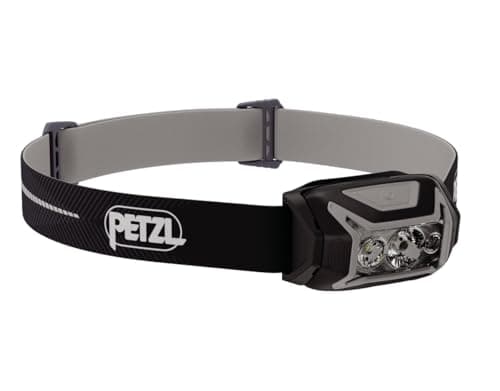 Petzl Actik CoreTop pickThe default outdoor headlamp: hybrid power, a published ANSI figure, and a beam shaped for walking rather than for a spec sheet. | Hiking and general outdoor use | 625 lm | |
| 2 | No image Streamlight MacroStream USB500 lumens, 2,000 candela, 90 m and two hours on high — every figure published per mode by the maker. That is the reason it leads. | The best-documented small EDC light here | 500 lm | Check price#ad |
| 3 | 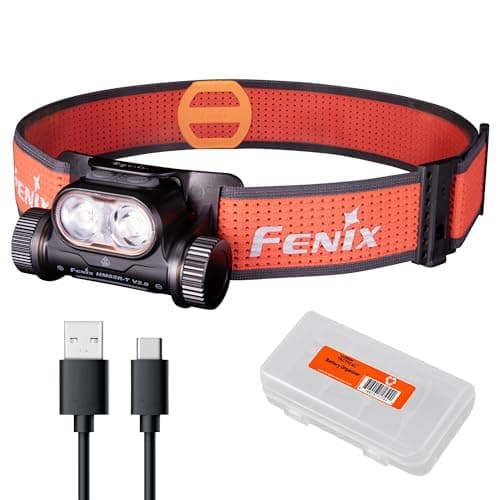 Fenix HM65R-T V2.01,600 lumens and 170 m from a magnesium body running a standard 18650, at 140 g. The removable cell is what separates it from the sealed-pack lamps. | Long nights where you want reach and a spare cell | 1,600 lm |
We earn a commission if you buy through the links on this page, at no extra cost to you. It does not change what we recommend or the order they appear in. Full disclosure. Prices checked October 15, 2026.
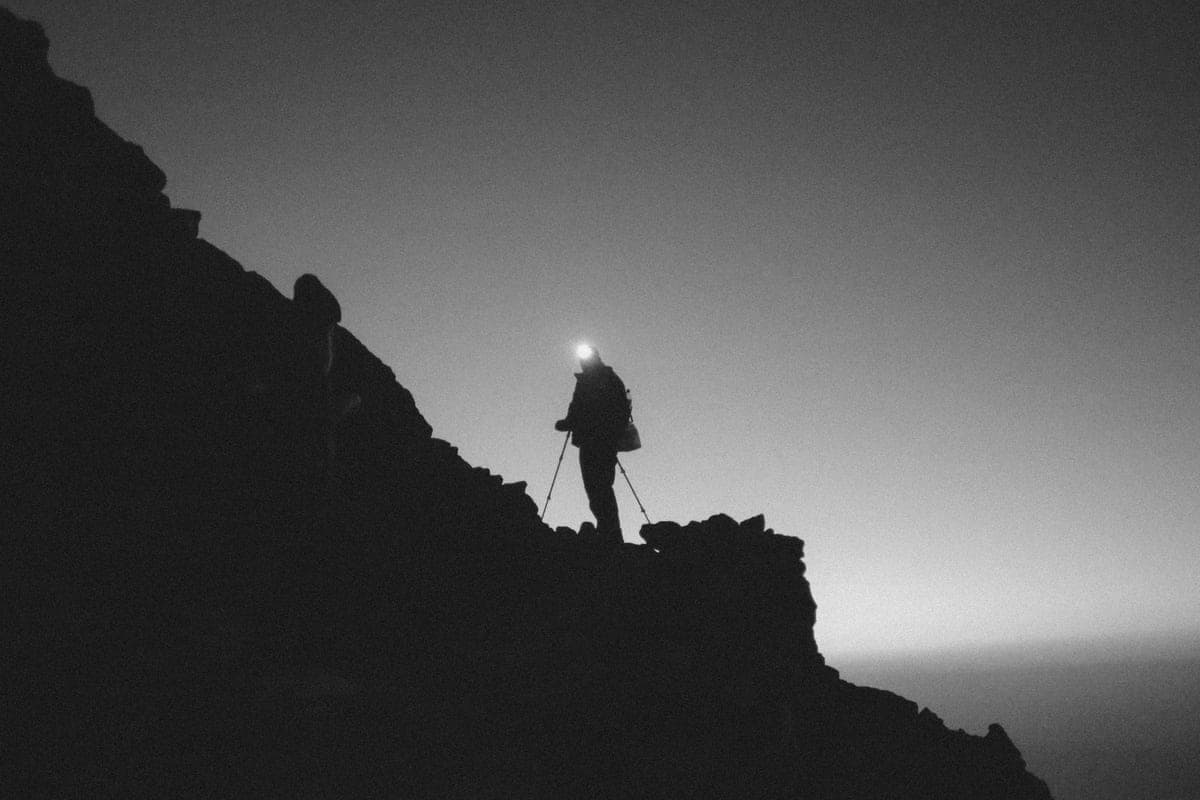
People treat this as a preference. It is not: the two form factors have genuinely different properties, and each one is clearly correct for some jobs and clearly wrong for others.
The four real differences
| Headlamp | Flashlight | |
|---|---|---|
| Aiming | Where you look, automatically | Where you point, deliberately |
| Hands | Both free | One occupied |
| Shadows | Almost none, because the light is at your eye | Strong, because the light is offset from your eye |
| Battery | Limited by what you will wear on your head | Limited only by what you will carry |
The shadow difference is the underrated one
A headlamp sits within a few centimeters of your eyes, so the shadows it casts fall almost exactly behind the objects casting them, out of your view. Everything looks flat and evenly lit.
A handheld light held to one side casts visible shadows, and those shadows carry information: they show you texture, depth and the edges of things. On rough ground a handheld light held low often reveals more than a headlamp does.
This is why experienced people sometimes hold a headlamp in their hand rather than wear it, and why a chest-mounted light reads terrain differently from a head-mounted one.
The battery ceiling
Which for which job
| Task | Better | Why |
|---|---|---|
| Working with both hands | Headlamp | The whole point |
| Walking or running | Headlamp | Beam follows your eyes without thought |
| Camping chores | Headlamp | Hands free, and a red mode is easy to reach |
| Searching at distance | Flashlight | Bigger reflector, more candela, more battery |
| Reading terrain on rough ground | Flashlight, held low | Shadows show texture a headlamp flattens away |
| Looking into a recess or under something | Flashlight | You can aim it independently of your head |
| Signaling or attracting attention | Flashlight | Easier to aim and to sweep |
| Working under a vehicle | Either | Headlamp for aim, magnetic work light for shadow control |
The case for carrying both
They weigh very little together and they cover different failures. A 43-gram Petzl Swift LT plus a 62-gram Streamlight MacroStream is 105 grams for a hands-free light and a directional one with real reach — less than a single mid-size handheld.
It is also redundancy. Two lights means one flat battery is an inconvenience rather than the end of the night.
The hybrid options
Several lights detach from a headband and work as a right-angle flashlight — the Olight Perun series and the Fenix HM50R both do. It is a genuine convenience rather than a compromise, because a right-angle light clips to a pocket and stands on a surface aimed upward.
What it does not do is give you a handheld light's reach, because the head is still headlamp-sized. Headlamps covers the form factor properly; EDC flashlights covers the other side.
A note on the phrase
In American English a head-mounted light is a headlamp and a vehicle's front light is a headlight. In British usage headlamp is often the car part, which is why searches for headlamps return automotive results — and why we are explicit throughout this site that we mean the head-mounted kind. Light types explained covers the terminology.
The picks, in full
Top pick · Hiking and general outdoor use
Petzl Actik Core
The default outdoor headlamp: hybrid power, a published ANSI figure, and a beam shaped for walking rather than for a spec sheet.
625 lumens and 115 meters is a walking beam, not a searching beam. The FL1 definition puts illuminance at 115 m down to 0.25 lux, which is enough to tell that something is there and not enough to identify it. In practice you run the middle level and see 30 to 60 m of usable trail.
4.5 watt-hours matters more than the lumen figure. A lamp drawing a regulated 2 W empties that pack in a bit over two hours. The 400-hour number Petzl quotes is a reserve-mode visibility claim, not 400 hours of light you can walk by.
The hybrid design is the real feature. When the CORE pack dies three hours into a night descent, three AAA cells from a gas station bring the lamp back. Very little else at this price does that.
What works
- Runs on the rechargeable pack or three AAA cells, which is a genuine field fix rather than a marketing bullet
- Petzl publishes the full ANSI FL 1 table, including a distance for every mode
- 88 g is light enough that you stop noticing it
What does not
- IPX4 only: rain is fine, a dropped-in-the-creek recovery is not
- No published peak candela, so the 115 m claim cannot be checked against the intensity
- The maker's own site and its own Amazon listing disagree about peak output
Skip this ifyou need reach. 115 m is short by 2026 standards, and the 625-lumen headline does not change the shape of the beam.
Published specification
- Output
- 625 lmANSI/PLATO FL 1. Petzl's US product page states 625; the brand's own Amazon listing says 650. We use the maker's own site.Petzl Actik Core — manufacturer spec page (retrieved September 1, 2026)
- Peak intensity
- not published(Petzl publishes distance, not peak intensity)
- Beam distance
- 115 mMaximum, on the CORE rechargeable batteryPetzl Actik Core — manufacturer spec page (retrieved September 1, 2026)
- Runtime
- 2 h at 625 lm / 7 h at 100 lm / 100 h at 7 lm, on the CORE packPetzl publishes a full per-mode table for both power sources. On 3 x AAA the same levels run 2 h / 10 h / 100 h, with peak output capped at 450 lm. Its separate strobe figure, visible at 700 m for 400 h, is a be-seen claim and not a working runtime.Petzl Actik Core — manufacturer spec page (retrieved September 19, 2026)
- Battery
- CORE 1250 mAh / 3.6 V / 4.5 Wh, or 3 x AAAPetzl Actik Core — manufacturer spec page (retrieved September 1, 2026)
- Ingress
- IPX4Weather resistant. Not immersion rated.Petzl Actik Core — manufacturer spec page (retrieved September 1, 2026)
$87.95 · 6% off
#ad · how this is funded · price as of October 15, 2026
image
Pick 2 · The best-documented small EDC light here
Streamlight MacroStream USB
500 lumens, 2,000 candela, 90 m and two hours on high — every figure published per mode by the maker. That is the reason it leads.
2,000 candela and 90 m are consistent with each other, which is a better sign than it sounds. The FL1 beam distance is the square root of candela divided by 0.25 lux: the square root of 2,000 over 0.25 is 89.4 m. Streamlight's published figures check out to within a meter.
Two hours on high for 500 lumens implies roughly 2.5 watt-hours of usable energy, which is about right for a light this size. Nothing here is being oversold.
62 grams is pocketable in a way that a 21700 light is not, and that is the trade you are making against a bigger cell.
What works
- Every headline figure published per mode, and internally consistent
- 62 g with a real clip
- The arithmetic between its candela and its distance actually reconciles
What does not
- IPX4, so splash-resistant and no more
- Built-in cell rather than a replaceable 18650
- 500 lumens is modest against the 1,600-lumen headlines nearby
Skip this ifyou want reach. 2,000 candela is a close-range beam and no setting will change that.
Published specification
- Output
- 500 lmHigh. Low is 50 lm.Streamlight MacroStream USB — manufacturer spec page (retrieved September 1, 2026)
- Peak intensity
- 2,000 cdHigh. 220 cd on low.Streamlight MacroStream USB — manufacturer spec page (retrieved October 15, 2026)
- Beam distance
- 90 mHigh. 30 m on low.Streamlight MacroStream USB — manufacturer spec page (retrieved September 1, 2026)
- Runtime
- 2 h on high, 8 h on lowStreamlight MacroStream USB — manufacturer spec page (retrieved September 1, 2026)
- Battery
- Built-in Li-ion, charges in 4 hStreamlight MacroStream USB — manufacturer spec page (retrieved September 1, 2026)
- Weight
- 62.4 g (2.2 oz)Streamlight MacroStream USB — manufacturer spec page (retrieved September 1, 2026)
- Ingress
- IPX41 m impact resistance testedStreamlight MacroStream USB — manufacturer spec page (retrieved September 1, 2026)
#ad · how this is funded · price as of October 15, 2026
Pick 3 · Long nights where you want reach and a spare cell
Fenix HM65R-T V2.0
1,600 lumens and 170 m from a magnesium body running a standard 18650, at 140 g. The removable cell is what separates it from the sealed-pack lamps.
A 3,400 mAh 18650 at a nominal 3.6 V is 12.2 watt-hours. That is more energy than a Petzl NAO RL carries, in a lamp 5 g lighter, because a bare 18650 is a more efficient package than a molded pack.
It is also the only headlamp in this set whose battery you can replace at a checkpoint for three dollars, because 18650 is a standard cell and not a proprietary brick.
IP68 rather than IPX4 is the second real difference. This one survives being dropped in water; most of the running lamps here do not.
What works
- Standard 18650 cell: swappable, cheap, and available everywhere
- IP68 and 2 m impact rating, the toughest specification in this roundup
- Dual emitters, one white and one warm white, so it works for close tasks as well as reach
What does not
- 140 g is at the heavy end for a running lamp
- Charging works only with Fenix ARB-L18 series cells, which limits the swap-any-18650 advantage
- No published candela figure
Skip this ifyou count grams. A Swift LT does the camp job at 43 g; you are carrying 97 g extra for reach and a removable cell.
Published specification
- Peak intensity
- not published(Fenix publishes distance, not peak intensity)
- Runtime
- 300 h maximumLowest mode. The turbo figure is far shorter and Fenix publishes it per-mode.Fenix HM65R-T V2.0 — manufacturer spec page (retrieved September 1, 2026)
- Battery
- 3,400 mAh 18650 Li-ion (included), or 2 x CR123AFenix HM65R-T V2.0 — manufacturer spec page (retrieved September 1, 2026)
- Weight
- 140 g (4.94 oz)Including battery and headbandFenix HM65R-T V2.0 — manufacturer spec page (retrieved September 1, 2026)
- Ingress
- IP68Dust tight and immersion rated; 2 m impact resistanceFenix HM65R-T V2.0 — manufacturer spec page (retrieved September 1, 2026)
#ad · how this is funded · price as of October 15, 2026
Questions people actually ask
Is a headlamp better than a flashlight?
For anything needing both hands, and for walking or running, yes. For reach, for looking into recesses, and for reading texture on rough ground, a handheld is better. They are different tools rather than better and worse.
Why do things look flat under a headlamp?
Because the light sits within a few centimeters of your eyes, so shadows fall behind the objects casting them, out of your view. A handheld light held to one side casts visible shadows, and those shadows carry depth and texture information.
Can a headlamp be as bright as a flashlight?
In peak output, often. In sustained output and runtime, rarely, because the head is a much harder constraint than the hand — the heaviest headlamps we cover carry around 12 watt-hours against 18 in a comparable handheld, and heat against your forehead limits sustained output further.
Should I carry both a headlamp and a flashlight?
It is a good answer for most outdoor use. A 43-gram headlamp plus a 62-gram pocket light is about 105 grams total, less than one mid-size handheld, and it gives you hands-free light, real reach, and redundancy.
Are detachable headlamps that work as flashlights any good?
Genuinely useful as a convenience — a right-angle light clips to a pocket and stands aimed upward on a surface. What they cannot give you is a handheld's reach, because the head is still headlamp-sized.
Why do searches for headlamps show car parts?
Because in British usage headlamp usually means a vehicle's front light, and a large automotive parts market uses the term. On this site headlamp always means the head-mounted kind.
Sources
Every figure on this page came from one of the documents below, read on the date shown. We do not cite other review sites, forum posts or video reviews as sources of fact.
- Petzl — ANSI/PLATO FL 1 technical information for its headlamp range
- Streamlight MacroStream USB — manufacturer spec page (retrieved September 1, 2026)
- Fenix HM65R-T V2.0 — manufacturer spec page (retrieved September 1, 2026)
- ANSI/PLATO FL 1 flashlight performance standard — definitions of lumens, peak beam intensity, beam distance, runtime, impact and water resistance
Read next
Flashlight specifications, explained
The reference section: lumens, candela, runtime, CRI, IP ratings and cell formats, all brand-neutral.
Best headlamps, ranked on the watt-hours behind the lumens
The full headlamp ranking: output, weight, battery energy and beam distance, every figure sourced to the maker.

Best EDC flashlights, ranked on what they actually hold
The full EDC ranking: cell format, stored energy, color rendering and beam shape, every figure sourced.
Light types explained
The portable light categories, and the terminology that trips people up.
How to choose a headlamp
A decision guide built on watt-hours, weight, beam distance, ingress rating and red-mode access.
Found a number that is wrong? Tell us and we will fix it and say so. Our methodology shows every formula on this page.