Tactical Flashlights
Best flashlight throwers
Reach is decided by candela, and candela is decided by reflector geometry. The lumen figure barely enters into it.
By Scooter M. · Published · Updated
| # | Product | Best for | Reach | Price |
|---|---|---|---|---|
| 1 | 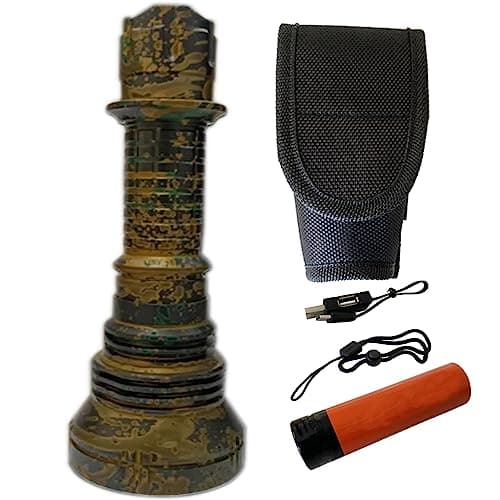 Acebeam L19Top pick1,650 lumens and 1,300 m of stated throw. The most efficient distance-per-lumen figure on the site, by a wide margin. | The longest reach per lumen here | 1,300 m | |
| 2 | 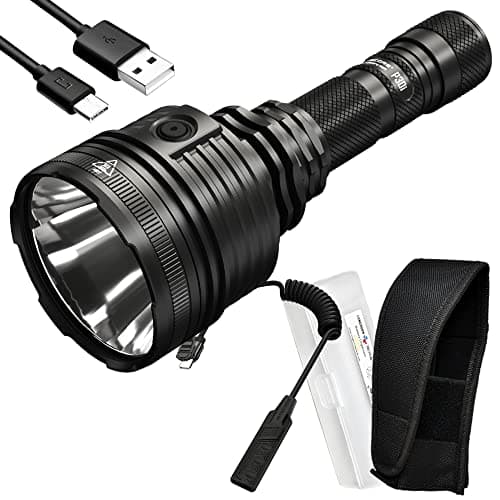 Nitecore P30i2,000 lumens and 1,000 m of stated throw. The furthest-reaching light on the site, and a genuinely specialized one. | Maximum distance | 1,000 m | |
| 3 | 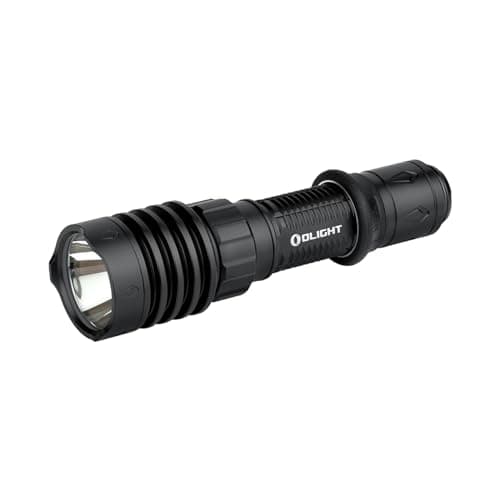 Olight Warrior X 42,600 lumens and 630 m of stated throw. The longest published reach of any general-purpose light here. | Reach in a tactical body | 630 m | Check price#ad |
| 4 | 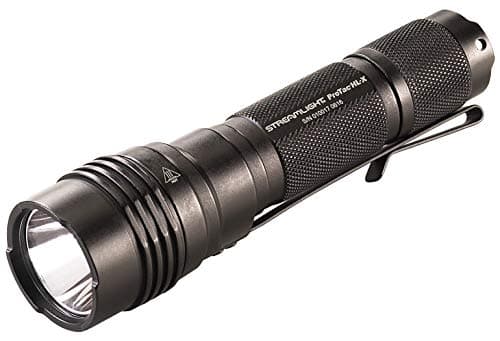 Streamlight ProTac HL-X1,300 lumens, 35,000 candela, 374 m, 1.5 hours, IP68, on either a rechargeable pack or two CR123A cells. Every figure published per mode. | Duty use, and the best-documented light on this site | 374 m |
We earn a commission if you buy through the links on this page, at no extra cost to you. It does not change what we recommend or the order they appear in. Full disclosure. Prices checked October 16, 2026.
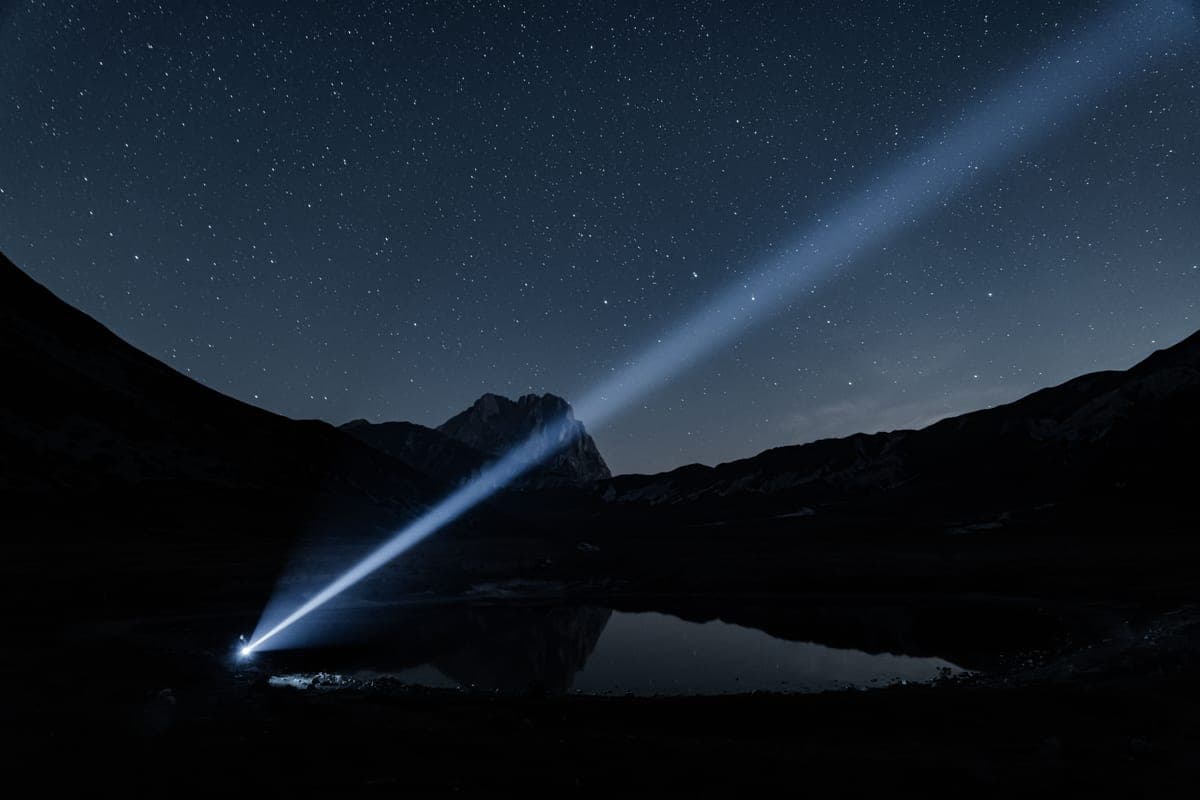
A thrower is a light built to put as much of its output as possible into a very small angle. That is an optical problem, not a power problem, and it is why a 1,650-lumen light on this page reaches nearly four times as far as a 2,800-lumen light on the tactical hub.
How we picked
Published beam distance, converted to candela, ranked. Where a maker publishes candela directly we use it. Every figure is sourced and we have handled none of these lights — see our methodology.
The ranking, and the arithmetic behind it
| Light | Output | Beam distance | Candela | Candela per lumen |
|---|---|---|---|---|
| Acebeam L19 | 1,650 lm | 1,300 m | 422,500 | 256 |
| Nitecore P30i | 2,000 lm | 1,000 m | 250,000 | 125 |
| Olight Warrior X 4 | 2,600 lm | 630 m | 99,200 | 38 |
| Streamlight ProTac HL-X | 1,300 lm | 374 m | 35,000 (published) | 27 |
Why reflector geometry decides everything
Peak beam intensity scales roughly with the square of the reflector diameter and with how deep the reflector is, and inversely with the size of the emitting surface. That is the whole design problem of a thrower: a big deep reflector and the smallest, brightest possible die.
- Reflector diameter. Doubling it roughly quadruples peak intensity for the same emitter. This is why throwers have fat heads.
- Reflector depth. A deeper reflector captures more of the emitted light into the collimated beam and less into spill.
- Emitter size. A physically smaller die is closer to a point source and collimates better. The high-intensity emitters used in throwers are deliberately small, which is also why they produce fewer total lumens.
- Surface finish. A smooth reflector maximizes the hotspot; an orange-peel finish smooths the beam at the cost of intensity.
This is also why a thrower cannot be pocket-sized. The head diameter is the specification, and there is no way to shrink it without losing exactly what you bought the light for.
What you give up
Spill. A light putting 256 candela into the hotspot per lumen of output is putting almost nothing anywhere else, and the practical result is a bright circle in a black field. Walking with a thrower is genuinely unpleasant; you see a distant patch clearly and nothing at your feet.
The honest way to own a thrower is as a second light. EDC flashlights covers the first one.
Current draw, and why the cell matters
A high-intensity emitter driven hard pulls serious current. Acebeam ships the L19 with a 20-amp-rated 21700 for that reason, and a standard protected cell in its place will trip its own protection circuit or sag enough to lose a chunk of the intensity you paid for.
This is the most common way a thrower disappoints its owner: the wrong cell. 18650 versus 21700 covers current ratings.
How far can you actually see
The rated beam distance is where illuminance falls to 0.25 lux, roughly full moonlight. You can detect a large object at that range on a clear night. To identify what it is, you need somewhere around three to four times the light, which puts the practical identification range at about half the rated figure.
So a 1,300-meter light gives you real identification at somewhere around 600 meters, and only in clear air. Humidity, dust and fog cut it dramatically, because a tight beam scatters off airborne particles and you end up illuminating the air.
What we would not buy
A thrower advertising a very long beam distance with a small head. The physics does not allow it: reach comes from reflector diameter and depth, and a 25-millimeter head cannot produce a 1,000-meter beam whatever the listing says.
We would also avoid a thrower as a first or only flashlight. It is the most specialized tool in this category and it is bad at almost everything a flashlight is normally asked to do.
The picks, in full
Top pick · The longest reach per lumen here
Acebeam L19
1,650 lumens and 1,300 m of stated throw. The most efficient distance-per-lumen figure on the site, by a wide margin.
1,300 m implies roughly 422,500 candela. From 1,650 lumens that is an extraordinarily concentrated beam — this light puts a higher fraction of its output into the hotspot than anything else on the site.
It is the clearest possible demonstration of why lumens are the wrong metric for reach: this light reaches nearly twice as far as the Nitecore P30i on 82 percent of its output.
The 20A cell requirement is not a detail. A beam this intense draws hard, and a standard protected 21700 will trip its own protection circuit.
What works
- 1,300 m of published throw, the longest here
- Best distance-per-lumen ratio on the site by a distance
- Ships with the high-drain cell it actually needs
What does not
- No sourced runtime, candela or IP rating
- Requires a 20A-rated cell, so a generic replacement will underperform
- Effectively no spill
Skip this ifyou do not have a genuine long-distance need. Inside 50 m it is worse than a 500-lumen pocket light.
Published specification
- Peak intensity
- not published
- Beam distance
- 1,300 mAcebeam L19 — the brand's own listing on Amazon.com (retrieved September 1, 2026)
- Runtime
- not published
- Battery
- 20A-rated 21700 (included)Acebeam L19 — the brand's own listing on Amazon.com (retrieved September 1, 2026)
- Weight
- not published
- Ingress
- not published
#ad · how this is funded · price as of October 16, 2026
Pick 2 · Maximum distance
Nitecore P30i
2,000 lumens and 1,000 m of stated throw. The furthest-reaching light on the site, and a genuinely specialized one.
1,000 m implies 250,000 candela. That is seven times the ProTac HL-X's intensity from 1.5 times the lumens, and it is only achievable with a large, deep reflector.
A beam this tight is close to useless for anything within ten meters. It is a search-and-identify tool for open country.
21700 is the right cell for it — a beam this intense needs current, and an 18650 would sag.
What works
- 1,000 m of published throw
- 21700 cell with USB-C
- The specialist tool the category actually needs, rather than another 3,000-lumen flood
What does not
- No sourced runtime, candela or IP rating
- The head diameter that buys the throw makes it awkward to carry
- Almost no usable spill
Skip this ifyou want one light for everything. This one does distance and does nothing else well.
Published specification
- Peak intensity
- not published
- Beam distance
- 1,000 mListed as a 1,093-yard beam; converted to metersNitecore P30i — the brand's own listing on Amazon.com (retrieved September 1, 2026)
- Runtime
- not published
- Battery
- 21700, USB-C rechargeableNitecore P30i — the brand's own listing on Amazon.com (retrieved September 1, 2026)
- Weight
- not published
- Ingress
- not published
#ad · how this is funded · price as of October 16, 2026
Pick 3 · Reach in a tactical body
Olight Warrior X 4
2,600 lumens and 630 m of stated throw. The longest published reach of any general-purpose light here.
630 m works back to about 99,200 candela. That is a genuine thrower: nearly three times the ProTac HL-X's intensity from twice the lumens, which means a much tighter hotspot.
The trade is spill. At that concentration you get a bright circle and very little else, which is superb across a field and awkward in a corridor.
No published runtime is a real gap on a light this bright. Sustained output is the question a 2,600-lumen thrower most needs to answer.
What works
- 630 m of published throw, the longest in the general-purpose set
- Magnetic charging with no port to flood
- 2,600 lumens alongside the reach, so it is not a narrow-beam-only light
What does not
- No sourced runtime, candela, weight or IP rating
- Very tight hotspot with limited spill
- Proprietary charger
Skip this ifyou work indoors. The beam is built for distance and it is the wrong tool inside a building.
Published specification
- Output
- 2,600 lmOlight Warrior X 4 — the brand's own listing on Amazon.com (retrieved September 1, 2026)
- Peak intensity
- not published
- Beam distance
- 630 mOlight Warrior X 4 — the brand's own listing on Amazon.com (retrieved September 1, 2026)
- Runtime
- not published
- Battery
- Rechargeable, magnetic chargingOlight Warrior X 4 — the brand's own listing on Amazon.com (retrieved September 1, 2026)
- Weight
- not published
- Ingress
- not published
#ad · how this is funded · price as of October 16, 2026
Pick 4 · Duty use, and the best-documented light on this site
Streamlight ProTac HL-X
1,300 lumens, 35,000 candela, 374 m, 1.5 hours, IP68, on either a rechargeable pack or two CR123A cells. Every figure published per mode.
35,000 candela and 374 m reconcile exactly: the square root of 35,000 divided by 0.25 is 374.2 m. Streamlight's numbers are internally consistent across all three modes, which is the strongest signal of a maker publishing real measurements rather than marketing figures.
1.5 hours at 1,300 lumens implies roughly 6 to 7 watt-hours of usable energy — consistent with a single 18650-class pack and with the CR123A alternative.
IP68 with 2 m impact resistance is the toughest rating in this roundup, and the reason this light shows up on so many duty belts.
What works
- Full ANSI FL1 table published per mode, and it reconciles
- Runs on a rechargeable pack or on shelf-stable CR123A lithium cells
- IP68 and 2 m impact rating
What does not
- The programming interface takes reading the manual to understand
- 162 to 176 g is heavy for pocket carry
- CR123A cells are expensive if you use it hard
Skip this ifyou want a pocket light. It is a duty-belt tool and the weight and length are built for a holster.
Published specification
- Output
- 1,300 lmHigh. Medium 420 lm, low 70 lm.Streamlight ProTac HL-X — manufacturer spec page (retrieved September 1, 2026)
- Peak intensity
- 35,000 cdHigh. 11,000 cd medium, 1,800 cd low.Streamlight ProTac HL-X — manufacturer spec page (retrieved September 1, 2026)
- Beam distance
- 374 mHigh. 210 m medium, 85 m low.Streamlight ProTac HL-X — manufacturer spec page (retrieved September 1, 2026)
- Runtime
- 1.5 h high / 3.75 h medium / 25 h lowOn the SL-B26 pack. On CR123A: 1.25 h / 3 h / 20 h.Streamlight ProTac HL-X — manufacturer spec page (retrieved September 1, 2026)
- Battery
- SL-B26 rechargeable Li-ion pack, or 2 x CR123A lithiumStreamlight ProTac HL-X — manufacturer spec page (retrieved September 1, 2026)
- Weight
- 162 g with CR123A, 176 g with the packStreamlight ProTac HL-X — manufacturer spec page (retrieved September 1, 2026)
- Ingress
- IP68Dust tight, waterproof to 2 m; 2 m impact resistance testedStreamlight ProTac HL-X — manufacturer spec page (retrieved September 1, 2026)
#ad · how this is funded · price as of October 16, 2026
Questions people actually ask
What is the longest throw flashlight?
In our set, the Acebeam L19 at a published 1,300 meters, which works back to about 422,500 candela. It achieves that on 1,650 lumens — less output than several lights that reach a third as far, because reach comes from beam concentration rather than from total output.
How do you calculate flashlight beam distance?
Beam distance is the square root of candela divided by 0.25, because ANSI FL 1 defines it as the point where illuminance falls to 0.25 lux. Reversing it, candela equals distance squared times 0.25. Any published beam distance can be converted and compared.
Do more lumens mean more throw?
No. Reach depends on candela, which is set by reflector diameter and depth and by how small the emitter die is. In our set the Acebeam L19 puts twenty times more of each lumen into its hotspot than a Fenix PD36R Pro, and reaches nearly four times as far on less output.
Why do throwers have such big heads?
Peak beam intensity scales roughly with the square of the reflector diameter. Doubling the head diameter roughly quadruples the intensity for the same emitter, and there is no way to get the same reach from a small head.
Can I use any 21700 battery in a thrower?
No. High-intensity emitters driven hard pull serious current, and Acebeam ships the L19 with a 20-amp-rated cell for that reason. A standard protected cell will trip its protection or sag enough to lose a large part of the intensity.
Are throwers good for general use?
No, and it is worth being clear about it. A beam that concentrated produces a bright circle in a black field. Walking with one is genuinely awkward. Own a thrower as a second light, not a first.
Does fog reduce a thrower's range?
Dramatically. A tight beam scatters off airborne water and dust, so in fog you end up brightly illuminating the air in front of you. Warmer color temperatures scatter slightly less, which is why a 4000 K light often reads better in bad air than a 6500 K one.
Sources
Every figure on this page came from one of the documents below, read on the date shown. We do not cite other review sites, forum posts or video reviews as sources of fact.
Read next
The brightest tactical flashlights, and what brightness actually buys
Seven of the highest-output tactical lights we cover, ranked on published lumens with the beam distance that contradicts the order.
Nitecore vs Streamlight
Nitecore against Streamlight: a 40-fold spread in beam concentration inside one brand, measured against the most complete spec sheets we cover.
Best tactical flashlights, ranked on candela rather than lumens
The tactical ranking: published candela, beam distance, sustained runtime and ingress rating, all sourced.
Throw vs flood
How reflector geometry produces throw or flood, what each suits, and where the middle ground lives.
Lumens vs candela
The distinction that decides reach, with the conversion formula and a table of real published figures.
18650 vs 21700, and every other cell format
Cell formats compared on capacity, current rating and dimensions, with the safety rules that matter.

Best EDC flashlights, ranked on what they actually hold
The full EDC ranking: cell format, stored energy, color rendering and beam shape, every figure sourced.
Nitecore P30i review
A specification-first review of the Nitecore P30i: what 250,000 computed candela buys, what it costs in usable spill, and who should buy a general-purpose light instead.
Olight Warrior X 4 review
A specification-first review of the Olight Warrior X 4: 630 m of published reach in a beam you can still use at close range, and the four figures Olight leaves out.
Best compact thrower flashlights
Pocketable lights ranked on how tightly they concentrate each lumen, with every candela figure either published by the maker or computed from a published beam distance.
Maglite ML150LRX review
A specification-first review of the Maglite ML150LRX: 48.6 candela per lumen, four programmable function sets, a 1,000-cycle LiFePO4 pack, and the IPX4 rating that holds it back.
Found a number that is wrong? Tell us and we will fix it and say so. Our methodology shows every formula on this page.