Tactical Flashlights
Nitecore P30i review
Two thousand lumens aimed a kilometer down a field. This is the most specialized light we cover, and the review is mostly about whether you need a specialist.
By Scooter M. · Published · Updated
| # | Product | Best for | Reach | Price |
|---|---|---|---|---|
| 1 | 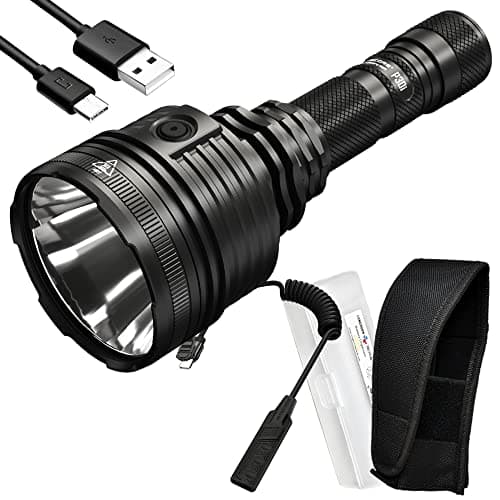 Nitecore P30iTop pick2,000 lumens and 1,000 m of stated throw. The furthest-reaching light on the site, and a genuinely specialized one. | Maximum distance | 1,000 m |
We earn a commission if you buy through the links on this page, at no extra cost to you. It does not change what we recommend or the order they appear in. Full disclosure. Prices checked September 21, 2026.
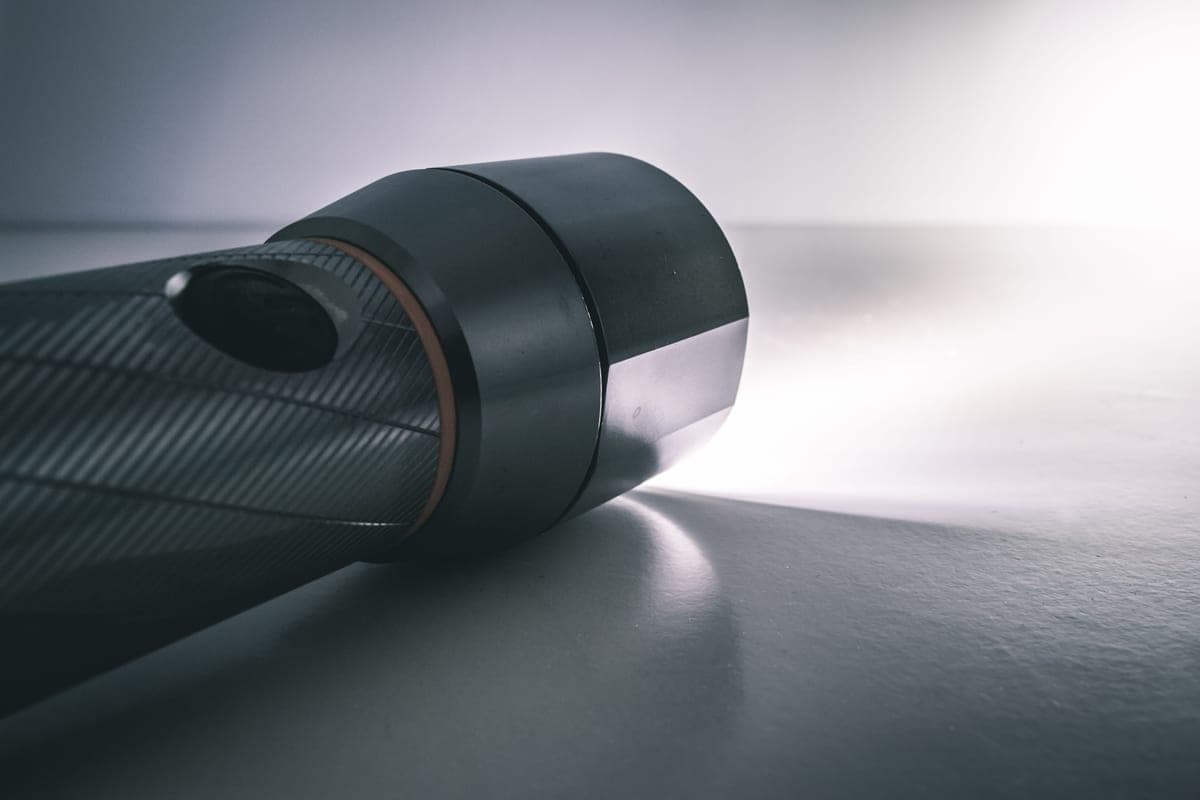
We have not tested this flashlight. We own none of the products on this site and have no laboratory. This review works from what Nitecore publishes through its retail listing, read for this build, plus the arithmetic ANSI FL 1 allows on top of it.
The P30i exists to answer one question — what is out there, a long way off — and it answers it better than anything else on this site except the Acebeam L19. Everything else about it is a compromise made in service of that one answer.
What Nitecore publishes
| Specification | Published figure |
|---|---|
| Maximum output | 2,000 lm |
| Beam distance | 1,000 m (listed as 1,093 yards) |
| Battery | 21700, USB-C rechargeable |
| Peak candela | not published |
| Runtime | not published |
| Weight | not published |
| Ingress protection | not published |
| Impact resistance | not published |
Two figures and a cell format. That is thin for a light in this price bracket, and it is the pattern across the Nitecore range as we could source it — the brand publishes the headline numbers and little of the supporting evidence. Streamlight publishes a runtime for every mode and an IP rating on comparable lights.
The beam, computed
125 candela per lumen is the number that actually describes this light. For scale, a Streamlight ProTac HL-X manages 27 and a Maglite ML300L 54. The P30i concentrates roughly five times as much of each lumen into its hotspot as a normal tactical light does, which is why it reaches 1,000 m on output that a pocketable Fenix PD36R Pro exceeds.
That concentration comes from a large, deep reflector, and there is no way to get it from a compact head. The physics is not negotiable: throw scales with reflector area and depth, so a thrower is a big light or it is not a thrower. See throw versus flood.
What you give up
The second thing you give up is knowing what it does over time. Nitecore publishes no runtime at any level, and on a light whose emitter is being driven hard enough to make 250,000 candela, sustained output is exactly the question you would want answered. We will not estimate a figure. How runtime is defined sets out what the missing number would have told you.
Third, no ingress or impact rating. A search light gets used outdoors in weather by definition, and Nitecore states nothing about either. The ProTac HL-X publishes IP68 and 2 m.
What 250,000 candela looks like at real distances
A beam distance figure is widely misread as an identification range. It is not. Under ANSI FL 1 it is the point where illumination falls to 0.25 lux, which is about what a full moon delivers — enough to notice that something is there, nowhere near enough to say what it is.
Twenty-five lux at 100 meters is a genuinely bright pool of light — comparable to a dim room, and easily enough to recognize a person, an animal or a gate. Four lux at 250 m is late dusk: you will see shape and movement and not detail. One lux at 500 m is deep twilight. By 1,000 m you are at the threshold the standard defines and not much else.
That is not a criticism of Nitecore's figure, which is measured the way every other maker's is. It is the reason the figure is worth converting: a light that reaches 1,000 m under FL 1 is a light that genuinely works at two to three hundred meters, and almost nothing else we cover can say that.
The 21700 is the right call
One specification here is unambiguously correct: the cell. A beam this intense needs high, sustained current, and a 21700 supplies it where an 18650 would sag under the load and drop output. It also charges over USB-C on the light, so there is no cradle or proprietary dock to lose. Our 18650 versus 21700 guide covers the difference.
Against the two lights it actually competes with
| Light | Output | Beam distance | Candela | Candela per lumen |
|---|---|---|---|---|
| Acebeam L19 | 1,650 lm | 1,300 m | 422,500 (computed) | 256 |
| Nitecore P30i | 2,000 lm | 1,000 m | 250,000 (computed) | 125 |
| Olight Warrior X 4 | 2,600 lm | 630 m | 99,200 (computed) | 38 |
| Streamlight ProTac HL-X | 1,300 lm | 374 m | 35,000 (published) | 27 |
Read that table downward and the output column tells you nothing. The 1,650-lumen light reaches twice as far as the 2,600-lumen one. If you have ever wondered why lumens are the wrong number to shop on, this is the clearest illustration on the site.
The L19 throws further; the P30i is brighter and, on live pricing, materially cheaper. The Warrior X 4 gives up half the reach for a beam you could plausibly use at conversational distance. Our throwers page ranks all four.
Who should buy something else
Skip it if this is your only light. It is a bad choice for everything inside ten meters, which is most of what a flashlight does. Buy it as a second light or not at all.
Skip it if you need a documented duty light. No runtime, no IP rating, no impact figure. The ProTac HL-X publishes all three and costs less.
Skip it if you want absolute maximum reach and are prepared to pay for it — the Acebeam L19 publishes 1,300 m.
Skip it if it has to fit in a pocket. The head diameter that buys the throw is the head diameter that does not clip to a waistband.
The verdict, stated as what it commits to
Nitecore commits to 2,000 lumens and 1,000 meters, which computes to 250,000 candela and 125 candela per lumen — a genuine long-range instrument rather than a marketing distance. For searching open country, spotting livestock, checking a far fence line or working a boat at night, that is the specification that matters and this is a well-chosen tool for it.
What Nitecore does not commit to is how long it holds that beam, whether it survives rain, or what it weighs. On a specialist tool bought for one job that is a smaller objection than it would be on a general-purpose light — but it is still the reason this sits behind Streamlight in our tactical field overall.
The picks, in full
Top pick · Maximum distance
Nitecore P30i
2,000 lumens and 1,000 m of stated throw. The furthest-reaching light on the site, and a genuinely specialized one.
1,000 m implies 250,000 candela. That is seven times the ProTac HL-X's intensity from 1.5 times the lumens, and it is only achievable with a large, deep reflector.
A beam this tight is close to useless for anything within ten meters. It is a search-and-identify tool for open country.
21700 is the right cell for it — a beam this intense needs current, and an 18650 would sag.
What works
- 1,000 m of published throw
- 21700 cell with USB-C
- The specialist tool the category actually needs, rather than another 3,000-lumen flood
What does not
- No sourced runtime, candela or IP rating
- The head diameter that buys the throw makes it awkward to carry
- Almost no usable spill
Skip this ifyou want one light for everything. This one does distance and does nothing else well.
Published specification
- Peak intensity
- not published
- Beam distance
- 1,000 mListed as a 1,093-yard beam; converted to metersNitecore P30i — the brand's own listing on Amazon.com (retrieved September 1, 2026)
- Runtime
- not published
- Battery
- 21700, USB-C rechargeableNitecore P30i — the brand's own listing on Amazon.com (retrieved September 1, 2026)
- Weight
- not published
- Ingress
- not published
#ad · how this is funded · price as of September 21, 2026
Questions people actually ask
How far does the Nitecore P30i really throw?
Nitecore publishes 1,000 m, listed as 1,093 yards. Under ANSI FL 1 that means the beam falls to 0.25 lux - roughly full-moon brightness - at that distance, so it is a measured threshold rather than a useful working range. Expect to identify things at a fraction of it.
Is the Nitecore P30i worth it?
For long-range searching, yes: 1,000 m from 2,000 lumens works back to 250,000 candela, which is about five times the concentration of a normal tactical light. As a general-purpose or only flashlight, no - a beam that tight has almost no usable spill inside ten meters.
How long does the Nitecore P30i run?
Nitecore does not publish a runtime at any level on the listing we could source, and does not publish a battery capacity either, so there is no figure and no arithmetic available. We will not invent one. On a light driven hard enough for 250,000 candela, that is the gap worth knowing about.
Nitecore P30i or Acebeam L19?
The L19 throws further - 1,300 m against 1,000, or 422,500 computed candela against 250,000. The P30i is brighter at 2,000 lumens against 1,650 and costs less. Neither publishes a runtime, weight or IP rating, so the choice comes down to reach against price.
Is the Nitecore P30i waterproof?
Nitecore publishes no ingress rating for it on the listing we read, so we do not state one. That is a disclosure gap rather than evidence it leaks, but on a light intended for outdoor searching it is a conspicuous omission. Streamlight publishes IP68 on the ProTac HL-X.
What battery does the Nitecore P30i use?
A 21700 cell, charging over USB-C on the light itself. That is the correct choice for a thrower: a beam this intense draws high sustained current, and an 18650 would sag under the load and drop output.
Why is a 2,000-lumen light brighter at distance than a 2,600-lumen one?
Because reach depends on candela, not lumens. The P30i concentrates 125 candela per lumen and the Olight Warrior X 4 about 38, so the P30i reaches 1,000 m and the Olight 630 despite having less total output. Our lumens versus candela guide covers the distinction.
Sources
Every figure on this page came from one of the documents below, read on the date shown. We do not cite other review sites, forum posts or video reviews as sources of fact.
- Nitecore P30i — the brand's own listing on Amazon.com (retrieved September 1, 2026)
- Acebeam L19 — the brand's own listing on Amazon.com (retrieved September 1, 2026)
- Olight Warrior X 4 — the brand's own listing on Amazon.com (retrieved September 1, 2026)
- Streamlight ProTac HL-X — manufacturer spec page (retrieved September 1, 2026)
- ANSI/PLATO FL 1 flashlight performance standard — definitions of lumens, peak beam intensity, beam distance, runtime, impact and water resistance
- IEC 60529 — the IP (ingress protection) rating system
Read next
Best tactical flashlights, ranked on candela rather than lumens
The tactical ranking: published candela, beam distance, sustained runtime and ingress rating, all sourced.
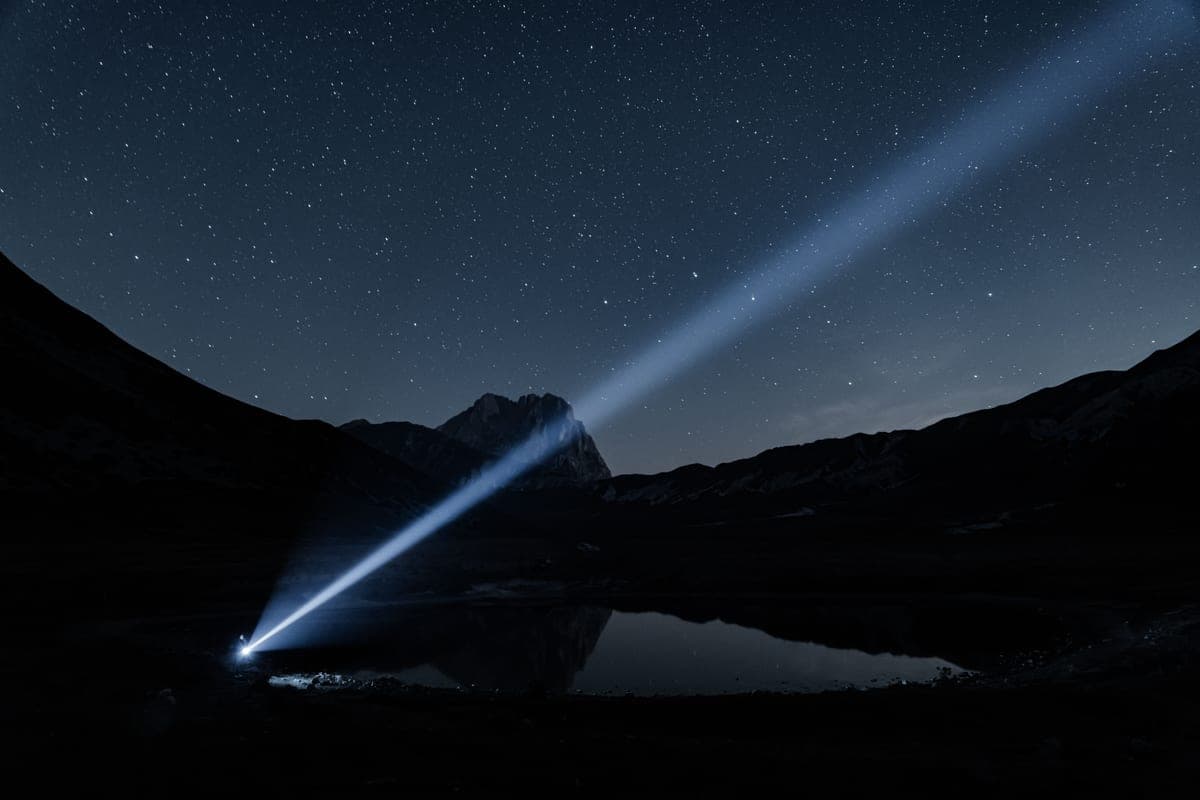
Best flashlight throwers
Throwers ranked on computed candela and published beam distance, with the optics explained.
The brightest tactical flashlights, and what brightness actually buys
Seven of the highest-output tactical lights we cover, ranked on published lumens with the beam distance that contradicts the order.
Lumens vs candela
The distinction that decides reach, with the conversion formula and a table of real published figures.
Throw vs flood
How reflector geometry produces throw or flood, what each suits, and where the middle ground lives.
Nitecore vs Olight
Nitecore against Olight on output per dollar, charging ecosystem, and the specifications neither publishes.
Found a number that is wrong? Tell us and we will fix it and say so. Our methodology shows every formula on this page.