Tactical Flashlights
Streamlight ProTac HL-X review
The only light on this site whose published candela and beam distance check out against each other. That is a smaller claim than 1,300 lumens and a much more useful one.
By Scooter M. · Published · Updated
| # | Product | Best for | Reach | Price |
|---|---|---|---|---|
| 1 | 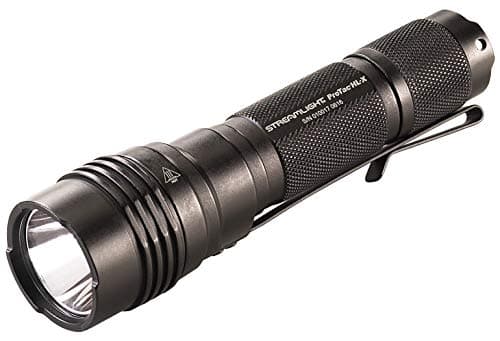 Streamlight ProTac HL-XTop pick1,300 lumens, 35,000 candela, 374 m, 1.5 hours, IP68, on either a rechargeable pack or two CR123A cells. Every figure published per mode. | Duty use, and the best-documented light on this site | 374 m |
We earn a commission if you buy through the links on this page, at no extra cost to you. It does not change what we recommend or the order they appear in. Full disclosure. Prices checked September 13, 2026.
We have not tested this flashlight. We own none of the products on this site, we have no laboratory, and nothing here is an impression of how it feels in a hand. This review takes every figure Streamlight publishes, runs the arithmetic those figures allow, and says what they do and do not commit the company to.
The ProTac HL-X is the light we cite more than any other, and the reason is narrow and specific: it is the only light on this site that publishes both peak candela and beam distance, and the two reconcile. That single property is worth more than any headline number in the category.
The published specification
| Specification | Published figure |
|---|---|
| Output | 1,300 lm |
| Peak beam intensity | 35,000 cd |
| Beam distance | 374 m |
| Runtime | 1.5 h high / 3.75 h medium / 25 h low |
| Battery | SL-B26 rechargeable Li-ion pack, or 2 x CR123A lithium |
| Weight | 162 g with CR123A, 176 g with the pack |
| Ingress protection | IP68 |
Seven figures, including a runtime for every mode and an immersion rating. Across the nine brands we cover, the only other light publishing a comparable sheet is Streamlight's own Stinger 2020.
Why the two beam figures matter more than the lumens
Divide the intensity by the output and you get roughly 27 candela per lumen — a tight hotspot sitting inside substantial usable spill. That is the middle of the range on this site, between the Streamlight MacroStream's 4 (pure flood) and the Acebeam L19's 256 (extreme thrower), and it is why this light is a genuine general-purpose choice rather than a specialist.
The runtime table is the second reason to buy it
1.5 hours on high, 3.75 on medium, 25 on low. Three numbers rather than one, and that is the difference between a specification you can plan a shift around and a marketing figure.
The usual pattern is a single maximum. Fenix publishes 42 hours for the PD36R Pro, which describes its lowest mode and says nothing about the 2,800 lumens on the box; Nitecore, Olight, Acebeam and Coast publish no runtime at all for the lights we cover. A per-mode table is the same claim made checkable, and it tells you the honest thing: this light does not hold 1,300 lumens for long, and Streamlight is willing to print how long.
What Streamlight does not publish is the SL-B26 pack's capacity, so the watt-hour arithmetic this site normally runs cannot be applied. You can see the hours; you cannot check them against the energy behind them. How runtime is defined covers the computation where the inputs exist.
Dual power is the feature that survives a bad day
The ProTac HL-X runs on its rechargeable SL-B26 pack or two CR123A lithium primaries. That is the most flexible power arrangement of any light we cover, and it is worth more than it sounds.
CR123A primaries store for roughly a decade and do not care that the light sat in a drawer since last winter. So this is simultaneously a rechargeable duty light and a light that works in a blackout, on a third day in the field, or anywhere there is no socket. A sealed rechargeable light in those situations is a paperweight. It is also why this light appears on our emergency and home lighting pages as well as the tactical ones.
The weight figures reflect the choice honestly: 162 g on primaries, 176 g with the pack. Streamlight publishes both, which is a small thing that most makers do not bother with.
IP68, and what it actually covers
Under IEC 60529 the first digit 6 is dust-tight — the highest solid-particle rating — and the second digit 8 is protection against continuous immersion beyond a meter, on conditions the manufacturer sets. Streamlight also states a 2 m impact rating for this light.
For context, the Fenix handhelds we cover publish no ingress rating at all, and Nitecore, Olight and Acebeam publish none either. On a light that might be carried in weather or dropped on concrete, IP68 is a tested claim where most of the category offers silence.
Who should buy something else
Skip it if you genuinely need maximum output. 1,300 lumens is modest now. The Nitecore P20iX publishes 4,000, the Fenix PD36R Pro 2,800 and the Olight Warrior X 4 2,600 — though none of those three publishes a per-mode runtime, so what the output costs you is unknown. See the brightest tactical flashlights.
Skip it if reach is the whole job. At 374 m it is respectable and it is not a thrower. The Nitecore P30i publishes 1,000 m and the Acebeam L19 1,300 m, both on less output. See best flashlight throwers.
Skip it if you want it in a trouser pocket every day. 162 g is a belt or a bag light. The Streamlight MacroStream publishes 62.4 g and a full spec sheet of its own if pocket carry is the requirement.
Skip it if you want the battery capacity published, which Fenix and Petzl both do and Streamlight does not on any product. It is the one clear gap in an otherwise unusually complete sheet.
The verdict, stated as what it commits to
On published evidence this is the light we would choose to depend on. Its candela and beam distance reconcile, it publishes a runtime for every mode, it holds IP68, and it runs on primaries when the pack is flat. Four checkable facts, and together they describe a light built to be relied upon rather than to win a specification comparison it was never entered in.
It is not the brightest, it does not throw furthest, and it will not disappear in a pocket. Every one of those is visible in the numbers before you spend anything — which is the whole argument. For the wider category ranked on candela rather than lumens, see tactical flashlights.
The picks, in full
Top pick · Duty use, and the best-documented light on this site
Streamlight ProTac HL-X
1,300 lumens, 35,000 candela, 374 m, 1.5 hours, IP68, on either a rechargeable pack or two CR123A cells. Every figure published per mode.
35,000 candela and 374 m reconcile exactly: the square root of 35,000 divided by 0.25 is 374.2 m. Streamlight's numbers are internally consistent across all three modes, which is the strongest signal of a maker publishing real measurements rather than marketing figures.
1.5 hours at 1,300 lumens implies roughly 6 to 7 watt-hours of usable energy — consistent with a single 18650-class pack and with the CR123A alternative.
IP68 with 2 m impact resistance is the toughest rating in this roundup, and the reason this light shows up on so many duty belts.
What works
- Full ANSI FL1 table published per mode, and it reconciles
- Runs on a rechargeable pack or on shelf-stable CR123A lithium cells
- IP68 and 2 m impact rating
What does not
- The programming interface takes reading the manual to understand
- 162 to 176 g is heavy for pocket carry
- CR123A cells are expensive if you use it hard
Skip this ifyou want a pocket light. It is a duty-belt tool and the weight and length are built for a holster.
Published specification
- Output
- 1,300 lmHigh. Medium 420 lm, low 70 lm.Streamlight ProTac HL-X — manufacturer spec page (retrieved September 1, 2026)
- Peak intensity
- 35,000 cdHigh. 11,000 cd medium, 1,800 cd low.Streamlight ProTac HL-X — manufacturer spec page (retrieved September 1, 2026)
- Beam distance
- 374 mHigh. 210 m medium, 85 m low.Streamlight ProTac HL-X — manufacturer spec page (retrieved September 1, 2026)
- Runtime
- 1.5 h high / 3.75 h medium / 25 h lowOn the SL-B26 pack. On CR123A: 1.25 h / 3 h / 20 h.Streamlight ProTac HL-X — manufacturer spec page (retrieved September 1, 2026)
- Battery
- SL-B26 rechargeable Li-ion pack, or 2 x CR123A lithiumStreamlight ProTac HL-X — manufacturer spec page (retrieved September 1, 2026)
- Weight
- 162 g with CR123A, 176 g with the packStreamlight ProTac HL-X — manufacturer spec page (retrieved September 1, 2026)
- Ingress
- IP68Dust tight, waterproof to 2 m; 2 m impact resistance testedStreamlight ProTac HL-X — manufacturer spec page (retrieved September 1, 2026)
#ad · how this is funded · price as of September 13, 2026
Questions people actually ask
Is the Streamlight ProTac HL-X worth it?
On published evidence it makes the strongest case of any light we cover for dependable use: candela and beam distance that reconcile exactly, a runtime for all three modes, IP68, and the ability to run on CR123A primaries when the rechargeable pack is flat. It is not the brightest or the longest-throwing light in its price range.
How far does the ProTac HL-X shine?
Streamlight publishes 374 m and 35,000 candela, and the two check out against each other — the square root of 35,000 divided by 0.25 is 374.2 m. At roughly 27 candela per lumen it is a tight hotspot inside usable spill, which is the middle of the range and makes it a general-purpose light rather than a specialist.
How long does the ProTac HL-X run?
1.5 hours on high, 3.75 on medium and 25 on low. Publishing a figure for each mode is unusual — most makers publish a single maximum describing their lowest setting, and several publish nothing at all. Streamlight does not publish the SL-B26 pack's capacity, so the hours cannot be checked against stored energy.
Can the ProTac HL-X use CR123A batteries?
Yes — two CR123A lithium primaries as an alternative to the rechargeable SL-B26 pack. Those cells store for around a decade, so the light works after long storage or in a blackout where a sealed rechargeable would be flat. Streamlight publishes both weights: 162 g on primaries, 176 g with the pack.
Is the ProTac HL-X waterproof?
It publishes IP68, which under IEC 60529 means dust-tight and protected against continuous immersion beyond one meter on the manufacturer's stated conditions, along with a 2 m impact rating. Most of this category — Fenix handhelds, Nitecore, Olight and Acebeam — publishes no ingress rating at all.
ProTac HL-X or Fenix PD36R Pro?
The Fenix publishes 2,800 lumens, 380 m and an 18 Wh 21700 cell; the Streamlight publishes 1,300 lumens, 374 m, IP68, three runtimes and a CR123A fallback. More than double the output buys six meters of reach. Buy the Fenix for output and stored energy, the Streamlight for knowing what it does and having it work when the pack is dead.
Is 1,300 lumens enough for a duty flashlight?
For most duty use, yes — and the more relevant figure is the 35,000 candela behind it, which is what determines whether you can identify something at distance. Lights publishing three times the output frequently reach no further, because they spread the light rather than concentrating it.
Sources
Every figure on this page came from one of the documents below, read on the date shown. We do not cite other review sites, forum posts or video reviews as sources of fact.
- Streamlight ProTac HL-X — manufacturer spec page (retrieved September 1, 2026)
- Fenix PD36R Pro — manufacturer spec page (retrieved September 1, 2026)
- ANSI/PLATO FL 1 flashlight performance standard — definitions of lumens, peak beam intensity, beam distance, runtime, impact and water resistance
- IEC 60529 — the IP (ingress protection) rating system
Read next
Best tactical flashlights, ranked on candela rather than lumens
The tactical ranking: published candela, beam distance, sustained runtime and ingress rating, all sourced.
The brightest tactical flashlights, and what brightness actually buys
Seven of the highest-output tactical lights we cover, ranked on published lumens with the beam distance that contradicts the order.
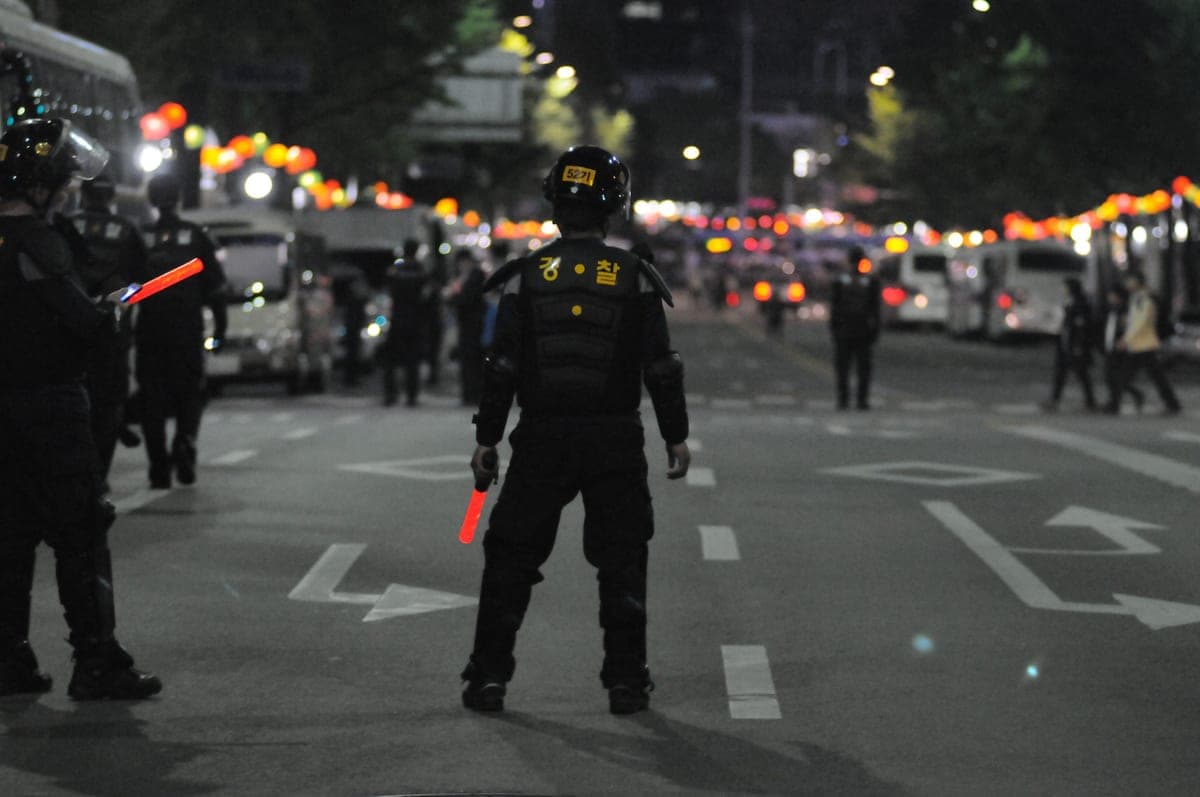
Best flashlights for police and law enforcement
Duty lights ranked on shift-length sustained runtime, impact rating and charging strategy.
Streamlight vs Fenix
Streamlight against Fenix on published candela, reach and runtime — one brand wins the headline, the other wins the spec sheet.
Lumens vs candela
The distinction that decides reach, with the conversion formula and a table of real published figures.
Flashlight runtime, computed
How runtime is defined, why thermal step-down happens, and the arithmetic to compute a real figure yourself.
Found a number that is wrong? Tell us and we will fix it and say so. Our methodology shows every formula on this page.