EDC Flashlights
Best compact thrower flashlights
A thrower concentrates light; a pocket light has nowhere to put a big reflector. These six manage both, and the one that concentrates hardest is the dimmest on the page.
By Scooter M. · Published · Updated
| # | Product | Best for | Output | Price |
|---|---|---|---|---|
| 1 | 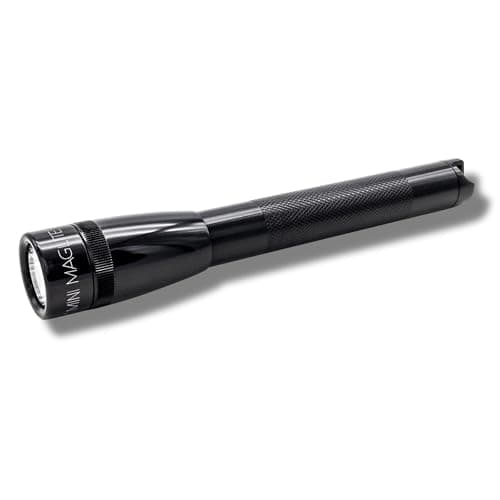 Maglite Mini Maglite LED 2-Cell AATop pick127 lumens that reach 156 meters. A Streamlight MacroStream puts out four times the output and reaches 90. | Reach from a pocket light, on AA cells | 127 lm | |
| 2 | 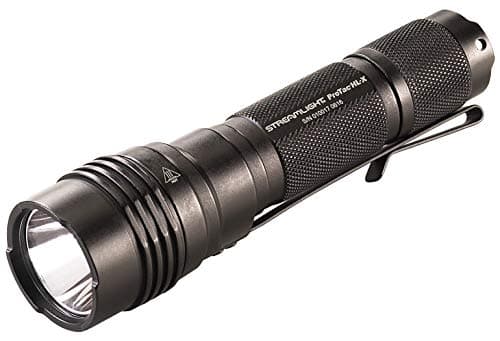 Streamlight ProTac HL-X1,300 lumens, 35,000 candela, 374 m, 1.5 hours, IP68, on either a rechargeable pack or two CR123A cells. Every figure published per mode. | Duty use, and the best-documented light on this site | 1,300 lm | |
| 3 | 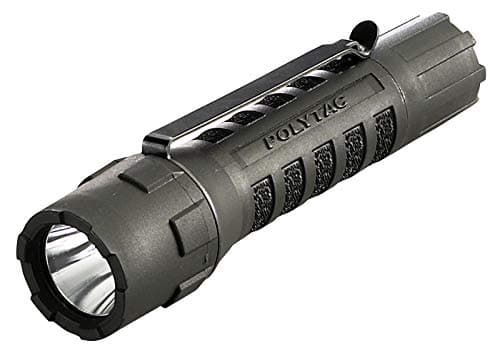 Streamlight PolyTac600 lumens, 214 m, 2.75 hours, IPX7 and 3 m impact resistance in a nylon polymer body. The one you leave in a truck. | A polymer duty light you will not worry about | 600 lm | |
| 4 | 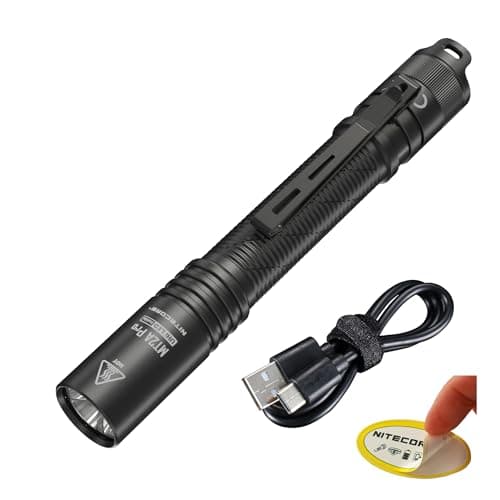 Nitecore MT2A Pro1,000 lumens and 255 m of stated reach on AA cells, with USB-C charging. Dual power done properly. | AA cells with USB-C and real reach | 1,000 lm | |
| 5 | 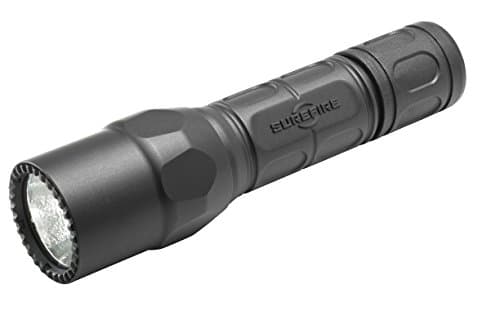 SureFire G2X Pro600 lumens, 8,700 candela, 1.5 hours, and two modes. The specification is modest; the point is that nothing on it can go wrong. | A simple two-mode light that will outlive you | 600 lm | |
| 6 | 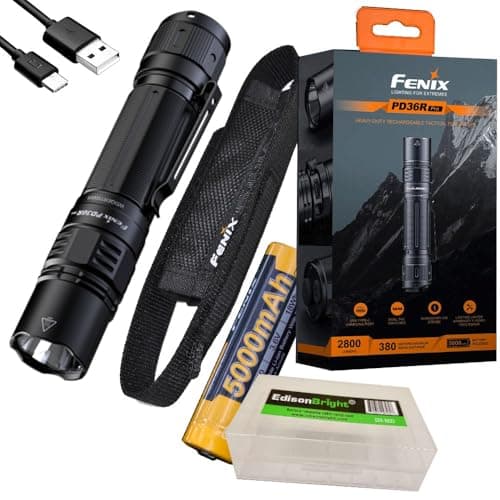 Fenix PD36R Pro2,800 lumens from a 21700 cell holding 18 watt-hours, at 169 grams. The biggest energy store in the tactical set. | The most output and energy in a tactical body | 2,800 lm |
We earn a commission if you buy through the links on this page, at no extra cost to you. It does not change what we recommend or the order they appear in. Full disclosure. Prices checked September 26, 2026.
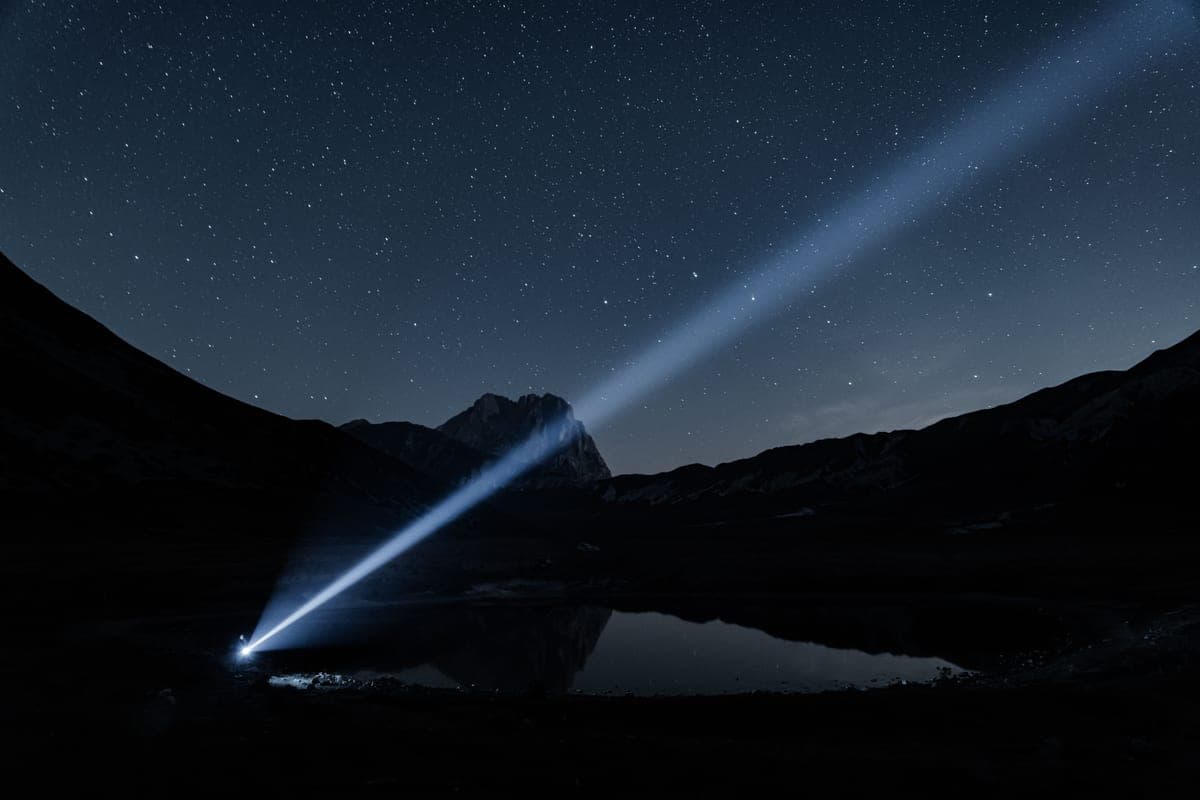
A dedicated thrower is a big light. Reach comes from concentrating light into a narrow cone, that concentration comes from a large, deep reflector, and a large deep reflector needs a head you cannot clip to a waistband. Our throwers page ranks the full-size ones, and the light at the top of it reaches 1,300 meters from a head far too large to clip into a pocket.
This page is about the compromise: how much reach you can buy in something that actually rides in a pocket. It is a real category with a real answer, and the answer is not the brightest light here.
How we judged these
- Candela, not lumens. Lumens measure everything a light emits in every direction. Candela measure intensity in the brightest part of the beam, which is what decides how far you see. A light can double its lumens and lose reach. Lumens versus candela is the short version.
- Candela per lumen is the ranking metric. Divide intensity by output and you get one number describing how hard the optic concentrates. It is the only figure that separates a thrower from a bright flood, and no maker prints it.
- A candela figure that is published, or a beam distance we can convert. Under ANSI/PLATO FL 1 the two are interchangeable, so either is acceptable and we label which we used. A light with neither is not on this page, however good it may be.
- Pocketable. A published weight under about 200 grams, or a body we can see is pocket-sized. Two lights that out-throw everything here were excluded for this reason alone.
- Currently purchasable, verified against the live listing before writing. We have not tested any of them — every figure is the maker's own, cited with the date it was read. See our methodology.
The six, on the numbers
| Light | Output | Candela | Beam distance | Candela per lumen | Weight |
|---|---|---|---|---|---|
| Maglite Mini LED 2-Cell AA | 127 lm | 6,093 (published) | 156 m | 48.0 | 118 g |
| Streamlight ProTac HL-X | 1,300 lm | 35,000 (published) | 374 m | 26.9 | 162-176 g |
| Streamlight PolyTac | 600 lm | 11,449 (computed) | 214 m | 19.1 | 119 g |
| Nitecore MT2A Pro | 1,000 lm | 16,256 (computed) | 255 m | 16.3 | not published |
| SureFire G2X Pro | 600 lm | 8,700 (published) | 186 m (computed) | 14.5 | not published |
| Fenix PD36R Pro | 2,800 lm | 36,100 (computed) | 380 m | 12.9 | 169 g |
Read the first column against the last two. The 127-lumen light concentrates nearly four times as hard as the 2,800-lumen one. The 2,800-lumen one still reaches further. Both of those are true at the same time, and which one matters depends entirely on what you are trying to see.
There are two honest answers here
If you want the most concentrated beam in a pocket, it is the Maglite Mini at 48 candela per lumen. Nothing else here is close, and it does it with an adjustable-focus reflector on two AA cells.
If you want the longest reach in a pocket, it is the Fenix PD36R Pro at 380 meters — which it achieves despite having the loosest beam on this page, by brute-forcing 2,800 lumens through it.
Those are different lights for different jobs. The Maglite puts a tight disc of light on something at 150 m while barely denting a AA cell. The Fenix floods a field. A buyer who reads only the lumen column will pick the Fenix for a job the Maglite does better, and a buyer who reads only the concentration column will do the reverse.
The arithmetic, both directions
The picks, and who each one is wrong for
Maglite Mini LED 2-Cell AA — the most concentrated beam here, by a wide margin
127 lumens, 6,093 published candela, 156 m, 118 g and IPX4, with 25 hours published on Low. It has the lowest output on this page by nearly a factor of five, and also the shortest absolute reach. What it has is efficiency: an adjustable-focus reflector concentrating 48 candela per lumen, nearly twice what the ProTac manages and nearly four times the Fenix. It gets to 156 m on 127 lumens where the Fenix needs 2,800 to reach 380.
It also publishes both a candela figure and a distance, and they reconcile. On two AA cells you can buy in any shop in the country. For the specific job of putting a tight beam on something a long way off, from a light that lives in a glovebox for a year between uses, nothing here comes close.
Skip it if you need to light an area. 127 lumens is genuinely dim and the focused beam makes it feel dimmer up close. Skip it too if you want USB charging or an immersion rating — IPX4 is splash resistance.
Streamlight ProTac HL-X — the best combination of the two
1,300 lumens, 35,000 published candela, 374 m, 162 to 176 g depending on cell, IP68 and a 2 m impact rating, with a runtime for every mode. At 26.9 candela per lumen it is the second most concentrated light here and it reaches nearly as far as the Fenix on half the output.
It is also the best-documented light on this site: its candela and distance reconcile, and it runs on its rechargeable pack or two CR123A primaries that store for roughly a decade. There is a full review.
Skip it if you want maximum output — the Fenix is more than twice as bright. Skip it too if 162 to 176 g in a pocket is more than you want; the PolyTac and the Maglite are lighter.
Streamlight PolyTac — the one you will not worry about
600 lumens, 214 m, 119 g with cells fitted, IPX7 and a tested 3 m impact rating — the highest drop rating on this page, because a polymer body absorbs impact that an aluminum one transmits to the internals. Streamlight publishes a full runtime table: 2.75 hours on high, 5.5 on medium, 34 on low.
It runs on two CR123A lithium primaries, included, which makes it the right compact thrower for a glovebox or a go-bag where a rechargeable would be flat when you needed it.
Skip it if you use it daily — CR123A cells cost real money to replace and a rechargeable is cheaper to run. At 19.1 candela per lumen it is also a middling concentrator; you are buying durability and shelf life more than reach.
Nitecore MT2A Pro — the longest reach on ordinary AA cells
1,000 lumens and 255 m of published beam distance, which computes to 16,256 candela — the most reach of any AA light we cover, and it charges over USB-C as well. The dual-power arrangement is the practical part: charge it normally, and if it dies far from a socket, put an alkaline AA in it and keep going.
Skip it if you want it documented. Nitecore publishes output and beam distance and stops — no runtime, no weight, and it is listed as waterproof without a rating, which is a claim rather than a specification. On a page where two lights publish candela and distance that reconcile, that is a real step down.
SureFire G2X Pro — two modes, and nothing to go wrong
600 lumens and 8,700 published candela, which works back to 186 m. Two modes on a single switch, a polymer body, and two CR123A primaries. There is no charging routine, no mode-cycling grammar and no software: press for high, press again for low.
SureFire is one of only three brands we cover that publishes a candela figure directly, which on a light this simple is a useful signal about the company rather than the product.
Skip it if you want figures. SureFire publishes candela and a 1.5-hour high-mode runtime and then stops — no weight, no ingress rating, no impact rating. It is also near the top of this page on price and near the bottom on output, and you are paying for reputation and simplicity rather than specification.
Fenix PD36R Pro — the longest reach in a pocket, by brute force
2,800 lumens and 380 m — the furthest of the six — from a 5,000 mAh 21700 cell at 169 g, with 3 hours 30 minutes published on Turbo and 18.0 computed watt-hours, the largest single-cell energy store on this site. Fenix states it is waterproof underwater to 2 m. There is a full review.
It earns last place on the ranking metric and first place on the one most buyers actually mean. At 12.9 candela per lumen this is not really a thrower — it is a very bright light with a moderately wide beam, and the reach is a consequence of the output rather than of the optic.
Skip it if you want a genuine thrower. The beam is broad, and against a treeline at 300 m the ProTac's tighter hotspot will read better despite half the lumens. Skip it too if you want a published IP code or an impact figure — Fenix gives neither.
How to buy on this page
- You want the tightest beam that fits in a pocket — Maglite Mini LED, at 48 candela per lumen.
- You want the most reach that fits in a pocket — Fenix PD36R Pro, 380 m.
- You want both, in balance — Streamlight ProTac HL-X: 374 m at 26.9 candela per lumen, with the most complete spec sheet here.
- It lives in a glovebox or a go-bag — Streamlight PolyTac, on lithium primaries that keep for a decade, or the Maglite on AA cells.
- You want cells from any shop — Maglite Mini or Nitecore MT2A Pro. See AA flashlights.
- You want reach without a charging routine — SureFire G2X Pro or Streamlight PolyTac, both on CR123A primaries.
- You do not actually need reach — most people do not. What to look for in a flashlight starts from the specifications that matter more often.
What we would not tell you
We would not tell you any of these will identify a person at its published beam distance. Under FL 1, beam distance is the point where the light falls to 0.25 lux — about full moonlight. It is a measured threshold, not a working range, and the inverse-square law means useful light arrives at a fraction of it. Expect to recognize things at perhaps a third of the number on the box.
We would also not tell you what three of these weigh. Nitecore and SureFire publish no weight at all, and on a page whose entire premise is that the light fits in a pocket, that is a gap worth naming rather than filling with a guess.
And we would not tell you a compact thrower replaces a real one. The two lights excluded from this page reach 1,000 and 1,300 meters; the best here manages 380. If distance is genuinely the job, buy the big light and carry it in a bag.
The picks, in full
Top pick · Reach from a pocket light, on AA cells
Maglite Mini Maglite LED 2-Cell AA
127 lumens that reach 156 meters. A Streamlight MacroStream puts out four times the output and reaches 90.
This is the clearest single illustration on the site of why lumens do not decide reach. 127 lumens, 6,093 candela, 156 m. The Streamlight MacroStream is 500 lumens, 2,000 candela, 90 m. Four times the output, and it reaches 66 m less, because its reflector spreads the light instead of collimating it.
Forty-eight candela per lumen from a AA light is remarkable, and it is entirely down to the focusing head. Twist it and the beam goes from a usable flood to a tight circle you can put on something across a field.
What you give up is everything else. 127 lumens is genuinely dim next to any modern pocket light, there is no USB-C, and IPX4 is a rain rating.
What works
- 156 m of published reach from a 2 x AA pocket light, with candela that reconciles
- Two AA cells: available anywhere, storable for years, no charging routine
- Adjustable focus from flood to spot
What does not
- 127 lumens is far below anything modern in this size class
- IPX4, and no published sustained-output figure
- No rechargeable option and no USB-C
Skip this ifyou want a modern pocket light. On raw output it loses to everything, and it earns its place here only on reach per lumen and on running from cells you already own.
Published specification
- Output
- 127 lmMaglite Mini Maglite LED 2-Cell AA — manufacturer spec page (retrieved September 4, 2026)
- Peak intensity
- 6,093 cdMaglite Mini Maglite LED 2-Cell AA — manufacturer spec page (retrieved September 4, 2026)
- Beam distance
- 156 mReconciles with the published candela: the square root of 6,093 divided by 0.25 is 156.1 mMaglite Mini Maglite LED 2-Cell AA — manufacturer spec page (retrieved September 4, 2026)
- Runtime
- 25 h on LowMaglite Mini Maglite LED 2-Cell AA — manufacturer spec page (retrieved September 4, 2026)
- Battery
- 2 x AA (included)Maglite Mini Maglite LED 2-Cell AA — manufacturer spec page (retrieved September 4, 2026)
- Weight
- 118 g (4.15 oz)With batteriesMaglite Mini Maglite LED 2-Cell AA — manufacturer spec page (retrieved September 4, 2026)
- Ingress
- IPX41 m drop resistanceMaglite Mini Maglite LED 2-Cell AA — manufacturer spec page (retrieved September 4, 2026)
#ad · how this is funded · price as of September 26, 2026
Pick 2 · Duty use, and the best-documented light on this site
Streamlight ProTac HL-X
1,300 lumens, 35,000 candela, 374 m, 1.5 hours, IP68, on either a rechargeable pack or two CR123A cells. Every figure published per mode.
35,000 candela and 374 m reconcile exactly: the square root of 35,000 divided by 0.25 is 374.2 m. Streamlight's numbers are internally consistent across all three modes, which is the strongest signal of a maker publishing real measurements rather than marketing figures.
1.5 hours at 1,300 lumens implies roughly 6 to 7 watt-hours of usable energy — consistent with a single 18650-class pack and with the CR123A alternative.
IP68 with 2 m impact resistance is the toughest rating in this roundup, and the reason this light shows up on so many duty belts.
What works
- Full ANSI FL1 table published per mode, and it reconciles
- Runs on a rechargeable pack or on shelf-stable CR123A lithium cells
- IP68 and 2 m impact rating
What does not
- The programming interface takes reading the manual to understand
- 162 to 176 g is heavy for pocket carry
- CR123A cells are expensive if you use it hard
Skip this ifyou want a pocket light. It is a duty-belt tool and the weight and length are built for a holster.
Published specification
- Output
- 1,300 lmHigh. Medium 420 lm, low 70 lm.Streamlight ProTac HL-X — manufacturer spec page (retrieved September 1, 2026)
- Peak intensity
- 35,000 cdHigh. 11,000 cd medium, 1,800 cd low.Streamlight ProTac HL-X — manufacturer spec page (retrieved September 1, 2026)
- Beam distance
- 374 mHigh. 210 m medium, 85 m low.Streamlight ProTac HL-X — manufacturer spec page (retrieved September 1, 2026)
- Runtime
- 1.5 h high / 3.75 h medium / 25 h lowOn the SL-B26 pack. On CR123A: 1.25 h / 3 h / 20 h.Streamlight ProTac HL-X — manufacturer spec page (retrieved September 1, 2026)
- Battery
- SL-B26 rechargeable Li-ion pack, or 2 x CR123A lithiumStreamlight ProTac HL-X — manufacturer spec page (retrieved September 1, 2026)
- Weight
- 162 g with CR123A, 176 g with the packStreamlight ProTac HL-X — manufacturer spec page (retrieved September 1, 2026)
- Ingress
- IP68Dust tight, waterproof to 2 m; 2 m impact resistance testedStreamlight ProTac HL-X — manufacturer spec page (retrieved September 1, 2026)
#ad · how this is funded · price as of September 26, 2026
Pick 3 · A polymer duty light you will not worry about
Streamlight PolyTac
600 lumens, 214 m, 2.75 hours, IPX7 and 3 m impact resistance in a nylon polymer body. The one you leave in a truck.
2.75 hours at 600 lumens from two CR123A cells is a very efficient result — that is roughly 6 watt-hours doing real work rather than being thrown away as heat.
3 m of impact resistance is the highest figure in this roundup. Polymer absorbs a drop that would dent an aluminum body.
119 g with cells installed makes this the lightest full-size duty light here.
What works
- Full per-mode table published, all three modes
- 3 m impact resistance and IPX7
- 119 g, with a ten-year shelf life on its cells
What does not
- 600 lumens is modest against the rechargeable competition
- CR123A running costs add up
- We could not pin a current ASIN for it, so the buy link is a tagged Amazon search
Skip this ifyou use a light daily. CR123A primaries are the wrong economics for frequent use; buy a rechargeable instead.
Published specification
- Output
- 600 lmHigh. Medium 260 lm, low 35 lm.Streamlight PolyTac — manufacturer spec page (retrieved September 1, 2026)
- Peak intensity
- not published(Listed per mode; no value on the page we read)
- Beam distance
- 214 mHigh. 140 m medium, 52 m low.Streamlight PolyTac — manufacturer spec page (retrieved September 1, 2026)
- Runtime
- 2.75 h high / 5.5 h medium / 34 h lowStreamlight PolyTac — manufacturer spec page (retrieved September 1, 2026)
- Battery
- 2 x CR123A lithium (included)Streamlight PolyTac — manufacturer spec page (retrieved September 1, 2026)
- Weight
- 119 g (4.2 oz) with batteriesStreamlight PolyTac — manufacturer spec page (retrieved September 1, 2026)
- Ingress
- IPX7Waterproof to 1 m for 30 minutes; 3 m impact resistance testedStreamlight PolyTac — manufacturer spec page (retrieved September 1, 2026)
#ad · how this is funded · price as of September 26, 2026
Pick 4 · AA cells with USB-C and real reach
Nitecore MT2A Pro
1,000 lumens and 255 m of stated reach on AA cells, with USB-C charging. Dual power done properly.
255 m from 1,000 lumens works back to roughly 16,300 candela. That is a moderately tight beam — real reach without the tunnel vision of a dedicated thrower.
AA plus USB-C is the combination that solves the emergency case: charge it normally, and when the power has been out for three days put alkalines in it.
Nitecore lists it as waterproof with no IP number, which is exactly the sort of claim we will not carry into the spec table.
What works
- AA compatibility and USB-C charging in the same light
- 255 m of published reach
- 1,000 lumens is high for the AA class
What does not
- Waterproof claim without a rating
- No sourced runtime or candela
- AA sets the diameter, so it is a wide pocket light
Skip this ifyou want the smallest possible carry. The AA format costs you length and girth over a 16340 light.
Published specification
- Output
- 1,000 lmNitecore MT2A Pro — the brand's own listing on Amazon.com (retrieved September 1, 2026)
- Peak intensity
- not published
- Beam distance
- 255 mListed as a 279-yard beam; converted to metersNitecore MT2A Pro — the brand's own listing on Amazon.com (retrieved September 1, 2026)
- Runtime
- not published
- Battery
- AA, dual power compatible, USB-C rechargeableNitecore MT2A Pro — the brand's own listing on Amazon.com (retrieved September 1, 2026)
- Weight
- not published
- Ingress
- not published(Listed as waterproof without a rating)
#ad · how this is funded · price as of September 26, 2026
Pick 5 · A simple two-mode light that will outlive you
SureFire G2X Pro
600 lumens, 8,700 candela, 1.5 hours, and two modes. The specification is modest; the point is that nothing on it can go wrong.
8,700 candela works out to a 186 m FL1 beam distance, which SureFire does not print. That is well short of the ProTac's 374 m on similar output, because SureFire deliberately builds a wider beam with more usable spill.
Two modes, low then high, with no strobe and no programming. On a light you might need in a hurry, that is a feature.
CR123A primaries hold their charge for a decade on a shelf. For a light that lives in a drawer against the worst night of your life, that matters more than rechargeability.
What works
- Two modes, no menu, nothing to misconfigure
- CR123A lithium cells with a ten-year shelf life
- The most durable reputation in the category, earned over decades
What does not
- 600 lumens and 8,700 candela are modest for the price in 2026
- No published weight or ingress rating on the page we read
- CR123A cells cost real money to run
Skip this ifyou buy on specification. Almost everything here beats it on paper; you are paying for reliability and simplicity instead.
Published specification
- Output
- 600 lmHigh. Low is 15 lm.SureFire G2X Pro — manufacturer spec page (retrieved September 1, 2026)
- Peak intensity
- 8,700 cdSureFire G2X Pro — manufacturer spec page (retrieved September 1, 2026)
- Beam distance
- not published(SureFire publishes candela, not distance)
- Runtime
- 1.5 h on highSureFire G2X Pro — manufacturer spec page (retrieved September 1, 2026)
- Battery
- 2 x CR123A lithiumSureFire G2X Pro — manufacturer spec page (retrieved September 1, 2026)
- Weight
- not published(Not stated on the page we read)
- Ingress
- not published(Not stated on the page we read)
#ad · how this is funded · price as of September 26, 2026
Pick 6 · The most output and energy in a tactical body
Fenix PD36R Pro
2,800 lumens from a 21700 cell holding 18 watt-hours, at 169 grams. The biggest energy store in the tactical set.
A 5,000 mAh 21700 at 3.6 V is 18.0 watt-hours — nearly three times what the ProTac HL-X carries. That is the case for the 21700 format in one number.
380 m of reach on 2,800 lumens works back to about 36,100 candela, almost identical to the ProTac's 35,000 from 1,300 lumens. The Fenix is spending its extra output on spill, not on distance.
169 g including the cell is only 7 g more than a ProTac on CR123A, for nearly triple the energy. That is what four years of cell development buys.
What works
- 18 Wh of stored energy, the most in the tactical set
- 2,800 lumens with 380 m of published reach
- Standard 21700 cell, USB-C on the light
What does not
- Waterproofing stated as 2 m submersion, with no IP code to compare against
- No published candela, so the throw figure cannot be cross-checked
- 2,800 lumens will step down quickly in a body this size
Skip this ifyou need a shelf-stable light. A rechargeable cell self-discharges; for a drawer light, CR123A primaries are the right answer.
Published specification
- Peak intensity
- not published
- Beam distance
- 380 mFenix states 1,247 feet (380 m)Fenix PD36R Pro — manufacturer spec page (retrieved September 17, 2026)
- Runtime
- 3 h 30 min on Turbo / 42 h maximumTurbo is measured to 10% output under ANSI FL 1, so it includes step-down; 42 h is the lowest mode. Other modes are published as a chart imageFenix PD36R Pro — manufacturer spec page (retrieved September 1, 2026)
- Battery
- 5,000 mAh 21700 Li-ion (included), USB-CFenix PD36R Pro — manufacturer spec page (retrieved September 1, 2026)
- Weight
- 169 g (5.96 oz)Including batteryFenix PD36R Pro — manufacturer spec page (retrieved September 1, 2026)
- Ingress
- Waterproof underwater to 2 mFenix states this without giving an IP codeFenix PD36R Pro — manufacturer spec page (retrieved September 17, 2026)
#ad · how this is funded · price as of September 26, 2026
Questions people actually ask
What is a compact thrower flashlight?
A pocketable light whose optic concentrates its output into a narrow, intense beam rather than spreading it. The measure is candela per lumen: divide peak beam intensity by total output. Above roughly 20 is a thrower, below about 10 is a flood, and lumens alone will not tell you which you are buying.
What is the best compact thrower flashlight?
For beam concentration, the Maglite Mini LED 2-Cell AA at 48 candela per lumen - nearly twice the next light here, from 127 lumens and two AA cells. For absolute reach in a pocket, the Fenix PD36R Pro at a published 380 m. The Streamlight ProTac HL-X is the best balance of the two.
Can a small flashlight really throw a long way?
Up to a point. Reach comes from reflector size and depth, and a pocket light has limited room for both, so the compact lights here top out at 380 m against 1,300 m for the full-size Acebeam L19. What a small light can do is concentrate efficiently - the 127-lumen Maglite out-reaches several lights with eight times its output.
Why does a 127-lumen light out-throw a 1,000-lumen one?
Because reach depends on candela, not lumens. The Maglite Mini concentrates 48 candela per lumen through an adjustable-focus reflector; a wide-beam light might manage 4. Total output tells you how much light exists, not how much of it is pointed at the thing you want to see.
How far will a compact thrower actually let me see?
Considerably less than the published beam distance. Under ANSI FL 1 that figure is where illumination falls to 0.25 lux, roughly full moonlight - enough to notice something is there, not to say what it is. As a rough guide, expect to recognize things at around a third of the stated number.
Is candela or lumens more important?
It depends on the job, which is why both exist. Candela decides how far you see and lumens decide how much you light up. For searching a field, reading a sign at distance or checking a far fence line, candela is the figure. For lighting a room, a campsite or a work area, lumens is.
Do any compact throwers run on AA batteries?
Two here do. The Maglite Mini LED takes two AA cells and publishes 6,093 candela and 156 m; the Nitecore MT2A Pro takes AA or USB-C and publishes 255 m, the longest reach of any AA light we cover. Both mean a flat light is a two-minute problem rather than a dead evening.
What is the difference between throw and flood?
Throw is a concentrated beam that reaches far with little surrounding light; flood is a wide beam that lights everything near you. The same emitter can produce either depending on the reflector or lens in front of it, which is why two lights with identical lumen figures can behave completely differently.
Sources
Every figure on this page came from one of the documents below, read on the date shown. We do not cite other review sites, forum posts or video reviews as sources of fact.
- Maglite Mini Maglite LED 2-Cell AA — manufacturer spec page (retrieved September 4, 2026)
- Streamlight ProTac HL-X — manufacturer spec page (retrieved September 1, 2026)
- Streamlight PolyTac — manufacturer spec page (retrieved September 1, 2026)
- Nitecore MT2A Pro — the brand's own listing on Amazon.com (retrieved September 1, 2026)
- SureFire G2X Pro — manufacturer spec page (retrieved September 1, 2026)
- Fenix PD36R Pro — manufacturer spec page (retrieved September 1, 2026)
- ANSI/PLATO FL 1 flashlight performance standard — definitions of lumens, peak beam intensity, beam distance, runtime, impact and water resistance
- IEC 60529 — the IP (ingress protection) rating system
Read next

Best EDC flashlights, ranked on what they actually hold
The full EDC ranking: cell format, stored energy, color rendering and beam shape, every figure sourced.
Best flashlight throwers
Throwers ranked on computed candela and published beam distance, with the optics explained.
Lumens vs candela
The distinction that decides reach, with the conversion formula and a table of real published figures.
Throw vs flood
How reflector geometry produces throw or flood, what each suits, and where the middle ground lives.
Best AA flashlights
AA and AAA flashlights ranked on published reach, CRI and ingress rating, with the arithmetic behind each and the gaps named.
Streamlight ProTac HL-X review
A specification-first review of the Streamlight ProTac HL-X: the arithmetic behind its figures, the dual power arrangement, and who should buy something brighter.
Found a number that is wrong? Tell us and we will fix it and say so. Our methodology shows every formula on this page.