Tactical Flashlights
Maglite ML150LRX review
The longest-reaching light we cover that is not a dedicated thrower, and the only one whose maker publishes how many times you can recharge it.
By Scooter M. · Published · Updated
| # | Product | Best for | Reach | Price |
|---|---|---|---|---|
| 1 | 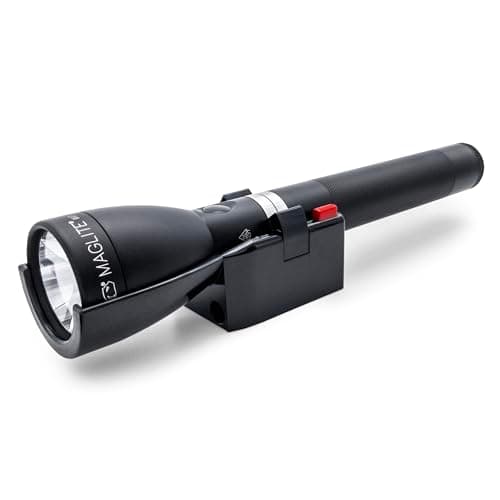 Maglite ML150LRX RechargeableTop pick1,082 lumens and 458 meters, which is further than any Streamlight here reaches and further than most lights of twice its output. | The longest published reach in this comparison | 458 m |
We earn a commission if you buy through the links on this page, at no extra cost to you. It does not change what we recommend or the order they appear in. Full disclosure. Prices checked October 4, 2026.
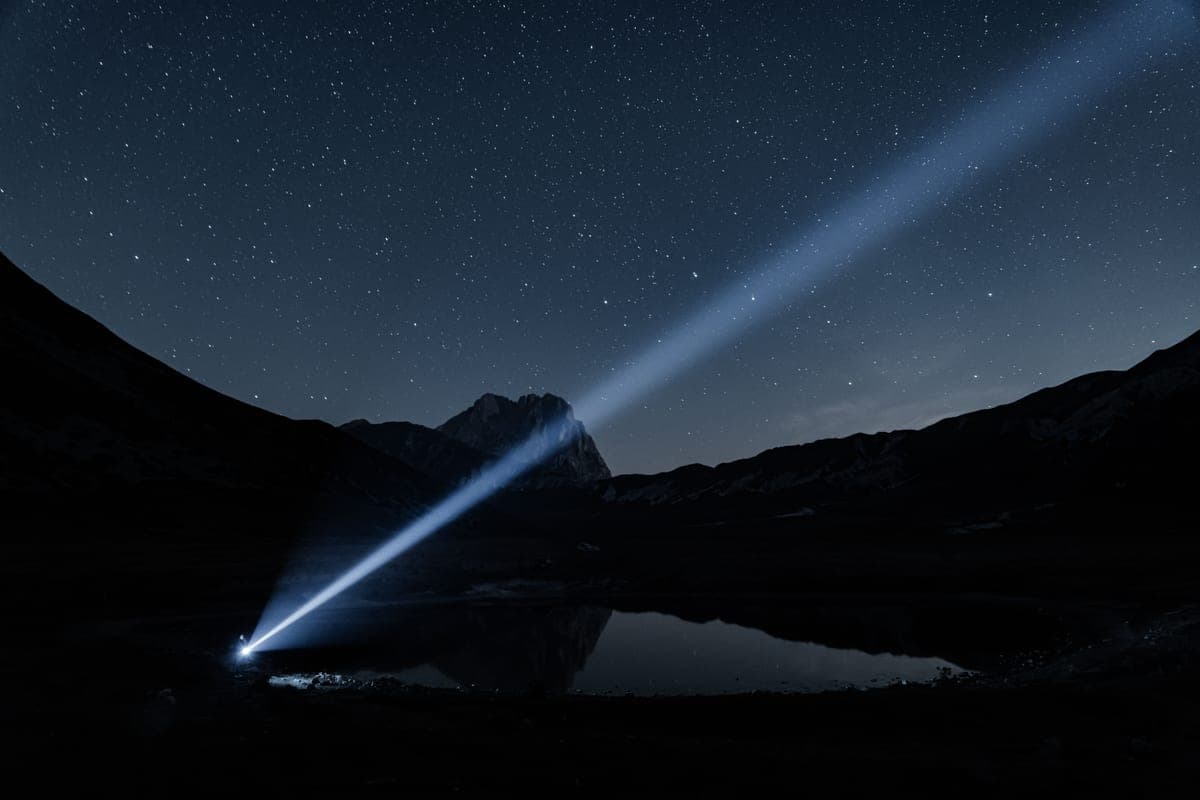
We have not tested this flashlight. We own none of the products on this site and have no laboratory. This review works from Maglite's own product page, read on October 4, 2026, and the arithmetic those figures allow.
Two figures make this light worth a page. 458 meters is the longest published beam distance of any duty-class light we cover — only the three dedicated long-range throwers and the DeWalt DCL043 jobsite spotlight, at 464 m, reach further. And Maglite publishes something almost nobody does: 80 percent of capacity remaining at 1,000 charge-discharge cycles. On a rechargeable light with a sealed pack, that second number decides how long you own a working tool rather than a tube.
What Maglite publishes
| Mode | Output | Runtime |
|---|---|---|
| Full power | 1,082 lm | 3 h 15 min |
| Low power | 138 lm | 18 h |
| Eco | 25 lm | 79 h |
| Specification | Published figure |
|---|---|
| Peak beam intensity | 52,555 cd (at maximum output) |
| Beam distance | 458 m (approx. 1,503 ft, at maximum output) |
| Battery | Lithium iron phosphate (LiFePO4), rechargeable |
| Service life | 80% of capacity at 1,000 charge-discharge cycles |
| Charging | About 80% in roughly 30 minutes; 2.5 h to full |
| Weight | approx. 431 g (15.2 oz) with battery |
| Length | 271.45 mm (10.687 in) |
| Head diameter | 49.2 mm (1.937 in) |
| Water resistance | IPX4 |
| Drop resistance | 1 m |
| Warranty | Ten years from first retail purchase |
| Battery capacity | not published in mAh or watt-hours |
The two figures check each other
Forty-nine candela per lumen
That ratio is why the reach figure is not a typo. 1,082 lumens is mid-pack output — less than a ProTac HL-X, less than half a PD36R Pro — and it reaches 458 m where they reach 374 m and 380 m. The adjustable-focus reflector is doing the work, as it does across the Maglite range.
The cost is spill. A beam concentrated this hard puts a bright disc on a distant object and comparatively little light around your feet, which is excellent across a yard and awkward in a corridor. Throw versus flood covers the trade, and our throwers page ranks the specialists that go further still — the Acebeam L19 at 1,300 m and the Nitecore P30i at 1,000 m.
Three hours fifteen at full output
3 h 15 min at 1,082 lumens is a strong figure in this company. The ProTac HL-X publishes 1.5 hours at 1,300 lumens and the Stinger 2020 two hours at 2,000. Among the duty-class lights, only the Fenix PD36R Pro beats it outright, at 3 h 30 min from 2,800 lumens — the more impressive figure of the two. Maglite's own ML300L runs 32 hours at its full 746 lumens, but it does that on three alkaline D cells and weighs 748 g.
Under FL 1 those runtimes run until output falls to 10 percent of the reading taken 30 seconds after switch-on, so they already include whatever thermal step-down the light does. That makes them working figures rather than bursts — see how runtime is defined.
What Maglite does not publish is the cell capacity, in either milliamp-hours or watt-hours. That is the one real gap in the sheet, and it means the stored energy this site normally computes for every rechargeable cannot be derived here.
The battery chemistry, and the figure nobody else states
The chemistry is why. LiFePO4 holds less energy per gram than the lithium-ion in most rechargeable lights, which is part of why this one weighs 431 g — but it tolerates far more cycles and is markedly more stable at temperature. On a light expected to live on a charger in a vehicle for years, that is the right trade and a deliberate one.
The charging figures follow the same logic: about 80 percent in roughly 30 minutes, and 2.5 hours to full. A thirty-minute top-up between calls is a genuinely useful property that no other light we cover publishes.
Four function sets, which is more interface than it sounds
Maglite publishes four selectable function sets rather than a single mode cycle:
- General — Full Power / Low Power / Eco
- Outdoor — Full Power / Low Power / Strobe
- Law Enforcement — Momentary / Full Power / Eco
- Tactical — Momentary / Full Power / Strobe
The point is what you can remove. Choose General and there is no strobe to cycle through in the dark. Choose Law Enforcement or Tactical and you get momentary-on, which is the switch behavior that actually distinguishes a duty light — see what makes a flashlight tactical. Streamlight's TEN-TAP does the same job on the ProTac HL-X and the PolyTac; almost nobody else offers it.
What it costs you
- IPX4 and 1 m. This is the weak part of the sheet and it is not close. IPX4 is splash resistance with no dust digit; 1 m is the lowest drop tier anyone here publishes. The ProTac HL-X publishes IP68 and 2 m, and the PolyTac 3 m.
- 431 g and 271 mm. Roughly two and a half times a ProTac HL-X and longer than most lights here. It belongs in a vehicle or a hand, not a pocket.
- No published cell capacity, so watt-hours and cost-to-run cannot be computed.
- A sealed pack, so there is no swapping in a spare at 2 a.m. the way the ProTac HL-X allows with two CR123A primaries.
- Strobe only in two of the four function sets, which is a feature rather than a flaw — but worth knowing if strobe is something you want always available.
- Candela and distance published at maximum output only. The per-mode outputs and runtimes are complete; the per-mode reach is not.
Who should buy something else
Skip it if the light will be rained on hard or dropped on concrete. IPX4 with a 1 m drop rating is the weakest durability pairing among the duty-class lights we cover. The Streamlight ProTac HL-X publishes IP68 and 2 m for meaningfully less money.
Skip it if you need a primary-cell fallback. A sealed pack with no alternative is the wrong arrangement for a go-bag. The Streamlight PolyTac runs on CR123A primaries that keep for roughly a decade.
Skip it if you want real distance. 458 m is excellent for a general-purpose light and modest against a specialist. The Nitecore P30i publishes 1,000 m.
Skip it if you want output. 1,082 lumens is mid-pack, and eight lights in our tactical set are brighter. If brightness is the point, the brightest tactical flashlights ranks them.
The verdict, stated as what it commits to
Maglite commits to 1,082 lumens for 3 hours 15 minutes, 138 for 18 hours, 25 for 79, 52,555 candela, 458 meters, 431 grams, 271 mm, IPX4, 1 m drop resistance, four selectable function sets, an 80-percent charge in half an hour, 80 percent of capacity at 1,000 cycles and a ten-year warranty — with the candela and distance figures reconciling exactly.
On disclosure that is among the best sheets on this site, and the cycle figure is genuinely unique. What it is not is tough by published rating, light, or bright. Buy it as a vehicle light that reaches a long way and will still hold a charge in a decade. If it has to survive weather and drops, buy the Streamlight — and Streamlight versus Maglite is the page that works that argument through properly.
The picks, in full
Top pick · The longest published reach in this comparison
Maglite ML150LRX Rechargeable
1,082 lumens and 458 meters, which is further than any Streamlight here reaches and further than most lights of twice its output.
458 m is the longest published reach of any light in this comparison, and it comes from 1,082 lumens — 17 percent less output than a Streamlight ProTac HL-X, which reaches 374 m. Forty-nine candela per lumen against twenty-seven.
The LiFePO4 chemistry is an unusual choice and a deliberate one. Lithium iron phosphate holds less energy per gram than the lithium-ion in a Streamlight SL-B26 pack, but it tolerates far more charge cycles and is markedly more stable at temperature. On a light expected to sit on a charger for years, that trade makes sense.
Maglite publishes a figure for every mode — 3 h 15 min at 1,082 lm, 18 h at 138, 79 h at 25 — plus 80 percent of capacity at 1,000 charge cycles, which is the only service-life figure on this site apart from Petzl's 300 cycles. What it still publishes badly is durability: IPX4 and a 1 m drop rating against IP68 and 2 m on the ProTac HL-X.
What works
- The longest published beam distance here, 458 m, with candela that reconciles
- LiFePO4 cells: longer cycle life and better temperature stability than lithium-ion
- Rechargeable without giving up the reach that defines the brand
What does not
- IPX4 and a 1 m drop rating, against IP68 and 2 m on the ProTac HL-X
- 431 g is nearly three times a ProTac HL-X
- No published cell capacity, so watt-hours and cost-to-run cannot be computed
Skip this ifthe light will be rained on hard or dropped on concrete. Maglite's published durability figures are the weakest part of its specification, and Streamlight's are the strongest part of its.
Published specification
- Peak intensity
- 52,555 cdMaglite ML150LRX Rechargeable — manufacturer spec page (retrieved September 4, 2026)
- Beam distance
- 458 mReconciles with the published candela: the square root of 52,555 divided by 0.25 is 458.5 mMaglite ML150LRX Rechargeable — manufacturer spec page (retrieved September 4, 2026)
- Runtime
- 3 h 15 min at 1,082 lm / 18 h at 138 lm / 79 h at 25 lmMaglite publishes output and runtime for all three modes. It also publishes a service life of 80 percent of capacity at 1,000 charge-discharge cycles, which almost no maker states.Maglite ML150LRX Rechargeable — manufacturer spec page (retrieved October 4, 2026)
- Battery
- LiFePO4, C-cell size, includedLithium iron phosphate rather than lithium-ion — a different chemistry, with a longer cycle life and a lower energy density.Maglite ML150LRX Rechargeable — manufacturer spec page (retrieved September 4, 2026)
- Weight
- 431 g (15.2 oz)With batteriesMaglite ML150LRX Rechargeable — manufacturer spec page (retrieved September 4, 2026)
- Ingress
- IPX41 m drop resistanceMaglite ML150LRX Rechargeable — manufacturer spec page (retrieved September 4, 2026)
#ad · how this is funded · price as of October 4, 2026
Questions people actually ask
How far does the Maglite ML150LRX throw?
Maglite publishes 458 m, or about 1,503 feet, at maximum output - the longest published beam distance of any light we cover that is not a dedicated thrower. It separately publishes 52,555 candela, and the two reconcile exactly: the square root of 52,555 divided by 0.25 is 458.5 m.
How long does the Maglite ML150LRX run?
Maglite publishes a figure for every mode: 3 hours 15 minutes at 1,082 lumens, 18 hours at 138 lumens and 79 hours at 25 lumens. Under ANSI FL 1 those run until output falls to 10 percent of the 30-second reading, so they already account for thermal step-down.
Is the Maglite ML150LRX worth it?
For a vehicle or duty light where reach and battery longevity matter more than weather sealing, yes: 458 m from 1,082 lumens, 3 h 15 min at full output, and a published 1,000-cycle battery life nothing else here states. It is the wrong buy if it will be rained on hard - IPX4 and a 1 m drop rating are the weakest in its class.
How many times can you recharge a Maglite ML150LRX?
Maglite publishes 80 percent of capacity remaining at 1,000 charge-discharge cycles, which is the only figure of its kind on this site apart from Petzl's 300 cycles on the Swift LT. Charged weekly that is roughly nineteen years; charged daily, nearly three.
Why does a 1,082-lumen light out-throw a 2,800-lumen one?
Because reach depends on candela, not lumens. The ML150LRX concentrates 48.6 candela per lumen through its adjustable-focus reflector; the Fenix PD36R Pro manages 13. So the Maglite reaches 458 m on 1,082 lumens where the Fenix reaches 380 m on 2,800.
Is the Maglite ML150LRX waterproof?
It is rated IPX4 - splash resistance rather than immersion, and the X means Maglite publishes no dust rating. Drop resistance is 1 m. Those are the weakest durability figures of any duty-class light we cover; the Streamlight ProTac HL-X publishes IP68 and 2 m.
What is LiFePO4 and why does Maglite use it?
Lithium iron phosphate. It holds less energy per gram than ordinary lithium-ion, which is part of why this light weighs 431 g, but it tolerates far more charge cycles and is more stable at temperature. On a light that lives on a charger for years, that is the sensible trade.
Maglite ML150LRX or ML300L?
The ML150LRX if you want rechargeable and reach: 458 m against 403, and a 30-minute fast charge. The ML300L if you want endurance on cells from any shop - 32 hours at its full 746 lumens on three D cells, for roughly a third of the price. Both publish a complete, reconciling sheet.
Sources
Every figure on this page came from one of the documents below, read on the date shown. We do not cite other review sites, forum posts or video reviews as sources of fact.
- Maglite ML150LRX Rechargeable — manufacturer spec page (retrieved October 4, 2026)
- Maglite ML300L 3-Cell D — manufacturer spec page (retrieved September 21, 2026)
- Streamlight ProTac HL-X — manufacturer spec page (retrieved September 1, 2026)
- Streamlight PolyTac — manufacturer spec page (retrieved September 1, 2026)
- Fenix PD36R Pro — manufacturer spec page (retrieved September 1, 2026)
- ANSI/PLATO FL 1 flashlight performance standard — definitions of lumens, peak beam intensity, beam distance, runtime, impact and water resistance
- IEC 60529 — the IP (ingress protection) rating system
Read next
Best tactical flashlights, ranked on candela rather than lumens
The tactical ranking: published candela, beam distance, sustained runtime and ingress rating, all sourced.
Best flashlight throwers
Throwers ranked on computed candela and published beam distance, with the optics explained.
The brightest tactical flashlights, and what brightness actually buys
Seven of the highest-output tactical lights we cover, ranked on published lumens with the beam distance that contradicts the order.
Streamlight vs Maglite
Streamlight against Maglite on published candela, reach, runtime and durability - two complete spec sheets that disagree about beam shape.
Streamlight ProTac HL-X review
A specification-first review of the Streamlight ProTac HL-X: the arithmetic behind its figures, the dual power arrangement, and who should buy something brighter.
Maglite ML300L 3-Cell D review
A specification-first review of the Maglite ML300L 3-Cell D: 32 hours at its full 746 lumens, 403 m of reach, and the 748 grams that pays for both.
Found a number that is wrong? Tell us and we will fix it and say so. Our methodology shows every formula on this page.