Emergency & Home
Flashlights for kids
A child's flashlight is judged on whether it gets carried and whether it can be found in the dark. Output is close to irrelevant.
By Scooter M. · Published · Updated
| # | Product | Best for | Output | Price |
|---|---|---|---|---|
| 1 | 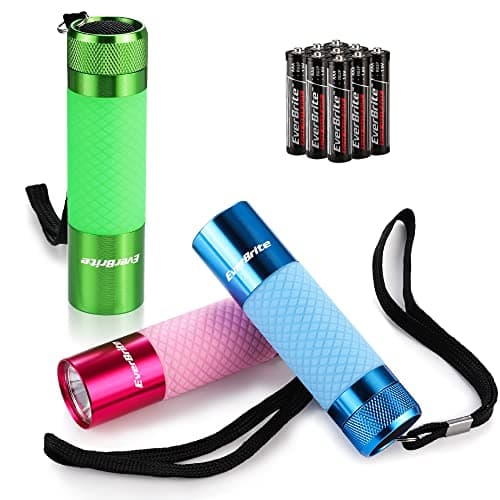 EverBrite Mini Flashlights (3-pack)Top pickThree small aluminum lights that glow in the dark so they can be found without a light. The right answer for kids. | Handing one to each child | not published | |
| 2 | 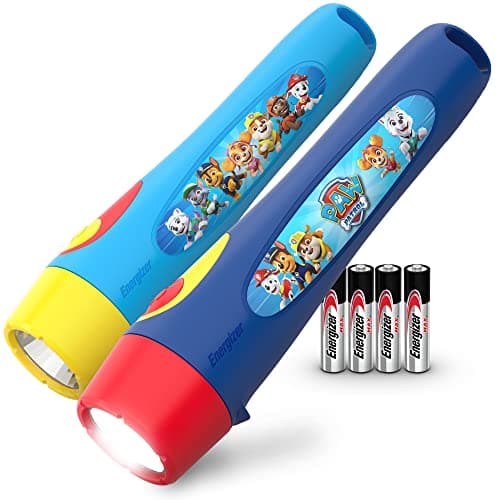 Energizer PAW Patrol Flashlights (2-pack)Two child-sized LED lights that a four-year-old will want to hold. That is a real specification. | Getting a young child to actually carry a light | not published | |
| 3 | 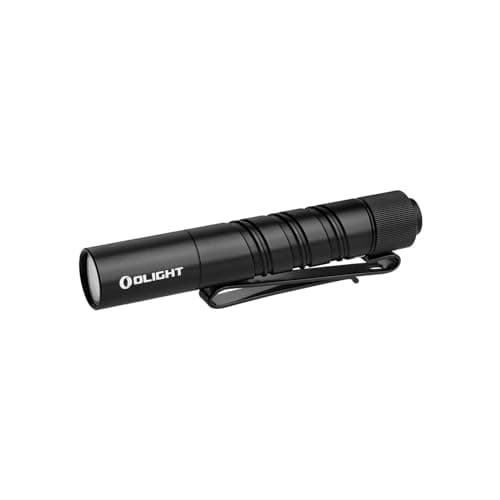 Olight i3T 2 EOS200 lumens, 62 m of stated throw, IPX8, on a single AAA cell. The one to buy if you want no charging routine at all. | A AAA light that lives on a keyring and never needs thinking about | 200 lm | |
| 4 | 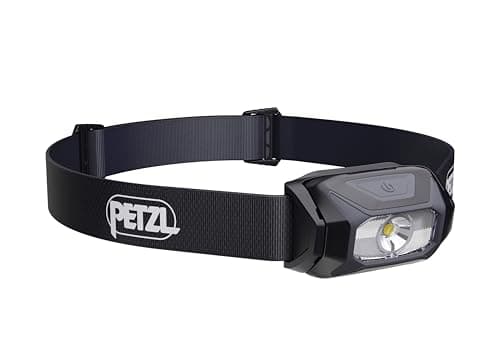 Petzl Tikkina300 lumens on AAA cells with a published ANSI figure. It does one thing and does not pretend to do more. | The cheapest lamp we would actually recommend | 300 lm |
We earn a commission if you buy through the links on this page, at no extra cost to you. It does not change what we recommend or the order they appear in. Full disclosure. Prices checked October 16, 2026.
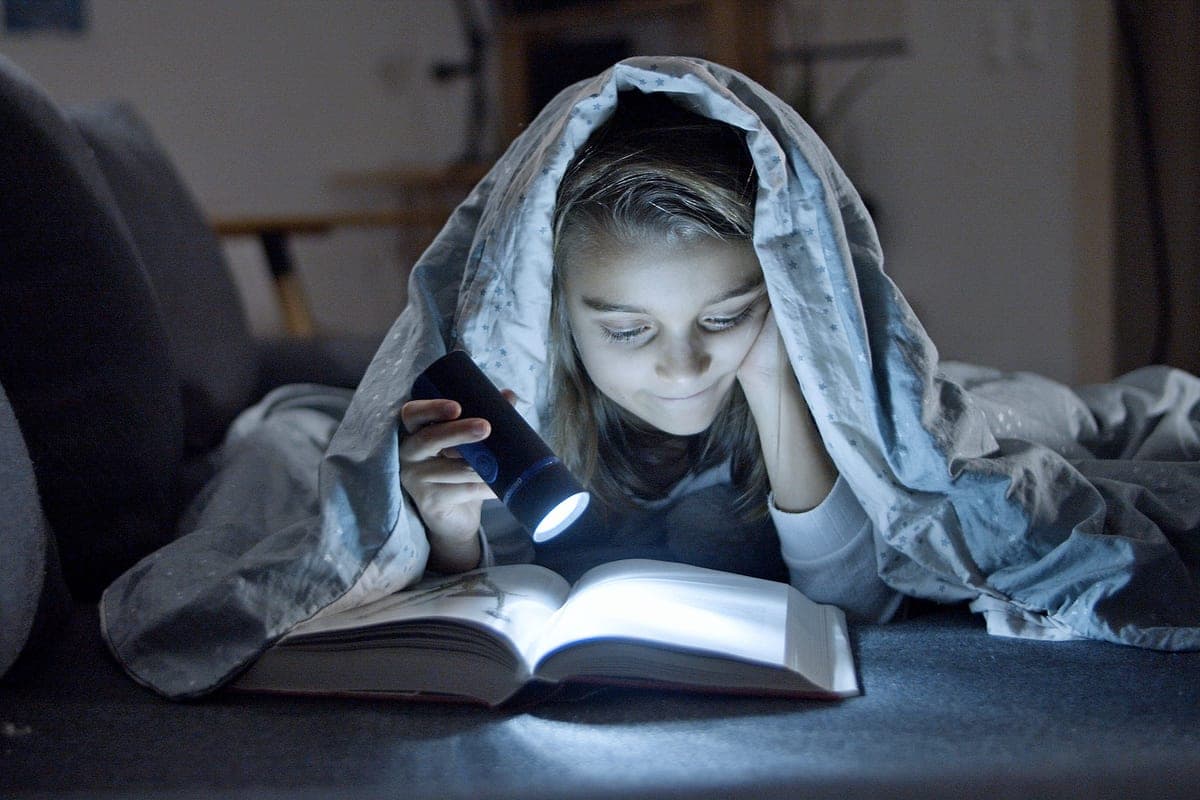
Every household emergency guide says to give each family member a light. None of them mentions that a small child will not carry an object they find boring, and that a light left upstairs is not a light.
So this page ranks on two things that are not specifications: whether the light can be found in the dark, and whether a child will keep hold of it.
How we picked
Findability first, then durability, then whether the light is sized for small hands. Most products here publish no performance figures at all, and we say so in each entry rather than estimating. See our methodology.
Glow-in-the-dark is the actual feature
A child's flashlight that cannot be found in the dark has failed at its only job. A body that glows for twenty minutes after the room light goes off solves that completely, and it costs the manufacturer nothing.
This is why the EverBrite three-pack leads a page that also contains an Olight with a published IPX8 rating and a Petzl with a published ANSI figure. On this page the specification is findability.
Buy several
Children lose things. The correct quantity for any object a child is responsible for is more than one, which is why the multi-packs on this page make more sense than a single better light.
It also means a lost light is not an emergency-planning failure, and that the child can keep one in a bag and one by the bed.
How bright is appropriate
Modest. A hundred lumens is plenty for a child, and there are two good reasons not to hand over more: a very bright light aimed at a sibling's face is genuinely unpleasant, and a small hot body is not what you want in a small hand.
For an older child ready for a real light, the Olight i3T 2 EOS is the sensible step up: 200 lumens, a single AAA cell, and a published IPX8 rating for the inevitable trip through the washing machine.
Batteries and small children
AAA cells are also cheaper to replace than a sealed rechargeable, which matters when the light has been left switched on inside a toy box for two days.
Teaching a child to use a light
- Never at faces. The rule needs stating once and enforcing, because a bright light at close range genuinely hurts.
- Switch it off when you are not using it. The habit that makes the light work when it is needed.
- It lives in one place. A light with a home gets found; a light that floats does not.
- Show them where the household lights are too. A child who knows where the lantern is can help rather than wait.
What we would not buy
A very bright light for a young child. Two hundred lumens in a small hand is enough, and a thousand-lumen light gets hot, drains fast and ends up aimed at a sibling.
We would also avoid anything with an accessible coin-cell compartment for a small child, and anything whose only virtue is that it is cheap and brittle — a light that breaks the first week teaches the wrong lesson about whether it is worth having.
The picks, in full
Top pick · Handing one to each child
EverBrite Mini Flashlights (3-pack)
Three small aluminum lights that glow in the dark so they can be found without a light. The right answer for kids.
The glow-in-the-dark body is the feature. A child's flashlight that cannot be found in the dark has failed at the only job it has.
Three of them means one per child and one spare, which is the correct quantity for any object a child is responsible for.
No performance figures are published and none are needed. This is a coverage purchase.
What works
- Glow-in-the-dark bodies, so they can be located without another light
- Aluminum rather than the usual brittle plastic
- Three in a pack
What does not
- No published output, runtime or battery specification
- Small lights are easy to lose despite the glow
- Not rechargeable
Skip this ifyou want one good light for the household. This is a set of small lights for small people, not a primary.
Published specification
- Output
- not published(Not stated in the listing we read)
- Peak intensity
- not published
- Beam distance
- not published
- Runtime
- not published
- Battery
- not published
- Weight
- not published
- Ingress
- not published
#ad · how this is funded · price as of October 16, 2026
Pick 2 · Getting a young child to actually carry a light
Energizer PAW Patrol Flashlights (2-pack)
Two child-sized LED lights that a four-year-old will want to hold. That is a real specification.
Every emergency-preparedness guide tells you to give each family member a light. None of them mentions that a small child will not carry an object they find boring.
The character branding is doing genuine work here, and it is the only reason this appears on a site that otherwise cares about candela.
No figures are published. Buy it for compliance from a small human, not for output.
What works
- A child will actually keep it with them
- Sized for small hands
- Two in a pack
What does not
- No published performance figures at all
- Cheap construction
- Will not survive being stood on
Skip this ifthe child is old enough for a real light. A proper AAA light with a glow body lasts longer and works better.
Published specification
- Output
- not published(Not stated in the listing we read)
- Peak intensity
- not published
- Beam distance
- not published
- Runtime
- not published
- Battery
- not published
- Weight
- not published
- Ingress
- not published
$14.99 · 6% off
#ad · how this is funded · price as of October 16, 2026
Pick 3 · A AAA light that lives on a keyring and never needs thinking about
Olight i3T 2 EOS
200 lumens, 62 m of stated throw, IPX8, on a single AAA cell. The one to buy if you want no charging routine at all.
62 m from 200 lumens implies roughly 960 candela, working backward through the FL1 definition. That is a tight little beam for the output, which is what you want on a light this small.
IPX8 on a AAA twist light is unusual and worth the money on its own.
One alkaline AAA is about 1.3 Wh. At a modest 30 lumens that is a genuinely long night; at 200 lumens it is minutes.
What works
- IPX8 immersion rating on a keychain light
- AAA cells: no charging, no degradation, available anywhere
- Published beam distance, which most keychain lights omit
What does not
- 200 lumens is the ceiling and there is no reserve
- No published runtime
- Twist switch means two hands
Skip this ifyou want more than a few minutes at full output. A single AAA cannot hold it and no design gets around that.
Published specification
- Peak intensity
- not published
- Beam distance
- 62 mOlight i3T 2 EOS — the brand's own listing on Amazon.com (retrieved September 1, 2026)
- Runtime
- not published
- Battery
- 1 x AAAOlight i3T 2 EOS — the brand's own listing on Amazon.com (retrieved September 1, 2026)
- Weight
- not published
#ad · how this is funded · price as of October 16, 2026
Pick 4 · The cheapest lamp we would actually recommend
Petzl Tikkina
300 lumens on AAA cells with a published ANSI figure. It does one thing and does not pretend to do more.
No red mode, no reactive sensor, no charge port. Three brightness levels and a battery door.
The 65 m distance and the 300-lumen output are both ANSI FL 1 figures published alongside the rest of Petzl's table, which is more than most lamps at this price manage.
For a kit bag, a car, or a first lamp for someone unsure they will use it, this is the honest recommendation.
What works
- Published ANSI figures at the bottom of the price range
- Nothing to break and nothing to charge
- Takes the same CORE pack as the rest of the Petzl range if you upgrade
What does not
- No red mode
- No rechargeable option in the box
- IPX4
Skip this ifyou are out after dark regularly. The missing red mode gets old fast in a shared tent.
Published specification
- Output
- 300 lmANSI/PLATO FL 1Petzl Tikkina — manufacturer spec page (retrieved September 1, 2026)
- Peak intensity
- not published
- Beam distance
- 65 mPetzl Tikkina — manufacturer spec page (retrieved September 1, 2026)
- Battery
- 3 x AAA (included), or the CORE rechargeable packPetzl Tikkina — manufacturer spec page (retrieved September 1, 2026)
#ad · how this is funded · price as of October 16, 2026
Questions people actually ask
What is the best flashlight for a child?
One they can find in the dark and will actually carry. A glow-in-the-dark body is the single most useful feature, and a multi-pack is the right quantity, because children lose things and a lost light should not be a planning failure.
How bright should a kid's flashlight be?
Around 100 lumens is plenty, and 200 is the sensible ceiling. A very bright light gets hot in a small hand, drains quickly, and ends up aimed at somebody's face.
Are coin-cell flashlights safe for children?
Button and coin cells are a serious ingestion hazard for young children. Prefer AA or AAA lights for anyone small enough to put things in their mouth, and check that any battery compartment needs a tool to open.
Should a child's flashlight be rechargeable?
AAA is usually better. Cheap to replace when the light has been left switched on for two days, no cable to lose, and it works after months in a toy box.
At what age can a child have a proper flashlight?
That is a parent's call rather than ours. What we would say is that when a child is ready, a real light with a published water rating — like the Olight i3T 2 EOS at IPX8 — lasts far longer than a toy one and survives the washing machine.
How many flashlights should each child have?
At least two: one that lives by the bed and one in a bag. Children lose things, and the whole point of giving a child a light is that they have it when the room goes dark.
Sources
Every figure on this page came from one of the documents below, read on the date shown. We do not cite other review sites, forum posts or video reviews as sources of fact.
Read next
Best flashlights for power outages
Outage lighting ranked on shelf life, area coverage and findability rather than on output.
Best flashlights for home use
Household lighting ranked on coverage: socket lights, lanterns and a handheld that will still work in two years.
What to keep in a power outage lighting kit
A practical outage lighting kit, with battery storage rules and a check schedule that takes ten minutes a year.
Best keychain flashlights
Keychain lights ranked on cell type, published output and how long they stay useful.
Best headlamps for camping
Camping headlamps ranked on red-mode access, replaceable cells and honest runtime figures.
Found a number that is wrong? Tell us and we will fix it and say so. Our methodology shows every formula on this page.