Emergency & Home
Best flashlights for elderly people and seniors
For an older person the flashlight that fails is not the dim one. It is the one in a drawer across a dark room, with a flat battery and three modes to click through.
By Scooter M. · Published · Updated
| # | Product | Best for | Output | Price |
|---|---|---|---|---|
| 1 | 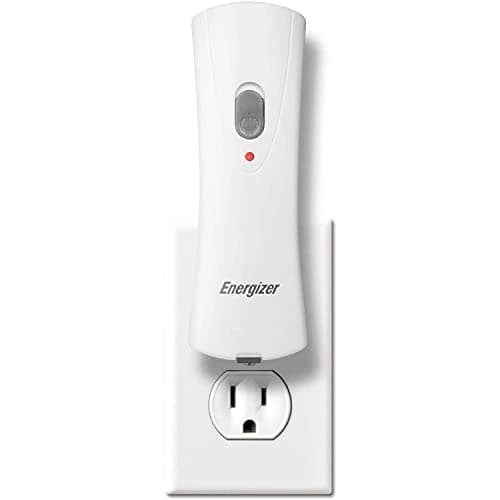 Energizer Auto-On Rechargeable FlashlightTop pickIt lives in a wall socket, charges continuously, and switches itself on the instant the power fails. | The light that finds you, rather than the other way round | not published | |
| 2 | 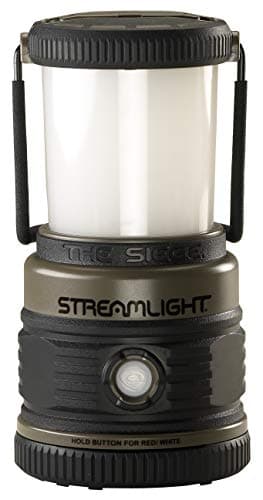 Streamlight Siege540 lumens of 360-degree area lighting, IPX7, on replaceable cells. A lantern beats a flashlight indoors and this is the one to own. | Area light in a power cut | 540 lm | |
| 3 | 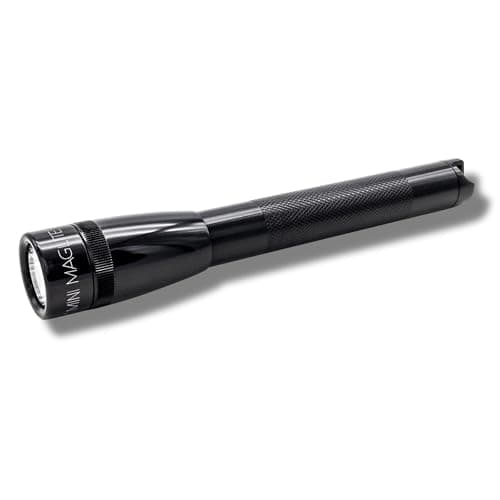 Maglite Mini Maglite LED 2-Cell AA127 lumens that reach 156 meters. A Streamlight MacroStream puts out four times the output and reaches 90. | Reach from a pocket light, on AA cells | 127 lm | |
| 4 | 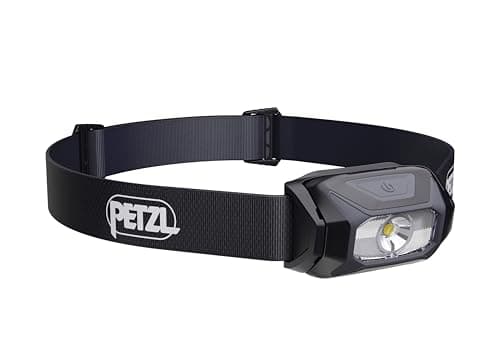 Petzl Tikkina300 lumens on AAA cells with a published ANSI figure. It does one thing and does not pretend to do more. | The cheapest lamp we would actually recommend | 300 lm | |
| 5 | 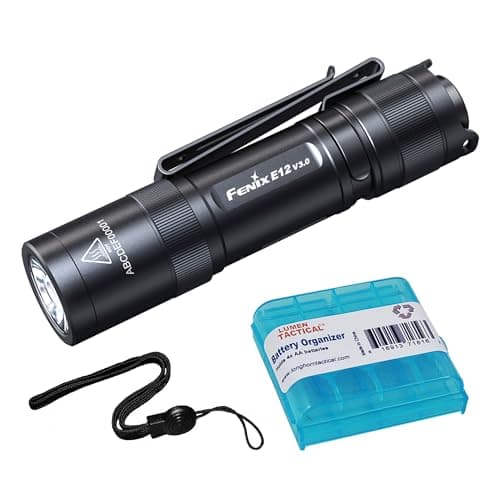 Fenix E12 V3.0200 lumens on one AA cell in a penlight body. Simple, replaceable, and the least likely light here to be flat when you need it. | A pen-shaped AA light for pockets and toolbags | 200 lm | |
| 6 | 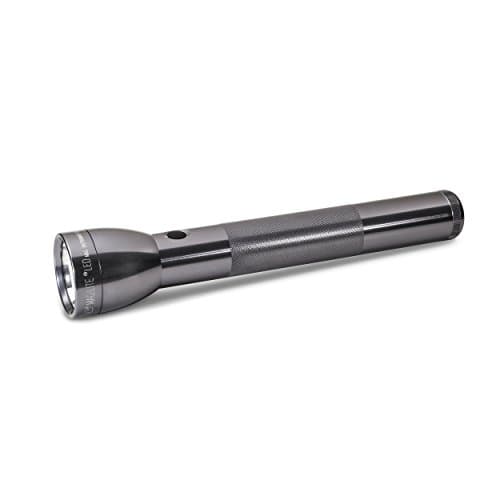 Maglite ML300L 3-Cell D746 lumens thrown 403 meters, and 298 hours on its lowest mode. The reach per lumen and the runtime are both far beyond anything Streamlight fields here. | Runtime measured in days, on cells from any shop | 746 lm | |
| 7 | 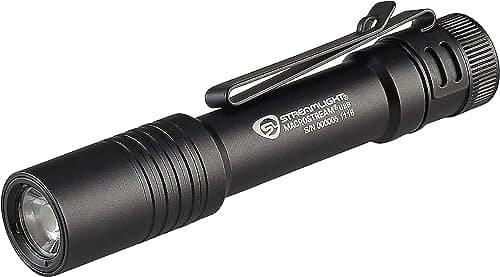 Streamlight MacroStream USB500 lumens, 2,000 candela, 90 m and two hours on high — every figure published per mode by the maker. That is the reason it leads. | The best-documented small EDC light here | 500 lm |
We earn a commission if you buy through the links on this page, at no extra cost to you. It does not change what we recommend or the order they appear in. Full disclosure. Prices checked September 18, 2026.
Almost every flashlight page on the internet, including most of this site, ranks lights on how much they put out and how far it goes. For an older person living at home those are the wrong questions. The flashlight that fails a senior is the one that cannot be found, cannot be switched on with stiff fingers, or has been flat since the last time the power went out. Output barely enters into it.
So this page is ranked on different criteria from the rest of the site, and it says so up front. The lights below are the ones we would put in a parent's house — chosen for where they live, how they switch on, and whether they will work in two years — with the honest downside of each stated plainly.
How we picked, before we ranked
- Findable in the dark. A light that lives in a wall socket, or in a fixed spot by the bed, beats a better light in a kitchen drawer. The best of these switches itself on when the power fails, which removes the finding step entirely.
- Simple to switch on. The fewer modes and gestures the better, and nothing that can land on strobe by accident. Makers almost never publish how a switch actually behaves, so we do not claim simplicity we cannot source — but where a maker does publish a mode set, as Maglite does for the Mini, we say so and count it against the light for this buyer.
- Charged when it is needed. Either it charges itself in a socket, or it runs on ordinary AA, AAA or D cells that hold their charge for years and can be replaced from any shop. A sealed rechargeable light that needs a charging habit is a light that will be flat at the wrong moment.
- Manageable in the hand. Enough body to grip with reduced strength, not so heavy that a tired wrist cannot lift it. We say which lights fall on each side.
- A hands-free option, because stairs and a handrail need both hands and a headlamp solves that.
- Currently purchasable, verified against the live listing before writing.
We have not tested any of these lights and do not own them. Every figure is the maker's own with its source linked — see our methodology. Where a maker publishes nothing, we say so rather than filling it in; on this page that happens more than usual, because the most useful light here is also the least documented.
What each one publishes, and how it lives
| Light | Where it lives | Power | Output | Weight |
|---|---|---|---|---|
| Energizer Auto-On | A wall socket, permanently | Charges in the socket | not published | not published |
| Streamlight Siege | A table or shelf, standing | Replaceable cells | 540 lm, all directions | not published |
| Maglite Mini LED 2-Cell AA | Bedside, glovebox, coat pocket | 2 x AA | 127 lm | 118 g |
| Petzl Tikkina | On the head, for stairs and reading | 3 x AAA | 300 lm | 92 g |
| Fenix E12 V3.0 | A pocket or a bag | 1 x AA | 200 lm | not published |
| Maglite ML300L 3-Cell D | A cupboard by the fuse box | 3 x D | 746 lm | 748 g |
| Streamlight MacroStream | A pocket, if charging is a habit | Built-in, USB | 500 lm | 62.4 g |
Six of the seven run on either a wall socket or cells you can buy at any shop. That is not an accident. The one exception is on the page for people who will genuinely keep it charged, and its entry says so.
The picks, and who each one is wrong for
Energizer Auto-On — the one that finds you
Lives in a socket, stays charged, comes on by itself when the mains fail, and glows as a night light the rest of the time. For an older person, that behavior beats every specification on this site: it solves the finding problem, the charging problem and the switching problem at once. It is also the least expensive light on the page by a distance, which makes putting one in every room realistic.
Skip it as the only light in the house. It works in the room it is plugged into and nowhere else, so you need several, and it is not a light you carry to the fuse box. Energizer publishes no output, runtime or weight figure, so we cannot tell you how bright it is or how long it lasts — buy it for what it does, not for a number.
Streamlight Siege — light the whole room, no aiming
540 lumens in every direction from a lantern that stands on its own, on replaceable cells, with a published IPX7 rating. A lantern is the right shape for an older person because there is nothing to aim: put it on the table and the room is lit, with none of the hard shadows a beam throws across a staircase. Replaceable cells mean it works after two years in a cupboard.
Skip it for anything outside the house — it lights a room, not a path. Streamlight publishes no runtime for it, which is a real gap on an emergency light, and no weight. See flashlight vs lantern for why we would still own one.
Maglite Mini LED 2-Cell AA — familiar and long-lived, with a catch
127 lumens on two AA cells, 118 g, IPX4, with 25 hours published on Low and a surprising 156 m of published reach. It is a design almost everyone recognizes, it lives by the bed or in a coat pocket, and it will run on AA cells from the corner shop for as long as it is owned. Maglite states that rotating the head changes the beam from spot to flood.
The catch is the switch, and it is a real one. Maglite publishes a four-mode electronic switch on this light — High, Low, Blink and SOS — which is exactly the kind of mode set this page tells you to avoid. It earns its place on AA cells, familiarity and 25 hours on Low, not on simplicity, and for someone who will be confused by a light that can land on Blink it is the wrong pick. 127 lumens is also modest: enough for a fuse box, not a garden.
Petzl Tikkina — the hands-free one, for stairs
300 lumens on three AAA cells, 92 g, IPX4 and 65 m of published reach, from the cheapest lamp we would recommend to anyone. The argument for a headlamp on this page is specific: a staircase in a power cut needs one hand on the rail and the other free, and a handheld light takes one of them. A lamp on the head takes neither. Petzl publishes more about it than any other lamp at the price.
Skip it if a headband is a non-starter — some people simply will not wear one, and a lamp that stays in the drawer does nothing. AAA cells are also fiddlier to change than AA, and Petzl does not publish how the switch behaves. See headlamps under $50 for the wider field.
Fenix E12 V3.0 — one cell, no fuss
200 lumens from a single AA in a pen-shaped body. One cell means one thing to replace, and AA is the most available cell there is — which is why we rank it, across this site, as the light least likely to be flat when it is needed. That is exactly the pitch for this page.
Skip it if grip is the problem. A penlight body is slim, which is easy to pocket and hard to hold with weak or arthritic fingers; the fatter lights here are easier. Unusually for Fenix, no beam distance, runtime, weight, IP rating or switch description appears in the page we read, so we cannot say how simple it is to operate.
Maglite ML300L 3-Cell D — the big familiar one, with a caveat
746 lumens, 403 m of published reach, and 298 hours published on its lowest mode from three D cells — the longest runtime on this site, from cells that sit in a cupboard for years. The body is large enough to grip with a whole hand, which many older people find easier than a slim light, and it is the shape a generation grew up with.
Skip it for anyone with a weak wrist or shoulder. At 748 g with cells it is the heaviest light on the page by a wide margin, and a heavy light that cannot be lifted comfortably is worse than a dim one that can. Keep it by the fuse box or in the car rather than by the bed. IPX4, so rain only.
Streamlight MacroStream — the light one, if charging is a habit
500 lumens, 62.4 g, 90 m, IPX4, and a runtime published for both modes: 2 hours on high, 8 on low. It is the lightest light here by a distance, which matters for a tired hand, and it is the best-documented small light we cover. It charges over USB, which is genuinely convenient for someone who already charges a phone every night.
Skip it for anyone who will not keep it charged. This is the one light on the page with a built-in cell, and a built-in cell that has not been topped up is a dead light in a power cut. It is here for the person with a charging routine, and it is the wrong choice for everyone else. See the full MacroStream review before deciding.
What to avoid
- Anything with a mode sequence. Lights that cycle through several settings on each press, or that need a double-click or press-and-hold to change modes, are the single biggest reason older people abandon a flashlight. The enthusiast firmware covered in our Anduril guide is the extreme case and is exactly wrong here. Note that the Maglite Mini on this page publishes a four-mode switch; its entry says so.
- Tiny keychain lights. Small buttons, small bodies and small cells are all harder with reduced dexterity. See keychain flashlights for what they are actually for.
- Very bright tactical lights. A 2,000-lumen beam in a dark hallway is glare, and the mode sets on those lights are built for a different buyer.
- Any sealed rechargeable light, unless there is a charging routine. Not because they are bad, but because a flat cell is the most common way an emergency light fails.
Where to put them
The right answer for most homes is not one light but a few cheap ones in fixed places, so that nobody has to remember where anything is.
- A socket light in the bedroom and the hallway, so the route from bed to the rest of the house is lit the moment the power goes.
- A lantern on the kitchen table or living room shelf, standing where it is always seen.
- A simple handheld by the bed — the Maglite Mini or the Fenix E12 — for anything the socket light does not reach.
- A headlamp in the drawer by the stairs, if the person will wear one.
- The big Maglite by the fuse box, where its reach and runtime are useful and its weight does not matter.
Building an outage kit covers the rest of what belongs alongside these, and best flashlights for home use ranks the wider household field.
What we would not tell you
We would not tell you how bright the Energizer Auto-On is, because Energizer does not publish it and an estimate would be a number pretending to be a measurement. It is the only product on this site we recommend without a single performance figure, and it is first on this page anyway, because for this buyer its behavior matters more than its beam.
We would also not tell you that any of these is the best flashlight in general. Most of this site would rank them differently, and it does. This page is ranked for one specific person — someone who needs a light to be found, switched on and working, in that order — and that is a different question from which light is best.
The picks, in full
Top pick · The light that finds you, rather than the other way round
Energizer Auto-On Rechargeable Flashlight
It lives in a wall socket, charges continuously, and switches itself on the instant the power fails.
This is the only product on the site we recommend without a single performance figure, and the reason is that its performance is not the point. Being switched on and in a known place at the moment the lights go out is the point.
Every household emergency plan fails the same way: the torch is in a drawer in the dark room you cannot cross safely. A socket light removes that step entirely.
Energizer publishes no output figure we could find, and we are not going to invent one. Buy it for the behavior, not for the beam.
What works
- Switches itself on when mains power fails
- Always charged, because it lives in the socket
- Doubles as a night light
What does not
- No published output figure at all
- Nothing else about it is documented either
- Only useful in the room it is plugged into, so you need several
Skip this ifyou want one good light rather than several adequate ones. This is a coverage product, not a performance one.
Published specification
- Output
- not published(Not stated in the listing we read)
- Peak intensity
- not published
- Beam distance
- not published
- Runtime
- not published
- Battery
- Rechargeable, charges in the wall socketEnergizer Auto-On rechargeable flashlight — the brand's own listing on Amazon.com (retrieved September 1, 2026)
- Weight
- not published
- Ingress
- not published
$12.99 · 11% off
#ad · how this is funded · price as of September 18, 2026
Pick 2 · Area light in a power cut
Streamlight Siege
540 lumens of 360-degree area lighting, IPX7, on replaceable cells. A lantern beats a flashlight indoors and this is the one to own.
A flashlight in a dark kitchen produces one bright circle and a room full of hard shadow. A 360-degree lantern at a quarter of the output makes the room usable. That is the whole argument for owning one.
IPX7 on an outage light matters because outages and weather arrive together.
Replaceable cells rather than a sealed pack is the correct choice for something that sits in a cupboard for two years between uses.
What works
- 360-degree area lighting, which is the right beam shape indoors
- IPX7
- Replaceable cells, so storage does not kill it
What does not
- No published runtime in the source we could reach
- 540 lumens is modest if you want to light a whole floor
- No sourced weight
Skip this ifyou need to walk outside with it. A lantern spreads light everywhere, which is exactly wrong on a dark path.
Published specification
- Peak intensity
- not published
- Beam distance
- not published(Not applicable to a 360-degree lantern)
- Runtime
- not published(Not stated in the listing we read)
- Battery
- Replaceable cellsStreamlight Siege — the brand's own listing on Amazon.com (retrieved September 1, 2026)
- Weight
- not published
#ad · how this is funded · price as of September 18, 2026
Pick 3 · Reach from a pocket light, on AA cells
Maglite Mini Maglite LED 2-Cell AA
127 lumens that reach 156 meters. A Streamlight MacroStream puts out four times the output and reaches 90.
This is the clearest single illustration on the site of why lumens do not decide reach. 127 lumens, 6,093 candela, 156 m. The Streamlight MacroStream is 500 lumens, 2,000 candela, 90 m. Four times the output, and it reaches 66 m less, because its reflector spreads the light instead of collimating it.
Forty-eight candela per lumen from a AA light is remarkable, and it is entirely down to the focusing head. Twist it and the beam goes from a usable flood to a tight circle you can put on something across a field.
What you give up is everything else. 127 lumens is genuinely dim next to any modern pocket light, there is no USB-C, and IPX4 is a rain rating.
What works
- 156 m of published reach from a 2 x AA pocket light, with candela that reconciles
- Two AA cells: available anywhere, storable for years, no charging routine
- Adjustable focus from flood to spot
What does not
- 127 lumens is far below anything modern in this size class
- IPX4, and no published sustained-output figure
- No rechargeable option and no USB-C
Skip this ifyou want a modern pocket light. On raw output it loses to everything, and it earns its place here only on reach per lumen and on running from cells you already own.
Published specification
- Output
- 127 lmMaglite Mini Maglite LED 2-Cell AA — manufacturer spec page (retrieved September 4, 2026)
- Peak intensity
- 6,093 cdMaglite Mini Maglite LED 2-Cell AA — manufacturer spec page (retrieved September 4, 2026)
- Beam distance
- 156 mReconciles with the published candela: the square root of 6,093 divided by 0.25 is 156.1 mMaglite Mini Maglite LED 2-Cell AA — manufacturer spec page (retrieved September 4, 2026)
- Runtime
- 25 h on LowMaglite Mini Maglite LED 2-Cell AA — manufacturer spec page (retrieved September 4, 2026)
- Battery
- 2 x AA (included)Maglite Mini Maglite LED 2-Cell AA — manufacturer spec page (retrieved September 4, 2026)
- Weight
- 118 g (4.15 oz)With batteriesMaglite Mini Maglite LED 2-Cell AA — manufacturer spec page (retrieved September 4, 2026)
- Ingress
- IPX41 m drop resistanceMaglite Mini Maglite LED 2-Cell AA — manufacturer spec page (retrieved September 4, 2026)
#ad · how this is funded · price as of September 18, 2026
Pick 4 · The cheapest lamp we would actually recommend
Petzl Tikkina
300 lumens on AAA cells with a published ANSI figure. It does one thing and does not pretend to do more.
No red mode, no reactive sensor, no charge port. Three brightness levels and a battery door.
The 65 m distance and the 300-lumen output are both ANSI FL 1 figures published alongside the rest of Petzl's table, which is more than most lamps at this price manage.
For a kit bag, a car, or a first lamp for someone unsure they will use it, this is the honest recommendation.
What works
- Published ANSI figures at the bottom of the price range
- Nothing to break and nothing to charge
- Takes the same CORE pack as the rest of the Petzl range if you upgrade
What does not
- No red mode
- No rechargeable option in the box
- IPX4
Skip this ifyou are out after dark regularly. The missing red mode gets old fast in a shared tent.
Published specification
- Output
- 300 lmANSI/PLATO FL 1Petzl Tikkina — manufacturer spec page (retrieved September 1, 2026)
- Peak intensity
- not published
- Beam distance
- 65 mPetzl Tikkina — manufacturer spec page (retrieved September 1, 2026)
- Battery
- 3 x AAA (included), or the CORE rechargeable packPetzl Tikkina — manufacturer spec page (retrieved September 1, 2026)
#ad · how this is funded · price as of September 18, 2026
Pick 5 · A pen-shaped AA light for pockets and toolbags
Fenix E12 V3.0
200 lumens on one AA cell in a penlight body. Simple, replaceable, and the least likely light here to be flat when you need it.
One AA cell holds roughly 1.9 Wh, which at a genuine 30 lumens is a very long night and at 200 lumens is well under an hour.
The penlight shape is the point: it sits in a shirt pocket or a tool roll where a tube light will not.
Fenix's own site did not carry a page for this variant when we looked, so we cite the brand's listing and assert only what it states.
What works
- AA cells, so it is never dead for long
- Pocket-clip penlight shape
- Fenix build quality at the bottom of the range
What does not
- 200 lumens is the ceiling
- No sourced runtime, candela, beam distance or IP rating
- No rechargeable option
Skip this ifyou need to light a room or a yard. It is a close-work light and nothing more.
Published specification
- Peak intensity
- not published
- Beam distance
- not published
- Runtime
- not published
- Weight
- not published
- Ingress
- not published
#ad · how this is funded · price as of September 18, 2026
Pick 6 · Runtime measured in days, on cells from any shop
Maglite ML300L 3-Cell D
746 lumens thrown 403 meters, and 298 hours on its lowest mode. The reach per lumen and the runtime are both far beyond anything Streamlight fields here.
40,596 candela from 746 lumens is 54 candela per lumen. A Streamlight ProTac HL-X manages 27. That is the whole Maglite argument in one ratio: the deep adjustable-focus reflector puts roughly twice as much of each lumen into the hotspot, so this light reaches 403 m on 57 percent of the ProTac's output.
298 hours on Eco is not a reserve-visibility claim of the kind some makers publish — Maglite states it as a runtime. Three D cells hold more energy than every lithium pack in this comparison put together, and this is what that buys.
The cost is mass and ingress. 748 g is more than four ProTac HL-Xs, and IPX4 means rain rather than immersion. This is a light that lives in a truck, a workshop or a hall cupboard, not on a belt.
What works
- 403 m of published reach from only 746 lumens, and the candela figure reconciles with it exactly
- 298 hours on Eco, on D cells you can buy in any supermarket
- Adjustable focus, from a wide flood to a tight spot, on a mechanism Maglite has refined for decades
What does not
- 748 g with cells fitted — the heaviest light on this site by a wide margin
- IPX4 only, against IP68 on the ProTac HL-X
- Maglite does not publish a per-mode runtime table, so the high-mode figure is unknown
Skip this ifyou have to carry it. The reach and the runtime are real, and so is the weight; a duty light at a fifth the mass is the better tool on a belt.
Published specification
- Peak intensity
- 40,596 cdMaglite ML300L 3-Cell D — manufacturer spec page (retrieved September 4, 2026)
- Beam distance
- 403 mReconciles exactly with the published candela: the square root of 40,596 divided by 0.25 is 403.0 mMaglite ML300L 3-Cell D — manufacturer spec page (retrieved September 4, 2026)
- Runtime
- 298 h on EcoMaglite publishes the Eco figure on the page. The per-mode table is not in the static page, so the high-mode runtime is not sourced here.Maglite ML300L 3-Cell D — manufacturer spec page (retrieved September 4, 2026)
- Battery
- 3 x D (not included)Maglite ML300L 3-Cell D — manufacturer spec page (retrieved September 4, 2026)
- Weight
- 748 g (26.4 oz)With batteries. 11.75 in x 2.25 in.Maglite ML300L 3-Cell D — manufacturer spec page (retrieved September 4, 2026)
- Ingress
- IPX4Water resistant, not immersion rated. 1 m drop resistance.Maglite ML300L 3-Cell D — manufacturer spec page (retrieved September 4, 2026)
#ad · how this is funded · price as of September 18, 2026
Pick 7 · The best-documented small EDC light here
Streamlight MacroStream USB
500 lumens, 2,000 candela, 90 m and two hours on high — every figure published per mode by the maker. That is the reason it leads.
2,000 candela and 90 m are consistent with each other, which is a better sign than it sounds. The FL1 beam distance is the square root of candela divided by 0.25 lux: the square root of 2,000 over 0.25 is 89.4 m. Streamlight's published figures check out to within a meter.
Two hours on high for 500 lumens implies roughly 2.5 watt-hours of usable energy, which is about right for a light this size. Nothing here is being oversold.
62 grams is pocketable in a way that a 21700 light is not, and that is the trade you are making against a bigger cell.
What works
- Every headline figure published per mode, and internally consistent
- 62 g with a real clip
- The arithmetic between its candela and its distance actually reconciles
What does not
- IPX4, so splash-resistant and no more
- Built-in cell rather than a replaceable 18650
- 500 lumens is modest against the 1,600-lumen headlines nearby
Skip this ifyou want reach. 2,000 candela is a close-range beam and no setting will change that.
Published specification
- Output
- 500 lmHigh. Low is 50 lm.Streamlight MacroStream USB — manufacturer spec page (retrieved September 1, 2026)
- Peak intensity
- 2,000 cdStreamlight MacroStream (500 lm, 2,000 cd) — the brand's own listing on Amazon.com (retrieved September 1, 2026)
- Beam distance
- 90 mHigh. 30 m on low.Streamlight MacroStream USB — manufacturer spec page (retrieved September 1, 2026)
- Runtime
- 2 h on high, 8 h on lowStreamlight MacroStream USB — manufacturer spec page (retrieved September 1, 2026)
- Battery
- Built-in Li-ion, charges in 4 hStreamlight MacroStream USB — manufacturer spec page (retrieved September 1, 2026)
- Weight
- 62.4 g (2.2 oz)Streamlight MacroStream USB — manufacturer spec page (retrieved September 1, 2026)
- Ingress
- IPX41 m impact resistance testedStreamlight MacroStream USB — manufacturer spec page (retrieved September 1, 2026)
#ad · how this is funded · price as of September 18, 2026
Questions people actually ask
What is the best flashlight for an elderly person?
For anyone living alone, a plug-in socket light such as the Energizer Auto-On, because it charges itself and switches on automatically when the power fails — nobody has to find it or remember to charge it. Alongside it, a lantern on replaceable cells for the main room and a simple AA handheld by the bed.
What features should a flashlight for seniors have?
As simple a switch as possible, with few modes and no press-and-hold gestures; a body large enough to grip but light enough to lift; ordinary AA, AAA or D cells that hold their charge for years, or a socket it charges in; and a fixed place to live so it can be found in the dark. Output matters far less than any of those. Makers rarely publish how a switch behaves, so ask before buying.
Are rechargeable flashlights good for elderly people?
Only with a charging routine. A sealed rechargeable light that has not been topped up is flat exactly when it is needed, which is the most common way an emergency light fails. A light that charges itself in a wall socket, or runs on replaceable cells, avoids the problem entirely.
Is a lantern better than a flashlight for an older person?
Indoors, usually yes. A lantern stands on a table and lights the whole room with nothing to aim and no hard shadows across a staircase. The Streamlight Siege publishes 540 lumens in every direction on replaceable cells with an IPX7 rating. Keep a handheld as well for anything the lantern does not reach.
How many lumens does an elderly person need in a flashlight?
Far fewer than most flashlights are sold on. 100 to 300 lumens lights a hallway, a staircase or a fuse box comfortably; more than that indoors is glare. Every light on this page publishes at least 127 lumens except the Energizer Auto-On, which publishes no figure and is recommended for its behavior rather than its beam.
What is the easiest flashlight to hold with arthritis?
Generally a body large enough to grip with the whole hand and light enough to lift comfortably. The Streamlight MacroStream is the lightest here at a published 62.4 g. The Maglite ML300L has the largest body but weighs 748 g, so it suits a weak grip and not a weak wrist. Slim penlights and tiny keychain lights are the hardest.
Should a senior have a headlamp?
If they will wear one, yes — a staircase in a power cut needs one hand on the rail, and a headlamp leaves both free. The Petzl Tikkina publishes 300 lumens on three AAA cells at 92 g. If a headband is a non-starter, a lantern that lights the whole room is the next best answer.
Sources
Every figure on this page came from one of the documents below, read on the date shown. We do not cite other review sites, forum posts or video reviews as sources of fact.
- Energizer Auto-On rechargeable flashlight — the brand's own listing on Amazon.com (retrieved September 1, 2026)
- Streamlight Siege — the brand's own listing on Amazon.com (retrieved September 1, 2026)
- Maglite Mini Maglite LED 2-Cell AA — manufacturer spec page (retrieved September 18, 2026)
- Maglite ML300L 3-Cell D — manufacturer spec page (retrieved September 4, 2026)
- Petzl Tikkina — manufacturer spec page (retrieved September 1, 2026)
- Fenix E12 V3.0 — the brand's own listing on Amazon.com (retrieved September 1, 2026)
- Streamlight MacroStream USB — manufacturer spec page (retrieved September 1, 2026)
- ANSI/PLATO FL 1 flashlight performance standard — definitions of lumens, peak beam intensity, beam distance, runtime, impact and water resistance
- IEC 60529 — the IP (ingress protection) rating system
Read next
Best flashlights for power outages
Outage lighting ranked on shelf life, area coverage and findability rather than on output.
Best flashlights for home use
Household lighting ranked on coverage: socket lights, lanterns and a handheld that will still work in two years.
What to keep in a power outage lighting kit
A practical outage lighting kit, with battery storage rules and a check schedule that takes ten minutes a year.
Flashlight vs lantern
Directional versus area light, with the illuminance arithmetic for choosing between them.
Streamlight Siege review
A specification-first review of the Streamlight Siege: what a 360-degree lantern is actually judged on, and why the brightest light is the wrong tool indoors.

Best AA flashlights
AA and AAA flashlights ranked on published reach, CRI and ingress rating, with the arithmetic behind each and the gaps named.
Found a number that is wrong? Tell us and we will fix it and say so. Our methodology shows every formula on this page.