Headlamps
Best headlamps under $50
Fifty dollars buys a genuinely good headlamp in 2026. It also buys several that publish almost nothing about themselves, and the difference is the whole page.
By Scooter M. · Published · Updated
| # | Product | Best for | Output / weight | Price |
|---|---|---|---|---|
| 1 | 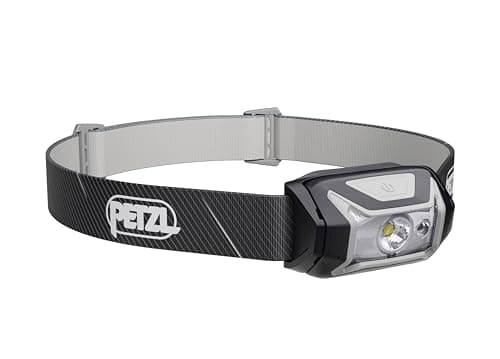 Petzl TikkaTop pick350 lumens, three AAA cells, a red mode, 94 grams. The unglamorous answer that covers most of what people actually do after dark. | A first headlamp, and the glovebox | 350 lm / 94 g | |
| 2 | 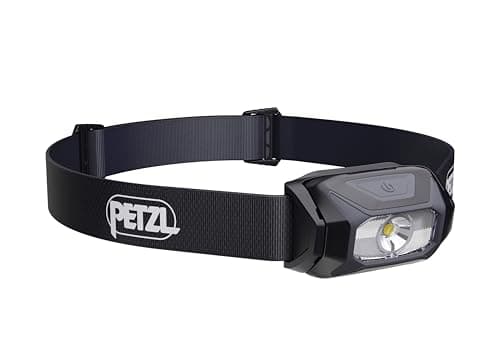 Petzl Tikkina300 lumens on AAA cells with a published ANSI figure. It does one thing and does not pretend to do more. | The cheapest lamp we would actually recommend | 300 lm / 92 g | |
| 3 | 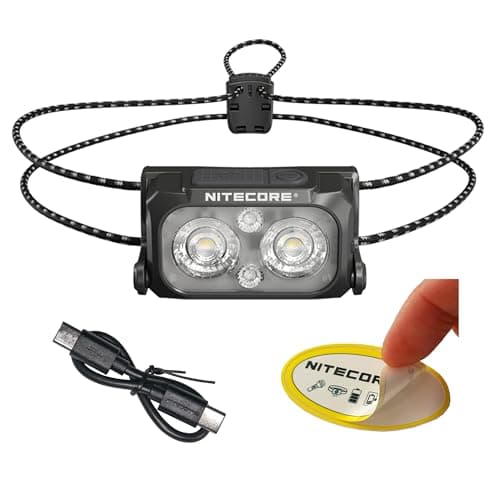 Nitecore NU25 UL400 lumens, USB-C, and multiple color temperatures in an ultralight body. The thru-hiker default for good reason. | The lightest rechargeable that still has three emitters | 400 lm | |
| 4 | 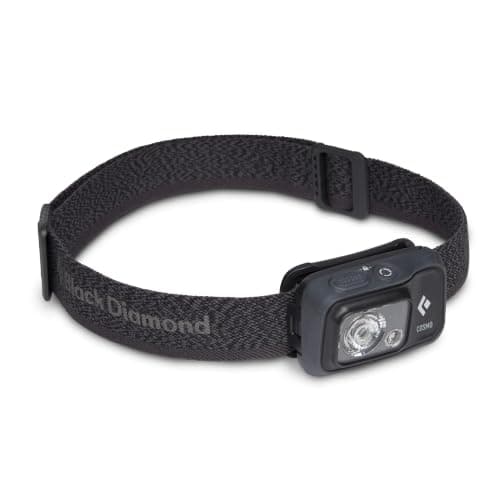 Black Diamond Cosmo 350350 lumens on AAA cells with dual-fuel compatibility. The Black Diamond answer to the Petzl Tikka, at a similar price. | A cheap AAA lamp with a red mode | 350 lm | |
| 5 | 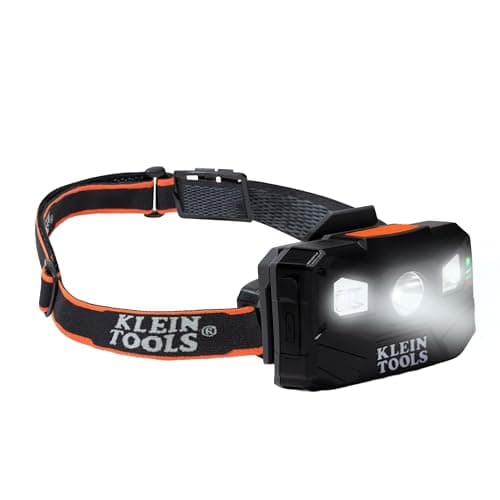 Klein Tools 56048 Rechargeable Headlamp400 lumens on a fabric strap built for a hard-hat brim, from a brand that sells to electricians rather than to hikers. | Trades work with a hard hat | 400 lm | |
| 6 | 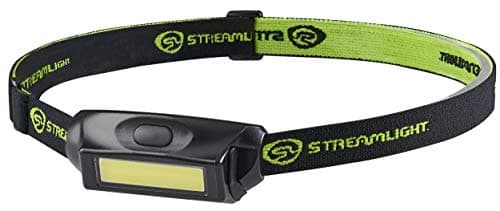 Streamlight Bandit Pro180 lumens of deliberately diffused light at 45 grams, running 4.5 hours on high. Modest numbers, and the right ones for the job. | Close work where you want a diffused beam, not a spotlight | 180 lm / 45.4 g (1.6 oz) | |
| 7 | 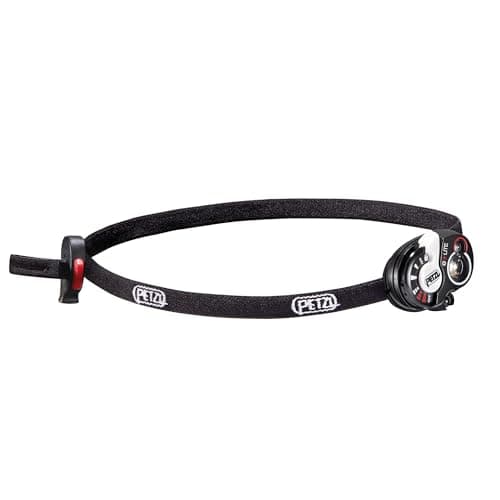 Petzl e+LITE30 lumens, and that is the point. An emergency lamp you store for years and hope never to switch on. | The one that lives in the first-aid kit | 30 lm |
We earn a commission if you buy through the links on this page, at no extra cost to you. It does not change what we recommend or the order they appear in. Full disclosure. Prices checked September 13, 2026.
This is the bracket where most headlamps are actually bought, and it is a good place to be buying. The emitter and driver technology that cost two hundred dollars a decade ago is commodity now, and every lamp on this page publishes at least 300 lumens — which is more than most people need for camp chores, a dog walk, a loft, or a power cut.
What separates them at this price is not output. It is how much each maker is willing to tell you, and whether the lamp still works when the battery is flat.
How we picked, before we ranked
- Published specifications first. A lamp that states beam distance, weight and an ingress rating outranks a brighter lamp that states only lumens. On this site an unpublished figure counts against a product rather than being quietly assumed.
- What happens when the battery dies. A lamp that takes AAA cells from a corner shop is worth more in a power cut than a sealed rechargeable with a flat cell and no socket.
- Weight, where it is published. You wear this on your head for hours. Thirty grams is noticeable.
- Currently purchasable at this price, checked against the live listing before writing. Prices move, so the bracket is checked against the live layer rather than typed into the copy.
We have not tested any of these lamps, do not own them, and have no laboratory. Every figure below is the maker's own with its source linked — see our methodology. We also do not print a fixed dollar figure in this copy, because a price typed into an article is wrong within a week; every price you see comes from the live layer with the date it was checked.
What each one publishes
| Lamp | Output | Beam distance | Power | Weight | Ingress |
|---|---|---|---|---|---|
| Nitecore NU25 UL | 400 lm | not published | Built-in Li-ion, USB-C | not published | not published |
| Klein Tools 56048 | 400 lm | not published | Rechargeable | not published | not published |
| Petzl Tikka | 350 lm | 70 m | 3 x AAA, or the CORE pack | 94 g | IPX4 |
| Black Diamond Cosmo 350 | 350 lm | not published | 3 x AAA, or the BD 1500 pack | not published | not published |
| Petzl Tikkina | 300 lm | 65 m | 3 x AAA, or the CORE pack | 92 g | IPX4 |
| Streamlight Bandit Pro | 180 lm | not published | USB rechargeable | 45.4 g | IPX4 |
| Petzl e+LITE | 30 lm | not published | not published | not published | not published |
Two of the seven publish a beam distance. Three publish a weight. Three publish an ingress rating. All three of the lamps with a full sheet are Petzl, which is the single most useful thing this table says.
The picks, and who each one is wrong for
Petzl Tikka — the best-documented lamp at this price
350 lumens, 70 m of published reach, 94 g and IPX4, running on three AAA cells or Petzl's CORE rechargeable pack in the same body. It is the only lamp in this bracket that publishes output, distance, weight and an ingress rating together, and the hybrid power arrangement means it is both an everyday lamp and a genuine emergency lamp.
Skip it if you want a rechargeable in the box — the CORE pack is a separate purchase, which pushes the real cost above this bracket. Skip it if you need immersion protection: IPX4 is rain, not submersion. And 350 lumens will not light a field.
Petzl Tikkina — the cheapest lamp we would actually recommend
300 lumens, 65 m, 92 g, IPX4, same AAA-or-CORE hybrid as the Tikka. It is the least expensive lamp on the page by a clear margin and it publishes more about itself than lamps costing twice as much. At 3.5 candela per lumen it throws the same shape of beam as its more expensive sibling.
Skip it if you want modes beyond the basics, or a red mode — that is the Tikka's territory and above. The honest summary is that the Tikka is the same lamp with more lumens and a red LED, so if neither matters to you, the cheaper one is the better buy.
Nitecore NU25 UL — the lightest rechargeable, on reputation rather than a figure
400 lumens, USB-C, a built-in cell, and three emitters including multiple color temperatures. Outdoors, a warm emitter beside a cool one cuts through fog, dust and snow in a way another 200 lumens does not, and this lamp has been the ultralight backpacking default for years.
Skip it if you want the numbers before you buy. Nitecore publishes no weight, no beam distance, no runtime and no IP rating for it — and on a lamp whose entire selling point is being light, the missing weight is the specification you would most want. Its reputation is doing work the published data does not.
Black Diamond Cosmo 350 — dual-fuel with a red mode
350 lumens on three AAA cells, or Black Diamond's rechargeable brick in the same body. Same output as the Petzl Tikka at a slightly lower price, with Black Diamond's red night-vision implementation and brightness behavior, which some people prefer outright.
Skip it if published specifications matter to you: Black Diamond states output and nothing else — no beam distance, no weight, no runtime, no IP rating. Against the Tikka at nearly the same money that is the whole argument, and it is covered in full on Petzl vs Black Diamond.
Klein Tools 56048 — the hard-hat lamp
400 lumens, rechargeable, and built for trades work with a hard hat rather than for a trail. If the lamp is going on a job site and needs to sit on a helmet rather than a headband, this is the one in the bracket designed for it, from a brand tradespeople already stock.
Skip it for outdoor use — there is no red mode, no published beam distance, no weight and no IP rating, which for a work lamp that will meet dust and rain is a real gap. See headlamps for work for the wider trade field.
Streamlight Bandit Pro — the only per-mode runtime here
180 lumens, 45.4 g, IPX4, and — uniquely in this bracket — a published runtime for each mode: 4.5 hours on high and 21 on low, charging in the lamp in 3.5 hours. It is the lightest lamp on the page and the only one whose endurance you can actually plan around. The beam is a diffused flood for close work rather than a spotlight.
Skip it if you need output. 180 lumens is the lowest of any working lamp here and it will not light a trail at speed. Buy it if you want something almost weightless for close work whose numbers you can trust.
Petzl e+LITE — not a headlamp you use, one you find
30 lumens, and it belongs in a first-aid kit or a glovebox rather than on a trail. It is on this page because at this price a dedicated emergency lamp that still works after years of storage is a genuinely sensible purchase alongside a main lamp — not instead of one.
Skip it as your only headlamp, without qualification. 30 lumens will not get you off a hill in the dark. See building an outage kit for where a lamp like this actually belongs.
How to buy in this bracket
- You want the most lamp for the least money — Petzl Tikkina. Fully documented, hybrid power, cheapest here.
- You want one lamp to cover camping and a power cut — Petzl Tikka or the Black Diamond Cosmo 350, both dual-fuel.
- You are counting grams for backpacking — Nitecore NU25 UL on reputation, Streamlight Bandit Pro on a published 45.4 g.
- You need a runtime figure you can plan around — Streamlight Bandit Pro, the only per-mode table in the bracket.
- It is going on a hard hat — Klein Tools 56048. See headlamps for work.
- You have more than fifty dollars — the Petzl Actik Core and Fenix HL18R-T sit just above this bracket and publish considerably more. See how to choose a headlamp.
What we would not tell you
We would not tell you how far the Nitecore, the Klein, the Black Diamond or the Streamlight throw, because none of those makers publishes a beam distance and an estimate copied from a forum is not evidence. Five of seven lamps in the most popular headlamp bracket on the market publish no reach figure at all, and naming that is more useful than papering over it.
We would also not tell you that the 400-lumen lamps are better than the 300-lumen ones. Without a beam distance beside it, a lumen figure tells you how much light there is and nothing about where it goes — and on a headlamp, where it goes is most of the job.
The picks, in full
Top pick · A first headlamp, and the glovebox
Petzl Tikka
350 lumens, three AAA cells, a red mode, 94 grams. The unglamorous answer that covers most of what people actually do after dark.
Three alkaline AAA cells hold roughly 3.9 Wh between them at a modest draw. That is comparable to the Swift LT's entire battery, for a couple of dollars, available in any gas station in the country.
The red mode is the feature people end up using most. It preserves night adaptation and does not wake a tent.
350 lumens looks modest next to a 3,000-lumen listing. On a footpath at walking pace it is more light than you need, and it will still be running when the 3,000-lumen light has stepped down twice.
What works
- AAA cells: replaceable anywhere, storable for years, no charge cycle to manage
- A red mode you can reach without a mode-cycling ordeal
- Cheap enough to own two
What does not
- No rechargeable pack in the box
- 70 m throw identifies nothing at distance
- IPX4
Skip this ifyou want one lamp for everything including work. There is no real flood mode and no high-CRI option.
Published specification
- Output
- 350 lmANSI/PLATO FL 1Petzl Tikka — manufacturer spec page (retrieved September 1, 2026)
- Peak intensity
- not published
- Beam distance
- 70 mOn three AAA cells; 75 m on the CORE rechargeable accessoryPetzl Tikka — manufacturer spec page (retrieved September 1, 2026)
- Runtime
- Visible at 700 m for 400 hReserve visibility figurePetzl Tikka — manufacturer spec page (retrieved September 1, 2026)
- Battery
- 3 x AAA (included), or the CORE rechargeable packPetzl Tikka — manufacturer spec page (retrieved September 1, 2026)
#ad · how this is funded · price as of September 13, 2026
Pick 2 · The cheapest lamp we would actually recommend
Petzl Tikkina
300 lumens on AAA cells with a published ANSI figure. It does one thing and does not pretend to do more.
No red mode, no reactive sensor, no charge port. Three brightness levels and a battery door.
The 65 m distance and the 300-lumen output are both ANSI FL 1 figures published alongside the rest of Petzl's table, which is more than most lamps at this price manage.
For a kit bag, a car, or a first lamp for someone unsure they will use it, this is the honest recommendation.
What works
- Published ANSI figures at the bottom of the price range
- Nothing to break and nothing to charge
- Takes the same CORE pack as the rest of the Petzl range if you upgrade
What does not
- No red mode
- No rechargeable option in the box
- IPX4
Skip this ifyou are out after dark regularly. The missing red mode gets old fast in a shared tent.
Published specification
- Output
- 300 lmANSI/PLATO FL 1Petzl Tikkina — manufacturer spec page (retrieved September 1, 2026)
- Peak intensity
- not published
- Beam distance
- 65 mPetzl Tikkina — manufacturer spec page (retrieved September 1, 2026)
- Battery
- 3 x AAA (included), or the CORE rechargeable packPetzl Tikkina — manufacturer spec page (retrieved September 1, 2026)
#ad · how this is funded · price as of September 13, 2026
Pick 3 · The lightest rechargeable that still has three emitters
Nitecore NU25 UL
400 lumens, USB-C, and multiple color temperatures in an ultralight body. The thru-hiker default for good reason.
The multiple-color-temperature version is the interesting one. A warm emitter beside a cool one is genuinely more useful in fog, dust and snow than another 200 lumens would be.
Nitecore's own site would not serve us a product page from this build, so the table stays thin and we say so rather than filling it from a forum post.
The NU25 has been the ultralight backpacking default for years. That is reputation, not evidence, and we are not going to pretend otherwise.
What works
- Multiple color temperatures, which matters more than peak lumens outdoors
- USB-C, built-in cell, nothing proprietary to lose
- Very light for a lamp with three emitters
What does not
- We could not source a weight, runtime, beam distance or IP rating
- Built-in cell: when it degrades the lamp is done
- 400 lumens is modest if you want to see down a valley
Skip this ifyou want a spec sheet you can check. Petzl and Fenix publish full ANSI tables; for this one we could not get past the retail listing.
Published specification
- Output
- 400 lmNitecore NU25 MCT UL — the brand's own listing on Amazon.com (retrieved September 1, 2026)
- Peak intensity
- not published
- Beam distance
- not published(Not stated in the listing we read)
- Runtime
- not published
- Battery
- Built-in Li-ion, USB-C rechargeableNitecore NU25 MCT UL — the brand's own listing on Amazon.com (retrieved September 1, 2026)
- Weight
- not published(Marketed as ultralight; no figure in the listing)
- Ingress
- not published
- CRI
- not published(Multiple color temperatures offered; no CRI figure stated)
#ad · how this is funded · price as of September 13, 2026
Pick 4 · A cheap AAA lamp with a red mode
Black Diamond Cosmo 350
350 lumens on AAA cells with dual-fuel compatibility. The Black Diamond answer to the Petzl Tikka, at a similar price.
Dual-fuel means the same lamp takes AAA cells or Black Diamond's rechargeable brick, which is the same idea as Petzl's hybrid concept and just as useful.
350 lumens with a red mode is the specification that covers camp chores, a dog walk and a power cut. Most people never need more.
We assert only what the brand's listing states, because Black Diamond's own site would not serve us a spec page.
What works
- AAA and rechargeable from the same lamp
- Red night vision at the bottom of the range
- Genuinely inexpensive
What does not
- No sourced beam distance, runtime, weight or IP rating
- The rechargeable battery is an extra purchase
- 350 lumens is a burst figure on alkaline cells
Skip this ifyou want reach. This is a close-work and footpath lamp and the aperture says so.
Published specification
- Output
- 350 lmBlack Diamond Cosmo 350 — the brand's own listing on Amazon.com (retrieved September 1, 2026)
- Peak intensity
- not published
- Beam distance
- not published
- Runtime
- not published
- Battery
- 3 x AAA, dual-fuel compatible with the BD 1500 rechargeable batteryBlack Diamond Cosmo 350 — the brand's own listing on Amazon.com (retrieved September 1, 2026)
- Weight
- not published
- Ingress
- not published
$39.95 · 15% off
#ad · how this is funded · price as of September 13, 2026
Pick 5 · Trades work with a hard hat
Klein Tools 56048 Rechargeable Headlamp
400 lumens on a fabric strap built for a hard-hat brim, from a brand that sells to electricians rather than to hikers.
The strap is the product. Klein designs around a hard hat, which means the lamp sits where a brim allows rather than where an elastic band wants to put it.
400 lumens is the right number for panel work. More output at close range is glare, and glare on a live panel is a hazard rather than a feature.
All-day runtime is a marketing phrase, not a specification, and we will not convert it into a number.
What works
- Designed for a hard hat rather than adapted to one
- 400 lumens is well matched to close electrical work
- Sold through trade channels, so replacement is easy
What does not
- No published runtime figure, only the phrase all-day
- No sourced beam distance, weight or IP rating
- Nothing here for outdoor use
Skip this ifyou want it outdoors. It is a jobsite lamp and its beam, strap and rating all say so.
Published specification
- Peak intensity
- not published
- Beam distance
- not published
- Runtime
- not published(Listing states 'all-day runtime' without a figure)
- Battery
- RechargeableKlein Tools 56048 — the brand's own listing on Amazon.com (retrieved September 1, 2026)
- Weight
- not published
- Ingress
- not published
#ad · how this is funded · price as of September 13, 2026
Pick 6 · Close work where you want a diffused beam, not a spotlight
Streamlight Bandit Pro
180 lumens of deliberately diffused light at 45 grams, running 4.5 hours on high. Modest numbers, and the right ones for the job.
4.5 hours on high and 21 hours on low are published per-mode figures, not a reserve-visibility claim. That is rarer than it should be and it is why this lamp scores well despite the smallest headline here.
180 diffused lumens at arm's length is more comfortable than 1,000 focused ones. Under a dashboard or inside an electrical panel, glare is the enemy and this is built to avoid it.
45 g puts it within 2 g of a Petzl Swift LT while costing a fraction as much.
What works
- Honest per-mode runtimes published by the maker
- 45 g, and a hard-hat strap option
- Diffused beam that does not blind you off close work
What does not
- 180 lumens will not light a trail
- No beam distance published, because there is not much to publish
- IPX4
Skip this ifyou need to see past about ten meters. It is a task light worn on the head, not a trail lamp.
Published specification
- Output
- 180 lmHigh. Low is 35 lm.Streamlight Bandit Pro — manufacturer spec page (retrieved September 1, 2026)
- Peak intensity
- not published
- Beam distance
- not published(Streamlight does not publish one for this diffused lamp)
- Runtime
- 4.5 h on high, 21 h on lowStreamlight Bandit Pro — manufacturer spec page (retrieved September 1, 2026)
- Battery
- USB rechargeable, charges in the light in 3.5 hStreamlight Bandit Pro — manufacturer spec page (retrieved September 1, 2026)
- Weight
- 45.4 g (1.6 oz)Streamlight Bandit Pro — manufacturer spec page (retrieved September 1, 2026)
- Ingress
- IPX42 m impact resistance testedStreamlight Bandit Pro — manufacturer spec page (retrieved September 1, 2026)
#ad · how this is funded · price as of September 13, 2026
Pick 7 · The one that lives in the first-aid kit
Petzl e+LITE
30 lumens, and that is the point. An emergency lamp you store for years and hope never to switch on.
This is the only light on the site we recommend on a basis other than performance. It is the one that still works after five years in a pack lid.
30 lumens will let you find a zip, read a map, change a tire and walk slowly. It will not let you do anything else, and it is not meant to.
We could not reach a manufacturer spec page for it from this build, so the only figure we assert is the 30-lumen output on Petzl's own listing. Everything else is marked unpublished rather than guessed.
What works
- Stores for years with no maintenance
- Small enough that there is no excuse not to carry it
- Costs less than one night of not having a light
What does not
- 30 lumens is 30 lumens
- We could not source a full ANSI table for it
- Coin cells are awkward to replace in the field
Skip this ifit would be your only light. It is a backup, and treating it as a primary is how people end up walking out in the dark.
Published specification
- Peak intensity
- not published
- Beam distance
- not published
- Battery
- not published(Lithium coin cells; capacity not stated in the listing we read)
- Weight
- not published
- Ingress
- not published
#ad · how this is funded · price as of September 13, 2026
Questions people actually ask
What is the best headlamp under $50?
The Petzl Tikka, on published evidence. It is the only lamp in the bracket that states output, beam distance, weight and an ingress rating together, and it runs on AAA cells or a rechargeable pack in the same body. The Tikkina is the same optic for less money if you do not need the extra output or the red mode.
How many lumens do I need in a headlamp?
For camp chores, a dog walk or a power cut, 300 lumens is genuinely enough, and every lamp on this page clears it. Running or moving fast at night is where more output and a published beam distance start to matter. Our how-many-lumens guide works through it task by task.
Are cheap headlamps any good in 2026?
The emitter and driver technology is commodity now, so yes at this price. What you give up is disclosure and durability rather than brightness — five of the seven lamps here publish no beam distance, and only three publish an ingress rating.
Should I buy a rechargeable or AAA headlamp?
For everyday use, rechargeable is cheaper to run and lighter. For camping, a glovebox or an emergency kit, AAA wins decisively: the lamp works after two years in a drawer and works again ten minutes after it dies. The Petzl Tikka and Black Diamond Cosmo 350 do both from the same body.
Which headlamp under $50 is lightest?
The Streamlight Bandit Pro at a published 45.4 g. The Nitecore NU25 UL is widely considered lighter still, but Nitecore publishes no weight for it, so we cannot state one — which on an ultralight lamp is exactly the figure you would want.
Do any headlamps under $50 have a red light mode?
Yes. The Petzl Tikka and the Black Diamond Cosmo 350 both include red, which preserves dark adaptation and is the mode most people actually use in a shared tent. Our red light mode guide explains what it does and does not do.
Is a headlamp under $50 waterproof?
Only three of these publish any ingress rating at all, and all three are Petzl at IPX4 — splashing water and rain, not immersion. If you need a published immersion rating you need to spend more; the Fenix HM65R-T states IP68.
Sources
Every figure on this page came from one of the documents below, read on the date shown. We do not cite other review sites, forum posts or video reviews as sources of fact.
- Petzl Tikka — manufacturer spec page (retrieved September 1, 2026)
- Petzl Tikkina — manufacturer spec page (retrieved September 1, 2026)
- Petzl e+LITE — the brand's own listing on Amazon.com (retrieved September 1, 2026)
- Nitecore NU25 UL — the brand's own listing on Amazon.com (retrieved September 1, 2026)
- Black Diamond Cosmo 350 — the brand's own listing on Amazon.com (retrieved September 1, 2026)
- Klein Tools 56048 Rechargeable Headlamp — the brand's own listing on Amazon.com (retrieved September 1, 2026)
- Streamlight Bandit Pro — manufacturer spec page (retrieved September 1, 2026)
- Petzl — ANSI/PLATO FL 1 technical information for its headlamp range
- ANSI/PLATO FL 1 flashlight performance standard — definitions of lumens, peak beam intensity, beam distance, runtime, impact and water resistance
- IEC 60529 — the IP (ingress protection) rating system
Read next
Best headlamps, ranked on the watt-hours behind the lumens
The full headlamp ranking: output, weight, battery energy and beam distance, every figure sourced to the maker.
How to choose a headlamp
A decision guide built on watt-hours, weight, beam distance, ingress rating and red-mode access.
Best headlamps for camping
Camping headlamps ranked on red-mode access, replaceable cells and honest runtime figures.
What a headlamp red light mode is actually for
The physiology behind red headlamp modes, and how to choose a lamp whose red is reachable in one click.
Petzl vs Black Diamond
Petzl against Black Diamond on published beam distance, runtime, battery energy and weight, with three matched pairs at the prices people actually shop.
Headlamp brands, ranked on what they tell you
Every headlamp brand we cover, ranked on specification disclosure — from the one publishing watt-hours to the three publishing only a lumen figure.
Found a number that is wrong? Tell us and we will fix it and say so. Our methodology shows every formula on this page.