Headlamps
Headlamp brands, ranked on what they tell you
Ten brands, one ranking, and a single criterion: how much of the specification sheet the company is willing to print. The gap between first and last is enormous.
By Scooter M. · Published · Updated
| # | Product | Best for | Output / weight | Price |
|---|---|---|---|---|
| 1 | 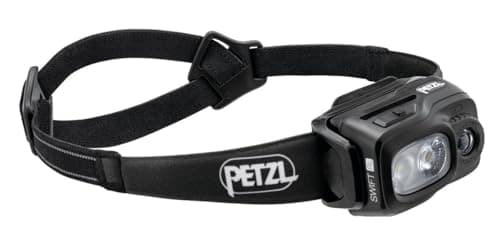 Petzl Swift RLTop pickThe best power-to-weight figure we could source: 1,200 lumens and 168 m from 92 grams, with reactive dimming that genuinely extends the burn. | Trail running and fast movement at night | 1,200 lm / 92 g | |
| 2 | 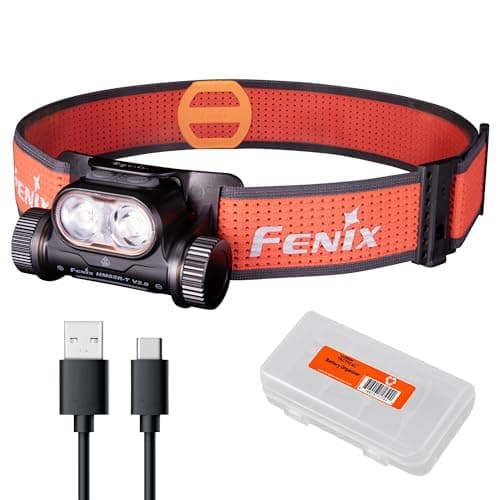 Fenix HM65R-T V2.01,600 lumens and 170 m from a magnesium body running a standard 18650, at 140 g. The removable cell is what separates it from the sealed-pack lamps. | Long nights where you want reach and a spare cell | 1,600 lm / 140 g (4.94 oz) | |
| 3 | 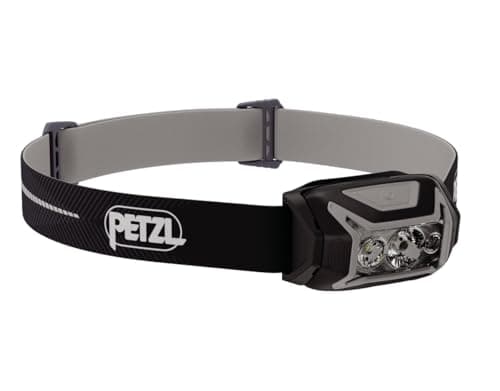 Petzl Actik CoreThe default outdoor headlamp: hybrid power, a published ANSI figure, and a beam shaped for walking rather than for a spec sheet. | Hiking and general outdoor use | 625 lm / 88 g | |
| 4 | 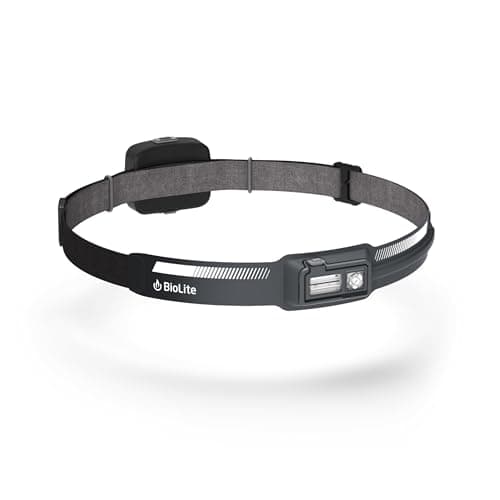 BioLite Dash 450450 lumens, 90 m of stated beam and 60 hours of stated runtime in BioLite's flat, no-bounce strap. | Road running, where the strap matters more than the beam | 450 lm | |
| 5 | 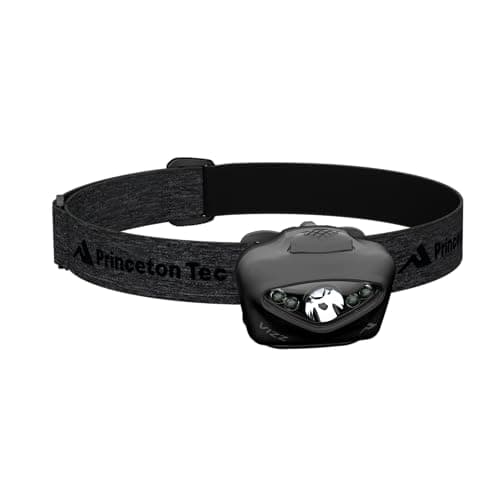 Princeton Tec Vizz550 lumens on three AAA cells with an IPX7 rating — immersion, not just rain. The only AAA lamp here rated for a dunking. | Getting wet | 550 lm / 92 g | |
| 6 | 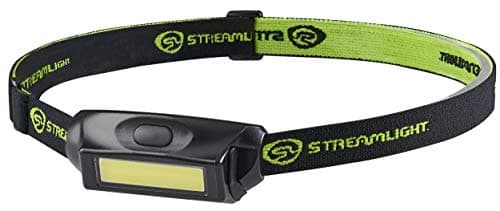 Streamlight Bandit Pro180 lumens of deliberately diffused light at 45 grams, running 4.5 hours on high. Modest numbers, and the right ones for the job. | Close work where you want a diffused beam, not a spotlight | 180 lm / 45.4 g (1.6 oz) | |
| 7 | 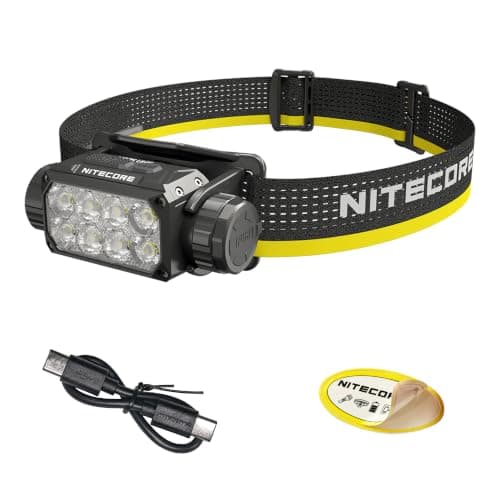 Nitecore HC75 UHE3,000 lumens with a zoomable head, white and red beams, and 192 m of stated reach. The brightest headlamp on the site. | Industrial work where you need to change the beam | 3,000 lm | |
| 8 | 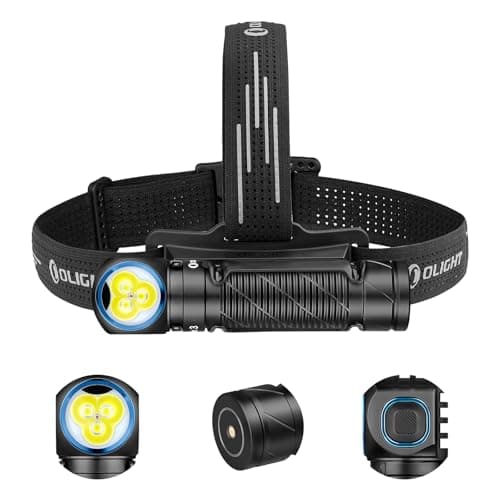 Olight Perun 33,000 lumens, 160 m of stated beam, and a body that comes off the strap and works as a right-angle flashlight. | A headlamp that detaches into a proper flashlight | 3,000 lm | |
| 9 | 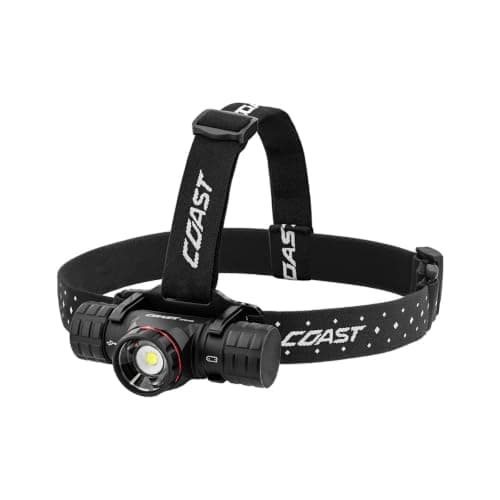 Coast XPH34R2,700 lumens, a twist-focus beam, and dual-power operation on either the rechargeable pack or alkaline cells. | Maximum output with a swappable power source | 2,700 lm | |
| 10 | 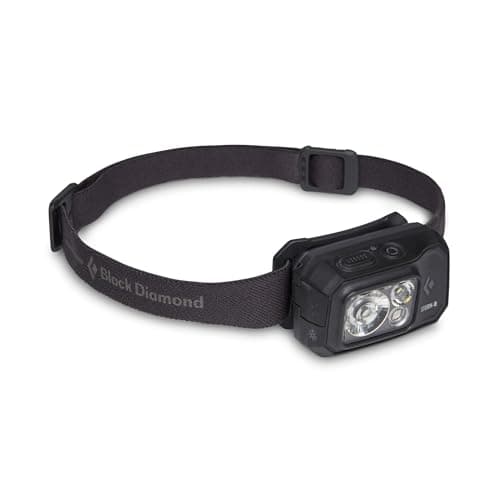 Black Diamond Storm 500-R500 lumens with red, green and blue night-vision modes. The Storm is the waterproof one in Black Diamond's range. | Wet weather and RGB night vision | 500 lm |
We earn a commission if you buy through the links on this page, at no extra cost to you. It does not change what we recommend or the order they appear in. Full disclosure. Prices checked October 20, 2026.
Every headlamp brand publishes a lumen figure. That is where the similarity ends. One of the ten brands below publishes the energy in its battery pack in watt-hours; three publish nothing beyond output at all. This page ranks them on that difference, because on a site that judges lights by what can be checked, disclosure is the specification underneath every other specification.
This is not a ranking of how good the lamps are. It is a ranking of how much you can know before you buy one, which is a different question and the only one we are equipped to answer honestly.
The five things a headlamp maker could tell you
- Output in lumens, measured under ANSI/PLATO FL 1. Every brand here publishes this.
- Beam distance, which is what actually determines how far you see. Five of ten publish it on at least one lamp.
- Runtime, and ideally per mode rather than a single maximum.
- Battery energy, either as watt-hours directly or as capacity in milliamp-hours you can convert. This is what makes a runtime claim checkable.
- Weight and an ingress rating — the two figures that decide whether you will actually wear it and whether it survives the weather.
We have handled none of these lamps. Every figure is the maker's own, linked with the date we read it, and where a brand's own site would not serve us a spec page we cite the brand's own retail listing and label it as such — see our methodology.
The ranking
| Brand | Beam distance | Runtime | Battery energy | Weight and IP |
|---|---|---|---|---|
| Petzl | Yes, on every lamp | Yes | Yes — watt-hours stated directly | Yes, both |
| Fenix | On some lamps | Yes, as a maximum | Yes — capacity in mAh | Yes, both |
| Streamlight | No | Yes, per mode | No | Yes, both |
| Princeton Tec | Yes, 85 m | Yes, per mode | No | Yes, both |
| BioLite | Yes | Yes, as a maximum | No | IP only |
| Nitecore | On one lamp | No | No | Neither |
| Olight | On one lamp | No | No | Neither |
| Coast | No | No | No | Neither |
| Black Diamond | No | No | No | Neither |
| Klein Tools | No | No | No | Neither |
Petzl is the only brand on this site, in any category, that publishes the watt-hours in its battery. That single fact is why it sits first, and it is worth understanding what it buys you.
Why watt-hours is the specification that matters
A runtime claim with no battery figure behind it cannot be checked. A runtime claim with a stated watt-hour figure can be tested against arithmetic in about ten seconds, and that changes what the number is worth.
The brands, in order
1. Petzl — the only complete spec sheets in the category
Petzl publishes output, beam distance, runtime, battery energy in watt-hours, weight and an IPX rating on every lamp we cover, and the figures are consistent across a range from a 30-lumen emergency lamp to a 1,500-lumen reactive one. The Swift RL states 1,200 lumens, 168 m, 8.47 Wh and 92 g. The Actik Core states 625 lumens, 115 m, 4.5 Wh and 88 g. The Swift LT weighs 43 g, the lightest figure on this site.
Petzl's runtime disclosure is the most complete we have found. On the Actik Core page, read 2026-09-19, it publishes a full table in text — lumens, beam distance and runtime for every level, given separately for the rechargeable pack and for AAA cells. It then adds a strobe figure, visible at 700 m for 400 hours, which states the threshold the measurement was taken to rather than hiding it inside a bare hour count. Skip Petzl if you want maximum output per dollar — Nitecore and Coast publish far bigger numbers for the money.
2. Fenix — nearly as complete, with the biggest batteries
Fenix publishes capacity in milliamp-hours rather than watt-hours, which takes one multiplication to convert but is otherwise the same information. The HM65R-T states 1,600 lumens, 170 m, 300 hours maximum, a 3,400 mAh 18650, 140 g and IP68 — the strongest ingress rating of any headlamp we cover. The HM75R pairs an 18650 with a 21700 for the largest stored energy in the category.
The gap against Petzl is the runtime format: Fenix publishes a single maximum rather than a per-mode table, so the 300-hour figure on the HM65R-T describes its lowest setting and not the 1,600 lumens on the box. Skip Fenix if weight is the deciding factor — the HM75R is 321 g complete, against 43 g for the lightest Petzl.
3. Streamlight — a per-mode runtime table, on one lamp
Streamlight publishes the best-formatted runtime figures of anyone here — 4.5 hours on high and 21 on low for the Bandit Pro, rather than a single maximum — along with 45.4 g and IPX4. It is a per-mode table, which is what we ask for everywhere and rarely get.
The limitation is range rather than disclosure: the Bandit Pro is the only headlamp Streamlight fields in our set, and at 180 lumens it is a light task lamp rather than a general-purpose one. No beam distance is published. Skip it if you need output; take it if you want a very light lamp whose runtime you can actually plan around.
4. BioLite — publishes distance and runtime, not much else
The Dash 450 states 450 lumens, 90 m, 60 hours maximum and IPX4. Four figures including a beam distance puts BioLite ahead of every brand below it, and the 90 m works back to 2,025 candela — 4.5 candela per lumen, a wide running-oriented beam. No weight or battery capacity is published, which on a running lamp is a real omission since weight on the head is the property you notice most.
5. Princeton Tec — per-mode runtime, a distance and IPX7
The Vizz states 550 lumens on spot high for 1 hour 30 minutes, with a runtime for each of its other three modes, plus an 85 m beam distance, a 92 g weight, three AAA cells and IPX7 — the second-strongest ingress rating in the category and the best on any AAA lamp here. Running on replaceable cells with published waterproofing is a genuinely useful combination for anyone who cannot rely on charging. This entry said no beam distance or weight was published until 2026-10-15; that was wrong, and the full review works through the whole sheet. What is still missing is a candela figure.
6. Nitecore — the biggest numbers, the thinnest sheets
Nitecore publishes the highest output in the category — 3,000 lumens on the HC75 UHE — and one beam distance across four lamps. No runtime, no weight, no ingress rating on any of them. The 192 m on the HC75 works back to 9,216 candela, or 3.1 candela per lumen, which tells you the 3,000 lumens buys width rather than reach.
On a 3,000-lumen lamp the missing runtime is the figure you most need, because no headlamp sustains that output. Take Nitecore for output per dollar and the unusual zoomable head; skip it if you need to know what happens after the first few minutes.
7. Olight — output and one distance figure
The Perun 3 states 3,000 lumens and 160 m; the Perun 2 Mini states 1,100 lumens and nothing else. Magnetic charging is convenient and proprietary, which is a trade rather than a fault. No runtime, weight or ingress rating published on either.
8. Black Diamond — a complete sheet on one lamp, an output figure on the rest
This entry moved up on October 17, 2026, and the reason is worth stating plainly: Black Diamond's own site served us a spec page for the Spot 400-R that an earlier pass could not reach, and it publishes 400/200/6 lumens, 100/60/12 meters, 4/8/225 hours of burn time, 86 g, a 1500 mAh cell and IP67 — a fuller sheet than Nitecore, Olight or Coast manage for anything. For the Storm 500-R and the Cosmo 350 we still cannot reach a maker page, so those two remain an output figure each: 500 lumens with red, green and blue night-vision modes, which no other brand here matches, and 350 lumens on AAA or the BD 1500 pack.
So Black Diamond is the brand where the question "what does it publish?" has no single answer, and that is why it sits mid-table rather than at either end. The lesson for a buyer is narrower than a brand ranking: check the lamp, not the badge. Our Petzl against Black Diamond comparison and the model-level Petzl Actik Core vs Black Diamond Spot 400-R both work through what that means in practice.
9 and 10. Coast and Klein Tools — a lumen figure and nothing else
Both publish output and stop. Coast's XPH34R states 2,700 lumens and dual power — a rechargeable pack or alkaline cells — which is a genuinely valuable feature and the reason it is still a pick. Klein's 56048 states 400 lumens. Neither publishes a beam distance, a runtime, a weight or an ingress rating for anything we cover, so if a published figure is part of your decision they cannot participate in it.
How to buy on this page
- You want to know exactly what you are getting — Petzl. Complete sheets across the whole range, including watt-hours.
- You want maximum stored energy and IP68 — Fenix, on the HM65R-T or HM75R.
- You want a runtime figure per mode — Streamlight Bandit Pro, the only per-mode table in the category.
- You want the most lumens per dollar — Nitecore or Coast, accepting that little else is published.
- You want red, green and blue night vision — Black Diamond Storm 500-R, the only lamp here with all three. See red light mode.
- You want it to run on cells from a shop — Coast XPH34R, Princeton Tec Vizz, or a Petzl hybrid. See rechargeable headlamps.
What we would not tell you
We would not tell you Petzl makes better headlamps than Black Diamond. We have used neither, and a disclosure ranking is not a performance ranking. What we can say is that if a Petzl lamp underperforms its published figures you have a documented claim to hold it against, and with three of these brands you have only a lumen number.
We would also not fill in the empty cells in the table above. It would be easy to publish an estimated runtime for a Nitecore lamp or an assumed IP rating for a Black Diamond, and it would make the page look more useful. It would also be exactly the thing this site exists not to do. For how we choose picks across the whole category, see how to choose a headlamp.
The picks, in full
Top pick · Trail running and fast movement at night
Petzl Swift RL
The best power-to-weight figure we could source: 1,200 lumens and 168 m from 92 grams, with reactive dimming that genuinely extends the burn.
8.47 watt-hours across 92 grams is the whole argument. That works out to 13.0 lumens per gram at peak and 0.092 Wh of stored energy per gram carried, the best combination of the two figures in this roundup.
Reactive lighting is the runtime strategy, not a gimmick. The lamp meters reflected light and cuts output when you look at your own hands or a pale trail. Petzl's 7-hour minimum at medium is quoted in that mode, and it is the number to plan around.
168 m of throw is more than a runner can use below about 8 minutes per kilometer. What you actually notice is how little the beam sags once the pack drops under half.
What works
- 1,200 lm and 168 m at 92 g, the best power-to-weight in this set on published figures
- Reactive dimming extends the burn instead of just cutting output in bright patches
- Five-level charge gauge, so you know what you have before you start
What does not
- IPX4, in a category where running in rain is the normal case
- Charging cable not included at this price
- Reactive mode takes a few outings to trust
Skip this ifyou mostly walk. You are paying for a reactive sensor and a 2,250 mAh pack to solve a problem hikers do not have.
Published specification
- Output
- 1,200 lmANSI FL 1 standardPetzl Swift RL — manufacturer spec page (retrieved September 1, 2026)
- Peak intensity
- not published(Petzl publishes distance, not peak intensity)
- Beam distance
- 168 mPetzl Swift RL — manufacturer spec page (retrieved September 1, 2026)
- Runtime
- 7 h minimum at medium, in reactive modePetzl Swift RL — manufacturer spec page (retrieved September 1, 2026)
- Battery
- 2,250 mAh / 3.85 V / 8.47 Wh Li-ion, USB-CPetzl Swift RL — manufacturer spec page (retrieved September 1, 2026)
$134.95 · 19% off
#ad · how this is funded · price as of October 20, 2026
Pick 2 · Long nights where you want reach and a spare cell
Fenix HM65R-T V2.0
1,600 lumens and 170 m from a magnesium body running a standard 18650, at 140 g. The removable cell is what separates it from the sealed-pack lamps.
A 3,400 mAh 18650 at a nominal 3.6 V is 12.2 watt-hours. That is more energy than a Petzl NAO RL carries, in a lamp 5 g lighter, because a bare 18650 is a more efficient package than a molded pack.
It is also the only headlamp in this set whose battery you can replace at a checkpoint for three dollars, because 18650 is a standard cell and not a proprietary brick.
IP68 rather than IPX4 is the second real difference. This one survives being dropped in water; most of the running lamps here do not.
What works
- Standard 18650 cell: swappable, cheap, and available everywhere
- IP68 and 2 m impact rating, the toughest specification in this roundup
- Dual emitters, one white and one warm white, so it works for close tasks as well as reach
What does not
- 140 g is at the heavy end for a running lamp
- Charging works only with Fenix ARB-L18 series cells, which limits the swap-any-18650 advantage
- No published candela figure
Skip this ifyou count grams. A Swift LT does the camp job at 43 g; you are carrying 97 g extra for reach and a removable cell.
Published specification
- Peak intensity
- not published(Fenix publishes distance, not peak intensity)
- Runtime
- 300 h maximumLowest mode. The turbo figure is far shorter and Fenix publishes it per-mode.Fenix HM65R-T V2.0 — manufacturer spec page (retrieved September 1, 2026)
- Battery
- 3,400 mAh 18650 Li-ion (included), or 2 x CR123AFenix HM65R-T V2.0 — manufacturer spec page (retrieved September 1, 2026)
- Weight
- 140 g (4.94 oz)Including battery and headbandFenix HM65R-T V2.0 — manufacturer spec page (retrieved September 1, 2026)
- Ingress
- IP68Dust tight and immersion rated; 2 m impact resistanceFenix HM65R-T V2.0 — manufacturer spec page (retrieved September 1, 2026)
#ad · how this is funded · price as of October 20, 2026
Pick 3 · Hiking and general outdoor use
Petzl Actik Core
The default outdoor headlamp: hybrid power, a published ANSI figure, and a beam shaped for walking rather than for a spec sheet.
625 lumens and 115 meters is a walking beam, not a searching beam. The FL1 definition puts illuminance at 115 m down to 0.25 lux, which is enough to tell that something is there and not enough to identify it. In practice you run the middle level and see 30 to 60 m of usable trail.
4.5 watt-hours matters more than the lumen figure. A lamp drawing a regulated 2 W empties that pack in a bit over two hours. The 400-hour number Petzl quotes is a reserve-mode visibility claim, not 400 hours of light you can walk by.
The hybrid design is the real feature. When the CORE pack dies three hours into a night descent, three AAA cells from a gas station bring the lamp back. Very little else at this price does that.
What works
- Runs on the rechargeable pack or three AAA cells, which is a genuine field fix rather than a marketing bullet
- Petzl publishes the full ANSI FL 1 table, including a distance for every mode
- 88 g is light enough that you stop noticing it
What does not
- IPX4 only: rain is fine, a dropped-in-the-creek recovery is not
- No published peak candela, so the 115 m claim cannot be checked against the intensity
- The maker's own site and its own Amazon listing disagree about peak output
Skip this ifyou need reach. 115 m is short by 2026 standards, and the 625-lumen headline does not change the shape of the beam.
Published specification
- Output
- 625 lmANSI/PLATO FL 1. Petzl's US product page states 625; the brand's own Amazon listing says 650. We use the maker's own site.Petzl Actik Core — manufacturer spec page (retrieved September 1, 2026)
- Peak intensity
- not published(Petzl publishes distance, not peak intensity)
- Beam distance
- 115 mMaximum, on the CORE rechargeable batteryPetzl Actik Core — manufacturer spec page (retrieved September 1, 2026)
- Runtime
- 2 h at 625 lm / 7 h at 100 lm / 100 h at 7 lm, on the CORE packPetzl publishes a full per-mode table for both power sources. On 3 x AAA the same levels run 2 h / 10 h / 100 h, with peak output capped at 450 lm. Its separate strobe figure, visible at 700 m for 400 h, is a be-seen claim and not a working runtime.Petzl Actik Core — manufacturer spec page (retrieved September 19, 2026)
- Battery
- CORE 1250 mAh / 3.6 V / 4.5 Wh, or 3 x AAAPetzl Actik Core — manufacturer spec page (retrieved September 1, 2026)
- Ingress
- IPX4Weather resistant. Not immersion rated.Petzl Actik Core — manufacturer spec page (retrieved September 1, 2026)
$87.95 · 9% off
#ad · how this is funded · price as of October 20, 2026
Pick 4 · Road running, where the strap matters more than the beam
BioLite Dash 450
450 lumens, 90 m of stated beam and 60 hours of stated runtime in BioLite's flat, no-bounce strap.
BioLite's listing publishes more than most: output, beam distance, maximum runtime and an IP rating. That is why this one earns a place despite the modest headline.
450 lumens and 90 m is a road-running beam. On tarmac at 5 minutes per kilometer it is enough; on technical singletrack it is not.
The flat front profile is the actual product. A headlamp that does not bounce is worth more to a runner than another 300 lumens that does.
What works
- One of the few non-European brands here to publish beam distance and IP rating
- Low-profile strap that stays put at pace
- 60-hour low mode is a real number, not a reserve-visibility claim
What does not
- 450 lumens is modest for trail use
- No published weight
- IPX4 rather than a proper rain rating
Skip this ifyou run technical trail. 90 m of reach at 450 lumens does not give you time to read the ground at speed.
Published specification
- Peak intensity
- not published
- Beam distance
- 90 mBioLite Dash 450 — the brand's own listing on Amazon.com (retrieved September 1, 2026)
- Runtime
- 60 h maximumLowest modeBioLite Dash 450 — the brand's own listing on Amazon.com (retrieved September 1, 2026)
- Battery
- Rechargeable, built inBioLite Dash 450 — the brand's own listing on Amazon.com (retrieved September 1, 2026)
- Weight
- not published
#ad · how this is funded · price as of October 20, 2026
Pick 5 · Getting wet
Princeton Tec Vizz
550 lumens on three AAA cells with an IPX7 rating — immersion, not just rain. The only AAA lamp here rated for a dunking.
IPX7 on AAA cells is the specification that makes this interesting. Almost everything else in the AAA class is IPX4, which means rain and nothing more.
Three lithium AAA cells hold roughly 4.5 Wh and shrug off cold in a way alkalines do not. On this lamp that combination is worth more than another 500 lumens.
Princeton Tec publishes an output and a runtime for each of its four modes, plus an 85 m beam distance and a 92 g weight - not a single flattering maximum. The 85 m works back to about 1,806 candela, or 3.3 candela per lumen, which says the 550 lumens buys width rather than reach.
What works
- IPX7 immersion rating on replaceable cells
- A published runtime spread across modes and chemistries
- Digital lockout, so it does not drain itself in a pack
What does not
- No candela figure, so the 85 m distance cannot be cross-checked
- Bulkier than the modern rechargeable lamps
- No rechargeable option
Skip this ifweight is your constraint. The AAA carriage that makes it robust also makes it bigger than the Li-ion competition.
Published specification
- Output
- 550 lmSpot high. Spot low 150 lm, flood high 30 lm, red high 10 lm.Princeton Tec Vizz — manufacturer spec page (retrieved October 15, 2026)
- Peak intensity
- not published(Princeton Tec publishes distance, not peak intensity)
- Runtime
- 1 h 30 min on spot highFour published pairs: spot 150 lm/40 h, flood 30 lm/90 h, red 10 lm/135 h. The headline 90 h is the flood figure.Princeton Tec Vizz — manufacturer spec page (retrieved October 15, 2026)
- Battery
- 3 x AAA alkaline or lithiumPrinceton Tec Vizz — manufacturer spec page (retrieved October 15, 2026)
- Ingress
- IPX7Withstands immersion to one meterPrinceton Tec Vizz — manufacturer spec page (retrieved October 15, 2026)
#ad · how this is funded · price as of October 20, 2026
Pick 6 · Close work where you want a diffused beam, not a spotlight
Streamlight Bandit Pro
180 lumens of deliberately diffused light at 45 grams, running 4.5 hours on high. Modest numbers, and the right ones for the job.
4.5 hours on high and 21 hours on low are published per-mode figures, not a reserve-visibility claim. That is rarer than it should be and it is why this lamp scores well despite the smallest headline here.
180 diffused lumens at arm's length is more comfortable than 1,000 focused ones. Under a dashboard or inside an electrical panel, glare is the enemy and this is built to avoid it.
45 g puts it within 2 g of a Petzl Swift LT while costing a fraction as much.
What works
- Honest per-mode runtimes published by the maker
- 45 g, and a hard-hat strap option
- Diffused beam that does not blind you off close work
What does not
- 180 lumens will not light a trail
- No beam distance published, because there is not much to publish
- IPX4
Skip this ifyou need to see past about ten meters. It is a task light worn on the head, not a trail lamp.
Published specification
- Output
- 180 lmHigh. Low is 35 lm.Streamlight Bandit Pro — manufacturer spec page (retrieved September 1, 2026)
- Peak intensity
- not published
- Beam distance
- not published(Streamlight does not publish one for this diffused lamp)
- Runtime
- 4.5 h on high, 21 h on lowStreamlight Bandit Pro — manufacturer spec page (retrieved September 1, 2026)
- Battery
- USB rechargeable, charges in the light in 3.5 hStreamlight Bandit Pro — manufacturer spec page (retrieved September 1, 2026)
- Weight
- 45.4 g (1.6 oz)Streamlight Bandit Pro — manufacturer spec page (retrieved September 1, 2026)
- Ingress
- IPX42 m impact resistance testedStreamlight Bandit Pro — manufacturer spec page (retrieved September 1, 2026)
#ad · how this is funded · price as of October 20, 2026
Pick 7 · Industrial work where you need to change the beam
Nitecore HC75 UHE
3,000 lumens with a zoomable head, white and red beams, and 192 m of stated reach. The brightest headlamp on the site.
A zoomable head is unusual on a headlamp and it is the point of this one: you can flood a panel at arm's length, then throw the same 3,000 lumens 190 m down a yard.
3,000 lumens is not a setting you run in. It is a burst for identifying something, and any lamp this bright will step down within minutes to protect the emitter and your forehead.
192 m from 3,000 lumens implies a fairly wide hotspot. A dedicated thrower at a third of the output would reach further — which is exactly the lumens-versus-candela confusion this site exists to unpick.
What works
- Zoom lets one lamp do close work and distance
- The highest published output of any headlamp here
- White and red in a work-rated body
What does not
- No sourced runtime, which on a 3,000-lumen lamp is the number you most need
- Zoom optics lose light compared with a fixed reflector
- Heavy enough that a hard hat mount is the sensible way to wear it
Skip this ifyou want reach specifically. 192 m from 3,000 lumens is a flood-biased beam; a thrower gets you further on a quarter of the output.
Published specification
- Output
- 3,000 lmNitecore HC75 UHE — the brand's own listing on Amazon.com (retrieved September 1, 2026)
- Peak intensity
- not published
- Beam distance
- 192 mNitecore HC75 UHE (192 m beam, 3,000 lm) — the brand's own listing on Amazon.com (retrieved September 1, 2026)
- Runtime
- not published
- Battery
- USB-C rechargeableNitecore HC75 UHE — the brand's own listing on Amazon.com (retrieved September 1, 2026)
- Weight
- not published
- Ingress
- not published
#ad · how this is funded · price as of October 20, 2026
Pick 8 · A headlamp that detaches into a proper flashlight
Olight Perun 3
3,000 lumens, 160 m of stated beam, and a body that comes off the strap and works as a right-angle flashlight.
3,000 lumens at 160 m tells you this is a flood-biased beam. For comparison, a Petzl Swift RL reaches 168 m on 1,200 lumens — more distance from 40 percent of the output, because distance comes from intensity, not from lumens.
The two-in-one design is the real selling point. A right-angle light that clips to a pocket and also mounts on a strap replaces two tools.
Marketing copy calling it waterproof without an IP number is exactly the kind of claim we will not repeat as a specification.
What works
- Detaches into a genuinely useful right-angle flashlight
- Magnetic charging, which is quick and has no port to flood
- Published beam distance, which many competitors omit
What does not
- No sourced runtime, weight, or IP rating
- 3,000 lumens on 160 m of reach is a wide beam sold on a big number
- Proprietary magnetic charger to lose
Skip this ifyou want distance. The published figures say flood; a 1,200-lumen Petzl reaches further.
Published specification
- Peak intensity
- not published
- Beam distance
- 160 mOlight Perun 3 — the brand's own listing on Amazon.com (retrieved September 1, 2026)
- Runtime
- not published
- Battery
- Rechargeable, magnetic chargingOlight Perun 3 — the brand's own listing on Amazon.com (retrieved September 1, 2026)
- Weight
- not published
- Ingress
- not published(Marketed as waterproof; no rating stated in the listing)
#ad · how this is funded · price as of October 20, 2026
Pick 9 · Maximum output with a swappable power source
Coast XPH34R
2,700 lumens, a twist-focus beam, and dual-power operation on either the rechargeable pack or alkaline cells.
Dual power is the same hybrid idea Petzl and Fenix use, and it is the single most practically valuable feature a headlamp can have.
2,700 lumens is the largest headline on this page. Treat it as a burst; sustained output on any headlamp is limited by what your forehead will tolerate as heat.
The twist focus is Coast's signature. It works, and it costs you some throw efficiency compared with a fixed reflector of the same aperture.
What works
- Runs on rechargeable or disposable cells
- The highest published output of any lamp in the headlamp set
- Twist focus covers flood and spot from one head
What does not
- No sourced runtime, weight, beam distance or IP rating
- 2,700 lumens on a head-mounted light is a heat problem before it is a light problem
- Bulky next to the running lamps
Skip this ifyou plan to wear it for hours. Output this high on a headlamp is a burst tool and the mass reflects it.
Published specification
- Peak intensity
- not published
- Beam distance
- not published
- Runtime
- not published
- Battery
- Dual power: rechargeable pack or alkaline cellsCoast XPH34R — the brand's own listing on Amazon.com (retrieved September 1, 2026)
- Weight
- not published
- Ingress
- not published
$64.99 · 5% off
#ad · how this is funded · price as of October 20, 2026
Pick 10 · Wet weather and RGB night vision
Black Diamond Storm 500-R
500 lumens with red, green and blue night-vision modes. The Storm is the waterproof one in Black Diamond's range.
The RGB night-vision set is the differentiator. Green preserves adaptation like red does but renders map contours and blood trails differently, which is why hunters ask for it specifically.
As with the Spot, we could not reach Black Diamond's own spec page from this build, so the table is thin on purpose. We assert the two figures the brand's listing states and nothing else.
The Storm line has historically been the waterproof one, but we will not print an IP rating we could not source.
What works
- Red, green and blue night-vision modes in one lamp
- 500 lumens is a step up from the Spot for a small price difference
- Integrated rechargeable
What does not
- No sourced beam distance, runtime, weight or IP rating
- Heavier than the Spot, though we cannot tell you by how much
- Mode cycling gets busy with four colors to reach
Skip this ifyou only ever use white light. You are paying for two colors you will not switch on.
Published specification
- Output
- 500 lmBlack Diamond Storm 500-R — the brand's own listing on Amazon.com (retrieved September 1, 2026)
- Peak intensity
- not published
- Beam distance
- not published(Not stated in the listing we read)
- Runtime
- not published
- Battery
- Integrated rechargeableBlack Diamond Storm 500-R — the brand's own listing on Amazon.com (retrieved September 1, 2026)
- Weight
- not published
- Ingress
- not published(Not stated in the listing we read)
$89.95 · 22% off
#ad · how this is funded · price as of October 20, 2026
Questions people actually ask
Which headlamp brand publishes the best specifications?
Petzl, without much argument. It is the only brand on this site that publishes battery energy in watt-hours, and it states beam distance, runtime, weight and an IPX rating on every lamp we cover. Fenix is a close second and publishes capacity in milliamp-hours, which is the same information one multiplication away.
Is Petzl or Black Diamond better?
On published specifications Petzl wins across the range - it states five categories of figure for every lamp we cover, where Black Diamond states them for one lamp of three. On that one lamp, the Spot 400-R, Black Diamond publishes a comparable sheet and a better ingress rating: IP67 immersion against Petzl's IPX4. That is a disclosure judgment rather than a claim about how the lamps perform. Black Diamond's Storm 500-R also offers red, green and blue night-vision modes, which no Petzl lamp in our set matches.
Which headlamp brand is brightest?
Nitecore, at 3,000 lumens on the HC75 UHE, with Olight's Perun 3 matching it. Bear in mind the HC75's 192 m of published reach works back to just 3.1 candela per lumen — it is a very wide beam, so the output buys width rather than distance, and neither brand publishes a runtime.
What is the most waterproof headlamp brand?
Fenix, on published figures — the HM65R-T states IP68, which is dust tight and protected against continuous immersion. Princeton Tec's Vizz states IPX7. Petzl publishes IPX4 across its range, which covers rain but not immersion. Five of the ten brands here publish no ingress rating at all.
Why does watt-hours matter on a headlamp?
Because it is what makes a runtime claim checkable. Watt-hours divided by the lamp's draw gives hours. Petzl's Actik Core states 4.5 Wh, which the arithmetic confirms from its 1,250 mAh at 3.6 V. Without a battery figure, a runtime number has to be taken entirely on trust.
Which headlamp brands run on AAA batteries?
Petzl's Tikka and Tikkina take three AAA cells or a rechargeable CORE pack, Black Diamond's Cosmo 350 is dual-fuel with the BD 1500 pack, Princeton Tec's Vizz takes three AAA, and Coast's XPH34R takes alkaline cells or a rechargeable pack. That flexibility matters when charging is not available.
Are more expensive headlamp brands worth it?
We do not quote prices — the buttons on this page read a live figure where our data layer has one and say Check price otherwise. What we can say is that the brands publishing the most tend not to be the ones publishing the biggest lumen numbers, so paying more often buys documentation and weight savings rather than output.
Sources
Every figure on this page came from one of the documents below, read on the date shown. We do not cite other review sites, forum posts or video reviews as sources of fact.
- Petzl Actik Core — manufacturer spec page (retrieved September 1, 2026)
- Petzl Swift RL — manufacturer spec page (retrieved September 1, 2026)
- Petzl Swift LT — manufacturer spec page (retrieved September 1, 2026)
- Petzl NAO RL — manufacturer spec page (retrieved September 1, 2026)
- Petzl — ANSI/PLATO FL 1 technical information for its headlamp range
- Fenix HM65R-T V2.0 — manufacturer spec page (retrieved September 1, 2026)
- Fenix HL18R-T V2.0 — manufacturer spec page (retrieved September 1, 2026)
- Fenix HM75R — manufacturer spec page (retrieved September 1, 2026)
- Princeton Tec Vizz — manufacturer spec page (retrieved September 1, 2026)
- Streamlight Bandit Pro — manufacturer spec page (retrieved September 1, 2026)
- BioLite Dash 450 — the brand's own listing on Amazon.com (retrieved September 1, 2026)
- Nitecore HC75 UHE — the brand's own listing on Amazon.com (retrieved September 1, 2026)
- Olight Perun 3 — the brand's own listing on Amazon.com (retrieved September 1, 2026)
- Coast XPH34R — the brand's own listing on Amazon.com (retrieved September 1, 2026)
- Black Diamond Storm 500-R — the brand's own listing on Amazon.com (retrieved September 1, 2026)
- Klein Tools 56048 Rechargeable Headlamp — the brand's own listing on Amazon.com (retrieved September 1, 2026)
- ANSI/PLATO FL 1 flashlight performance standard — definitions of lumens, peak beam intensity, beam distance, runtime, impact and water resistance
- IEC 60529 — the IP (ingress protection) rating system
Read next
Princeton Tec Vizz review
A specification-first review of the Princeton Tec Vizz: the per-mode runtimes, the arithmetic that shows which mode to actually use, what 85 meters says about the beam, and the one figure Princeton Tec still will not state.

Petzl Actik Core review
A specification-first review of the Petzl Actik Core: the full per-mode table, what the AAA fallback actually costs you, and who should buy something else.
Petzl vs Fenix headlamps
Petzl against Fenix on published battery energy, beam distance, weight and ingress rating — four matched pairs where both makers actually show their work.
Petzl vs Black Diamond
Petzl against Black Diamond on published beam distance, runtime, battery energy and weight, with three matched pairs at the prices people actually shop.
Best headlamps, ranked on the watt-hours behind the lumens
The full headlamp ranking: output, weight, battery energy and beam distance, every figure sourced to the maker.
How to choose a headlamp
A decision guide built on watt-hours, weight, beam distance, ingress rating and red-mode access.
Best rechargeable headlamps
Rechargeable headlamps sorted by cell strategy: sealed, swappable standard cell, or hybrid.
What a headlamp red light mode is actually for
The physiology behind red headlamp modes, and how to choose a lamp whose red is reachable in one click.
Nitecore vs Black Diamond headlamps
Nitecore against Black Diamond on published headlamp output and features — the least documented matchup on this site, and what you can still decide from it.
Flashlight runtime, computed
How runtime is defined, why thermal step-down happens, and the arithmetic to compute a real figure yourself.
Fenix vs Black Diamond headlamps
Fenix against Black Diamond on published energy, reach and waterproofing, with three matched pairs and the disclosure gap named.
Coast XPH34R review
A specification-first review of the Coast XPH34R: its dual-power advantage, its 2,700-lumen headline, and the six specifications Coast does not publish.
Fenix HL18R-T V2.0 review
A specification-first review of the Fenix HL18R-T V2.0: dual color temperatures, a published IP66, and the per-mode figures Fenix still charts instead of printing.
Found a number that is wrong? Tell us and we will fix it and say so. Our methodology shows every formula on this page.