Compare
Fenix vs Black Diamond headlamps
One of these brands tells you what its lamps do. The other has the night-vision features climbers actually ask for. That is the whole choice.
By Scooter M. · Published · Updated
| # | Product | Best for | Output | Price |
|---|---|---|---|---|
| 1 | 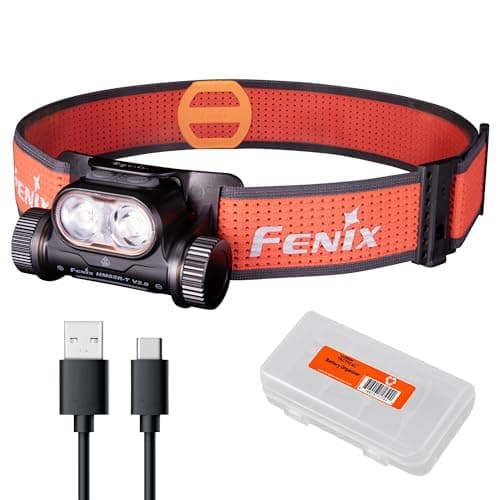 Fenix HM65R-T V2.0Top pick1,600 lumens and 170 m from a magnesium body running a standard 18650, at 140 g. The removable cell is what separates it from the sealed-pack lamps. | Long nights where you want reach and a spare cell | 1,600 lm | |
| 2 | 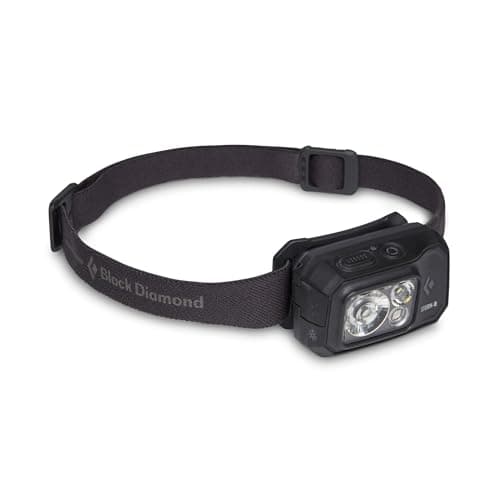 Black Diamond Storm 500-R500 lumens with red, green and blue night-vision modes. The Storm is the waterproof one in Black Diamond's range. | Wet weather and RGB night vision | 500 lm | |
| 3 | 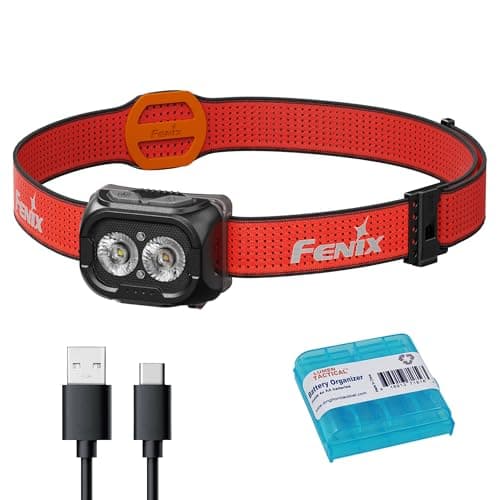 Fenix HL18R-T V2.0103 g, 800 lumens, and an AAA fallback. The cheapest lamp here that is genuinely built for running rather than adapted to it. | Trail running on a budget | 800 lm | |
| 4 | 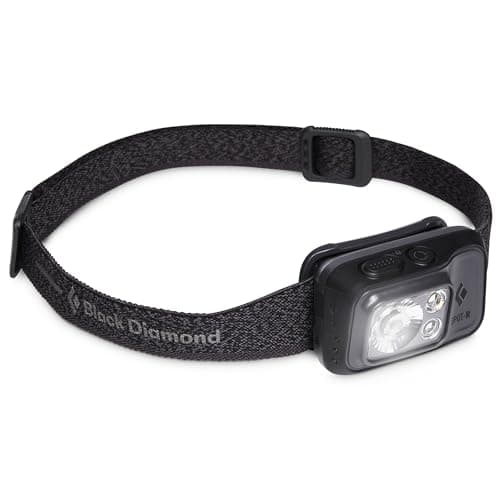 Black Diamond Spot 400-R400 lumens, red night vision, and brightness memory, from the brand most likely to already be in your gear closet. | Camping with a red mode that stays put | 400 lm | |
| 5 | 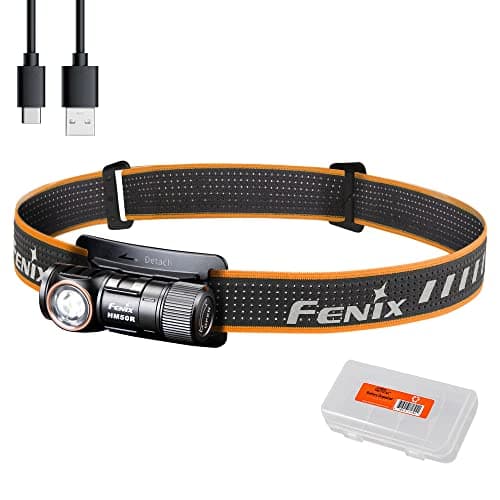 Fenix HM50R V2.078 grams and 700 lumens from a single 16340. The lightest genuinely bright lamp here, with the shortest battery life to match. | A headlamp that detaches and works as a pocket light | 700 lm | |
| 6 | 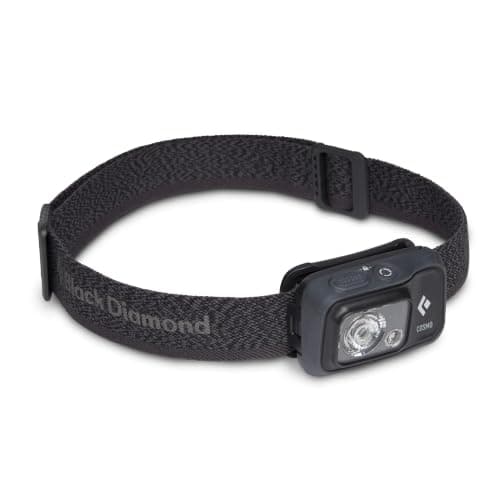 Black Diamond Cosmo 350350 lumens on AAA cells with dual-fuel compatibility. The Black Diamond answer to the Petzl Tikka, at a similar price. | A cheap AAA lamp with a red mode | 350 lm | |
| 7 | 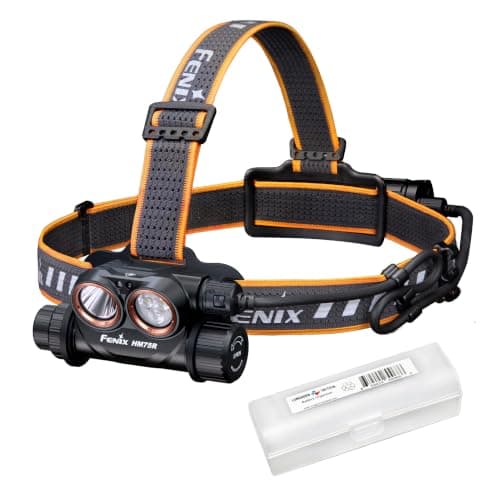 Fenix HM75RTwo cells in a rear case feeding a 1,600-lumen head. Heavy at 321 g, and the only lamp here that will genuinely run a full night shift on high-ish output. | All-shift work lighting | 1,600 lm |
We earn a commission if you buy through the links on this page, at no extra cost to you. It does not change what we recommend or the order they appear in. Full disclosure. Prices checked September 21, 2026.
These two brands rarely appear on the same shortlist, which is odd, because they are aimed at the same buyer from opposite directions. Fenix publishes battery capacity, weight, ingress ratings and beam distance. Black Diamond publishes output. Everything below follows from that.
It would be easy to stop there and declare it, and that would be lazy. Black Diamond fields two features Fenix does not answer at all, and for a buyer who needs them the spec sheet is beside the point.
How we picked
Three matched pairs by role and price, plus Fenix's endurance outlier, which Black Diamond fields no equivalent to in our set. Every figure is the maker's own, linked with the date we read it. Black Diamond's own site would not serve us a spec page from this build, so its figures come from the brand's own retail listing and are labeled as such. We have handled none of these lamps — our methodology sets out what we do instead.
What each brand tells you
| Lamp | Output | Beam distance | Energy | Weight | Water / impact |
|---|---|---|---|---|---|
| Fenix HM75R | 1,600 lm | 223 m | 30.2 Wh (computed) | 321 g complete | 2 m impact, no IP code |
| Fenix HM65R-T V2.0 | 1,600 lm | 170 m | 12.2 Wh (computed) | 140 g | IP68 |
| Fenix HL18R-T V2.0 | 800 lm | not published | 6.8 Wh (computed) | 103 g | IP66 |
| Fenix HM50R V2.0 | 700 lm | not published | 2.9 Wh (computed) | 78 g | not published |
| Black Diamond Storm 500-R | 500 lm | not published | not published | not published | not published |
| Black Diamond Spot 400-R | 400 lm | not published | not published | not published | not published |
| Black Diamond Cosmo 350 | 350 lm | not published | not published | not published | not published |
Fenix publishes a capacity figure for all four lamps and an ingress rating for three. Black Diamond publishes neither, for any lamp. That is not a close call, and it is the reason this site ranks Fenix second and Black Diamond eighth in the headlamp brand ranking.
What Black Diamond has that Fenix does not
- Red, green and blue night vision on the Storm 500-R. Green preserves dark adaptation the way red does while rendering contours and blood trails differently, which is why hunters ask for it specifically. No Fenix lamp we cover offers green at all.
- Brightness memory on the Spot 400-R. The lamp returns to the level you switched off at, so the dim setting is one press away rather than a cycle through full white. In a shared tent that is the difference between a lamp people tolerate and one they resent.
- Dual-fuel on the Cosmo 350. Three AAA cells or Black Diamond's rechargeable pack in the same body, at the cheapest price here.
Fenix answers with standard removable cells rather than proprietary packs: the HM65R-T takes an 18650 or two CR123A primaries, the HM50R a 16340, the HL18R-T three AAA. You can carry a charged spare and swap it in the dark, and CR123A cells store for roughly a decade. Whether that beats a green LED depends entirely on what you do at night.
The three matched pairs
Flagship: Fenix HM65R-T vs Black Diamond Storm 500-R
The Fenix publishes 1,600 lumens, 170 m, 12.2 Wh, 140 g and IP68 — the only immersion rating in this comparison. The Storm publishes 500 lumens and a three-color night-vision set. Three times the output and a verified waterproofing claim against a feature no Fenix matches.
Skip the HM65R-T if you sit still at night and want your dark adaptation protected — the Storm's green mode is a real advantage the figures do not capture. Skip the Storm if the lamp will be submerged, or if you want to know what it does before you buy. There is a full review of the HM65R-T if it is the one you are deciding on.
Mid-range: Fenix HL18R-T vs Black Diamond Spot 400-R
800 lumens, 6.8 Wh, 103 g and IP66 against 400 lumens with brightness memory. Twice the output and a published weather rating against better ergonomics in the dark. The HL18R-T also takes three AAA cells when its pack is flat, which the Spot's integrated battery cannot match.
Skip the HL18R-T if you want a published beam distance — Fenix does not state one for it, which on an 800-lumen lamp is the figure you would most want. Skip the Spot if a runtime you can plan around matters.
Budget: Fenix HM50R vs Black Diamond Cosmo 350
The Fenix publishes 700 lumens at 78 g, the lightest lamp in this comparison, and detaches to work as a pocket light. The Cosmo publishes 350 lumens, runs on AAA cells or a rechargeable pack, and costs less. Worth knowing on the Fenix: it states that a CR123A primary works but caps output at 130 lumens, which is exactly the caveat most makers leave out.
Skip the HM50R if you need a fallback that keeps full output — 130 lumens on a primary is a big step down. Skip the Cosmo if you want any figure beyond lumens. See headlamps under $50 for the wider budget field.
The lamp with no Black Diamond answer
The Fenix HM75R carries an 18650 and a 21700 at once for a computed 30.2 watt-hours, the largest energy store on this site, and publishes 223 m, 234 hours on floodlight and 365 on red. It also works as a power bank. At 321 g complete it is a work lamp rather than a hiking one, and Fenix states it is completely waterproof without giving an IP code — a claim we can repeat but not place on a scale. There is a full review.
The cell formats, and what each brand commits you to
Underneath the disclosure gap there is a structural difference that outlasts any single model: Fenix builds around standard, removable cells with a primary-battery fallback, and Black Diamond builds around integrated packs with an AAA option at the bottom of the range.
| Lamp | Power source | Fallback |
|---|---|---|
| Fenix HM65R-T V2.0 | 3,400 mAh 18650 | 2 x CR123A |
| Fenix HM75R | 18650 plus 21700 in a rear case | None stated |
| Fenix HL18R-T V2.0 | 1,900 mAh pack | 3 x AAA |
| Fenix HM50R V2.0 | 800 mAh 16340 | CR123A, capped at 130 lm |
| Black Diamond Storm 500-R | Integrated rechargeable | None stated |
| Black Diamond Spot 400-R | Integrated rechargeable | None stated |
| Black Diamond Cosmo 350 | 3 x AAA | BD 1500 rechargeable pack |
Read the fallback column, because it is the one that decides a trip. Three of the four Fenix lamps take a battery you can buy in a gas station, and CR123A primaries store for roughly a decade. Two of the three Black Diamond lamps have a sealed cell and no alternative: flat is flat until you find a socket.
The Cosmo 350 is the exception and the interesting one. It runs on three AAA cells out of the box and accepts Black Diamond's own rechargeable pack, which is the same hybrid arrangement Petzl uses — and the arrangement we would recommend to most buyers in most categories.
There is a real argument on the other side, and it is not a weak one. A sealed lamp has no battery door to break, no contacts to corrode and no way for a user to fit the wrong cell. Black Diamond is not being careless here; it is optimizing for a hiker who charges at home and a product that survives being packed wet. It is simply the opposite bet from Fenix's.
The cost of the Fenix approach is knowledge. Standard cells mean you need to know that a 16340 is not a CR123A even though they fit the same tube, that protected and unprotected cells differ, and that the HM50R's output drops to 130 lumens on a primary. Black Diamond asks none of that of you. See 18650 versus 21700 for the formats.
What neither brand publishes
It is worth being even-handed about the gaps, because Fenix wins the disclosure comparison without winning it outright.
- Neither publishes a peak candela figure for any lamp in this comparison. Fenix publishes beam distance, which converts, so the gap is recoverable on its side and not on Black Diamond's.
- Neither publishes a per-mode runtime table. Fenix publishes a single maximum — 300 hours on the HM65R-T, 160 on the HL18R-T, 42 on the HM50R — which describes the lowest mode and tells you nothing about the mode on the box. Petzl publishes the full table and both brands here look worse for it.
- Neither publishes a beam profile or tint figure. Whether a lamp floods or spots, and whether its white is warm or blue, are things you find out by owning it.
- Neither publishes a charge cycle count, which is the specification that decides how long an integrated-cell lamp actually lasts — and it matters far more to Black Diamond's range than to Fenix's.
Which brand should you buy
- You want to know what you are getting — Fenix, on every lamp.
- You need green or blue night vision — Black Diamond Storm 500-R. Nothing from Fenix answers it. See hunting headlamps.
- The lamp gets submerged — Fenix HM65R-T, the only published IP68 here.
- You want to carry a spare cell — Fenix. Standard 18650, 16340, AAA and CR123A fallbacks.
- You want the cheapest lamp that still has a red mode — Black Diamond Cosmo 350.
- You need all-shift runtime — Fenix HM75R at 30.2 Wh. See headlamps for work.
What we would not tell you
We would not tell you Black Diamond makes worse lamps. It has a deserved reputation among climbers and its lamps are in more gear closets than almost anything else. What we can say is that if a Fenix lamp underperforms its published figures you have a documented claim to hold it to, and with Black Diamond you have a lumen number.
We would also not fill in the four empty columns on the Black Diamond rows. Estimating a runtime or assuming an IP rating would make the table tidier and would be exactly the thing this site exists not to do.
The picks, in full
Top pick · Long nights where you want reach and a spare cell
Fenix HM65R-T V2.0
1,600 lumens and 170 m from a magnesium body running a standard 18650, at 140 g. The removable cell is what separates it from the sealed-pack lamps.
A 3,400 mAh 18650 at a nominal 3.6 V is 12.2 watt-hours. That is more energy than a Petzl NAO RL carries, in a lamp 5 g lighter, because a bare 18650 is a more efficient package than a molded pack.
It is also the only headlamp in this set whose battery you can replace at a checkpoint for three dollars, because 18650 is a standard cell and not a proprietary brick.
IP68 rather than IPX4 is the second real difference. This one survives being dropped in water; most of the running lamps here do not.
What works
- Standard 18650 cell: swappable, cheap, and available everywhere
- IP68 and 2 m impact rating, the toughest specification in this roundup
- Dual emitters, one white and one warm white, so it works for close tasks as well as reach
What does not
- 140 g is at the heavy end for a running lamp
- Charging works only with Fenix ARB-L18 series cells, which limits the swap-any-18650 advantage
- No published candela figure
Skip this ifyou count grams. A Swift LT does the camp job at 43 g; you are carrying 97 g extra for reach and a removable cell.
Published specification
- Peak intensity
- not published(Fenix publishes distance, not peak intensity)
- Runtime
- 300 h maximumLowest mode. The turbo figure is far shorter and Fenix publishes it per-mode.Fenix HM65R-T V2.0 — manufacturer spec page (retrieved September 1, 2026)
- Battery
- 3,400 mAh 18650 Li-ion (included), or 2 x CR123AFenix HM65R-T V2.0 — manufacturer spec page (retrieved September 1, 2026)
- Weight
- 140 g (4.94 oz)Including battery and headbandFenix HM65R-T V2.0 — manufacturer spec page (retrieved September 1, 2026)
- Ingress
- IP68Dust tight and immersion rated; 2 m impact resistanceFenix HM65R-T V2.0 — manufacturer spec page (retrieved September 1, 2026)
#ad · how this is funded · price as of September 21, 2026
Pick 2 · Wet weather and RGB night vision
Black Diamond Storm 500-R
500 lumens with red, green and blue night-vision modes. The Storm is the waterproof one in Black Diamond's range.
The RGB night-vision set is the differentiator. Green preserves adaptation like red does but renders map contours and blood trails differently, which is why hunters ask for it specifically.
As with the Spot, we could not reach Black Diamond's own spec page from this build, so the table is thin on purpose. We assert the two figures the brand's listing states and nothing else.
The Storm line has historically been the waterproof one, but we will not print an IP rating we could not source.
What works
- Red, green and blue night-vision modes in one lamp
- 500 lumens is a step up from the Spot for a small price difference
- Integrated rechargeable
What does not
- No sourced beam distance, runtime, weight or IP rating
- Heavier than the Spot, though we cannot tell you by how much
- Mode cycling gets busy with four colors to reach
Skip this ifyou only ever use white light. You are paying for two colors you will not switch on.
Published specification
- Output
- 500 lmBlack Diamond Storm 500-R — the brand's own listing on Amazon.com (retrieved September 1, 2026)
- Peak intensity
- not published
- Beam distance
- not published(Not stated in the listing we read)
- Runtime
- not published
- Battery
- Integrated rechargeableBlack Diamond Storm 500-R — the brand's own listing on Amazon.com (retrieved September 1, 2026)
- Weight
- not published
- Ingress
- not published(Not stated in the listing we read)
$89.95 · 22% off
#ad · how this is funded · price as of September 21, 2026
Pick 3 · Trail running on a budget
Fenix HL18R-T V2.0
103 g, 800 lumens, and an AAA fallback. The cheapest lamp here that is genuinely built for running rather than adapted to it.
1,900 mAh at 3.7 V is about 7.0 watt-hours. That is 83 percent of a Swift RL's tank in a lamp 11 g lighter and considerably cheaper.
The AAA fallback is unusual at this weight and it is the reason to pick this over a sealed running lamp: a flat pack at 2 a.m. is a battery change rather than the end of the night.
IP66 is a step up from the IPX4 that most running lamps ship with. It will not survive immersion, but it will survive a downpour.
What works
- 103 g with three AAA cells as a backup power source
- IP66, better than most of the running field
- A warm-white emitter alongside the cool white, which helps in fog and dust
What does not
- Fenix does not publish a beam distance for it on the pages we read
- The 800-lumen turbo is a short burst, not a setting you can run in
- Proprietary ARB-LP1900 pack for the rechargeable option
Skip this ifyou need to identify things at distance. Without a published beam distance we cannot tell you how far it reaches, and the aperture suggests it is not far.
Published specification
- Output
- 800 lmFenix HL18R-T V2.0 — the brand's own listing on Amazon.com (retrieved September 1, 2026)
- Peak intensity
- not published
- Beam distance
- not published(Not stated on the pages we read)
- Runtime
- 160 h maximumLowest modeFenix HL18R-T V2.0 — manufacturer spec page (retrieved September 1, 2026)
- Battery
- 1,900 mAh Li-ion pack (included), or 3 x AAAFenix HL18R-T V2.0 — manufacturer spec page (retrieved September 1, 2026)
- Weight
- 103 g (3.63 oz)Including battery and headbandFenix HL18R-T V2.0 — manufacturer spec page (retrieved September 1, 2026)
- Ingress
- IP66Dust tight, withstands heavy rain and splashes; 1 m impact resistanceFenix HL18R-T V2.0 — manufacturer spec page (retrieved September 1, 2026)
#ad · how this is funded · price as of September 21, 2026
Pick 4 · Camping with a red mode that stays put
Black Diamond Spot 400-R
400 lumens, red night vision, and brightness memory, from the brand most likely to already be in your gear closet.
Black Diamond's own site would not serve us a product page from this build, so we are citing the brand's Amazon listing and we are only asserting what that listing states: 400 lumens, red night vision, brightness memory, integrated rechargeable.
Brightness memory is the underrated feature. The lamp comes back on at the level you left it, which means the red mode is one click away rather than a cycle through white.
Everything else on this lamp is unpublished as far as our sourcing goes, and we would rather say that than fill the table in from another review site.
What works
- Red night vision with brightness memory, so you do not blind a tent to get to it
- Integrated rechargeable rather than a proprietary pack to lose
- Widely stocked, which matters when you need one today
What does not
- We could not source beam distance, runtime, weight or an IP rating from the maker
- 400 lumens is mid-pack for the money in 2026
- No AAA fallback on the -R version
Skip this ifyou want the numbers before you buy. We could not get a full spec table for it, and on this site that counts against a light.
Published specification
- Output
- 400 lmBlack Diamond Spot 400-R — the brand's own listing on Amazon.com (retrieved September 1, 2026)
- Peak intensity
- not published
- Beam distance
- not published(Not stated in the listing we read)
- Runtime
- not published(Not stated in the listing we read)
- Battery
- Integrated rechargeableBlack Diamond Spot 400-R — the brand's own listing on Amazon.com (retrieved September 1, 2026)
- Weight
- not published
- Ingress
- not published
#ad · how this is funded · price as of September 21, 2026
Pick 5 · A headlamp that detaches and works as a pocket light
Fenix HM50R V2.0
78 grams and 700 lumens from a single 16340. The lightest genuinely bright lamp here, with the shortest battery life to match.
An 800 mAh 16340 at 3.6 V holds 2.9 watt-hours. That is the smallest tank of any rechargeable lamp on this page, and it is why 700 lumens is a burst rather than a setting.
The CR123A caveat is worth reading twice: Fenix states that on a primary lithium cell only the low and medium white modes work, for a maximum of 130 lumens. The fallback exists, but it is not the same lamp.
At 78 g with the head detached it becomes a small flashlight, which is the honest use case: a camp light that also lives in a jacket pocket.
What works
- 78 g including battery, which is remarkable for a 700-lumen lamp
- Detaches from the strap and works as a pocket light
- USB-C on the cell itself
What does not
- 2.9 Wh is the smallest energy store in this roundup
- CR123A fallback caps you at 130 lm, which Fenix states plainly and most buyers miss
- No published beam distance or IP rating on the page we read
Skip this ifyou need more than about two hours of useful light between charges. The battery is the constraint and no setting gets around it.
Published specification
- Peak intensity
- not published
- Beam distance
- not published(Not stated on the page we read)
- Runtime
- 42 h maximumLowest modeFenix HM50R V2.0 — manufacturer spec page (retrieved September 1, 2026)
- Battery
- 16340 Li-ion, 800 mAh (included). CR123A works but caps output at 130 lm.Fenix HM50R V2.0 — manufacturer spec page (retrieved September 1, 2026)
- Weight
- 78 g (2.75 oz)Including battery and headbandFenix HM50R V2.0 — manufacturer spec page (retrieved September 1, 2026)
- Ingress
- not published(Not stated on the page we read)
#ad · how this is funded · price as of September 21, 2026
Pick 6 · A cheap AAA lamp with a red mode
Black Diamond Cosmo 350
350 lumens on AAA cells with dual-fuel compatibility. The Black Diamond answer to the Petzl Tikka, at a similar price.
Dual-fuel means the same lamp takes AAA cells or Black Diamond's rechargeable brick, which is the same idea as Petzl's hybrid concept and just as useful.
350 lumens with a red mode is the specification that covers camp chores, a dog walk and a power cut. Most people never need more.
We assert only what the brand's listing states, because Black Diamond's own site would not serve us a spec page.
What works
- AAA and rechargeable from the same lamp
- Red night vision at the bottom of the range
- Genuinely inexpensive
What does not
- No sourced beam distance, runtime, weight or IP rating
- The rechargeable battery is an extra purchase
- 350 lumens is a burst figure on alkaline cells
Skip this ifyou want reach. This is a close-work and footpath lamp and the aperture says so.
Published specification
- Output
- 350 lmBlack Diamond Cosmo 350 — the brand's own listing on Amazon.com (retrieved September 1, 2026)
- Peak intensity
- not published
- Beam distance
- not published
- Runtime
- not published
- Battery
- 3 x AAA, dual-fuel compatible with the BD 1500 rechargeable batteryBlack Diamond Cosmo 350 — the brand's own listing on Amazon.com (retrieved September 1, 2026)
- Weight
- not published
- Ingress
- not published
$39.95 · 15% off
#ad · how this is funded · price as of September 21, 2026
Pick 7 · All-shift work lighting
Fenix HM75R
Two cells in a rear case feeding a 1,600-lumen head. Heavy at 321 g, and the only lamp here that will genuinely run a full night shift on high-ish output.
3,400 mAh at 3.6 V plus 5,000 mAh at 3.6 V is 30.2 watt-hours. That is 2.5 times a Petzl NAO RL and roughly ten times a Swift LT, which is the single reason to accept 321 grams.
It also discharges over USB-C, so on a jobsite it is a headlamp and a phone charger. That is a genuine second function rather than a spec-sheet bullet.
The 170 g figure without the rear case matters: you can leave the power bank behind on a short job and carry a normal-weight lamp.
What works
- 30.2 Wh of stored energy, by far the most on the site
- Rear case detaches, so the lamp has a light configuration and a long configuration
- USB-C output charges a phone from the same cells
What does not
- 321 g complete is heavy enough to notice within an hour
- No IP code, only a statement that the lamp is completely waterproof
- The two-cell arrangement means two things to keep charged
Skip this ifyou are not working a full shift. For recreation it is 200 g of battery you will never flatten.
Published specification
- Peak intensity
- not published
- Beam distance
- 223 mFenix states 732 feet (223 m)Fenix HM75R — manufacturer spec page (retrieved September 21, 2026)
- Runtime
- 234 h floodlight / 365 h redMaximum, lowest modes. Fenix does not break runtime out per spotlight or floodlight level. Red tops out at 130 lm.Fenix HM75R — manufacturer spec page (retrieved September 1, 2026)
- Battery
- One 18650 (3,400 mAh) plus one 21700 (5,000 mAh) in a rear battery caseFenix HM75R — manufacturer spec page (retrieved September 1, 2026)
- Weight
- 321 g (11.32 oz) complete; 170 g without the rear power bankFenix HM75R — manufacturer spec page (retrieved September 1, 2026)
- Ingress
- Impact-resistant to 2 mFenix states the lamp is completely waterproof but gives no IP code, so it cannot be placed on the IEC 60529 scale.Fenix HM75R — manufacturer spec page (retrieved September 21, 2026)
#ad · how this is funded · price as of September 21, 2026
Questions people actually ask
Is Fenix or Black Diamond better for headlamps?
On published specifications, Fenix: it states battery capacity for every lamp we cover and an ingress rating for three, while Black Diamond states output alone. Black Diamond wins on two features Fenix does not answer - three-color night vision on the Storm 500-R and brightness memory on the Spot 400-R.
Which is more waterproof, Fenix or Black Diamond?
Fenix, on the evidence available. It publishes IP68 on the HM65R-T and IP66 on the HL18R-T. Black Diamond publishes no ingress rating for any lamp we cover, which is a disclosure gap rather than proof they leak.
Does Fenix make a headlamp with a green light?
Not among the lamps we cover. If green matters - and for hunting it often is the specific ask - the Black Diamond Storm 500-R offers red, green and blue. The Coast FL85R also offers white, red and green in one head.
Which Fenix headlamp has the longest battery life?
The HM75R, which carries an 18650 and a 21700 for a computed 30.2 watt-hours and publishes 234 hours on floodlight and 365 on red. It weighs 321 g complete, so it is a work lamp rather than something you wear for pleasure.
Can you use regular batteries in a Fenix headlamp?
In several. The HM65R-T takes two CR123A primaries as well as its 18650, and the HL18R-T takes three AAA. Fenix also states that a CR123A works in the HM50R but caps output at 130 lumens, which is the sort of caveat worth knowing before you rely on it.
Is the Black Diamond Spot 400-R worth it?
For ergonomics, it makes a real case: brightness memory means the lamp returns to the level you left it on, which matters more in a tent than another few hundred lumens. For anyone who wants to know the runtime, weight or waterproofing before buying, Black Diamond publishes none of them.
What is the lightest headlamp from either brand?
The Fenix HM50R at a published 78 g. Black Diamond publishes no weight for any lamp we cover, so it cannot be compared - that is a disclosure gap rather than evidence its lamps are heavy.
Sources
Every figure on this page came from one of the documents below, read on the date shown. We do not cite other review sites, forum posts or video reviews as sources of fact.
- Fenix HM65R-T V2.0 — manufacturer spec page (retrieved September 1, 2026)
- Fenix HL18R-T V2.0 — the brand's own listing on Amazon.com (retrieved September 1, 2026)
- Fenix HM50R V2.0 — manufacturer spec page (retrieved September 1, 2026)
- Fenix HM75R — the brand's own listing on Amazon.com (retrieved September 1, 2026)
- Black Diamond Storm 500-R — the brand's own listing on Amazon.com (retrieved September 1, 2026)
- Black Diamond Spot 400-R — the brand's own listing on Amazon.com (retrieved September 1, 2026)
- Black Diamond Cosmo 350 — the brand's own listing on Amazon.com (retrieved September 1, 2026)
- ANSI/PLATO FL 1 flashlight performance standard — definitions of lumens, peak beam intensity, beam distance, runtime, impact and water resistance
- IEC 60529 — the IP (ingress protection) rating system
Read next
Flashlight brand comparisons
Brand-against-brand comparisons on published figures and disclosure quality, not on reputation.
Headlamp brands, ranked on what they tell you
Every headlamp brand we cover, ranked on specification disclosure — from the one publishing watt-hours to the three publishing only a lumen figure.
Petzl vs Black Diamond
Petzl against Black Diamond on published beam distance, runtime, battery energy and weight, with three matched pairs at the prices people actually shop.
Petzl vs Fenix headlamps
Petzl against Fenix on published battery energy, beam distance, weight and ingress rating — four matched pairs where both makers actually show their work.
Best headlamps, ranked on the watt-hours behind the lumens
The full headlamp ranking: output, weight, battery energy and beam distance, every figure sourced to the maker.
Best headlamps for hunting
Hunting headlamps ranked on color channels first — red and green — then on output and runtime.
Found a number that is wrong? Tell us and we will fix it and say so. Our methodology shows every formula on this page.