Compare
Nitecore vs Black Diamond headlamps
Nitecore publishes far bigger output figures. Black Diamond publishes better night-vision features. Neither publishes a runtime, a weight or an IP rating.
By Scooter M. · Published · Updated
| # | Product | Best for | Output | Price |
|---|---|---|---|---|
| 1 | 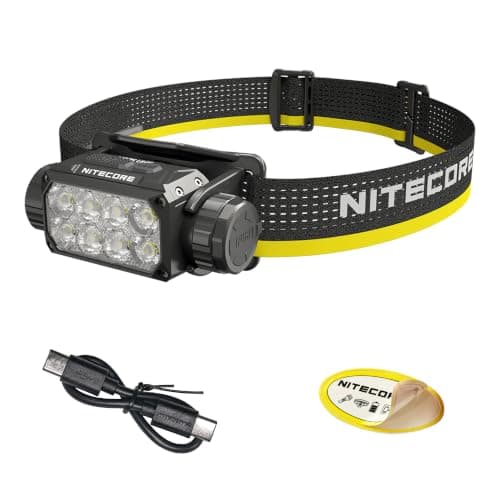 Nitecore HC75 UHETop pick3,000 lumens with a zoomable head, white and red beams, and 192 m of stated reach. The brightest headlamp on the site. | Industrial work where you need to change the beam | 3,000 lm | |
| 2 | 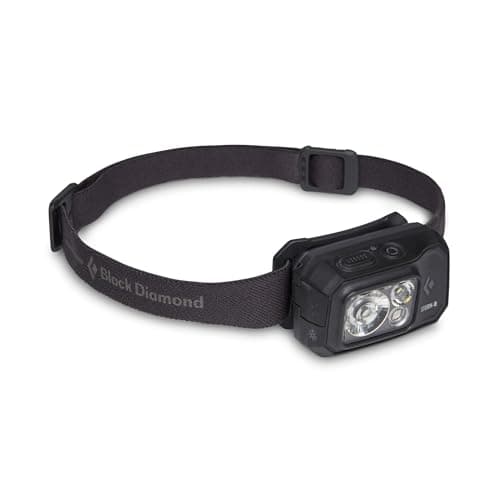 Black Diamond Storm 500-R500 lumens with red, green and blue night-vision modes. The Storm is the waterproof one in Black Diamond's range. | Wet weather and RGB night vision | 500 lm | |
| 3 | 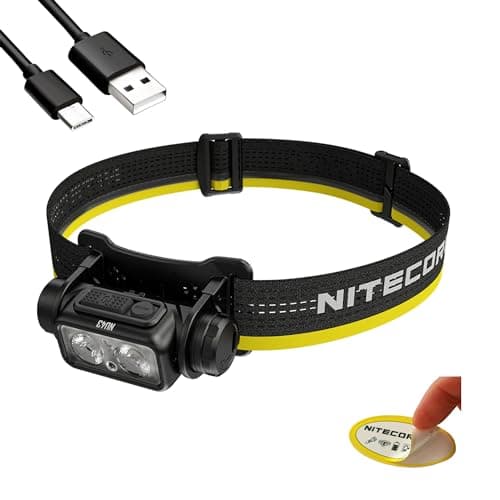 Nitecore NU431,400 lumens with a spotlight and floodlight pair, USB-C, and a price well under the European brands. | Bright output at low weight for the money | 1,400 lm | |
| 4 | 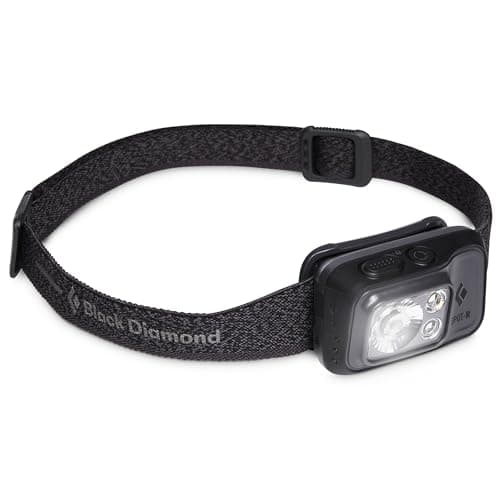 Black Diamond Spot 400-R400 lumens, red night vision, and brightness memory, from the brand most likely to already be in your gear closet. | Camping with a red mode that stays put | 400 lm | |
| 5 | 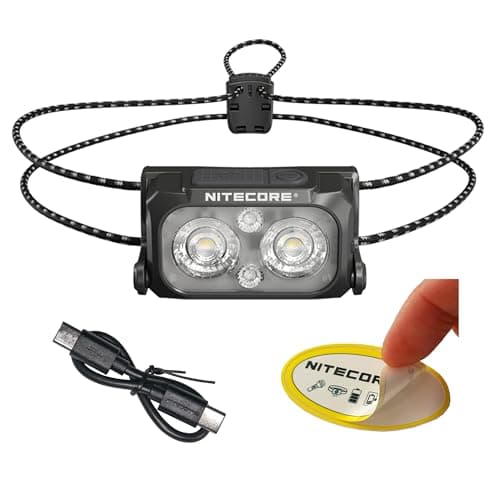 Nitecore NU25 UL400 lumens, USB-C, and multiple color temperatures in an ultralight body. The thru-hiker default for good reason. | The lightest rechargeable that still has three emitters | 400 lm | |
| 6 | 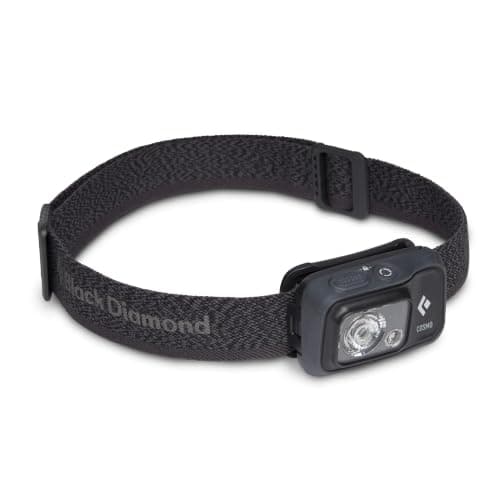 Black Diamond Cosmo 350350 lumens on AAA cells with dual-fuel compatibility. The Black Diamond answer to the Petzl Tikka, at a similar price. | A cheap AAA lamp with a red mode | 350 lm |
We earn a commission if you buy through the links on this page, at no extra cost to you. It does not change what we recommend or the order they appear in. Full disclosure. Prices checked October 20, 2026.
We should say the most important thing first, because it shapes everything else on this page. Across the seven headlamps in this comparison, we could source exactly one beam distance figure, zero runtimes, zero weights and zero ingress ratings. Neither company's own website would serve us a spec page from this build, so every figure below comes from the brand's own retail listing and is labeled as such.
That is a poor evidence base, and on a site that ranks lights by what can be checked it has to be stated rather than papered over. It does not make the page useless. It means the page has to be honest about which questions the published data can answer — output, power source, beam architecture and night-vision features — and which it simply cannot.
How we picked
Three matched pairs by role and price — the high-output work lamps, the mid-range all-rounders, and the budget lamps with a red mode — plus Nitecore's ultralight. Every figure is the brand's own. We have handled none of these lamps and do not claim to have; our methodology sets out both what we do instead and why a retail listing is a weaker source than a manufacturer document.
What each brand actually publishes
| Headlamp | Output | Beam distance | Power source |
|---|---|---|---|
| Nitecore HC75 UHE | 3,000 lm | 192 m | USB-C rechargeable |
| Nitecore HC65 UHE | 2,000 lm | not published | USB-C rechargeable |
| Nitecore NU43 | 1,400 lm | not published | USB-C rechargeable |
| Black Diamond Storm 500-R | 500 lm | not published | Integrated rechargeable |
| Nitecore NU25 UL | 400 lm | not published | Built-in Li-ion, USB-C |
| Black Diamond Spot 400-R | 400 lm | 100 m | Integrated 1500 mAh Li-ion |
| Black Diamond Cosmo 350 | 350 lm | not published | 3 x AAA, or the BD 1500 pack |
On output the comparison is not close: Nitecore's smallest lamp here matches Black Diamond's second largest, and its largest publishes six times the Black Diamond flagship. If the only number you care about is lumens, this comparison ends at the top row.
But the output column is doing something misleading, and the single beam-distance figure in the table is what exposes it.
Where Black Diamond earns its place
On raw specifications Black Diamond loses this comparison badly. It wins a different argument, and it is one that matters more than the lumen gap suggests for anyone using a headlamp around other people.
- Storm 500-R — red, green and blue night-vision modes in one lamp. Green preserves dark adaptation the way red does but renders map contours and blood trails differently, which is why hunters ask for it specifically.
- Spot 400-R — red night vision with brightness memory. The lamp returns to the level you left it on, so red is one click away rather than a cycle through full white. In a shared tent that is the difference between a usable lamp and an unpopular one.
- Cosmo 350 — dual-fuel, so the same lamp runs on three AAA cells or Black Diamond's rechargeable pack. The cheapest route to a red mode in this comparison.
Nitecore answers with beam architecture rather than color. The NU43 pairs a spot and a flood emitter, which is the right structure for a lamp that has to do both map reading and trail finding. The HC65 UHE adds a dedicated reading light — a low, wide, close-range flood, which in practice is the mode people leave on. The HC75 UHE has a zoomable head, unusual on a headlamp, letting one lamp flood a panel at arm's length and then throw the same output down a yard.
Bodies and power
One genuine construction difference is worth flagging, because it is the sort of thing that survives the absence of a spec sheet. The Nitecore HC65 UHE has a metal body in a category almost entirely made of polymer. Plastic headlamps survive being dropped; metal ones survive being stepped on in a truck bed. We cannot tell you what it weighs, because neither we nor Nitecore's listing says.
On power, six of the seven lamps are rechargeable-only. The exception is the Black Diamond Cosmo 350, which takes three AAA cells or the BD 1500 pack, and that flexibility is the single strongest practical argument on the Black Diamond side. A rechargeable lamp with a flat cell and no power available is an object; a dual-fuel lamp takes cells from a corner shop. The same idea appears on the Petzl side of the range — see rechargeable headlamps for how hybrid power compares across brands.
The three matched pairs
High output: Nitecore HC75 UHE vs Black Diamond Storm 500-R
Six times the published output, and it is the only pair where a beam figure exists on either side. The HC75 UHE is a work lamp — zoom, white and red, 3,000 lumens, 192 m — and the Storm 500-R is a mountaineering lamp with a three-color night-vision set. They are barely competing for the same buyer. If the job is industrial and you need to identify something at distance, the Nitecore. If the job is outdoors at night among other people, the Storm's color modes are worth more than 2,500 lumens you cannot sustain.
All-rounder: Nitecore NU43 vs Black Diamond Spot 400-R
The closest pair on price and the widest gap on philosophy. The NU43 publishes 1,400 lumens with separate spot and flood emitters, and nothing else we could source. The Spot 400-R publishes 400 lumens with red night vision and brightness memory — plus, on Black Diamond's own page, 100 m of beam distance, three burn times, 86 g, a 1500 mAh cell and IP67. So this is no longer a choice between two silences: it is three and a half times the light against the only lamp of the pair whose specification you can check.
Budget with a red mode: Nitecore NU25 UL vs Black Diamond Cosmo 350
The NU25 UL publishes 400 lumens and offers multiple color temperatures, which outdoors is genuinely more useful than another 200 lumens — a warm emitter beside a cool one cuts through fog, dust and snow. The Cosmo 350 publishes 350 lumens and takes AAA cells. The Nitecore is the better lamp on paper and the ultralight backpacking default; the Black Diamond is the one that still works when the battery is dead and you are three days from a socket.
Which brand should you buy
- You want the most output — Nitecore, decisively. 3,000 lm against 500 lm at the top of each range.
- You need red, green or blue night vision — Black Diamond. The Storm 500-R is the only lamp here with all three.
- You want a lamp that runs on cells from a shop — Black Diamond Cosmo 350, the only dual-fuel lamp in this comparison.
- You want the lightest rechargeable — Nitecore NU25 UL, though neither brand publishes a weight so this rests on the lamp's reputation rather than a figure.
- You need one lamp for close work and distance — Nitecore HC75 UHE, on the zoomable head.
- You want published runtime, weight and waterproofing before you buy — neither. Look at Petzl and Fenix, which publish all three.
What we would not do
We would not read Black Diamond's thin spec sheet as meaning its lamps are poor. Black Diamond has an extremely strong reputation among climbers and its lamps are in more gear closets than almost any other brand. But reputation is not a specification, this site ranks on specifications, and we are not going to convert the first into the second because it would make the page tidier.
We would also not buy the HC75 UHE expecting to run at 3,000 lumens. No headlamp sustains that, no runtime figure is published to tell you for how long, and the honest reading of the number is that it is a burst for identifying something rather than a level you work at. If runtime is the deciding factor, this is the wrong pair of brands and our headlamp brand ranking explains which ones publish it.
The picks, in full
Top pick · Industrial work where you need to change the beam
Nitecore HC75 UHE
3,000 lumens with a zoomable head, white and red beams, and 192 m of stated reach. The brightest headlamp on the site.
A zoomable head is unusual on a headlamp and it is the point of this one: you can flood a panel at arm's length, then throw the same 3,000 lumens 190 m down a yard.
3,000 lumens is not a setting you run in. It is a burst for identifying something, and any lamp this bright will step down within minutes to protect the emitter and your forehead.
192 m from 3,000 lumens implies a fairly wide hotspot. A dedicated thrower at a third of the output would reach further — which is exactly the lumens-versus-candela confusion this site exists to unpick.
What works
- Zoom lets one lamp do close work and distance
- The highest published output of any headlamp here
- White and red in a work-rated body
What does not
- No sourced runtime, which on a 3,000-lumen lamp is the number you most need
- Zoom optics lose light compared with a fixed reflector
- Heavy enough that a hard hat mount is the sensible way to wear it
Skip this ifyou want reach specifically. 192 m from 3,000 lumens is a flood-biased beam; a thrower gets you further on a quarter of the output.
Published specification
- Output
- 3,000 lmNitecore HC75 UHE — the brand's own listing on Amazon.com (retrieved September 1, 2026)
- Peak intensity
- not published
- Beam distance
- 192 mNitecore HC75 UHE (192 m beam, 3,000 lm) — the brand's own listing on Amazon.com (retrieved September 1, 2026)
- Runtime
- not published
- Battery
- USB-C rechargeableNitecore HC75 UHE — the brand's own listing on Amazon.com (retrieved September 1, 2026)
- Weight
- not published
- Ingress
- not published
#ad · how this is funded · price as of October 20, 2026
Pick 2 · Wet weather and RGB night vision
Black Diamond Storm 500-R
500 lumens with red, green and blue night-vision modes. The Storm is the waterproof one in Black Diamond's range.
The RGB night-vision set is the differentiator. Green preserves adaptation like red does but renders map contours and blood trails differently, which is why hunters ask for it specifically.
As with the Spot, we could not reach Black Diamond's own spec page from this build, so the table is thin on purpose. We assert the two figures the brand's listing states and nothing else.
The Storm line has historically been the waterproof one, but we will not print an IP rating we could not source.
What works
- Red, green and blue night-vision modes in one lamp
- 500 lumens is a step up from the Spot for a small price difference
- Integrated rechargeable
What does not
- No sourced beam distance, runtime, weight or IP rating
- Heavier than the Spot, though we cannot tell you by how much
- Mode cycling gets busy with four colors to reach
Skip this ifyou only ever use white light. You are paying for two colors you will not switch on.
Published specification
- Output
- 500 lmBlack Diamond Storm 500-R — the brand's own listing on Amazon.com (retrieved September 1, 2026)
- Peak intensity
- not published
- Beam distance
- not published(Not stated in the listing we read)
- Runtime
- not published
- Battery
- Integrated rechargeableBlack Diamond Storm 500-R — the brand's own listing on Amazon.com (retrieved September 1, 2026)
- Weight
- not published
- Ingress
- not published(Not stated in the listing we read)
$89.95 · 22% off
#ad · how this is funded · price as of October 20, 2026
Pick 3 · Bright output at low weight for the money
Nitecore NU43
1,400 lumens with a spotlight and floodlight pair, USB-C, and a price well under the European brands.
1,400 lumens at this price is the whole pitch, and it is a real pitch: nothing from Petzl at the same money publishes a number that high.
A spot and a flood emitter together is the right architecture for a general-purpose lamp. One beam shape never covers both map-reading and trail-finding.
Everything except output and charging is unpublished in the source we could reach, which is why this sits below the Fenix and Petzl picks despite the bigger headline.
What works
- The highest published output per dollar in this roundup
- Separate spot and flood emitters
- USB-C
What does not
- No sourced runtime, weight, beam distance or IP rating
- A 1,400-lumen headline on an unstated battery tells you nothing about how long it holds
- Built-in cell
Skip this ifthe runtime matters more than the peak. Without a published runtime table you cannot plan a night around it, and we will not estimate one for you.
Published specification
- Peak intensity
- not published
- Beam distance
- not published
- Runtime
- not published
- Battery
- USB-C rechargeableNitecore NU43 — the brand's own listing on Amazon.com (retrieved September 1, 2026)
- Weight
- not published
- Ingress
- not published
#ad · how this is funded · price as of October 20, 2026
Pick 4 · Camping with a red mode that stays put
Black Diamond Spot 400-R
400 lumens, red night vision, and brightness memory, from the brand most likely to already be in your gear closet.
Black Diamond publishes a complete sheet for this lamp on its own site: 400/200/6 lumens, 100/60/12 meters, 4/8/225 hours, 86 grams, IP67 and a 1500 mAh cell. This catalogue previously held four of those as unpublished because we had only read the Amazon listing.
The burn-time figures are FL 1 maximums - measured until output falls to a tenth of where it started - so 4 hours on high is not 4 hours of 400 lumens. 5.6 watt-hours cannot deliver it: that would be a draw no 400-lumen lamp sustains.
Brightness memory is the underrated feature. The lamp comes back on at the level you left it, which means the red mode is one click away rather than a cycle through white.
IP67 is the specification that separates it from the Petzl range at this price. Petzl publishes IPX4 across the Tikkina, Tikka and Actik Core - rain, not immersion.
What works
- A complete published spec sheet: per-mode output, distance and burn time, weight, cell capacity and IP rating
- IP67 immersion, where the obvious Petzl alternatives publish IPX4
- Red night vision with brightness memory and a digital lockout, so you do not blind a tent to get to it
What does not
- Micro-USB in 2026, when almost everything else here charges over USB-C
- No candela figure, so the 100 m distance cannot be cross-checked against an intensity
- No AAA fallback on the -R version: when the sealed cell is flat the lamp is done for the night
Skip this ifyou want a power-source fallback. The Petzl Actik Core and Tikka take three AAA cells when the pack dies; this one does not.
Published specification
- Output
- 400 lmHigh. Medium 200 lm, low 6 lm.Black Diamond Spot 400-R — manufacturer spec page (retrieved October 17, 2026)
- Peak intensity
- not published(Black Diamond publishes distance, not peak intensity)
- Beam distance
- 100 mHigh. 60 m medium, 12 m low.Black Diamond Spot 400-R — manufacturer spec page (retrieved October 17, 2026)
- Runtime
- 4 h high / 8 h medium / 225 h lowPublished as max burn time, the FL 1 measure to 10 percent of initial output - not hours at the stated lumens.Black Diamond Spot 400-R — manufacturer spec page (retrieved October 17, 2026)
- Battery
- Integrated 1500 mAh Li-ion, micro-USB5.6 Wh at a 3.7 V nominal cell. Micro-USB, not USB-C.Black Diamond Spot 400-R — manufacturer spec page (retrieved October 17, 2026)
- Ingress
- IP67Black Diamond states tested to operate at least 1.0 m underwater for 30 minutes. The same page's prose calls the housing IPX8; we quote the spec line.Black Diamond Spot 400-R — manufacturer spec page (retrieved October 17, 2026)
$79.95 · 29% off
#ad · how this is funded · price as of October 20, 2026
Pick 5 · The lightest rechargeable that still has three emitters
Nitecore NU25 UL
400 lumens, USB-C, and multiple color temperatures in an ultralight body. The thru-hiker default for good reason.
The multiple-color-temperature version is the interesting one. A warm emitter beside a cool one is genuinely more useful in fog, dust and snow than another 200 lumens would be.
Nitecore's own site would not serve us a product page from this build, so the table stays thin and we say so rather than filling it from a forum post.
The NU25 has been the ultralight backpacking default for years. That is reputation, not evidence, and we are not going to pretend otherwise.
What works
- Multiple color temperatures, which matters more than peak lumens outdoors
- USB-C, built-in cell, nothing proprietary to lose
- Very light for a lamp with three emitters
What does not
- We could not source a weight, runtime, beam distance or IP rating
- Built-in cell: when it degrades the lamp is done
- 400 lumens is modest if you want to see down a valley
Skip this ifyou want a spec sheet you can check. Petzl and Fenix publish full ANSI tables; for this one we could not get past the retail listing.
Published specification
- Output
- 400 lmNitecore NU25 MCT UL — the brand's own listing on Amazon.com (retrieved September 1, 2026)
- Peak intensity
- not published
- Beam distance
- not published(Not stated in the listing we read)
- Runtime
- not published
- Battery
- Built-in Li-ion, USB-C rechargeableNitecore NU25 MCT UL — the brand's own listing on Amazon.com (retrieved September 1, 2026)
- Weight
- not published(Marketed as ultralight; no figure in the listing)
- Ingress
- not published
- CRI
- not published(Multiple color temperatures offered; no CRI figure stated)
#ad · how this is funded · price as of October 20, 2026
Pick 6 · A cheap AAA lamp with a red mode
Black Diamond Cosmo 350
350 lumens on AAA cells with dual-fuel compatibility. The Black Diamond answer to the Petzl Tikka, at a similar price.
Dual-fuel means the same lamp takes AAA cells or Black Diamond's rechargeable brick, which is the same idea as Petzl's hybrid concept and just as useful.
350 lumens with a red mode is the specification that covers camp chores, a dog walk and a power cut. Most people never need more.
We assert only what the brand's listing states, because Black Diamond's own site would not serve us a spec page.
What works
- AAA and rechargeable from the same lamp
- Red night vision at the bottom of the range
- Genuinely inexpensive
What does not
- No sourced beam distance, runtime, weight or IP rating
- The rechargeable battery is an extra purchase
- 350 lumens is a burst figure on alkaline cells
Skip this ifyou want reach. This is a close-work and footpath lamp and the aperture says so.
Published specification
- Output
- 350 lmBlack Diamond Cosmo 350 — the brand's own listing on Amazon.com (retrieved September 1, 2026)
- Peak intensity
- not published
- Beam distance
- not published
- Runtime
- not published
- Battery
- 3 x AAA, dual-fuel compatible with the BD 1500 rechargeable batteryBlack Diamond Cosmo 350 — the brand's own listing on Amazon.com (retrieved September 1, 2026)
- Weight
- not published
- Ingress
- not published
$39.95 · 15% off
#ad · how this is funded · price as of October 20, 2026
Questions people actually ask
Is Nitecore or Black Diamond better for headlamps?
Nitecore publishes far higher output — 3,000 lumens against 500 at the top of each range. Black Diamond publishes better night-vision features, including red, green and blue on the Storm 500-R, and is the only one of the two offering a dual-fuel lamp. Neither publishes a runtime, a weight or an ingress rating on any lamp in this comparison.
Why does the 3,000-lumen Nitecore HC75 only reach 192 meters?
Because it is a wide beam by design. 192 m works back to 9,216 candela, which is 3.1 candela per lumen — one of the lowest concentrations on this site. That is the right shape for a headlamp, where you want to see the ground around you, but it means the output buys width rather than distance.
Do Nitecore or Black Diamond publish runtime figures?
Neither, on any of the seven lamps here. We could not source a single runtime, weight or IP rating from either brand's available listings. We report that as a gap rather than estimating, because a runtime taken from another review site is not evidence. Petzl and Fenix both publish these figures.
Are Black Diamond headlamps waterproof?
The Storm line has historically been the waterproof one in Black Diamond's range, but no ingress rating appeared in the listings we read, so we will not print one. If a published IP rating matters to you, the Fenix HM65R-T states IP68 and the Princeton Tec Vizz states IPX7.
Which headlamp is best for hunting?
On features, the Black Diamond Storm 500-R, because green preserves night vision like red does while rendering contours and blood trails differently. That is a real functional advantage no Nitecore lamp here matches. Our hunting headlamps page covers the wider field.
Is the Nitecore NU25 good for backpacking?
It publishes 400 lumens, multiple color temperatures and USB-C charging in a lamp that has been the ultralight default for years. The multiple color temperatures are the genuinely useful part outdoors. We could not source a weight, which on an ultralight lamp is the specification you would most want, so its reputation is doing work the data does not.
Which brand is cheaper?
Prices move constantly and we never quote a stale one — the buttons on this page read the live price where our data layer has a current figure and say Check price otherwise. Structurally, Black Diamond's Cosmo 350 and Nitecore's NU25 UL sit at the budget end of each range, and Nitecore generally publishes more lumens per dollar.
Sources
Every figure on this page came from one of the documents below, read on the date shown. We do not cite other review sites, forum posts or video reviews as sources of fact.
- Nitecore HC75 UHE — the brand's own listing on Amazon.com (retrieved September 1, 2026)
- Nitecore HC65 UHE — the brand's own listing on Amazon.com (retrieved September 1, 2026)
- Nitecore NU43 — the brand's own listing on Amazon.com (retrieved September 1, 2026)
- Nitecore NU25 UL — the brand's own listing on Amazon.com (retrieved September 1, 2026)
- Black Diamond Storm 500-R — the brand's own listing on Amazon.com (retrieved September 1, 2026)
- Black Diamond Spot 400-R — manufacturer spec page (retrieved October 17, 2026)
- Black Diamond Cosmo 350 — the brand's own listing on Amazon.com (retrieved September 1, 2026)
- ANSI/PLATO FL 1 flashlight performance standard — definitions of lumens, peak beam intensity, beam distance, runtime, impact and water resistance
- IEC 60529 — the IP (ingress protection) rating system
Read next
Petzl vs Black Diamond
Petzl against Black Diamond on published beam distance, runtime, battery energy and weight, with three matched pairs at the prices people actually shop.
Flashlight brand comparisons
Brand-against-brand comparisons on published figures and disclosure quality, not on reputation.
Nitecore vs Fenix
Nitecore against Fenix: output per dollar against specification completeness, across headlamps and handhelds.
Headlamp brands, ranked on what they tell you
Every headlamp brand we cover, ranked on specification disclosure — from the one publishing watt-hours to the three publishing only a lumen figure.
Best headlamps, ranked on the watt-hours behind the lumens
The full headlamp ranking: output, weight, battery energy and beam distance, every figure sourced to the maker.
What a headlamp red light mode is actually for
The physiology behind red headlamp modes, and how to choose a lamp whose red is reachable in one click.

Lumens vs candela
The distinction that decides reach, with the conversion formula and a table of real published figures.
Found a number that is wrong? Tell us and we will fix it and say so. Our methodology shows every formula on this page.