Headlamps
What a headlamp red light mode is actually for
Red light is not about being stealthy. It is about not destroying the night vision you spent twenty minutes building.
By Scooter M. · Published · Updated
| # | Product | Best for | Output / weight | Price |
|---|---|---|---|---|
| 1 | 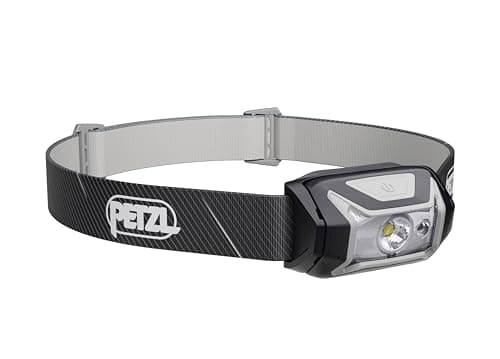 Petzl TikkaTop pick350 lumens, three AAA cells, a red mode, 94 grams. The unglamorous answer that covers most of what people actually do after dark. | A first headlamp, and the glovebox | 350 lm / 94 g | |
| 2 | 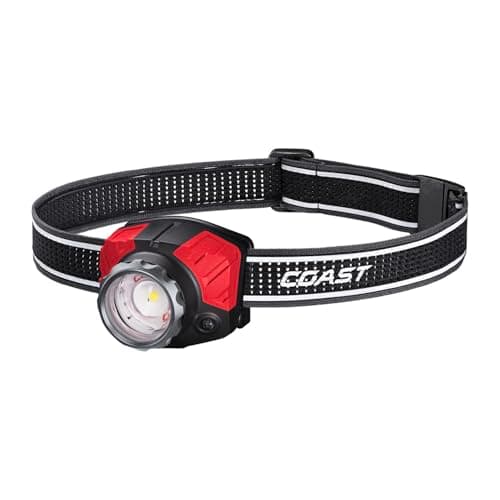 Coast FL85R1,000 lumens with white, red and green in one focusing head. The green mode is why this is on the hunting page. | Hunting, where the light color is the decision | 1,000 lm | |
| 3 | 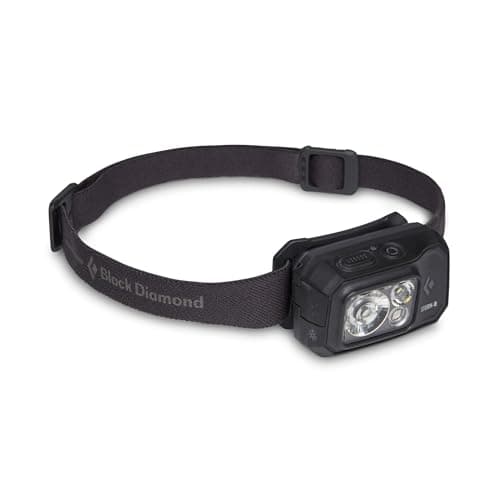 Black Diamond Storm 500-R500 lumens with red, green and blue night-vision modes. The Storm is the waterproof one in Black Diamond's range. | Wet weather and RGB night vision | 500 lm |
We earn a commission if you buy through the links on this page, at no extra cost to you. It does not change what we recommend or the order they appear in. Full disclosure. Prices checked October 15, 2026.
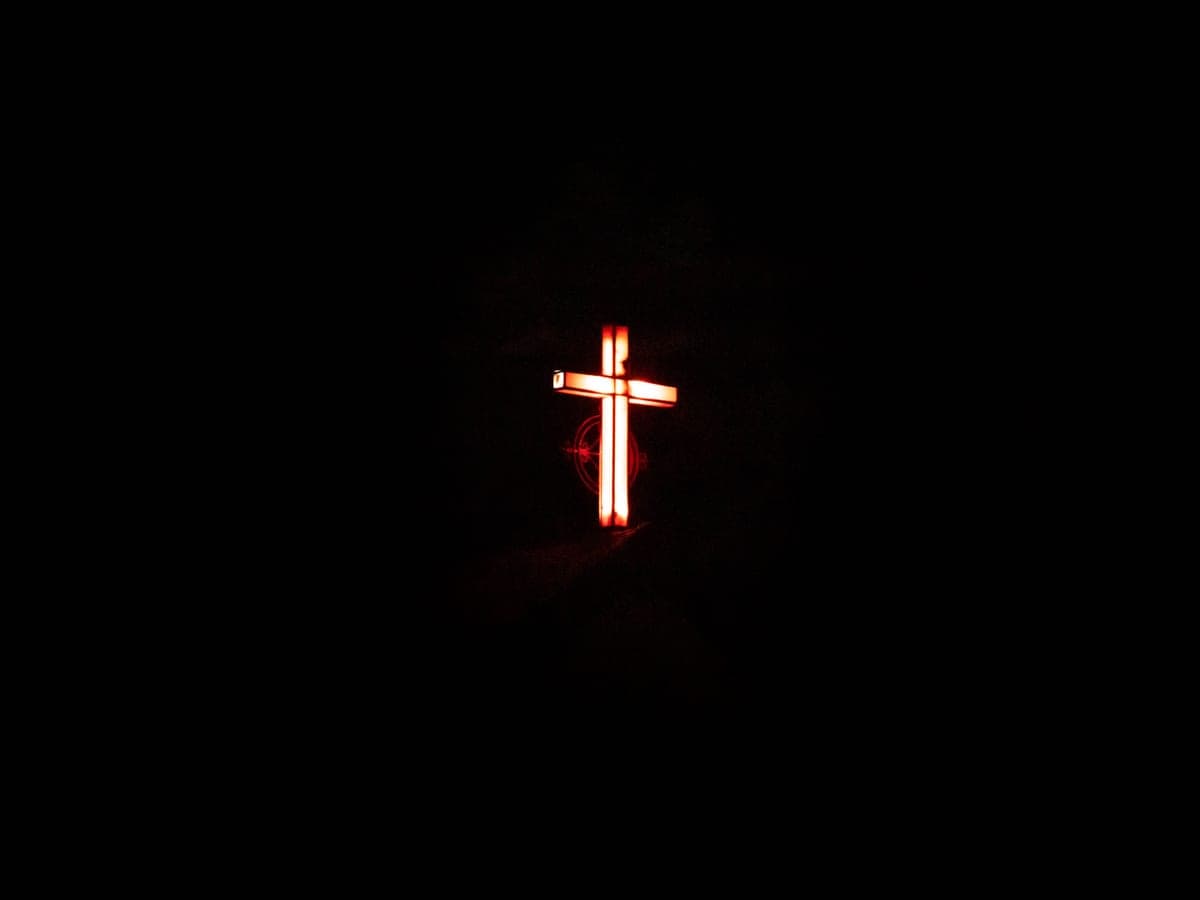
The short version: your eye has two kinds of photoreceptor, and only one of them works in the dark. Red light barely stimulates that one, so you can use it and still see afterwards. Everything else people say about red modes is downstream of that fact.
The physiology, briefly
Cone cells handle color and detail and need reasonable light levels. Rod cells handle low light, see no color, and take about twenty to thirty minutes to reach full sensitivity. That process is dark adaptation, and it depends on rhodopsin, a pigment that bleaches almost instantly under bright light and takes those twenty minutes to regenerate.
Rods are most sensitive around 500 nm — blue-green — and their sensitivity falls away sharply toward the red end of the spectrum. A red LED at roughly 630 nm sits near the bottom of that curve. So a red beam bright enough for your cones to read a map by is, in rod terms, close to darkness. Your adaptation survives.
What red mode is not
- It is not invisible to animals. Many mammals have limited long-wavelength sensitivity, which is where the folklore comes from, but red light is not stealth. Movement gives you away long before color does.
- It is not better for reading. Red light renders no color at all and reduces contrast on printed material. It is worse for reading than dim white; it is just far better for what happens after you stop reading.
- It is not automatically dim. A bright red channel bleaches rhodopsin too. The benefit comes from red at a low level, which is how manufacturers implement it.
Green, and where it fits
Green light sits near 555 nm, which is where the human eye is most sensitive overall. That makes a green beam look considerably brighter than a red one of the same radiated power, and it renders contrast in vegetation better. The cost is that it stimulates rods more than red does, so it preserves less adaptation.
The practical split most people arrive at: red for moving and for close work in the dark, green for picking out detail in foliage where contrast matters more than adaptation. The Coast FL85R and the Black Diamond Storm 500-R are the two lamps in our set offering both.
How to choose a lamp for its red mode
The output figure is irrelevant here. What matters is the interface, and there is a clear hierarchy:
- A dedicated red button, or press-and-hold from off. The lamp goes straight to red without emitting any white. This is the only implementation that fully delivers the benefit.
- Brightness and mode memory. The lamp comes back on in whatever mode you left it, so once you are in red you stay there. Good enough for most people.
- Cycling through white. You have to pass through the white modes to reach red. This defeats the purpose entirely and we would not buy it.
| Lamp | Colors | Access |
|---|---|---|
| Petzl Tikka | White, red | Red reachable from off without passing through white |
| Petzl Actik Core | White, red | Red reachable from off without passing through white |
| Coast FL85R | White, red, green | Color selection on the lamp |
| Black Diamond Storm 500-R | White, red, green, blue | Brightness memory |
| Black Diamond Cosmo 350 | White, red | Brightness memory |
Where red modes genuinely earn their place
- Shared tents and shelters. Red will not wake the person next to you.
- [Night fishing](/headlamps/fishing). No glare bounce off the water surface.
- [Hunting](/headlamps/hunting). Preserves adaptation on the approach and the sit.
- Astronomy. The classic case: twenty minutes of adaptation is the whole point of the evening.
- Aviation and marine night work. Instrument panels have used red for the same reason for decades.
How much power a red channel uses
The picks, in full
Top pick · A first headlamp, and the glovebox
Petzl Tikka
350 lumens, three AAA cells, a red mode, 94 grams. The unglamorous answer that covers most of what people actually do after dark.
Three alkaline AAA cells hold roughly 3.9 Wh between them at a modest draw. That is comparable to the Swift LT's entire battery, for a couple of dollars, available in any gas station in the country.
The red mode is the feature people end up using most. It preserves night adaptation and does not wake a tent.
350 lumens looks modest next to a 3,000-lumen listing. On a footpath at walking pace it is more light than you need, and it will still be running when the 3,000-lumen light has stepped down twice.
What works
- AAA cells: replaceable anywhere, storable for years, no charge cycle to manage
- A red mode you can reach without a mode-cycling ordeal
- Cheap enough to own two
What does not
- No rechargeable pack in the box
- 70 m throw identifies nothing at distance
- IPX4
Skip this ifyou want one lamp for everything including work. There is no real flood mode and no high-CRI option.
Published specification
- Output
- 350 lmANSI/PLATO FL 1Petzl Tikka — manufacturer spec page (retrieved September 1, 2026)
- Peak intensity
- not published
- Beam distance
- 70 mOn three AAA cells; 75 m on the CORE rechargeable accessoryPetzl Tikka — manufacturer spec page (retrieved September 1, 2026)
- Runtime
- 2 h at 350 lm / 12 h at 100 lm / 110 h at 7 lm, on AAAOn the CORE pack the same levels run 2.5 h at 450 lm / 7 h at 100 lm / 110 h at 7 lm. AAA gives less peak output and more mid-level runtime. The 400 h figure Petzl lists is the red strobe, not a working runtime.Petzl Tikka — manufacturer spec page (retrieved September 27, 2026)
- Battery
- 3 x AAA (included), or the CORE rechargeable packPetzl Tikka — manufacturer spec page (retrieved September 1, 2026)
#ad · how this is funded · price as of October 15, 2026
Pick 2 · Hunting, where the light color is the decision
Coast FL85R
1,000 lumens with white, red and green in one focusing head. The green mode is why this is on the hunting page.
Green light is the specific ask in hunting. It preserves dark adaptation like red does, but it renders contrast in vegetation better and many states restrict white light for particular uses.
A focusing head on a headlamp is a compromise: you gain a variable beam and you lose some output to the optic. Coast has built its range around it and the mechanism is the most refined of the focusing lamps.
We could not reach Coast's own product page from this build, so the table is limited to what its listing states.
What works
- White, red and green from a single head
- Focusing beam adjusts from a wide flood to a narrow spot
- 1,000 lumens is plenty for field dressing and for finding a trail
What does not
- No sourced runtime, weight, beam distance or IP rating
- Focusing optics cost you output relative to a fixed reflector
- Built-in cell
Skip this ifyou only need white. You are paying for two color channels and a focusing mechanism that a fixed-beam lamp does without.
Published specification
- Peak intensity
- not published
- Beam distance
- not published
- Runtime
- not published
- Battery
- Built-in rechargeableCoast FL85R — the brand's own listing on Amazon.com (retrieved September 1, 2026)
- Weight
- not published
- Ingress
- not published
$43.13 · 5% off
#ad · how this is funded · price as of October 15, 2026
Pick 3 · Wet weather and RGB night vision
Black Diamond Storm 500-R
500 lumens with red, green and blue night-vision modes. The Storm is the waterproof one in Black Diamond's range.
The RGB night-vision set is the differentiator. Green preserves adaptation like red does but renders map contours and blood trails differently, which is why hunters ask for it specifically.
As with the Spot, we could not reach Black Diamond's own spec page from this build, so the table is thin on purpose. We assert the two figures the brand's listing states and nothing else.
The Storm line has historically been the waterproof one, but we will not print an IP rating we could not source.
What works
- Red, green and blue night-vision modes in one lamp
- 500 lumens is a step up from the Spot for a small price difference
- Integrated rechargeable
What does not
- No sourced beam distance, runtime, weight or IP rating
- Heavier than the Spot, though we cannot tell you by how much
- Mode cycling gets busy with four colors to reach
Skip this ifyou only ever use white light. You are paying for two colors you will not switch on.
Published specification
- Output
- 500 lmBlack Diamond Storm 500-R — the brand's own listing on Amazon.com (retrieved September 1, 2026)
- Peak intensity
- not published
- Beam distance
- not published(Not stated in the listing we read)
- Runtime
- not published
- Battery
- Integrated rechargeableBlack Diamond Storm 500-R — the brand's own listing on Amazon.com (retrieved September 1, 2026)
- Weight
- not published
- Ingress
- not published(Not stated in the listing we read)
$89.95 · 18% off
#ad · how this is funded · price as of October 15, 2026
Questions people actually ask
Does red light really preserve night vision?
Yes. Rod cells, which handle low-light vision, are least sensitive to long wavelengths. A red LED near 630 nm sits at the bottom of their sensitivity curve, so it bleaches very little rhodopsin and your dark adaptation largely survives.
How long does it take to regain night vision after white light?
Full dark adaptation takes roughly twenty to thirty minutes, and most of the useful recovery happens in the first ten. That asymmetry — instant to lose, twenty minutes to rebuild — is why a red mode is worth more than extra lumens.
Is green light better than red?
Green appears brighter for the same radiated power and renders contrast in vegetation better, because the eye is most sensitive near 555 nm. The trade is that it preserves less dark adaptation. Red for movement, green for picking out detail.
Can animals see red light?
Many mammals have reduced long-wavelength sensitivity, but red light is not invisible to them. Treat a red mode as a way of protecting your own vision, not as camouflage.
Why does my headlamp make me cycle through white to reach red?
A cost-saving interface decision: one button, one sequence. It defeats the purpose of having a red channel, and it is the single thing we would check before buying a lamp for its red mode.
Does red mode use less battery?
Substantially. Red channels typically run at a few lumens and draw around a tenth of a watt, so even a small pack will run one for tens of hours. Using red as your default output is close to free.
Sources
Every figure on this page came from one of the documents below, read on the date shown. We do not cite other review sites, forum posts or video reviews as sources of fact.
Read next
Best headlamps, ranked on the watt-hours behind the lumens
The full headlamp ranking: output, weight, battery energy and beam distance, every figure sourced to the maker.
Best headlamps for camping
Camping headlamps ranked on red-mode access, replaceable cells and honest runtime figures.

Best headlamps for hunting
Hunting headlamps ranked on color channels first — red and green — then on output and runtime.
Best headlamps for fishing at night
Night fishing headlamps ranked on published water rating first, then red mode and runtime.
CRI explained
What CRI measures, the R9 problem, the output cost, and how CRI differs from color temperature.

Petzl Tikka review
A specification-first review of the Petzl Tikka: two full published runtime tables, a genuinely useful red mode, and what the hybrid battery actually trades.
Found a number that is wrong? Tell us and we will fix it and say so. Our methodology shows every formula on this page.