Headlamps
Best headlamps for fishing at night
Night fishing is the one use case where the ingress rating is the primary specification and everything else is secondary.
By Scooter M. · Published · Updated
| # | Product | Best for | Output / weight | Price |
|---|---|---|---|---|
| 1 | 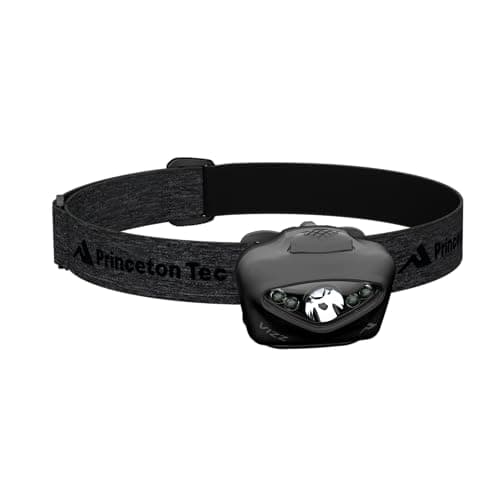 Princeton Tec VizzTop pick550 lumens on three AAA cells with an IPX7 rating — immersion, not just rain. The only AAA lamp here rated for a dunking. | Getting wet | 550 lm / 92 g | |
| 2 | 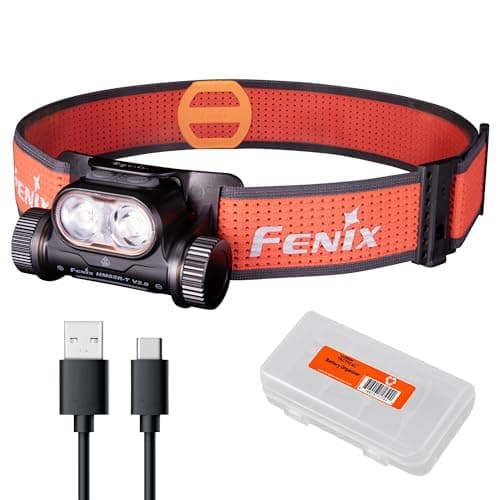 Fenix HM65R-T V2.01,600 lumens and 170 m from a magnesium body running a standard 18650, at 140 g. The removable cell is what separates it from the sealed-pack lamps. | Long nights where you want reach and a spare cell | 1,600 lm / 140 g (4.94 oz) | |
| 3 | 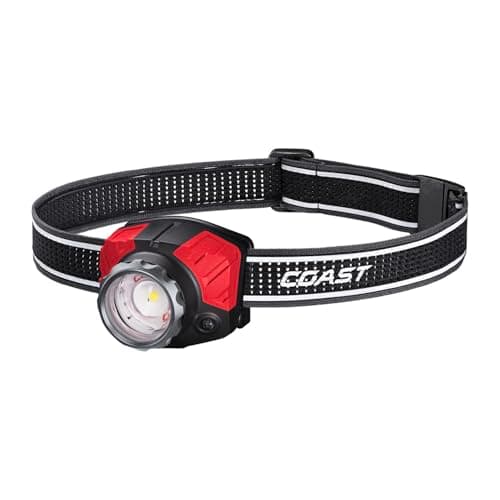 Coast FL85R1,000 lumens with white, red and green in one focusing head. The green mode is why this is on the hunting page. | Hunting, where the light color is the decision | 1,000 lm | |
| 4 | 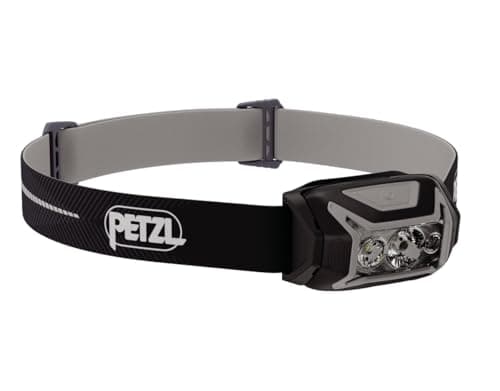 Petzl Actik CoreThe default outdoor headlamp: hybrid power, a published ANSI figure, and a beam shaped for walking rather than for a spec sheet. | Hiking and general outdoor use | 625 lm / 88 g | |
| 5 | 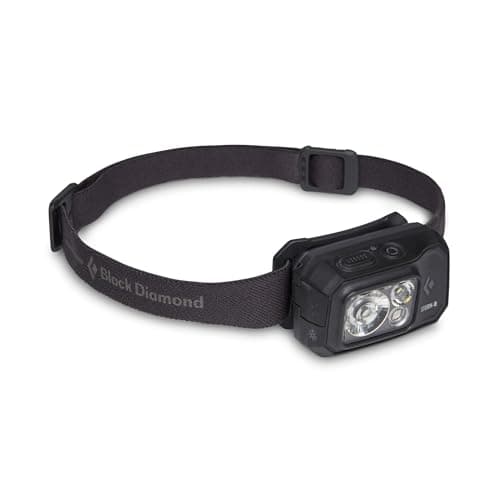 Black Diamond Storm 500-R500 lumens with red, green and blue night-vision modes. The Storm is the waterproof one in Black Diamond's range. | Wet weather and RGB night vision | 500 lm |
We earn a commission if you buy through the links on this page, at no extra cost to you. It does not change what we recommend or the order they appear in. Full disclosure. Prices checked October 15, 2026.
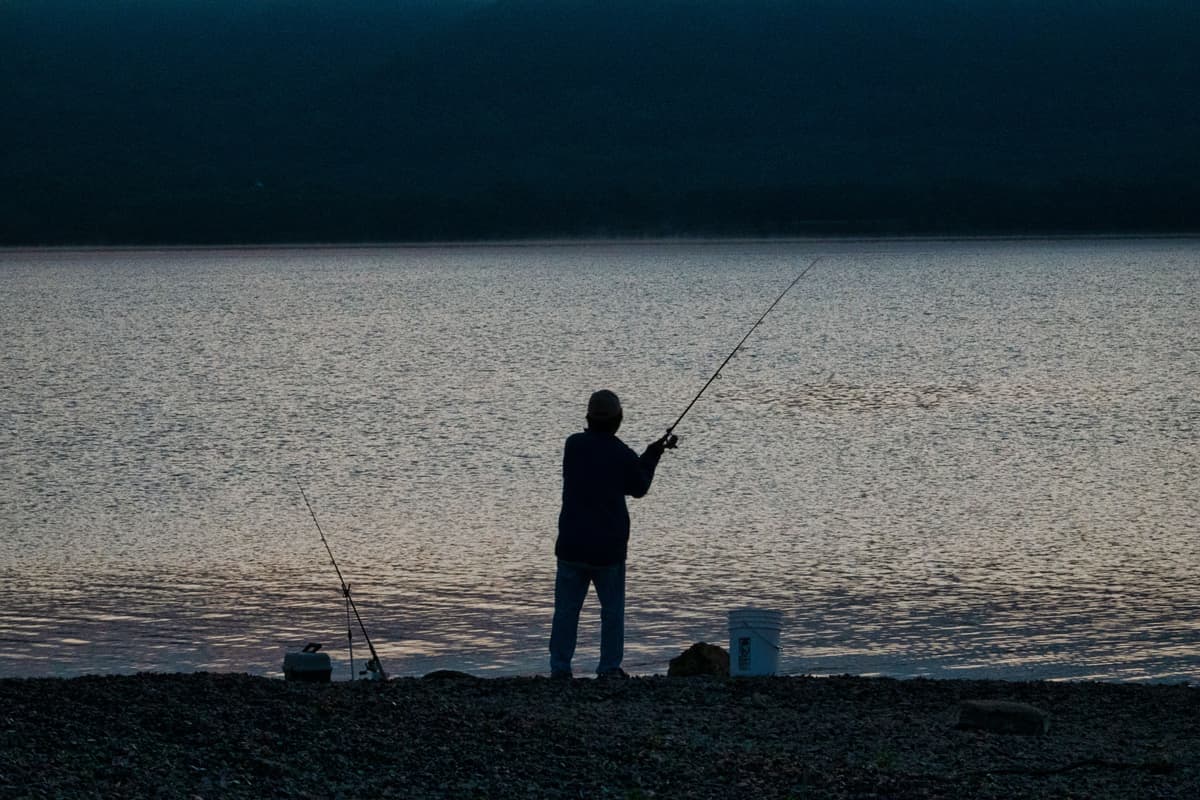
Every other headlamp page on this site treats the ingress rating as a secondary specification. Night fishing inverts that. You are next to water, you are handling wet line and wet fish, and the lamp is going in the water at some point.
How we picked
Published ingress rating first, then red mode, then runtime. Every rating below is a manufacturer figure and is linked in the entry. Where a maker publishes no rating we have said so rather than assuming. See our methodology.
IPX4 is not a fishing rating
| Rating | Tested against | Survives a drop in the lake? |
|---|---|---|
| IPX4 | Splashing water from any direction | No |
| IPX6 | Powerful water jets | No — jets are not immersion |
| IPX7 | Immersion to 1 m for 30 minutes | Yes, if you retrieve it promptly |
| IPX8 | Continuous immersion, depth per maker | Yes |
| IP68 | Dust tight plus continuous immersion | Yes |
The important detail is that the water digit is not cumulative in the way people assume. IPX6 tests jets, not immersion; a lamp rated IPX6 has not been tested for being dropped in a lake. Only IPX7 and above have.
In our headlamp set that leaves exactly two candidates: the Princeton Tec Vizz at IPX7 and the Fenix HM65R-T V2.0 at IP68. Everything else here is IPX4 and is a splash rating.
Red light, and why it matters more on the water
A white beam on water does two unhelpful things at once: it reflects straight back at you off the surface, and it kills the dark adaptation you need to see a float, a rod tip or the far bank. A red channel avoids both.
Red is also what you want for the fiddly work — tying a hook, re-rigging, unhooking — because it is bright enough at close range without the glare bounce. Red light modes covers the physiology.
Runtime for a whole night session
Replaceable cells beat rechargeables at the waterside
Two reasons. Cold air over water drains alkaline cells faster than you expect, so you want the option of a swap rather than a charge. And a sealed rechargeable lamp that takes water is a total loss, whereas a AAA lamp is often recoverable once dried out.
What we would not buy for night fishing
Anything rated IPX4 as your primary lamp, however good the rest of its specification is. Anything with no published rating at all — several lamps that would otherwise fit this page publish nothing, and near water that is not a gap we are willing to guess across.
And any lamp whose red mode requires cycling through white. On the water you will be reaching for red constantly, and blinding yourself each time is worse than carrying a second light.
The picks, in full
Top pick · Getting wet
Princeton Tec Vizz
550 lumens on three AAA cells with an IPX7 rating — immersion, not just rain. The only AAA lamp here rated for a dunking.
IPX7 on AAA cells is the specification that makes this interesting. Almost everything else in the AAA class is IPX4, which means rain and nothing more.
Three lithium AAA cells hold roughly 4.5 Wh and shrug off cold in a way alkalines do not. On this lamp that combination is worth more than another 500 lumens.
Princeton Tec publishes an output and a runtime for each of its four modes, plus an 85 m beam distance and a 92 g weight - not a single flattering maximum. The 85 m works back to about 1,806 candela, or 3.3 candela per lumen, which says the 550 lumens buys width rather than reach.
What works
- IPX7 immersion rating on replaceable cells
- A published runtime spread across modes and chemistries
- Digital lockout, so it does not drain itself in a pack
What does not
- No candela figure, so the 85 m distance cannot be cross-checked
- Bulkier than the modern rechargeable lamps
- No rechargeable option
Skip this ifweight is your constraint. The AAA carriage that makes it robust also makes it bigger than the Li-ion competition.
Published specification
- Output
- 550 lmSpot high. Spot low 150 lm, flood high 30 lm, red high 10 lm.Princeton Tec Vizz — manufacturer spec page (retrieved October 15, 2026)
- Peak intensity
- not published(Princeton Tec publishes distance, not peak intensity)
- Runtime
- 1 h 30 min on spot highFour published pairs: spot 150 lm/40 h, flood 30 lm/90 h, red 10 lm/135 h. The headline 90 h is the flood figure.Princeton Tec Vizz — manufacturer spec page (retrieved October 15, 2026)
- Battery
- 3 x AAA alkaline or lithiumPrinceton Tec Vizz — manufacturer spec page (retrieved October 15, 2026)
- Ingress
- IPX7Withstands immersion to one meterPrinceton Tec Vizz — manufacturer spec page (retrieved October 15, 2026)
#ad · how this is funded · price as of October 15, 2026
Pick 2 · Long nights where you want reach and a spare cell
Fenix HM65R-T V2.0
1,600 lumens and 170 m from a magnesium body running a standard 18650, at 140 g. The removable cell is what separates it from the sealed-pack lamps.
A 3,400 mAh 18650 at a nominal 3.6 V is 12.2 watt-hours. That is more energy than a Petzl NAO RL carries, in a lamp 5 g lighter, because a bare 18650 is a more efficient package than a molded pack.
It is also the only headlamp in this set whose battery you can replace at a checkpoint for three dollars, because 18650 is a standard cell and not a proprietary brick.
IP68 rather than IPX4 is the second real difference. This one survives being dropped in water; most of the running lamps here do not.
What works
- Standard 18650 cell: swappable, cheap, and available everywhere
- IP68 and 2 m impact rating, the toughest specification in this roundup
- Dual emitters, one white and one warm white, so it works for close tasks as well as reach
What does not
- 140 g is at the heavy end for a running lamp
- Charging works only with Fenix ARB-L18 series cells, which limits the swap-any-18650 advantage
- No published candela figure
Skip this ifyou count grams. A Swift LT does the camp job at 43 g; you are carrying 97 g extra for reach and a removable cell.
Published specification
- Peak intensity
- not published(Fenix publishes distance, not peak intensity)
- Runtime
- 300 h maximumLowest mode. The turbo figure is far shorter and Fenix publishes it per-mode.Fenix HM65R-T V2.0 — manufacturer spec page (retrieved September 1, 2026)
- Battery
- 3,400 mAh 18650 Li-ion (included), or 2 x CR123AFenix HM65R-T V2.0 — manufacturer spec page (retrieved September 1, 2026)
- Weight
- 140 g (4.94 oz)Including battery and headbandFenix HM65R-T V2.0 — manufacturer spec page (retrieved September 1, 2026)
- Ingress
- IP68Dust tight and immersion rated; 2 m impact resistanceFenix HM65R-T V2.0 — manufacturer spec page (retrieved September 1, 2026)
#ad · how this is funded · price as of October 15, 2026
Pick 3 · Hunting, where the light color is the decision
Coast FL85R
1,000 lumens with white, red and green in one focusing head. The green mode is why this is on the hunting page.
Green light is the specific ask in hunting. It preserves dark adaptation like red does, but it renders contrast in vegetation better and many states restrict white light for particular uses.
A focusing head on a headlamp is a compromise: you gain a variable beam and you lose some output to the optic. Coast has built its range around it and the mechanism is the most refined of the focusing lamps.
We could not reach Coast's own product page from this build, so the table is limited to what its listing states.
What works
- White, red and green from a single head
- Focusing beam adjusts from a wide flood to a narrow spot
- 1,000 lumens is plenty for field dressing and for finding a trail
What does not
- No sourced runtime, weight, beam distance or IP rating
- Focusing optics cost you output relative to a fixed reflector
- Built-in cell
Skip this ifyou only need white. You are paying for two color channels and a focusing mechanism that a fixed-beam lamp does without.
Published specification
- Peak intensity
- not published
- Beam distance
- not published
- Runtime
- not published
- Battery
- Built-in rechargeableCoast FL85R — the brand's own listing on Amazon.com (retrieved September 1, 2026)
- Weight
- not published
- Ingress
- not published
$43.13 · 5% off
#ad · how this is funded · price as of October 15, 2026
Pick 4 · Hiking and general outdoor use
Petzl Actik Core
The default outdoor headlamp: hybrid power, a published ANSI figure, and a beam shaped for walking rather than for a spec sheet.
625 lumens and 115 meters is a walking beam, not a searching beam. The FL1 definition puts illuminance at 115 m down to 0.25 lux, which is enough to tell that something is there and not enough to identify it. In practice you run the middle level and see 30 to 60 m of usable trail.
4.5 watt-hours matters more than the lumen figure. A lamp drawing a regulated 2 W empties that pack in a bit over two hours. The 400-hour number Petzl quotes is a reserve-mode visibility claim, not 400 hours of light you can walk by.
The hybrid design is the real feature. When the CORE pack dies three hours into a night descent, three AAA cells from a gas station bring the lamp back. Very little else at this price does that.
What works
- Runs on the rechargeable pack or three AAA cells, which is a genuine field fix rather than a marketing bullet
- Petzl publishes the full ANSI FL 1 table, including a distance for every mode
- 88 g is light enough that you stop noticing it
What does not
- IPX4 only: rain is fine, a dropped-in-the-creek recovery is not
- No published peak candela, so the 115 m claim cannot be checked against the intensity
- The maker's own site and its own Amazon listing disagree about peak output
Skip this ifyou need reach. 115 m is short by 2026 standards, and the 625-lumen headline does not change the shape of the beam.
Published specification
- Output
- 625 lmANSI/PLATO FL 1. Petzl's US product page states 625; the brand's own Amazon listing says 650. We use the maker's own site.Petzl Actik Core — manufacturer spec page (retrieved September 1, 2026)
- Peak intensity
- not published(Petzl publishes distance, not peak intensity)
- Beam distance
- 115 mMaximum, on the CORE rechargeable batteryPetzl Actik Core — manufacturer spec page (retrieved September 1, 2026)
- Runtime
- 2 h at 625 lm / 7 h at 100 lm / 100 h at 7 lm, on the CORE packPetzl publishes a full per-mode table for both power sources. On 3 x AAA the same levels run 2 h / 10 h / 100 h, with peak output capped at 450 lm. Its separate strobe figure, visible at 700 m for 400 h, is a be-seen claim and not a working runtime.Petzl Actik Core — manufacturer spec page (retrieved September 19, 2026)
- Battery
- CORE 1250 mAh / 3.6 V / 4.5 Wh, or 3 x AAAPetzl Actik Core — manufacturer spec page (retrieved September 1, 2026)
- Ingress
- IPX4Weather resistant. Not immersion rated.Petzl Actik Core — manufacturer spec page (retrieved September 1, 2026)
$87.95 · 6% off
#ad · how this is funded · price as of October 15, 2026
Pick 5 · Wet weather and RGB night vision
Black Diamond Storm 500-R
500 lumens with red, green and blue night-vision modes. The Storm is the waterproof one in Black Diamond's range.
The RGB night-vision set is the differentiator. Green preserves adaptation like red does but renders map contours and blood trails differently, which is why hunters ask for it specifically.
As with the Spot, we could not reach Black Diamond's own spec page from this build, so the table is thin on purpose. We assert the two figures the brand's listing states and nothing else.
The Storm line has historically been the waterproof one, but we will not print an IP rating we could not source.
What works
- Red, green and blue night-vision modes in one lamp
- 500 lumens is a step up from the Spot for a small price difference
- Integrated rechargeable
What does not
- No sourced beam distance, runtime, weight or IP rating
- Heavier than the Spot, though we cannot tell you by how much
- Mode cycling gets busy with four colors to reach
Skip this ifyou only ever use white light. You are paying for two colors you will not switch on.
Published specification
- Output
- 500 lmBlack Diamond Storm 500-R — the brand's own listing on Amazon.com (retrieved September 1, 2026)
- Peak intensity
- not published
- Beam distance
- not published(Not stated in the listing we read)
- Runtime
- not published
- Battery
- Integrated rechargeableBlack Diamond Storm 500-R — the brand's own listing on Amazon.com (retrieved September 1, 2026)
- Weight
- not published
- Ingress
- not published(Not stated in the listing we read)
$89.95 · 18% off
#ad · how this is funded · price as of October 15, 2026
Questions people actually ask
What IP rating do I need for a fishing headlamp?
IPX7 as a minimum, which covers immersion to one meter for thirty minutes. IPX4 is a splash rating and it is what most outdoor headlamps carry, which makes them the wrong tool at the water's edge.
Is red light better for night fishing?
Yes, for two reasons. It does not reflect off the water surface into your eyes the way white does, and it preserves the dark adaptation you need to see a float or a rod tip against a dark background.
Will a headlamp scare fish?
A white beam swept across shallow water certainly moves fish. Keeping the beam off the water, using red at close range, and only switching to white when you need to handle a fish is the practical approach, and it is why color channels rank above output on this page.
How many lumens for night fishing?
Very few. Five to twenty lumens of red for rigging and unhooking, and a white burst of 200 to 500 when you genuinely need to see something. Running high output all night will empty any lamp here and ruin your night vision.
Are rechargeable headlamps a bad idea for fishing?
Not bad, but a sealed rechargeable that takes water is a total loss, and cold air over water drains cells faster than expected. A lamp taking replaceable cells gives you both a fallback and a better chance of recovery after a soaking.
Should I use a headlamp or a clip light for fishing?
A headlamp keeps both hands free, which matters when you are unhooking. A cap-clip light sits lower and keeps the beam out of your own eyeline on the water. Several lamps here detach, so you can try both.
Sources
Every figure on this page came from one of the documents below, read on the date shown. We do not cite other review sites, forum posts or video reviews as sources of fact.
- Princeton Tec Vizz — manufacturer spec page (retrieved September 1, 2026)
- Fenix HM65R-T V2.0 — manufacturer spec page (retrieved September 1, 2026)
- IEC 60529 — the IP (ingress protection) rating system
- ANSI/PLATO FL 1 flashlight performance standard — definitions of lumens, peak beam intensity, beam distance, runtime, impact and water resistance
Read next
Princeton Tec Vizz review
A specification-first review of the Princeton Tec Vizz: the per-mode runtimes, the arithmetic that shows which mode to actually use, what 85 meters says about the beam, and the one figure Princeton Tec still will not state.
Best headlamps, ranked on the watt-hours behind the lumens
The full headlamp ranking: output, weight, battery energy and beam distance, every figure sourced to the maker.
What a headlamp red light mode is actually for
The physiology behind red headlamp modes, and how to choose a lamp whose red is reachable in one click.
Best headlamps for camping
Camping headlamps ranked on red-mode access, replaceable cells and honest runtime figures.
The ANSI FL 1 standard, explained
What the ANSI/PLATO FL 1 standard specifies, measurement by measurement, and the self-reporting problem at its center.
Best flashlights for power outages
Outage lighting ranked on shelf life, area coverage and findability rather than on output.
Found a number that is wrong? Tell us and we will fix it and say so. Our methodology shows every formula on this page.