Headlamps
Petzl Swift LT review
The lightest headlamp on this site, from the only maker that publishes a figure for every level it offers. Both halves of that sentence are the reason to buy it.
By Scooter M. · Published · Updated
| # | Product | Best for | Output / weight | Price |
|---|---|---|---|---|
| 1 | 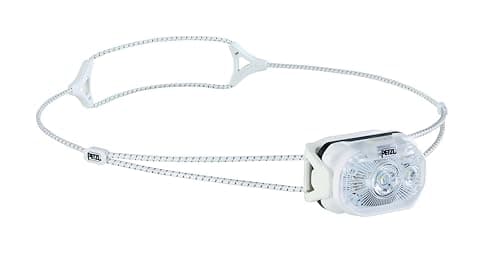 Petzl Swift LTTop pick43 grams with a real 380-lumen ANSI figure. The lightest lamp here that is still a lamp rather than a token. | Ultralight backpacking | 380 lm / 43 g |
We earn a commission if you buy through the links on this page, at no extra cost to you. It does not change what we recommend or the order they appear in. Full disclosure. Prices checked September 27, 2026.

We have not tested this headlamp. We own none of the products on this site and have no laboratory. This review works from Petzl's own product page, read on September 27, 2026, and the arithmetic those figures allow.
Two things make the Swift LT worth a page of its own. It publishes 43 grams, the lightest figure anywhere on this site. And Petzl states output, beam distance and runtime for every level it offers, including the red ones — which almost nobody in this category does, and which means the weight saving can be checked against what you give up rather than taken on faith.
What Petzl publishes
| Level | Output | Beam distance | Runtime |
|---|---|---|---|
| White, max power | 380 lm | 70 m | 2 h |
| White, standard | 100 lm | 30 m | 6 h, plus 2 h reserve |
| White, max burn time | 7 lm | 6 m | 60 h |
| Red, continuous | 2 lm | 5 m | 25 h |
| Red, strobe | not stated | Visible at 700 m | 200 h |
| Specification | Published figure |
|---|---|
| Battery | 880 mAh rechargeable, 3.7 V, 3.27 Wh |
| Charge time | 3 h |
| Weight | 43 g |
| Water resistance | IPX4, stated as weather resistant |
| Certification | CE |
| Guarantee | 3 years or 300 charging cycles |
| Peak candela | not published |
That is a complete sheet by the standards of this category. For comparison, the Coast XPH34R and the Klein Tools 56048 each publish an output figure and a one-line description of the battery, and nothing else — no runtime, no beam distance, no weight, no ingress rating. Our headlamp brand ranking sets out the whole spread.
The beam, computed
3.2 candela per lumen puts this among the widest headlamp beams we compute, and it is the single most useful thing to know before buying this lamp. The Petzl Actik Core sits at 5.3, the Fenix HM65R-T at 4.5 and the Fenix HM75R at 7.8 — the Swift LT spreads its output more than all three. Only the two 3,000-lumen lamps go wider still, the Olight Perun 3 at 2.1 and the Nitecore HC75 UHE at 3.1.
That is the correct decision for what the lamp is for. A backpacker wants the ground in front of their boots lit evenly, not a hotspot forty meters down the trail. But it does mean 70 meters is among the shortest published reaches in our headlamp set — only Petzl's own Tikkina goes lower, at 65 m — and if you need to identify something across a valley this is emphatically not the lamp. Throw versus flood covers the trade.
Forty-three grams, and what fits inside them
3.27 watt-hours is the smallest energy store of any product on this site — about a ninth of the Fenix HM75R's 30.2. Stated that way it sounds disqualifying. Stated against what a backpacker actually does with a headlamp, it is usually enough: our backpacking page works through the arithmetic for a five-day resupply interval and the answer comes out under this lamp's capacity with margin.
The figure that decides it is not capacity but the 6-hour standard level at 100 lumens, which is a genuinely useful working brightness. Camp chores, a pre-dawn start and finding a tent at night all happen at around that level, and six hours of it covers several nights. The 60-hour, 7-lumen level is the reserve that gets you to morning.
Petzl publishes the specification almost nobody does
3 years or 300 charging cycles. On a lamp with a sealed battery that is the figure that decides how long the product lasts, and it is the one makers almost universally omit — our Fenix versus Black Diamond comparison notes that neither of those brands publishes it for any lamp we cover.
It is worth being clear about what the number means, because it cuts both ways. Three hundred full cycles is a real service life for occasional use — charge it after every second weekend and it outlasts the guarantee comfortably. Charge it nightly and you are inside three hundred cycles in under a year. The cell is not user-replaceable, so at that point the lamp is the cell.
What the weight costs you
- Two hours at full output. 380 lumens is a burst level here, not a working one. The lamp is designed around its 100-lumen standard setting and that is how it should be judged.
- IPX4. Splashing water from any direction, which is rain rather than immersion, and no dust digit at all. Petzl states IPX4 across almost its whole range, so this is a brand position rather than a corner cut — but the Fenix HM65R-T publishes IP68 at 140 g if weather is the deciding factor.
- A sealed cell. No swapping in a spare at 2 a.m., and no AAA fallback of the kind the Petzl Tikka and Actik Core offer. On a long trip that is the argument for a hybrid lamp instead.
- 70 meters. Second-shortest in our headlamp set, and a deliberate consequence of the wide beam.
- No peak candela figure, so the beam intensity above is derived from the distance rather than published — which is true of every Petzl lamp we cover.
Who should buy something else
Skip it if you night-hike seriously. Two hours at 380 lumens and 70 m of reach are not the specifications for moving fast in the dark. The Petzl Swift RL publishes 1,200 lumens, 168 m and 8.47 Wh at 92 g, and reactive lighting on top.
Skip it if it will be rained on hard or used at work. IPX4 is weather resistance. The Fenix HM65R-T publishes IP68 and takes a replaceable 18650 with a CR123A fallback.
Skip it if you want a cell you can replace in the field. The Petzl Actik Core runs on its rechargeable pack or three AAA cells in the same body, for 45 grams more.
Skip it if you charge nightly. The published 300-cycle guarantee is generous for weekend use and modest for daily use, and there is no replacing the battery when it goes.
The verdict, stated as what it commits to
Petzl commits to 43 grams, 380 lumens at 70 meters for 2 hours, 100 lumens at 30 meters for 6, 7 lumens for 60, a red mode at 2 lumens for 25, 3.27 watt-hours, a 3-hour charge, IPX4 and 300 charging cycles. There is no gap in that sheet worth naming except peak candela, which no Petzl lamp publishes.
For ultralight backpacking, where grams are argued over seriously and the lamp is used for an hour a night rather than all of it, this is the most completely documented answer available and the lightest. For anything that involves moving quickly in the dark, weather, or nightly charging, the specifications say plainly that it is the wrong tool — which is the most useful thing a spec sheet can do. See best headlamps for the wider field.
The picks, in full
Top pick · Ultralight backpacking
Petzl Swift LT
43 grams with a real 380-lumen ANSI figure. The lightest lamp here that is still a lamp rather than a token.
3.27 watt-hours is a small tank. Run it at a genuine 100 lumens, roughly 0.5 W at the emitter once losses are counted, and the arithmetic lands near five hours. That is a night of camp chores or one pre-dawn start, not a week.
43 g is 45 g under an Actik Core and 102 g under a NAO RL. Across a multi-day trip that saving is the only reason to accept the smaller battery.
70 m of throw is honest for the size. This is a camp-and-trail beam and it does not pretend otherwise.
What works
- 43 g with a published ANSI figure rather than a vague ultralight claim
- USB-C, which by 2026 should be standard and still is not
- Small enough to live permanently in a pack lid
What does not
- 3.27 Wh means planning recharges on anything longer than an overnight
- No AAA fallback: when it is flat, it is flat
- IPX4
Skip this ifgrams are not your binding constraint. For the same money a heavier lamp buys two to three times the watt-hours.
Published specification
- Output
- 380 lmANSI/PLATO FL 1Petzl Swift LT — manufacturer spec page (retrieved September 1, 2026)
- Peak intensity
- not published
- Runtime
- 2 h at 380 lm / 6 h at 100 lm / 60 h at 7 lmPetzl publishes output, beam distance and runtime for every level. The standard level adds a 2 h reserve; red runs 25 h at 2 lm, and the 200 h figure Petzl lists is the red strobe rather than a working runtime.Petzl Swift LT — manufacturer spec page (retrieved September 27, 2026)
- Battery
- 880 mAh / 3.7 V / 3.27 Wh Li-ion, USB-CPetzl Swift LT — manufacturer spec page (retrieved September 1, 2026)
#ad · how this is funded · price as of September 27, 2026
Questions people actually ask
How long does the Petzl Swift LT last?
Petzl publishes a figure for every level: 2 hours at 380 lumens, 6 hours at 100 lumens with a further 2 hours of reserve, and 60 hours at 7 lumens. The red mode runs 25 hours at 2 lumens. The often-quoted 200-hour figure is the red strobe, not a working runtime.
Is the Petzl Swift LT worth it?
For ultralight backpacking, yes: 43 g is the lightest published weight on this site and Petzl states output, distance and runtime for every level, so you can check what the weight saving costs. It is the wrong lamp for night hiking, wet work or nightly charging.
How much does the Petzl Swift LT weigh?
43 g, which is the lightest figure of any headlamp or flashlight we cover. For comparison the Petzl Actik Core is 88 g, the Fenix HM65R-T is 140 g and the Fenix HM75R is 321 g complete.
Is the Petzl Swift LT waterproof?
It is rated IPX4, which Petzl describes as weather resistant - splashing water from any direction, not immersion, and no dust rating at all. That is Petzl's rating across almost its whole range. If you need more, the Fenix HM65R-T publishes IP68.
How far does the Petzl Swift LT shine?
70 m on max power, 30 m on standard and 6 m on the lowest level. That 70 m works back to roughly 1,225 candela, about 3.2 candela per lumen - the widest beam we have computed for any headlamp, which is the right shape for lighting the ground rather than a distance.
Can you replace the battery in the Petzl Swift LT?
No - it is a sealed 880 mAh rechargeable, and that is the main structural limitation. Petzl guarantees it for 3 years or 300 charging cycles. If you want a cell you can swap on the trail, the Petzl Actik Core takes three AAA cells or its rechargeable pack in the same body.
Petzl Swift LT or Petzl Actik Core?
The Swift LT for weight: 43 g against 88, and a full per-level table from both. The Actik Core for flexibility: 625 lumens against 380, 115 m against 70, and it runs on three AAA cells when its pack is flat. Most people should take the Actik Core; grams-counters should take the Swift LT.
How long does the Petzl Swift LT take to charge?
Petzl publishes 3 hours from its 880 mAh, 3.27 watt-hour cell. That is a small battery by any standard - about a ninth of what the Fenix HM75R carries - so a short charge time is expected rather than impressive.
Sources
Every figure on this page came from one of the documents below, read on the date shown. We do not cite other review sites, forum posts or video reviews as sources of fact.
- Petzl Swift LT — manufacturer spec page (retrieved September 1, 2026)
- Petzl Actik Core — manufacturer spec page (retrieved September 1, 2026)
- Fenix HM65R-T V2.0 — manufacturer spec page (retrieved September 1, 2026)
- Petzl — ANSI/PLATO FL 1 technical information for its headlamp range
- ANSI/PLATO FL 1 flashlight performance standard — definitions of lumens, peak beam intensity, beam distance, runtime, impact and water resistance
- IEC 60529 — the IP (ingress protection) rating system
Read next
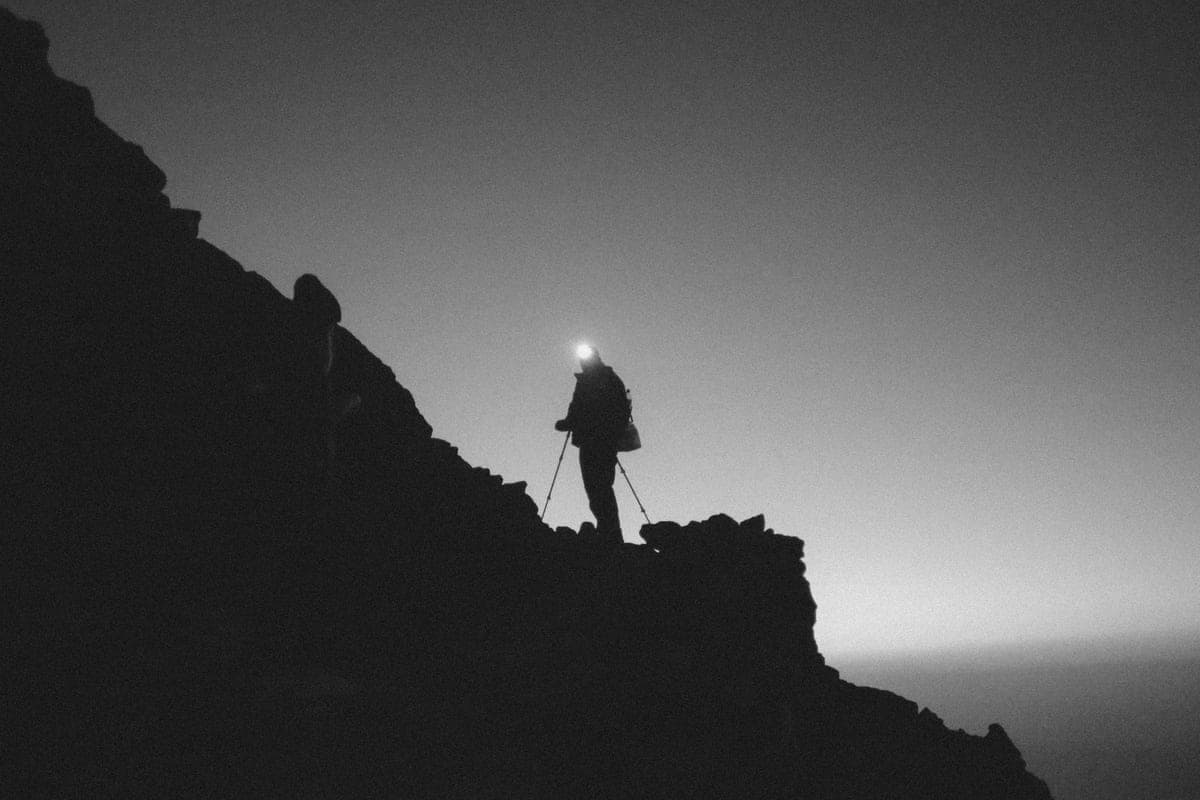
Best headlamps, ranked on the watt-hours behind the lumens
The full headlamp ranking: output, weight, battery energy and beam distance, every figure sourced to the maker.
Best headlamps for backpacking
Backpacking headlamps ranked on the grams-per-watt-hour trade, computed from published figures.

Best headlamps for hiking
Hiking headlamps ranked on hybrid power, published runtime and weight — not on peak output.
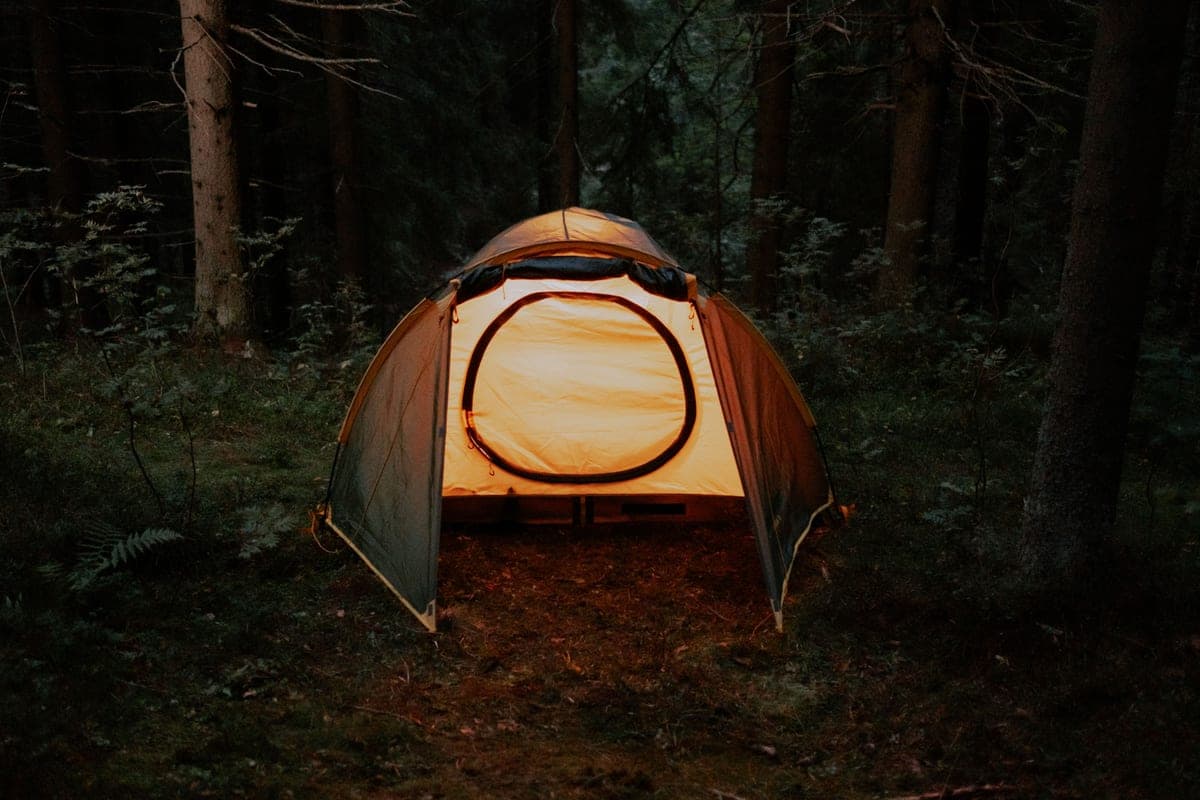
Best headlamps under $50
Seven headlamps in the sub-$50 bracket, ranked on what their makers actually publish, with the gaps named and live prices on every pick.
Petzl Actik Core review
A specification-first review of the Petzl Actik Core: the full per-mode table, what the AAA fallback actually costs you, and who should buy something else.
Petzl vs Fenix headlamps
Petzl against Fenix on published battery energy, beam distance, weight and ingress rating — four matched pairs where both makers actually show their work.
Found a number that is wrong? Tell us and we will fix it and say so. Our methodology shows every formula on this page.