Headlamps
Best headlamps for backpacking
Ultralight headlamps trade watt-hours for grams. Here is exactly what that exchange rate is, so you can decide whether it is worth it.
By Scooter M. · Published · Updated
| # | Product | Best for | Output / weight | Price |
|---|---|---|---|---|
| 1 | 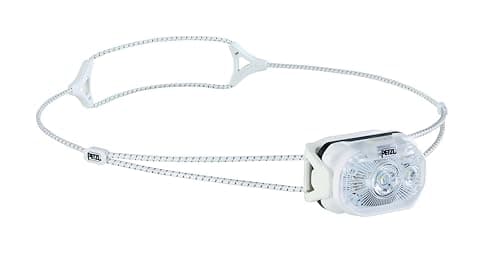 Petzl Swift LTTop pick43 grams with a real 380-lumen ANSI figure. The lightest lamp here that is still a lamp rather than a token. | Ultralight backpacking | 380 lm / 43 g | |
| 2 | 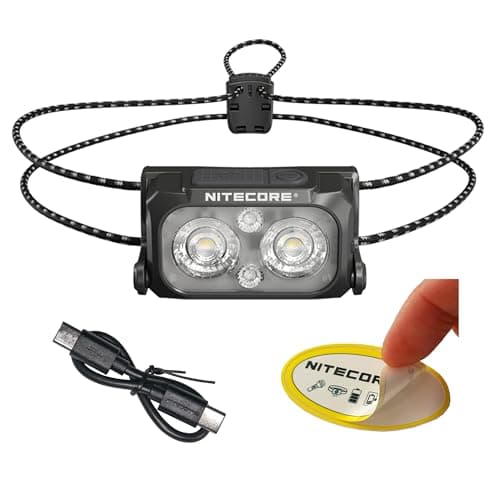 Nitecore NU25 UL400 lumens, USB-C, and multiple color temperatures in an ultralight body. The thru-hiker default for good reason. | The lightest rechargeable that still has three emitters | 400 lm | |
| 3 | 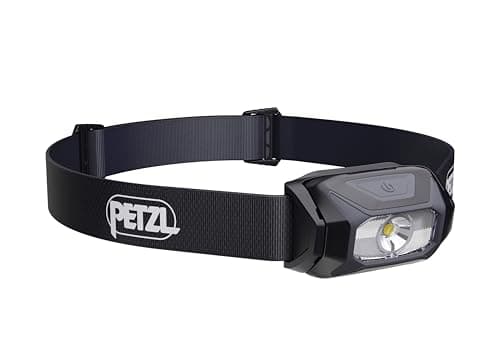 Petzl Tikkina300 lumens on AAA cells with a published ANSI figure. It does one thing and does not pretend to do more. | The cheapest lamp we would actually recommend | 300 lm / 92 g | |
| 4 | 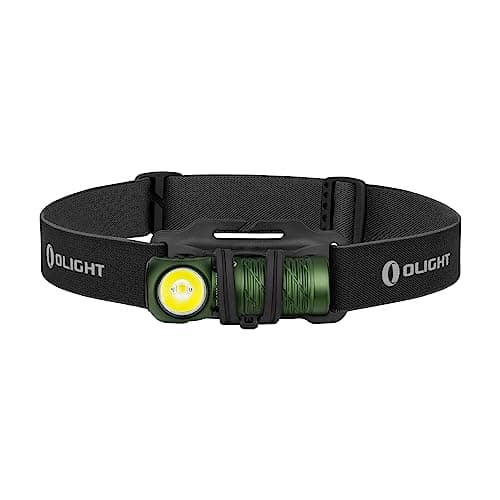 Olight Perun 2 Mini1,100 lumens in a body small enough to clip to a cap brim, a pocket or a headband. | A pocket light that also mounts on a strap | 1,100 lm | Check price#ad |
| 5 | 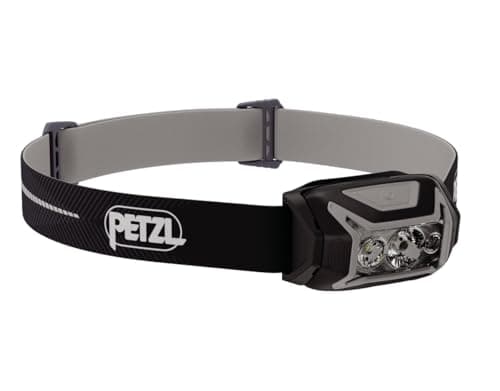 Petzl Actik CoreThe default outdoor headlamp: hybrid power, a published ANSI figure, and a beam shaped for walking rather than for a spec sheet. | Hiking and general outdoor use | 625 lm / 88 g | |
| 6 | 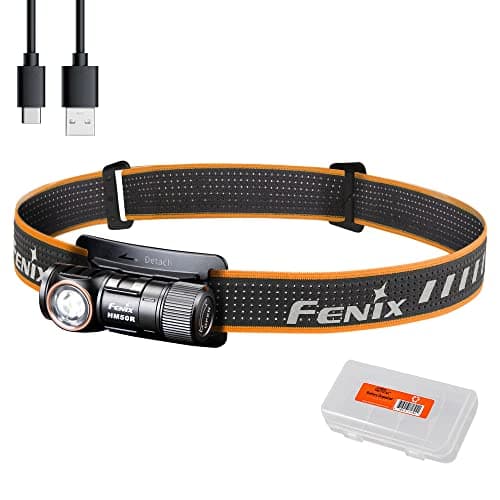 Fenix HM50R V2.078 grams and 700 lumens from a single 16340. The lightest genuinely bright lamp here, with the shortest battery life to match. | A headlamp that detaches and works as a pocket light | 700 lm / 78 g (2.75 oz) |
We earn a commission if you buy through the links on this page, at no extra cost to you. It does not change what we recommend or the order they appear in. Full disclosure. Prices checked October 16, 2026.

Backpacking is the only category where a worse lamp is often the right lamp. You are carrying it for days and using it for minutes, so the calculation is not what it does but what it costs you to have it.
The useful way to frame that is grams per watt-hour: how much weight you are carrying for each unit of stored energy. Below is that number for every lamp whose maker publishes both figures.
How we picked
Weight first, then whether the remaining energy is enough for the trips people actually do, then whether the cells can be replaced. Everything is computed from published figures — we have carried none of these. Our methodology sets out the sums.
The exchange rate: grams per watt-hour
| Lamp | Weight | Watt-hours | Grams per Wh |
|---|---|---|---|
| Petzl Swift LT | 43 g | 3.3 | 13.0 |
| Fenix HM50R V2.0 | 78 g | 2.9 | 26.9 |
| Petzl Actik Core | 88 g | 4.5 | 19.6 |
| Petzl Swift RL | 92 g | 8.5 | 10.8 |
| Fenix HM65R-T V2.0 | 140 g | 12.2 | 11.5 |
Read that column carefully, because it says something counterintuitive. The Swift LT is the lightest lamp here and it is not the most efficient carrier of energy — the Swift RL is, at 10.8 grams per watt-hour. The Swift LT wins on absolute weight; the Swift RL wins on what you get for the weight.
The Fenix HM50R is the outlier in the wrong direction: at 26.9 grams per watt-hour it costs you two and a half times what a Swift RL does for the same stored energy. Its virtue is absolute compactness, not efficiency.
How much energy a thru-hike actually needs
This is the calculation that decides the category. If you night-hike, you need a big battery and the weight that comes with it. If you do not — and most backpackers do not — the ultralight lamps are not a compromise at all. They are correctly sized.
Recharging on trail
Every ultralight lamp here except the Petzl Tikkina uses a sealed cell charged over USB-C. If you already carry a power bank for a phone, topping up a 3.3 watt-hour lamp costs almost nothing from a 10,000 mAh bank — around 37 watt-hours, so roughly a tenth of it.
If you do not carry a bank, the Tikkina's AAA cells are the safer choice: 92 grams, three cells that last the trip, and no charging routine at all.
What we would not buy for backpacking
A 140-gram lamp, unless you genuinely night-hike. On a five-day trip the difference between a Swift LT and an HM65R-T is 97 grams carried for 120 hours to save you nothing, because you were never going to flatten either.
We would also avoid the very cheapest ultralight lamps that publish no weight at all. On this page, weight is the specification, and a maker who does not state it has not designed around it.
The picks, in full
Top pick · Ultralight backpacking
Petzl Swift LT
43 grams with a real 380-lumen ANSI figure. The lightest lamp here that is still a lamp rather than a token.
3.27 watt-hours is a small tank. Run it at a genuine 100 lumens, roughly 0.5 W at the emitter once losses are counted, and the arithmetic lands near five hours. That is a night of camp chores or one pre-dawn start, not a week.
43 g is 45 g under an Actik Core and 102 g under a NAO RL. Across a multi-day trip that saving is the only reason to accept the smaller battery.
70 m of throw is honest for the size. This is a camp-and-trail beam and it does not pretend otherwise.
What works
- 43 g with a published ANSI figure rather than a vague ultralight claim
- USB-C, which by 2026 should be standard and still is not
- Small enough to live permanently in a pack lid
What does not
- 3.27 Wh means planning recharges on anything longer than an overnight
- No AAA fallback: when it is flat, it is flat
- IPX4
Skip this ifgrams are not your binding constraint. For the same money a heavier lamp buys two to three times the watt-hours.
Published specification
- Output
- 380 lmANSI/PLATO FL 1Petzl Swift LT — manufacturer spec page (retrieved September 1, 2026)
- Peak intensity
- not published
- Runtime
- 2 h at 380 lm / 6 h at 100 lm / 60 h at 7 lmPetzl publishes output, beam distance and runtime for every level. The standard level adds a 2 h reserve; red runs 25 h at 2 lm, and the 200 h figure Petzl lists is the red strobe rather than a working runtime.Petzl Swift LT — manufacturer spec page (retrieved September 27, 2026)
- Battery
- 880 mAh / 3.7 V / 3.27 Wh Li-ion, USB-CPetzl Swift LT — manufacturer spec page (retrieved September 1, 2026)
#ad · how this is funded · price as of October 16, 2026
Pick 2 · The lightest rechargeable that still has three emitters
Nitecore NU25 UL
400 lumens, USB-C, and multiple color temperatures in an ultralight body. The thru-hiker default for good reason.
The multiple-color-temperature version is the interesting one. A warm emitter beside a cool one is genuinely more useful in fog, dust and snow than another 200 lumens would be.
Nitecore's own site would not serve us a product page from this build, so the table stays thin and we say so rather than filling it from a forum post.
The NU25 has been the ultralight backpacking default for years. That is reputation, not evidence, and we are not going to pretend otherwise.
What works
- Multiple color temperatures, which matters more than peak lumens outdoors
- USB-C, built-in cell, nothing proprietary to lose
- Very light for a lamp with three emitters
What does not
- We could not source a weight, runtime, beam distance or IP rating
- Built-in cell: when it degrades the lamp is done
- 400 lumens is modest if you want to see down a valley
Skip this ifyou want a spec sheet you can check. Petzl and Fenix publish full ANSI tables; for this one we could not get past the retail listing.
Published specification
- Output
- 400 lmNitecore NU25 MCT UL — the brand's own listing on Amazon.com (retrieved September 1, 2026)
- Peak intensity
- not published
- Beam distance
- not published(Not stated in the listing we read)
- Runtime
- not published
- Battery
- Built-in Li-ion, USB-C rechargeableNitecore NU25 MCT UL — the brand's own listing on Amazon.com (retrieved September 1, 2026)
- Weight
- not published(Marketed as ultralight; no figure in the listing)
- Ingress
- not published
- CRI
- not published(Multiple color temperatures offered; no CRI figure stated)
#ad · how this is funded · price as of October 16, 2026
Pick 3 · The cheapest lamp we would actually recommend
Petzl Tikkina
300 lumens on AAA cells with a published ANSI figure. It does one thing and does not pretend to do more.
No red mode, no reactive sensor, no charge port. Three brightness levels and a battery door.
The 65 m distance and the 300-lumen output are both ANSI FL 1 figures published alongside the rest of Petzl's table, which is more than most lamps at this price manage.
For a kit bag, a car, or a first lamp for someone unsure they will use it, this is the honest recommendation.
What works
- Published ANSI figures at the bottom of the price range
- Nothing to break and nothing to charge
- Takes the same CORE pack as the rest of the Petzl range if you upgrade
What does not
- No red mode
- No rechargeable option in the box
- IPX4
Skip this ifyou are out after dark regularly. The missing red mode gets old fast in a shared tent.
Published specification
- Output
- 300 lmANSI/PLATO FL 1Petzl Tikkina — manufacturer spec page (retrieved September 1, 2026)
- Peak intensity
- not published
- Beam distance
- 65 mPetzl Tikkina — manufacturer spec page (retrieved September 1, 2026)
- Battery
- 3 x AAA (included), or the CORE rechargeable packPetzl Tikkina — manufacturer spec page (retrieved September 1, 2026)
#ad · how this is funded · price as of October 16, 2026
Pick 4 · A pocket light that also mounts on a strap
Olight Perun 2 Mini
1,100 lumens in a body small enough to clip to a cap brim, a pocket or a headband.
Three mounting options from one light — headband, pocket clip, magnetic tail — is more genuinely useful than the lumen figure.
The magnetic tail is the feature people keep. Stick it to the underside of a car hood or a steel beam and you have a work light.
As with the rest of the Olight range, the retail listing states output and charging and nothing else, so that is all we assert.
What works
- Headband, clip and magnet from one small body
- 1,100 lumens from something this size
- Red mode included
What does not
- No sourced runtime, beam distance, weight or IP rating
- Proprietary magnetic charger
- Small body means a small cell and a short high-mode burn
Skip this ifit would be your only headlamp for long nights. The body is too small to hold much energy.
Published specification
- Output
- 1,100 lmOlight Perun 2 Mini — the brand's own listing on Amazon.com (retrieved September 1, 2026)
- Peak intensity
- not published
- Beam distance
- not published
- Runtime
- not published
- Battery
- Rechargeable, magnetic tail chargingOlight Perun 2 Mini — the brand's own listing on Amazon.com (retrieved September 1, 2026)
- Weight
- not published
- Ingress
- not published
#ad · how this is funded · price as of October 16, 2026
Pick 5 · Hiking and general outdoor use
Petzl Actik Core
The default outdoor headlamp: hybrid power, a published ANSI figure, and a beam shaped for walking rather than for a spec sheet.
625 lumens and 115 meters is a walking beam, not a searching beam. The FL1 definition puts illuminance at 115 m down to 0.25 lux, which is enough to tell that something is there and not enough to identify it. In practice you run the middle level and see 30 to 60 m of usable trail.
4.5 watt-hours matters more than the lumen figure. A lamp drawing a regulated 2 W empties that pack in a bit over two hours. The 400-hour number Petzl quotes is a reserve-mode visibility claim, not 400 hours of light you can walk by.
The hybrid design is the real feature. When the CORE pack dies three hours into a night descent, three AAA cells from a gas station bring the lamp back. Very little else at this price does that.
What works
- Runs on the rechargeable pack or three AAA cells, which is a genuine field fix rather than a marketing bullet
- Petzl publishes the full ANSI FL 1 table, including a distance for every mode
- 88 g is light enough that you stop noticing it
What does not
- IPX4 only: rain is fine, a dropped-in-the-creek recovery is not
- No published peak candela, so the 115 m claim cannot be checked against the intensity
- The maker's own site and its own Amazon listing disagree about peak output
Skip this ifyou need reach. 115 m is short by 2026 standards, and the 625-lumen headline does not change the shape of the beam.
Published specification
- Output
- 625 lmANSI/PLATO FL 1. Petzl's US product page states 625; the brand's own Amazon listing says 650. We use the maker's own site.Petzl Actik Core — manufacturer spec page (retrieved September 1, 2026)
- Peak intensity
- not published(Petzl publishes distance, not peak intensity)
- Beam distance
- 115 mMaximum, on the CORE rechargeable batteryPetzl Actik Core — manufacturer spec page (retrieved September 1, 2026)
- Runtime
- 2 h at 625 lm / 7 h at 100 lm / 100 h at 7 lm, on the CORE packPetzl publishes a full per-mode table for both power sources. On 3 x AAA the same levels run 2 h / 10 h / 100 h, with peak output capped at 450 lm. Its separate strobe figure, visible at 700 m for 400 h, is a be-seen claim and not a working runtime.Petzl Actik Core — manufacturer spec page (retrieved September 19, 2026)
- Battery
- CORE 1250 mAh / 3.6 V / 4.5 Wh, or 3 x AAAPetzl Actik Core — manufacturer spec page (retrieved September 1, 2026)
- Ingress
- IPX4Weather resistant. Not immersion rated.Petzl Actik Core — manufacturer spec page (retrieved September 1, 2026)
$87.95 · 6% off
#ad · how this is funded · price as of October 16, 2026
Pick 6 · A headlamp that detaches and works as a pocket light
Fenix HM50R V2.0
78 grams and 700 lumens from a single 16340. The lightest genuinely bright lamp here, with the shortest battery life to match.
An 800 mAh 16340 at 3.6 V holds 2.9 watt-hours. That is the smallest tank of any rechargeable lamp on this page, and it is why 700 lumens is a burst rather than a setting.
The CR123A caveat is worth reading twice: Fenix states that on a primary lithium cell only the low and medium white modes work, for a maximum of 130 lumens. The fallback exists, but it is not the same lamp.
At 78 g with the head detached it becomes a small flashlight, which is the honest use case: a camp light that also lives in a jacket pocket.
What works
- 78 g including battery, which is remarkable for a 700-lumen lamp
- Detaches from the strap and works as a pocket light
- USB-C on the cell itself
What does not
- 2.9 Wh is the smallest energy store in this roundup
- CR123A fallback caps you at 130 lm, which Fenix states plainly and most buyers miss
- No published beam distance or IP rating on the page we read
Skip this ifyou need more than about two hours of useful light between charges. The battery is the constraint and no setting gets around it.
Published specification
- Peak intensity
- not published
- Beam distance
- not published(Not stated on the page we read)
- Runtime
- 42 h maximumLowest modeFenix HM50R V2.0 — manufacturer spec page (retrieved September 1, 2026)
- Battery
- 16340 Li-ion, 800 mAh (included). CR123A works but caps output at 130 lm.Fenix HM50R V2.0 — manufacturer spec page (retrieved September 1, 2026)
- Weight
- 78 g (2.75 oz)Including battery and headbandFenix HM50R V2.0 — manufacturer spec page (retrieved September 1, 2026)
- Ingress
- not published(Not stated on the page we read)
#ad · how this is funded · price as of October 16, 2026
Questions people actually ask
How light should a backpacking headlamp be?
Under about 60 grams is the ultralight bracket, and 43 to 50 grams is achievable with a real 300-to-400-lumen lamp. Below that you are into emergency lights rather than usable ones.
Is 3 watt-hours enough for a thru-hike?
For camp use and pre-dawn starts, comfortably. Forty minutes a night at 60 to 80 lumens is roughly 0.4 watt-hours, so a 3.3 watt-hour lamp covers about a week of normal use. If you night-hike, it is not enough and you need a bigger lamp.
Should I take a rechargeable or AAA headlamp backpacking?
If you already carry a power bank for your phone, rechargeable is lighter and topping it up costs a tenth of a 10,000 mAh bank. If you carry no bank, AAA cells remove the charging problem entirely at a cost of about 50 grams.
Is the Nitecore NU25 still the ultralight default?
It has been for years, and it remains a sensible choice — the multiple-color-temperature version in particular. Be aware that Nitecore publishes no weight, runtime or beam distance we could source, which is a real drawback in a category where weight is the whole specification.
Do I need a red mode for backpacking?
If you camp near other people or share a shelter, yes. It also draws far less power, which on a 3-watt-hour lamp meaningfully extends how many nights you get per charge.
What is the lightest usable headlamp?
In this set, the Petzl Swift LT at a published 43 grams with a 380-lumen ANSI FL 1 rating. Below that weight the lamps stop being usable for walking and become be-seen or emergency lights.
Sources
Every figure on this page came from one of the documents below, read on the date shown. We do not cite other review sites, forum posts or video reviews as sources of fact.
- Petzl Swift LT — manufacturer spec page (retrieved September 1, 2026)
- Petzl Swift RL — manufacturer spec page (retrieved September 1, 2026)
- Petzl Actik Core — manufacturer spec page (retrieved September 1, 2026)
- Fenix HM65R-T V2.0 — manufacturer spec page (retrieved September 1, 2026)
- ANSI/PLATO FL 1 flashlight performance standard — definitions of lumens, peak beam intensity, beam distance, runtime, impact and water resistance
Read next

Fenix HM65R-T V2.0 review
A specification-first review of the Fenix HM65R-T V2.0: what the published figures mean, what they do not cover, and who should buy something else.
Best headlamps, ranked on the watt-hours behind the lumens
The full headlamp ranking: output, weight, battery energy and beam distance, every figure sourced to the maker.
Best headlamps for hiking
Hiking headlamps ranked on hybrid power, published runtime and weight — not on peak output.
Best rechargeable headlamps
Rechargeable headlamps sorted by cell strategy: sealed, swappable standard cell, or hybrid.
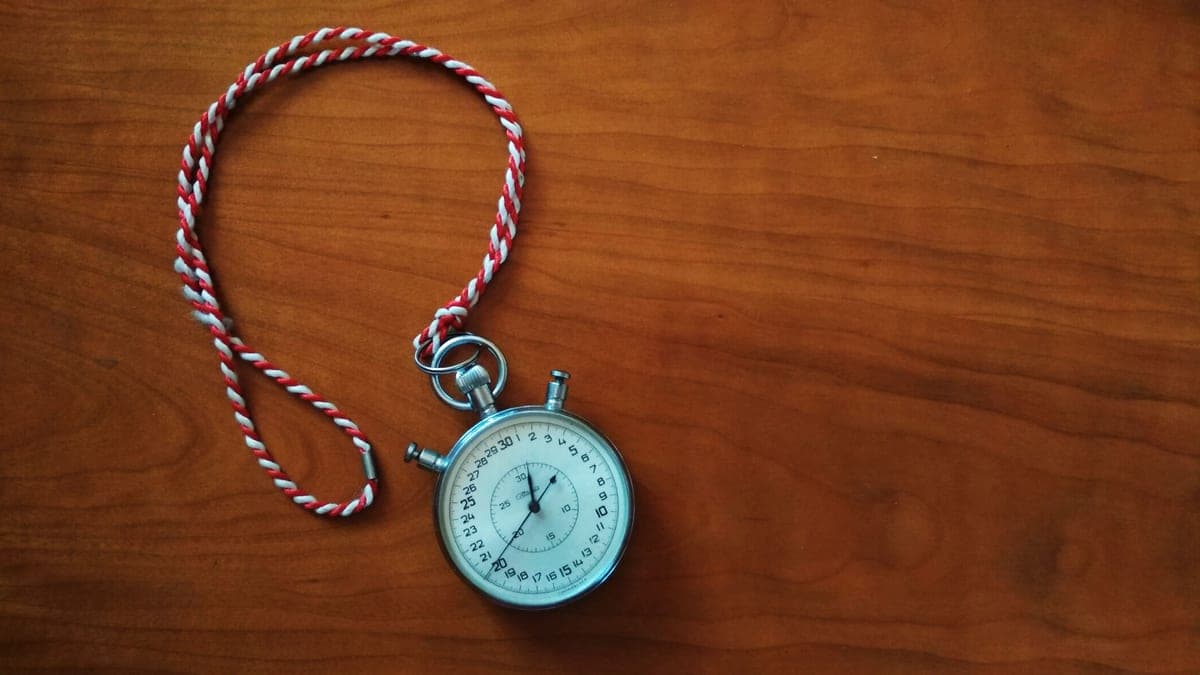
Flashlight runtime, computed
How runtime is defined, why thermal step-down happens, and the arithmetic to compute a real figure yourself.
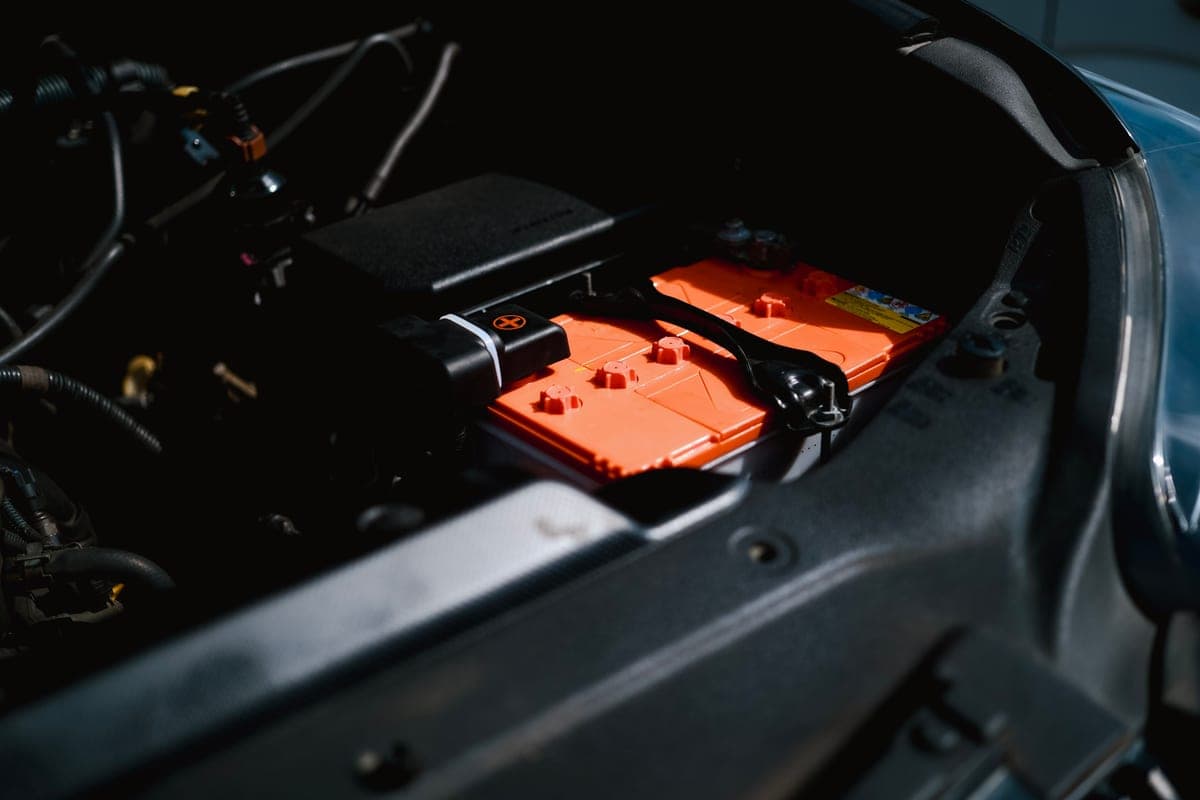
18650 vs 21700, and every other cell format
Cell formats compared on capacity, current rating and dimensions, with the safety rules that matter.
Petzl Swift LT review
A specification-first review of the Petzl Swift LT: what 43 grams and 3.27 watt-hours actually cover, and the three things that weight costs you.
Found a number that is wrong? Tell us and we will fix it and say so. Our methodology shows every formula on this page.