EDC Flashlights
Wurkkos FC11C review
The cheapest way to buy the flashlight specification that actually changes how a light feels. Also the thinnest specification sheet on this site.
By Scooter M. · Published · Updated
| # | Product | Best for | Output | Price |
|---|---|---|---|---|
| 1 | 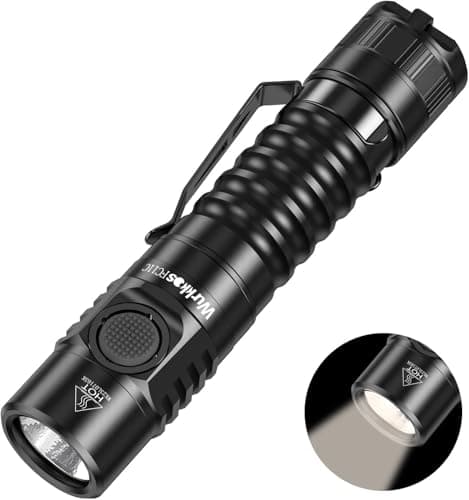 Wurkkos FC11CTop pick1,200 lumens at a stated CRI of 90 for a budget price. Color rendering is the spec that changes how a light feels, and this is the cheapest way to get it. | High color accuracy for the least money | 1,200 lm |
We earn a commission if you buy through the links on this page, at no extra cost to you. It does not change what we recommend or the order they appear in. Full disclosure. Prices checked September 21, 2026.

We have not tested this flashlight, own none of the products on this site, and have no laboratory. This review works from what Wurkkos publishes — which is two figures — and from what those two figures do and do not allow us to say.
The case for the FC11C is unusually easy to state. A stated CRI of 90, with 1,200 lumens, on a standard 18650, with USB-C on the light, for under thirty dollars. Every part of that sentence is unusual at the price, and the CRI figure is the one that matters most.
What Wurkkos publishes
| Specification | Published figure |
|---|---|
| Maximum output | 1,200 lm |
| Color rendering | CRI 90, stated as '90 High CRI' |
| Battery | 18650, USB-C rechargeable |
| Runtime | not published |
| Beam distance | not published |
| Peak candela | not published |
| Weight | not published |
| Ingress protection | not published |
Two figures and a cell format. Against the Streamlight MacroStream, which publishes output, candela, beam distance, per-mode runtime, weight, an impact rating and IPX4, that is a different order of disclosure — though the MacroStream currently costs about twice as much, which is part of what you are paying for.
Why CRI 90 is the figure worth buying
The color rendering index scores how faithfully a light source renders color against a reference, on a scale to 100. A typical cheap cool-white LED sits around 70. The gap between 70 and 90 is the single most noticeable upgrade in a flashlight, and it has nothing to do with brightness.
- Reds stop looking brown. Under a CRI 70 emitter, red wire insulation, blood, rust and brake dust all drift toward the same muddy shade.
- Wire colors become distinguishable — which is why our CRI for trades page exists and why electricians pay for it.
- Skin looks like skin, which matters for first aid more than people expect.
- Detail resolves better at low output. A high-CRI light at 100 lumens often reads as more useful than a cool-white one at 200.
The 18650 is the right decision
A standard 18650 with USB-C charging on the light is the correct arrangement at this price, and better than the built-in cells common in budget lights. You can replace the cell in five years for a few dollars instead of replacing the light, you can carry a charged spare, and you can charge it from any cable you already own. Our 18650 versus 21700 guide covers the format.
Wurkkos does not publish the capacity of the included cell, so the stored energy — and therefore any runtime arithmetic — is not available. A typical 3,400 mAh 18650 would hold about 12.2 watt-hours, but we cannot tell you that is what is in the box, so we will not present it as this light's figure.
What cannot be said about it
This is where the price shows. Five specifications a buyer would reasonably want are simply absent:
- Runtime, at any level. With no battery capacity published either, there is neither a figure nor arithmetic. On a 1,200-lumen light this is the most consequential gap — see how runtime is defined.
- Beam distance and candela. So how far it reaches cannot be computed, and whether the beam is a flood or a thrower is unknown.
- Weight, on a light you carry.
- Ingress protection. No rating at all. Not evidence it leaks, but an unknown on a pocket light.
- Impact resistance. ANSI FL 1 specifies a test; Wurkkos quotes no result.
There is a sixth, subtler gap: Wurkkos states 'CRI 90' without naming a measurement standard or a color temperature. CRI varies with tint, and a figure without those qualifiers is a manufacturer claim rather than a specification. We repeat it as what Wurkkos says, not as a verified result.
Who should buy it
Buy it if you want to find out whether high CRI matters to you and you do not want to spend a hundred dollars finding out. That is a real and common situation, and this is the cheapest honest answer to it on the market we can see.
Buy it also as a second light — a workshop, kitchen or toolbag light where color accuracy pays off daily and a missing IP rating does not matter. As a third-of-the-price companion to a documented primary light, it is excellent.
Who should buy something else
Skip it if this is your only light. No ingress rating, no impact rating and no runtime is a lot of unknown for a light you depend on. The MacroStream publishes all three, for roughly double the price.
Skip it if you need reach. No beam distance is published, and high-CRI emitters throw less than the cool-white ones they replace because the phosphor spreads the source. If distance is the job, see throwers.
Skip it if you want a known brand and a warranty path. Wurkkos is a budget maker without the service network Streamlight or Fenix have, and at this price that is part of what you are trading away.
Skip it if a AA light suits you better. The Acebeam Pokelit AA publishes CRI 90+, IP68 and 550 lumens for about twenty dollars, on a cell you can buy anywhere — less output, more disclosure.
The verdict, stated as what it commits to
Wurkkos commits to 1,200 lumens, CRI 90 and a standard 18650 with USB-C, for under thirty dollars. Taken on its own terms that is one of the best value propositions on this site, because CRI is the specification that changes how a light feels to use and this is the cheapest route to it.
What Wurkkos does not commit to is runtime, reach, weight, weather sealing or drop resistance — and it does not qualify the CRI claim it does make. Buy it as a cheap, color-accurate second light and it is hard to beat. Buy it as the light you will rely on and you are buying five unknowns to save thirty dollars. Our beginners' guide puts it in the field.
The picks, in full
Top pick · High color accuracy for the least money
Wurkkos FC11C
1,200 lumens at a stated CRI of 90 for a budget price. Color rendering is the spec that changes how a light feels, and this is the cheapest way to get it.
CRI 90 versus the CRI 70 typical of a cheap cool-white emitter is the single most noticeable upgrade in a flashlight, and it is nothing to do with brightness. Reds stop looking brown. Wire insulation colors become distinguishable.
The cost of high CRI is output: the same emitter family loses roughly 10 to 20 percent of its lumens for the better phosphor. A 1,200-lumen high-CRI light is doing well.
18650 is the right cell format here — replaceable, standard, and enough energy to hold a useful level.
What works
- CRI 90 at a price where CRI is usually not mentioned at all
- Standard 18650, replaceable anywhere
- USB-C on the light itself
What does not
- No sourced runtime, candela, beam distance or IP rating
- High CRI costs output; treat the 1,200 figure as generous
- A budget brand with a thin published spec table
Skip this ifyou need maximum reach per dollar. High-CRI emitters throw less than the cool-white ones they replace.
Published specification
- Peak intensity
- not published
- Beam distance
- not published
- Runtime
- not published
- Battery
- 18650, USB-C rechargeableWurkkos FC11C — the brand's own listing on Amazon.com (retrieved September 1, 2026)
- Weight
- not published
- Ingress
- not published
- CRI
- 90Stated as '90 High CRI' on the listingWurkkos FC11C — the brand's own listing on Amazon.com (retrieved September 1, 2026)
$35.99 · 20% off
#ad · how this is funded · price as of September 21, 2026
Questions people actually ask
Is the Wurkkos FC11C worth it?
As a cheap second light, yes - a stated CRI of 90 with 1,200 lumens on a standard 18650 for under thirty dollars is the best value in color rendering we can find. As an only light, no: Wurkkos publishes no runtime, beam distance, weight, ingress or impact rating for it.
What is CRI 90 and why does it matter?
CRI scores how faithfully a light renders color against a reference, out of 100. A cheap cool-white LED is about 70; at 90, reds look red rather than brown and wire colors become distinguishable. It is the flashlight upgrade most people notice most, and it is unrelated to brightness.
How long does the Wurkkos FC11C run?
Wurkkos does not publish a runtime at any level, and does not publish the capacity of the included 18650 either, so there is no figure and nothing to compute from. We will not invent one. Treat 1,200 lumens as a burst maximum rather than a level it holds.
Is the Wurkkos FC11C waterproof?
Wurkkos publishes no ingress rating for it, so we do not state one. That is a disclosure gap rather than evidence it leaks. If a published rating matters, the Acebeam Pokelit AA states IP68 for about twenty dollars and the Streamlight MacroStream states IPX4.
Does high CRI reduce brightness?
Yes. A fuller phosphor renders color better and absorbs more of the emitter's output, so the same LED family typically loses 10 to 20 percent of its lumens when specified for high CRI. That is why 1,200 lumens from a high-CRI emitter is a respectable figure.
Wurkkos FC11C or Streamlight MacroStream?
The Wurkkos for color accuracy, more output, a replaceable 18650 and roughly half the price. The MacroStream for evidence: Streamlight publishes candela, beam distance, per-mode runtime, weight, IPX4 and a 1 m impact rating, and Wurkkos publishes none of them. That is the real choice - cheaper and brighter against known and rated.
Can you replace the battery in the Wurkkos FC11C?
Yes - it takes a standard 18650 cell, which is the right decision at this price. You can carry a charged spare, swap it in the dark, and replace a worn cell for a few dollars in a few years rather than replacing the light.
Sources
Every figure on this page came from one of the documents below, read on the date shown. We do not cite other review sites, forum posts or video reviews as sources of fact.
- Wurkkos FC11C — the brand's own listing on Amazon.com (retrieved September 1, 2026)
- Streamlight MacroStream USB — manufacturer spec page (retrieved September 1, 2026)
- Acebeam Pokelit AA — the brand's own listing on Amazon.com (retrieved September 1, 2026)
- ANSI/PLATO FL 1 flashlight performance standard — definitions of lumens, peak beam intensity, beam distance, runtime, impact and water resistance
- IEC 60529 — the IP (ingress protection) rating system
Read next
Best EDC flashlights, ranked on what they actually hold
The full EDC ranking: cell format, stored energy, color rendering and beam shape, every figure sourced.

Best high-CRI flashlights
High-CRI picks, the output they give up for the phosphor, and why the trade is usually worth making.
Best EDC flashlights under $50
Budget EDC picks, with a straight account of what the price band actually costs you.
Best flashlights for beginners
A first flashlight, ranked for simplicity, ordinary batteries and published specifications rather than for the lumen number on the box.
CRI explained
What CRI measures, the R9 problem, the output cost, and how CRI differs from color temperature.

Streamlight MacroStream USB review
A specification-first review of the Streamlight MacroStream USB — the only small EDC light we cover that publishes output, candela, reach, runtime, weight and an ingress rating together.
Found a number that is wrong? Tell us and we will fix it and say so. Our methodology shows every formula on this page.