EDC Flashlights
Best flashlights for beginners
Almost everyone's first good flashlight is the wrong one, and almost always for the same four reasons. This page is about avoiding those, then naming the light.
By Scooter M. · Published · Updated
| # | Product | Best for | Output | Price |
|---|---|---|---|---|
| 1 | 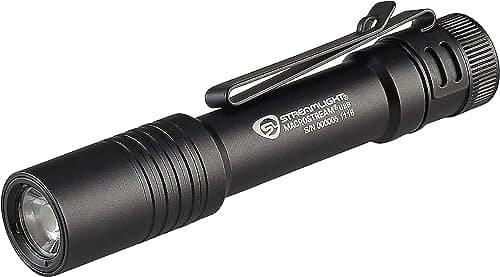 Streamlight MacroStream USBTop pick500 lumens, 2,000 candela, 90 m and two hours on high — every figure published per mode by the maker. That is the reason it leads. | The best-documented small EDC light here | 500 lm | |
| 2 | 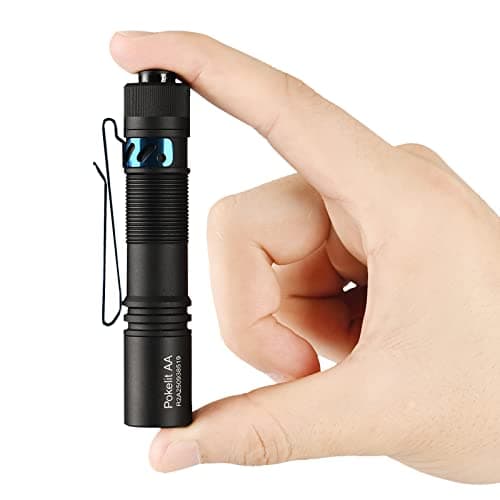 Acebeam Pokelit AA (high CRI)550 lumens at a stated 90-plus CRI, IP68, on a single AA. The combination of color accuracy and a standard cell is rare. | High CRI on a AA cell | 550 lm | |
| 3 | 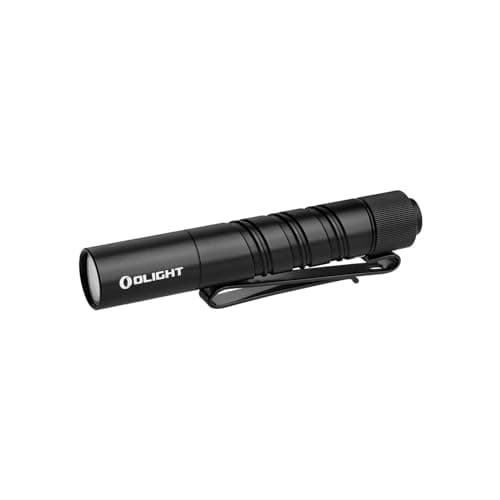 Olight i3T 2 EOS200 lumens, 62 m of stated throw, IPX8, on a single AAA cell. The one to buy if you want no charging routine at all. | A AAA light that lives on a keyring and never needs thinking about | 200 lm | |
| 4 | 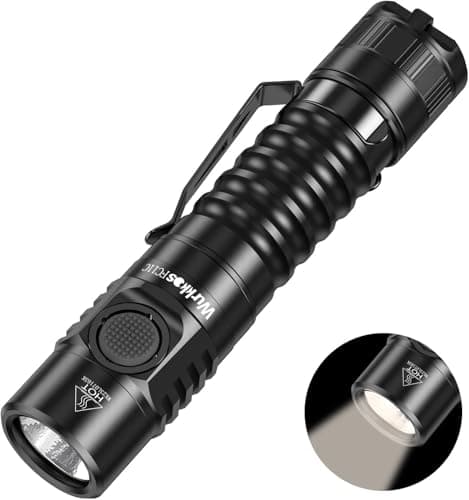 Wurkkos FC11C1,200 lumens at a stated CRI of 90 for a budget price. Color rendering is the spec that changes how a light feels, and this is the cheapest way to get it. | High color accuracy for the least money | 1,200 lm | |
| 5 | 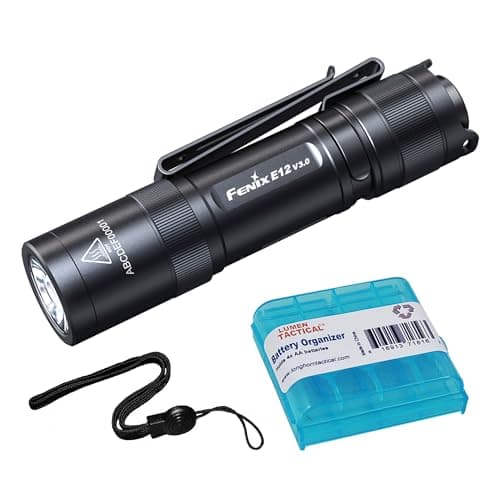 Fenix E12 V3.0200 lumens on one AA cell in a penlight body. Simple, replaceable, and the least likely light here to be flat when you need it. | A pen-shaped AA light for pockets and toolbags | 200 lm | |
| 6 | 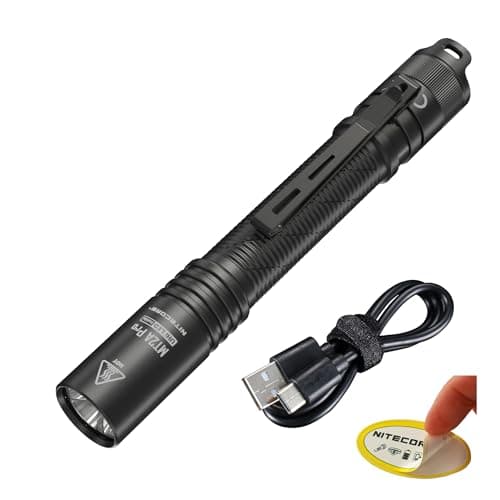 Nitecore MT2A Pro1,000 lumens and 255 m of stated reach on AA cells, with USB-C charging. Dual power done properly. | AA cells with USB-C and real reach | 1,000 lm | |
| 7 | 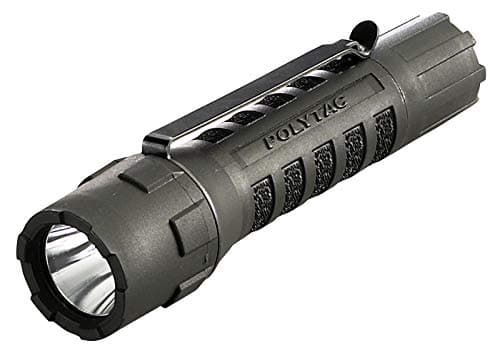 Streamlight PolyTac600 lumens, 214 m, 2.75 hours, IPX7 and 3 m impact resistance in a nylon polymer body. The one you leave in a truck. | A polymer duty light you will not worry about | 600 lm |
We earn a commission if you buy through the links on this page, at no extra cost to you. It does not change what we recommend or the order they appear in. Full disclosure. Prices checked September 21, 2026.

If you have never bought a flashlight seriously before, the category is unusually hostile to newcomers. The number printed largest on every box is the one that matters least, half the listings quote a figure no standard governs, and the light most people buy first is a 10,000-lumen listing for eighteen dollars that will do nothing it claims.
This page is deliberately narrow. Our buyer's checklist teaches you to read a specification sheet, and it is the better page if you want to evaluate lights yourself. This one assumes you do not want to learn the category — you want to be told which light to buy first, and why.
The four mistakes, in the order people make them
- Buying on lumens. Peak output is a burst figure. Every LED converts most of its input to heat, so a small light at its maximum steps down within a couple of minutes — and a listing that quotes only a peak number is quoting the part you will almost never use. Ask what it does after ten minutes.
- Believing a number no standard governs. ANSI/PLATO FL 1 defines how output, beam distance, runtime and impact resistance are measured. A maker who cites it is making a checkable claim. A listing that says 100,000 lumens is not citing anything, because that figure does not exist in a handheld light.
- Buying a cell format you have not thought about. A light with a built-in battery is one dead cell from being a paperweight. A light on AA or AAA runs on cells from any shop in the country. An 18650 or 21700 light gives you more energy and a charger to manage. None of these is wrong; picking one by accident is.
- Buying a specialist. Throwers, tactical lights and headlamps all exist for specific jobs. Bought as a first general-purpose light, each is frustrating in a different way — see throw versus flood for why the beam that reaches a kilometer is useless in a cupboard.
How these were chosen
- A simple interface. One or two modes reachable without a sequence. A beginner should not have to learn a mode-cycling grammar to get low light at 3 a.m.
- A battery you understand, and preferably one you can buy at a gas station.
- Something published beyond lumens — a beam distance, a runtime, an ingress rating. Where a maker publishes nothing else, we say so rather than filling the gap.
- A price low enough that a mistake is survivable. Most of this page is under fifty dollars.
- Currently purchasable, and verified against the live listing before it was written about. We have not tested any of them: every figure below is the maker's own. See our methodology.
What each one publishes
| Light | Output | Battery | Runtime | Ingress |
|---|---|---|---|---|
| Wurkkos FC11C | 1,200 lm | 18650, USB-C | not published | not published |
| Nitecore MT2A Pro | 1,000 lm | AA or USB-C | not published | not published |
| Streamlight PolyTac | 600 lm | 2 x CR123A | 2.75 h / 5.5 h / 34 h | IPX7 |
| Acebeam Pokelit AA | 550 lm | 1 x AA | not published | IP68 |
| Streamlight MacroStream | 500 lm | Built-in, USB | 2 h high / 8 h low | IPX4 |
| Fenix E12 V3.0 | 200 lm | 1 x AA | not published | not published |
| Olight i3T 2 EOS | 200 lm | 1 x AAA | not published | IPX8 |
Now look at the ranking below against that output column, because they are close to inverted. The 1,200-lumen light is fourth and the 500-lumen light is first. That is the whole argument of this page in one comparison: the brightest light on a list is almost never the best first light on it.
The picks, and who each one is wrong for
Streamlight MacroStream — buy this one
500 lumens, 2,000 candela, 90 m, 2 hours on high and 8 on low, 62.4 g, IPX4 and a tested 1 m impact rating. That list is the reason it leads: it is the most completely documented small light on this site, and every figure is Streamlight's own rather than a listing claim. A beginner buying this knows exactly what they are getting, which is true of almost nothing else in the category.
Two modes, USB charging on the light, and a pocket clip. There is nothing to learn. There is a full review.
Skip it if you want replaceable cells — the battery is built in, so in ten years the light is only as good as that cell. Skip it too if IPX4 worries you; that is splash resistance, not immersion.
Acebeam Pokelit AA — the cheapest genuinely good light here
550 lumens on a single AA, CRI 90+ and a published IP68, for about twenty dollars. Two things make it remarkable at that price: a dust-tight and immersion-rated body is unusual under fifty dollars, and high CRI at any price is rare enough that we have a whole page about it.
High CRI is the upgrade nobody tells beginners about. It is not brightness — it is whether colors look like themselves. Reds stop looking brown; a red wire stops looking like a black one. Once you have used a high-CRI light, ordinary cool white looks wrong.
Skip it if you need a runtime figure — Acebeam publishes none, so the 550 lumens has no duration attached. It also takes a 14500 lithium cell for more output, which is a step beyond what a first light needs.
Olight i3T 2 EOS — the one that is always with you
200 lumens, 62 m, IPX8, on one AAA, on a keyring, for about twenty dollars. The argument for it is not performance — it is that the best flashlight is the one in your pocket, and a light this small never gets left behind. A tail switch and two modes, nothing to learn.
IPX8 on a twenty-dollar keychain light is a genuinely strong rating: it means continuous immersion, not splashes.
Skip it as your only light. 200 lumens on a AAA is a find-the-keyhole tool, not a walk-the-dog-down-an-unlit-lane tool. Most people should own this *and* something bigger. See keychain flashlights.
Wurkkos FC11C — the most light per dollar, with a caveat
1,200 lumens at a stated CRI of 90, on a standard 18650 with USB-C on the light, for under thirty dollars. Nothing else here comes close on value, and the combination of high CRI with real output is one most brands charge triple for. There is a full review.
Skip it if you want a documented light. Wurkkos publishes output and CRI and nothing else — no runtime, no beam distance, no weight, no IP rating. For a first light that is a real trade: you are buying on price and on the CRI figure, and accepting that the rest is unknown until it arrives.
Fenix E12 V3.0 — a AA light that disappears in a pocket
200 lumens on one AA in a pen-shaped body, from a brand with a real reputation. It is here for a specific kind of beginner: someone who wants a light in a bag, a glovebox or a toolbag that will still work in two years without a thought, on a cell from any shop.
Skip it if you want figures. Fenix publishes 200 lumens for this one and, on the listing we could source, little else — which is unusual for Fenix and disappointing on a thirty-dollar light. Skip it too if 200 lumens sounds low; it is, and the Pokelit gives you 550 for less.
Nitecore MT2A Pro — AA cells with real reach
1,000 lumens and 255 m of published beam distance from a AA light that also charges over USB-C. That reach is the standout: 255 m works back to roughly 16,000 candela, which is more than most pocket lights manage and far more than anything else on this page.
The dual-power arrangement is the beginner-friendly part. Charge it normally; if it dies far from a socket, put an alkaline AA in it and keep going.
Skip it if you want it documented. No runtime, no weight, and Nitecore lists it as waterproof without giving a rating — which is a claim rather than a specification. At around forty-five dollars it is among the dearer lights here and comfortably the least evidenced of them.
Streamlight PolyTac — the one you will never worry about
600 lumens, 214 m, a full per-mode runtime table of 2.75 hours on high, 5.5 on medium and 34 on low, IPX7, a tested 3 m impact rating and 119 g with cells. The polymer body is the point: it absorbs impact that an aluminum one transmits to the internals, which is why its drop rating is the highest on this page.
It runs on two CR123A lithium primaries, included. Those store for roughly a decade, which makes this the right light for a glovebox or a go-bag where a rechargeable would be flat when you needed it.
Skip it if you will use it daily — CR123A cells cost real money to replace, and for everyday use a rechargeable is cheaper to run. It is also the most expensive light on this page.
How to buy on this page
- You want one light and no decisions — Streamlight MacroStream.
- You want the most light for the least money — Wurkkos FC11C, accepting the thin specification sheet.
- You want the cheapest light that is genuinely good — Acebeam Pokelit AA at about twenty dollars, with IP68 and high CRI.
- You want it on your keys — Olight i3T 2 EOS.
- It lives in a glovebox or a go-bag — Streamlight PolyTac, on lithium primaries that keep for a decade.
- You want to see a long way — Nitecore MT2A Pro, 255 m on AA cells.
- You have fifty dollars and want options — EDC flashlights under $50.
Two things to do after it arrives
Learn the low mode first. Beginners use high for everything and find the light disappointing, because high is the mode that steps down, dazzles you off white walls and empties the battery. Most real use is 50 to 200 lumens. How many lumens do I need puts numbers to ordinary tasks.
If it takes lithium cells, read the airline rules before you fly. Loose lithium cells and many rechargeable lights have restrictions that catch people out at security. Flying with flashlights covers it.
What we would not tell you
We would not tell you these are the seven best lights in the world, or that we have carried them. We have not. Every figure above is the manufacturer's own, cited and dated, and where a maker publishes nothing we have written that rather than guessed.
We would also not tell you that a first flashlight is a permanent decision. It is a thirty-dollar experiment that teaches you what you actually want — which is usually more low-mode runtime, better color and a smaller body than you expected, and almost never more lumens.
The picks, in full
Top pick · The best-documented small EDC light here
Streamlight MacroStream USB
500 lumens, 2,000 candela, 90 m and two hours on high — every figure published per mode by the maker. That is the reason it leads.
2,000 candela and 90 m are consistent with each other, which is a better sign than it sounds. The FL1 beam distance is the square root of candela divided by 0.25 lux: the square root of 2,000 over 0.25 is 89.4 m. Streamlight's published figures check out to within a meter.
Two hours on high for 500 lumens implies roughly 2.5 watt-hours of usable energy, which is about right for a light this size. Nothing here is being oversold.
62 grams is pocketable in a way that a 21700 light is not, and that is the trade you are making against a bigger cell.
What works
- Every headline figure published per mode, and internally consistent
- 62 g with a real clip
- The arithmetic between its candela and its distance actually reconciles
What does not
- IPX4, so splash-resistant and no more
- Built-in cell rather than a replaceable 18650
- 500 lumens is modest against the 1,600-lumen headlines nearby
Skip this ifyou want reach. 2,000 candela is a close-range beam and no setting will change that.
Published specification
- Output
- 500 lmHigh. Low is 50 lm.Streamlight MacroStream USB — manufacturer spec page (retrieved September 1, 2026)
- Peak intensity
- 2,000 cdStreamlight MacroStream (500 lm, 2,000 cd) — the brand's own listing on Amazon.com (retrieved September 1, 2026)
- Beam distance
- 90 mHigh. 30 m on low.Streamlight MacroStream USB — manufacturer spec page (retrieved September 1, 2026)
- Runtime
- 2 h on high, 8 h on lowStreamlight MacroStream USB — manufacturer spec page (retrieved September 1, 2026)
- Battery
- Built-in Li-ion, charges in 4 hStreamlight MacroStream USB — manufacturer spec page (retrieved September 1, 2026)
- Weight
- 62.4 g (2.2 oz)Streamlight MacroStream USB — manufacturer spec page (retrieved September 1, 2026)
- Ingress
- IPX41 m impact resistance testedStreamlight MacroStream USB — manufacturer spec page (retrieved September 1, 2026)
#ad · how this is funded · price as of September 21, 2026
Pick 2 · High CRI on a AA cell
Acebeam Pokelit AA (high CRI)
550 lumens at a stated 90-plus CRI, IP68, on a single AA. The combination of color accuracy and a standard cell is rare.
IP68 on a AA pocket light is the specification that justifies the price over a supermarket torch. Dust tight and immersion rated is a different class of object.
A single alkaline AA holds about 1.9 Wh. That is a long run at 50 lumens and a short one at 550; the 14500 lithium option roughly doubles the usable power at the cost of storage life.
CRI above 90 in a AA body is unusual. Most makers reserve the good phosphor for the 18650 lights.
What works
- 90-plus CRI with IP68 in a AA form factor
- Takes a AA or a 14500, so you choose storage life or output
- Clip and pocket profile are genuinely well designed
What does not
- No sourced runtime, candela or beam distance
- 550 lumens on an alkaline AA will not be sustained
- Costs meaningfully more than a comparable cool-white light
Skip this ifyou want maximum output for the money. You are paying for color accuracy and an ingress rating, not for lumens.
Published specification
- Output
- 550 lmAcebeam Pokelit AA — the brand's own listing on Amazon.com (retrieved September 1, 2026)
- Peak intensity
- not published
- Beam distance
- not published
- Runtime
- not published
- Battery
- 1 x AA (14500 compatible)Acebeam Pokelit AA — the brand's own listing on Amazon.com (retrieved September 1, 2026)
- Weight
- not published
$29.95 · 33% off
#ad · how this is funded · price as of September 21, 2026
Pick 3 · A AAA light that lives on a keyring and never needs thinking about
Olight i3T 2 EOS
200 lumens, 62 m of stated throw, IPX8, on a single AAA cell. The one to buy if you want no charging routine at all.
62 m from 200 lumens implies roughly 960 candela, working backward through the FL1 definition. That is a tight little beam for the output, which is what you want on a light this small.
IPX8 on a AAA twist light is unusual and worth the money on its own.
One alkaline AAA is about 1.3 Wh. At a modest 30 lumens that is a genuinely long night; at 200 lumens it is minutes.
What works
- IPX8 immersion rating on a keychain light
- AAA cells: no charging, no degradation, available anywhere
- Published beam distance, which most keychain lights omit
What does not
- 200 lumens is the ceiling and there is no reserve
- No published runtime
- Twist switch means two hands
Skip this ifyou want more than a few minutes at full output. A single AAA cannot hold it and no design gets around that.
Published specification
- Peak intensity
- not published
- Beam distance
- 62 mOlight i3T 2 EOS — the brand's own listing on Amazon.com (retrieved September 1, 2026)
- Runtime
- not published
- Battery
- 1 x AAAOlight i3T 2 EOS — the brand's own listing on Amazon.com (retrieved September 1, 2026)
- Weight
- not published
#ad · how this is funded · price as of September 21, 2026
Pick 4 · High color accuracy for the least money
Wurkkos FC11C
1,200 lumens at a stated CRI of 90 for a budget price. Color rendering is the spec that changes how a light feels, and this is the cheapest way to get it.
CRI 90 versus the CRI 70 typical of a cheap cool-white emitter is the single most noticeable upgrade in a flashlight, and it is nothing to do with brightness. Reds stop looking brown. Wire insulation colors become distinguishable.
The cost of high CRI is output: the same emitter family loses roughly 10 to 20 percent of its lumens for the better phosphor. A 1,200-lumen high-CRI light is doing well.
18650 is the right cell format here — replaceable, standard, and enough energy to hold a useful level.
What works
- CRI 90 at a price where CRI is usually not mentioned at all
- Standard 18650, replaceable anywhere
- USB-C on the light itself
What does not
- No sourced runtime, candela, beam distance or IP rating
- High CRI costs output; treat the 1,200 figure as generous
- A budget brand with a thin published spec table
Skip this ifyou need maximum reach per dollar. High-CRI emitters throw less than the cool-white ones they replace.
Published specification
- Peak intensity
- not published
- Beam distance
- not published
- Runtime
- not published
- Battery
- 18650, USB-C rechargeableWurkkos FC11C — the brand's own listing on Amazon.com (retrieved September 1, 2026)
- Weight
- not published
- Ingress
- not published
- CRI
- 90Stated as '90 High CRI' on the listingWurkkos FC11C — the brand's own listing on Amazon.com (retrieved September 1, 2026)
$35.99 · 20% off
#ad · how this is funded · price as of September 21, 2026
Pick 5 · A pen-shaped AA light for pockets and toolbags
Fenix E12 V3.0
200 lumens on one AA cell in a penlight body. Simple, replaceable, and the least likely light here to be flat when you need it.
One AA cell holds roughly 1.9 Wh, which at a genuine 30 lumens is a very long night and at 200 lumens is well under an hour.
The penlight shape is the point: it sits in a shirt pocket or a tool roll where a tube light will not.
Fenix's own site did not carry a page for this variant when we looked, so we cite the brand's listing and assert only what it states.
What works
- AA cells, so it is never dead for long
- Pocket-clip penlight shape
- Fenix build quality at the bottom of the range
What does not
- 200 lumens is the ceiling
- No sourced runtime, candela, beam distance or IP rating
- No rechargeable option
Skip this ifyou need to light a room or a yard. It is a close-work light and nothing more.
Published specification
- Peak intensity
- not published
- Beam distance
- not published
- Runtime
- not published
- Weight
- not published
- Ingress
- not published
#ad · how this is funded · price as of September 21, 2026
Pick 6 · AA cells with USB-C and real reach
Nitecore MT2A Pro
1,000 lumens and 255 m of stated reach on AA cells, with USB-C charging. Dual power done properly.
255 m from 1,000 lumens works back to roughly 16,300 candela. That is a moderately tight beam — real reach without the tunnel vision of a dedicated thrower.
AA plus USB-C is the combination that solves the emergency case: charge it normally, and when the power has been out for three days put alkalines in it.
Nitecore lists it as waterproof with no IP number, which is exactly the sort of claim we will not carry into the spec table.
What works
- AA compatibility and USB-C charging in the same light
- 255 m of published reach
- 1,000 lumens is high for the AA class
What does not
- Waterproof claim without a rating
- No sourced runtime or candela
- AA sets the diameter, so it is a wide pocket light
Skip this ifyou want the smallest possible carry. The AA format costs you length and girth over a 16340 light.
Published specification
- Output
- 1,000 lmNitecore MT2A Pro — the brand's own listing on Amazon.com (retrieved September 1, 2026)
- Peak intensity
- not published
- Beam distance
- 255 mListed as a 279-yard beam; converted to metersNitecore MT2A Pro — the brand's own listing on Amazon.com (retrieved September 1, 2026)
- Runtime
- not published
- Battery
- AA, dual power compatible, USB-C rechargeableNitecore MT2A Pro — the brand's own listing on Amazon.com (retrieved September 1, 2026)
- Weight
- not published
- Ingress
- not published(Listed as waterproof without a rating)
#ad · how this is funded · price as of September 21, 2026
Pick 7 · A polymer duty light you will not worry about
Streamlight PolyTac
600 lumens, 214 m, 2.75 hours, IPX7 and 3 m impact resistance in a nylon polymer body. The one you leave in a truck.
2.75 hours at 600 lumens from two CR123A cells is a very efficient result — that is roughly 6 watt-hours doing real work rather than being thrown away as heat.
3 m of impact resistance is the highest figure in this roundup. Polymer absorbs a drop that would dent an aluminum body.
119 g with cells installed makes this the lightest full-size duty light here.
What works
- Full per-mode table published, all three modes
- 3 m impact resistance and IPX7
- 119 g, with a ten-year shelf life on its cells
What does not
- 600 lumens is modest against the rechargeable competition
- CR123A running costs add up
- We could not pin a current ASIN for it, so the buy link is a tagged Amazon search
Skip this ifyou use a light daily. CR123A primaries are the wrong economics for frequent use; buy a rechargeable instead.
Published specification
- Output
- 600 lmHigh. Medium 260 lm, low 35 lm.Streamlight PolyTac — manufacturer spec page (retrieved September 1, 2026)
- Peak intensity
- not published(Listed per mode; no value on the page we read)
- Beam distance
- 214 mHigh. 140 m medium, 52 m low.Streamlight PolyTac — manufacturer spec page (retrieved September 1, 2026)
- Runtime
- 2.75 h high / 5.5 h medium / 34 h lowStreamlight PolyTac — manufacturer spec page (retrieved September 1, 2026)
- Battery
- 2 x CR123A lithium (included)Streamlight PolyTac — manufacturer spec page (retrieved September 1, 2026)
- Weight
- 119 g (4.2 oz) with batteriesStreamlight PolyTac — manufacturer spec page (retrieved September 1, 2026)
- Ingress
- IPX7Waterproof to 1 m for 30 minutes; 3 m impact resistance testedStreamlight PolyTac — manufacturer spec page (retrieved September 1, 2026)
#ad · how this is funded · price as of September 21, 2026
Questions people actually ask
What flashlight should a beginner buy?
The Streamlight MacroStream, because it is the most completely documented small light we cover: 500 lumens, 2,000 candela, 90 m, 2 hours on high and 8 on low, 62.4 g and IPX4, all published by Streamlight. A beginner buying it knows exactly what they are getting.
How many lumens does a beginner need?
Far fewer than the box suggests. Most real use - finding something in a cupboard, walking a path, checking under a sink - sits between 50 and 200 lumens. Peak output is a burst figure that steps down within minutes as the light heats up, so buying on it is the commonest beginner mistake.
Are cheap flashlights on Amazon any good?
Some are, and the listings are the problem rather than the lights. Any listing quoting tens of thousands of lumens from a handheld light is citing no standard at all. Look instead for a maker citing ANSI/PLATO FL 1, or for a published runtime and beam distance, which are checkable claims.
Should my first flashlight use AA batteries or be rechargeable?
AA or AAA if the light will sit in a drawer, a glovebox or a bag for months, because alkaline cells are available anywhere and there is no charge cycle to forget. Rechargeable if you will use it most days, because the running cost is lower and the output is usually higher.
What is the difference between lumens and candela?
Lumens measure total light output; candela measure intensity in the beam's brightest point, which is what determines how far you see. Under ANSI FL 1 you can convert: candela equals beam distance squared times 0.25. A tight 200-lumen beam outreaches a wide 1,000-lumen one.
Is a tactical flashlight a good first flashlight?
Usually not. Tactical lights are built around momentary switching, strobe and high output for a specific job, and as a general-purpose first light they are heavier, brighter than you need indoors and more expensive than a good EDC light. Our what-makes-it-tactical page explains the distinction.
What is high CRI and does a beginner need it?
CRI measures how accurately a light renders color. A CRI 90 light makes reds look red instead of brown, which matters for wiring, paintwork, cooking and first aid. Nobody needs it, but it is the upgrade most people notice most - and the Acebeam Pokelit AA offers it for about twenty dollars.
How much should I spend on a first flashlight?
Twenty to fifty dollars buys a genuinely good light, and five of the seven picks here fall inside that. Spending more mostly buys output, reach and durability ratings that a first-time buyer has no way to evaluate yet - which is a good reason to spend less and learn what you actually want.
Sources
Every figure on this page came from one of the documents below, read on the date shown. We do not cite other review sites, forum posts or video reviews as sources of fact.
- Streamlight MacroStream USB — manufacturer spec page (retrieved September 1, 2026)
- Acebeam Pokelit AA — the brand's own listing on Amazon.com (retrieved September 1, 2026)
- Olight i3T 2 EOS — the brand's own listing on Amazon.com (retrieved September 1, 2026)
- Streamlight PolyTac — manufacturer spec page (retrieved September 1, 2026)
- Fenix E12 V3.0 — the brand's own listing on Amazon.com (retrieved September 1, 2026)
- Nitecore MT2A Pro — the brand's own listing on Amazon.com (retrieved September 1, 2026)
- Wurkkos FC11C — the brand's own listing on Amazon.com (retrieved September 1, 2026)
- ANSI/PLATO FL 1 flashlight performance standard — definitions of lumens, peak beam intensity, beam distance, runtime, impact and water resistance
- IEC 60529 — the IP (ingress protection) rating system
Read next
Best EDC flashlights, ranked on what they actually hold
The full EDC ranking: cell format, stored energy, color rendering and beam shape, every figure sourced.
What to look for when buying a flashlight
A buyer's checklist in priority order: cell, sustained output, candela, interface, ingress and CRI.
Best EDC flashlights under $50
Budget EDC picks, with a straight account of what the price band actually costs you.
Best AA flashlights
AA and AAA flashlights ranked on published reach, CRI and ingress rating, with the arithmetic behind each and the gaps named.
Lumens vs candela
The distinction that decides reach, with the conversion formula and a table of real published figures.
How many lumens do I need?
A task-by-task lumen chart derived from illuminance requirements rather than from marketing.
Wurkkos FC11C review
A specification-first review of the Wurkkos FC11C: why CRI 90 for under thirty dollars is remarkable, and what buying from a maker that publishes two figures really costs.
Found a number that is wrong? Tell us and we will fix it and say so. Our methodology shows every formula on this page.