Emergency & Home
Best flashlights for a car emergency kit
A car light is judged on one thing: whether it works at the roadside two years after you put it there. Chemistry decides that, not lumens.
By Scooter M. · Published · Updated
| # | Product | Best for | Output | Price |
|---|---|---|---|---|
| 1 | 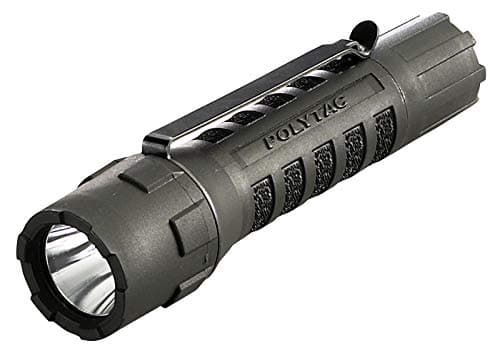 Streamlight PolyTacTop pick600 lumens, 214 m, 2.75 hours, IPX7 and 3 m impact resistance in a nylon polymer body. The one you leave in a truck. | A polymer duty light you will not worry about | 600 lm | |
| 2 | 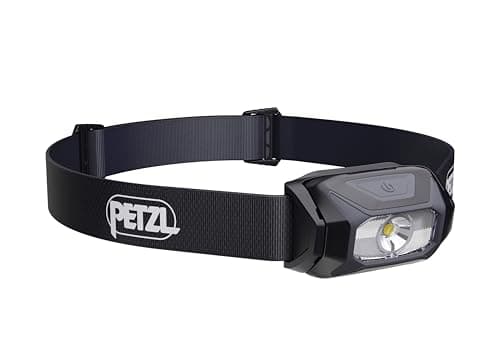 Petzl Tikkina300 lumens on AAA cells with a published ANSI figure. It does one thing and does not pretend to do more. | The cheapest lamp we would actually recommend | 300 lm | |
| 3 | 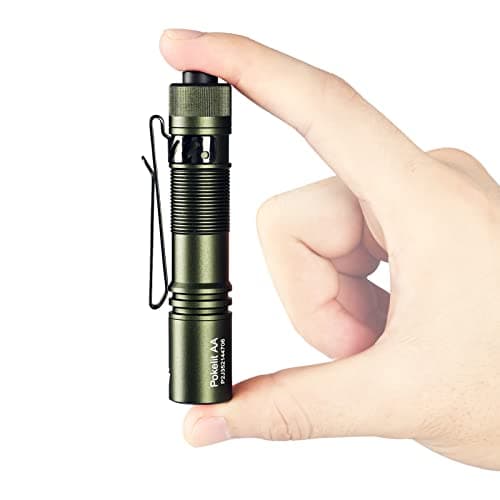 Acebeam Pokelit AA (high CRI)550 lumens at a stated 90-plus CRI, IP68, on a single AA. The combination of color accuracy and a standard cell is rare. | High CRI on a AA cell | 550 lm | |
| 4 | 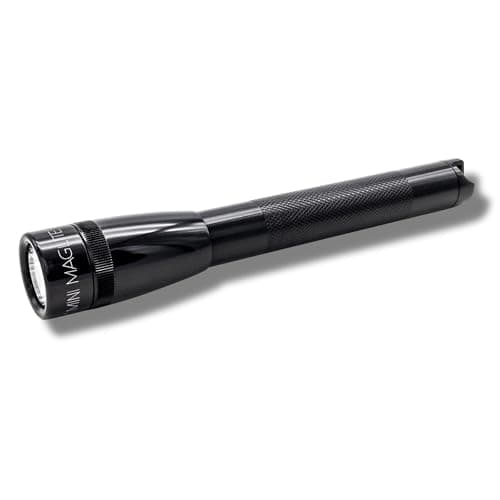 Maglite Mini Maglite LED 2-Cell AA127 lumens that reach 156 meters. A Streamlight MacroStream puts out four times the output and reaches 90. | Reach from a pocket light, on AA cells | 127 lm | |
| 5 | 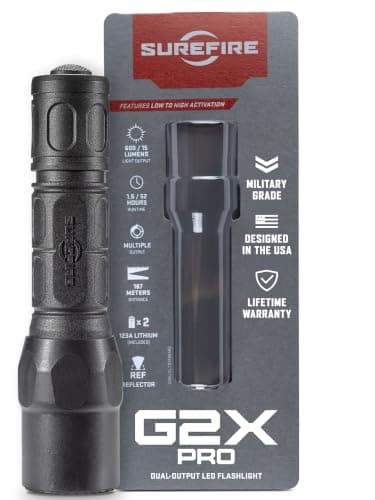 SureFire G2X Pro600 lumens, 8,700 candela, 1.5 hours, and two modes. The specification is modest; the point is that nothing on it can go wrong. | A simple two-mode light that will outlive you | 600 lm |
We earn a commission if you buy through the links on this page, at no extra cost to you. It does not change what we recommend or the order they appear in. Full disclosure. Prices checked October 17, 2026.
Keep a Streamlight PolyTac in the car. It runs on two CR123A lithium primaries that Energizer rates for storage and operation from -40 C to 60 C, it publishes a runtime for all three of its modes, and it is rated IPX7 with a 3 m impact figure - so it is the pick for the one job a car light has, which is working at the roadside two years after you forgot about it. If you would rather have your hands free to change a wheel, add a Petzl Tikkina headlamp for about twenty dollars.
We have not tested any of these lights. We own none of them and have no laboratory. What follows is the makers' own published figures, the cell manufacturers' own datasheets, and the arithmetic those allow - see our methodology.
How we judged this
Nothing on this page is ranked on brightness. A glovebox light spends years doing nothing and then has to work once, in the dark, possibly in a January night or an August afternoon, held by someone who is already having a bad day. That gives a specific and unusual order of criteria:
- Shelf life of the power source. The cell has to hold its charge for years, unattended, with nobody topping it up.
- Published temperature range. A car is the harshest place a household stores a battery. It goes below freezing and it sits in the sun.
- A runtime figure you can plan with. Not a headline maximum - a number per mode, so you know what you have.
- Weather and impact rating. Roadside work happens in rain, on gravel, next to traffic.
- Enough spill to work by, and ideally the ability to put it down or wear it. Reach is the least useful property here.
Cell chemistry, from the cell makers' own datasheets
Flashlight manufacturers publish what their lights do. Only the battery manufacturers publish what the battery does at temperature or after a decade in a drawer, and those figures are the whole argument of this page. All three of the sheets below are Energizer's own, read on October 17, 2026.
| Cell | Chemistry | Operating range | Stated shelf life | Weight |
|---|---|---|---|---|
| Lithium AA (L91) | Lithium iron disulfide | -40 C to 60 C | 25 years at 21 C | 15 g |
| Lithium AAA (L92) | Lithium iron disulfide | -40 C to 60 C | 25 years at 21 C | 7.6 g |
| CR123A (123) | Lithium manganese dioxide | -40 C to 60 C | Not stated on the sheet we read | 16.5 g |
| Alkaline AA (E91) | Zinc manganese dioxide | -18 C to 55 C | 10 years at 21 C | 23 g |
Read the alkaline row against the two lithium rows and the case makes itself. A lithium AA is rated 22 degrees Celsius colder at the bottom of its range, five degrees hotter at the top, holds its charge for two and a half times as long, and weighs a third less. Those are the printed specification lines on Energizer's own sheets, not our inference.
One honest gap: the CR123A sheet we read states the operating and storage range but no shelf-life figure, so we do not quote one for it. The widely repeated ten-year number for CR123A is not on the document we are citing, and we are not going to assert it on Energizer's behalf.
The other thing worth knowing is what alkalines do when they fail, which is leak. Over several years in a warm place the cells vent potassium hydroxide, and the leak usually destroys the light around them. If you are putting alkalines in a car light, store them beside it rather than inside it. Cell formats explained covers the rest of the chemistry.
Why the PolyTac wins on arithmetic as well as chemistry
Two of the picks here run on the same pair of CR123A cells, and because Energizer publishes the cell's capacity and both makers publish per-mode runtimes, it is possible to work out which light does more with the same energy.
That is the shape of this whole category: the figures that decide it are published by three different companies and have to be put on the same axis before they say anything. How runtime is defined sets out the FL 1 rules the hours above are measured under.
What each pick is for
[Streamlight PolyTac](/tactical-flashlights/streamlight-polytac-review) - best for the one light that has to work. 600 lumens, 11,500 candela and 214 m, with 2.75 h / 5.5 h / 34 h published across three modes, 119 g with its cells in, IPX7 and a 3 m impact rating. The two CR123A primaries come in the box. The published candela and the published distance reconcile with each other in every mode, which almost nothing else in this price range manages. Its honest downside is that a polymer duty light is a plain object with no magnet, no clip worth the name and no low mode under 35 lumens.
[Petzl Tikkina](/headlamps/petzl-tikkina-review) - best for actually fixing something. Changing a wheel or looking for a fuse with a torch in your teeth is the argument for a headlamp, and this is the cheapest one we would put in a car. Petzl publishes the complete ANSI FL 1 table: 300 lm over 65 m for 2 h 30 min, 100 lm over 40 m for 10 h, and 7 lm for 100 h, on three AAA cells. Swap the alkalines for lithium AAA and the datasheet range goes to -40 C for 7.6 g a cell. Downsides: no red mode at all, IPX4 rain resistance only, and nothing rechargeable in the box.
[Acebeam Pokelit AA](/edc-flashlights/acebeam-pokelit-aa-review) - best for seeing what you are looking at. Fluid colors and wire colors are the two things you most need to read correctly at a roadside, and this is one of only two lights on this site whose maker publishes a color rendering figure: CRI 90 or better from a Nichia 219F. It also publishes 1,849 candela, 86 m, three per-mode runtimes, 54.6 g and IP68 immersion. Note what comes in the box, though: a 14500 lithium-ion cell, which is a rechargeable and therefore exactly the thing this page warns about. Buy it for the car and run it on a plain AA - Acebeam publishes no separate figures for that cell, which is the gap on an otherwise exemplary sheet.
[Maglite Mini LED 2-Cell AA](/edc-flashlights/mini-maglite-led-review) - best for the cheapest honest answer. 127 lumens, 6,093 candela and 156 m, with 11 h on high and 25 h on low, on two AA cells, from the maker with the most complete spec sheet in the category. At 48 candela per lumen it reaches further than anything else here, which matters if you ever have to look at a road sign or walk a shoulder. Downsides: 127 lumens is genuinely dim by modern standards, it is IPX4, and 118 g of aluminum is heavy for the light you get.
[SureFire G2X Pro](/tactical-flashlights/surefire-g2x-pro-review) - best for buy-it-once. Two modes, no strobe, 600 lumens and 8,700 candela over 187 m on high, and 15 lumens for a published 52 hours on low - which is the single most useful figure on this page for an emergency, because 52 hours of usable light is more than any other pick here commits to. 125 g, IPX7, two CR123A cells. Downsides: it costs several times the Maglite, the high mode lasts 1 h 30 min, and SureFire publishes no impact rating for it.
What we would not put in a car, and why
Anything with a sealed rechargeable cell and no battery fallback. This rules out several lights we rate highly elsewhere on the site. A rechargeable work light is the right tool when you use it weekly and charge it; it is the wrong tool for a glovebox, and the reason is self-discharge rather than quality.
A thrower. 1,000 m of reach is useless at arm's length inside an engine bay, and the head diameter that buys the reach will not fit a door pocket. Best flashlight throwers covers them for the open-country job they are actually for.
A lantern. We like the Streamlight Siege a great deal for a house in an outage, and it is a poor choice in a vehicle - it is a light you place on a surface, and a roadside has no surface. Flashlight versus lantern sets out which is which.
The kit, if you want the whole answer
One light is a compromise. If you are assembling a kit rather than buying a single object, the arrangement we would defend is a handheld on lithium primaries in the glovebox, a headlamp in the door pocket, and spare cells in a sealed bag rather than loose. The power-outage lighting kit page applies the same logic to a house, and the reasoning transfers directly.
What we will not tell you is how hot your particular car gets, because we have not measured it and nobody publishes a figure for your parking space. What we can tell you is the published number on the other side of that question: 60 C, or 140 F, is the top of the stated storage range for all three lithium chemistries above, and 55 C for the alkaline. Decide against that rather than against a guess of ours.
The picks, in full
Top pick · A polymer duty light you will not worry about
Streamlight PolyTac
600 lumens, 214 m, 2.75 hours, IPX7 and 3 m impact resistance in a nylon polymer body. The one you leave in a truck.
2.75 hours at 600 lumens from two CR123A cells is a very efficient result — that is roughly 6 watt-hours doing real work rather than being thrown away as heat.
3 m of impact resistance is the highest figure in this roundup. Polymer absorbs a drop that would dent an aluminum body.
119 g with cells installed makes this the lightest full-size duty light here.
What works
- Full per-mode table published, all three modes
- 3 m impact resistance and IPX7
- 119 g, with a ten-year shelf life on its cells
What does not
- 600 lumens is modest against the rechargeable competition
- CR123A running costs add up
- We could not pin a current ASIN for it, so the buy link is a tagged Amazon search
Skip this ifyou use a light daily. CR123A primaries are the wrong economics for frequent use; buy a rechargeable instead.
Published specification
- Output
- 600 lmHigh. Medium 260 lm, low 35 lm.Streamlight PolyTac — manufacturer spec page (retrieved September 1, 2026)
- Peak intensity
- 11,500 cdHigh. Medium 4,900 cd, low 675 cd. Each reconciles with the published distance for its mode.Streamlight PolyTac — manufacturer spec page (retrieved September 27, 2026)
- Beam distance
- 214 mHigh. 140 m medium, 52 m low.Streamlight PolyTac — manufacturer spec page (retrieved September 1, 2026)
- Runtime
- 2.75 h high / 5.5 h medium / 34 h lowStreamlight PolyTac — manufacturer spec page (retrieved September 1, 2026)
- Battery
- 2 x CR123A lithium (included)Streamlight PolyTac — manufacturer spec page (retrieved September 1, 2026)
- Weight
- 119 g (4.2 oz) with batteriesStreamlight PolyTac — manufacturer spec page (retrieved September 1, 2026)
- Ingress
- IPX7Waterproof to 1 m for 30 minutes; 3 m impact resistance testedStreamlight PolyTac — manufacturer spec page (retrieved September 1, 2026)
#ad · how this is funded · price as of October 17, 2026
Pick 2 · The cheapest lamp we would actually recommend
Petzl Tikkina
300 lumens on AAA cells with a published ANSI figure. It does one thing and does not pretend to do more.
No red mode, no reactive sensor, no charge port. Three brightness levels and a battery door.
The 65 m distance and the 300-lumen output are both ANSI FL 1 figures published alongside the rest of Petzl's table, which is more than most lamps at this price manage.
The figure that matters is the middle one: 100 lumens over 40 meters for 10 hours on three AAA cells. That is a week of dog walks or a long night of reading, and it is the level anyone actually leaves the lamp on.
For a kit bag, a car, or a first lamp for someone unsure they will use it, this is the honest recommendation.
What works
- Published ANSI figures at the bottom of the price range, for both power sources
- 100 lumens for 10 hours on cells you can buy anywhere
- Nothing to break and nothing to charge
- Takes the same CORE pack as the rest of the Petzl range if you upgrade
What does not
- No red mode
- No rechargeable option in the box
- IPX4
Skip this ifyou are out after dark regularly. The missing red mode gets old fast in a shared tent.
Published specification
- Output
- 300 lmANSI/PLATO FL 1Petzl Tikkina — manufacturer spec page (retrieved September 1, 2026)
- Peak intensity
- not published
- Beam distance
- 65 mMAX POWER. 40 m on STANDARD, 10 m on MAX BURN TIME.Petzl Tikkina — manufacturer spec page (retrieved September 1, 2026)
- Runtime
- 2 h 30 min at 300 lm / 10 h at 100 lm / 100 h at 7 lm, on AAAPetzl publishes the full ANSI FL 1 table for both power sources. On the CORE pack the same three levels run 3 h / 7 h / 120 h. STANDARD also carries a further 20 h of reserve lighting on AAA.Petzl Tikkina — manufacturer spec page (retrieved October 17, 2026)
- Battery
- 3 x AAA (included), or the CORE rechargeable packPetzl Tikkina — manufacturer spec page (retrieved September 1, 2026)
#ad · how this is funded · price as of October 17, 2026
Pick 3 · High CRI on a AA cell
Acebeam Pokelit AA (high CRI)
550 lumens at a stated 90-plus CRI, IP68, on a single AA. The combination of color accuracy and a standard cell is rare.
IP68 on a AA pocket light is the specification that justifies the price over a supermarket torch. Dust tight and immersion rated is a different class of object.
Acebeam's own page publishes a complete table - 1,849 cd, 86 m, three per-mode runtimes and 54.6 g - and the candela and the distance reconcile exactly through the FL 1 definition. That is the behavior of a maker who measured the light.
The 14500 is in the box and the alkaline AA is the fallback, which is the opposite of how most listings describe it. Acebeam publishes no separate AA figures, so the 550-lumen headline belongs to the lithium cell.
CRI above 90 in a AA body is unusual. Most makers reserve the good phosphor for the 18650 lights.
What works
- 90-plus CRI with IP68 in a 54.6 g AA-sized body
- A complete published sheet: candela, distance, per-mode runtime and weight, with the two beam figures agreeing
- Takes a 14500 or a plain AA, so you choose output or storage life
- Clip and pocket profile are genuinely well designed
What does not
- The 550-lumen figure is published as 550~330, so it steps down inside the first hour
- Acebeam publishes no runtimes for the alkaline AA it is compatible with
- Costs meaningfully more than a comparable cool-white light
Skip this ifyou want maximum output for the money. You are paying for color accuracy and an ingress rating, not for lumens.
Published specification
- Output
- 550 lmPublished as 550~330 lm on High - a stepped figure, not a flat one. Mid is 190 lm, Low 5 lm.Acebeam Pokelit AA — manufacturer spec page (retrieved October 17, 2026)
- Peak intensity
- 1,849 cdHigh. Reconciles exactly with the published 86 m: 0.25 x 86 x 86 = 1,849.Acebeam Pokelit AA — manufacturer spec page (retrieved October 17, 2026)
- Beam distance
- 86 mHighAcebeam Pokelit AA — manufacturer spec page (retrieved October 17, 2026)
- Runtime
- 1 h 1 min at 550 lm / 2 h 21 min at 190 lm / 58 h at 5 lmAcebeam publishes one table and ships a 14500 in the box; it does not publish separate figures for an alkaline AA, so these are the lithium-cell numbers.Acebeam Pokelit AA — manufacturer spec page (retrieved October 17, 2026)
- Battery
- 1 x 14500 USB-C (included), or 1 x AA alkaline/NiMHAcebeam Pokelit AA — manufacturer spec page (retrieved October 17, 2026)
- Weight
- 54.6 g94.8 mm long, 18.2 mm headAcebeam Pokelit AA — manufacturer spec page (retrieved October 17, 2026)
- Ingress
- IP68Stated as submersible to 2 mAcebeam Pokelit AA — manufacturer spec page (retrieved October 17, 2026)
- CRI
- 90+Nichia 219F at 5000 K, stated as CRI 90 or betterAcebeam Pokelit AA — manufacturer spec page (retrieved October 17, 2026)
$29.95 · 17% off
#ad · how this is funded · price as of October 17, 2026
Pick 4 · Reach from a pocket light, on AA cells
Maglite Mini Maglite LED 2-Cell AA
127 lumens that reach 156 meters. A Streamlight MacroStream puts out four times the output and reaches 90.
This is the clearest single illustration on the site of why lumens do not decide reach. 127 lumens, 6,093 candela, 156 m. The Streamlight MacroStream is 500 lumens, 2,000 candela, 90 m. Four times the output, and it reaches 66 m less, because its reflector spreads the light instead of collimating it.
Forty-eight candela per lumen from a AA light is remarkable, and it is entirely down to the focusing head. Twist it and the beam goes from a usable flood to a tight circle you can put on something across a field.
What you give up is everything else. 127 lumens is genuinely dim next to any modern pocket light, there is no USB-C, and IPX4 is a rain rating.
What works
- 156 m of published reach from a 2 x AA pocket light, with candela that reconciles
- Two AA cells: available anywhere, storable for years, no charging routine
- Adjustable focus from flood to spot
What does not
- 127 lumens is far below anything modern in this size class
- IPX4, and no published sustained-output figure
- No rechargeable option and no USB-C
Skip this ifyou want a modern pocket light. On raw output it loses to everything, and it earns its place here only on reach per lumen and on running from cells you already own.
Published specification
- Output
- 127 lmMaglite Mini Maglite LED 2-Cell AA — manufacturer spec page (retrieved September 27, 2026)
- Peak intensity
- 6,093 cdMaglite Mini Maglite LED 2-Cell AA — manufacturer spec page (retrieved September 27, 2026)
- Beam distance
- 156 mReconciles with the published candela: the square root of 6,093 divided by 0.25 is 156.1 mMaglite Mini Maglite LED 2-Cell AA — manufacturer spec page (retrieved September 27, 2026)
- Runtime
- 11 h on High / 25 h on LowMaglite publishes both. Blink and SOS are not given a runtime.Maglite Mini Maglite LED 2-Cell AA — manufacturer spec page (retrieved September 27, 2026)
- Battery
- 2 x AA (included)Maglite Mini Maglite LED 2-Cell AA — manufacturer spec page (retrieved September 27, 2026)
- Weight
- 118 g (4.15 oz)With batteriesMaglite Mini Maglite LED 2-Cell AA — manufacturer spec page (retrieved September 27, 2026)
- Ingress
- IPX41 m drop resistanceMaglite Mini Maglite LED 2-Cell AA — manufacturer spec page (retrieved September 27, 2026)
#ad · how this is funded · price as of October 17, 2026
Pick 5 · A simple two-mode light that will outlive you
SureFire G2X Pro
600 lumens, 8,700 candela, 1.5 hours, and two modes. The specification is modest; the point is that nothing on it can go wrong.
SureFire publishes both 8,700 candela and a 187 m beam distance, and the two reconcile: the square root of 8,700 divided by 0.25 is 186.5 m. That makes this the only light on this site outside Streamlight and Maglite whose two beam figures can be checked against each other. It is still well short of the ProTac's 374 m on similar output, because SureFire deliberately builds a wider beam with more usable spill.
Two modes, low then high, with no strobe and no programming. On a light you might need in a hurry, that is a feature.
CR123A primaries hold their charge for a decade on a shelf. For a light that lives in a drawer against the worst night of your life, that matters more than rechargeability.
What works
- Two modes, no menu, nothing to misconfigure
- CR123A lithium cells with a ten-year shelf life
- The most durable reputation in the category, earned over decades
What does not
- 600 lumens and 8,700 candela are modest for the price in 2026
- IPX7 is immersion-only - no dust digit - and SureFire states no impact rating
- CR123A cells cost real money to run
Skip this ifyou buy on specification. Almost everything here beats it on paper; you are paying for reliability and simplicity instead.
Published specification
- Output
- 600 lmHigh. Low is 15 lm.SureFire G2X Pro — manufacturer spec page (retrieved October 6, 2026)
- Peak intensity
- 8,700 cdSureFire G2X Pro — manufacturer spec page (retrieved October 6, 2026)
- Beam distance
- 187 mPublished, and it reconciles with the 8,700 cd figure.SureFire G2X Pro — manufacturer spec page (retrieved October 6, 2026)
- Runtime
- 1.5 h on highLow is 52 h.SureFire G2X Pro — manufacturer spec page (retrieved October 6, 2026)
- Battery
- 2 x CR123A lithiumSureFire G2X Pro — manufacturer spec page (retrieved October 6, 2026)
- Weight
- 125 g4.4 oz, cells installed.SureFire G2X Pro — manufacturer spec page (retrieved October 6, 2026)
- Ingress
- IPX7No dust digit; no impact rating stated.SureFire G2X Pro — manufacturer spec page (retrieved October 6, 2026)
#ad · how this is funded · price as of October 17, 2026
Questions people actually ask
What flashlight should I keep in my car?
A Streamlight PolyTac, on published evidence. It runs on two CR123A lithium primaries that Energizer rates from -40 C to 60 C for both storage and operation, it publishes 2.75 h, 5.5 h and 34 h across its three modes, and it is IPX7 with a 3 m impact rating. If you want your hands free for a wheel change, add a Petzl Tikkina headlamp.
Can I leave a rechargeable flashlight in my car?
You can, but it is the wrong choice for an emergency light. A rechargeable cell self-discharges while it sits, so the likeliest state to find it in after a year is flat. Keep rechargeables for lights you use and charge regularly, and put lithium primaries in the lights that wait.
Do batteries go bad in a hot car?
Energizer publishes 60 C (140 F) as the top of the storage and operating range for its lithium AA, lithium AAA and CR123A cells, and 55 C (130 F) for its alkaline AA. We cannot tell you what temperature your car reaches, and we will not estimate it - but those are the published limits to judge it against.
Are lithium batteries better than alkaline for a car kit?
On the published figures, clearly. Energizer's lithium AA datasheet states -40 C to 60 C, a 25-year shelf life at 21 C and 15 g a cell; its alkaline AA sheet states -18 C to 55 C, 10 years and 23 g. Alkalines also leak as they age and typically destroy the light around them, which lithium primaries do not do in the same way.
How many lumens do I need for a car emergency light?
Far fewer than the marketing suggests. The Maglite on this page publishes 127 lumens and reaches 156 m; 100 to 200 lumens finds anything inside a vehicle, and the Petzl's 100-lumen middle setting runs for 10 published hours. What matters is that the light works at all, which is a chemistry question rather than an output one.
Should I keep a headlamp or a flashlight in the car?
Both, if you can. Anything that needs two hands - a wheel, a jump start, a fuse box - is a headlamp job, and anything that needs reach or needs handing to somebody else is a flashlight job. Our flashlight versus headlamp guide sets out the trade in full.
Is the SureFire G2X Pro worth the money over the Maglite?
For an emergency, its 52-hour published low mode is a real argument - no other pick here commits to that much usable light. For reach per dollar the Maglite wins outright at 156 m and 48 candela per lumen. The SureFire costs several times as much and its high mode lasts 1 h 30 min.
Where should the light live in the car?
Somewhere you can reach it from the driver's seat without getting out, which usually means a door pocket rather than the boot. A light in the spare-wheel well is a light you cannot find in the dark, and findability is the second thing that goes wrong after a flat battery.
Sources
Every figure on this page came from one of the documents below, read on the date shown. We do not cite other review sites, forum posts or video reviews as sources of fact.
- Streamlight PolyTac — manufacturer spec page (retrieved September 1, 2026)
- Petzl Tikkina — manufacturer spec page (retrieved September 1, 2026)
- Acebeam Pokelit AA — manufacturer spec page (retrieved October 17, 2026)
- Maglite Mini Maglite LED 2-Cell AA — manufacturer spec page (retrieved September 18, 2026)
- SureFire G2X Pro — manufacturer spec page (retrieved October 6, 2026)
- Energizer L91 Ultimate Lithium AA — product datasheet (lithium iron disulfide; operating and storage -40 to 60 C, 25-year shelf life at 21 C, 15 g; retrieved October 17, 2026)
- Energizer L92 Ultimate Lithium AAA — product datasheet (lithium iron disulfide; operating and storage -40 to 60 C, 25-year shelf life at 21 C, 7.6 g; retrieved October 17, 2026)
- Energizer 123 (CR123A) — product datasheet (lithium manganese dioxide, 3.0 V, 1,500 mAh typical; operating and storage -40 to 60 C, 16.5 g; retrieved October 17, 2026)
- Energizer E91 Alkaline AA — product datasheet (zinc manganese dioxide; operating -18 to 55 C, 10-year shelf life at 21 C, 23 g; retrieved October 17, 2026)
- ANSI/PLATO FL 1 flashlight performance standard — definitions of lumens, peak beam intensity, beam distance, runtime, impact and water resistance
- IEC 60529 — the IP (ingress protection) rating system
Read next
Best flashlights for power outages
Outage lighting ranked on shelf life, area coverage and findability rather than on output.
What to keep in a power outage lighting kit
A practical outage lighting kit, with battery storage rules and a check schedule that takes ten minutes a year.
Best flashlights for home use
Household lighting ranked on coverage: socket lights, lanterns and a handheld that will still work in two years.
Flashlight vs lantern
Directional versus area light, with the illuminance arithmetic for choosing between them.
Flashlights in the cold: the cell decides, not the light
What cold does to a flashlight, from the cell manufacturers' own datasheets - the published temperature limits, the charging hazard, and the lights that take the right cells.
Streamlight PolyTac review
A specification-first review of the Streamlight PolyTac: a 3 m drop rating, a full per-mode sheet that reconciles, and lithium primaries that keep for years.
Petzl Tikkina review
A specification-first review of the Petzl Tikkina: three levels, six published runtimes across two power sources, and the arithmetic that names the mode to plan a night around.

Acebeam Pokelit AA review
A specification-first review of the Acebeam Pokelit AA: the full per-mode table, the two figures that check each other, and why the 550-lumen headline is a 14500 figure rather than a AA one.
Flashlight runtime, computed
How runtime is defined, why thermal step-down happens, and the arithmetic to compute a real figure yourself.
18650 vs 21700, and every other cell format
Cell formats compared on capacity, current rating and dimensions, with the safety rules that matter.
Found a number that is wrong? Tell us and we will fix it and say so. Our methodology shows every formula on this page.