EDC Flashlights
Acebeam Pokelit AA review
One of two lights on this site whose maker publishes a CRI figure, and the only sub-twenty-dollar light whose candela and beam distance reconcile exactly. The catch is which cell those numbers belong to.
By Scooter M. · Published · Updated
| # | Product | Best for | Output | Price |
|---|---|---|---|---|
| 1 | 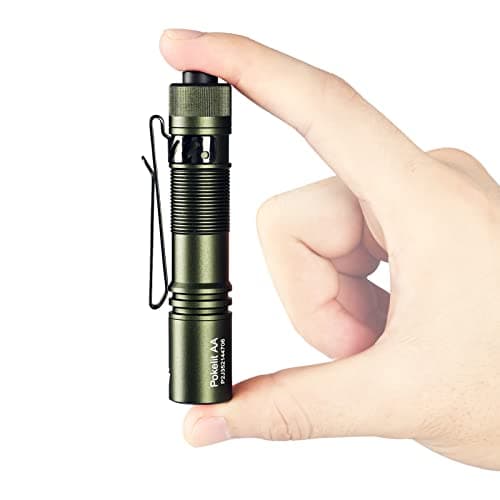 Acebeam Pokelit AA (high CRI)Top pick550 lumens at a stated 90-plus CRI, IP68, on a single AA. The combination of color accuracy and a standard cell is rare. | High CRI on a AA cell | 550 lm |
We earn a commission if you buy through the links on this page, at no extra cost to you. It does not change what we recommend or the order they appear in. Full disclosure. Prices checked October 17, 2026.

Buy it for color accuracy in a pocket-sized light, and buy it knowing the 550-lumen headline belongs to the rechargeable cell in the box rather than to the AA on the label. Acebeam publishes CRI 90 or better from a Nichia 219F, 1,849 candela, 86 meters, three per-mode runtimes, 54.6 grams and IP68 - and the candela and the beam distance agree to the digit, which almost nothing at this price does.
We have not tested this flashlight. We own none of the products on this site, we have no laboratory, and nothing here is an impression of how the beam looks. This review takes every figure Acebeam publishes, runs the arithmetic those figures allow, and says what they do and do not commit the company to.
It also corrects us. Until this review, this site recorded the Pokelit's candela, beam distance, runtime and weight as not published, because the only source we had reached was its retail listing. Re-reading Acebeam's own product page on October 17, 2026 produced all four, plus the emitter, the dimensions and the cell arrangement. Every page that described those as gaps has been corrected in the same change as this one - and the correction moved Acebeam up two rows in the brand disclosure table.
The published specification
| Mode | Output | Beam distance | Peak intensity | Runtime |
|---|---|---|---|---|
| High | 550~330 lm | 86 m | 1,849 cd | 1 h 1 min |
| Mid | 190 lm | Not published | Not published | 2 h 21 min |
| Low | 5 lm | Not published | Not published | 58 h |
| Specification | Published figure |
|---|---|
| Emitter | Nichia 219F, 5000 K, CRI 90 or better |
| Weight | 54.6 g |
| Length | 94.8 mm |
| Head diameter | 18.2 mm |
| Body diameter | 17.8 mm |
| Ingress protection | IP68, stated as submersible to 2 m |
| Lens | Double-sided scratch-resistant AR coating |
| Cell included | 1 x Acebeam 14500 USB-C rechargeable |
| Cell compatible | 1 x AA alkaline or NiMH |
| Interface | Single tail switch, three levels plus mode memory |
| Carry | Two-way clip |
| Warranty | 10 years, per Acebeam's own banner |
Fifteen published figures on a light that costs about twenty dollars. For comparison, the brand disclosure table shows Nitecore, Olight and Coast publishing a lumen figure and a cell format for most of what we cover.
The two numbers that check each other
The single best thing on this sheet is not the CRI figure. It is that Acebeam publishes both a peak intensity and a beam distance, and that the two are consistent.
What that 3.4 candela per lumen then tells you is the beam shape, and it is the floodiest figure in our AA flashlight ranking. The Maglite Mini on the same page concentrates 48 candela per lumen and reaches 156 m on a fifth of the output. This is a light for looking at things, not for looking for them, which is exactly consistent with what a high-CRI emitter is for.
Which cell the headline belongs to
This is the part of the sheet that most listings get backwards, including the one this site was previously reading. Acebeam states that the light comes with a 14500 USB-C rechargeable lithium-ion cell, and that it is compatible with one AA alkaline or NiMH. The AA is the fallback, not the default.
That matters because the three runtimes above are published as one table, with no separate column for the alkaline. A 14500 is a 3.7-volt lithium-ion cell; an alkaline AA is 1.5 volts. Those are not interchangeable in terms of what a driver can pull from them, and Acebeam publishes no figures at all for the AA configuration - so the honest position is that the 550-lumen headline and the 1 h 1 min runtime are 14500 numbers, and what you get on an alkaline is unstated.
We are not going to estimate it. What we will say is that the dual-fuel ability is still the reason to own this light: a cell you can buy anywhere is worth a great deal in a pocket light, and the car emergency kit and cold weather pages both turn on exactly that property. Just do not expect the box figure from the gas-station cell.
The arithmetic: which mode to actually use
Three output-and-runtime pairs let you work out how much total light each level delivers from one charge. On this light the answer is unusually lopsided.
The 550~330 notation is worth more praise than it will get. Every high-output light in a small body steps down as it heats; almost no maker says so on the spec line. Acebeam prints the step into the output figure itself, which is a small act of honesty that makes the runtime number mean something. How runtime is defined sets out the standard both figures are measured under.
What CRI 90 actually buys
The emitter is a Nichia 219F at 5000 K with a stated CRI of 90 or better. CRI is a measure of how accurately a light renders color against a reference, and 90 is the point past which most people stop noticing a light distorting what they look at. Below about 70 - which is where a great many cheap cool-white emitters sit - reds turn brown and skin tones turn gray.
The practical cases are specific rather than general: identifying a wire by its insulation color, reading a fluid on a dipstick or a floor, looking at a wound, checking paint or timber, finding a stain. What CRI measures explains the number properly, and high-CRI EDC flashlights ranks the field.
What CRI costs is output: the phosphor that fills in the red end of the spectrum absorbs light doing it, so a 90-CRI emitter is dimmer than a 70-CRI one driven identically. That is the trade this light makes, and 550 stepping to 330 lumens from a 14500 is a reasonable result of it.
IP68 and 54.6 grams
Acebeam publishes IP68, stated as submersible to 2 meters. Under IEC 60529 the 6 is dust tight and the 8 is continuous immersion to a depth the maker specifies, so this is the strongest ingress claim of any pocket light we cover - stronger than the ThruNite Archer 2A V3's IPX8, which omits the dust digit, and far stronger than the IPX4 that most lights in this price band carry.
54.6 grams is the other figure that justifies the price. At 94.8 mm long and 18.2 mm across the head this is genuinely a pocket object, and having the weight published at all puts Acebeam ahead of Nitecore and Olight, neither of which states one for any light we cover. How to carry an EDC flashlight covers why those two numbers matter more than output for a light you actually carry.
What Acebeam does not publish
No candela or distance for mid or low. Only the high mode gets the full treatment, so the beam shape at the setting we recommend most is unstated. It will be the same optic and therefore the same ratio, but that is our inference and not Acebeam's claim.
No figures for the AA cell, as set out above. On a light named after the AA format, that is the real gap on the sheet.
No impact rating, where Streamlight publishes 2 m or 3 m on comparable lights. And no cell capacity for the included 14500, so the runtimes above cannot be checked against stored energy the way a Fenix or a Petzl figure can.
Who should buy something else
Skip it if you need reach. 86 m and 3.4 candela per lumen is the floodiest AA light we cover. The Maglite Mini LED 2-Cell AA publishes 156 m and the Nitecore MT2A Pro 255 m.
Skip it if you want the headline output to last. Acebeam publishes 550~330 lumens for one hour. For sustained output from a small light, the Wurkkos FC11C runs an 18650 and also publishes a CRI figure.
Skip it if a lithium-ion cell is a problem for you. As shipped this is a lithium light, which matters when flying and matters again in the cold, where lithium-ion must not be charged below freezing. The AA fallback solves both, at an output Acebeam does not state.
Skip it if you want the cheapest usable light. It is not expensive, but a Maglite Mini or a Fenix E12 costs less and publishes enough to be trusted. You are paying here for color accuracy and an ingress rating.
The verdict, stated as what it commits to
Acebeam commits to CRI 90 or better, 1,849 candela, 86 meters, three per-mode runtimes, 54.6 grams and IP68 - and the candela and distance reconcile, which is the mark of a measured sheet rather than a marketing one. For a pocket light whose job is to show you what something actually looks like, in a body you will carry and a rating that survives weather, this is the one we would buy under twenty dollars.
What it does not commit to is any figure for the AA cell its name advertises, an impact rating, or a beam figure for the two lower modes. And its 550-lumen headline is published as stepping to 330 inside an hour, which is more honest than its competitors and still means the mode to live on is the 190-lumen one. For the field it sits in, see high-CRI EDC flashlights; for the cell-format argument, AA flashlights.
The picks, in full
Top pick · High CRI on a AA cell
Acebeam Pokelit AA (high CRI)
550 lumens at a stated 90-plus CRI, IP68, on a single AA. The combination of color accuracy and a standard cell is rare.
IP68 on a AA pocket light is the specification that justifies the price over a supermarket torch. Dust tight and immersion rated is a different class of object.
Acebeam's own page publishes a complete table - 1,849 cd, 86 m, three per-mode runtimes and 54.6 g - and the candela and the distance reconcile exactly through the FL 1 definition. That is the behavior of a maker who measured the light.
The 14500 is in the box and the alkaline AA is the fallback, which is the opposite of how most listings describe it. Acebeam publishes no separate AA figures, so the 550-lumen headline belongs to the lithium cell.
CRI above 90 in a AA body is unusual. Most makers reserve the good phosphor for the 18650 lights.
What works
- 90-plus CRI with IP68 in a 54.6 g AA-sized body
- A complete published sheet: candela, distance, per-mode runtime and weight, with the two beam figures agreeing
- Takes a 14500 or a plain AA, so you choose output or storage life
- Clip and pocket profile are genuinely well designed
What does not
- The 550-lumen figure is published as 550~330, so it steps down inside the first hour
- Acebeam publishes no runtimes for the alkaline AA it is compatible with
- Costs meaningfully more than a comparable cool-white light
Skip this ifyou want maximum output for the money. You are paying for color accuracy and an ingress rating, not for lumens.
Published specification
- Output
- 550 lmPublished as 550~330 lm on High - a stepped figure, not a flat one. Mid is 190 lm, Low 5 lm.Acebeam Pokelit AA — manufacturer spec page (retrieved October 17, 2026)
- Peak intensity
- 1,849 cdHigh. Reconciles exactly with the published 86 m: 0.25 x 86 x 86 = 1,849.Acebeam Pokelit AA — manufacturer spec page (retrieved October 17, 2026)
- Beam distance
- 86 mHighAcebeam Pokelit AA — manufacturer spec page (retrieved October 17, 2026)
- Runtime
- 1 h 1 min at 550 lm / 2 h 21 min at 190 lm / 58 h at 5 lmAcebeam publishes one table and ships a 14500 in the box; it does not publish separate figures for an alkaline AA, so these are the lithium-cell numbers.Acebeam Pokelit AA — manufacturer spec page (retrieved October 17, 2026)
- Battery
- 1 x 14500 USB-C (included), or 1 x AA alkaline/NiMHAcebeam Pokelit AA — manufacturer spec page (retrieved October 17, 2026)
- Weight
- 54.6 g94.8 mm long, 18.2 mm headAcebeam Pokelit AA — manufacturer spec page (retrieved October 17, 2026)
- Ingress
- IP68Stated as submersible to 2 mAcebeam Pokelit AA — manufacturer spec page (retrieved October 17, 2026)
- CRI
- 90+Nichia 219F at 5000 K, stated as CRI 90 or betterAcebeam Pokelit AA — manufacturer spec page (retrieved October 17, 2026)
$29.95 · 17% off
#ad · how this is funded · price as of October 17, 2026
Questions people actually ask
How long does the Acebeam Pokelit AA run?
Acebeam publishes three figures: 1 hour 1 minute on high, 2 hours 21 minutes at 190 lumens, and 58 hours at 5 lumens. All three belong to the 14500 lithium-ion cell that comes in the box - Acebeam publishes no runtimes for the alkaline AA the light also accepts, so we cannot tell you what that gives and will not estimate it.
Does the Pokelit AA really make 550 lumens?
Acebeam publishes it as 550~330 lumens, which is the company telling you the light steps down from 550 to 330 within the published hour. That notation is more honest than most makers manage, and it means the mode worth planning around is the 190-lumen setting at 2 hours 21 minutes.
Does it run on a normal AA battery?
Yes - Acebeam states compatibility with one AA alkaline or NiMH cell, and that is the main reason to own it. But the cell in the box is a 14500 lithium-ion rechargeable, and every published figure belongs to that cell. A 14500 is 3.7 volts against an alkaline's 1.5, so expect less from the AA; Acebeam does not say how much less.
Is the Acebeam Pokelit AA waterproof?
Yes, and strongly: Acebeam publishes IP68 and states submersion to 2 meters. Under IEC 60529 the 6 means dust tight and the 8 means continuous immersion to a depth the maker specifies. That is the strongest ingress rating of any pocket light we cover.
How far does the Pokelit AA throw?
86 meters, and Acebeam publishes the matching 1,849 candela - the two figures reconcile exactly through the ANSI FL 1 definition. At 3.4 candela per lumen it is the widest beam of any AA light we cover, which is appropriate for a high-CRI light meant for looking at things close up rather than finding them at distance.
Is high CRI worth paying for?
For specific jobs, clearly: identifying a wire by color, reading a fluid, checking paint, looking at a wound or a stain. CRI 90 is the point past which most people stop noticing a light distorting color. What it costs is output, because the phosphor that fills in the red end of the spectrum absorbs light doing it.
Acebeam Pokelit AA or Wurkkos FC11C?
Both publish a CRI figure, which is why they are the only two such lights on this site. The Pokelit is 54.6 g, IP68 and runs on a AA-sized cell; the FC11C runs an 18650 for far more sustained output and publishes no ingress rating at all. Buy the Pokelit to carry, the Wurkkos to work by.
How much does it weigh?
54.6 grams, as published, at 94.8 mm long and 18.2 mm across the head. Having the figure at all is worth noting: neither Nitecore nor Olight publishes a weight for any light we cover.
Sources
Every figure on this page came from one of the documents below, read on the date shown. We do not cite other review sites, forum posts or video reviews as sources of fact.
- Acebeam Pokelit AA — manufacturer spec page (retrieved October 17, 2026)
- Maglite Mini Maglite LED 2-Cell AA — manufacturer spec page (retrieved September 27, 2026)
- Wurkkos FC11C — the brand's own listing on Amazon.com (retrieved September 1, 2026)
- ANSI/PLATO FL 1 flashlight performance standard — definitions of lumens, peak beam intensity, beam distance, runtime, impact and water resistance
- IEC 60529 — the IP (ingress protection) rating system
Read next

Best EDC flashlights, ranked on what they actually hold
The full EDC ranking: cell format, stored energy, color rendering and beam shape, every figure sourced.
Best high-CRI flashlights
High-CRI picks, the output they give up for the phosphor, and why the trade is usually worth making.
Best AA flashlights
AA and AAA flashlights ranked on published reach, CRI and ingress rating, with the arithmetic behind each and the gaps named.
Best EDC flashlights under $50
Budget EDC picks, with a straight account of what the price band actually costs you.
Best flashlights for beginners
A first flashlight, ranked for simplicity, ordinary batteries and published specifications rather than for the lumen number on the box.
Wurkkos FC11C review
A specification-first review of the Wurkkos FC11C: why CRI 90 for under thirty dollars is remarkable, and what buying from a maker that publishes two figures really costs.
Mini Maglite LED 2-Cell AA review
A specification-first review of the Mini Maglite LED 2-Cell AA: 48 candela per lumen from an adjustable-focus reflector, a full published sheet, and the four-mode switch that costs it.

How to carry an EDC flashlight
Clip orientation, pocket choice and holsters — the practical side of actually carrying a light every day.
Best flashlights for a car emergency kit
What to keep in a glovebox, ranked on cell chemistry and published temperature limits rather than output - with the one sentence that rules out most rechargeable lights.
CRI explained
What CRI measures, the R9 problem, the output cost, and how CRI differs from color temperature.
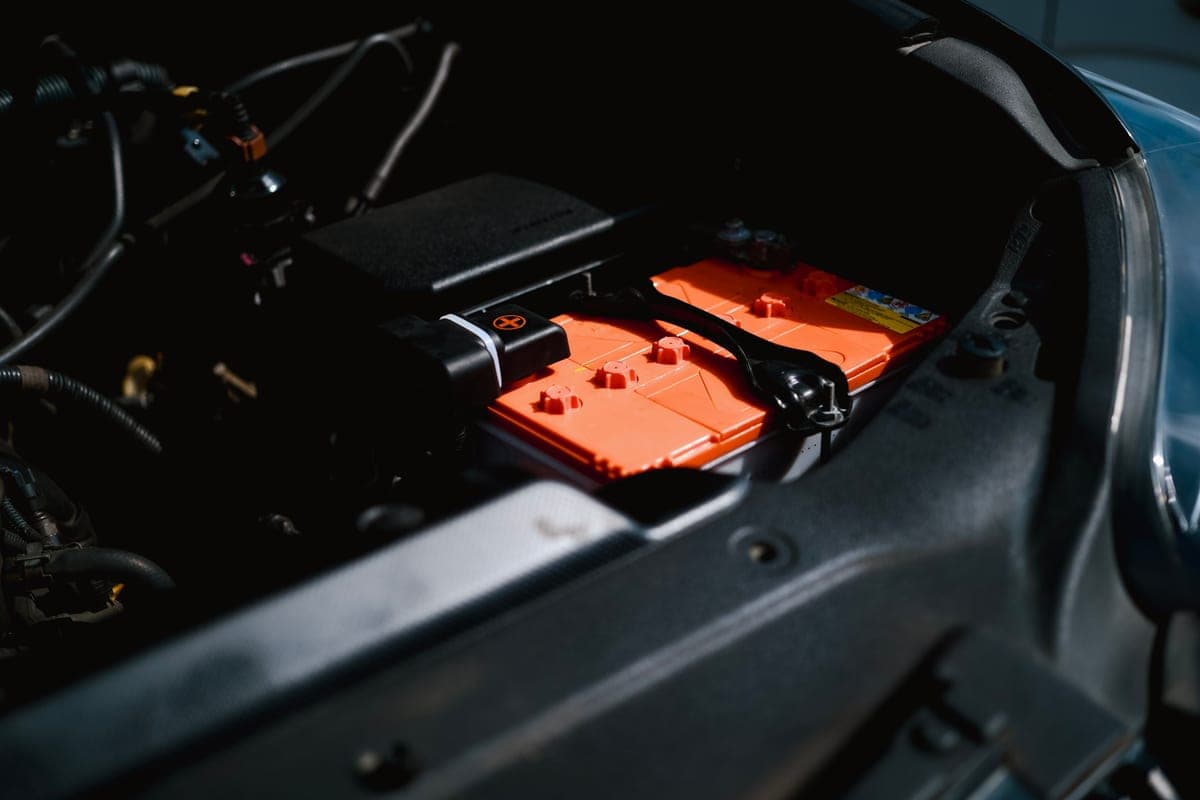
Flashlights in the cold: the cell decides, not the light
What cold does to a flashlight, from the cell manufacturers' own datasheets - the published temperature limits, the charging hazard, and the lights that take the right cells.
Found a number that is wrong? Tell us and we will fix it and say so. Our methodology shows every formula on this page.