Learn
Flashlights in the cold: the cell decides, not the light
Every light here works in winter. Whether it works for as long as the box claims is a question about the battery inside it, and the battery makers publish the answer.
By Scooter M. · Published · Updated
| # | Product | Best for | Output | Price |
|---|---|---|---|---|
| 1 | 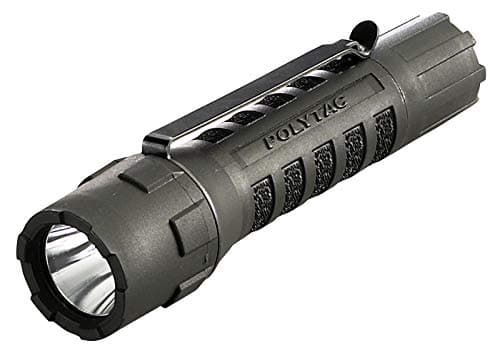 Streamlight PolyTacTop pick600 lumens, 214 m, 2.75 hours, IPX7 and 3 m impact resistance in a nylon polymer body. The one you leave in a truck. | A polymer duty light you will not worry about | 600 lm | |
| 2 | 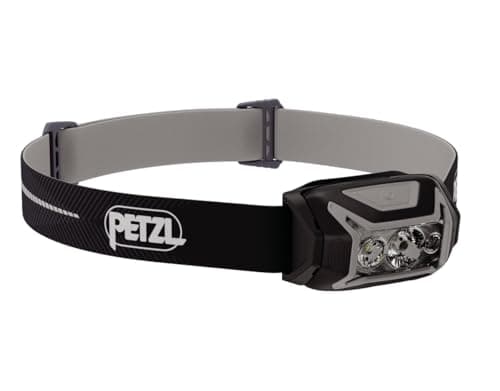 Petzl Actik CoreThe default outdoor headlamp: hybrid power, a published ANSI figure, and a beam shaped for walking rather than for a spec sheet. | Hiking and general outdoor use | 625 lm | |
| 3 | 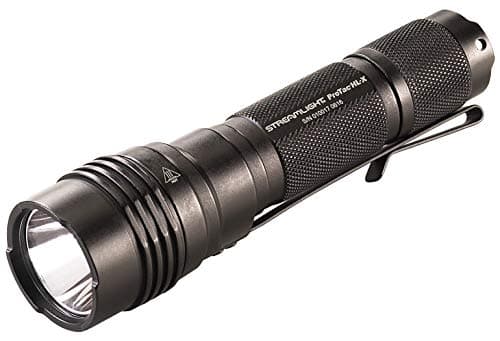 Streamlight ProTac HL-X1,300 lumens, 35,000 candela, 374 m, 1.5 hours, IP68, on either a rechargeable pack or two CR123A cells. Every figure published per mode. | Duty use, and the best-documented light on this site | 1,300 lm | |
| 4 | 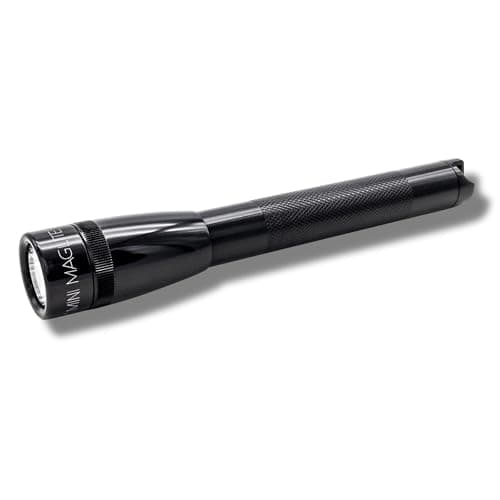 Maglite Mini Maglite LED 2-Cell AA127 lumens that reach 156 meters. A Streamlight MacroStream puts out four times the output and reaches 90. | Reach from a pocket light, on AA cells | 127 lm | |
| 5 | 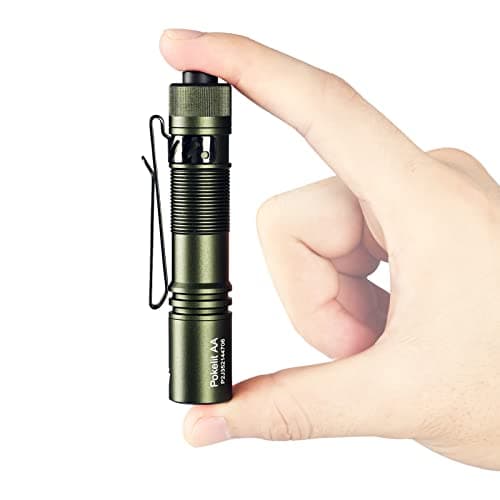 Acebeam Pokelit AA (high CRI)550 lumens at a stated 90-plus CRI, IP68, on a single AA. The combination of color accuracy and a standard cell is rare. | High CRI on a AA cell | 550 lm |
We earn a commission if you buy through the links on this page, at no extra cost to you. It does not change what we recommend or the order they appear in. Full disclosure. Prices checked October 17, 2026.
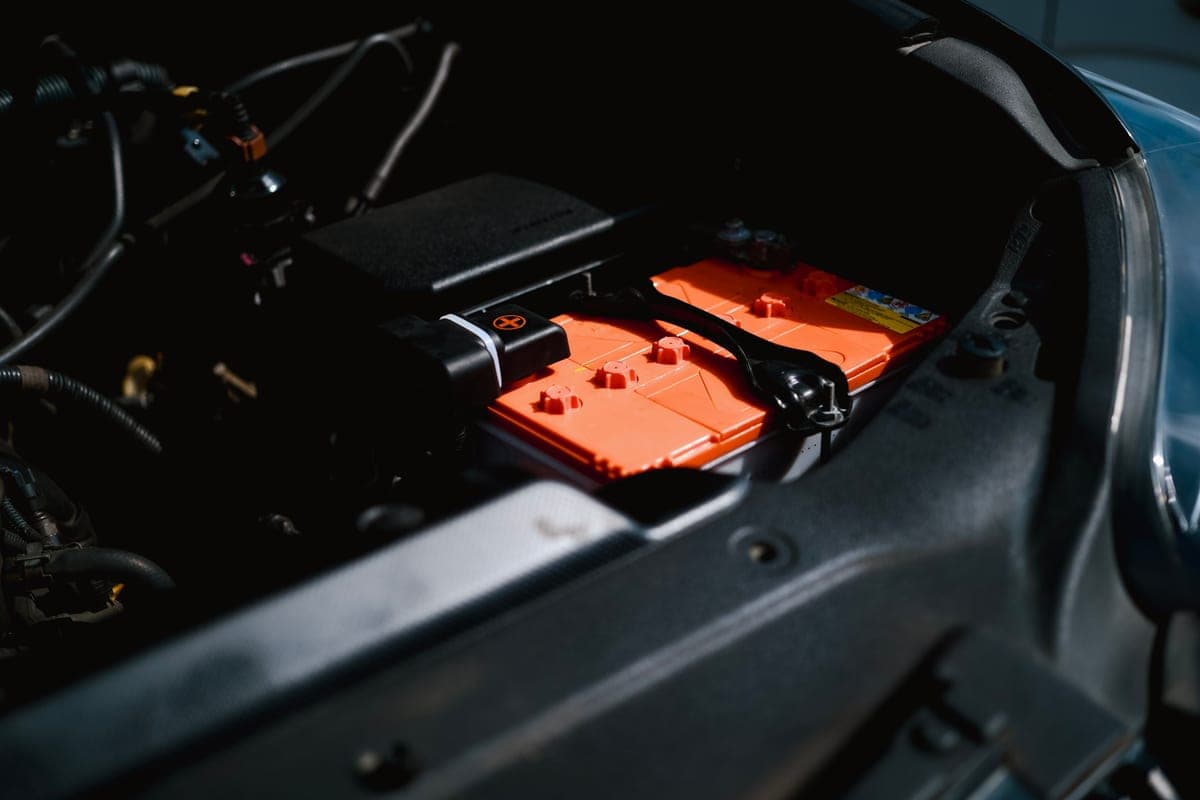
If a light has to work in genuine cold, buy one that takes lithium primaries - and our pick is the Streamlight PolyTac, which runs on two CR123A cells Energizer rates for operation from -40 C to 60 C. The flashlight is almost never the problem in winter. The cell is, and the difference between the chemistries is published: a lithium primary is rated 22 degrees Celsius colder at the bottom of its range than an alkaline, and a sealed lithium-ion pack brings a hazard neither of them has.
We have not tested anything in a freezer. We own none of these lights, we have no cold chamber, and nothing on this page is a measurement of ours. What follows is what three cell datasheets and five product pages state, plus arithmetic - see our methodology.
What the cell makers publish
Flashlight manufacturers publish lumens and hours. Almost none of them publishes an operating temperature, so the figures that answer this question come from the companies that make the batteries. All three sheets below are Energizer's own, read on October 17, 2026.
| Cell | Chemistry | Operating range | Shelf life | Weight |
|---|---|---|---|---|
| Lithium AA (L91) | Lithium iron disulfide | -40 C to 60 C (-40 F to 140 F) | 25 years at 21 C | 15 g |
| Lithium AAA (L92) | Lithium iron disulfide | -40 C to 60 C (-40 F to 140 F) | 25 years at 21 C | 7.6 g |
| CR123A (123) | Lithium manganese dioxide | -40 C to 60 C (-40 F to 140 F) | Not stated on the sheet we read | 16.5 g |
| Alkaline AA (E91) | Zinc manganese dioxide | -18 C to 55 C (0 F to 130 F) | 10 years at 21 C | 23 g |
That alkaline row is the practical finding of this page. Zero degrees Fahrenheit is not an unusual winter night in a large part of the United States, and it is the published floor of the most common cell format in the world. Below it, Energizer is not telling you the cell fails - it is telling you the cell is outside the range the specification covers.
Why cold costs you output as well as hours
A cell in the cold has higher internal resistance, and internal resistance is what sets how much current a battery can deliver before its voltage sags. A flashlight driver responds to sag by reducing output or stepping down a mode - so a cold light is often a dimmer light before it is a shorter-lived one.
Energizer prints an internal resistance figure for both chemistries, measured at 21 C: 120 to 240 milliohms for the lithium AA, and 150 to 300 for the alkaline. Those are room-temperature numbers and we are not going to extrapolate them down the scale. They do establish the starting order, which is the same order as the temperature ratings.
Energizer also publishes a maximum continuous discharge for each: 2.5 amps for the lithium AA and 1.5 amps for the lithium AAA. On a 1,000-lumen AA light that figure matters more than capacity does, and it is another reason the lithium cell is the one to put in a light you are asking to work hard in bad conditions. How runtime is computed sets out the rest of the arithmetic.
The one thing never to do
That hazard is specific to charging rather than to using a lithium-ion light in the cold, and it is the strongest argument against a sealed rechargeable as a winter light: the light you most want to top up in a cold vehicle is the light you must not.
What this means for the three kinds of light you can buy
| Arrangement | Cold behavior | What to do about it |
|---|---|---|
| Lithium primary (CR123A, lithium AA/AAA) | Specified to -40 C; nothing to charge | The default answer. Buy the cells and leave them in |
| Alkaline (AA, AAA, D) | Specified to -18 C; higher internal resistance | Works, with a narrower margin. Swap in lithium primaries for winter |
| Sealed lithium-ion | Usable cold; must not be charged below freezing | Keep it in an inside pocket and charge it indoors |
| Hybrid (pack plus primaries) | Best of both, if the maker publishes both tables | Carry the pack and a set of lithium cells |
The fourth row is the one worth noticing, because it is rare and because Petzl publishes enough to prove it. A hybrid lamp runs on its rechargeable pack and accepts three AAA cells when the pack dies - and if those AAA cells are lithium primaries, the lamp's cold floor becomes the cell's -40 C rather than the pack's. That arrangement is the single best answer to winter in this whole category, and almost nobody markets it that way.
What we would buy for the cold
[Streamlight PolyTac](/tactical-flashlights/streamlight-polytac-review) - best overall cold-weather light. Two CR123A lithium primaries, included, on a light that publishes 600 lm / 11,500 cd / 214 m with 2.75 h, 5.5 h and 34 h across three modes, plus IPX7 and a tested 3 m impact rating at 119 g. The candela and the distance reconcile in every mode. Honest downsides: no low mode under 35 lumens, no magnet, and CR123A cells cost more than AA.
[Petzl Actik Core](/headlamps/petzl-actik-core-review) - best for working in the cold. Cold work is hands-busy work, which makes it headlamp work. Petzl publishes 625 lm, 115 m, a 4.5 Wh pack and a full per-mode table for both power sources, so you can carry the pack and three lithium AAA cells and know what each gives you. 88 g. Honest downsides: IPX4 is rain rather than immersion, there is no red mode, and the 625-lumen setting runs two published hours.
[Streamlight ProTac HL-X](/tactical-flashlights/streamlight-protac-hl-x-review) - best if you need reach as well. 1,300 lm, a published 35,000 cd and 374 m, IP68, a tested 2 m impact rating, and - the reason it is here - a complete published runtime table on CR123A primaries as well as on its own pack: 1 h 15 min, 3 h and 20 h. Honest downsides: it costs more than the PolyTac, Streamlight does not publish its pack's capacity, and the programmable interface takes learning.
[Maglite Mini LED 2-Cell AA](/edc-flashlights/mini-maglite-led-review) - best cheap answer. Two AA cells, so a set of lithium AA primaries turns it into a -40 C light for a few dollars, and Maglite publishes 127 lm, 6,093 cd, 156 m, 11 h on high and 25 h on low. At 48 candela per lumen it reaches further than anything else here. Honest downsides: 127 lumens is dim by modern standards, IPX4, and 118 g of aluminum is cold to hold.
[Acebeam Pokelit AA](/edc-flashlights/acebeam-pokelit-aa-review) - best for seeing color in the cold. CRI 90-plus, IP68, 1,849 cd, 86 m, three published runtimes and 54.6 g, on a cell format that has a lithium primary option. One caveat that matters on this page: the cell in the box is a 14500 lithium-ion rechargeable, which is the chemistry with the charging restriction. Run it on a lithium AA primary for winter and accept that Acebeam publishes no separate figures for that cell.
What we would not buy for the cold
A sealed rechargeable with no cell fallback. Several lights we rate highly elsewhere fall here, including every lamp whose battery is glued in. The objection is not that they stop working when cold - it is that the only way to refill them is the one operation you must not perform on a cold cell.
Anything whose maker publishes no runtime. Cold reduces what a cell delivers, and you cannot reason about a reduction to a number that was never stated. Half of the brightest tactical flashlights publish no runtime at any level, which makes them impossible to plan a cold night around.
A light you have to hold. At -10 C you are wearing gloves, and a 118 g aluminum tube is both slippery and a heat sink against your palm. This is the practical argument for a headlamp or a light with a clip or a magnet, and it has nothing to do with specifications - see flashlight versus headlamp.
Four habits that do more than any purchase
- Carry the spare cells inside your jacket, not in the light. A warm cell put into a cold light performs like a warm cell for a while.
- Let a light warm up before charging it. The hazard is charging cold, not being cold.
- Run a lower mode. Less current means less voltage sag, and a 100-lumen setting that lasts is worth more than a 1,000-lumen setting that steps down.
- Take alkalines out of lights you store. They leak as they age and the leak usually destroys the light - the one failure mode that is worse than a flat battery.
And the honest limit of this page: we can tell you the published operating range of a cell and the published runtime of a light. We cannot tell you how either behaves at a particular temperature, because nobody publishes that as a number and we are not going to produce one. If that is the figure you need, the car emergency kit page applies the same chemistry to the place a household actually stores batteries badly.
The picks, in full
Top pick · A polymer duty light you will not worry about
Streamlight PolyTac
600 lumens, 214 m, 2.75 hours, IPX7 and 3 m impact resistance in a nylon polymer body. The one you leave in a truck.
2.75 hours at 600 lumens from two CR123A cells is a very efficient result — that is roughly 6 watt-hours doing real work rather than being thrown away as heat.
3 m of impact resistance is the highest figure in this roundup. Polymer absorbs a drop that would dent an aluminum body.
119 g with cells installed makes this the lightest full-size duty light here.
What works
- Full per-mode table published, all three modes
- 3 m impact resistance and IPX7
- 119 g, with a ten-year shelf life on its cells
What does not
- 600 lumens is modest against the rechargeable competition
- CR123A running costs add up
- We could not pin a current ASIN for it, so the buy link is a tagged Amazon search
Skip this ifyou use a light daily. CR123A primaries are the wrong economics for frequent use; buy a rechargeable instead.
Published specification
- Output
- 600 lmHigh. Medium 260 lm, low 35 lm.Streamlight PolyTac — manufacturer spec page (retrieved September 1, 2026)
- Peak intensity
- 11,500 cdHigh. Medium 4,900 cd, low 675 cd. Each reconciles with the published distance for its mode.Streamlight PolyTac — manufacturer spec page (retrieved September 27, 2026)
- Beam distance
- 214 mHigh. 140 m medium, 52 m low.Streamlight PolyTac — manufacturer spec page (retrieved September 1, 2026)
- Runtime
- 2.75 h high / 5.5 h medium / 34 h lowStreamlight PolyTac — manufacturer spec page (retrieved September 1, 2026)
- Battery
- 2 x CR123A lithium (included)Streamlight PolyTac — manufacturer spec page (retrieved September 1, 2026)
- Weight
- 119 g (4.2 oz) with batteriesStreamlight PolyTac — manufacturer spec page (retrieved September 1, 2026)
- Ingress
- IPX7Waterproof to 1 m for 30 minutes; 3 m impact resistance testedStreamlight PolyTac — manufacturer spec page (retrieved September 1, 2026)
#ad · how this is funded · price as of October 17, 2026
Pick 2 · Hiking and general outdoor use
Petzl Actik Core
The default outdoor headlamp: hybrid power, a published ANSI figure, and a beam shaped for walking rather than for a spec sheet.
625 lumens and 115 meters is a walking beam, not a searching beam. The FL1 definition puts illuminance at 115 m down to 0.25 lux, which is enough to tell that something is there and not enough to identify it. In practice you run the middle level and see 30 to 60 m of usable trail.
4.5 watt-hours matters more than the lumen figure. A lamp drawing a regulated 2 W empties that pack in a bit over two hours. The 400-hour number Petzl quotes is a reserve-mode visibility claim, not 400 hours of light you can walk by.
The hybrid design is the real feature. When the CORE pack dies three hours into a night descent, three AAA cells from a gas station bring the lamp back. Very little else at this price does that.
What works
- Runs on the rechargeable pack or three AAA cells, which is a genuine field fix rather than a marketing bullet
- Petzl publishes the full ANSI FL 1 table, including a distance for every mode
- 88 g is light enough that you stop noticing it
What does not
- IPX4 only: rain is fine, a dropped-in-the-creek recovery is not
- No published peak candela, so the 115 m claim cannot be checked against the intensity
- The maker's own site and its own Amazon listing disagree about peak output
Skip this ifyou need reach. 115 m is short by 2026 standards, and the 625-lumen headline does not change the shape of the beam.
Published specification
- Output
- 625 lmANSI/PLATO FL 1. Petzl's US product page states 625; the brand's own Amazon listing says 650. We use the maker's own site.Petzl Actik Core — manufacturer spec page (retrieved September 1, 2026)
- Peak intensity
- not published(Petzl publishes distance, not peak intensity)
- Beam distance
- 115 mMaximum, on the CORE rechargeable batteryPetzl Actik Core — manufacturer spec page (retrieved September 1, 2026)
- Runtime
- 2 h at 625 lm / 7 h at 100 lm / 100 h at 7 lm, on the CORE packPetzl publishes a full per-mode table for both power sources. On 3 x AAA the same levels run 2 h / 10 h / 100 h, with peak output capped at 450 lm. Its separate strobe figure, visible at 700 m for 400 h, is a be-seen claim and not a working runtime.Petzl Actik Core — manufacturer spec page (retrieved September 19, 2026)
- Battery
- CORE 1250 mAh / 3.6 V / 4.5 Wh, or 3 x AAAPetzl Actik Core — manufacturer spec page (retrieved September 1, 2026)
- Ingress
- IPX4Weather resistant. Not immersion rated.Petzl Actik Core — manufacturer spec page (retrieved September 1, 2026)
$87.95 · 8% off
#ad · how this is funded · price as of October 17, 2026
Pick 3 · Duty use, and the best-documented light on this site
Streamlight ProTac HL-X
1,300 lumens, 35,000 candela, 374 m, 1.5 hours, IP68, on either a rechargeable pack or two CR123A cells. Every figure published per mode.
35,000 candela and 374 m reconcile exactly: the square root of 35,000 divided by 0.25 is 374.2 m. Streamlight's numbers are internally consistent across all three modes, which is the strongest signal of a maker publishing real measurements rather than marketing figures.
1.5 hours at 1,300 lumens implies roughly 6 to 7 watt-hours of usable energy — consistent with a single 18650-class pack and with the CR123A alternative.
IP68 with 2 m impact resistance is the toughest rating in this roundup, and the reason this light shows up on so many duty belts.
What works
- Full ANSI FL1 table published per mode, and it reconciles
- Runs on a rechargeable pack or on shelf-stable CR123A lithium cells
- IP68 and 2 m impact rating
What does not
- The programming interface takes reading the manual to understand
- 162 to 176 g is heavy for pocket carry
- CR123A cells are expensive if you use it hard
Skip this ifyou want a pocket light. It is a duty-belt tool and the weight and length are built for a holster.
Published specification
- Output
- 1,300 lmHigh. Medium 420 lm, low 70 lm.Streamlight ProTac HL-X — manufacturer spec page (retrieved September 1, 2026)
- Peak intensity
- 35,000 cdHigh. 11,000 cd medium, 1,800 cd low.Streamlight ProTac HL-X — manufacturer spec page (retrieved September 1, 2026)
- Beam distance
- 374 mHigh. 210 m medium, 85 m low.Streamlight ProTac HL-X — manufacturer spec page (retrieved September 1, 2026)
- Runtime
- 1.5 h high / 3.75 h medium / 25 h lowOn the SL-B26 pack. On CR123A: 1.25 h / 3 h / 20 h.Streamlight ProTac HL-X — manufacturer spec page (retrieved September 1, 2026)
- Battery
- SL-B26 rechargeable Li-ion pack, or 2 x CR123A lithiumStreamlight ProTac HL-X — manufacturer spec page (retrieved September 1, 2026)
- Weight
- 162 g with CR123A, 176 g with the packStreamlight ProTac HL-X — manufacturer spec page (retrieved September 1, 2026)
- Ingress
- IP68Dust tight, waterproof to 2 m; 2 m impact resistance testedStreamlight ProTac HL-X — manufacturer spec page (retrieved September 1, 2026)
#ad · how this is funded · price as of October 17, 2026
Pick 4 · Reach from a pocket light, on AA cells
Maglite Mini Maglite LED 2-Cell AA
127 lumens that reach 156 meters. A Streamlight MacroStream puts out four times the output and reaches 90.
This is the clearest single illustration on the site of why lumens do not decide reach. 127 lumens, 6,093 candela, 156 m. The Streamlight MacroStream is 500 lumens, 2,000 candela, 90 m. Four times the output, and it reaches 66 m less, because its reflector spreads the light instead of collimating it.
Forty-eight candela per lumen from a AA light is remarkable, and it is entirely down to the focusing head. Twist it and the beam goes from a usable flood to a tight circle you can put on something across a field.
What you give up is everything else. 127 lumens is genuinely dim next to any modern pocket light, there is no USB-C, and IPX4 is a rain rating.
What works
- 156 m of published reach from a 2 x AA pocket light, with candela that reconciles
- Two AA cells: available anywhere, storable for years, no charging routine
- Adjustable focus from flood to spot
What does not
- 127 lumens is far below anything modern in this size class
- IPX4, and no published sustained-output figure
- No rechargeable option and no USB-C
Skip this ifyou want a modern pocket light. On raw output it loses to everything, and it earns its place here only on reach per lumen and on running from cells you already own.
Published specification
- Output
- 127 lmMaglite Mini Maglite LED 2-Cell AA — manufacturer spec page (retrieved September 27, 2026)
- Peak intensity
- 6,093 cdMaglite Mini Maglite LED 2-Cell AA — manufacturer spec page (retrieved September 27, 2026)
- Beam distance
- 156 mReconciles with the published candela: the square root of 6,093 divided by 0.25 is 156.1 mMaglite Mini Maglite LED 2-Cell AA — manufacturer spec page (retrieved September 27, 2026)
- Runtime
- 11 h on High / 25 h on LowMaglite publishes both. Blink and SOS are not given a runtime.Maglite Mini Maglite LED 2-Cell AA — manufacturer spec page (retrieved September 27, 2026)
- Battery
- 2 x AA (included)Maglite Mini Maglite LED 2-Cell AA — manufacturer spec page (retrieved September 27, 2026)
- Weight
- 118 g (4.15 oz)With batteriesMaglite Mini Maglite LED 2-Cell AA — manufacturer spec page (retrieved September 27, 2026)
- Ingress
- IPX41 m drop resistanceMaglite Mini Maglite LED 2-Cell AA — manufacturer spec page (retrieved September 27, 2026)
#ad · how this is funded · price as of October 17, 2026
Pick 5 · High CRI on a AA cell
Acebeam Pokelit AA (high CRI)
550 lumens at a stated 90-plus CRI, IP68, on a single AA. The combination of color accuracy and a standard cell is rare.
IP68 on a AA pocket light is the specification that justifies the price over a supermarket torch. Dust tight and immersion rated is a different class of object.
Acebeam's own page publishes a complete table - 1,849 cd, 86 m, three per-mode runtimes and 54.6 g - and the candela and the distance reconcile exactly through the FL 1 definition. That is the behavior of a maker who measured the light.
The 14500 is in the box and the alkaline AA is the fallback, which is the opposite of how most listings describe it. Acebeam publishes no separate AA figures, so the 550-lumen headline belongs to the lithium cell.
CRI above 90 in a AA body is unusual. Most makers reserve the good phosphor for the 18650 lights.
What works
- 90-plus CRI with IP68 in a 54.6 g AA-sized body
- A complete published sheet: candela, distance, per-mode runtime and weight, with the two beam figures agreeing
- Takes a 14500 or a plain AA, so you choose output or storage life
- Clip and pocket profile are genuinely well designed
What does not
- The 550-lumen figure is published as 550~330, so it steps down inside the first hour
- Acebeam publishes no runtimes for the alkaline AA it is compatible with
- Costs meaningfully more than a comparable cool-white light
Skip this ifyou want maximum output for the money. You are paying for color accuracy and an ingress rating, not for lumens.
Published specification
- Output
- 550 lmPublished as 550~330 lm on High - a stepped figure, not a flat one. Mid is 190 lm, Low 5 lm.Acebeam Pokelit AA — manufacturer spec page (retrieved October 17, 2026)
- Peak intensity
- 1,849 cdHigh. Reconciles exactly with the published 86 m: 0.25 x 86 x 86 = 1,849.Acebeam Pokelit AA — manufacturer spec page (retrieved October 17, 2026)
- Beam distance
- 86 mHighAcebeam Pokelit AA — manufacturer spec page (retrieved October 17, 2026)
- Runtime
- 1 h 1 min at 550 lm / 2 h 21 min at 190 lm / 58 h at 5 lmAcebeam publishes one table and ships a 14500 in the box; it does not publish separate figures for an alkaline AA, so these are the lithium-cell numbers.Acebeam Pokelit AA — manufacturer spec page (retrieved October 17, 2026)
- Battery
- 1 x 14500 USB-C (included), or 1 x AA alkaline/NiMHAcebeam Pokelit AA — manufacturer spec page (retrieved October 17, 2026)
- Weight
- 54.6 g94.8 mm long, 18.2 mm headAcebeam Pokelit AA — manufacturer spec page (retrieved October 17, 2026)
- Ingress
- IP68Stated as submersible to 2 mAcebeam Pokelit AA — manufacturer spec page (retrieved October 17, 2026)
- CRI
- 90+Nichia 219F at 5000 K, stated as CRI 90 or betterAcebeam Pokelit AA — manufacturer spec page (retrieved October 17, 2026)
$29.95 · 17% off
#ad · how this is funded · price as of October 17, 2026
Questions people actually ask
Do flashlights work in cold weather?
Yes, but the battery decides how well. Energizer specifies its lithium AA and AAA primaries and its CR123A cells for operation from -40 C to 60 C, and its alkaline AA from -18 C to 55 C. Below a cell's rated floor you are outside the specification the maker stands behind - so for genuine cold, buy a light that takes lithium primaries.
What batteries are best for cold weather?
Lithium primaries: CR123A, or lithium AA and AAA. Energizer rates all three for -40 C operation, against -18 C for its alkaline AA, and the lithium AA also has a lower published internal resistance and a higher maximum continuous discharge. They are more expensive and they last far longer in storage.
Can you charge a flashlight in freezing weather?
Not a lithium-ion one. Charging below about 0 C plates metallic lithium onto the anode, which permanently reduces capacity and creates a real safety hazard. Most chargers refuse to do it, but not all, and a light brought in from a cold vehicle is still cold. Let it reach room temperature first.
How much runtime do you lose in the cold?
We will not give you a number, because the cell makers publish temperature-against-capacity information as graphs rather than as text, and this site does not read figures off a chart and present them as published. What is published is the operating range, and that is enough to choose a chemistry.
Are rechargeable flashlights bad in winter?
Not to use - to refill. A sealed lithium-ion light works cold, but the only way to put energy back into it is the one operation you must not perform on a cold cell. That is why we prefer a light with a primary-cell fallback for winter, or a hybrid headlamp that takes lithium AAA when its pack is empty.
What is the best headlamp for cold weather?
The Petzl Actik Core, among the lamps we cover, and for a specific reason: Petzl publishes the full performance table for both its rechargeable pack and three AAA cells, so you can carry the pack plus a set of lithium AAA primaries and know what each one gives you. The lithium cells are specified to -40 C.
Why does my flashlight get dimmer in the cold?
Because a cold cell has higher internal resistance, so its voltage sags further under load, and the driver responds by reducing output or dropping a mode. That is often what people notice first in winter - not a shorter runtime but a dimmer light. Running a lower mode draws less current and reduces the effect.
Should I keep spare batteries in my pocket?
Yes, and it is the single most effective habit on this page. A cell kept at body temperature and installed when the first set fades behaves like a warm cell for a useful while. It costs nothing and it does more than most purchases.
Sources
Every figure on this page came from one of the documents below, read on the date shown. We do not cite other review sites, forum posts or video reviews as sources of fact.
- Energizer L91 Ultimate Lithium AA — product datasheet (lithium iron disulfide; operating and storage -40 to 60 C, 25-year shelf life at 21 C, 15 g; retrieved October 17, 2026)
- Energizer L92 Ultimate Lithium AAA — product datasheet (lithium iron disulfide; operating and storage -40 to 60 C, 25-year shelf life at 21 C, 7.6 g; retrieved October 17, 2026)
- Energizer 123 (CR123A) — product datasheet (lithium manganese dioxide, 3.0 V, 1,500 mAh typical; operating and storage -40 to 60 C, 16.5 g; retrieved October 17, 2026)
- Energizer E91 Alkaline AA — product datasheet (zinc manganese dioxide; operating -18 to 55 C, 10-year shelf life at 21 C, 23 g; retrieved October 17, 2026)
- Streamlight PolyTac — manufacturer spec page (retrieved September 1, 2026)
- Petzl Actik Core — manufacturer spec page (retrieved September 1, 2026)
- Streamlight ProTac HL-X — manufacturer spec page (retrieved September 1, 2026)
- Maglite Mini Maglite LED 2-Cell AA — manufacturer spec page (retrieved September 4, 2026)
- Acebeam Pokelit AA — manufacturer spec page (retrieved October 17, 2026)
- ANSI/PLATO FL 1 flashlight performance standard — definitions of lumens, peak beam intensity, beam distance, runtime, impact and water resistance
- IEC 60529 — the IP (ingress protection) rating system
Read next
Flashlight specifications, explained
The reference section: lumens, candela, runtime, CRI, IP ratings and cell formats, all brand-neutral.
18650 vs 21700, and every other cell format
Cell formats compared on capacity, current rating and dimensions, with the safety rules that matter.
Flashlight runtime, computed
How runtime is defined, why thermal step-down happens, and the arithmetic to compute a real figure yourself.
Flashlight vs headlamp
Handheld against head-mounted on aiming, shadows, hands-free use and battery capacity.
Best flashlights for a car emergency kit
What to keep in a glovebox, ranked on cell chemistry and published temperature limits rather than output - with the one sentence that rules out most rechargeable lights.
What to keep in a power outage lighting kit
A practical outage lighting kit, with battery storage rules and a check schedule that takes ten minutes a year.
Streamlight PolyTac review
A specification-first review of the Streamlight PolyTac: a 3 m drop rating, a full per-mode sheet that reconciles, and lithium primaries that keep for years.

Petzl Actik Core review
A specification-first review of the Petzl Actik Core: the full per-mode table, what the AAA fallback actually costs you, and who should buy something else.

Acebeam Pokelit AA review
A specification-first review of the Acebeam Pokelit AA: the full per-mode table, the two figures that check each other, and why the 550-lumen headline is a 14500 figure rather than a AA one.

Best AA flashlights
AA and AAA flashlights ranked on published reach, CRI and ingress rating, with the arithmetic behind each and the gaps named.
Found a number that is wrong? Tell us and we will fix it and say so. Our methodology shows every formula on this page.