Headlamps
Best headlamps for reading
Reading needs about ten lumens. Every lamp here has a setting that low, so this page is about which one lets you reach it without blinding yourself first.
By Scooter M. · Published · Updated
| # | Product | Best for | Output / weight | Price |
|---|---|---|---|---|
| 1 | 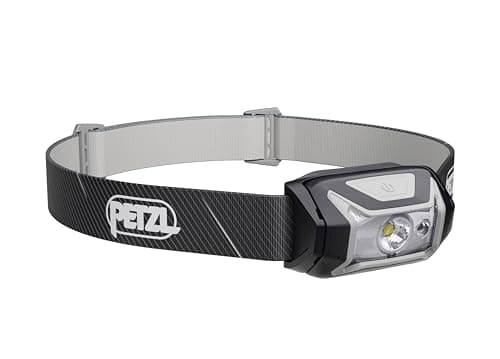 Petzl TikkaTop pick350 lumens, three AAA cells, a red mode, 94 grams. The unglamorous answer that covers most of what people actually do after dark. | A first headlamp, and the glovebox | 350 lm / 94 g | |
| 2 | 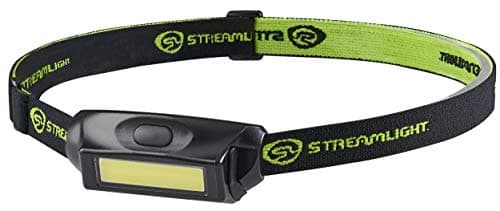 Streamlight Bandit Pro180 lumens of deliberately diffused light at 45 grams, running 4.5 hours on high. Modest numbers, and the right ones for the job. | Close work where you want a diffused beam, not a spotlight | 180 lm / 45.4 g (1.6 oz) | |
| 3 | 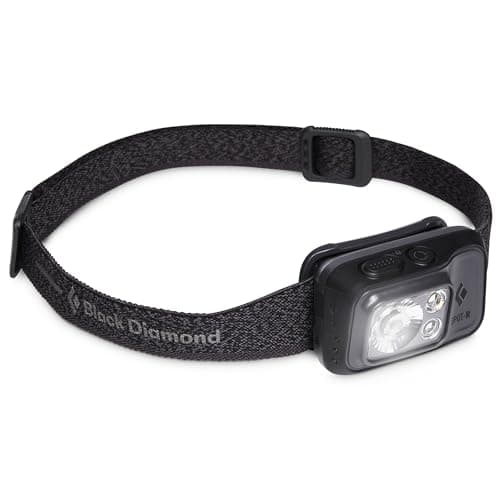 Black Diamond Spot 400-R400 lumens, red night vision, and brightness memory, from the brand most likely to already be in your gear closet. | Camping with a red mode that stays put | 400 lm / 86 g | |
| 4 | 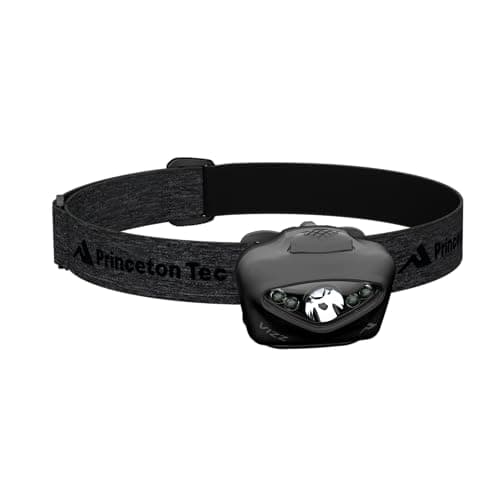 Princeton Tec Vizz550 lumens on three AAA cells with an IPX7 rating — immersion, not just rain. The only AAA lamp here rated for a dunking. | Getting wet | 550 lm / 92 g | |
| 5 | 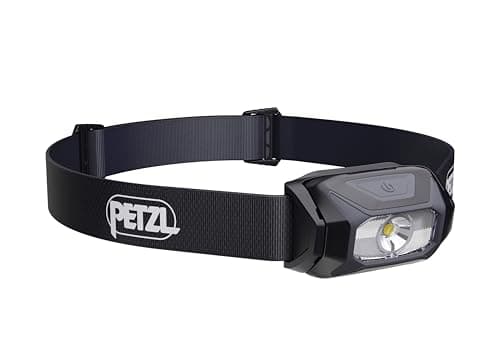 Petzl Tikkina300 lumens on AAA cells with a published ANSI figure. It does one thing and does not pretend to do more. | The cheapest lamp we would actually recommend | 300 lm / 92 g |
We earn a commission if you buy through the links on this page, at no extra cost to you. It does not change what we recommend or the order they appear in. Full disclosure. Prices checked October 17, 2026.
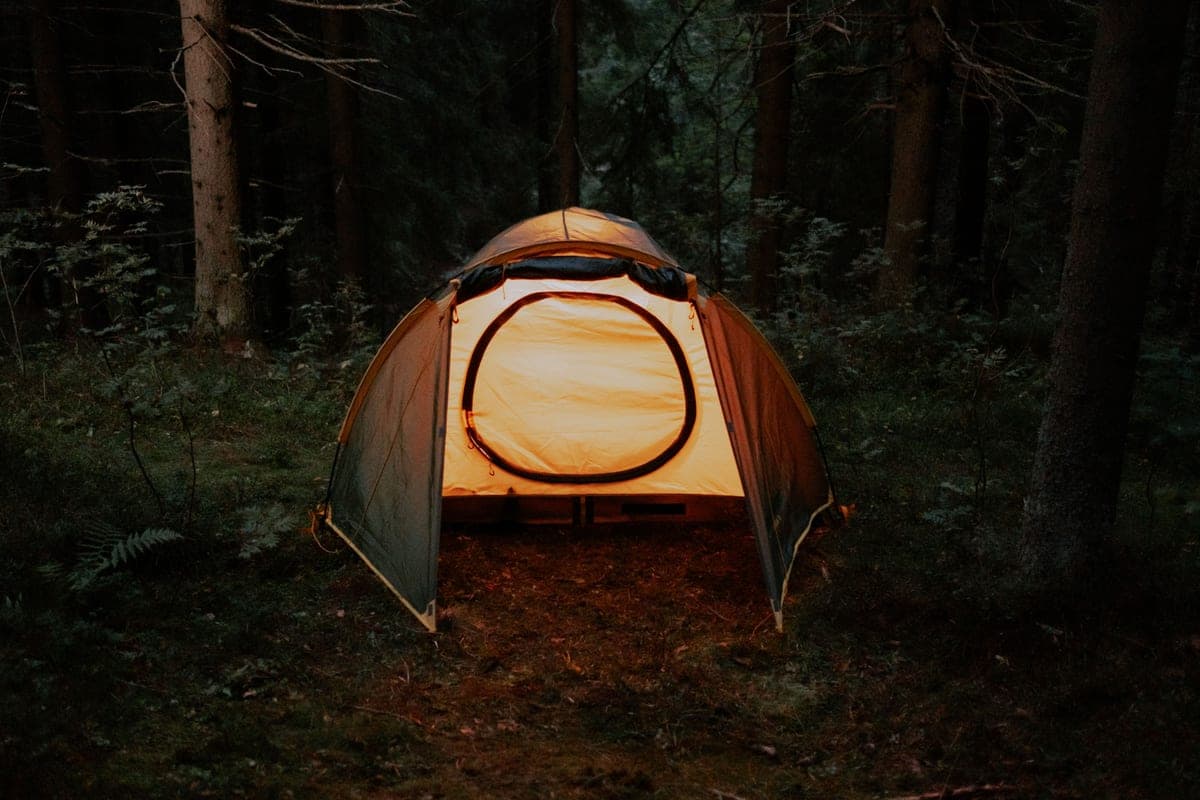
Buy a Petzl Tikka for reading. It has a red mode you reach without cycling through white, it publishes 7 lumens for 110 hours on three AAA cells, and at 94 g on a simple strap it is the pick for anyone reading in bed, in a tent or next to somebody who is asleep. If weight is what you notice, the Streamlight Bandit Pro is 45.4 g with a deliberately diffused beam and no hotspot on the page.
We have not tested any of these lamps. We own none of them and have no laboratory, so there is no verdict here about comfort after two hours. Every figure below is the maker's own, with the arithmetic those figures allow - see our methodology.
How we judged this
This is the one headlamp page on the site where a bigger number is a worse answer. A page at arm's length needs single-digit to low double-digit lumens; anything more bounces off white paper straight back at you, and a 400-lumen setting aimed at a book is actively unpleasant. So the criteria invert:
- The lowest usable setting, and its published runtime. This is the mode you will actually use, so it is the mode we rank on.
- How you reach that setting. A lamp that cycles through full white to get to red or to minimum is the wrong lamp for a shared room.
- Weight. An hour of reading is longer than most headlamp use, and grams on the front of a strap become obvious.
- Beam quality at close range. A diffused flood beats a hotspot on a page every time. This is the only page here where we would rather a maker published no beam distance.
- Whether a red mode exists at all, because it is the difference between reading next to someone and waking them up.
The published low-mode figures, side by side
| Lamp | Lowest output | Published runtime there | Red mode | Weight |
|---|---|---|---|---|
| Petzl Tikka | 7 lm | 110 h on AAA | Yes, 2 lm | 94 g |
| Streamlight Bandit Pro | 35 lm | 21 h | No | 45.4 g |
| Black Diamond Spot 400-R | 6 lm | 225 h | Yes, with dimming | 86 g |
| Princeton Tec Vizz | 10 lm (red) | 135 h | Yes, two red LEDs | 92 g |
| Petzl Tikkina | 7 lm | 100 h on AAA | No | 92 g |
Two things fall out of that table. The Bandit Pro's floor is 35 lumens - five times the Petzl's - which is the one real strike against an otherwise ideal reading lamp. And the Spot 400-R's 6 lumens for 225 hours is the longest figure on the site at any output, which is worth looking at more closely rather than simply believing.
What those long runtimes really mean
Multiply output by published runtime and you get the total light a lamp commits to delivering per fill. Do it across this page and the numbers say something none of the makers says out loud.
This is not a criticism of any one maker, because all of them measure the same way. It is the reason we rank the lowest setting rather than the longest number: a lamp whose floor is genuinely 6 or 7 lumens will still be readable deep into that tail, while one whose floor is 35 lumens has further to fall before it stops being a reading light. How runtime is defined sets out the standard in full.
Why red matters more here than anywhere else
A red mode does two things for a reader. It preserves the dark adaptation of anyone else in the room, and it preserves your own, so looking up from the page does not leave you blind. Red light also scatters less off white paper, which is why the effect at 2 lumens of red is closer to 10 lumens of white than the numbers suggest.
What separates the lamps here is not whether red exists but how you get to it. Black Diamond states that the Spot 400-R's red night vision activates without cycling through the white mode, and it remembers the brightness you switched off at. Petzl puts red on its own press on the Tikka. The Bandit Pro has no red at all. What a headlamp red light mode is for covers the physiology properly.
What each pick is for
[Petzl Tikka](/headlamps/petzl-tikka-review) - best for reading next to someone else. Petzl publishes the complete ANSI FL 1 table: 350 lm over 70 m for 2 h, 100 lm for 12 h and 7 lm for 110 h on three AAA cells, with 94 g and IPX4. The red mode is the reason it leads this page, and three AAA cells mean it is never flat for long. Honest downsides: 94 g is heavier than the Streamlight by half again, there is no rechargeable pack in the box, and IPX4 is rain resistance rather than immersion.
[Streamlight Bandit Pro](/headlamps/streamlight-bandit-pro-review) - best for weight and for the beam itself. 45.4 g is the lightest lamp on this page by a clear margin, and Streamlight built the optic to diffuse rather than focus, so there is no hotspot to land on a page. It publishes 180 lm for 4.5 h and 35 lm for 21 h - genuine per-mode figures, which almost nobody else in this price band prints. The problem for reading is that floor: 35 lumens is brighter than this job needs, and there is no red mode to drop to instead.
Black Diamond Spot 400-R - best for the lowest setting and the quickest route to red. 6 lumens is the lowest floor here, the red mode activates without passing through white, brightness memory returns the lamp to where you left it, and a digital lockout stops it switching itself on in a bag. Black Diamond publishes 86 g, a 1500 mAh cell and IP67 immersion, which is better weather protection than any Petzl lamp we cover. Downsides: micro-USB charging in 2026, no battery fallback when the sealed cell is flat, and that 225-hour figure needs reading as the FL 1 maximum it is.
[Princeton Tec Vizz](/headlamps/princeton-tec-vizz-review) - best for a lamp that reads in bed and then goes outside. Two dedicated red LEDs at 10 lumens for a published 135 hours, plus 550 lumens of spot when you need it, on three AAA cells, at 92 g, with IPX7 immersion. It is the only lamp here that pairs a published immersion rating with cells you can buy in a shop. Downsides: 92 g, no candela figure, and Princeton Tec publishes two further columns it never defines.
[Petzl Tikkina](/headlamps/petzl-tikkina-review) - best for the cheapest lamp we would recommend. The same 7 lumens for 100 published hours as the Tikka, the same 92 g class, the same complete Petzl table, for noticeably less money. Petzl's own page names reading in a tent as a use case for it. The thing you give up is the red mode, which on this page is the thing that matters most - so buy it for a kit bag or a spare and spend the extra on the Tikka if the lamp will be used next to anyone.
Lamps we left off, and why
Anything over 1,000 lumens. The brightest headlamps page exists and this is the opposite of it. A 3,000-lumen lamp aimed at a book is a worse object for this job than a twenty-dollar one, and its low mode is usually no lower.
Reactive lamps. A sensor that brightens when it sees a dark field is exactly wrong over a white page - it reads the paper as bright and dims, then overcorrects when you look away. For running that behavior is the feature; here it is a fault.
Clip-on book lights. Genuinely the right answer for some readers, and we do not cover them - a light that clamps to a cover is a different product category, and light types explained sets out where the lines are. If you want one object that reads tonight and walks the dog tomorrow, a headlamp is the one that does both.
The honest summary
Every lamp on this page can light a book, and the published figures separate them on interface and weight rather than on output. Take the Tikka for the red mode, the Bandit Pro if 45 grams matters more than red, the Spot 400-R for the lowest floor and the best weather rating, the Vizz if it doubles as an outdoor lamp, the Tikkina if you want the cheapest honest answer. The one thing we would not do is buy a brighter lamp expecting it to be better at this.
The picks, in full
Top pick · A first headlamp, and the glovebox
Petzl Tikka
350 lumens, three AAA cells, a red mode, 94 grams. The unglamorous answer that covers most of what people actually do after dark.
Three alkaline AAA cells hold roughly 3.9 Wh between them at a modest draw. That is comparable to the Swift LT's entire battery, for a couple of dollars, available in any gas station in the country.
The red mode is the feature people end up using most. It preserves night adaptation and does not wake a tent.
350 lumens looks modest next to a 3,000-lumen listing. On a footpath at walking pace it is more light than you need, and it will still be running when the 3,000-lumen light has stepped down twice.
What works
- AAA cells: replaceable anywhere, storable for years, no charge cycle to manage
- A red mode you can reach without a mode-cycling ordeal
- Cheap enough to own two
What does not
- No rechargeable pack in the box
- 70 m throw identifies nothing at distance
- IPX4
Skip this ifyou want one lamp for everything including work. There is no real flood mode and no high-CRI option.
Published specification
- Output
- 350 lmANSI/PLATO FL 1Petzl Tikka — manufacturer spec page (retrieved September 1, 2026)
- Peak intensity
- not published
- Beam distance
- 70 mOn three AAA cells; 75 m on the CORE rechargeable accessoryPetzl Tikka — manufacturer spec page (retrieved September 1, 2026)
- Runtime
- 2 h at 350 lm / 12 h at 100 lm / 110 h at 7 lm, on AAAOn the CORE pack the same levels run 2.5 h at 450 lm / 7 h at 100 lm / 110 h at 7 lm. AAA gives less peak output and more mid-level runtime. The 400 h figure Petzl lists is the red strobe, not a working runtime.Petzl Tikka — manufacturer spec page (retrieved September 27, 2026)
- Battery
- 3 x AAA (included), or the CORE rechargeable packPetzl Tikka — manufacturer spec page (retrieved September 1, 2026)
#ad · how this is funded · price as of October 17, 2026
Pick 2 · Close work where you want a diffused beam, not a spotlight
Streamlight Bandit Pro
180 lumens of deliberately diffused light at 45 grams, running 4.5 hours on high. Modest numbers, and the right ones for the job.
4.5 hours on high and 21 hours on low are published per-mode figures, not a reserve-visibility claim. That is rarer than it should be and it is why this lamp scores well despite the smallest headline here.
180 diffused lumens at arm's length is more comfortable than 1,000 focused ones. Under a dashboard or inside an electrical panel, glare is the enemy and this is built to avoid it.
45 g puts it within 2 g of a Petzl Swift LT while costing a fraction as much.
What works
- Honest per-mode runtimes published by the maker
- 45 g, and a hard-hat strap option
- Diffused beam that does not blind you off close work
What does not
- 180 lumens will not light a trail
- No beam distance published, because there is not much to publish
- IPX4
Skip this ifyou need to see past about ten meters. It is a task light worn on the head, not a trail lamp.
Published specification
- Output
- 180 lmHigh. Low is 35 lm.Streamlight Bandit Pro — manufacturer spec page (retrieved September 1, 2026)
- Peak intensity
- not published
- Beam distance
- not published(Streamlight does not publish one for this diffused lamp)
- Runtime
- 4.5 h on high, 21 h on lowStreamlight Bandit Pro — manufacturer spec page (retrieved September 1, 2026)
- Battery
- USB rechargeable, charges in the light in 3.5 hStreamlight Bandit Pro — manufacturer spec page (retrieved September 1, 2026)
- Weight
- 45.4 g (1.6 oz)Streamlight Bandit Pro — manufacturer spec page (retrieved September 1, 2026)
- Ingress
- IPX42 m impact resistance testedStreamlight Bandit Pro — manufacturer spec page (retrieved September 1, 2026)
#ad · how this is funded · price as of October 17, 2026
Pick 3 · Camping with a red mode that stays put
Black Diamond Spot 400-R
400 lumens, red night vision, and brightness memory, from the brand most likely to already be in your gear closet.
Black Diamond publishes a complete sheet for this lamp on its own site: 400/200/6 lumens, 100/60/12 meters, 4/8/225 hours, 86 grams, IP67 and a 1500 mAh cell. This catalogue previously held four of those as unpublished because we had only read the Amazon listing.
The burn-time figures are FL 1 maximums - measured until output falls to a tenth of where it started - so 4 hours on high is not 4 hours of 400 lumens. 5.6 watt-hours cannot deliver it: that would be a draw no 400-lumen lamp sustains.
Brightness memory is the underrated feature. The lamp comes back on at the level you left it, which means the red mode is one click away rather than a cycle through white.
IP67 is the specification that separates it from the Petzl range at this price. Petzl publishes IPX4 across the Tikkina, Tikka and Actik Core - rain, not immersion.
What works
- A complete published spec sheet: per-mode output, distance and burn time, weight, cell capacity and IP rating
- IP67 immersion, where the obvious Petzl alternatives publish IPX4
- Red night vision with brightness memory and a digital lockout, so you do not blind a tent to get to it
What does not
- Micro-USB in 2026, when almost everything else here charges over USB-C
- No candela figure, so the 100 m distance cannot be cross-checked against an intensity
- No AAA fallback on the -R version: when the sealed cell is flat the lamp is done for the night
Skip this ifyou want a power-source fallback. The Petzl Actik Core and Tikka take three AAA cells when the pack dies; this one does not.
Published specification
- Output
- 400 lmHigh. Medium 200 lm, low 6 lm.Black Diamond Spot 400-R — manufacturer spec page (retrieved October 17, 2026)
- Peak intensity
- not published(Black Diamond publishes distance, not peak intensity)
- Beam distance
- 100 mHigh. 60 m medium, 12 m low.Black Diamond Spot 400-R — manufacturer spec page (retrieved October 17, 2026)
- Runtime
- 4 h high / 8 h medium / 225 h lowPublished as max burn time, the FL 1 measure to 10 percent of initial output - not hours at the stated lumens.Black Diamond Spot 400-R — manufacturer spec page (retrieved October 17, 2026)
- Battery
- Integrated 1500 mAh Li-ion, micro-USB5.6 Wh at a 3.7 V nominal cell. Micro-USB, not USB-C.Black Diamond Spot 400-R — manufacturer spec page (retrieved October 17, 2026)
- Ingress
- IP67Black Diamond states tested to operate at least 1.0 m underwater for 30 minutes. The same page's prose calls the housing IPX8; we quote the spec line.Black Diamond Spot 400-R — manufacturer spec page (retrieved October 17, 2026)
$79.95 · 28% off
#ad · how this is funded · price as of October 17, 2026
Pick 4 · Getting wet
Princeton Tec Vizz
550 lumens on three AAA cells with an IPX7 rating — immersion, not just rain. The only AAA lamp here rated for a dunking.
IPX7 on AAA cells is the specification that makes this interesting. Almost everything else in the AAA class is IPX4, which means rain and nothing more.
Three lithium AAA cells hold roughly 4.5 Wh and shrug off cold in a way alkalines do not. On this lamp that combination is worth more than another 500 lumens.
Princeton Tec publishes an output and a runtime for each of its four modes, plus an 85 m beam distance and a 92 g weight - not a single flattering maximum. The 85 m works back to about 1,806 candela, or 3.3 candela per lumen, which says the 550 lumens buys width rather than reach.
What works
- IPX7 immersion rating on replaceable cells
- A published runtime spread across modes and chemistries
- Digital lockout, so it does not drain itself in a pack
What does not
- No candela figure, so the 85 m distance cannot be cross-checked
- Bulkier than the modern rechargeable lamps
- No rechargeable option
Skip this ifweight is your constraint. The AAA carriage that makes it robust also makes it bigger than the Li-ion competition.
Published specification
- Output
- 550 lmSpot high. Spot low 150 lm, flood high 30 lm, red high 10 lm.Princeton Tec Vizz — manufacturer spec page (retrieved October 15, 2026)
- Peak intensity
- not published(Princeton Tec publishes distance, not peak intensity)
- Runtime
- 1 h 30 min on spot highFour published pairs: spot 150 lm/40 h, flood 30 lm/90 h, red 10 lm/135 h. The headline 90 h is the flood figure.Princeton Tec Vizz — manufacturer spec page (retrieved October 15, 2026)
- Battery
- 3 x AAA alkaline or lithiumPrinceton Tec Vizz — manufacturer spec page (retrieved October 15, 2026)
- Ingress
- IPX7Withstands immersion to one meterPrinceton Tec Vizz — manufacturer spec page (retrieved October 15, 2026)
#ad · how this is funded · price as of October 17, 2026
Pick 5 · The cheapest lamp we would actually recommend
Petzl Tikkina
300 lumens on AAA cells with a published ANSI figure. It does one thing and does not pretend to do more.
No red mode, no reactive sensor, no charge port. Three brightness levels and a battery door.
The 65 m distance and the 300-lumen output are both ANSI FL 1 figures published alongside the rest of Petzl's table, which is more than most lamps at this price manage.
The figure that matters is the middle one: 100 lumens over 40 meters for 10 hours on three AAA cells. That is a week of dog walks or a long night of reading, and it is the level anyone actually leaves the lamp on.
For a kit bag, a car, or a first lamp for someone unsure they will use it, this is the honest recommendation.
What works
- Published ANSI figures at the bottom of the price range, for both power sources
- 100 lumens for 10 hours on cells you can buy anywhere
- Nothing to break and nothing to charge
- Takes the same CORE pack as the rest of the Petzl range if you upgrade
What does not
- No red mode
- No rechargeable option in the box
- IPX4
Skip this ifyou are out after dark regularly. The missing red mode gets old fast in a shared tent.
Published specification
- Output
- 300 lmANSI/PLATO FL 1Petzl Tikkina — manufacturer spec page (retrieved September 1, 2026)
- Peak intensity
- not published
- Beam distance
- 65 mMAX POWER. 40 m on STANDARD, 10 m on MAX BURN TIME.Petzl Tikkina — manufacturer spec page (retrieved September 1, 2026)
- Runtime
- 2 h 30 min at 300 lm / 10 h at 100 lm / 100 h at 7 lm, on AAAPetzl publishes the full ANSI FL 1 table for both power sources. On the CORE pack the same three levels run 3 h / 7 h / 120 h. STANDARD also carries a further 20 h of reserve lighting on AAA.Petzl Tikkina — manufacturer spec page (retrieved October 17, 2026)
- Battery
- 3 x AAA (included), or the CORE rechargeable packPetzl Tikkina — manufacturer spec page (retrieved September 1, 2026)
#ad · how this is funded · price as of October 17, 2026
Questions people actually ask
What is the best headlamp for reading in bed?
The Petzl Tikka, on published figures. Its red mode is one press away rather than at the end of a white cycle, it publishes 7 lumens for 110 hours on three AAA cells, and it weighs 94 g. If you share a room, the red mode is the whole argument; if you read alone and notice weight, the 45.4 g Streamlight Bandit Pro is the better object.
How many lumens do you need to read with a headlamp?
Roughly 5 to 15 lumens at normal reading distance. All five lamps on this page publish a setting in or near that range, which is why we rank them on the lowest usable mode and on how easily you reach it rather than on peak output. A 400-lumen setting aimed at white paper is unpleasant rather than helpful.
Is a red headlamp better for reading?
For reading near other people, yes. Red light preserves dark adaptation for you and for them, and it scatters less off white paper, so 2 lumens of red does more than the number suggests. The Petzl Tikka and the Black Diamond Spot 400-R both reach red without cycling through full white; the Streamlight Bandit Pro has no red mode.
Do those 100-plus hour runtime figures mean 100 hours of reading light?
No, and this is the most misread number in the category. ANSI FL 1 measures runtime until output falls to 10 percent of its starting value, so a published 110 or 225 hours includes a long dimming tail. Run the arithmetic and some of these figures imply over 200 lumen-hours per watt-hour, which no headlamp achieves - that gap is the definition showing through. Expect a usable fraction at the stated brightness and a long, fading remainder.
Which reading headlamp is the lightest?
The Streamlight Bandit Pro at a published 45.4 g, which is less than half the weight of the others here. Streamlight also publishes per-mode runtimes for it, 4.5 hours on high and 21 on low, which is rarer than it should be. Its floor of 35 lumens is the trade.
Should I buy a rechargeable headlamp for reading?
It depends on whether the lamp lives by the bed or in a bag. Reading is a predictable, indoor activity, so a sealed rechargeable like the Spot 400-R or the Bandit Pro is easy to keep charged. If the same lamp also has to work after a year in a glovebox, the AAA lamps - the Tikka, the Tikkina, the Vizz - are the safer choice. Our car emergency kit page explains why.
Will a headlamp strap be comfortable for an hour of reading?
We cannot tell you - we have not worn any of these. What we can tell you is the published weight, which is the only part of comfort that is a specification: 45.4 g for the Bandit Pro, 86 g for the Spot 400-R, 92 g for the Vizz and the Tikkina, 94 g for the Tikka. The rest is fit, and fit is personal.
Sources
Every figure on this page came from one of the documents below, read on the date shown. We do not cite other review sites, forum posts or video reviews as sources of fact.
- Petzl Tikka — manufacturer spec page (retrieved September 1, 2026)
- Streamlight Bandit Pro — manufacturer spec page (retrieved September 1, 2026)
- Black Diamond Spot 400-R — manufacturer spec page (retrieved October 17, 2026)
- Princeton Tec Vizz — manufacturer spec page (retrieved October 15, 2026)
- Petzl Tikkina — manufacturer spec page (retrieved October 17, 2026)
- ANSI/PLATO FL 1 flashlight performance standard — definitions of lumens, peak beam intensity, beam distance, runtime, impact and water resistance
- IEC 60529 — the IP (ingress protection) rating system
Read next
Best headlamps, ranked on the watt-hours behind the lumens
The full headlamp ranking: output, weight, battery energy and beam distance, every figure sourced to the maker.
What a headlamp red light mode is actually for
The physiology behind red headlamp modes, and how to choose a lamp whose red is reachable in one click.
Best headlamps for camping
Camping headlamps ranked on red-mode access, replaceable cells and honest runtime figures.
Best headlamps under $50
Seven headlamps in the sub-$50 bracket, ranked on what their makers actually publish, with the gaps named and live prices on every pick.

Best headlamps for walking at night
Headlamps for night walks and dog walks, ranked on the middle setting you will actually use - plus the warning Petzl prints that nobody reads.
Petzl Tikka review
A specification-first review of the Petzl Tikka: two full published runtime tables, a genuinely useful red mode, and what the hybrid battery actually trades.
Petzl Tikkina review
A specification-first review of the Petzl Tikkina: three levels, six published runtimes across two power sources, and the arithmetic that names the mode to plan a night around.
Streamlight Bandit Pro review
A specification-first review of the Streamlight Bandit Pro: 45.4 grams, a published runtime for both levels, a diffused close-range beam, and the two-year warranty that goes with it.
Princeton Tec Vizz review
A specification-first review of the Princeton Tec Vizz: the per-mode runtimes, the arithmetic that shows which mode to actually use, what 85 meters says about the beam, and the one figure Princeton Tec still will not state.
How many lumens do I need?
A task-by-task lumen chart derived from illuminance requirements rather than from marketing.
Flashlight runtime, computed
How runtime is defined, why thermal step-down happens, and the arithmetic to compute a real figure yourself.
Found a number that is wrong? Tell us and we will fix it and say so. Our methodology shows every formula on this page.