Headlamps
Best headlamps for running
A running lamp is decided by three numbers: what it weighs, how long it holds output, and whether it stays still. Peak lumens is not one of them.
By Scooter M. · Published · Updated
| # | Product | Best for | Output / weight | Price |
|---|---|---|---|---|
| 1 | 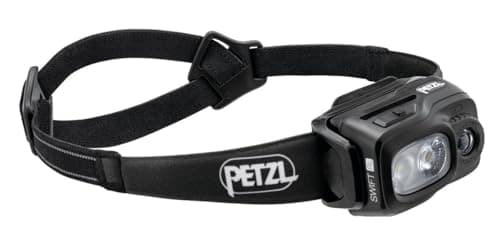 Petzl Swift RLTop pickThe best power-to-weight figure we could source: 1,200 lumens and 168 m from 92 grams, with reactive dimming that genuinely extends the burn. | Trail running and fast movement at night | 1,200 lm / 92 g | Check price#ad |
| 2 | 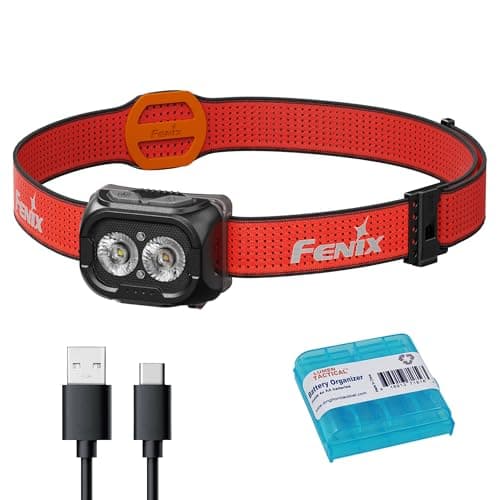 Fenix HL18R-T V2.0103 g, 800 lumens, and an AAA fallback. The cheapest lamp here that is genuinely built for running rather than adapted to it. | Trail running on a budget | 800 lm / 103 g (3.63 oz) | |
| 3 | 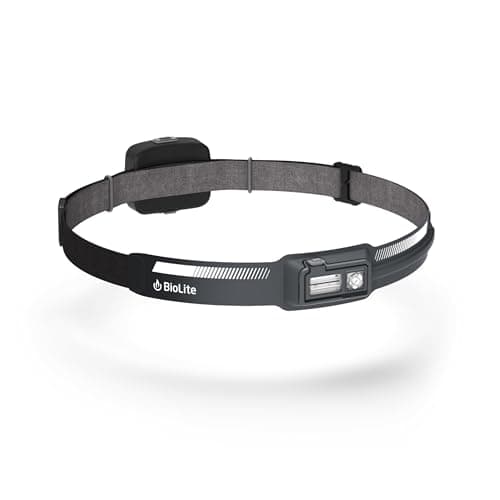 BioLite Dash 450450 lumens, 90 m of stated beam and 60 hours of stated runtime in BioLite's flat, no-bounce strap. | Road running, where the strap matters more than the beam | 450 lm | |
| 4 | 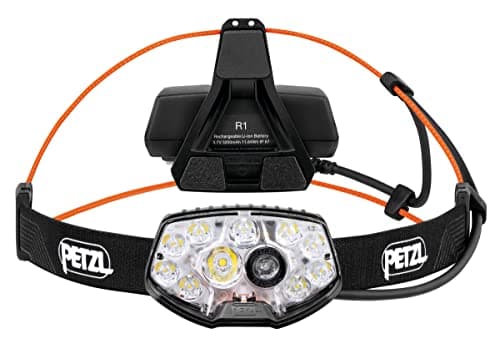 Petzl NAO RL1,500 lumens and 11.84 watt-hours in a rear-battery layout. The most stored energy on this list, and the weight that comes with it. | Ultra distance, where the battery has to last the night | 1,500 lm / 145 g | |
| 5 | 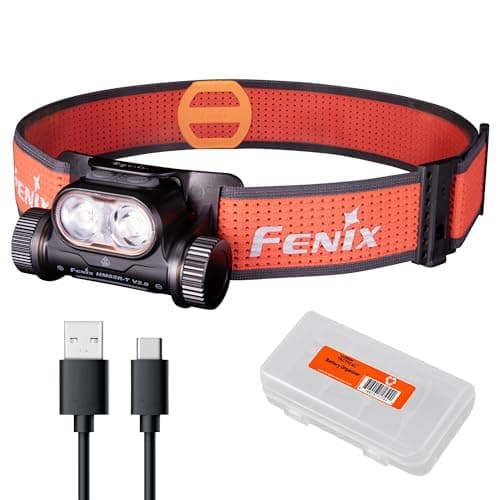 Fenix HM65R-T V2.01,600 lumens and 170 m from a magnesium body running a standard 18650, at 140 g. The removable cell is what separates it from the sealed-pack lamps. | Long nights where you want reach and a spare cell | 1,600 lm / 140 g (4.94 oz) |
We earn a commission if you buy through the links on this page, at no extra cost to you. It does not change what we recommend or the order they appear in. Full disclosure. Prices checked October 16, 2026.
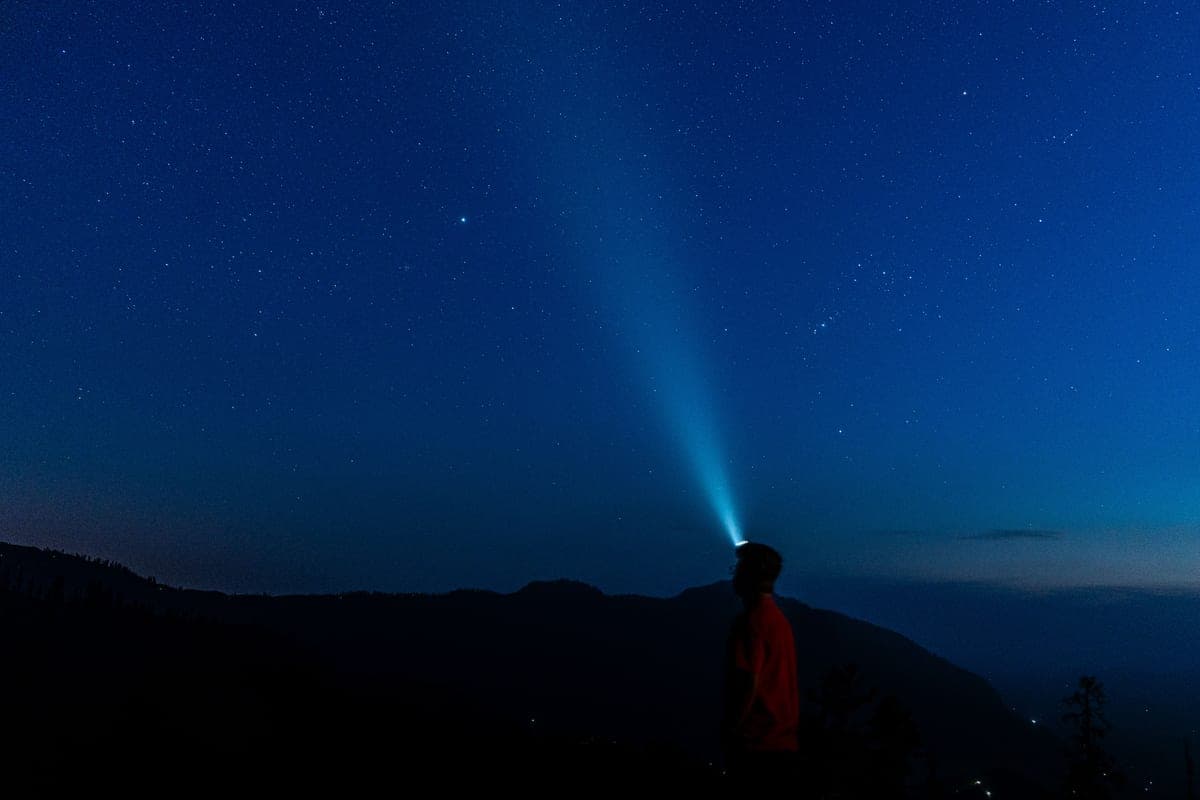
Running is the one headlamp use case where the marketing number is most actively misleading. A 2,000-lumen lamp that steps down to 400 after ninety seconds and weighs 200 grams is worse for running than an 800-lumen lamp that holds 300 for four hours at 100 grams. What matters is sustained output, stored energy and mass — in that order.
How we picked
Every lamp here has a published weight and a published battery capacity from its maker, which is what lets us compute the energy-per-gram figures below. We have not run in any of them. The methodology page sets out the arithmetic and what we refuse to claim.
The weight problem, in numbers
A headlamp does not sit still on your head when you run. It moves with every footstrike, and the force it applies to the strap scales with its mass. That is why 50 grams is not a rounding error in this category the way it is in hiking.
| Lamp | Weight | Watt-hours | Peak output | Wh per 100 g |
|---|---|---|---|---|
| Petzl Swift RL | 92 g | 8.5 | 1,200 lm | 9.2 |
| Fenix HL18R-T V2.0 | 103 g | 6.8 | 800 lm | 6.6 |
| Petzl NAO RL | 145 g | 11.8 | 1,500 lm | 8.2 |
| Fenix HM65R-T V2.0 | 140 g | 12.2 | 1,600 lm | 8.7 |
| BioLite Dash 450 | not published | not published | 450 lm | not computable |
The Swift RL wins the ratio and the NAO RL wins the absolute figure. Which one you want depends entirely on how long your longest night is: under five hours, take the 92 grams; over five, take the 11.8 watt-hours and the rear-mounted battery that keeps it stable.
Reactive lighting is a runtime feature, not a gimmick
Petzl's reactive lamps meter reflected light and cut output when you look at something close and pale — your own hands, a white trail marker, the back of the runner in front. In practice that is a large fraction of your running time, and it is why Petzl can quote a 7-hour minimum at medium on the Swift RL and 5 hours on the NAO RL.
Beam distance you can use at speed
At 5 minutes per kilometer you cover about 3.3 meters per second. To read the ground with a second of reaction time you need clear detail at 10 to 15 meters, and to plan a line you want detection out to 40 or 50. The ANSI beam distance figure — the point where illumination falls to 0.25 lux — needs to be roughly three times your useful working distance.
That puts the practical floor for trail running at about 120 m of rated distance. The Swift RL's 168 m and the Actik Core's 115 m bracket it. Anything rated under 100 m is a walking lamp. Throw versus flood explains why a wide beam and a long one are different purchases.
Front-mounted or rear-battery
Under about 100 grams, a front-mounted lamp is fine and simpler. Above that, the mass wants to pivot down on every footstrike and a rear battery pack that balances the load is worth the extra strap. The Petzl NAO RL is the only lamp here built that way, and 145 grams distributed is more comfortable than 120 grams all on your forehead.
What we would not buy for running
Anything sold on a peak-lumen figure with no published runtime table. Anything over about 160 grams with the mass entirely at the front. Anything with a single sealed cell under 5 watt-hours if your runs go past two hours. And anything whose maker does not publish a weight, because on a running lamp that is the specification you most need.
The BioLite Dash 450 sits at the bottom of our list for exactly that reason. It publishes output, beam distance, runtime and an IP rating — more than most — but not a weight, which on a running lamp is the number that decides everything.
The picks, in full
Top pick · Trail running and fast movement at night
Petzl Swift RL
The best power-to-weight figure we could source: 1,200 lumens and 168 m from 92 grams, with reactive dimming that genuinely extends the burn.
8.47 watt-hours across 92 grams is the whole argument. That works out to 13.0 lumens per gram at peak and 0.092 Wh of stored energy per gram carried, the best combination of the two figures in this roundup.
Reactive lighting is the runtime strategy, not a gimmick. The lamp meters reflected light and cuts output when you look at your own hands or a pale trail. Petzl's 7-hour minimum at medium is quoted in that mode, and it is the number to plan around.
168 m of throw is more than a runner can use below about 8 minutes per kilometer. What you actually notice is how little the beam sags once the pack drops under half.
What works
- 1,200 lm and 168 m at 92 g, the best power-to-weight in this set on published figures
- Reactive dimming extends the burn instead of just cutting output in bright patches
- Five-level charge gauge, so you know what you have before you start
What does not
- IPX4, in a category where running in rain is the normal case
- Charging cable not included at this price
- Reactive mode takes a few outings to trust
Skip this ifyou mostly walk. You are paying for a reactive sensor and a 2,250 mAh pack to solve a problem hikers do not have.
Published specification
- Output
- 1,200 lmANSI FL 1 standardPetzl Swift RL — manufacturer spec page (retrieved September 1, 2026)
- Peak intensity
- not published(Petzl publishes distance, not peak intensity)
- Beam distance
- 168 mPetzl Swift RL — manufacturer spec page (retrieved September 1, 2026)
- Runtime
- 7 h minimum at medium, in reactive modePetzl Swift RL — manufacturer spec page (retrieved September 1, 2026)
- Battery
- 2,250 mAh / 3.85 V / 8.47 Wh Li-ion, USB-CPetzl Swift RL — manufacturer spec page (retrieved September 1, 2026)
#ad · how this is funded · price as of October 16, 2026
Pick 2 · Trail running on a budget
Fenix HL18R-T V2.0
103 g, 800 lumens, and an AAA fallback. The cheapest lamp here that is genuinely built for running rather than adapted to it.
1,900 mAh at 3.7 V is about 7.0 watt-hours. That is 83 percent of a Swift RL's tank in a lamp 11 g lighter and considerably cheaper.
The AAA fallback is unusual at this weight and it is the reason to pick this over a sealed running lamp: a flat pack at 2 a.m. is a battery change rather than the end of the night.
IP66 is a step up from the IPX4 that most running lamps ship with. It will not survive immersion, but it will survive a downpour.
What works
- 103 g with three AAA cells as a backup power source
- IP66, better than most of the running field
- A warm-white emitter alongside the cool white, which helps in fog and dust
What does not
- Fenix does not publish a beam distance for it on the pages we read
- The 800-lumen turbo is a short burst, not a setting you can run in
- Proprietary ARB-LP1900 pack for the rechargeable option
Skip this ifyou need to identify things at distance. Without a published beam distance we cannot tell you how far it reaches, and the aperture suggests it is not far.
Published specification
- Output
- 800 lmFenix HL18R-T V2.0 — the brand's own listing on Amazon.com (retrieved September 1, 2026)
- Peak intensity
- not published
- Beam distance
- 125 mFenix states 410 feet (125 m) as the maximumFenix HL18R-T V2.0 — manufacturer spec page (retrieved September 27, 2026)
- Runtime
- 160 h maximumLowest modeFenix HL18R-T V2.0 — manufacturer spec page (retrieved September 1, 2026)
- Battery
- 1,900 mAh Li-ion pack (included), or 3 x AAAFenix HL18R-T V2.0 — manufacturer spec page (retrieved September 1, 2026)
- Weight
- 103 g (3.63 oz)Including battery and headbandFenix HL18R-T V2.0 — manufacturer spec page (retrieved September 1, 2026)
- Ingress
- IP66Dust tight, withstands heavy rain and splashes; 1 m impact resistanceFenix HL18R-T V2.0 — manufacturer spec page (retrieved September 1, 2026)
#ad · how this is funded · price as of October 16, 2026
Pick 3 · Road running, where the strap matters more than the beam
BioLite Dash 450
450 lumens, 90 m of stated beam and 60 hours of stated runtime in BioLite's flat, no-bounce strap.
BioLite's listing publishes more than most: output, beam distance, maximum runtime and an IP rating. That is why this one earns a place despite the modest headline.
450 lumens and 90 m is a road-running beam. On tarmac at 5 minutes per kilometer it is enough; on technical singletrack it is not.
The flat front profile is the actual product. A headlamp that does not bounce is worth more to a runner than another 300 lumens that does.
What works
- One of the few non-European brands here to publish beam distance and IP rating
- Low-profile strap that stays put at pace
- 60-hour low mode is a real number, not a reserve-visibility claim
What does not
- 450 lumens is modest for trail use
- No published weight
- IPX4 rather than a proper rain rating
Skip this ifyou run technical trail. 90 m of reach at 450 lumens does not give you time to read the ground at speed.
Published specification
- Peak intensity
- not published
- Beam distance
- 90 mBioLite Dash 450 — the brand's own listing on Amazon.com (retrieved September 1, 2026)
- Runtime
- 60 h maximumLowest modeBioLite Dash 450 — the brand's own listing on Amazon.com (retrieved September 1, 2026)
- Battery
- Rechargeable, built inBioLite Dash 450 — the brand's own listing on Amazon.com (retrieved September 1, 2026)
- Weight
- not published
#ad · how this is funded · price as of October 16, 2026
Pick 4 · Ultra distance, where the battery has to last the night
Petzl NAO RL
1,500 lumens and 11.84 watt-hours in a rear-battery layout. The most stored energy on this list, and the weight that comes with it.
11.84 watt-hours is 3.6 times the Swift LT's tank and 1.4 times the Swift RL's. That is the entire reason to carry 145 g on your head.
The rear battery is not styling. It moves sixty-odd grams off the front of your skull, which is why the NAO does not bounce on a descent the way a front-heavy lamp does.
It charges a phone. On a hundred-miler that is a second reason to carry it.
What works
- The most stored energy in this roundup, by a wide margin
- Weight split front and rear, so it stays put on rough ground
- Swappable spare pack turns a battery change into a 20-second job at an aid station
What does not
- 145 g is 53 g more than a Swift RL for the same reactive technology
- No published beam distance or IP rating on the page we read
- The most expensive headlamp here
Skip this ifyour longest night is under five hours. You would be carrying a battery for a duration you never reach.
Published specification
- Peak intensity
- not published
- Beam distance
- not published(Not stated on the page we read)
- Runtime
- 5 h minimum in reactive mode at the standard levelPetzl NAO RL — manufacturer spec page (retrieved September 1, 2026)
- Battery
- 3,200 mAh / 3.7 V / 11.84 Wh Li-ion, USB-C, doubles as a power bankPetzl NAO RL — manufacturer spec page (retrieved September 1, 2026)
- Ingress
- not published(Not stated on the page we read)
$199.95 · 10% off
#ad · how this is funded · price as of October 16, 2026
Pick 5 · Long nights where you want reach and a spare cell
Fenix HM65R-T V2.0
1,600 lumens and 170 m from a magnesium body running a standard 18650, at 140 g. The removable cell is what separates it from the sealed-pack lamps.
A 3,400 mAh 18650 at a nominal 3.6 V is 12.2 watt-hours. That is more energy than a Petzl NAO RL carries, in a lamp 5 g lighter, because a bare 18650 is a more efficient package than a molded pack.
It is also the only headlamp in this set whose battery you can replace at a checkpoint for three dollars, because 18650 is a standard cell and not a proprietary brick.
IP68 rather than IPX4 is the second real difference. This one survives being dropped in water; most of the running lamps here do not.
What works
- Standard 18650 cell: swappable, cheap, and available everywhere
- IP68 and 2 m impact rating, the toughest specification in this roundup
- Dual emitters, one white and one warm white, so it works for close tasks as well as reach
What does not
- 140 g is at the heavy end for a running lamp
- Charging works only with Fenix ARB-L18 series cells, which limits the swap-any-18650 advantage
- No published candela figure
Skip this ifyou count grams. A Swift LT does the camp job at 43 g; you are carrying 97 g extra for reach and a removable cell.
Published specification
- Peak intensity
- not published(Fenix publishes distance, not peak intensity)
- Runtime
- 300 h maximumLowest mode. The turbo figure is far shorter and Fenix publishes it per-mode.Fenix HM65R-T V2.0 — manufacturer spec page (retrieved September 1, 2026)
- Battery
- 3,400 mAh 18650 Li-ion (included), or 2 x CR123AFenix HM65R-T V2.0 — manufacturer spec page (retrieved September 1, 2026)
- Weight
- 140 g (4.94 oz)Including battery and headbandFenix HM65R-T V2.0 — manufacturer spec page (retrieved September 1, 2026)
- Ingress
- IP68Dust tight and immersion rated; 2 m impact resistanceFenix HM65R-T V2.0 — manufacturer spec page (retrieved September 1, 2026)
#ad · how this is funded · price as of October 16, 2026
Questions people actually ask
How many lumens do I need for trail running?
300 to 500 lumens sustained is the working range for technical trail at pace. Peak figures above 1,000 are useful for scanning ahead on a descent, not for running in. A lamp that holds 300 for four hours beats one that peaks at 1,500 for ninety seconds.
Does a heavier headlamp really bounce more?
Yes, and the effect is not linear with weight because a front-mounted mass also creates a rotating moment about the strap. That is why lamps above about 100 grams start moving the battery to the back of the head: the same mass distributed is measurably more stable.
Is reactive lighting worth paying for?
If your runs are over about two hours, yes. It cuts average draw substantially, which is why Petzl quotes its Swift RL minimum runtime in reactive mode. On short runs you will never reach the battery limit and it is money spent on a problem you do not have.
Can I use a hiking headlamp for running?
For road running, usually. For trail, the beam pattern is often wrong — hiking lamps favor a wide flood at short range, and running needs a hotspot far enough ahead to read the ground before you reach it.
What IP rating do I need for running in the rain?
IPX4 covers rain and is what most running lamps carry, including every Petzl here. If you run in genuinely heavy weather or ford streams, the Fenix HM65R-T's IP68 is the only rating in this set that covers immersion.
Should the headlamp go on my head or on a chest strap?
A head-mounted beam follows your eyes, which is what you want on technical ground. A chest-mounted beam casts longer shadows from rocks and roots, which some runners find easier to read. Several lamps here detach and clip, so you can try both without buying twice.
Sources
Every figure on this page came from one of the documents below, read on the date shown. We do not cite other review sites, forum posts or video reviews as sources of fact.
- Petzl Swift RL — manufacturer spec page (retrieved September 1, 2026)
- Petzl NAO RL — manufacturer spec page (retrieved September 1, 2026)
- Fenix HL18R-T V2.0 — manufacturer spec page (retrieved September 1, 2026)
- Fenix HM65R-T V2.0 — manufacturer spec page (retrieved September 1, 2026)
- ANSI/PLATO FL 1 flashlight performance standard — definitions of lumens, peak beam intensity, beam distance, runtime, impact and water resistance
Read next
Best headlamps, ranked on the watt-hours behind the lumens
The full headlamp ranking: output, weight, battery energy and beam distance, every figure sourced to the maker.

Best headlamps for backpacking
Backpacking headlamps ranked on the grams-per-watt-hour trade, computed from published figures.
How many lumens do I need?
A task-by-task lumen chart derived from illuminance requirements rather than from marketing.
Flashlight runtime, computed
How runtime is defined, why thermal step-down happens, and the arithmetic to compute a real figure yourself.

Best headlamps for hiking
Hiking headlamps ranked on hybrid power, published runtime and weight — not on peak output.
Fenix HL18R-T V2.0 review
A specification-first review of the Fenix HL18R-T V2.0: dual color temperatures, a published IP66, and the per-mode figures Fenix still charts instead of printing.
Found a number that is wrong? Tell us and we will fix it and say so. Our methodology shows every formula on this page.