Headlamps
Best headlamps for walking at night
A hundred lumens is enough to walk by. What a pavement at night actually asks for is a red mode, a free hand and a lamp you will put on without thinking.
By Scooter M. · Published · Updated
| # | Product | Best for | Output / weight | Price |
|---|---|---|---|---|
| 1 | 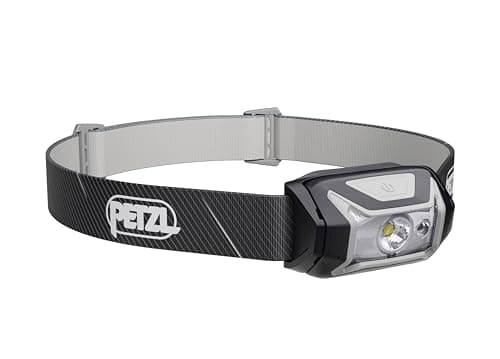 Petzl TikkaTop pick350 lumens, three AAA cells, a red mode, 94 grams. The unglamorous answer that covers most of what people actually do after dark. | A first headlamp, and the glovebox | 350 lm / 94 g | |
| 2 | 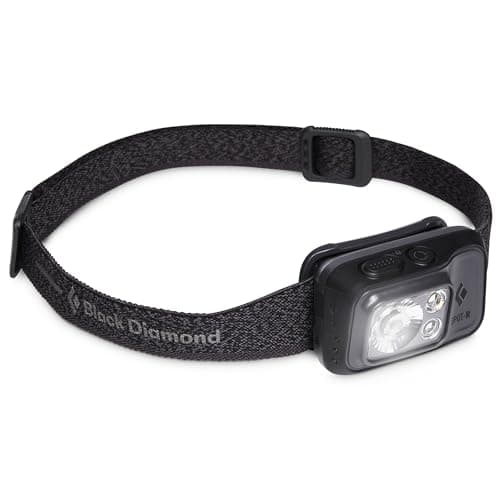 Black Diamond Spot 400-R400 lumens, red night vision, and brightness memory, from the brand most likely to already be in your gear closet. | Camping with a red mode that stays put | 400 lm / 86 g | |
| 3 | 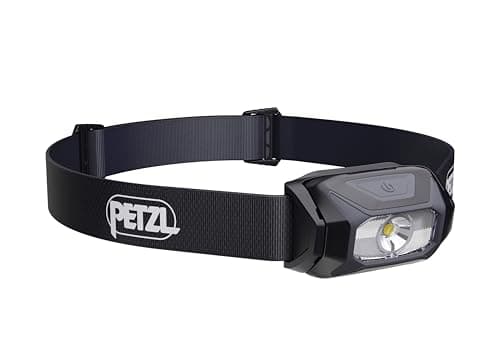 Petzl Tikkina300 lumens on AAA cells with a published ANSI figure. It does one thing and does not pretend to do more. | The cheapest lamp we would actually recommend | 300 lm / 92 g | |
| 4 | 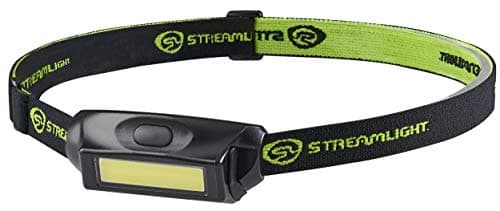 Streamlight Bandit Pro180 lumens of deliberately diffused light at 45 grams, running 4.5 hours on high. Modest numbers, and the right ones for the job. | Close work where you want a diffused beam, not a spotlight | 180 lm / 45.4 g (1.6 oz) | |
| 5 | 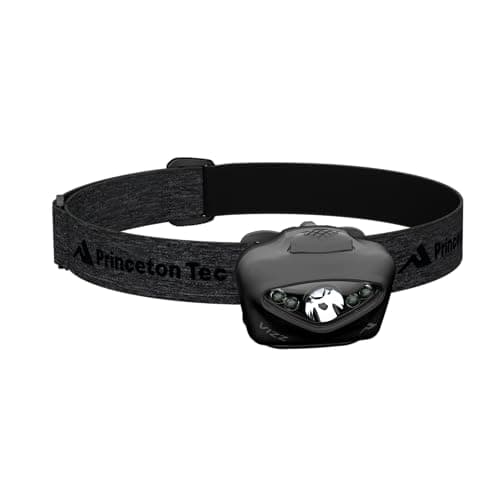 Princeton Tec Vizz550 lumens on three AAA cells with an IPX7 rating — immersion, not just rain. The only AAA lamp here rated for a dunking. | Getting wet | 550 lm / 92 g |
We earn a commission if you buy through the links on this page, at no extra cost to you. It does not change what we recommend or the order they appear in. Full disclosure. Prices checked October 17, 2026.

For walking at night, buy a Petzl Tikka. Its middle setting publishes 100 lumens over 40 meters for 10 hours on three AAA cells, which is more light than a pavement needs and more hours than a month of dog walks, and its red mode means you can look at a lead, a bin or another person without dazzling anybody. At about twenty dollars the Petzl Tikkina gives you the same 100-lumen setting without the red mode.
We have not tested any of these lamps. We own none of them and have no laboratory. Everything below is the maker's own published figure plus the arithmetic it allows - see our methodology.
How we judged this
Walking is the use case where the headlamp industry's numbers are least useful, because peak output is irrelevant at 3 km/h on a known surface. The criteria that decide it:
- The middle setting and its published runtime. Nobody walks on turbo. The 100-lumen-class mode is the one to rank.
- A red mode. For looking at a lead or a gate without destroying your own night vision, and for not dazzling people coming the other way.
- One-handed operation. If one hand holds a lead and the other holds a bag, the lamp has to be switchable by feel and ideally lockable.
- Weight, honestly reported. Twenty minutes of walking is long enough to notice a heavy front end.
- Weather rating. Dog walks happen in rain by definition, which is where a published ingress figure stops being trivia.
What 100 lumens actually buys on a footpath
Petzl publishes a beam distance for every level of every lamp it makes, which lets us convert the walking mode into the figure that describes what you will see. Under ANSI FL 1 beam distance is the point where illuminance falls to 0.25 lux - roughly full moonlight - so it is a detection threshold rather than a working range.
Forty meters of detection is more than enough warning at walking pace. The practical limit on a dark lane is not the beam - it is that you are looking at a 40 m pool of light and nothing beyond it, which is why we would rather have the wide beam than the far one. Throw versus flood sets out the trade, and how many lumens do I need puts walking in context against other jobs.
The published figures for the mode you will use
| Lamp | Walking mode | Runtime there | Red mode | Weight | Ingress |
|---|---|---|---|---|---|
| Petzl Tikka | 100 lm / 40 m | 12 h on AAA | Yes | 94 g | IPX4 |
| Black Diamond Spot 400-R | 200 lm / 60 m | 8 h | Yes, with dimming | 86 g | IP67 |
| Petzl Tikkina | 100 lm / 40 m | 10 h on AAA | No | 92 g | IPX4 |
| Streamlight Bandit Pro | 35 lm, no distance stated | 21 h | No | 45.4 g | IPX4 |
| Princeton Tec Vizz | 150 lm (spot low) | 40 h | Yes | 92 g | IPX7 |
Every one of those runtimes is a week or more of half-hour walks per fill, so runtime is not the thing that separates them. What separates them is red, weather and weight, and no single lamp here leads on all three.
Why a red mode is the feature to pay for
On a dark lane your eyes adapt, and a burst of white light undoes twenty minutes of that adaptation in a second. Red light largely does not, which is the reason the mode exists on lamps built for climbing and camping. On a walk it does three jobs: checking a lead or a collar, reading a gate or a sign, and passing another person without blinding them.
What matters is reaching it. Black Diamond states that the Spot 400-R's red mode activates without cycling through the white mode, and that brightness memory returns the lamp to the setting you switched off at. Petzl gives the Tikka a dedicated red press. The Bandit Pro and the Tikkina have no red at all - they are on this page for weight and for price respectively, and that is the trade. What a headlamp red light mode is for goes into the physiology.
Being seen, and the limits of what a headlamp does
A forward-facing headlamp makes you visible to a driver ahead of you and invisible to one behind you. That is a real limitation and it is the reason the callout at the top of this page exists. None of these lamps publishes a rear-facing light; where a maker does claim one we would need its own figure before repeating it, and we have none.
So the honest position is: a headlamp is for seeing, and a reflective band or a clip-on red marker is for being seen. They are different objects and buying one does not do the other's job. We do not cover rear markers, which is a gap in this page we would rather state than paper over.
What each pick is for
[Petzl Tikka](/headlamps/petzl-tikka-review) - best for walking generally, and for walking a dog. Petzl publishes the complete table: 350 lm over 70 m for 2 h, 100 lm over 40 m for 12 h, 7 lm for 110 h, plus red, on three AAA cells at 94 g. The red mode, the published distance for every level and cells from any shop are the three reasons it leads. Honest downsides: IPX4 is rain resistance and not immersion, 94 g is the heaviest here, and there is no rechargeable pack in the box.
Black Diamond Spot 400-R - best for wet winters and one-handed use. 200 lumens over 60 m for a published 8 hours on the middle setting, 86 g, a 1500 mAh cell, red that skips the white cycle, brightness memory, a digital lockout so it does not switch itself on in a pocket, and IP67 - the only immersion rating on this page except the Vizz. Downsides: micro-USB rather than USB-C, no battery fallback when the sealed cell is flat, and no candela figure to check the 100 m claim against.
[Petzl Tikkina](/headlamps/petzl-tikkina-review) - best for the cheapest lamp worth owning. The same 100 lm over 40 m for a published 10 hours as the Tikka, the same 92 g class, the same complete Petzl table, for noticeably less. If a lamp is going to live by the back door and get used twice a day, this is the one we would buy two of. What you give up is red, which on a shared path is the feature we would most want back.
[Streamlight Bandit Pro](/headlamps/streamlight-bandit-pro-review) - best if you will not wear anything heavier. 45.4 g, a deliberately diffused beam with no hotspot to bob around, and genuine per-mode runtimes at 180 lm for 4.5 h and 35 lm for 21 h. Streamlight publishes no beam distance for it, which on a walking page is a real gap: we cannot tell you how far ahead you will see. No red mode either.
[Princeton Tec Vizz](/headlamps/princeton-tec-vizz-review) - best if the walk ends somewhere wet. 150 lumens on spot low for a published 40 hours, two red LEDs at 10 lm for 135 h, 550 lumens of spot when something needs identifying, 92 g, three AAA cells and IPX7 immersion. It is the only lamp here that pairs an immersion rating with cells you can buy at a counter. Downsides: 92 g, no published candela, and its 550-lumen headline lasts 1 h 30 min.
What we would not buy for this
A thrower, or anything sold on peak lumens. The brightest headlamps are the wrong tool here: a 3,000-lumen lamp on a pavement lights the house opposite, and its low mode is rarely any lower than these. Best flashlight throwers explains what the concentrated beams are actually for.
A reactive lamp. A sensor that dims when it sees something bright is a genuine advantage running on trails, and a nuisance walking past lit windows and car headlights.
A handheld, mostly. If you walk a dog you have one hand on a lead and often another on a bag, and a torch is the thing you put down and forget. A handheld is the better answer only when you want to point light at something specific without turning your head, and flashlight versus headlamp sets out the whole trade.
The honest summary
The Tikka for most people, the Spot 400-R if it will be rained on hard and you want a lockout, the Tikkina if you want the cheapest honest answer, the Bandit Pro if 45 grams is the deciding number, the Vizz if the lamp doubles as outdoor kit. All five publish a setting around 100 lumens with a runtime measured in hours rather than minutes, and that - not peak output - is the specification that decides a night walk.
The picks, in full
Top pick · A first headlamp, and the glovebox
Petzl Tikka
350 lumens, three AAA cells, a red mode, 94 grams. The unglamorous answer that covers most of what people actually do after dark.
Three alkaline AAA cells hold roughly 3.9 Wh between them at a modest draw. That is comparable to the Swift LT's entire battery, for a couple of dollars, available in any gas station in the country.
The red mode is the feature people end up using most. It preserves night adaptation and does not wake a tent.
350 lumens looks modest next to a 3,000-lumen listing. On a footpath at walking pace it is more light than you need, and it will still be running when the 3,000-lumen light has stepped down twice.
What works
- AAA cells: replaceable anywhere, storable for years, no charge cycle to manage
- A red mode you can reach without a mode-cycling ordeal
- Cheap enough to own two
What does not
- No rechargeable pack in the box
- 70 m throw identifies nothing at distance
- IPX4
Skip this ifyou want one lamp for everything including work. There is no real flood mode and no high-CRI option.
Published specification
- Output
- 350 lmANSI/PLATO FL 1Petzl Tikka — manufacturer spec page (retrieved September 1, 2026)
- Peak intensity
- not published
- Beam distance
- 70 mOn three AAA cells; 75 m on the CORE rechargeable accessoryPetzl Tikka — manufacturer spec page (retrieved September 1, 2026)
- Runtime
- 2 h at 350 lm / 12 h at 100 lm / 110 h at 7 lm, on AAAOn the CORE pack the same levels run 2.5 h at 450 lm / 7 h at 100 lm / 110 h at 7 lm. AAA gives less peak output and more mid-level runtime. The 400 h figure Petzl lists is the red strobe, not a working runtime.Petzl Tikka — manufacturer spec page (retrieved September 27, 2026)
- Battery
- 3 x AAA (included), or the CORE rechargeable packPetzl Tikka — manufacturer spec page (retrieved September 1, 2026)
#ad · how this is funded · price as of October 17, 2026
Pick 2 · Camping with a red mode that stays put
Black Diamond Spot 400-R
400 lumens, red night vision, and brightness memory, from the brand most likely to already be in your gear closet.
Black Diamond publishes a complete sheet for this lamp on its own site: 400/200/6 lumens, 100/60/12 meters, 4/8/225 hours, 86 grams, IP67 and a 1500 mAh cell. This catalogue previously held four of those as unpublished because we had only read the Amazon listing.
The burn-time figures are FL 1 maximums - measured until output falls to a tenth of where it started - so 4 hours on high is not 4 hours of 400 lumens. 5.6 watt-hours cannot deliver it: that would be a draw no 400-lumen lamp sustains.
Brightness memory is the underrated feature. The lamp comes back on at the level you left it, which means the red mode is one click away rather than a cycle through white.
IP67 is the specification that separates it from the Petzl range at this price. Petzl publishes IPX4 across the Tikkina, Tikka and Actik Core - rain, not immersion.
What works
- A complete published spec sheet: per-mode output, distance and burn time, weight, cell capacity and IP rating
- IP67 immersion, where the obvious Petzl alternatives publish IPX4
- Red night vision with brightness memory and a digital lockout, so you do not blind a tent to get to it
What does not
- Micro-USB in 2026, when almost everything else here charges over USB-C
- No candela figure, so the 100 m distance cannot be cross-checked against an intensity
- No AAA fallback on the -R version: when the sealed cell is flat the lamp is done for the night
Skip this ifyou want a power-source fallback. The Petzl Actik Core and Tikka take three AAA cells when the pack dies; this one does not.
Published specification
- Output
- 400 lmHigh. Medium 200 lm, low 6 lm.Black Diamond Spot 400-R — manufacturer spec page (retrieved October 17, 2026)
- Peak intensity
- not published(Black Diamond publishes distance, not peak intensity)
- Beam distance
- 100 mHigh. 60 m medium, 12 m low.Black Diamond Spot 400-R — manufacturer spec page (retrieved October 17, 2026)
- Runtime
- 4 h high / 8 h medium / 225 h lowPublished as max burn time, the FL 1 measure to 10 percent of initial output - not hours at the stated lumens.Black Diamond Spot 400-R — manufacturer spec page (retrieved October 17, 2026)
- Battery
- Integrated 1500 mAh Li-ion, micro-USB5.6 Wh at a 3.7 V nominal cell. Micro-USB, not USB-C.Black Diamond Spot 400-R — manufacturer spec page (retrieved October 17, 2026)
- Ingress
- IP67Black Diamond states tested to operate at least 1.0 m underwater for 30 minutes. The same page's prose calls the housing IPX8; we quote the spec line.Black Diamond Spot 400-R — manufacturer spec page (retrieved October 17, 2026)
$79.95 · 28% off
#ad · how this is funded · price as of October 17, 2026
Pick 3 · The cheapest lamp we would actually recommend
Petzl Tikkina
300 lumens on AAA cells with a published ANSI figure. It does one thing and does not pretend to do more.
No red mode, no reactive sensor, no charge port. Three brightness levels and a battery door.
The 65 m distance and the 300-lumen output are both ANSI FL 1 figures published alongside the rest of Petzl's table, which is more than most lamps at this price manage.
The figure that matters is the middle one: 100 lumens over 40 meters for 10 hours on three AAA cells. That is a week of dog walks or a long night of reading, and it is the level anyone actually leaves the lamp on.
For a kit bag, a car, or a first lamp for someone unsure they will use it, this is the honest recommendation.
What works
- Published ANSI figures at the bottom of the price range, for both power sources
- 100 lumens for 10 hours on cells you can buy anywhere
- Nothing to break and nothing to charge
- Takes the same CORE pack as the rest of the Petzl range if you upgrade
What does not
- No red mode
- No rechargeable option in the box
- IPX4
Skip this ifyou are out after dark regularly. The missing red mode gets old fast in a shared tent.
Published specification
- Output
- 300 lmANSI/PLATO FL 1Petzl Tikkina — manufacturer spec page (retrieved September 1, 2026)
- Peak intensity
- not published
- Beam distance
- 65 mMAX POWER. 40 m on STANDARD, 10 m on MAX BURN TIME.Petzl Tikkina — manufacturer spec page (retrieved September 1, 2026)
- Runtime
- 2 h 30 min at 300 lm / 10 h at 100 lm / 100 h at 7 lm, on AAAPetzl publishes the full ANSI FL 1 table for both power sources. On the CORE pack the same three levels run 3 h / 7 h / 120 h. STANDARD also carries a further 20 h of reserve lighting on AAA.Petzl Tikkina — manufacturer spec page (retrieved October 17, 2026)
- Battery
- 3 x AAA (included), or the CORE rechargeable packPetzl Tikkina — manufacturer spec page (retrieved September 1, 2026)
#ad · how this is funded · price as of October 17, 2026
Pick 4 · Close work where you want a diffused beam, not a spotlight
Streamlight Bandit Pro
180 lumens of deliberately diffused light at 45 grams, running 4.5 hours on high. Modest numbers, and the right ones for the job.
4.5 hours on high and 21 hours on low are published per-mode figures, not a reserve-visibility claim. That is rarer than it should be and it is why this lamp scores well despite the smallest headline here.
180 diffused lumens at arm's length is more comfortable than 1,000 focused ones. Under a dashboard or inside an electrical panel, glare is the enemy and this is built to avoid it.
45 g puts it within 2 g of a Petzl Swift LT while costing a fraction as much.
What works
- Honest per-mode runtimes published by the maker
- 45 g, and a hard-hat strap option
- Diffused beam that does not blind you off close work
What does not
- 180 lumens will not light a trail
- No beam distance published, because there is not much to publish
- IPX4
Skip this ifyou need to see past about ten meters. It is a task light worn on the head, not a trail lamp.
Published specification
- Output
- 180 lmHigh. Low is 35 lm.Streamlight Bandit Pro — manufacturer spec page (retrieved September 1, 2026)
- Peak intensity
- not published
- Beam distance
- not published(Streamlight does not publish one for this diffused lamp)
- Runtime
- 4.5 h on high, 21 h on lowStreamlight Bandit Pro — manufacturer spec page (retrieved September 1, 2026)
- Battery
- USB rechargeable, charges in the light in 3.5 hStreamlight Bandit Pro — manufacturer spec page (retrieved September 1, 2026)
- Weight
- 45.4 g (1.6 oz)Streamlight Bandit Pro — manufacturer spec page (retrieved September 1, 2026)
- Ingress
- IPX42 m impact resistance testedStreamlight Bandit Pro — manufacturer spec page (retrieved September 1, 2026)
#ad · how this is funded · price as of October 17, 2026
Pick 5 · Getting wet
Princeton Tec Vizz
550 lumens on three AAA cells with an IPX7 rating — immersion, not just rain. The only AAA lamp here rated for a dunking.
IPX7 on AAA cells is the specification that makes this interesting. Almost everything else in the AAA class is IPX4, which means rain and nothing more.
Three lithium AAA cells hold roughly 4.5 Wh and shrug off cold in a way alkalines do not. On this lamp that combination is worth more than another 500 lumens.
Princeton Tec publishes an output and a runtime for each of its four modes, plus an 85 m beam distance and a 92 g weight - not a single flattering maximum. The 85 m works back to about 1,806 candela, or 3.3 candela per lumen, which says the 550 lumens buys width rather than reach.
What works
- IPX7 immersion rating on replaceable cells
- A published runtime spread across modes and chemistries
- Digital lockout, so it does not drain itself in a pack
What does not
- No candela figure, so the 85 m distance cannot be cross-checked
- Bulkier than the modern rechargeable lamps
- No rechargeable option
Skip this ifweight is your constraint. The AAA carriage that makes it robust also makes it bigger than the Li-ion competition.
Published specification
- Output
- 550 lmSpot high. Spot low 150 lm, flood high 30 lm, red high 10 lm.Princeton Tec Vizz — manufacturer spec page (retrieved October 15, 2026)
- Peak intensity
- not published(Princeton Tec publishes distance, not peak intensity)
- Runtime
- 1 h 30 min on spot highFour published pairs: spot 150 lm/40 h, flood 30 lm/90 h, red 10 lm/135 h. The headline 90 h is the flood figure.Princeton Tec Vizz — manufacturer spec page (retrieved October 15, 2026)
- Battery
- 3 x AAA alkaline or lithiumPrinceton Tec Vizz — manufacturer spec page (retrieved October 15, 2026)
- Ingress
- IPX7Withstands immersion to one meterPrinceton Tec Vizz — manufacturer spec page (retrieved October 15, 2026)
#ad · how this is funded · price as of October 17, 2026
Questions people actually ask
What is the best headlamp for walking at night?
The Petzl Tikka, on published figures: 100 lumens over 40 meters for 12 hours on its middle setting, a red mode on its own press, three AAA cells and 94 g. If the lamp will be out in heavy rain, the Black Diamond Spot 400-R publishes IP67 immersion and a digital lockout instead.
How many lumens do you need for walking at night?
About 100. Petzl publishes 100 lumens over 40 meters for its middle setting, which works back to 400 candela and 4 candela per lumen - a wide beam that lights the path and the verges rather than a spot 200 meters away. Under ANSI FL 1 that 40 m is a detection threshold at 0.25 lux, which is ample warning at walking pace.
What is the best headlamp for walking the dog?
The same Petzl Tikka, and for a specific reason: the red mode lets you look at a lead, a collar or a bag without dazzling yourself or anyone coming the other way, and you can reach it with one hand. A dedicated lockout, as on the Black Diamond Spot 400-R, is the other feature worth having when a lamp lives in a coat pocket.
Will a headlamp make me visible to cars?
Partly, and not enough to rely on. A forward-facing lamp is visible to a driver approaching you and not to one behind you. Petzl states on its own product pages that its lamps are not certified for road use and are not a substitute for required standardized lights. Treat a headlamp as the thing that lets you see, and a reflective band or a rear marker as the thing that makes you seen.
Should I use a red light when walking at night?
For looking at something close - a lead, a gate, a phone - yes. Red light does not destroy the dark adaptation your eyes have built up, so you can look down and then look up again without a blind spot. For the path itself you want the white flood: red carries far less usable distance.
Is a headlamp or a handheld flashlight better for a night walk?
A headlamp, if your hands are doing anything at all. It aims where you look, it does not get put down, and it leaves both hands for a lead or a bag. A handheld wins when you want to point light at something without turning your head, or hand it to somebody else. Our flashlight versus headlamp guide covers the trade in full.
Do I need a rechargeable headlamp for walking?
Not necessarily, and the AAA lamps have a real advantage for a twice-a-day habit: when they die, they die at a shop counter rather than a charging cable. The Petzl Tikka and Tikkina publish 10 to 12 hours on their walking mode per set of cells, which is weeks of half-hour walks.
Which of these is lightest?
The Streamlight Bandit Pro at a published 45.4 g, less than half of everything else here. The trade is that Streamlight publishes no beam distance for it, so on a page about seeing a path ahead we cannot tell you how far it reaches, and it has no red mode.
Sources
Every figure on this page came from one of the documents below, read on the date shown. We do not cite other review sites, forum posts or video reviews as sources of fact.
- Petzl Tikka — manufacturer spec page (retrieved September 1, 2026)
- Black Diamond Spot 400-R — manufacturer spec page (retrieved October 17, 2026)
- Petzl Tikkina — manufacturer spec page (retrieved October 17, 2026)
- Streamlight Bandit Pro — manufacturer spec page (retrieved September 1, 2026)
- Princeton Tec Vizz — manufacturer spec page (retrieved October 15, 2026)
- Petzl — ANSI/PLATO FL 1 technical information for its headlamp range
- ANSI/PLATO FL 1 flashlight performance standard — definitions of lumens, peak beam intensity, beam distance, runtime, impact and water resistance
- IEC 60529 — the IP (ingress protection) rating system
Read next
Best headlamps, ranked on the watt-hours behind the lumens
The full headlamp ranking: output, weight, battery energy and beam distance, every figure sourced to the maker.
How to choose a headlamp
A decision guide built on watt-hours, weight, beam distance, ingress rating and red-mode access.
What a headlamp red light mode is actually for
The physiology behind red headlamp modes, and how to choose a lamp whose red is reachable in one click.
Best headlamps under $50
Seven headlamps in the sub-$50 bracket, ranked on what their makers actually publish, with the gaps named and live prices on every pick.
Best headlamps for reading
Reading lamps ranked on the lowest usable setting, how easily you reach it and what sits on your forehead for an hour - with the arithmetic that shows what those long runtimes really mean.
Best headlamps for running
Running headlamps ranked on weight, stored energy and beam stability rather than on peak output.
Petzl Tikka review
A specification-first review of the Petzl Tikka: two full published runtime tables, a genuinely useful red mode, and what the hybrid battery actually trades.
Petzl Tikkina review
A specification-first review of the Petzl Tikkina: three levels, six published runtimes across two power sources, and the arithmetic that names the mode to plan a night around.
Princeton Tec Vizz review
A specification-first review of the Princeton Tec Vizz: the per-mode runtimes, the arithmetic that shows which mode to actually use, what 85 meters says about the beam, and the one figure Princeton Tec still will not state.
Flashlight vs headlamp
Handheld against head-mounted on aiming, shadows, hands-free use and battery capacity.
Throw vs flood
How reflector geometry produces throw or flood, what each suits, and where the middle ground lives.
Found a number that is wrong? Tell us and we will fix it and say so. Our methodology shows every formula on this page.