Work Lights
Best work lights for electricians
Wire insulation color is the identification system. A work light that renders color badly is a work light that makes the job harder.
By Scooter M. · Published · Updated
| # | Product | Best for | Output | Price |
|---|---|---|---|---|
| 1 | 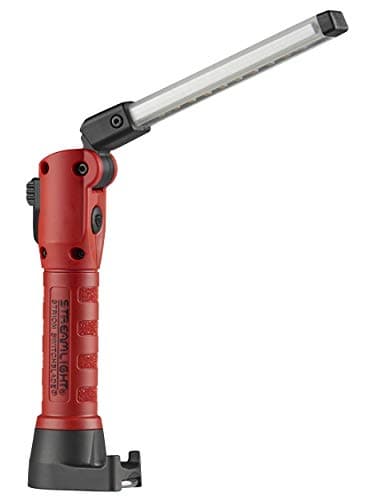 Streamlight Strion SwitchbladeTop pick500 lumens cool white, or 400 at a published 90 CRI, in a folding bar. The color accuracy is the specification that matters on a wiring loom, and it is the only one here with a number behind it. | Color-critical work under the hood | 500 lm | |
| 2 | 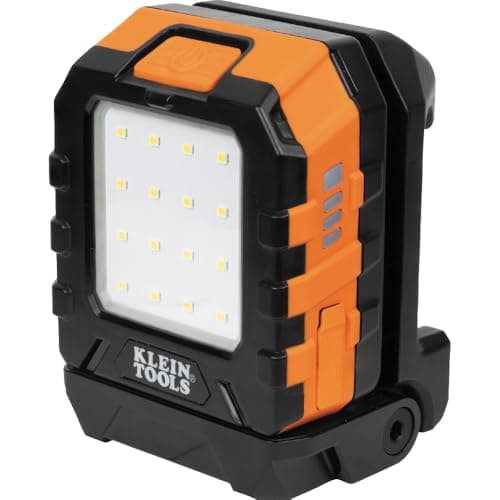 Klein Tools 56416 Rechargeable Work Light1,000 lumens, three modes, 360-degree rotation and a magnet. Built to be put down and aimed rather than held. | A magnetic work light with a kickstand | 1,000 lm | |
| 3 | 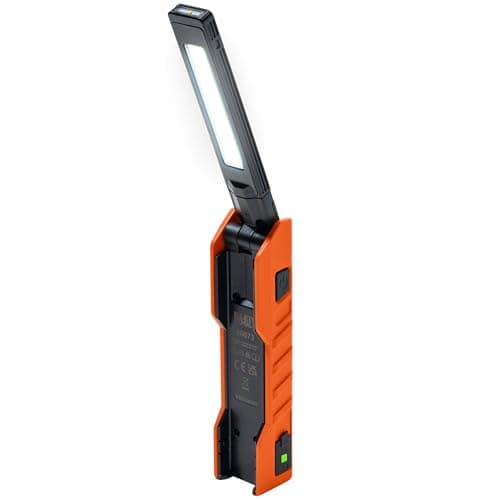 Klein Tools 56073 Foldable Handheld Work Light500 lumens in a light that folds flat, pivots 180 degrees and rotates 270, charged over USB-C. | A pocketable folding light for panel work | 500 lm | |
| 4 | 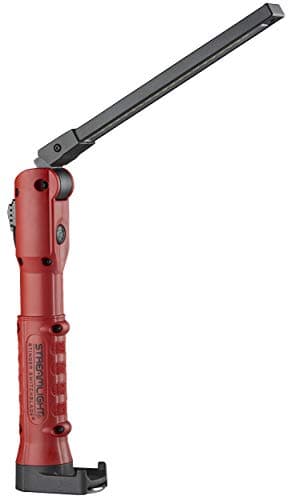 Streamlight Stinger Switchblade800 lumens in the same folding bar format, USB rechargeable, with multiple modes. | A brighter folding work bar | 800 lm | |
| 5 | 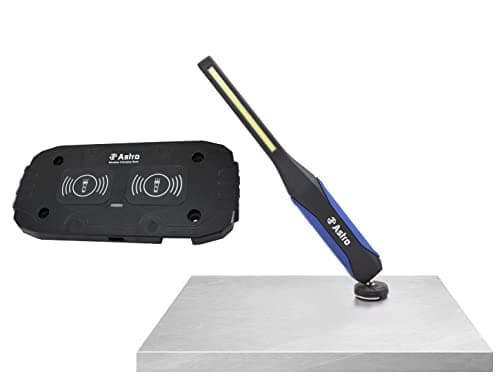 Astro Pneumatic 90SLC Slim Light900 lumens in the same slim body, with a quick-charge pad so it goes back on the bench rather than on a cable. | A slim light that charges on a pad | 900 lm |
We earn a commission if you buy through the links on this page, at no extra cost to you. It does not change what we recommend or the order they appear in. Full disclosure. Prices checked October 16, 2026.
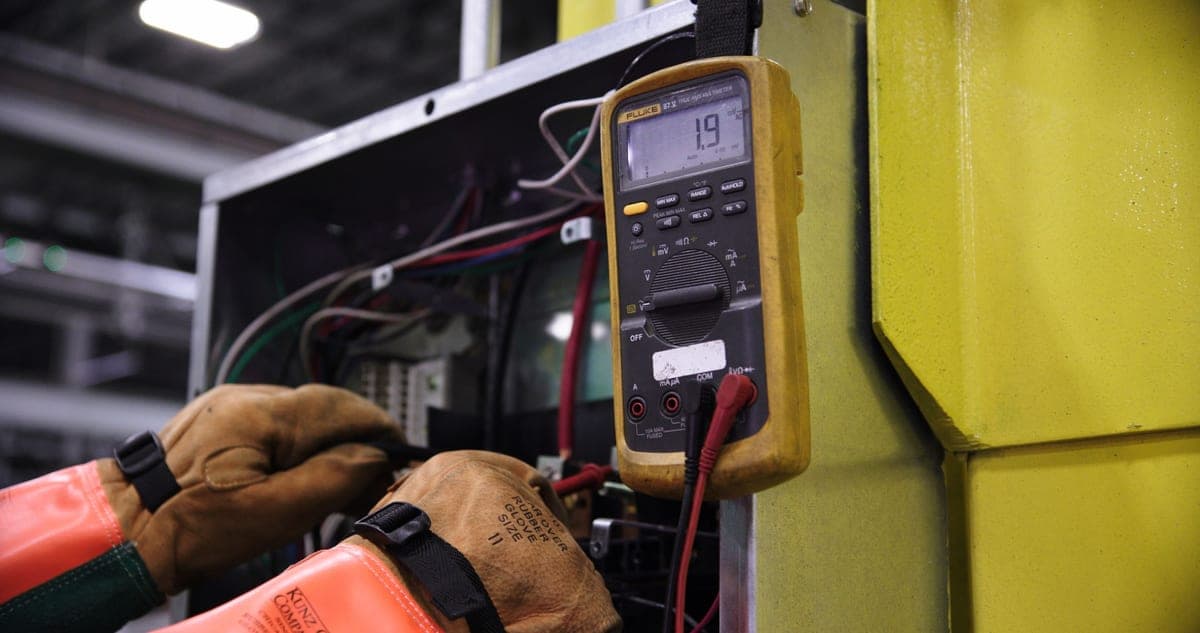
Electrical work has a specific and unusual lighting requirement: the entire identification system is color. Brown, blue, green-and-yellow, black, gray, red. Get the color wrong and you have not made a cosmetic mistake.
That makes color rendering the primary specification, which is awkward, because it is the specification this category almost never publishes.
How we picked
Any published or named color-accuracy claim first, then beam shape and glare control, then mounting, then output. Every figure is sourced and the gaps are named. See our methodology.
What low CRI does to wire colors
A cheap cool-white LED produces light with a large blue spike and a broad but weak red region. The color rendering index measures how well that spectrum reproduces reference samples, and a typical figure is around 70.
The practical consequence is specific: reds go brown, browns go gray, and the difference between them shrinks. In a consumer unit under a torch, that is the difference you are relying on.
Glare control in a panel
A consumer unit or a distribution board is a metal box full of reflective surfaces at arm's length. A hotspot in that environment produces a bright patch, hard shadows behind every DIN rail, and a glare bounce off the enclosure straight into your eyes.
A COB bar avoids all three. Light along a strip rather than from a point means soft shadows and no hotspot, and it is why every light we recommend on this page is a bar rather than a spot.
Output: less than you think
| Task | Distance | Useful output |
|---|---|---|
| Consumer unit or distribution board | 0.3 to 0.5 m | 300 to 700 lm, diffused |
| Back box or ceiling void | 0.2 to 0.4 m | 200 to 500 lm, diffused |
| Cable run in a loft | 1 to 3 m | 500 to 1,000 lm |
| Lighting a room during first fix | 3 to 6 m | 2,000 lm and up, on a stand |
The 3,000-lumen Klein 56417 is on our work lights hub rather than this page for that reason: it is an area light, and at panel distance it is the wrong tool.
Mounting inside an enclosure
Enclosures are steel, which makes magnets genuinely useful here in a way they are becoming less so in automotive work. A light that sticks to the inside of the enclosure door lights the whole board without occupying a hand or a surface.
A hook matters too, for hanging off a joist in a ceiling void where nothing is steel and nothing is flat.
Safety notes worth stating
Nothing on this page is rated for use in a hazardous or explosive atmosphere. Lights certified for those environments carry specific approvals and are a different product category entirely; do not infer any such rating from an IP number.
None of this is advice about safe working practice. It is a comparison of published lighting specifications, and it assumes you already know how to work safely on the installation.
What we would not buy
A cool-white spot for panel work. Wrong color spectrum and wrong beam shape, and both problems are worse in a reflective metal enclosure.
We would also avoid a light with a claimed color accuracy and no number, if a competitor publishes one. On this page only Streamlight publishes a number, and it does so twice — 90 CRI at 4,000 K on the Strion Switchblade's 400-lumen Color-Rite mode and on the Stinger Switchblade's 600-lumen side — so the brand wins this criterion outright rather than by being the least vague.
The picks, in full
Top pick · Color-critical work under the hood
Streamlight Strion Switchblade
500 lumens cool white, or 400 at a published 90 CRI, in a folding bar. The color accuracy is the specification that matters on a wiring loom, and it is the only one here with a number behind it.
Color accuracy is the whole reason this exists. Under a cool-white work light, a brown wire and a red wire look the same, and that is not a cosmetic problem.
Streamlight calls it Color-Rite and does publish the number: 90 CRI at 4,000 K. That makes this the only work light we cover whose maker states a color rendering index, and the figure applies to the 400 lm mode rather than the 500 lm one - so color accuracy costs 20 percent of the output, which is a good price for it.
The folding bar shape puts a wide, even flood along a panel rather than a hotspot in the middle of it.
What works
- A published 90 CRI at 4,000 K - the only work light here with a color figure
- Bar shape floods a panel evenly, and a UV mode for dye-traced leaks
- Streamlight's trade distribution makes service easy
What does not
- No ingress rating of any kind, on a light sold for engine bays
- No candela or beam distance, and no runtime for the Color-Rite or UV modes
- 500 lumens is modest if you need to light a whole bay
Skip this ifyou need area lighting. It is a close-range color-accurate tool, not a floodlight.
Published specification
- Output
- 500 lmCool white. The Color-Rite mode is 400 lm; a third mode is UV.Streamlight Strion Switchblade — manufacturer spec page (retrieved October 10, 2026)
- Peak intensity
- not published
- Beam distance
- not published(A flood bar; Streamlight publishes neither beam figure)
- Runtime
- 3 h on highNo runtime published for the Color-Rite or UV modes.Streamlight Strion Switchblade — manufacturer spec page (retrieved October 10, 2026)
- Battery
- Li-ion, 4 h rechargeUSB or an existing Strion charger. Capacity not published.Streamlight Strion Switchblade — manufacturer spec page (retrieved October 10, 2026)
- Weight
- 181 g6.40 oz.Streamlight Strion Switchblade — manufacturer spec page (retrieved October 10, 2026)
- Ingress
- not published(No IP or IPX code stated; a 2 m impact rating is)
- CRI
- 90 CRIAt 4,000 K, in the 400 lm Color-Rite mode - not the 500 lm cool-white one.Streamlight Strion Switchblade — manufacturer spec page (retrieved October 10, 2026)
#ad · how this is funded · price as of October 16, 2026
Pick 2 · A magnetic work light with a kickstand
Klein Tools 56416 Rechargeable Work Light
1,000 lumens, three modes, 360-degree rotation and a magnet. Built to be put down and aimed rather than held.
The magnet and the kickstand are the product. A work light you have to hold is a work light that is not working.
360-degree rotation means you set the body once and aim the head, which is the difference between a good work light and a torch on its side.
1,000 lumens is the sweet spot for a bay: enough to see, not so much that it glares back off metal.
What works
- Magnet plus kickstand plus rotation, so it goes anywhere
- 1,000 lumens is well matched to close work
- Trade distribution
What does not
- No candela or beam distance published
- No published CRI, on a light that would benefit from one
- Built-in cell
Skip this ifyou need to light a whole room. It is a task light, and a 3,000-lumen area light is a different tool.
Published specification
- Output
- 1,000 lmHigh. Medium is 425 lm, low 300 lm.Klein Tools 56416 — manufacturer spec page (retrieved October 11, 2026)
- Peak intensity
- not published
- Beam distance
- not published(Klein publishes neither beam figure)
- Runtime
- 9 h at 1,000 lmAlso 425 lm/14 h and 300 lm/21 h.Klein Tools 56416 — manufacturer spec page (retrieved October 11, 2026)
- Battery
- Li-ion, USB-CKlein Tools 56416 — manufacturer spec page (retrieved October 11, 2026)
- Weight
- 549 g19.36 oz.Klein Tools 56416 — manufacturer spec page (retrieved October 11, 2026)
- Ingress
- IP66Dust-tight and waterproof. 3 m drop rating.Klein Tools 56416 — manufacturer spec page (retrieved October 11, 2026)
$64.98 · 8% off
#ad · how this is funded · price as of October 16, 2026
Pick 3 · A pocketable folding light for panel work
Klein Tools 56073 Foldable Handheld Work Light
500 lumens in a light that folds flat, pivots 180 degrees and rotates 270, charged over USB-C.
Five hundred diffused lumens is the right output for a consumer unit. More than that inside a metal enclosure at arm's length bounces back at you and makes the job harder.
The 180-degree pivot plus 270-degree rotation is what lets one small light aim into a back box, along a joist and down into a floor void without moving the body.
Klein publishes a runtime for all four of its modes, an IP54 rating, a 2 m drop rating and a 147 g weight on a light this cheap, which is better disclosure than most of this category manages at any price.
What works
- Folds flat enough to live in a pouch
- Pivot and rotation cover most awkward angles
- USB-C
What does not
- No candela or beam distance, and IP54 is the weakest rating of Klein's three
- No published CRI on a light aimed at electricians
- 500 lumens is task lighting only
Skip this ifyou need to light an area. It is a close-range panel light and it will not do a room.
Published specification
- Output
- 500 lmHigh. Medium 250 lm, low 100 lm, plus a 100 lm spot.Klein Tools 56073 — manufacturer spec page (retrieved October 11, 2026)
- Peak intensity
- not published
- Beam distance
- not published(Klein publishes neither beam figure)
- Runtime
- 5 h at 500 lmAlso 250 lm/9 h, 100 lm/13 h and the 100 lm spot/12 h.Klein Tools 56073 — manufacturer spec page (retrieved October 11, 2026)
- Battery
- 18650 Li-ion, USB-CKlein Tools 56073 — manufacturer spec page (retrieved October 11, 2026)
- Weight
- 147 g5.2 oz.Klein Tools 56073 — manufacturer spec page (retrieved October 11, 2026)
- Ingress
- IP54Dust and water resistant. 2 m drop rating.Klein Tools 56073 — manufacturer spec page (retrieved October 11, 2026)
#ad · how this is funded · price as of October 16, 2026
Pick 4 · A brighter folding work bar
Streamlight Stinger Switchblade
800 lumens in the same folding bar format, USB rechargeable, with multiple modes.
800 lumens spread along a bar is a genuinely different quality of light from 800 lumens in a spot: no hotspot, no harsh shadow edge, no glare bouncing back off a painted panel.
The pivoting head is what makes it work in an engine bay — you set the bar down and aim the light without moving the light.
Streamlight's page for this one did not give us a runtime, which is the figure a work light most needs.
What works
- 800 lumens of bar-shaped flood
- USB rechargeable
- Multi-mode with a pivoting head
What does not
- No candela or beam distance published
- The 90 CRI side costs 200 lumens against the cool-white side
- IPX4 and a 1 m impact rating are the weakest of any Streamlight here
Skip this ifcolor matters more than output. The Strion Switchblade drops to 400 lumens for its published 90 CRI mode, so it trades half the output of this light for color accuracy - usually the better trade.
Published specification
- Output
- 800 lmCool white. A separate 90 CRI side runs 600 lm; a UV side is rated 500 mW.Streamlight Stinger Switchblade — manufacturer spec page (retrieved October 11, 2026)
- Peak intensity
- not published
- Beam distance
- not published
- Runtime
- 3 h 45 min at 800 lmSame 3 h 45 min on the 600 lm 90 CRI side; 15 h on UV.Streamlight Stinger Switchblade — manufacturer spec page (retrieved October 11, 2026)
- Battery
- Li-ion, 8 h chargeUSB or a Stinger charger.Streamlight Stinger Switchblade — manufacturer spec page (retrieved October 11, 2026)
- Weight
- 485 g17.1 oz.Streamlight Stinger Switchblade — manufacturer spec page (retrieved October 11, 2026)
- Ingress
- IPX4Water-resistant only; 1 m impact rating.Streamlight Stinger Switchblade — manufacturer spec page (retrieved October 11, 2026)
- CRI
- 90 CRIAt 4,000 K, on the 600 lm side - not the 800 lm cool-white side.Streamlight Stinger Switchblade — manufacturer spec page (retrieved October 11, 2026)
#ad · how this is funded · price as of October 16, 2026
Pick 5 · A slim light that charges on a pad
Astro Pneumatic 90SLC Slim Light
900 lumens in the same slim body, with a quick-charge pad so it goes back on the bench rather than on a cable.
The charging pad matters more than the extra 250 lumens. A work light that lives on a pad is always charged; a work light with a cable is flat by Thursday.
900 lumens in a slim body is at the top of what the format can dissipate without getting hot to hold.
Same caveat as the rest of the trade-tool brands: nothing beyond output and charging is published.
What works
- Charging pad removes the cable from the routine
- 900 lumens in a slim body
- Top flashlight alongside the main flood
What does not
- No sourced runtime, weight or IP rating
- No published CRI
- Costs meaningfully more than the corded-charge version
Skip this ifyou do not have a fixed bench. The pad is the reason to pay the premium and it needs somewhere to live.
Published specification
- Output
- 900 lmAstro Pneumatic 90SLC — the brand's own listing on Amazon.com (retrieved September 1, 2026)
- Peak intensity
- not published
- Beam distance
- not published
- Runtime
- not published
- Battery
- Rechargeable, with a quick-charge padAstro Pneumatic 90SLC — the brand's own listing on Amazon.com (retrieved September 1, 2026)
- Weight
- not published
- Ingress
- not published
#ad · how this is funded · price as of October 16, 2026
Questions people actually ask
What CRI do I need for electrical work?
Ra 90 or above is the target, because the task depends on distinguishing wire insulation colors. Ra 80 is a middle ground that can still render saturated reds poorly, since the Ra average excludes the R9 red sample.
How many lumens for working in a consumer unit?
300 to 700 lumens of diffused light at 30 to 50 centimeters. More than that in a reflective metal enclosure produces glare that makes the job harder rather than easier.
Why is a bar light better than a spot for panel work?
A COB bar produces light along a strip rather than from a point, which gives soft shadows and no hotspot. In a metal enclosure a hotspot bounces straight back at you and casts a hard shadow behind every component.
Do any work lights publish a CRI figure?
Very few, but not none. Streamlight publishes 90 CRI at 4,000 K on both of its Switchblade bars — the Strion Switchblade's 400-lumen Color-Rite mode and the Stinger Switchblade's 600-lumen side. Those are the only color rendering figures among the lights on this page. Every other maker here publishes a lumen number and nothing about color, which remains a genuine gap in the category.
Are these lights safe in hazardous atmospheres?
No. Nothing on this page carries a hazardous-location approval, and an IP rating is not one. Lights for those environments are a separate certified category and must be selected on that basis.
Should I use a headlamp for electrical work?
It is genuinely useful because it points where you look and leaves both hands free. Pair it with a set-down bar light for the times you need to see into a shadow you would otherwise be casting — see work headlamps.
Sources
Every figure on this page came from one of the documents below, read on the date shown. We do not cite other review sites, forum posts or video reviews as sources of fact.
- Streamlight Strion Switchblade — manufacturer spec page (retrieved October 10, 2026)
- Streamlight Stinger Switchblade — manufacturer spec page (retrieved September 1, 2026)
- ANSI/PLATO FL 1 flashlight performance standard — definitions of lumens, peak beam intensity, beam distance, runtime, impact and water resistance
- IEC 60529 — the IP (ingress protection) rating system
Read next

Streamlight Strion Switchblade review
A specification-first review of the Streamlight Strion Switchblade: the published 90 CRI figure, the 100 lumens it costs you, the UV mode nobody mentions, and what Streamlight still will not state.

Best work lights under $100
Eight work lights under $100, ranked on beam shape, mounting and published figures, with the category's disclosure gaps named.
Best work lights for a construction site
Work lights for construction, ranked on published ingress rating, power source and area coverage, with the gaps named.
Best work lights, ranked on beam shape rather than brightness
The work-light ranking: beam shape, color rendering, mounting and runtime, with every published figure sourced.
Why color accuracy matters on a jobsite
What color rendering does to trade work, and how to choose when almost no maker publishes a CRI figure.
CRI explained
What CRI measures, the R9 problem, the output cost, and how CRI differs from color temperature.
Best headlamps for work
Work headlamps ranked on shift runtime, color rendering and hard-hat compatibility.
Best high-CRI flashlights
High-CRI picks, the output they give up for the phosphor, and why the trade is usually worth making.
Klein vs Streamlight work lights
Klein against Streamlight on work-light beam shape, mounting and published figures - including the only ingress rating either brand states.
Best headlamps for HVAC and mechanical trades
Headlamps for HVAC, machinists and night maintenance, ranked on close-range beam shape, hard-hat compatibility and what each maker actually publishes.
Streamlight Bandit Pro review
A specification-first review of the Streamlight Bandit Pro: 45.4 grams, a published runtime for both levels, a diffused close-range beam, and the two-year warranty that goes with it.
Found a number that is wrong? Tell us and we will fix it and say so. Our methodology shows every formula on this page.