Headlamps
Best headlamps for HVAC and mechanical trades
Attics, crawlspaces, plant rooms and the underside of ductwork. The lamp that wins here is the one that works at arm's length above your head, not the one with the biggest number.
By Scooter M. · Published · Updated
| # | Product | Best for | Output / weight | Price |
|---|---|---|---|---|
| 1 | 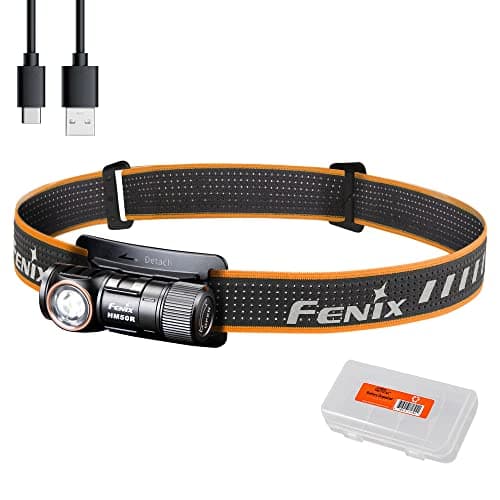 Fenix HM50R V2.0Top pick78 grams and 700 lumens from a single 16340. The lightest genuinely bright lamp here, with the shortest battery life to match. | A headlamp that detaches and works as a pocket light | 700 lm / 78 g (2.75 oz) | |
| 2 | 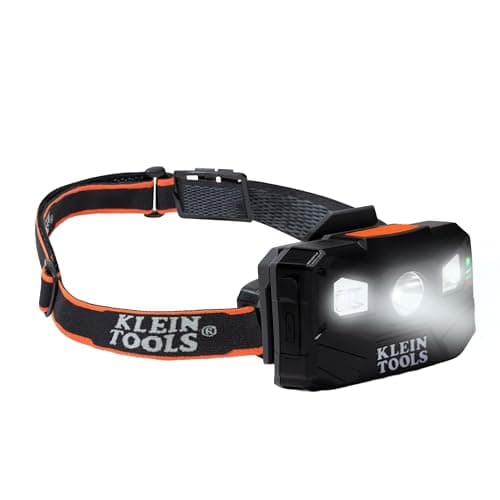 Klein Tools 56048 Rechargeable Headlamp400 lumens on a fabric strap built for a hard-hat brim, from a brand that sells to electricians rather than to hikers. | Trades work with a hard hat | 400 lm | |
| 3 | 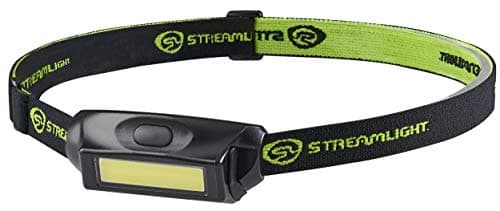 Streamlight Bandit Pro180 lumens of deliberately diffused light at 45 grams, running 4.5 hours on high. Modest numbers, and the right ones for the job. | Close work where you want a diffused beam, not a spotlight | 180 lm / 45.4 g (1.6 oz) | |
| 4 | 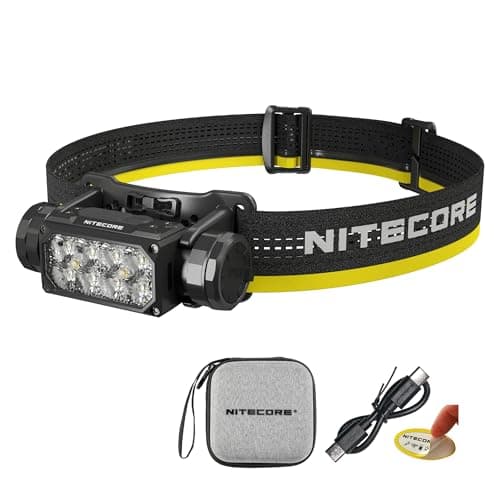 Nitecore HC65 UHE2,000 lumens in a heavy-duty metal body with white, red and reading lights. Built like a work light, worn like a headlamp. | A metal-bodied headlamp that takes abuse | 2,000 lm | |
| 5 | 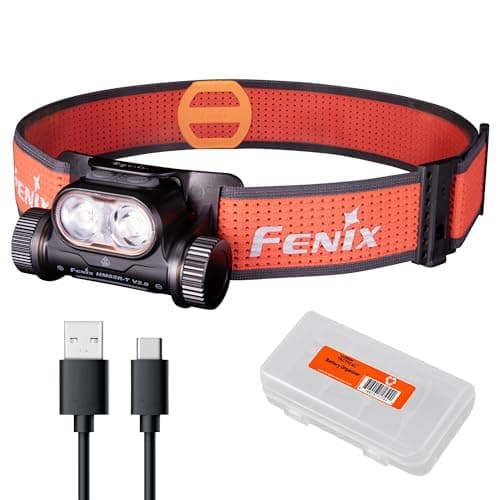 Fenix HM65R-T V2.01,600 lumens and 170 m from a magnesium body running a standard 18650, at 140 g. The removable cell is what separates it from the sealed-pack lamps. | Long nights where you want reach and a spare cell | 1,600 lm / 140 g (4.94 oz) | |
| 6 | 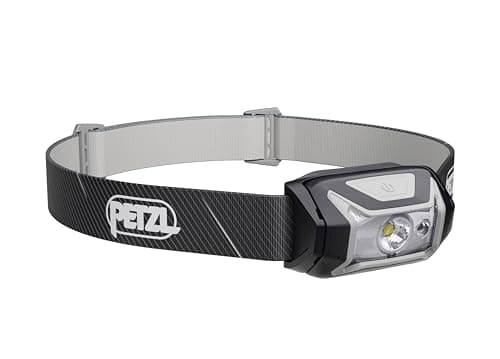 Petzl Tikka350 lumens, three AAA cells, a red mode, 94 grams. The unglamorous answer that covers most of what people actually do after dark. | A first headlamp, and the glovebox | 350 lm / 94 g | |
| 7 | 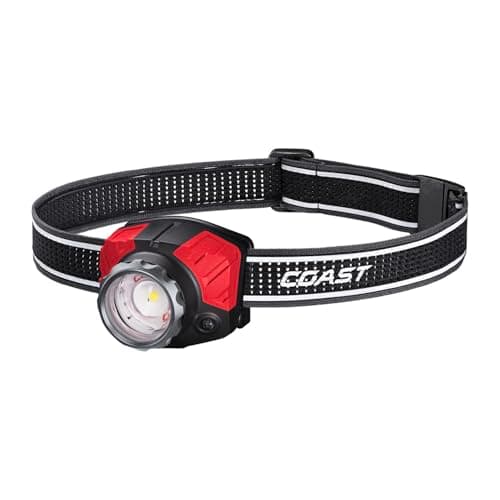 Coast FL85R1,000 lumens with white, red and green in one focusing head. The green mode is why this is on the hunting page. | Hunting, where the light color is the decision | 1,000 lm |
We earn a commission if you buy through the links on this page, at no extra cost to you. It does not change what we recommend or the order they appear in. Full disclosure. Prices checked September 21, 2026.
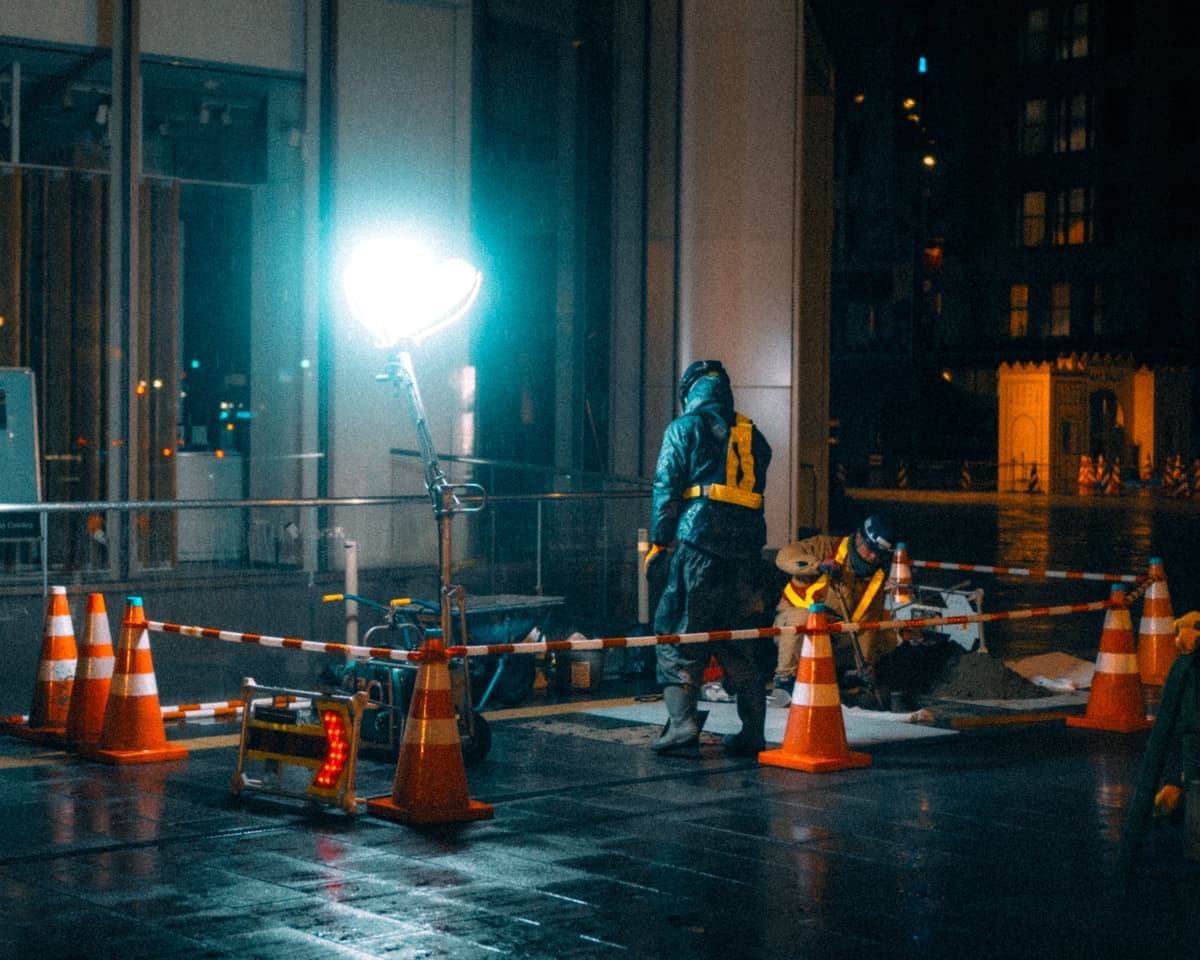
This page exists because the general work-headlamp advice does not fit the mechanical trades. HVAC, plant maintenance and machine work put you in attics, crawlspaces, ceiling voids and plant rooms, almost always at arm's length, frequently looking upward, and usually with both hands occupied. That set of constraints inverts most of what a headlamp is sold on.
Our general work headlamps page ranks for trades broadly. This one narrows to the environment: confined, dusty, hot, overhead, and close. If you are working on a bench or a site floor rather than inside a duct, that page is the better fit.
How we judged these, and why it differs
- Close-range beam over reach. At arm's length inside a plenum, a tight hotspot is glare bouncing back off galvanized steel into your eyes. A wide, even flood is what you want, and a lamp with a dedicated low or reading mode is better again.
- It has to sit on a hard hat. A soft headband under or over a helmet slips. A lamp with a clip, a flat back or a hat-compatible strap stays where you put it.
- Detachable is a real advantage. Half the job is not on your head. A lamp that comes off the strap and clips to a pocket, or sticks to a duct, does two jobs.
- Red or a low mode, because a full-output lamp two feet from a controls panel washes out the labels you are trying to read.
- Published figures where they exist, and the gap named where they do not. Currently purchasable, verified against the live listing before writing.
We have not used any of these lamps in a duct or anywhere else. Every figure is the maker's own with its source linked — see our methodology.
What each one publishes
| Lamp | Output | Weight | Power | Ingress |
|---|---|---|---|---|
| Nitecore HC65 UHE | 2,000 lm | not published | USB-C rechargeable | not published |
| Fenix HM65R-T V2.0 | 1,600 lm | 140 g | 18650 or 2 x CR123A | IP68 |
| Coast FL85R | 1,000 lm | not published | Built-in rechargeable | not published |
| Fenix HM50R V2.0 | 700 lm | 78 g | 16340, CR123A caps at 130 lm | not published |
| Klein Tools 56048 | 400 lm | not published | Rechargeable | not published |
| Petzl Tikka | 350 lm | 94 g | 3 x AAA or CORE pack | IPX4 |
| Streamlight Bandit Pro | 180 lm | 45.4 g | USB rechargeable | IPX4 |
Note the ranking order against that output column. The 2,000-lumen lamp is not first, and the 180-lumen lamp is not last by much. In a confined space output stops being the deciding variable at around 400 lumens, and the things that matter instead — weight on your head for a full shift, whether it detaches, whether it survives dust — are the columns most of these makers leave blank.
The picks, and who each one is wrong for
Fenix HM50R V2.0 — it comes off the strap
700 lumens at a published 78 g, the lightest lamp here with real output, and it detaches from the headband to work as a pocket light. That second role is why it leads: a lot of HVAC work is done with the light held, wedged or set down rather than worn, and a lamp that converts is doing two jobs. Fenix also states honestly that a CR123A primary works but caps output at 130 lumens.
Skip it if dust resistance matters most — Fenix publishes no ingress rating for this one, which in an attic is the gap you would feel. 700 lumens is also modest if you are lighting a whole plant room rather than a panel.
Klein Tools 56048 — built for the hard hat
400 lumens, rechargeable, from the brand whose tools are already in the van, and designed around hard-hat use rather than a trail headband. If site rules put a helmet on your head, a lamp that is meant to live there beats a better lamp that slides off it.
Skip it if you want any figure beyond output — Klein publishes no weight, runtime, beam distance or IP rating for it. That is a real gap on a lamp sold for job sites, and it is why this sits second rather than first despite fitting the use case well.
Streamlight Bandit Pro — almost weightless, and it tells you the runtime
180 lumens at 45.4 g, IPX4, with a published runtime for both modes: 4.5 hours on high and 21 on low, charging in the lamp in 3.5 hours. It is the only lamp on this page whose endurance you can actually plan a shift around, and the beam is a diffused flood for close work rather than a spotlight — which is exactly the right shape here.
Skip it if 180 lumens is not enough, and for some plant rooms it will not be. This is a lamp for panels, enclosures and ductwork at arm's length, not for lighting a space.
Nitecore HC65 UHE — metal, and a dedicated reading mode
2,000 lumens in a metal-bodied lamp with white, red and a separate reading emitter. Two things earn its place: a polymer lamp survives a drop, but a metal one survives being stepped on in a truck bed; and the reading light is a low, wide, close-range flood, which is the mode you actually leave on when you are reading a controls label two feet away.
Skip it if weight matters — metal costs grams and Nitecore does not publish how many. No runtime and no ingress rating either, so on a 2,000-lumen lamp you cannot find out how long that output lasts.
Fenix HM65R-T V2.0 — the only dust-tight lamp here
1,600 lumens, 170 m, 12.2 computed watt-hours, 140 g and IP68. In a dusty environment that rating is the single most relevant published figure on this page, and nothing else here carries one. It also runs on a standard 18650 with a CR123A fallback, so a spare cell in a pocket keeps you working. There is a full review.
Skip it if you wear it all shift — 140 g on a helmet is noticeable by hour six, and the HM50R or Bandit Pro will be kinder. It is also the most expensive lamp on this page.
Petzl Tikka — the documented cheap one
350 lumens, 70 m, 94 g and IPX4, on three AAA cells or a rechargeable pack in the same body. It is here because it publishes more about itself than lamps costing three times as much, and because AAA cells mean a flat lamp is a two-minute problem rather than a dead shift. Petzl publishes lumens, beam distance, weight and an IPX rating for it, though its headline runtime figure is a reserve-visibility claim rather than a per-mode table.
Skip it if you need output or a dust rating. 350 lumens is enough for close work and not for much else, and IPX4 is rain rather than dust.
Coast FL85R — white, red and green from one head
1,000 lumens with white, red and green in a single focusing head. The red is the useful one here: a low red mode lets you read a lit controls panel or a gauge without the white wash-out, and having it in the same head rather than on a separate lamp is genuinely convenient.
Skip it if published specifications matter to you — Coast states output and nothing else we could source. No weight, runtime, beam distance or IP rating, which for a lamp at this price is the thinnest sheet on the page.
How to buy on this page
- You work in attics and dusty voids — Fenix HM65R-T, the only published IP68 here.
- Half your work is not on your head — Fenix HM50R, which detaches into a pocket light.
- Site rules mean a hard hat — Klein Tools 56048.
- You wear it for a full shift — Streamlight Bandit Pro at 45.4 g, with a runtime you can plan around.
- You read panels and gauges close up — Nitecore HC65 UHE for its reading mode, or the Coast FL85R for red.
- You want the cheapest lamp that is fully documented — Petzl Tikka. See headlamps under $50.
What we would not tell you
We would not tell you which of these survives an attic in August. Only one publishes a dust rating and none publishes a temperature range, so heat tolerance in a roof space is not something any of these makers has put on the record.
We would also not rank these by lumens. In a confined metal space, more output past a point is glare returning to your own eyes, and the lamp that makes the job easier is usually the one with a good low mode and a beam that does not concentrate. That is the opposite of how this category is normally sold.
The picks, in full
Top pick · A headlamp that detaches and works as a pocket light
Fenix HM50R V2.0
78 grams and 700 lumens from a single 16340. The lightest genuinely bright lamp here, with the shortest battery life to match.
An 800 mAh 16340 at 3.6 V holds 2.9 watt-hours. That is the smallest tank of any rechargeable lamp on this page, and it is why 700 lumens is a burst rather than a setting.
The CR123A caveat is worth reading twice: Fenix states that on a primary lithium cell only the low and medium white modes work, for a maximum of 130 lumens. The fallback exists, but it is not the same lamp.
At 78 g with the head detached it becomes a small flashlight, which is the honest use case: a camp light that also lives in a jacket pocket.
What works
- 78 g including battery, which is remarkable for a 700-lumen lamp
- Detaches from the strap and works as a pocket light
- USB-C on the cell itself
What does not
- 2.9 Wh is the smallest energy store in this roundup
- CR123A fallback caps you at 130 lm, which Fenix states plainly and most buyers miss
- No published beam distance or IP rating on the page we read
Skip this ifyou need more than about two hours of useful light between charges. The battery is the constraint and no setting gets around it.
Published specification
- Peak intensity
- not published
- Beam distance
- not published(Not stated on the page we read)
- Runtime
- 42 h maximumLowest modeFenix HM50R V2.0 — manufacturer spec page (retrieved September 1, 2026)
- Battery
- 16340 Li-ion, 800 mAh (included). CR123A works but caps output at 130 lm.Fenix HM50R V2.0 — manufacturer spec page (retrieved September 1, 2026)
- Weight
- 78 g (2.75 oz)Including battery and headbandFenix HM50R V2.0 — manufacturer spec page (retrieved September 1, 2026)
- Ingress
- not published(Not stated on the page we read)
#ad · how this is funded · price as of September 21, 2026
Pick 2 · Trades work with a hard hat
Klein Tools 56048 Rechargeable Headlamp
400 lumens on a fabric strap built for a hard-hat brim, from a brand that sells to electricians rather than to hikers.
The strap is the product. Klein designs around a hard hat, which means the lamp sits where a brim allows rather than where an elastic band wants to put it.
400 lumens is the right number for panel work. More output at close range is glare, and glare on a live panel is a hazard rather than a feature.
All-day runtime is a marketing phrase, not a specification, and we will not convert it into a number.
What works
- Designed for a hard hat rather than adapted to one
- 400 lumens is well matched to close electrical work
- Sold through trade channels, so replacement is easy
What does not
- No published runtime figure, only the phrase all-day
- No sourced beam distance, weight or IP rating
- Nothing here for outdoor use
Skip this ifyou want it outdoors. It is a jobsite lamp and its beam, strap and rating all say so.
Published specification
- Peak intensity
- not published
- Beam distance
- not published
- Runtime
- not published(Listing states 'all-day runtime' without a figure)
- Battery
- RechargeableKlein Tools 56048 — the brand's own listing on Amazon.com (retrieved September 1, 2026)
- Weight
- not published
- Ingress
- not published
#ad · how this is funded · price as of September 21, 2026
Pick 3 · Close work where you want a diffused beam, not a spotlight
Streamlight Bandit Pro
180 lumens of deliberately diffused light at 45 grams, running 4.5 hours on high. Modest numbers, and the right ones for the job.
4.5 hours on high and 21 hours on low are published per-mode figures, not a reserve-visibility claim. That is rarer than it should be and it is why this lamp scores well despite the smallest headline here.
180 diffused lumens at arm's length is more comfortable than 1,000 focused ones. Under a dashboard or inside an electrical panel, glare is the enemy and this is built to avoid it.
45 g puts it within 2 g of a Petzl Swift LT while costing a fraction as much.
What works
- Honest per-mode runtimes published by the maker
- 45 g, and a hard-hat strap option
- Diffused beam that does not blind you off close work
What does not
- 180 lumens will not light a trail
- No beam distance published, because there is not much to publish
- IPX4
Skip this ifyou need to see past about ten meters. It is a task light worn on the head, not a trail lamp.
Published specification
- Output
- 180 lmHigh. Low is 35 lm.Streamlight Bandit Pro — manufacturer spec page (retrieved September 1, 2026)
- Peak intensity
- not published
- Beam distance
- not published(Streamlight does not publish one for this diffused lamp)
- Runtime
- 4.5 h on high, 21 h on lowStreamlight Bandit Pro — manufacturer spec page (retrieved September 1, 2026)
- Battery
- USB rechargeable, charges in the light in 3.5 hStreamlight Bandit Pro — manufacturer spec page (retrieved September 1, 2026)
- Weight
- 45.4 g (1.6 oz)Streamlight Bandit Pro — manufacturer spec page (retrieved September 1, 2026)
- Ingress
- IPX42 m impact resistance testedStreamlight Bandit Pro — manufacturer spec page (retrieved September 1, 2026)
#ad · how this is funded · price as of September 21, 2026
Pick 4 · A metal-bodied headlamp that takes abuse
Nitecore HC65 UHE
2,000 lumens in a heavy-duty metal body with white, red and reading lights. Built like a work light, worn like a headlamp.
A metal body is the reason to buy this rather than the NU43. Plastic headlamps survive drops; metal ones survive being stepped on in a truck bed.
Three emitters — white, red and a dedicated reading light — is more useful than it sounds. The reading light is a low, wide, close-range flood, which is the mode people actually leave on.
As with the rest of the Nitecore range, we could only reach the brand's retail listing, so the spec table stops at the two figures it states.
What works
- Metal construction in a category dominated by polymer
- White, red and reading emitters
- 2,000-lumen headline for a mid-range price
What does not
- Heavier than any polymer lamp here, though we cannot give you the number
- No sourced runtime or beam distance
- Metal conducts heat, so turbo will get warm against your forehead
Skip this ifyou want it for running. The mass that makes it durable is the mass that makes it bounce.
Published specification
- Output
- 2,000 lmMaximumNitecore HC65 UHE — the brand's own listing on Amazon.com (retrieved September 1, 2026)
- Peak intensity
- not published
- Beam distance
- not published
- Runtime
- not published
- Battery
- USB-C rechargeableNitecore HC65 UHE — the brand's own listing on Amazon.com (retrieved September 1, 2026)
- Weight
- not published(Metal body; no figure in the listing we read)
- Ingress
- not published
#ad · how this is funded · price as of September 21, 2026
Pick 5 · Long nights where you want reach and a spare cell
Fenix HM65R-T V2.0
1,600 lumens and 170 m from a magnesium body running a standard 18650, at 140 g. The removable cell is what separates it from the sealed-pack lamps.
A 3,400 mAh 18650 at a nominal 3.6 V is 12.2 watt-hours. That is more energy than a Petzl NAO RL carries, in a lamp 5 g lighter, because a bare 18650 is a more efficient package than a molded pack.
It is also the only headlamp in this set whose battery you can replace at a checkpoint for three dollars, because 18650 is a standard cell and not a proprietary brick.
IP68 rather than IPX4 is the second real difference. This one survives being dropped in water; most of the running lamps here do not.
What works
- Standard 18650 cell: swappable, cheap, and available everywhere
- IP68 and 2 m impact rating, the toughest specification in this roundup
- Dual emitters, one white and one warm white, so it works for close tasks as well as reach
What does not
- 140 g is at the heavy end for a running lamp
- Charging works only with Fenix ARB-L18 series cells, which limits the swap-any-18650 advantage
- No published candela figure
Skip this ifyou count grams. A Swift LT does the camp job at 43 g; you are carrying 97 g extra for reach and a removable cell.
Published specification
- Peak intensity
- not published(Fenix publishes distance, not peak intensity)
- Runtime
- 300 h maximumLowest mode. The turbo figure is far shorter and Fenix publishes it per-mode.Fenix HM65R-T V2.0 — manufacturer spec page (retrieved September 1, 2026)
- Battery
- 3,400 mAh 18650 Li-ion (included), or 2 x CR123AFenix HM65R-T V2.0 — manufacturer spec page (retrieved September 1, 2026)
- Weight
- 140 g (4.94 oz)Including battery and headbandFenix HM65R-T V2.0 — manufacturer spec page (retrieved September 1, 2026)
- Ingress
- IP68Dust tight and immersion rated; 2 m impact resistanceFenix HM65R-T V2.0 — manufacturer spec page (retrieved September 1, 2026)
#ad · how this is funded · price as of September 21, 2026
Pick 6 · A first headlamp, and the glovebox
Petzl Tikka
350 lumens, three AAA cells, a red mode, 94 grams. The unglamorous answer that covers most of what people actually do after dark.
Three alkaline AAA cells hold roughly 3.9 Wh between them at a modest draw. That is comparable to the Swift LT's entire battery, for a couple of dollars, available in any gas station in the country.
The red mode is the feature people end up using most. It preserves night adaptation and does not wake a tent.
350 lumens looks modest next to a 3,000-lumen listing. On a footpath at walking pace it is more light than you need, and it will still be running when the 3,000-lumen light has stepped down twice.
What works
- AAA cells: replaceable anywhere, storable for years, no charge cycle to manage
- A red mode you can reach without a mode-cycling ordeal
- Cheap enough to own two
What does not
- No rechargeable pack in the box
- 70 m throw identifies nothing at distance
- IPX4
Skip this ifyou want one lamp for everything including work. There is no real flood mode and no high-CRI option.
Published specification
- Output
- 350 lmANSI/PLATO FL 1Petzl Tikka — manufacturer spec page (retrieved September 1, 2026)
- Peak intensity
- not published
- Beam distance
- 70 mOn three AAA cells; 75 m on the CORE rechargeable accessoryPetzl Tikka — manufacturer spec page (retrieved September 1, 2026)
- Runtime
- Visible at 700 m for 400 hReserve visibility figurePetzl Tikka — manufacturer spec page (retrieved September 1, 2026)
- Battery
- 3 x AAA (included), or the CORE rechargeable packPetzl Tikka — manufacturer spec page (retrieved September 1, 2026)
#ad · how this is funded · price as of September 21, 2026
Pick 7 · Hunting, where the light color is the decision
Coast FL85R
1,000 lumens with white, red and green in one focusing head. The green mode is why this is on the hunting page.
Green light is the specific ask in hunting. It preserves dark adaptation like red does, but it renders contrast in vegetation better and many states restrict white light for particular uses.
A focusing head on a headlamp is a compromise: you gain a variable beam and you lose some output to the optic. Coast has built its range around it and the mechanism is the most refined of the focusing lamps.
We could not reach Coast's own product page from this build, so the table is limited to what its listing states.
What works
- White, red and green from a single head
- Focusing beam adjusts from a wide flood to a narrow spot
- 1,000 lumens is plenty for field dressing and for finding a trail
What does not
- No sourced runtime, weight, beam distance or IP rating
- Focusing optics cost you output relative to a fixed reflector
- Built-in cell
Skip this ifyou only need white. You are paying for two color channels and a focusing mechanism that a fixed-beam lamp does without.
Published specification
- Peak intensity
- not published
- Beam distance
- not published
- Runtime
- not published
- Battery
- Built-in rechargeableCoast FL85R — the brand's own listing on Amazon.com (retrieved September 1, 2026)
- Weight
- not published
- Ingress
- not published
#ad · how this is funded · price as of September 21, 2026
Questions people actually ask
What headlamp is best for HVAC work?
The Fenix HM50R is our first pick, because it publishes 700 lumens at 78 g and detaches from the headband to work as a handheld - and a lot of HVAC work is done with the light set down rather than worn. If dust resistance matters most, the Fenix HM65R-T is the only lamp here with a published IP68.
How many lumens do I need for working in an attic or crawlspace?
Less than you would expect. At arm's length in a confined metal space, output past roughly 400 lumens starts adding glare bouncing back at you rather than useful light. A good low or reading mode matters more than peak output, which is why the 180-lumen Streamlight Bandit Pro earns a place here.
Which headlamp works with a hard hat?
The Klein Tools 56048 is designed around hard-hat use rather than a trail headband, which matters if site rules put a helmet on your head - a soft band under a helmet slips. Klein publishes 400 lumens for it and no other figure, which is the trade.
Do I need a dust-rated headlamp for HVAC work?
It is the most relevant rating for the environment, and almost nobody publishes one. The first digit of an IP code is the dust digit, and the Fenix HM65R-T's IP68 means dust-tight. Every other lamp on this page publishes no ingress rating at all, so their dust resistance is unknown rather than proven.
Is a red light useful for mechanical work?
Yes, for a specific reason that has nothing to do with night vision: a low red mode lets you read a lit controls panel, gauge or label without the white wash-out you get from a full-output lamp two feet away. The Coast FL85R and Nitecore HC65 UHE both offer red in the same head.
Should a machinist use a headlamp or a work light?
Both, for different parts of the job. A headlamp keeps both hands free and puts light exactly where you are looking, which is what close machine work needs. For lighting a bench or a whole bay, a set-down area light is better - our work lights pages cover that side.
What is the lightest headlamp for wearing all shift?
The Streamlight Bandit Pro at a published 45.4 g, which also publishes 4.5 hours on high and 21 on low. The Fenix HM50R is next at 78 g with considerably more output. Weight is the specification you notice by hour six, and most makers on this page do not publish it.
Sources
Every figure on this page came from one of the documents below, read on the date shown. We do not cite other review sites, forum posts or video reviews as sources of fact.
- Fenix HM50R V2.0 — manufacturer spec page (retrieved September 1, 2026)
- Klein Tools 56048 Rechargeable Headlamp — the brand's own listing on Amazon.com (retrieved September 1, 2026)
- Streamlight Bandit Pro — manufacturer spec page (retrieved September 1, 2026)
- Nitecore HC65 UHE — the brand's own listing on Amazon.com (retrieved September 1, 2026)
- Fenix HM65R-T V2.0 — manufacturer spec page (retrieved September 1, 2026)
- Petzl Tikka — manufacturer spec page (retrieved September 1, 2026)
- Coast FL85R — the brand's own listing on Amazon.com (retrieved September 1, 2026)
- Petzl — ANSI/PLATO FL 1 technical information for its headlamp range
- ANSI/PLATO FL 1 flashlight performance standard — definitions of lumens, peak beam intensity, beam distance, runtime, impact and water resistance
- IEC 60529 — the IP (ingress protection) rating system
Read next
Best headlamps, ranked on the watt-hours behind the lumens
The full headlamp ranking: output, weight, battery energy and beam distance, every figure sourced to the maker.
Best headlamps for work
Work headlamps ranked on shift runtime, color rendering and hard-hat compatibility.
Best rechargeable headlamps
Rechargeable headlamps sorted by cell strategy: sealed, swappable standard cell, or hybrid.
Headlamp brands, ranked on what they tell you
Every headlamp brand we cover, ranked on specification disclosure — from the one publishing watt-hours to the three publishing only a lumen figure.
Best work lights for electricians
Electrical work lights ranked on color rendering and glare control rather than raw output.

Fenix HM65R-T V2.0 review
A specification-first review of the Fenix HM65R-T V2.0: what the published figures mean, what they do not cover, and who should buy something else.
Found a number that is wrong? Tell us and we will fix it and say so. Our methodology shows every formula on this page.