Compare
Streamlight Siege vs Super Siege
The Super Siege publishes twice the output and charges your phone. The plain Siege delivers two and a half times as much total light, at the same weight, and does not care how long it sat in a cupboard.
By Scooter M. · Published · Updated
| # | Product | Best for | Output | Price |
|---|---|---|---|---|
| 1 | 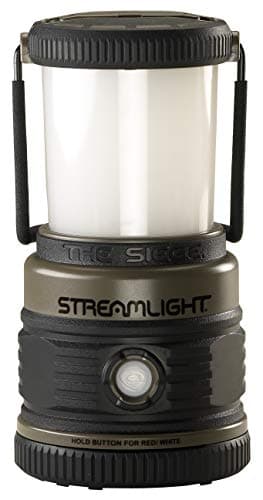 Streamlight SiegeTop pick540 lumens of 360-degree area lighting, IPX7, on replaceable cells. A lantern beats a flashlight indoors and this is the one to own. | Area light in a power cut | 540 lm | |
| 2 | 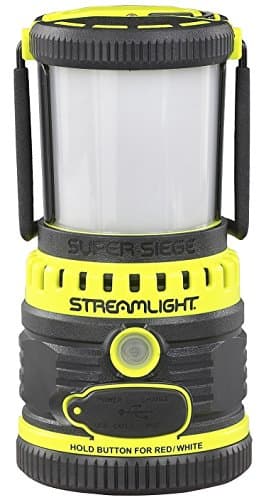 Streamlight Super Siege1,100 lumens of area light, USB rechargeable, and it will put charge back into a phone during an outage. | A lantern that also charges a phone | 1,100 lm | |
| 3 | 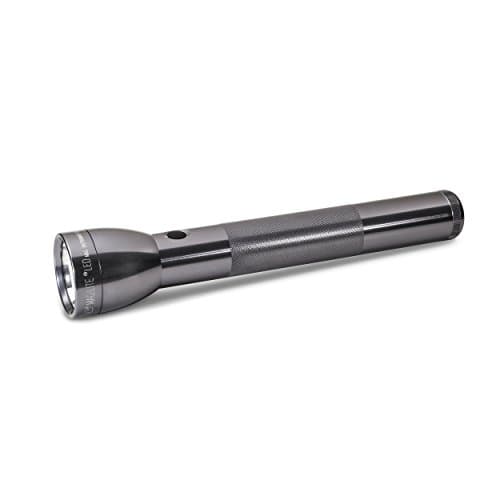 Maglite ML300L 3-Cell D746 lumens thrown 403 meters, and 298 hours on its lowest mode. The reach per lumen and the runtime are both far beyond anything Streamlight fields here. | Runtime measured in days, on cells from any shop | 746 lm |
We earn a commission if you buy through the links on this page, at no extra cost to you. It does not change what we recommend or the order they appear in. Full disclosure. Prices checked October 17, 2026.
For a power cut, buy the plain Streamlight Siege. For camping or a vehicle, buy the Super Siege. They weigh the same within 11 grams, they carry the same IPX7 rating, and they both float. The difference is what is inside: three D cells against a sealed rechargeable pack - and on Streamlight's own published figures the D cells deliver roughly two and a half times the total light per fill. What the Super Siege buys with that trade is twice the peak output and a USB power bank.
We have not handled either lantern. We own none of the products on this site and have no laboratory. Every figure below is Streamlight's own, read from its own product pages on October 17, 2026 and October 13, 2026 respectively - see our methodology.
Both sheets, side by side
| Specification | Siege | Super Siege |
|---|---|---|
| White high | 540 lm for 30 h | 1,100 lm for 5 h 45 min |
| White medium | 275 lm for 70 h | 550 lm for 11 h 30 min |
| White low | 55 lm for 295 h | 125 lm for 36 h 15 min |
| Red | 10 lm for 235 h | 2.7 lm for 140 h; 1 lm for 348 h |
| Red SOS | 10 lm for 430 h | 2.7 lm for 320 h |
| Power source | 3 x D alkaline, sold separately | Sealed Li-ion, USB rechargeable |
| Cell capacity | Not published by Streamlight | Not published |
| Power bank | No | Yes; Streamlight states 4+ phone charges |
| Weight | 878.83 g with cells | 868 g |
| Height | 18.42 cm | 19.05 cm |
| Ingress protection | IPX7, 2 m impact, floats | IPX7, 2 m impact, floats |
| Battery indicator | Four-state level indicator | Yes |
| Battery door | Keyed, openable in the dark | Not applicable |
Streamlight publishes five output-and-runtime pairs for the Siege and six for the Super Siege. That is more disclosure than any other lantern maker we have been able to reach, and it is what makes the arithmetic below possible.
The arithmetic that settles it
Multiply each published output by its published runtime and you get the total light each lantern commits to delivering from one fill. Do it on both sheets and the cheaper lantern wins by a margin no amount of peak output closes.
Note what that does not say. It does not say the Super Siege is a worse lantern; it says the Super Siege spends its energy faster and more brightly, which is exactly what you want when you can recharge it the next morning. It also does not say anything about brightness over time - both figures are ANSI FL 1 runtimes, measured until output falls to 10 percent of its starting value, so both include a dimming tail. How runtime is defined sets out the standard.
Why the power source decides the use case
An outage light is judged on whether it works after two years in a cupboard, which is the argument that runs through all of our outage coverage. A sealed lithium-ion pack self-discharges while it waits, so the Super Siege wants a top-up every few months to be trustworthy. Three D cells do not: you can put a fresh set in during the outage itself, in the dark, through a keyed door Streamlight designed for exactly that.
The one caveat on the Siege is the other side of the same coin. Alkaline cells left inside a light for years frequently leak, and the potassium hydroxide that comes out destroys the contacts and usually the lantern. Our standing advice applies: store the cells beside it rather than in it, or keep lithium primaries for the lights that wait. Cell formats explained covers the chemistry.
How many lanterns, which is the question underneath this one
Before choosing between them it is worth noticing that these two lanterns cost very different amounts, and that the argument on our home flashlight page is that coverage beats performance in an outage. A house with one 1,100-lumen lantern in the kitchen still has dark bedrooms.
On live pricing the plain Siege is usually a fraction of the Super Siege, and two Sieges in two rooms is a better-lit house than one Super Siege in one room - with twice the total light again by the arithmetic above. We would rather own two of the cheaper lantern and a headlamp per adult than one of anything, and the outage lighting kit page sets that arrangement out in full.
The case for a single Super Siege is different and real: it is one object that lights a campsite, charges a phone and takes a knock, which suits a vehicle or a trip rather than a cupboard. Buying two of those would be buying the power bank twice.
Red modes, and the one that is actually useful
Both lanterns have a red mode and they are not comparable. The Siege publishes 10 lumens for 235 hours, which is enough red light to move around a room by. The Super Siege publishes 2.7 lumens for 140 hours and 1 lumen for 348 hours, which is a marker rather than a working light.
For a house in an outage, the Siege's red mode is the one we would actually use - it preserves dark adaptation and still lets you find a drawer. The Super Siege's 348-hour setting is better understood as a be-seen beacon. What a red mode is for covers the physiology; the same reasoning applies to a lantern on a kitchen table.
What they share, which is more than you would expect
- IPX7 on both, stated as waterproof to 1 m submersion. Under IEC 60529 the X means no dust rating was declared.
- A 2 m impact rating on both, tested rather than asserted.
- Both float. Streamlight states it explicitly for each, which is a useful property in a flooded basement and a camp near water.
- Both give 360-degree light with a removable glare cover, which is the right beam shape indoors and the reason a lantern beats a flashlight in a room at all.
- Neither publishes a cell capacity, which is the one conspicuous gap on two otherwise exemplary sheets.
- Effectively the same weight and height. 878.83 g and 18.42 cm against 868 g and 19.05 cm - these are the same object in your hand.
Which to buy
Buy the Siege for a house, a cupboard or a go-bag. Best for anyone whose lantern will sit unused for months: 540 lumens for 30 published hours, 55 lumens for 295, a 10-lumen red mode for 235, three D cells you can replace in the dark, 878.83 g, IPX7, a 2 m impact rating and it floats. Its honest downsides are that D cells are not included, alkalines leak if left in for years, and 540 lumens will not light a whole floor. The full review goes through the sheet.
Buy the Super Siege for camping, a van, or anywhere you charge things daily. Best for anyone who wants maximum light now and will plug it in later: 1,100 lumens for 5 h 45 min, 550 for 11 h 30 min, 125 for 36 h 15 min, a USB power bank rated at four-plus phone charges, 868 g, IPX7, 2 m impact, and it floats too. Its honest downsides are a sealed pack that self-discharges in storage, a quarter of the Siege's total light per fill, a red mode too dim to work by, and no published cell capacity to check the power-bank claim against. The full review covers it.
If you want neither: a Maglite ML300L 3-Cell D is the other way to answer the same question. It is a flashlight rather than a lantern, so the beam is wrong for a room - but Maglite publishes 298 hours at 23 lumens, it runs on the same D cells, and it is the only directional light we cover with a comparable endurance figure. Flashlight versus lantern sets out which shape you actually want, and the home flashlight page argues for owning several cheap lights instead of one good one.
The picks, in full
Top pick · Area light in a power cut
Streamlight Siege
540 lumens of 360-degree area lighting, IPX7, on replaceable cells. A lantern beats a flashlight indoors and this is the one to own.
A flashlight in a dark kitchen produces one bright circle and a room full of hard shadow. A 360-degree lantern at a quarter of the output makes the room usable. That is the whole argument for owning one.
Three D cells is the reason to buy this one rather than its rechargeable sibling. Multiply Streamlight's own figures and the Siege delivers 16,200 lumen-hours on high against the Super Siege's 6,325 - roughly two and a half times the total light, at nearly the same weight.
295 hours at 55 lumens is twelve days of usable room light from cells you can buy in any supermarket, which is a different proposition from a sealed pack that needs a socket.
IPX7 on an outage light matters because outages and weather arrive together, and Streamlight states that this one floats.
What works
- Five published output-and-runtime pairs, including 295 h at 55 lm
- 360-degree area lighting, which is the right beam shape indoors
- IPX7, a 2 m impact rating, and it floats
- Three D cells and a keyed battery door you can open in the dark
What does not
- 878.83 g with cells in: a lantern you place rather than carry
- 540 lumens is modest if you want to light a whole floor
- D cells are not sold with it, and alkalines leak if left in for years
Skip this ifyou need to walk outside with it. A lantern spreads light everywhere, which is exactly wrong on a dark path.
Published specification
- Output
- 540 lmWhite high, cover removed. Medium 275 lm, low 55 lm, plus a 10 lm red LED.Streamlight Siege — manufacturer spec page (retrieved October 17, 2026)
- Peak intensity
- not published
- Beam distance
- not published(Not applicable to a 360-degree lantern)
- Runtime
- 30 h at 540 lm / 70 h at 275 lm / 295 h at 55 lmStreamlight also publishes the red LED at 10 lm for 235 h steady and 430 h on SOS. Five output-and-runtime pairs in all.Streamlight Siege — manufacturer spec page (retrieved October 17, 2026)
- Battery
- 3 x D alkaline (sold separately)Keyed battery door, so cells can be changed in the dark, and a four-state battery level indicator.Streamlight Siege — manufacturer spec page (retrieved October 17, 2026)
- Weight
- 878.83 g with batteries1 lb 15 oz. 18.42 cm tall.Streamlight Siege — manufacturer spec page (retrieved October 17, 2026)
- Ingress
- IPX7Waterproof to 1 m submersion, 2 m impact resistance tested, and it floats.Streamlight Siege — manufacturer spec page (retrieved October 17, 2026)
$85.81 · 47% off
#ad · how this is funded · price as of October 17, 2026
Pick 2 · A lantern that also charges a phone
Streamlight Super Siege
1,100 lumens of area light, USB rechargeable, and it will put charge back into a phone during an outage.
1,100 lumens is enough to light a whole room to a level where you can read and cook, which is the difference between coping with an outage and enduring one.
The USB output is the second reason to own it. In a multi-day outage, the phone is the thing that matters.
Rechargeable rather than replaceable cells is a real trade-off for emergency kit: better in a planned outage, worse if it has been in a cupboard for eighteen months. The red LED is the hedge: 1 lumen for a published 348 hours means a flat-ish pack still gives you two weeks of find-the-stairs light.
What works
- Six published output-and-runtime pairs, including 348 h on the 1 lm red
- IPX7 to a meter, a 2 m impact rating, and it floats
- Charges a phone over USB - Streamlight states 4+ phone charges
What does not
- No sourced runtime, weight or IP rating
- Rechargeable cell self-discharges in storage
- Bulkier and heavier than the standard Siege
Skip this ifit will sit untouched for years. For pure standby, replaceable cells beat a rechargeable pack every time.
Published specification
- Output
- 1,100 lmWhite high. Medium 550 lm, low 125 lm, plus a three-mode red LED.Streamlight Super Siege — manufacturer spec page (retrieved October 13, 2026)
- Peak intensity
- not published
- Beam distance
- not published(Not applicable to a 360-degree lantern)
- Runtime
- 5 h 45 min at 1,100 lmSix published pairs: white 550 lm/11.5 h and 125 lm/36.25 h; red 2.7 lm/140 h, 1 lm/348 h and SOS 2.7 lm/320 h.Streamlight Super Siege — manufacturer spec page (retrieved October 13, 2026)
- Battery
- Li-ion, USB rechargeableAlso a USB power bank: Streamlight states 4+ phone charges. Capacity not published.Streamlight Super Siege — manufacturer spec page (retrieved October 13, 2026)
- Weight
- 868 g1 lb 14.0 oz. 19.05 cm tall.Streamlight Super Siege — manufacturer spec page (retrieved October 13, 2026)
- Ingress
- IPX7Submersible to 1 m, 2 m impact rating, and it floats.Streamlight Super Siege — manufacturer spec page (retrieved October 13, 2026)
#ad · how this is funded · price as of October 17, 2026
Pick 3 · Runtime measured in days, on cells from any shop
Maglite ML300L 3-Cell D
746 lumens thrown 403 meters, and 298 hours on its lowest mode. The reach per lumen and the runtime are both far beyond anything Streamlight fields here.
40,596 candela from 746 lumens is 54 candela per lumen. A Streamlight ProTac HL-X manages 27. That is the whole Maglite argument in one ratio: the deep adjustable-focus reflector puts roughly twice as much of each lumen into the hotspot, so this light reaches 403 m on 57 percent of the ProTac's output.
298 hours on Eco is not a reserve-visibility claim of the kind some makers publish — Maglite states it as a runtime. Three D cells hold more energy than every lithium pack in this comparison put together, and this is what that buys.
The cost is mass and ingress. 748 g is more than four ProTac HL-Xs, and IPX4 means rain rather than immersion. This is a light that lives in a truck, a workshop or a hall cupboard, not on a belt.
What works
- 403 m of published reach from only 746 lumens, and the candela figure reconciles with it exactly
- 298 hours on Eco, on D cells you can buy in any supermarket
- Adjustable focus, from a wide flood to a tight spot, on a mechanism Maglite has refined for decades
What does not
- 748 g with cells fitted — the heaviest light on this site by a wide margin
- IPX4 only, against IP68 on the ProTac HL-X
- Three D cells are not included, and there is no rechargeable option in this model
Skip this ifyou have to carry it. The reach and the runtime are real, and so is the weight; a duty light at a fifth the mass is the better tool on a belt.
Published specification
- Peak intensity
- 40,596 cdMaglite ML300L 3-Cell D — manufacturer spec page (retrieved September 21, 2026)
- Beam distance
- 403 mReconciles exactly with the published candela: the square root of 40,596 divided by 0.25 is 403.0 mMaglite ML300L 3-Cell D — manufacturer spec page (retrieved September 21, 2026)
- Runtime
- 32 h at 746 lm / 112 h at 102 lm / 298 h at 23 lmMaglite publishes output and runtime for all three modes. Thirty-two hours at full output is the highest full-power figure on this site.Maglite ML300L 3-Cell D — manufacturer spec page (retrieved September 21, 2026)
- Battery
- 3 x D (not included)Maglite ML300L 3-Cell D — manufacturer spec page (retrieved September 21, 2026)
- Weight
- 748 g (26.4 oz)With batteries. 11.75 in x 2.25 in.Maglite ML300L 3-Cell D — manufacturer spec page (retrieved September 21, 2026)
- Ingress
- IPX4Water resistant, not immersion rated. 1 m drop resistance.Maglite ML300L 3-Cell D — manufacturer spec page (retrieved September 21, 2026)
#ad · how this is funded · price as of October 17, 2026
Questions people actually ask
Streamlight Siege or Super Siege?
The Siege for a power cut, the Super Siege for camping. Multiply each maker's own figures and the Siege delivers about 16,200 lumen-hours on high against the Super Siege's 6,325 - two and a half times the total light, at nearly identical weight - because three D cells hold more energy than the Super Siege's sealed pack. The Super Siege's advantages are twice the peak output and a USB power bank.
How long does the Streamlight Siege run?
Streamlight publishes five figures: 540 lumens for 30 hours, 275 for 70 hours, 55 for 295 hours, and a 10-lumen red LED for 235 hours steady or 430 hours on SOS. All are measured under ANSI FL 1, which runs until output falls to 10 percent of its starting value, so each includes a dimming tail.
How long does the Super Siege run?
Streamlight publishes six figures: white at 1,100 lumens for 5 hours 45 minutes, 550 for 11 hours 30 minutes and 125 for 36 hours 15 minutes; red at 2.7 lumens for 140 hours, 1 lumen for 348 hours, and an SOS mode at 2.7 lumens for 320 hours.
Which is better for a power outage?
The Siege, and not narrowly. An outage light is judged on working after months of neglect, and a sealed rechargeable pack self-discharges while it waits. Three D cells can be replaced during the outage itself - through a keyed door Streamlight designed to be opened in the dark - and the Siege's 295-hour low mode is twelve days of usable room light.
Is the Super Siege's power bank worth it?
It is a real convenience with an unpublished cost. Streamlight states four or more full phone charges, but does not publish the pack's capacity, so the claim cannot be checked against stored energy - and the lantern and the power bank share one cell, so every charge is light you will not get later.
Do both lanterns float?
Yes. Streamlight states it for both, along with IPX7 waterproofing to 1 m submersion and a tested 2 m impact rating on each. For a flooded basement or a camp near water that is a genuinely useful property rather than a marketing line.
Which red mode is more useful?
The Siege's, clearly. It publishes 10 lumens for 235 hours, which is enough red light to cross a room by. The Super Siege publishes 2.7 lumens and 1 lumen, which are marker outputs - better understood as a beacon than as a working light.
Are they the same size?
Within a centimeter and 11 grams: the Siege is 18.42 cm and 878.83 g with its cells installed, the Super Siege 19.05 cm and 868 g. Both are lanterns you place rather than carry, which is fine for a cupboard, a vehicle or a campsite and wrong for a pack.
Sources
Every figure on this page came from one of the documents below, read on the date shown. We do not cite other review sites, forum posts or video reviews as sources of fact.
- Streamlight Siege — manufacturer spec page (retrieved October 17, 2026)
- Streamlight Super Siege — manufacturer spec page (retrieved October 13, 2026)
- Maglite ML300L 3-Cell D — manufacturer spec page (retrieved September 21, 2026)
- ANSI/PLATO FL 1 flashlight performance standard — definitions of lumens, peak beam intensity, beam distance, runtime, impact and water resistance
- IEC 60529 — the IP (ingress protection) rating system
Read next
Flashlight brand comparisons
Brand-against-brand comparisons on published figures and disclosure quality, not on reputation.
Streamlight vs Maglite
Streamlight against Maglite on published candela, reach, runtime and durability - two complete spec sheets that disagree about beam shape.
Best flashlights for power outages
Outage lighting ranked on shelf life, area coverage and findability rather than on output.
Best flashlights for home use
Household lighting ranked on coverage: socket lights, lanterns and a handheld that will still work in two years.
What to keep in a power outage lighting kit
A practical outage lighting kit, with battery storage rules and a check schedule that takes ten minutes a year.
Flashlight vs lantern
Directional versus area light, with the illuminance arithmetic for choosing between them.
Streamlight Siege review
A specification-first review of the Streamlight Siege: what a 360-degree lantern is actually judged on, and why the brightest light is the wrong tool indoors.
Streamlight Super Siege review
A specification-first review of the Streamlight Super Siege: six published runtimes, the 348-hour red mode that matters in a long outage, the power-bank figures, and the one arithmetic result that tells you which mode to run.
Best flashlights for a car emergency kit
What to keep in a glovebox, ranked on cell chemistry and published temperature limits rather than output - with the one sentence that rules out most rechargeable lights.
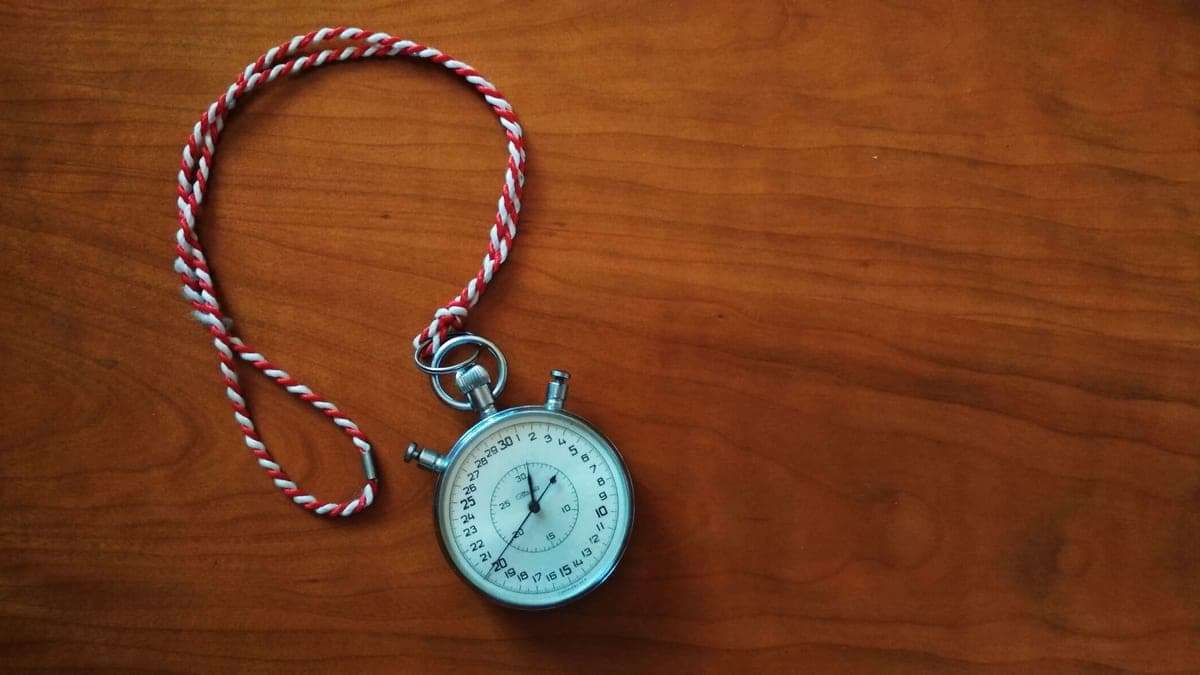
Flashlight runtime, computed
How runtime is defined, why thermal step-down happens, and the arithmetic to compute a real figure yourself.
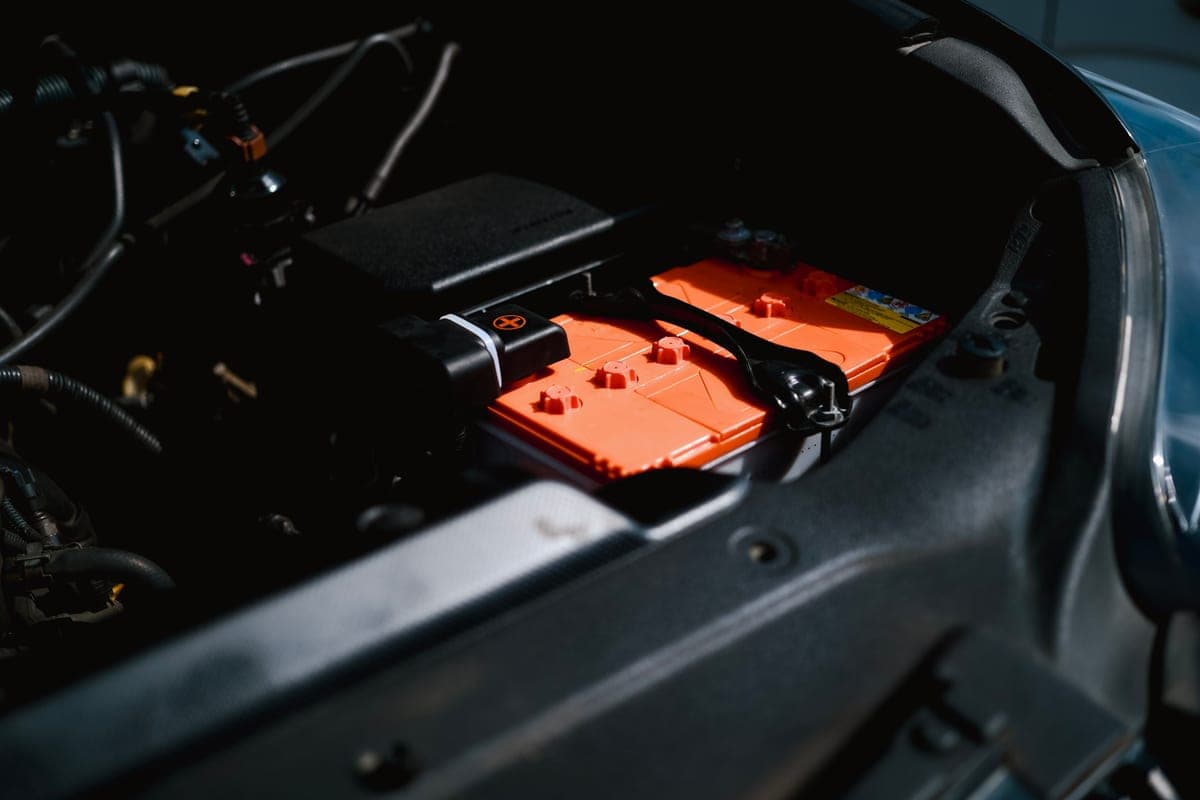
18650 vs 21700, and every other cell format
Cell formats compared on capacity, current rating and dimensions, with the safety rules that matter.
Found a number that is wrong? Tell us and we will fix it and say so. Our methodology shows every formula on this page.