Compare
Streamlight ProTac HL-X vs Fenix PD36R Pro
The two lights that come up most often for duty carry. One publishes more than twice the output; the other publishes an answer to every question you can ask about it.
By Scooter M. · Published · Updated
| # | Product | Best for | Output | Price |
|---|---|---|---|---|
| 1 | 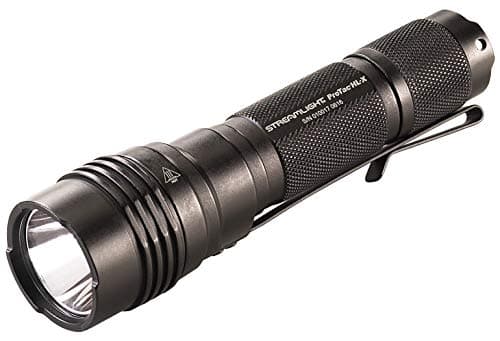 Streamlight ProTac HL-XTop pick1,300 lumens, 35,000 candela, 374 m, 1.5 hours, IP68, on either a rechargeable pack or two CR123A cells. Every figure published per mode. | Duty use, and the best-documented light on this site | 1,300 lm | |
| 2 | 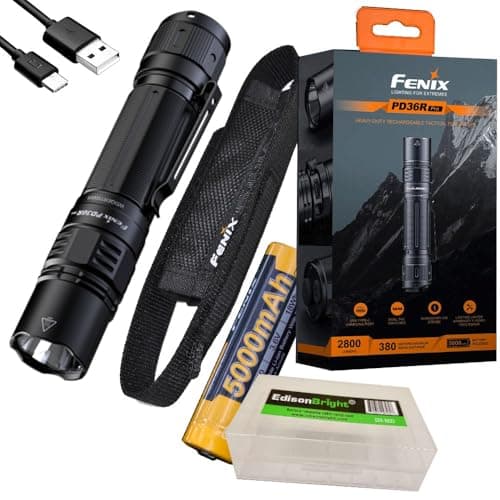 Fenix PD36R Pro2,800 lumens from a 21700 cell holding 18 watt-hours, at 169 grams. The biggest energy store in the tactical set. | The most output and energy in a tactical body | 2,800 lm | |
| 3 | 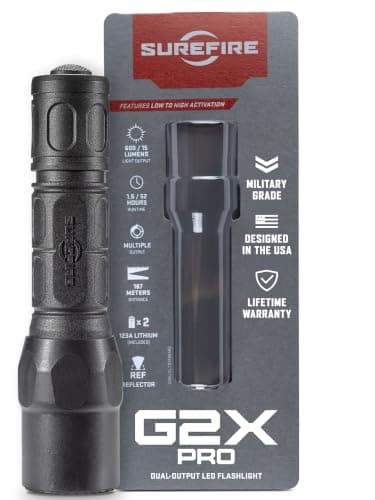 SureFire G2X Pro600 lumens, 8,700 candela, 1.5 hours, and two modes. The specification is modest; the point is that nothing on it can go wrong. | A simple two-mode light that will outlive you | 600 lm | |
| 4 | 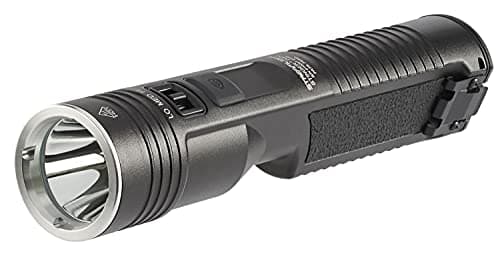 Streamlight Stinger 20202,000 lumens, 315 m, two hours on high, and a charger in the box. Built for a shift, not for a pocket. | A patrol light that lives in a charging cradle | 2,000 lm |
We earn a commission if you buy through the links on this page, at no extra cost to you. It does not change what we recommend or the order they appear in. Full disclosure. Prices checked October 17, 2026.
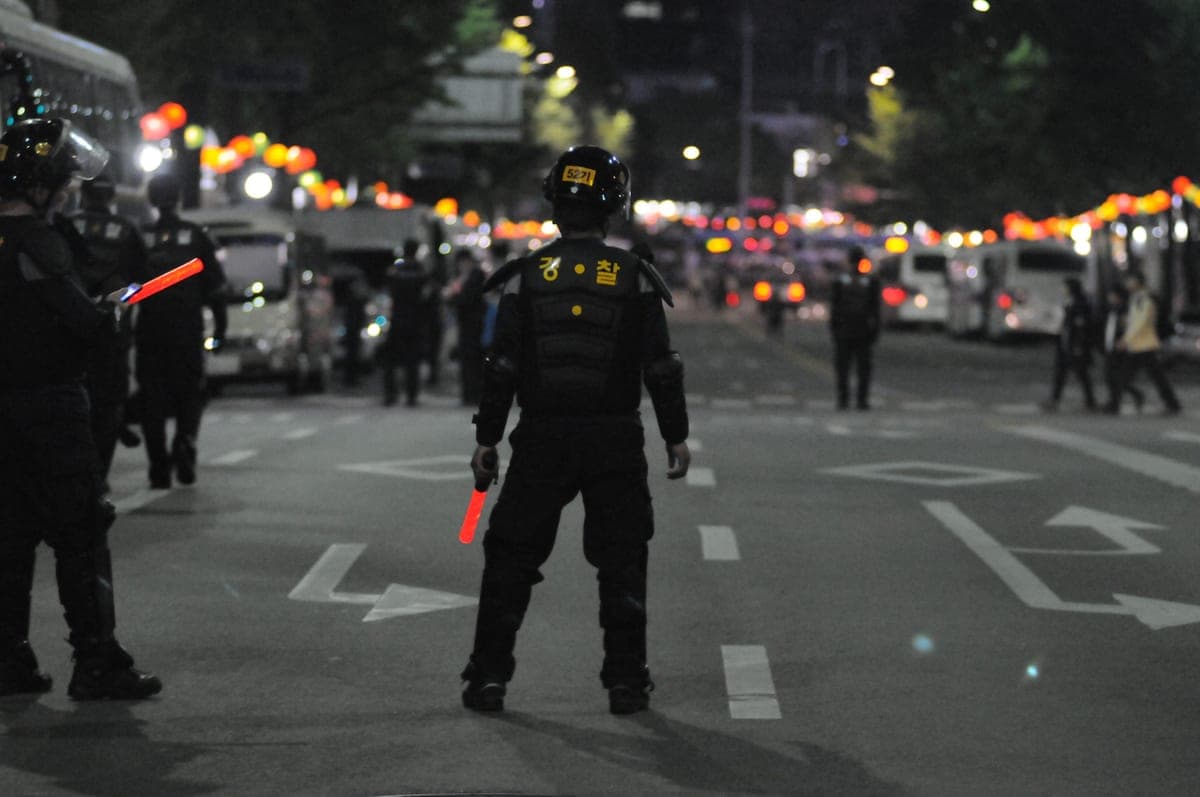
For duty carry, buy the Streamlight ProTac HL-X. Buy the Fenix PD36R Pro if you want the most light and the most stored energy and will accept a thinner spec sheet. The Streamlight publishes candela, beam distance and runtime for all three of its modes, carries IP68 and a 2 m impact rating, and runs on two CR123A primaries when its pack is flat. The Fenix publishes 2,800 lumens against 1,300, six meters more reach, and an 18.5 watt-hour cell - but no candela, no per-mode table in text, and no IP code.
We have not handled either light. We own none of the products on this site and have no laboratory. Everything below is read from each maker's own product page on the date cited, plus the arithmetic ANSI FL 1 allows - see our methodology.
Both sheets, side by side
| Specification | Streamlight ProTac HL-X | Fenix PD36R Pro |
|---|---|---|
| Maximum output | 1,300 lm | 2,800 lm |
| Mid / low output | 420 lm / 70 lm | Published as a chart image |
| Peak beam intensity | 35,000 cd high, 11,000 mid, 1,800 low | Not published |
| Beam distance | 374 m high, 210 m mid, 85 m low | 380 m |
| Runtime | 1 h 30 min / 3 h 45 min / 25 h on the pack | 3 h 30 min on Turbo, 42 h maximum |
| Runtime on primaries | 1 h 15 min / 3 h / 20 h on CR123A | No primary-cell option |
| Battery | SL-B26 Li-ion pack, or 2 x CR123A | 5,000 mAh 21700, USB-C, included |
| Stored energy | Not published | 18.5 Wh (computed from 5,000 mAh at 3.7 V) |
| Weight | 162 g with CR123A, 176 g with the pack | 169 g with battery |
| Ingress protection | IP68 | Waterproof to 2 m, no IP code stated |
| Impact resistance | 2 m, tested | Stated, no height given |
| Candela per lumen | 27 | 13 (computed from distance) |
That table is the comparison. Fenix wins the first row and Streamlight wins almost every other one, and whether that is the right trade depends entirely on whether you need a number or need the light.
Twice the lumens, six meters
The PD36R Pro publishes 2,800 lumens against the ProTac's 1,300, and reaches 380 m against 374 m. Those two facts in one sentence are the most useful thing on this page, and they are the clearest demonstration on the site that lumens do not buy distance.
Note which of those two candela figures is published and which is computed. Streamlight prints 35,000 cd and prints 374 m, and they agree - the strongest evidence a spec sheet can offer that somebody measured the light. For the Fenix we have one number and arithmetic on top of it. Lumens versus candela explains why the two answer different questions.
Runtime: three figures against one and a half
Streamlight publishes a runtime for every mode on both power sources - six figures in total. Fenix publishes a Turbo figure and a maximum in text and puts the remaining modes in a chart image, which is better than nothing and worse than a table.
The Fenix figure that gets quoted is 3 h 30 min on Turbo, and it is worth being precise about what that is. Fenix measures to the ANSI FL 1 rule, which runs until output falls to 10 percent of its starting value, so those three and a half hours include the step-down from 2,800 lumens that any light this bright performs within a minute or two. It is not three and a half hours of 2,800 lumens, and nobody should plan as though it is.
The middle mode, and what a chart image costs you
Nobody works on turbo. The level a duty light spends its night on is the middle one, and this is where the two sheets diverge most sharply in practice rather than on paper.
| Streamlight ProTac HL-X | Fenix PD36R Pro | |
|---|---|---|
| Middle output | 420 lm | Chart image only |
| Middle candela | 11,000 cd | Not published |
| Middle beam distance | 210 m | Not published |
| Middle runtime | 3 h 45 min on the pack, 3 h on CR123A | Chart image only |
| Low output and runtime | 70 lm for 25 h | 42 h maximum, output not stated in text |
Fenix does publish its other modes - as an image. That is better than silence and worse than a table: it cannot be quoted, searched, read by a screen reader or compared against a competitor without someone squinting at a graph. On the Streamlight side you can state plainly that 420 lumens reaches 210 meters for 3 hours 45 minutes, and check it: 210 m works back to 11,025 candela against a published 11,000.
This is the whole reason we rank disclosure rather than output. A buyer who wants to know what the light does at the setting they will use all night can answer that question from Streamlight's page and cannot answer it from Fenix's. Our tactical hub applies the same test across the category.
The CR123A fallback, and why duty users care
The ProTac HL-X takes two CR123A lithium primaries in place of its rechargeable pack, and Streamlight publishes the full runtime table for that configuration: 1 h 15 min, 3 h and 20 h. Energizer's own datasheet rates CR123A for storage and operation from -40 C to 60 C.
The Fenix has no primary-cell option at all. For a light that lives on a belt and gets charged at the end of a shift, that is a non-issue. For a light that has to work on the third day of something, or in a vehicle, or after a year in a bag, it is the whole argument - and it is why we rank the Streamlight first on flashlights for police and duty use and why the car emergency kit page is built on the same chemistry.
Weather and impact: a coded rating against a sentence
Streamlight publishes IP68 and a 2 m impact rating, tested. Under IEC 60529 the 6 is dust tight and the 8 is continuous immersion to a depth the maker specifies - Streamlight states 2 m.
Fenix states the PD36R Pro is waterproof underwater to 2 meters and that it is impact resistant, and gives neither an IP code nor a drop height. Those are real claims from a serious company and we record them as such; they are also unverifiable against a standard, which is a different thing from a tested IP68. This site corrected its own records on exactly this point in October 2026 - we had previously said Fenix published no ingress claim at all, which was wrong.
Which to buy
Buy the Streamlight ProTac HL-X for duty carry. Best for anyone who needs to know what the light does before they need it: candela and distance for three modes that reconcile with each other, runtime for three modes on two power sources, IP68, a tested 2 m drop, a CR123A fallback and 162 g. Honest downsides: 1,300 lumens is modest in 2026, Streamlight does not publish its pack's capacity, and the programmable interface is a menu you have to learn.
Buy the Fenix PD36R Pro for maximum output and endurance. Best for anyone who wants one rechargeable light that fills a space and runs a long time: 2,800 lumens, a published 18.5 watt-hours, 42 hours at its lowest level, USB-C charging in about three hours, and 169 g. Honest downsides: no published candela, no per-mode runtime table in text, no IP code, no primary-cell fallback, and a Turbo figure that includes its own step-down.
If neither is quite right: the SureFire G2X Pro is the two-mode, no-menu, CR123A-only answer with a published 8,700 cd and 52 hours on low; the Streamlight Stinger 2020 publishes 2,000 lumens with candela and runtime for every mode but weighs 350 g and needs a charger. The brand-level argument sits on Streamlight vs Fenix.
The picks, in full
Top pick · Duty use, and the best-documented light on this site
Streamlight ProTac HL-X
1,300 lumens, 35,000 candela, 374 m, 1.5 hours, IP68, on either a rechargeable pack or two CR123A cells. Every figure published per mode.
35,000 candela and 374 m reconcile exactly: the square root of 35,000 divided by 0.25 is 374.2 m. Streamlight's numbers are internally consistent across all three modes, which is the strongest signal of a maker publishing real measurements rather than marketing figures.
1.5 hours at 1,300 lumens implies roughly 6 to 7 watt-hours of usable energy — consistent with a single 18650-class pack and with the CR123A alternative.
IP68 with 2 m impact resistance is the toughest rating in this roundup, and the reason this light shows up on so many duty belts.
What works
- Full ANSI FL1 table published per mode, and it reconciles
- Runs on a rechargeable pack or on shelf-stable CR123A lithium cells
- IP68 and 2 m impact rating
What does not
- The programming interface takes reading the manual to understand
- 162 to 176 g is heavy for pocket carry
- CR123A cells are expensive if you use it hard
Skip this ifyou want a pocket light. It is a duty-belt tool and the weight and length are built for a holster.
Published specification
- Output
- 1,300 lmHigh. Medium 420 lm, low 70 lm.Streamlight ProTac HL-X — manufacturer spec page (retrieved September 1, 2026)
- Peak intensity
- 35,000 cdHigh. 11,000 cd medium, 1,800 cd low.Streamlight ProTac HL-X — manufacturer spec page (retrieved September 1, 2026)
- Beam distance
- 374 mHigh. 210 m medium, 85 m low.Streamlight ProTac HL-X — manufacturer spec page (retrieved September 1, 2026)
- Runtime
- 1.5 h high / 3.75 h medium / 25 h lowOn the SL-B26 pack. On CR123A: 1.25 h / 3 h / 20 h.Streamlight ProTac HL-X — manufacturer spec page (retrieved September 1, 2026)
- Battery
- SL-B26 rechargeable Li-ion pack, or 2 x CR123A lithiumStreamlight ProTac HL-X — manufacturer spec page (retrieved September 1, 2026)
- Weight
- 162 g with CR123A, 176 g with the packStreamlight ProTac HL-X — manufacturer spec page (retrieved September 1, 2026)
- Ingress
- IP68Dust tight, waterproof to 2 m; 2 m impact resistance testedStreamlight ProTac HL-X — manufacturer spec page (retrieved September 1, 2026)
#ad · how this is funded · price as of October 17, 2026
Pick 2 · The most output and energy in a tactical body
Fenix PD36R Pro
2,800 lumens from a 21700 cell holding 18 watt-hours, at 169 grams. The biggest energy store in the tactical set.
A 5,000 mAh 21700 at 3.6 V is 18.0 watt-hours — nearly three times what the ProTac HL-X carries. That is the case for the 21700 format in one number.
380 m of reach on 2,800 lumens works back to about 36,100 candela, almost identical to the ProTac's 35,000 from 1,300 lumens. The Fenix is spending its extra output on spill, not on distance.
169 g including the cell is only 7 g more than a ProTac on CR123A, for nearly triple the energy. That is what four years of cell development buys.
What works
- 18 Wh of stored energy, the most in the tactical set
- 2,800 lumens with 380 m of published reach
- Standard 21700 cell, USB-C on the light
What does not
- Waterproofing stated as 2 m submersion, with no IP code to compare against
- No published candela, so the throw figure cannot be cross-checked
- 2,800 lumens will step down quickly in a body this size
Skip this ifyou need a shelf-stable light. A rechargeable cell self-discharges; for a drawer light, CR123A primaries are the right answer.
Published specification
- Peak intensity
- not published
- Beam distance
- 380 mFenix states 1,247 feet (380 m)Fenix PD36R Pro — manufacturer spec page (retrieved September 17, 2026)
- Runtime
- 3 h 30 min on Turbo / 42 h maximumTurbo is measured to 10% output under ANSI FL 1, so it includes step-down; 42 h is the lowest mode. Other modes are published as a chart imageFenix PD36R Pro — manufacturer spec page (retrieved September 1, 2026)
- Battery
- 5,000 mAh 21700 Li-ion (included), USB-CFenix PD36R Pro — manufacturer spec page (retrieved September 1, 2026)
- Weight
- 169 g (5.96 oz)Including batteryFenix PD36R Pro — manufacturer spec page (retrieved September 1, 2026)
- Ingress
- Waterproof underwater to 2 mFenix states this without giving an IP codeFenix PD36R Pro — manufacturer spec page (retrieved September 17, 2026)
#ad · how this is funded · price as of October 17, 2026
Pick 3 · A simple two-mode light that will outlive you
SureFire G2X Pro
600 lumens, 8,700 candela, 1.5 hours, and two modes. The specification is modest; the point is that nothing on it can go wrong.
SureFire publishes both 8,700 candela and a 187 m beam distance, and the two reconcile: the square root of 8,700 divided by 0.25 is 186.5 m. That makes this the only light on this site outside Streamlight and Maglite whose two beam figures can be checked against each other. It is still well short of the ProTac's 374 m on similar output, because SureFire deliberately builds a wider beam with more usable spill.
Two modes, low then high, with no strobe and no programming. On a light you might need in a hurry, that is a feature.
CR123A primaries hold their charge for a decade on a shelf. For a light that lives in a drawer against the worst night of your life, that matters more than rechargeability.
What works
- Two modes, no menu, nothing to misconfigure
- CR123A lithium cells with a ten-year shelf life
- The most durable reputation in the category, earned over decades
What does not
- 600 lumens and 8,700 candela are modest for the price in 2026
- IPX7 is immersion-only - no dust digit - and SureFire states no impact rating
- CR123A cells cost real money to run
Skip this ifyou buy on specification. Almost everything here beats it on paper; you are paying for reliability and simplicity instead.
Published specification
- Output
- 600 lmHigh. Low is 15 lm.SureFire G2X Pro — manufacturer spec page (retrieved October 6, 2026)
- Peak intensity
- 8,700 cdSureFire G2X Pro — manufacturer spec page (retrieved October 6, 2026)
- Beam distance
- 187 mPublished, and it reconciles with the 8,700 cd figure.SureFire G2X Pro — manufacturer spec page (retrieved October 6, 2026)
- Runtime
- 1.5 h on highLow is 52 h.SureFire G2X Pro — manufacturer spec page (retrieved October 6, 2026)
- Battery
- 2 x CR123A lithiumSureFire G2X Pro — manufacturer spec page (retrieved October 6, 2026)
- Weight
- 125 g4.4 oz, cells installed.SureFire G2X Pro — manufacturer spec page (retrieved October 6, 2026)
- Ingress
- IPX7No dust digit; no impact rating stated.SureFire G2X Pro — manufacturer spec page (retrieved October 6, 2026)
#ad · how this is funded · price as of October 17, 2026
Pick 4 · A patrol light that lives in a charging cradle
Streamlight Stinger 2020
2,000 lumens, 315 m, two hours on high, and a charger in the box. Built for a shift, not for a pocket.
Two hours at 2,000 lumens is the standout number: that is a whole traffic stop at full output rather than the ninety-second burst most 2,000-lumen lights give you.
350 grams is heavy in the hand and irrelevant on a belt. This light is designed around a duty rig and a vehicle charger, and the mass buys the runtime.
Streamlight publishes 25,000 candela alongside the 315 m, and they reconcile: the square root of 25,000 divided by 0.25 is 316.2 m. That is 12.5 candela per lumen — a broader beam than the ProTac's 27, which is the right call for searching a room rather than a treeline.
What works
- Two hours at full 2,000 lumens, which almost nothing else here can claim
- Full per-mode output, candela, distance and runtime table published, and the candela and distance figures check each other
- Ships with a charger designed for a vehicle cradle
What does not
- 350 g, so pocket carry is out
- IPX7 rather than the ProTac's IP68
- Proprietary battery pack, and no capacity published in mAh or watt-hours
Skip this ifyou carry a light rather than wear one. At 350 g it is a duty-belt and vehicle tool, and the ProTac HL-X does most of the same job at half the weight with a CR123A fallback.
Published specification
- Output
- 2,000 lmHigh. Medium 850 lm, low 100 lm.Streamlight Stinger 2020 — manufacturer spec page (retrieved September 1, 2026)
- Peak intensity
- 25,000 cdHigh. Medium 10,000 cd, low 1,200 cd. Each reconciles with the published beam distance for its mode.Streamlight Stinger 2020 — manufacturer spec page (retrieved September 22, 2026)
- Beam distance
- 315 mHigh. 200 m medium, 70 m low.Streamlight Stinger 2020 — manufacturer spec page (retrieved September 1, 2026)
- Runtime
- 2 h high / 4 h medium / 24 h lowStreamlight Stinger 2020 — manufacturer spec page (retrieved September 1, 2026)
- Battery
- 2 x SL-B26 rechargeable Li-ion packStreamlight publishes a quantity of 2, so the spare is in the box. Charges with existing Stinger chargers, a USB cord, or the SL-B26 bank charger. Capacity is not published in mAh or watt-hours.Streamlight Stinger 2020 — manufacturer spec page (retrieved September 1, 2026)
- Weight
- 350 g (12.3 oz)Streamlight Stinger 2020 — manufacturer spec page (retrieved September 1, 2026)
- Ingress
- IPX7Waterproof; 2 m impact resistance testedStreamlight Stinger 2020 — manufacturer spec page (retrieved September 1, 2026)
#ad · how this is funded · price as of October 17, 2026
Questions people actually ask
Streamlight ProTac HL-X or Fenix PD36R Pro?
The ProTac HL-X for duty carry: it publishes candela, beam distance and runtime for all three modes, carries IP68 and a tested 2 m impact rating, and takes two CR123A primaries when the pack is flat. The PD36R Pro if you want maximum output and endurance - 2,800 lumens and a published 18.5 watt-hour cell - and will accept no candela figure, no IP code and no primary-cell option.
Why does the 1,300-lumen Streamlight reach as far as the 2,800-lumen Fenix?
Because reach depends on beam intensity, not total output. Streamlight publishes 35,000 candela, which is 27 candela per lumen; the Fenix's 380 m works back to 36,100 candela, which is 13 candela per lumen. The Streamlight concentrates each lumen roughly twice as hard, so it matches a light with more than double the output at 374 m against 380 m.
Which has the better battery?
The Fenix, on capacity: 5,000 mAh at 3.7 V is 18.5 watt-hours, roughly double what a pair of CR123A cells holds, and it charges over USB-C. The Streamlight's advantage is optionality rather than size - it runs on CR123A lithium primaries that Energizer rates from -40 C to 60 C, which no amount of capacity replaces when there is no socket.
Is the Fenix PD36R Pro waterproof?
Fenix states it is waterproof underwater to 2 meters and that it is impact resistant, but publishes no IP code and no drop height. Streamlight publishes IP68 and a tested 2 m impact rating for the ProTac HL-X. Both are real claims; only one is stated against a published standard.
Does the ProTac HL-X really run 25 hours?
On its lowest mode, at a published 70 lumens, on the SL-B26 pack - Streamlight states 25 hours there and 20 hours on CR123A primaries. The high mode is 1 hour 30 minutes. That is the value of a per-mode table: you can see which number belongs to which setting, which is not possible on a sheet that publishes only a maximum.
Which is better for searching a large area?
The Fenix. At 13 candela per lumen it spreads 2,800 lumens across a wide field, which is what fills a yard, a warehouse aisle or a vehicle interior. The Streamlight's tighter 27 candela per lumen beam is better for looking down a street and worse for lighting one up.
Are they the same size and weight?
Close. Streamlight publishes 162 g with CR123A cells and 176 g with its pack; Fenix publishes 169 g including its battery and a 145.8 mm length. Any difference in carry is down to clip and body shape rather than mass.
Which is better value?
Check the live prices in the table above rather than a number typed into an article. What the Fenix gives you per dollar is output and stored energy; what the Streamlight gives you is a sheet you can verify, weather sealing stated against a standard, and the ability to run on cells you can buy in a shop.
Sources
Every figure on this page came from one of the documents below, read on the date shown. We do not cite other review sites, forum posts or video reviews as sources of fact.
- Streamlight ProTac HL-X — manufacturer spec page (retrieved September 1, 2026)
- Fenix PD36R Pro — manufacturer spec page (retrieved September 1, 2026)
- SureFire G2X Pro — manufacturer spec page (retrieved October 6, 2026)
- Streamlight Stinger 2020 — manufacturer spec page (retrieved September 1, 2026)
- Energizer 123 (CR123A) — product datasheet (lithium manganese dioxide, 3.0 V, 1,500 mAh typical; operating and storage -40 to 60 C, 16.5 g; retrieved October 17, 2026)
- ANSI/PLATO FL 1 flashlight performance standard — definitions of lumens, peak beam intensity, beam distance, runtime, impact and water resistance
- IEC 60529 — the IP (ingress protection) rating system
Read next
Flashlight brand comparisons
Brand-against-brand comparisons on published figures and disclosure quality, not on reputation.
Streamlight vs Fenix
Streamlight against Fenix on published candela, reach and runtime — one brand wins the headline, the other wins the spec sheet.
Streamlight vs SureFire
The two American duty brands compared on documentation, power strategy and interface philosophy.
Nitecore vs Fenix
Nitecore against Fenix: output per dollar against specification completeness, across headlamps and handhelds.
Best tactical flashlights, ranked on candela rather than lumens
The tactical ranking: published candela, beam distance, sustained runtime and ingress rating, all sourced.
Best flashlights for police and law enforcement
Duty lights ranked on shift-length sustained runtime, impact rating and charging strategy.
Streamlight ProTac HL-X review
A specification-first review of the Streamlight ProTac HL-X: the arithmetic behind its figures, the dual power arrangement, and who should buy something brighter.
Fenix PD36R Pro review
A specification-first review of the Fenix PD36R Pro: what 18 watt-hours buys, how to read its 3.5-hour Turbo claim, and who should buy something else.
What actually makes a flashlight tactical
What the word tactical actually describes, feature by feature, and what to judge a light on instead.
Lumens vs candela
The distinction that decides reach, with the conversion formula and a table of real published figures.
Best flashlights for a car emergency kit
What to keep in a glovebox, ranked on cell chemistry and published temperature limits rather than output - with the one sentence that rules out most rechargeable lights.
Found a number that is wrong? Tell us and we will fix it and say so. Our methodology shows every formula on this page.