Work Lights
Best work lights for mechanics
In automotive work the specification that decides everything is thickness. A light that does not fit where the job is has no useful brightness.
By Scooter M. · Published · Updated
| # | Product | Best for | Output | Price |
|---|---|---|---|---|
| 1 | 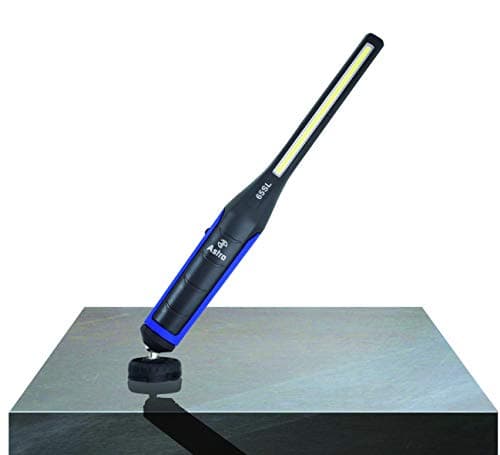 Astro Pneumatic 65SL Slim LightTop pick650 lumens in a body thin enough to slide between an engine and a fender, with a separate top-mounted spot. | Working in a gap too narrow for anything else | 650 lm | |
| 2 | 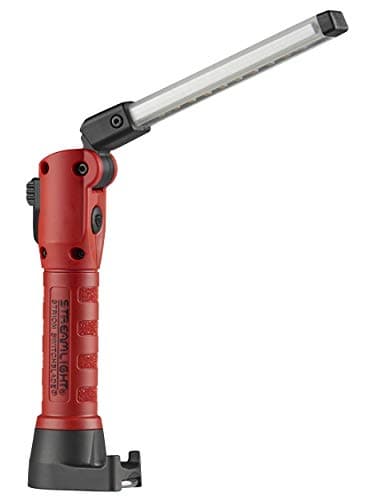 Streamlight Strion Switchblade500 lumens cool white, or 400 at a published 90 CRI, in a folding bar. The color accuracy is the specification that matters on a wiring loom, and it is the only one here with a number behind it. | Color-critical work under the hood | 500 lm | |
| 3 | 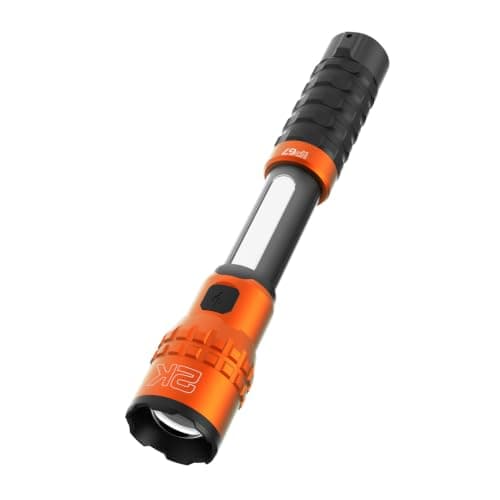 Nebo Slyde King 2KA 2,000-lumen spot at one end and a 500-lumen COB work light along the slide. Two lights, one body. | One tool that is both a flashlight and a work light | 2,000 lm spot / 500 lm COB work light | |
| 4 | 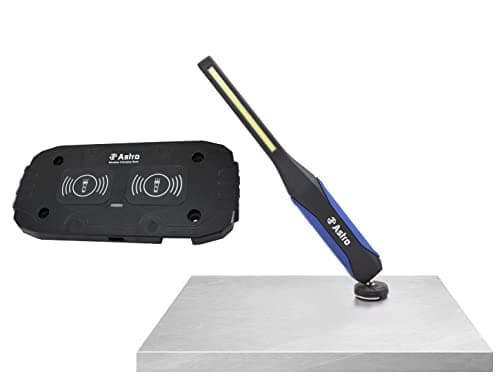 Astro Pneumatic 90SLC Slim Light900 lumens in the same slim body, with a quick-charge pad so it goes back on the bench rather than on a cable. | A slim light that charges on a pad | 900 lm | |
| 5 | 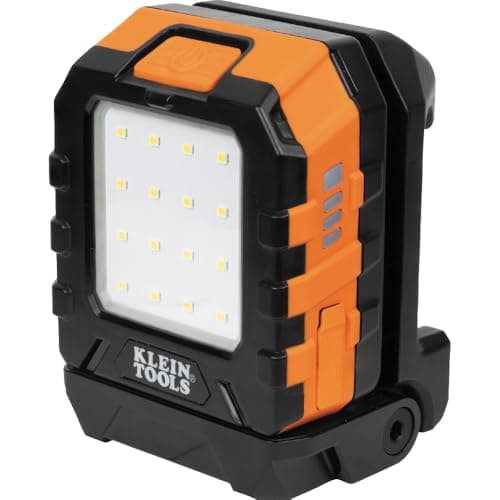 Klein Tools 56416 Rechargeable Work Light1,000 lumens, three modes, 360-degree rotation and a magnet. Built to be put down and aimed rather than held. | A magnetic work light with a kickstand | 1,000 lm |
We earn a commission if you buy through the links on this page, at no extra cost to you. It does not change what we recommend or the order they appear in. Full disclosure. Prices checked October 16, 2026.
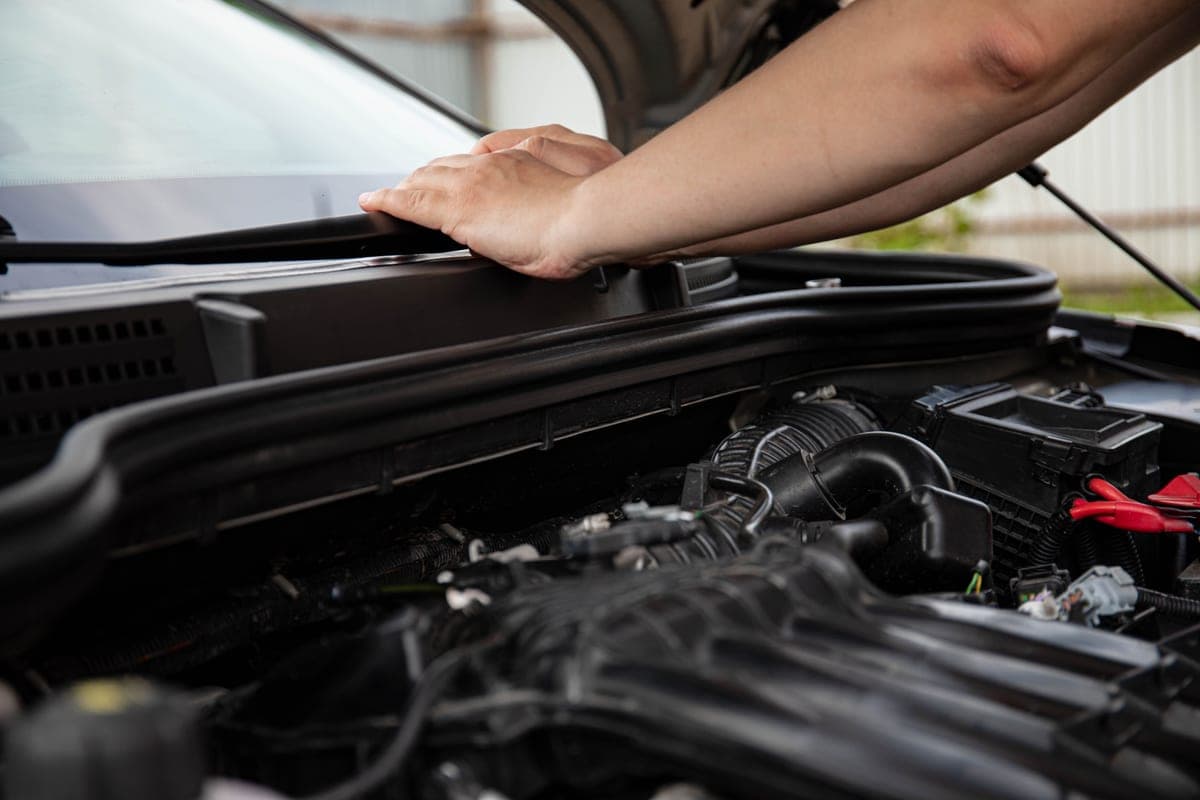
An engine bay is a set of narrow gaps with the work at the bottom of them. The best work light in the world does nothing if it will not fit between the engine and the inner wing, which is why this page ranks slim lights above brighter ones.
How we picked
Body format and access first, then color rendering, then mounting options, then output. This category publishes little beyond a lumen figure and we mark the gaps rather than filling them. See our methodology.
Slim bodies win
The Astro Pneumatic slim lights exist for exactly one reason: they are thin enough to slide into gaps a cylindrical light cannot enter. That is not a compromise on their part, it is the design brief.
The pattern repeats across the trade brands. Streamlight's Switchblade folds flat. Klein's foldable handheld pivots to lie along a surface. None of these shapes exists in the outdoor flashlight market, because outdoors nothing is 30 millimeters wide.
Color: fluids and wires
Two automotive tasks depend directly on color rendering. Identifying a fluid on a dark floor — coolant, oil, brake fluid, transmission fluid all differ mostly by color — and following a wiring loom where the insulation colors are the entire identification system.
The Streamlight Strion Switchblade is the only light on this page whose maker publishes a color-accuracy figure: 90 CRI at 4,000 K, in the Color-Rite mode, which costs 20 percent of the output at 400 lumens against the headline 500. No competitor here states a CRI number at all. Why color matters on a jobsite covers the detail, and our full review works through the whole sheet.
Magnets, and where they actually stick
A magnet is the most useful feature on an automotive work light, and it is worth thinking about where it will stick. Bonnets, wings and inner arches on a modern car are increasingly aluminum or composite, and a magnet does nothing on either.
What still works: the engine block, the subframe, the strut towers on most vehicles, and the tool cabinet. A light with a magnet plus a hook plus a kickstand covers the cases where the magnet does not.
Output, and the glare ceiling
Two lights beat one
The practical setup most workshops arrive at is a bar light for the area and a small spot for the detail. The Nebo Slyde King 2K puts both in one body — a 2,000-lumen spot at one end and a 500-lumen COB strip along the slide — which is a genuinely good answer if you want to carry one thing.
The alternative is a bar light plus a pocket flashlight, which gives better light in both roles at the cost of two objects.
Working under the car
Underneath, everything inverts. You are lying down, the work is above you, and the light needs to hang or stick rather than stand. A hook and a strong magnet matter more than any beam characteristic, and a headlamp becomes genuinely attractive because it points where you look — see work headlamps.
What we would not buy
A round-bodied work light for engine-bay work. The shape is wrong: it rolls, it does not fit gaps, and it lights a circle rather than a strip.
We would also avoid high-output work lights with no published runtime. A light that runs 40 minutes is not a work light, and without a published capacity there is no way to know before you own it.
The picks, in full
Top pick · Working in a gap too narrow for anything else
Astro Pneumatic 65SL Slim Light
650 lumens in a body thin enough to slide between an engine and a fender, with a separate top-mounted spot.
The slim format is the entire specification. Thickness decides whether a light fits where the work is, and no lumen figure compensates for a body that does not.
A top-mounted spot alongside the main flood turns one tool into two: wide light for the area, narrow light for the fastener.
Astro sells to mechanics through tool trucks, which is why this shape exists and why hiking brands do not make it.
What works
- Thin enough for genuinely tight access
- Separate flood and spot from one body
- Designed for the trade rather than adapted from an outdoor light
What does not
- No sourced runtime, weight or IP rating
- No published CRI
- 650 lumens is modest for the size
Skip this ifaccess is not your problem. A magnetic work light gives more light for the money if it fits.
Published specification
- Output
- 650 lmAstro Pneumatic 65SL — the brand's own listing on Amazon.com (retrieved September 1, 2026)
- Peak intensity
- not published
- Beam distance
- not published
- Runtime
- not published
- Battery
- RechargeableAstro Pneumatic 65SL — the brand's own listing on Amazon.com (retrieved September 1, 2026)
- Weight
- not published
- Ingress
- not published
#ad · how this is funded · price as of October 16, 2026
Pick 2 · Color-critical work under the hood
Streamlight Strion Switchblade
500 lumens cool white, or 400 at a published 90 CRI, in a folding bar. The color accuracy is the specification that matters on a wiring loom, and it is the only one here with a number behind it.
Color accuracy is the whole reason this exists. Under a cool-white work light, a brown wire and a red wire look the same, and that is not a cosmetic problem.
Streamlight calls it Color-Rite and does publish the number: 90 CRI at 4,000 K. That makes this the only work light we cover whose maker states a color rendering index, and the figure applies to the 400 lm mode rather than the 500 lm one - so color accuracy costs 20 percent of the output, which is a good price for it.
The folding bar shape puts a wide, even flood along a panel rather than a hotspot in the middle of it.
What works
- A published 90 CRI at 4,000 K - the only work light here with a color figure
- Bar shape floods a panel evenly, and a UV mode for dye-traced leaks
- Streamlight's trade distribution makes service easy
What does not
- No ingress rating of any kind, on a light sold for engine bays
- No candela or beam distance, and no runtime for the Color-Rite or UV modes
- 500 lumens is modest if you need to light a whole bay
Skip this ifyou need area lighting. It is a close-range color-accurate tool, not a floodlight.
Published specification
- Output
- 500 lmCool white. The Color-Rite mode is 400 lm; a third mode is UV.Streamlight Strion Switchblade — manufacturer spec page (retrieved October 10, 2026)
- Peak intensity
- not published
- Beam distance
- not published(A flood bar; Streamlight publishes neither beam figure)
- Runtime
- 3 h on highNo runtime published for the Color-Rite or UV modes.Streamlight Strion Switchblade — manufacturer spec page (retrieved October 10, 2026)
- Battery
- Li-ion, 4 h rechargeUSB or an existing Strion charger. Capacity not published.Streamlight Strion Switchblade — manufacturer spec page (retrieved October 10, 2026)
- Weight
- 181 g6.40 oz.Streamlight Strion Switchblade — manufacturer spec page (retrieved October 10, 2026)
- Ingress
- not published(No IP or IPX code stated; a 2 m impact rating is)
- CRI
- 90 CRIAt 4,000 K, in the 400 lm Color-Rite mode - not the 500 lm cool-white one.Streamlight Strion Switchblade — manufacturer spec page (retrieved October 10, 2026)
#ad · how this is funded · price as of October 16, 2026
Pick 3 · One tool that is both a flashlight and a work light
Nebo Slyde King 2K
A 2,000-lumen spot at one end and a 500-lumen COB work light along the slide. Two lights, one body.
The sliding body is a genuinely good mechanism: pull it open and a COB strip appears, close it and you have a spot with a 4x zoom.
A COB strip and a reflector produce completely different light. Having both means you stop choosing between seeing the area and seeing the detail.
Magnetic base, as every work light should have.
What works
- A spot and a COB flood in one body
- Magnetic base and a hands-free stance
- 4x zoom on the spot side
What does not
- No sourced runtime, weight or IP rating
- Two light engines in one body means a shorter run on either
- Zoom optics lose output
Skip this ifyou already carry a proper flashlight. As a work light alone, a dedicated bar puts out better light.
Published specification
- Output
- 2,000 lm spot / 500 lm COB work lightNebo Slyde King 2K — the brand's own listing on Amazon.com (retrieved September 1, 2026)
- Peak intensity
- not published
- Beam distance
- not published
- Runtime
- not published
- Battery
- USB rechargeableNebo Slyde King 2K — the brand's own listing on Amazon.com (retrieved September 1, 2026)
- Weight
- not published
- Ingress
- not published
#ad · how this is funded · price as of October 16, 2026
Pick 4 · A slim light that charges on a pad
Astro Pneumatic 90SLC Slim Light
900 lumens in the same slim body, with a quick-charge pad so it goes back on the bench rather than on a cable.
The charging pad matters more than the extra 250 lumens. A work light that lives on a pad is always charged; a work light with a cable is flat by Thursday.
900 lumens in a slim body is at the top of what the format can dissipate without getting hot to hold.
Same caveat as the rest of the trade-tool brands: nothing beyond output and charging is published.
What works
- Charging pad removes the cable from the routine
- 900 lumens in a slim body
- Top flashlight alongside the main flood
What does not
- No sourced runtime, weight or IP rating
- No published CRI
- Costs meaningfully more than the corded-charge version
Skip this ifyou do not have a fixed bench. The pad is the reason to pay the premium and it needs somewhere to live.
Published specification
- Output
- 900 lmAstro Pneumatic 90SLC — the brand's own listing on Amazon.com (retrieved September 1, 2026)
- Peak intensity
- not published
- Beam distance
- not published
- Runtime
- not published
- Battery
- Rechargeable, with a quick-charge padAstro Pneumatic 90SLC — the brand's own listing on Amazon.com (retrieved September 1, 2026)
- Weight
- not published
- Ingress
- not published
#ad · how this is funded · price as of October 16, 2026
Pick 5 · A magnetic work light with a kickstand
Klein Tools 56416 Rechargeable Work Light
1,000 lumens, three modes, 360-degree rotation and a magnet. Built to be put down and aimed rather than held.
The magnet and the kickstand are the product. A work light you have to hold is a work light that is not working.
360-degree rotation means you set the body once and aim the head, which is the difference between a good work light and a torch on its side.
1,000 lumens is the sweet spot for a bay: enough to see, not so much that it glares back off metal.
What works
- Magnet plus kickstand plus rotation, so it goes anywhere
- 1,000 lumens is well matched to close work
- Trade distribution
What does not
- No candela or beam distance published
- No published CRI, on a light that would benefit from one
- Built-in cell
Skip this ifyou need to light a whole room. It is a task light, and a 3,000-lumen area light is a different tool.
Published specification
- Output
- 1,000 lmHigh. Medium is 425 lm, low 300 lm.Klein Tools 56416 — manufacturer spec page (retrieved October 11, 2026)
- Peak intensity
- not published
- Beam distance
- not published(Klein publishes neither beam figure)
- Runtime
- 9 h at 1,000 lmAlso 425 lm/14 h and 300 lm/21 h.Klein Tools 56416 — manufacturer spec page (retrieved October 11, 2026)
- Battery
- Li-ion, USB-CKlein Tools 56416 — manufacturer spec page (retrieved October 11, 2026)
- Weight
- 549 g19.36 oz.Klein Tools 56416 — manufacturer spec page (retrieved October 11, 2026)
- Ingress
- IP66Dust-tight and waterproof. 3 m drop rating.Klein Tools 56416 — manufacturer spec page (retrieved October 11, 2026)
$64.98 · 8% off
#ad · how this is funded · price as of October 16, 2026
Questions people actually ask
What is the best work light for a mechanic?
On our criteria, a slim COB bar with a magnet and a hook. The Astro Pneumatic 65SL for access, or the Streamlight Strion Switchblade if color accuracy matters more than thickness. Both are the right shape for the work.
How many lumens for a mechanic's work light?
500 to 1,000 for close work in a bay. Above about 1,000 lumens at half a meter from painted metal you are producing glare rather than visibility, which is why experienced users run bright lights on a middle setting.
Do I need a high-CRI work light for automotive work?
It helps significantly for two specific tasks: identifying fluids on a dark floor and following a wiring loom. Both depend almost entirely on color, and a color rendering index around 70 makes both harder than they need to be.
Will a magnetic work light stick to a modern car?
Not always. Bonnets, wings and inner arches are increasingly aluminum or composite, where a magnet does nothing. The engine block, subframe and strut towers usually still work, and a light with a hook and kickstand as well covers the rest.
Should I use a headlamp or a handheld work light under a car?
Underneath, a headlamp is often better because it points where you look and you have both hands. A magnetic or hooked work light is better when you need to light a shadow you would otherwise be casting yourself.
Is a combination spot and COB light worth it?
Yes if you want to carry one object — the Nebo Slyde King 2K puts a 2,000-lumen spot and a 500-lumen COB strip in one body. Two dedicated lights give better light in both roles; it is a convenience trade rather than a performance one.
Sources
Every figure on this page came from one of the documents below, read on the date shown. We do not cite other review sites, forum posts or video reviews as sources of fact.
Read next

Streamlight Strion Switchblade review
A specification-first review of the Streamlight Strion Switchblade: the published 90 CRI figure, the 100 lumens it costs you, the UV mode nobody mentions, and what Streamlight still will not state.
Best work lights for a service truck
Work lights for mobile service work, ranked on power source, beam coverage and mounting — with every published figure sourced.

Best work lights, ranked on beam shape rather than brightness
The work-light ranking: beam shape, color rendering, mounting and runtime, with every published figure sourced.
Why color accuracy matters on a jobsite
What color rendering does to trade work, and how to choose when almost no maker publishes a CRI figure.
Best headlamps for work
Work headlamps ranked on shift runtime, color rendering and hard-hat compatibility.
Best rechargeable work lights
Rechargeable work lights compared on charging strategy, battery platform and published runtime.

Best high-CRI flashlights
High-CRI picks, the output they give up for the phosphor, and why the trade is usually worth making.
Best headlamps for HVAC and mechanical trades
Headlamps for HVAC, machinists and night maintenance, ranked on close-range beam shape, hard-hat compatibility and what each maker actually publishes.
Found a number that is wrong? Tell us and we will fix it and say so. Our methodology shows every formula on this page.