Work Lights
Best work lights for painting
Painting is the trade where color accuracy matters most and where the fewest makers publish it. Two lights we cover state a CRI figure. None of them is a work light.
By Scooter M. · Published · Updated
| # | Product | Best for | Output | Price |
|---|---|---|---|---|
| 1 | 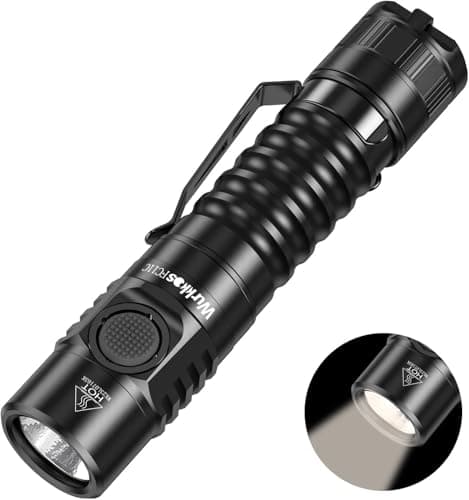 Wurkkos FC11CTop pick1,200 lumens at a stated CRI of 90 for a budget price. Color rendering is the spec that changes how a light feels, and this is the cheapest way to get it. | High color accuracy for the least money | 1,200 lm | |
| 2 | 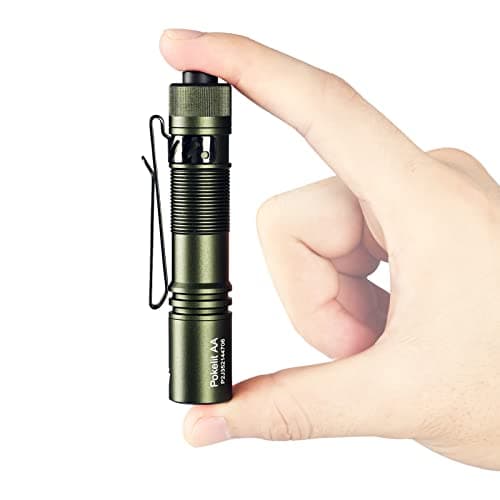 Acebeam Pokelit AA (high CRI)550 lumens at a stated 90-plus CRI, IP68, on a single AA. The combination of color accuracy and a standard cell is rare. | High CRI on a AA cell | 550 lm | |
| 3 | 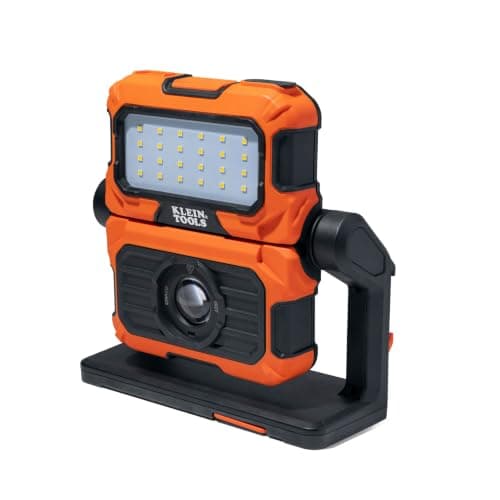 Klein Tools 56417 Rechargeable Work Light3,000 lumens with six modes and 360-degree rotation. The area-lighting version of the same idea. | Lighting a whole work area | 3,000 lm | |
| 4 | 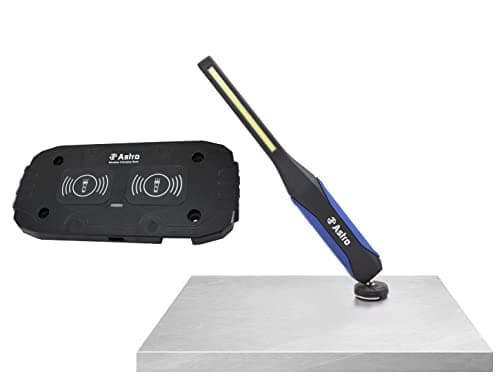 Astro Pneumatic 90SLC Slim Light900 lumens in the same slim body, with a quick-charge pad so it goes back on the bench rather than on a cable. | A slim light that charges on a pad | 900 lm | |
| 5 | 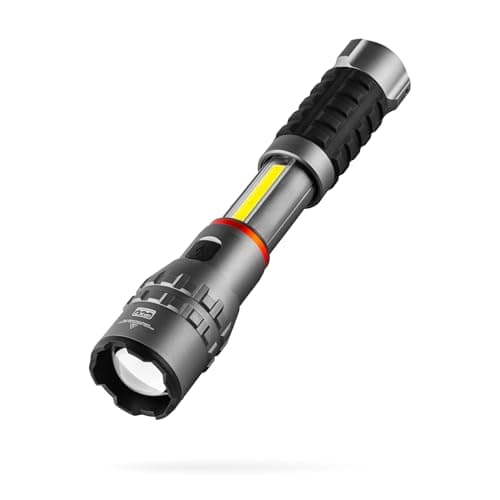 Nebo Slyde King 4KA 4,000-lumen spot and a 1,000-lumen COB work light in one sliding body, USB rechargeable. | The brightest two-in-one here | 4,000 lm spot / 1,000 lm COB work light | |
| 6 | 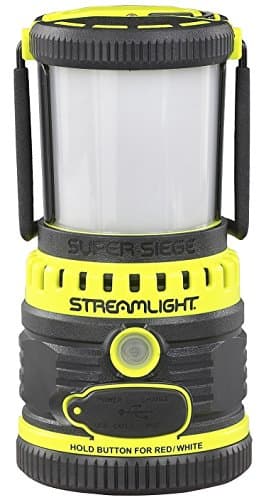 Streamlight Super Siege1,100 lumens of area light, USB rechargeable, and it will put charge back into a phone during an outage. | A lantern that also charges a phone | 1,100 lm | |
| 7 | 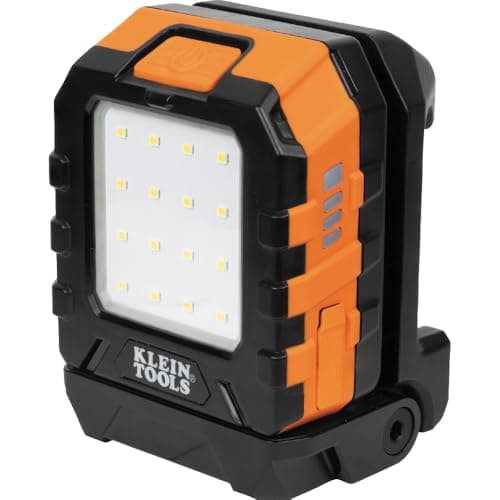 Klein Tools 56416 Rechargeable Work Light1,000 lumens, three modes, 360-degree rotation and a magnet. Built to be put down and aimed rather than held. | A magnetic work light with a kickstand | 1,000 lm |
We earn a commission if you buy through the links on this page, at no extra cost to you. It does not change what we recommend or the order they appear in. Full disclosure. Prices checked October 20, 2026.

Painting asks two things of a light that no other trade asks together: show the color truthfully, and show the surface at a glancing angle. The first is a specification. The second is a technique. Of every work light on this site, not one publishes a color rendering figure — so this page has to be honest about that before it recommends anything.
What follows is split accordingly: the two lights we cover that actually publish a CRI number, then the area lights worth owning for the raking-light job, with their missing CRI stated plainly rather than glossed over.
How we picked
- A published CRI figure, where one exists. Only two lights on this entire site have one. Both are handhelds, and both are here.
- Beam shape suited to raking light. A long even bar or a broad panel that can be placed near the wall and aimed along it, rather than a spot.
- It can be put down and aimed. Rotation, a kickstand or a magnet, because you are holding a brush or a roller.
- Currently purchasable, checked against the live listing before writing.
We have painted nothing under any of these lights and have not tested them. Every figure is the maker's own with the source linked — see our methodology. Where a maker publishes no CRI, we say so; we do not infer one from an emitter type or copy an estimate from elsewhere.
The disclosure problem, stated first
| Light | Published output | Published CRI | Format |
|---|---|---|---|
| Wurkkos FC11C | 1,200 lm | 90 | 18650 handheld, USB-C |
| Acebeam Pokelit AA | 550 lm | 90+ | AA handheld |
| Klein Tools 56417 | 3,000 lm | not published | Area light, 360-degree rotation |
| Astro Pneumatic 90SLC | 900 lm | not published | Slim bar with quick-charge pad |
| Nebo Slyde King 4K | 4,000 lm spot / 1,000 lm COB | not published | Sliding spot and COB |
| Streamlight Super Siege | 1,100 lm | not published | 360-degree lantern |
| Klein Tools 56416 | 1,000 lm | not published | Magnetic with kickstand |
Two published figures out of seven, and both belong to pocket flashlights rather than work lights. That is the honest state of this category. It does not mean the five area lights render color badly — modern LEDs are generally decent and some are very good — it means nobody will tell you, so you cannot choose on it.
The part no specification covers: where you put the light
Color accuracy tells you whether the paint looks right. It says nothing about whether you have missed a patch, and that is the other half of the job.
A light pointed straight at a wall from behind you is close to useless for finding defects. It flattens everything — roller texture, holidays, sheen differences and lap marks all disappear into an even wash. Move the same light close to the surface and aim it along the wall rather than at it, and every one of those defects throws a shadow. Painters call it raking or grazing light, and it is the single most useful thing a work light does on a paint job.
- Holidays — missed spots that are invisible head-on and obvious at a glancing angle, because the underlying surface has a different sheen.
- Lap marks and roller stipple — texture differences that only cast a shadow when the light is nearly parallel to the wall.
- Sheen variation — the reason a patch repair shows. Raking light reveals it before the customer's afternoon sun does.
- Cut lines — a bar light laid along the ceiling line shows a wavering edge that overhead lighting hides completely.
This is why beam shape matters as much as the CRI number here, and why a long even bar or a broad panel beats a bright spot for this work. A spot creates its own hotspot and its own misleading shadows.
The picks, and who each one is wrong for
Wurkkos FC11C — the only mid-power light here with a published CRI
1,200 lumens at a published CRI of 90, on an 18650 cell with USB-C charging. This is the light you check work with: hold it near the surface, rake it along, and trust what the color looks like. A CRI of 90 is the point at which most people stop noticing that a light is distorting anything, and Wurkkos is one of only two makers on this site willing to print the number.
Skip it as your main work light. It is a handheld flashlight, not an area light, and you cannot paint a room by it. Buy it as the inspection tool that lives in a pocket alongside whatever is lighting the room.
Acebeam Pokelit AA — published CRI 90+ on a single AA
550 lumens, CRI 90 or better, IP68, running on one AA cell with 14500 compatibility. The most portable honest-color light we can point at. For color matching a small repair or checking a cut line, having something in a shirt pocket you know renders color properly is worth more than another thousand unspecified lumens overhead.
Skip it if you want output. 550 lumens from an AA is a task light. Acebeam publishes no runtime for it either, which we note against it — see longest-runtime EDC flashlights for how thin that disclosure is across the category.
Klein Tools 56417 — the area light for a whole room
3,000 lumens with six modes and 360-degree rotation, designed to be set down and aimed. This is what actually lights the room while you work, and the rotation is the feature that matters: set it on the floor near a wall, turn the head along the surface, and you have raking light across a full wall without moving the light again.
Skip it if color accuracy is the deciding factor, because Klein publishes no CRI figure and we will not guess one. Use it to light the room and check the work with one of the two published-CRI handhelds above.
Astro Pneumatic 90SLC — the bar shape, which is the right shape
900 lumens in a slim bar with a quick-charge pad. The format is the argument: a long thin emitter laid parallel to a wall produces a much more even rake than a round panel, which means fewer false shadows to chase. The charge pad means it goes back on a bench between rooms rather than onto a cable you will trip over.
Skip it if you need to light a large space — 900 lumens is a working light for one wall at a time. No CRI figure published.
Nebo Slyde King 4K — the most output, and the least suited
A 4,000-lumen spot and a 1,000-lumen COB panel in one sliding body. The COB side is genuinely useful for painting; the spot side is not, and will actively mislead you if you inspect with it. It earns its place because 1,000 lumens of COB plus a spot for the rest of the site is a sensible one-object compromise.
Skip the spot mode entirely for inspection work. Skip the light altogether if you want a published CRI or runtime — neither exists.
Streamlight Super Siege — even light with no shadows
1,100 lumens of 360-degree area light that also charges a phone. A lantern is the opposite of raking light: it fills a room evenly and hides exactly the defects you are hunting. That is a fault for inspection and a virtue for actually applying paint, where hard shadows from a single directional source are what make you miss a spot in the first place.
Skip it for checking work. Own it for doing work, and rake with something else. No CRI published - though Streamlight does publish a runtime for all six of its modes.
Klein Tools 56416 — the small magnetic one
1,000 lumens, three modes, 360-degree rotation, a magnet and a kickstand. The magnet is the point for painting: stick it to a door frame, a stepladder or a radiator and aim it along a wall, and it stays where you put it while you work. 1,000 lumens is enough for one wall at a time and not so much that it glares off wet paint.
Skip it as a room light. Skip it if you want published color rendering — as with every work light here, there is none.
How to buy on this page
- You want the color to be right — Wurkkos FC11C at CRI 90, or the Acebeam Pokelit AA at 90+. They are the only two options on this site with a published figure.
- You want to light a whole room — Klein 56417 at 3,000 lm, or the Streamlight Super Siege for shadowless fill.
- You want to find holidays and lap marks — a bar shape placed close and aimed along the wall. The Astro 90SLC is the best format here for it.
- You want one light stuck to a door frame — Klein 56416, on the magnet and kickstand.
- You need one light for painting and everything else — Nebo Slyde King 4K, using the COB side for paint work.
- You want the CRI question explained properly — CRI explained and CRI for the trades.
What we would not tell you
We would not tell you the CRI of any of the five work lights on this page. Not one of their makers publishes it, and inferring a figure from an emitter type would be exactly the kind of confident guess this site exists to avoid. If a specification is not published, the honest answer is that you cannot choose on it.
We would also not tell you that a high-CRI light is brighter or better in general. High CRI usually costs output — the same emitter run at CRI 90 typically produces somewhere around 10 to 20 percent fewer lumens than its cool-white equivalent. For painting that is a trade worth making. For lighting a parking lot it is not.
The picks, in full
Top pick · High color accuracy for the least money
Wurkkos FC11C
1,200 lumens at a stated CRI of 90 for a budget price. Color rendering is the spec that changes how a light feels, and this is the cheapest way to get it.
CRI 90 versus the CRI 70 typical of a cheap cool-white emitter is the single most noticeable upgrade in a flashlight, and it is nothing to do with brightness. Reds stop looking brown. Wire insulation colors become distinguishable.
The cost of high CRI is output: the same emitter family loses roughly 10 to 20 percent of its lumens for the better phosphor. A 1,200-lumen high-CRI light is doing well.
18650 is the right cell format here — replaceable, standard, and enough energy to hold a useful level.
What works
- CRI 90 at a price where CRI is usually not mentioned at all
- Standard 18650, replaceable anywhere
- USB-C on the light itself
What does not
- No sourced runtime, candela, beam distance or IP rating
- High CRI costs output; treat the 1,200 figure as generous
- A budget brand with a thin published spec table
Skip this ifyou need maximum reach per dollar. High-CRI emitters throw less than the cool-white ones they replace.
Published specification
- Peak intensity
- not published
- Beam distance
- not published
- Runtime
- not published
- Battery
- 18650, USB-C rechargeableWurkkos FC11C — the brand's own listing on Amazon.com (retrieved September 1, 2026)
- Weight
- not published
- Ingress
- not published
- CRI
- 90Stated as '90 High CRI' on the listingWurkkos FC11C — the brand's own listing on Amazon.com (retrieved September 1, 2026)
$35.99 · 20% off
#ad · how this is funded · price as of October 20, 2026
Pick 2 · High CRI on a AA cell
Acebeam Pokelit AA (high CRI)
550 lumens at a stated 90-plus CRI, IP68, on a single AA. The combination of color accuracy and a standard cell is rare.
IP68 on a AA pocket light is the specification that justifies the price over a supermarket torch. Dust tight and immersion rated is a different class of object.
Acebeam's own page publishes a complete table - 1,849 cd, 86 m, three per-mode runtimes and 54.6 g - and the candela and the distance reconcile exactly through the FL 1 definition. That is the behavior of a maker who measured the light.
The 14500 is in the box and the alkaline AA is the fallback, which is the opposite of how most listings describe it. Acebeam publishes no separate AA figures, so the 550-lumen headline belongs to the lithium cell.
CRI above 90 in a AA body is unusual. Most makers reserve the good phosphor for the 18650 lights.
What works
- 90-plus CRI with IP68 in a 54.6 g AA-sized body
- A complete published sheet: candela, distance, per-mode runtime and weight, with the two beam figures agreeing
- Takes a 14500 or a plain AA, so you choose output or storage life
- Clip and pocket profile are genuinely well designed
What does not
- The 550-lumen figure is published as 550~330, so it steps down inside the first hour
- Acebeam publishes no runtimes for the alkaline AA it is compatible with
- Costs meaningfully more than a comparable cool-white light
Skip this ifyou want maximum output for the money. You are paying for color accuracy and an ingress rating, not for lumens.
Published specification
- Output
- 550 lmPublished as 550~330 lm on High - a stepped figure, not a flat one. Mid is 190 lm, Low 5 lm.Acebeam Pokelit AA — manufacturer spec page (retrieved October 17, 2026)
- Peak intensity
- 1,849 cdHigh. Reconciles exactly with the published 86 m: 0.25 x 86 x 86 = 1,849.Acebeam Pokelit AA — manufacturer spec page (retrieved October 17, 2026)
- Beam distance
- 86 mHighAcebeam Pokelit AA — manufacturer spec page (retrieved October 17, 2026)
- Runtime
- 1 h 1 min at 550 lm / 2 h 21 min at 190 lm / 58 h at 5 lmAcebeam publishes one table and ships a 14500 in the box; it does not publish separate figures for an alkaline AA, so these are the lithium-cell numbers.Acebeam Pokelit AA — manufacturer spec page (retrieved October 17, 2026)
- Battery
- 1 x 14500 USB-C (included), or 1 x AA alkaline/NiMHAcebeam Pokelit AA — manufacturer spec page (retrieved October 17, 2026)
- Weight
- 54.6 g94.8 mm long, 18.2 mm headAcebeam Pokelit AA — manufacturer spec page (retrieved October 17, 2026)
- Ingress
- IP68Stated as submersible to 2 mAcebeam Pokelit AA — manufacturer spec page (retrieved October 17, 2026)
- CRI
- 90+Nichia 219F at 5000 K, stated as CRI 90 or betterAcebeam Pokelit AA — manufacturer spec page (retrieved October 17, 2026)
$29.95 · 17% off
#ad · how this is funded · price as of October 20, 2026
Pick 3 · Lighting a whole work area
Klein Tools 56417 Rechargeable Work Light
3,000 lumens with six modes and 360-degree rotation. The area-lighting version of the same idea.
3,000 lumens from a portable light is enough to work by without a second source, which is the threshold that matters on a jobsite.
The six modes are not brightness steps on one emitter. There are two beams - a spot and a flood - that run alone or together, and Klein publishes an output and a runtime for each of the six combinations.
Runtime is the figure that decides whether a 3,000-lumen portable is a tool or a toy, and Klein publishes all six of them: 3 hours with both beams at 3,000 lumens, out to 12 hours on the 250-lumen flood. That is the most complete runtime disclosure of any work light on this site.
What works
- 3,000 lumens is genuine area lighting
- Magnetic mount and full rotation
- Six modes cover most jobsite needs
What does not
- No candela or beam distance, so the spot beam cannot be checked against anything
- 998 g and the largest body here - a set-down light, not a carry light
- No published CRI, on a light sold into color-coded trades
Skip this ifyou mostly work in panels and engine bays. At close range 3,000 lumens is glare, not visibility.
Published specification
- Output
- 3,000 lmBoth beams together. Spot and flood also run independently.Klein Tools 56417 — manufacturer spec page (retrieved October 11, 2026)
- Peak intensity
- not published
- Beam distance
- not published(Klein publishes neither beam figure)
- Runtime
- 3 h at 3,000 lmSix published pairs: spot 1,400 lm/5 h and 475 lm/9.5 h; flood 1,400 lm/8 h, 700 lm/10 h and 250 lm/12 h.Klein Tools 56417 — manufacturer spec page (retrieved October 11, 2026)
- Battery
- Li-ion, 12 h rated lifeUSB-C charge in, USB-A out to charge other kit. Capacity not published.Klein Tools 56417 — manufacturer spec page (retrieved October 11, 2026)
- Weight
- 998 g2.2 lb.Klein Tools 56417 — manufacturer spec page (retrieved October 11, 2026)
- Ingress
- IP65Dust-tight, water resistant. 3 m drop rating.Klein Tools 56417 — manufacturer spec page (retrieved October 11, 2026)
#ad · how this is funded · price as of October 20, 2026
Pick 4 · A slim light that charges on a pad
Astro Pneumatic 90SLC Slim Light
900 lumens in the same slim body, with a quick-charge pad so it goes back on the bench rather than on a cable.
The charging pad matters more than the extra 250 lumens. A work light that lives on a pad is always charged; a work light with a cable is flat by Thursday.
900 lumens in a slim body is at the top of what the format can dissipate without getting hot to hold.
Same caveat as the rest of the trade-tool brands: nothing beyond output and charging is published.
What works
- Charging pad removes the cable from the routine
- 900 lumens in a slim body
- Top flashlight alongside the main flood
What does not
- No sourced runtime, weight or IP rating
- No published CRI
- Costs meaningfully more than the corded-charge version
Skip this ifyou do not have a fixed bench. The pad is the reason to pay the premium and it needs somewhere to live.
Published specification
- Output
- 900 lmAstro Pneumatic 90SLC — the brand's own listing on Amazon.com (retrieved September 1, 2026)
- Peak intensity
- not published
- Beam distance
- not published
- Runtime
- not published
- Battery
- Rechargeable, with a quick-charge padAstro Pneumatic 90SLC — the brand's own listing on Amazon.com (retrieved September 1, 2026)
- Weight
- not published
- Ingress
- not published
#ad · how this is funded · price as of October 20, 2026
Pick 5 · The brightest two-in-one here
Nebo Slyde King 4K
A 4,000-lumen spot and a 1,000-lumen COB work light in one sliding body, USB rechargeable.
A thousand COB lumens is genuine small-area lighting rather than task lighting, which is what separates this from the 2K version.
At 4,000 lumens on the spot side the draw is likely around 40 watts, and without a published capacity there is no way to know whether that is twenty minutes or two hours. That gap is what keeps it off the top of our list.
Magnetic base and a hands-free stance, as every work light should have.
What works
- The highest published output of any light on the work pages
- A 1,000-lumen COB strip is genuine area light
- Magnetic base and 4x zoom on the spot side
What does not
- No sourced runtime, capacity, weight or IP rating
- Two light engines in one body means a shorter run on either
- Zoom optics lose output relative to a fixed reflector
Skip this ifyou need to know how long it runs. At this output the runtime is the specification, and it is not published.
Published specification
- Output
- 4,000 lm spot / 1,000 lm COB work lightNebo Slyde King 4K — the brand's own listing on Amazon.com (retrieved September 1, 2026)
- Peak intensity
- not published
- Beam distance
- not published
- Runtime
- not published
- Battery
- USB rechargeableNebo Slyde King 4K — the brand's own listing on Amazon.com (retrieved September 1, 2026)
- Weight
- not published
- Ingress
- not published
#ad · how this is funded · price as of October 20, 2026
Pick 6 · A lantern that also charges a phone
Streamlight Super Siege
1,100 lumens of area light, USB rechargeable, and it will put charge back into a phone during an outage.
1,100 lumens is enough to light a whole room to a level where you can read and cook, which is the difference between coping with an outage and enduring one.
The USB output is the second reason to own it. In a multi-day outage, the phone is the thing that matters.
Rechargeable rather than replaceable cells is a real trade-off for emergency kit: better in a planned outage, worse if it has been in a cupboard for eighteen months. The red LED is the hedge: 1 lumen for a published 348 hours means a flat-ish pack still gives you two weeks of find-the-stairs light.
What works
- Six published output-and-runtime pairs, including 348 h on the 1 lm red
- IPX7 to a meter, a 2 m impact rating, and it floats
- Charges a phone over USB - Streamlight states 4+ phone charges
What does not
- No sourced runtime, weight or IP rating
- Rechargeable cell self-discharges in storage
- Bulkier and heavier than the standard Siege
Skip this ifit will sit untouched for years. For pure standby, replaceable cells beat a rechargeable pack every time.
Published specification
- Output
- 1,100 lmWhite high. Medium 550 lm, low 125 lm, plus a three-mode red LED.Streamlight Super Siege — manufacturer spec page (retrieved October 13, 2026)
- Peak intensity
- not published
- Beam distance
- not published(Not applicable to a 360-degree lantern)
- Runtime
- 5 h 45 min at 1,100 lmSix published pairs: white 550 lm/11.5 h and 125 lm/36.25 h; red 2.7 lm/140 h, 1 lm/348 h and SOS 2.7 lm/320 h.Streamlight Super Siege — manufacturer spec page (retrieved October 13, 2026)
- Battery
- Li-ion, USB rechargeableAlso a USB power bank: Streamlight states 4+ phone charges. Capacity not published.Streamlight Super Siege — manufacturer spec page (retrieved October 13, 2026)
- Weight
- 868 g1 lb 14.0 oz. 19.05 cm tall.Streamlight Super Siege — manufacturer spec page (retrieved October 13, 2026)
- Ingress
- IPX7Submersible to 1 m, 2 m impact rating, and it floats.Streamlight Super Siege — manufacturer spec page (retrieved October 13, 2026)
#ad · how this is funded · price as of October 20, 2026
Pick 7 · A magnetic work light with a kickstand
Klein Tools 56416 Rechargeable Work Light
1,000 lumens, three modes, 360-degree rotation and a magnet. Built to be put down and aimed rather than held.
The magnet and the kickstand are the product. A work light you have to hold is a work light that is not working.
360-degree rotation means you set the body once and aim the head, which is the difference between a good work light and a torch on its side.
1,000 lumens is the sweet spot for a bay: enough to see, not so much that it glares back off metal.
What works
- Magnet plus kickstand plus rotation, so it goes anywhere
- 1,000 lumens is well matched to close work
- Trade distribution
What does not
- No candela or beam distance published
- No published CRI, on a light that would benefit from one
- Built-in cell
Skip this ifyou need to light a whole room. It is a task light, and a 3,000-lumen area light is a different tool.
Published specification
- Output
- 1,000 lmHigh. Medium is 425 lm, low 300 lm.Klein Tools 56416 — manufacturer spec page (retrieved October 11, 2026)
- Peak intensity
- not published
- Beam distance
- not published(Klein publishes neither beam figure)
- Runtime
- 9 h at 1,000 lmAlso 425 lm/14 h and 300 lm/21 h.Klein Tools 56416 — manufacturer spec page (retrieved October 11, 2026)
- Battery
- Li-ion, USB-CKlein Tools 56416 — manufacturer spec page (retrieved October 11, 2026)
- Weight
- 549 g19.36 oz.Klein Tools 56416 — manufacturer spec page (retrieved October 11, 2026)
- Ingress
- IP66Dust-tight and waterproof. 3 m drop rating.Klein Tools 56416 — manufacturer spec page (retrieved October 11, 2026)
$64.98 · 8% off
#ad · how this is funded · price as of October 20, 2026
Questions people actually ask
What CRI do I need for painting?
As high as you can source a published figure for. CRI 90 and above is where most people stop noticing a light distorting color, and both published-CRI lights we cover — the Wurkkos FC11C at 90 and the Acebeam Pokelit AA at 90+ — clear that bar. The difficulty is that no work light we cover publishes any CRI figure at all.
Why do work light makers not publish CRI?
We cannot say why any individual company omits it. What we can report is the pattern: across every work light on this site, not one states a color rendering figure, while two handheld flashlights do. If color accuracy is your deciding factor, that currently pushes you toward a handheld.
What is raking light and why does it matter for painting?
It means placing the light close to the surface and aiming it along the wall rather than at it. Defects that are invisible head-on — holidays, lap marks, roller stipple, sheen differences — throw shadows at a glancing angle. It is the most useful thing a work light does on a paint job, and it depends on where you put the light rather than on any specification.
How many lumens do I need for painting a room?
Around 1,000 to 3,000 lumens of area light is plenty for a typical room. Beyond that you are adding glare off wet paint, which makes the surface harder to read rather than easier. Beam shape and placement matter far more than the lumen figure here.
Should I use a lantern or a directional light for painting?
Both, for different parts of the job. A lantern like the Streamlight Super Siege fills a room evenly and prevents the hard shadows that cause missed spots while you apply paint. A directional light placed close and raked along the wall is what finds the spots you missed. Using only one of the two is the common mistake.
Will a high-CRI light show colors the same as daylight?
Closer, but not identical — CRI measures fidelity against a reference at the same color temperature, so a warm high-CRI light and daylight still differ. For matching a repair to an existing wall, the reliable approach is still to check in the light the room actually gets, and use a high-CRI work light to get close.
Is a COB work light good for painting?
Yes, for applying paint — a COB panel throws a broad even wash with soft shadows, which is what you want while working. It is less good for inspection, where a narrower source raked along the surface reveals more. The Nebo Slyde King 4K includes a 1,000-lumen COB side alongside its spot.
Sources
Every figure on this page came from one of the documents below, read on the date shown. We do not cite other review sites, forum posts or video reviews as sources of fact.
- Wurkkos FC11C — the brand's own listing on Amazon.com (retrieved September 1, 2026)
- Acebeam Pokelit AA — manufacturer spec page (retrieved October 17, 2026)
- Klein Tools 56417 Rechargeable Work Light — the brand's own listing on Amazon.com (retrieved September 1, 2026)
- Astro Pneumatic 90SLC Slim Light — the brand's own listing on Amazon.com (retrieved September 1, 2026)
- Nebo Slyde King 4K — the brand's own listing on Amazon.com (retrieved September 1, 2026)
- Streamlight Super Siege — the brand's own listing on Amazon.com (retrieved September 1, 2026)
- Klein Tools 56416 Rechargeable Work Light — the brand's own listing on Amazon.com (retrieved September 1, 2026)
- ANSI/PLATO FL 1 flashlight performance standard — definitions of lumens, peak beam intensity, beam distance, runtime, impact and water resistance
Read next
Best work lights, ranked on beam shape rather than brightness
The work-light ranking: beam shape, color rendering, mounting and runtime, with every published figure sourced.
Why color accuracy matters on a jobsite
What color rendering does to trade work, and how to choose when almost no maker publishes a CRI figure.
Best work lights for a construction site
Work lights for construction, ranked on published ingress rating, power source and area coverage, with the gaps named.
CRI explained
What CRI measures, the R9 problem, the output cost, and how CRI differs from color temperature.
Best high-CRI flashlights
High-CRI picks, the output they give up for the phosphor, and why the trade is usually worth making.
Best work lights for electricians
Electrical work lights ranked on color rendering and glare control rather than raw output.
Found a number that is wrong? Tell us and we will fix it and say so. Our methodology shows every formula on this page.